
Honey Chipotle Pork Belly Burnt Ends
Honey Chipotle Pork Belly Burnt Ends
Recipe Overview:
Honey Chipotle Pork Belly Burnt Ends
Cubed pork belly smoked over cherry wood, braised in honey chipotle BBQ sauce, then glazed until sticky and caramelized
Prep Time: 20 min | Cook Time: 4.5 hrs | Total Time: 4 hrs 50 min | Servings: 8-10 | Calories: 520/serving
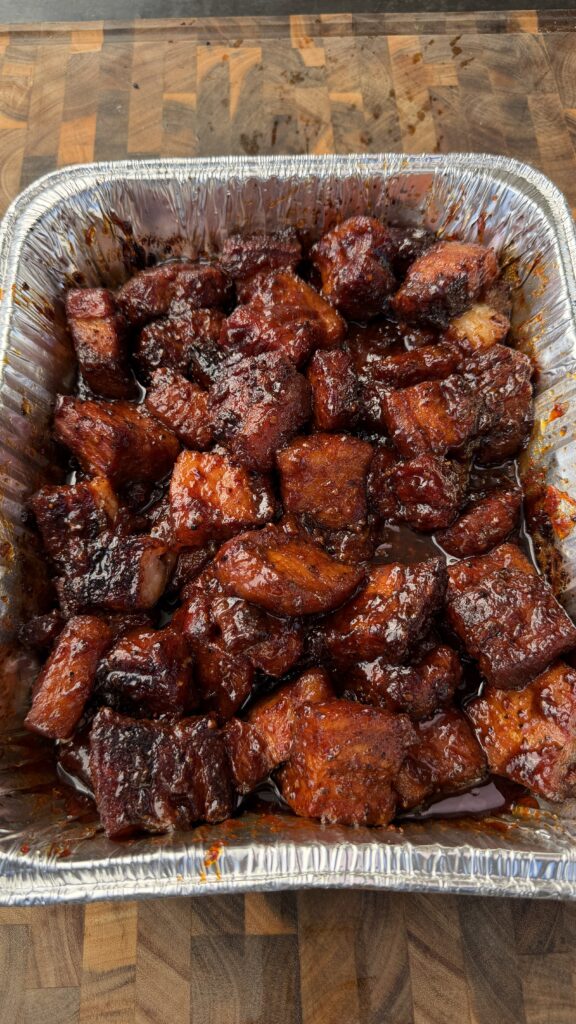
Honey chipotle pork belly burnt ends transform rich pork belly into candy-like cubes through a three-stage cooking process that develops layers of flavor and texture. These pork belly burnt ends start as one-inch cubes seasoned with BBQ rub and smoked over cherry wood until they develop a deep mahogany bark. The cubes then braise in a homemade honey chipotle BBQ sauce that balances sweet honey with smoky chipotle heat, becoming fork-tender as they reach 203°F. A final uncovered “tacking up” stage caramelizes the sauce into a sticky glaze that coats each cube in sweet, spicy, glossy perfection.
What makes this pork belly burnt ends recipe special is how pork belly’s high fat content creates superior results compared to the traditional beef brisket point burnt ends. Pork belly contains alternating layers of fat and meat that render during the long smoke, creating pieces that are simultaneously crispy on the outside and melt-in-your-mouth tender inside. The cherry wood smoke provides fruity sweetness that complements both the honey in the sauce and the natural richness of the pork, while the chipotle peppers add smoky heat that cuts through the fat.
This honey chipotle burnt ends recipe delivers barbecue candy that’s become a staple at competitions and backyard cookouts. The technique follows the classic burnt ends method – smoke, braise, glaze – but adapts it for pork belly’s unique characteristics. Unlike brisket burnt ends which can dry out, pork belly’s abundant fat ensures every cube stays juicy even after hours of cooking. The result is addictive bites that combine smoke, sweet, heat, and richness in perfect balance.
See How It’s Done
Why Pork Belly Makes Superior Burnt Ends
Pork belly is the ideal cut for burnt ends because of its extraordinary fat-to-meat ratio and layered structure. Each piece contains alternating stripes of meat and fat that create natural basting as the fat renders during cooking. This marbling ensures the meat stays moist throughout the long cooking process while the fat edges crisp up and caramelize. Unlike leaner cuts that would dry out, pork belly actually improves with extended cooking as more fat renders and collagen breaks down.
The skin-off pork belly strips used in this recipe have already had the tough outer layer removed, leaving you with pure meat and fat ready for cutting into cubes. Look for pork belly with relatively even fat distribution rather than pieces that are all fat on one end and all meat on the other. Quality pork belly should be bright pink with white fat that looks fresh, not yellowed or discolored. A four-pound piece will yield about forty to fifty one-inch cubes depending on how precisely you cut them.
Cutting the pork belly into uniform one-inch cubes is crucial for even cooking. Larger cubes take longer to reach temperature and may not render enough fat, while smaller cubes can dry out or fall apart during braising. One-inch cubes provide enough surface area for bark development while maintaining structural integrity throughout all three cooking stages. Use a sharp knife and wipe it clean between cuts to maintain clean edges that will crisp up nicely.
The Three-Stage Cooking Method
The burnt ends technique requires three distinct cooking stages that each serve specific purposes. The initial smoke develops bark and begins rendering fat while infusing deep wood smoke flavor. The braising stage tenderizes the meat through moist heat while the sauce penetrates deeply. The final tacking up stage caramelizes the sauce into a sticky glaze while crisping the exterior. Skipping any stage results in inferior burnt ends that lack the signature texture contrast.
Smoking uncovered at 250°F for three hours creates the foundation for great burnt ends. This moderate temperature is hot enough to render fat and develop bark without cooking so fast that the exterior burns before the interior tenderizes. The cherry wood smoke penetrates deeply during this stage when the meat is most receptive to smoke absorption. By the time the cubes hit 185°F, they’ve developed that mahogany bark that gives burnt ends their name.
The braising stage covered in foil with sauce transforms good smoked pork into great burnt ends. The sealed environment traps moisture and creates steam that breaks down remaining connective tissue while the sauce’s sugars, acids, and liquids penetrate the meat. This is when the cubes go from firm and somewhat chewy at 185°F to fork-tender and nearly falling apart at 203°F. The fat continues rendering, creating incredibly rich, juicy bites.
The final tacking up stage uncovered for ten minutes is what separates amateur burnt ends from competition-quality. Removing the foil allows the sauce to reduce and concentrate on the surface while the sugars caramelize in the dry heat. This creates that signature sticky, glossy exterior that’s slightly crispy with concentrated flavor. The brief uncovered cook also allows excess moisture to evaporate, preventing the burnt ends from being soggy or swimming in sauce.
Cherry Wood for Pork Belly
Cherry wood provides mild, fruity smoke that enhances pork without overwhelming it. The subtle sweetness in cherry smoke complements the honey in the sauce while the fruity notes provide complexity that balances the rich pork belly fat. Cherry burns clean and doesn’t produce the bitter compounds that can develop with stronger woods like mesquite during long cooks. The light smoke also won’t compete with the chipotle peppers’ own smoky flavor.
Cherry wood creates an attractive mahogany color on smoked meat that’s particularly appealing on burnt ends. The bark that develops during the three-hour initial smoke will have deep reddish-brown tones from the cherry smoke combining with the BBQ rub. This visual appeal matters when you’re serving these as appetizers or party food – the dark, caramelized appearance signals the intense flavors within.
Building the Honey Chipotle BBQ Sauce
The honey chipotle BBQ sauce balances sweet, smoky, and spicy elements that complement pork belly’s richness. Starting with a ketchup base provides familiar BBQ flavor along with tomato acidity that helps cut through fat. The honey adds floral sweetness that’s more complex than plain sugar, while brown sugar contributes molasses notes that deepen the flavor profile. Together, these sweeteners create the candy-like quality that makes burnt ends so addictive.
Chipotle peppers in adobo are the sauce’s signature ingredient, providing both heat and additional smoke flavor. Chipotles are smoked jalapeños, so they contribute complexity beyond just spiciness. The adobo sauce they’re packed in contains tomatoes, vinegar, and spices that further enhance the overall flavor. Two whole minced chipotles plus a tablespoon of adobo sauce creates moderate heat that most people find pleasant without being overwhelming. Adjust based on your tolerance – one chipotle for mild, three for genuinely spicy.
Apple cider vinegar provides the acidity that balances all the sweet components while helping tenderize the meat during braising. The vinegar’s sharpness cuts through the richness of the pork belly fat, preventing the burnt ends from tasting cloying or heavy. Worcestershire sauce adds umami depth and savory complexity that rounds out the flavor profile. The smoked paprika reinforces the smoke from both the wood and the chipotles, while garlic and onion powder provide aromatic backbone.
Understanding Internal Temperature Targets
The temperature progression from 185°F to 203°F during braising represents the zone where pork belly transforms from cooked but firm to fall-apart tender. At 185°F, the meat is fully cooked and safe to eat, but the connective tissue remains somewhat intact and the fat hasn’t fully rendered. This is why the cubes go into the foil pan with sauce at this point – they need the moist braising environment to finish properly.
Between 185°F and 203°F, collagen converts to gelatin and remaining fat pockets melt, creating the tender, juicy texture that defines great burnt ends. The braising liquid and sealed foil pan create gentle, even heat that allows this transformation to occur without drying out the exterior. The sauce penetrates deeply during this stage, flavoring the meat throughout rather than just coating the surface.
Pulling the burnt ends at 203°F ensures maximum tenderness while maintaining enough structure that the cubes don’t fall apart into mush. At temperatures above 205°F, pork belly can become so tender it loses its shape, making it difficult to serve as distinct burnt ends. The probe test is important – when you insert an instant-read thermometer, it should slide in and out with almost no resistance, like pushing into soft butter.
Ingredients
The Pork Belly:
- 4 lbs pork belly strips (skin off), cut into 1-inch cubes
- Your favorite BBQ seasoning (enough to coat generously)
- Cherry wood for smoke
For the Honey Chipotle BBQ Sauce:
- 1 cup ketchup
- ½ cup honey
- ⅓ cup brown sugar
- ¼ cup apple cider vinegar
- 2 chipotle peppers in adobo (minced) + 1 tbsp adobo sauce
- 1 tbsp Worcestershire sauce
- 1 tsp smoked paprika
- ½ tsp garlic powder
- ½ tsp onion powder
- Salt and pepper to taste
Step-by-Step Instructions
Prepare and Cut the Pork Belly
Remove the pork belly from refrigeration and place it on a large cutting board. If there’s any silver skin or membrane on the surface, trim it away with a sharp knife – these won’t render and will create chewy spots in the finished burnt ends. Pat the entire piece dry with paper towels to remove surface moisture that would prevent proper bark formation.
Using a sharp chef’s knife, cut the pork belly into uniform one-inch cubes. Work methodically to ensure consistent sizing – lay the belly flat and cut it into one-inch wide strips lengthwise, then rotate and cut across to create one-inch cubes. The pieces don’t need to be perfect, but aim for consistency so they cook at the same rate. You should get approximately forty to fifty cubes from four pounds of pork belly. Place all the cubed pork belly in a large bowl or on a baking sheet with raised edges.
Season the Pork Belly Cubes
Sprinkle your favorite BBQ seasoning generously over all the pork belly cubes. Use enough rub that you can see it coating each piece – the seasoning should be visible on all surfaces. A good rule of thumb is about three to four tablespoons of rub for four pounds of cubed pork belly. Use your hands to toss the cubes, ensuring every side of each piece gets coated with seasoning.
Don’t be shy with the seasoning – some will fall off during smoking and handling, and the fat in the pork belly can handle bold flavors. Press the seasoning gently into the meat so it adheres well. Let the seasoned cubes sit at room temperature while you prepare the smoker, about fifteen to twenty minutes. This allows the salt in the rub to begin penetrating the meat while taking the chill off for more even cooking.
Prepare and Preheat the Smoker
Load your smoker with cherry wood – either chunks if using a charcoal smoker or pellets if using a pellet grill. Preheat the smoker to 250°F with the lid closed. This moderate temperature is ideal for rendering pork belly fat while developing bark without burning. Make sure you have enough fuel for approximately four and a half hours of total cooking time.
Once the smoker reaches 250°F and is producing clean, thin blue smoke rather than thick white smoke, it’s ready for the pork belly. Clean the grill grates with a brush and lightly oil them to prevent sticking, though pork belly’s high fat content means sticking is rarely an issue. Have a spray bottle of water nearby for managing any flare-ups from dripping fat, though they should be minimal at this temperature.
Smoke the Pork Belly Cubes
Arrange the seasoned pork belly cubes directly on the smoker grates in a single layer, spacing them about half an inch apart. Don’t overcrowd – you want smoke to circulate around each piece. The cubes should be fat-side up if they have an obvious fat cap side, but with one-inch cubes, orientation matters less than with whole cuts.
Close the smoker lid and smoke for approximately three hours without opening frequently – every time you open the lid, you lose heat and smoke. After two hours, you can start checking the cubes’ appearance. They should be developing a dark mahogany bark with the seasoning darkened and slightly crusty. Begin checking internal temperature after two and a half hours by inserting an instant-read thermometer into the center of several cubes. You’re looking for around 185°F. The exact time to reach this temperature will vary based on smoker efficiency and how often you’ve opened the lid, but three hours is typical at 250°F.
Make the Honey Chipotle BBQ Sauce
While the pork belly smokes, prepare the honey chipotle BBQ sauce so the flavors have time to meld. In a medium saucepan, combine the ketchup, honey, brown sugar, apple cider vinegar, minced chipotle peppers, adobo sauce, Worcestershire sauce, smoked paprika, garlic powder, onion powder, salt, and pepper. Whisk everything together thoroughly until no lumps remain and the mixture is uniform in color.
Place the saucepan over medium-low heat and bring to a gentle simmer, stirring occasionally to prevent scorching on the bottom. Once simmering, reduce heat to low and continue cooking for ten to fifteen minutes, stirring every few minutes. The sauce will thicken noticeably as it reduces and the sugars dissolve. Taste and adjust seasoning – it should be sweet with noticeable honey flavor, smoky heat from the chipotles, and tangy brightness from the vinegar. The heat should be present but not overwhelming. Remove from heat and set aside until the pork belly reaches 185°F.
Braise the Burnt Ends in Sauce
Once the pork belly cubes reach approximately 185°F internal temperature and have developed good bark, remove them from the smoker. Have a disposable aluminum foil pan ready – it should be deep enough to hold all the cubes with at least an inch of headspace. Transfer all the smoked pork belly cubes into the foil pan.
Pour the prepared honey chipotle BBQ sauce over the cubes, using a spoon or spatula to toss and coat every piece thoroughly. Every cube should be glistening with sauce. The sauce will pool in the bottom of the pan, which is perfect – during braising, the cubes will simmer in this liquid, absorbing flavor while the steam tenderizes them. Cover the entire pan tightly with heavy-duty aluminum foil, crimping it securely around all edges to create a complete seal that traps moisture and heat.
Continue Cooking Until Fork-Tender
Place the covered foil pan back on the smoker at 250°F. The sealed pan creates a braising environment where the cubes cook in the moist heat from the sauce rather than direct smoke. Close the smoker lid and continue cooking for approximately one hour. The cubes need to reach about 203°F internal temperature and become fork-tender.
After forty-five minutes, carefully remove the foil to check doneness – watch for escaping steam when you open it. Insert an instant-read thermometer into several cubes to verify they’ve reached 203°F. More importantly, probe them with a fork or the thermometer – it should slide in and out with almost no resistance. If the cubes still feel firm or the thermometer meets resistance, re-cover and continue cooking, checking every fifteen minutes. The braising stage can take anywhere from forty-five minutes to ninety minutes depending on your smoker’s efficiency and the pork belly’s characteristics.
Tack Up for Sticky Glaze
Once the burnt ends reach 203°F and probe tender, remove the foil covering completely. Use a spoon or tongs to gently toss the cubes in the accumulated sauce at the bottom of the pan, ensuring every piece gets recoated. The sauce will have thickened considerably during braising and should coat the cubes like a glaze rather than a thin liquid.
Place the uncovered pan back on the smoker at 250°F for ten minutes. This “tacking up” stage allows the sauce to reduce further and caramelize on the surface of each cube, creating that signature sticky, glossy exterior. The sugars in the honey and brown sugar will caramelize, developing deeper flavor and creating slight crispness on the edges. Watch carefully during this stage – you want the sauce to become sticky and shiny without burning. If it starts to darken too much, remove immediately.
Rest and Serve
Remove the pan from the smoker and let the burnt ends rest uncovered for twenty to thirty minutes before serving. This rest allows the meat’s proteins to relax and reabsorb moisture while the sauce sets into a perfect sticky coating. The burnt ends will stay hot for up to an hour, so don’t worry about them getting cold.
Serve the honey chipotle pork belly burnt ends directly from the pan or transfer to a serving platter. Provide toothpicks or small forks for easy eating – these are finger food at their finest. Each cube should be dark mahogany on the outside with a sticky, glossy glaze. When bitten into, the exterior should have slight resistance before giving way to incredibly tender, fatty interior that nearly melts. The flavor should hit with smoke first, followed by sweet honey, then the warming heat of chipotle that builds with each bite. Any leftover burnt ends can be refrigerated for up to three days and reheated gently in a 300°F oven, though they’re never quite as good as fresh.
FAQ
Can I use a different cut of pork instead of pork belly?
Pork belly is strongly recommended because its high fat content is what makes burnt ends so tender and juicy. Leaner cuts like pork loin or tenderloin will dry out during the long cooking process. Pork shoulder could work but has different texture – it shreds rather than maintaining cube structure. If you can’t find pork belly, beef short ribs would be the closest alternative.
What if I don’t have cherry wood?
Apple wood is the closest substitute, providing similar mild, fruity smoke. Pecan also works well with pork, offering nutty sweetness. Hickory creates stronger smoke flavor that some prefer, though it can overpower the chipotle sauce. Avoid mesquite which is too intense for the long smoking time and can turn bitter.
How spicy are these burnt ends?
As written with two chipotle peppers, the heat is moderate – noticeable but not overwhelming for most people. The honey and brown sugar balance the heat while the fat in the pork belly helps mellow it. For mild burnt ends, use one chipotle pepper. For genuinely spicy, use three peppers plus two tablespoons of adobo sauce. You can always serve extra hot sauce on the side.
Can I make these in the oven if I don’t have a smoker?
Yes, though you’ll lose the smoke flavor. Roast the seasoned cubes on a wire rack over a baking sheet at 275°F for about two and a half hours until they reach 185°F. Transfer to a foil pan with sauce, cover, and continue cooking at 275°F until they reach 203°F, then uncover for the final glazing. Add liquid smoke to the sauce for a hint of smokiness.
Why is my bark getting too dark before the meat reaches temperature?
If the bark is darkening too much, reduce smoker temperature to 225°F and continue cooking more gently. Dark bark isn’t necessarily a problem – true burnt ends should be deeply caramelized – but if it’s actually burning and tasting bitter, your temperature is too high. Ensure your smoker thermometer is accurate by using a separate probe thermometer.
Conclusion
Honey chipotle pork belly burnt ends prove that adapting classic barbecue techniques to different proteins can create something arguably better than the original. While beef brisket burnt ends hold a special place in BBQ culture, pork belly’s superior fat content and tender texture create burnt ends that are more consistently successful and equally delicious. The three-stage cooking method ensures proper smoke penetration, complete fat rendering, and that signature sticky glaze that makes burnt ends irresistible.
What makes this pork belly burnt ends recipe so successful is the balance between technique and seasoning. The cherry wood smoke provides subtle sweetness, the honey chipotle sauce delivers complex sweet-spicy flavor, and the pork belly itself contributes incredible richness. The temperature progression from raw to 185°F to 203°F ensures proper texture development, while the final tacking up stage creates the caramelized exterior that defines great burnt ends.
Ready to Take Your Cooking to the Next Level?
This is where I keep all my most-used products, gear, and favorite cooking tools — check it out:
View My Cooking Gear & Tools: https://linktr.ee/cooking_with_fire___
Recipe Categories
If you loved this recipe, you’ll find more to savor across our diverse categories. From beef to pork, chicken to turkey, seafood to appetizers, there’s a wealth of flavors waiting for you. Explore them all at CWFeats.
- Beef Recipes: https://cwfeats.com/beef-recipes/
- Pork Recipes: https://cwfeats.com/pork-4/
- Chicken Recipes: https://cwfeats.com/chicken-recipes