Recipe Overview: Crying Tiger Steak (Seua Rong Hai) Thai-style grilled New York strip steaks marinated in soy-fish sauce blend, charcoal grilled with forward sear, served with spicy-tangy nam jim jaew dipping sauce
Prep Time: 40 min | Cook Time: 10 min | Total Time: 50 min | Servings: 2-4 | Calories: 580/serving

See How It’s Done
Crying Tiger steak, known as Seua Rong Hai in Thai, is a beloved street food dish that features grilled beef sliced thin and served with an intensely flavored dipping sauce that supposedly makes even tigers cry. This Thai grilled steak starts with New York strip steaks marinated in a blend of soy sauce, fish sauce, oyster sauce, and aromatics that create savory depth while tenderizing the meat. The steaks get seared hard over blazing charcoal before finishing over indirect heat, developing a mahogany crust while staying juicy inside. Sliced against the grain and served with nam jim jaew – a fiery, funky dipping sauce of fish sauce, lime, toasted rice powder, and chilies – Crying Tiger delivers bold Thai flavors that balance salty, sour, sweet, and spicy in every bite.
What makes this Crying Tiger recipe special is the marinade’s umami-packed combination of three different fermented sauces. Soy sauce provides salty depth, fish sauce adds funky complexity, and oyster sauce contributes sweet richness with subtle brininess. Together, they create layers of savory flavor that penetrate the steak while the brown sugar and lime juice provide balance. The garlic and black pepper add aromatic punch that complements the beef without overwhelming it.
This Thai beef recipe with nam jim jaew dipping sauce delivers restaurant-quality results that transport you straight to the streets of Bangkok. The forward searing technique over direct charcoal creates intense crust development impossible with gas grills, while the traditional dipping sauce provides the authentic Thai flavor profile that defines this dish. Whether you’re exploring Southeast Asian cuisine or just want incredibly flavorful grilled steak, Crying Tiger consistently impresses with its bold, balanced flavors and tender, juicy texture.
The Legend Behind Crying Tiger

Crying Tiger gets its evocative name from Thai folklore suggesting the steak is so delicious that even a tiger would cry tears of joy while eating it. Another interpretation is that the intensely spicy dipping sauce makes diners cry like wounded tigers. Regardless of the origin story, the name perfectly captures the dish’s bold, aggressive flavors that demand attention. This isn’t subtle cuisine – it’s in-your-face delicious with heat, funk, and acidity that wake up your palate.
The dish originated in Thailand’s Isaan region, the northeastern province known for its bold, rustic cooking that relies heavily on charcoal grilling, fermented ingredients, and intense spicing. Crying Tiger represents Isaan cuisine’s philosophy of maximizing flavor with minimal ingredients. The steak itself is simply seasoned, allowing the marinade’s umami depth and the dipping sauce’s complex flavors to shine. This approach creates more interesting eating than heavily seasoned steak would – each bite can be customized by how much sauce you use.
Understanding the Thai Marinade Components
The marinade combines three different fermented sauces that each contribute distinct savory characteristics. Soy sauce provides the familiar salty, savory base that most Western palates recognize. The sodium in soy sauce also helps tenderize the meat by breaking down proteins, making this brief marinade more effective than its thirty-minute minimum might suggest. Use regular soy sauce rather than low-sodium for this application – the steak needs that salt penetration.
Fish sauce is the funkier component that gives the marinade its unmistakably Thai character. Made from fermented anchovies, fish sauce delivers intense umami and complex saltiness that’s different from soy sauce. It adds depth that registers as “more beefy” rather than fishy when used in marinades for red meat. Quality fish sauce makes a difference – look for brands with just anchovies, salt, and water on the ingredient list rather than ones with additives and sugar.
Oyster sauce adds viscosity and sweet-savory richness that rounds out the marinade. Made from oyster extract, soy sauce, and sugar, oyster sauce provides body that helps the other ingredients cling to the meat. It contributes subtle brininess and sweetness that balances the aggressive saltiness of the soy and fish sauces. The combination of these three sauces creates more complexity than any single one could provide, with each contributing different facets of savory flavor.
Brown sugar balances the salty components while contributing to crust development during grilling. The molasses in brown sugar adds subtle depth beyond white sugar’s simple sweetness. Lime juice provides acidity that brightens the rich, salty marinade while its citric acid helps tenderize the meat’s surface. The garlic and black pepper add aromatic spice that complements the savory base without overwhelming the beef’s natural flavor.
The Traditional Nam Jim Jaew Dipping Sauce

Nam jim jaew, often called Crying Tiger sauce, is an Isaan-style dipping sauce that balances four fundamental Thai flavors: salty from fish sauce, sour from lime juice, sweet from sugar, and spicy from chili flakes. The sauce should taste aggressively seasoned when tasted alone – almost too intense – because it’s meant to be used sparingly with mild grilled meat. Each dip should provide a burst of flavor that enhances the beef rather than overwhelming it.
Toasted rice powder, called khao khua, is the traditional ingredient that gives nam jim jaew its distinctive nutty flavor and slightly gritty texture. Made by dry-toasting jasmine rice until golden brown then grinding it into a coarse powder, khao khua adds earthy, toasted grain notes that ground the sauce’s bright acidity and heat. It also provides body that helps the thin sauce cling to meat. While optional, toasted rice powder is what makes this sauce authentically Thai rather than just a spicy fish sauce mixture. You can buy it at Asian markets or make your own by toasting rice in a dry pan and grinding it in a spice grinder.
The fresh herbs – cilantro and green onions – add aromatic brightness that lifts the sauce beyond one-dimensional funk and heat. They should be added just before serving to maintain their fresh, vibrant character. The sauce improves as it sits and the flavors meld, so making it ahead while the steaks marinate is ideal. The garlic mellows slightly in the acidic environment, the sugar dissolves completely, and the chili heat distributes evenly throughout.
Forward Searing on Charcoal
The forward searing technique involves starting steaks directly over blazing hot coals for intense crust development before moving them to cooler indirect heat to finish cooking through. This method creates better crust than reverse searing for Thai-style steaks because you want aggressive char that complements the bold marinade and dipping sauce. The initial high heat caramelizes the sugars in the marinade while creating Maillard reaction that develops complex, savory flavors.
Charcoal grilling is essential for authentic Crying Tiger because the smoke and high heat create flavors impossible to replicate on gas grills. Thai street vendors use small charcoal grills that generate intense, concentrated heat that sears meat quickly. You want your charcoal glowing red-hot with a thin layer of white ash – this indicates the coals have reached maximum temperature. Build a two-zone fire with all coals on one side, leaving the other side empty for indirect cooking.
The one to two minute per side searing over direct heat should create a deep mahogany crust with some charred spots. Don’t move the steaks during this initial sear – let them sit undisturbed so the crust can develop properly. The sugars in the marinade will caramelize and may create some flare-ups as fat drips onto coals, which adds to the charred, smoky flavor. Have a spray bottle ready to manage excessive flames but accept that some char is desirable for this style of steak.
Why New York Strip Works Best
New York strip steaks are ideal for Crying Tiger because they have enough marbling to stay juicy during high-heat grilling while maintaining a firm texture that slices beautifully against the grain. The strip’s relatively uniform thickness cooks evenly, making it easier to achieve consistent doneness throughout. One-pound strips are the perfect size for serving two people when sliced, or feeding one very hungry person.
The strip’s flavor profile is beefy without being as rich as ribeye, allowing the marinade and dipping sauce to shine through rather than competing with the meat. Ribeye’s higher fat content can make it feel heavy when combined with the bold, salty dipping sauce, while strip provides better balance. The strip also has a single muscle without the fat pockets that ribeye contains, making it easier to slice into uniform pieces for presentation.
Ingredients
For the Steaks:
- 2 (1 lb each) New York strip steaks
The Marinade:
- 3 tbsp soy sauce
- 1 tbsp fish sauce
- 1 tbsp oyster sauce
- 1 tbsp brown sugar
- 2 cloves garlic, minced
- 1 tsp black pepper
- 1 tbsp lime juice
- 1 tbsp neutral oil (canola or avocado)
Crying Tiger Dipping Sauce (Nam Jim Jaew):
- 2 tbsp fish sauce
- 1 tbsp lime juice
- 1 tbsp toasted rice powder (optional but traditional)
- 1 tsp chili flakes (adjust for heat)
- 1 tsp brown sugar
- 1 clove garlic, minced
- 1 tbsp chopped cilantro
- 1 tbsp green onions, finely chopped
Step-by-Step Instructions
Make the Thai Marinade
In a medium bowl, combine the soy sauce, fish sauce, oyster sauce, brown sugar, minced garlic, black pepper, lime juice, and neutral oil. Whisk everything together vigorously until the brown sugar dissolves completely and the mixture is uniform. The marinade should be dark brown with visible black pepper flecks and bits of minced garlic throughout. The oil will help coat the steaks evenly while preventing the marinade from sliding off during grilling.
Taste the marinade carefully – it should be intensely salty with noticeable funk from the fish sauce, subtle sweetness from brown sugar, and bright acidity from lime juice. Remember that these flavors will be diluted by the beef, so what tastes strong in the bowl will be perfectly balanced on the steak. The garlic and black pepper should be prominent but not overwhelming. Set the marinade aside while you prepare the steaks.
Marinate the New York Strip Steaks
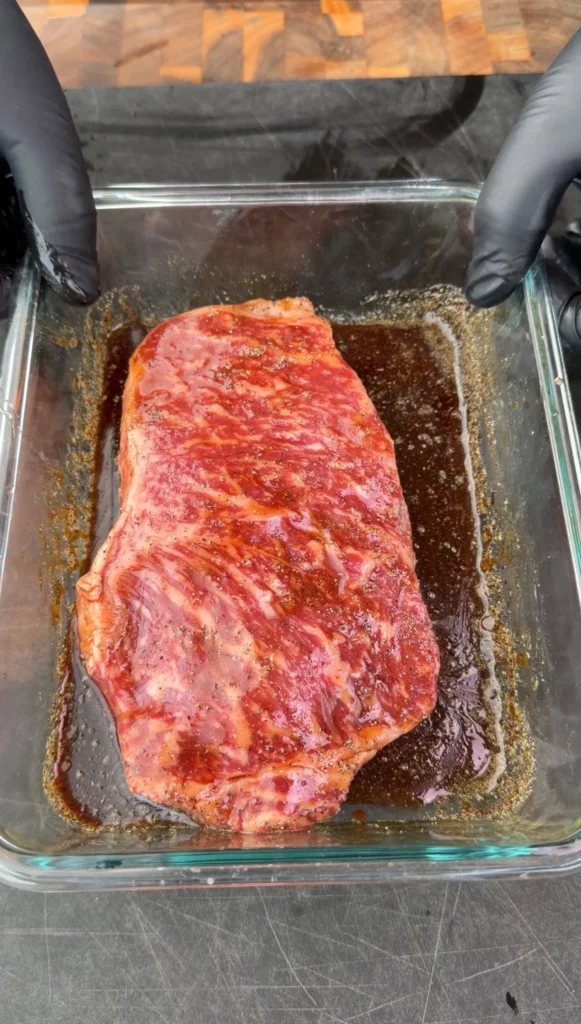
Remove the New York strip steaks from refrigeration and pat them completely dry with paper towels. Any surface moisture will dilute the marinade and prevent it from adhering properly. Place the steaks in a large zip-top bag or shallow dish. Pour the prepared marinade over the steaks, turning them to ensure every surface is coated evenly.
If using a zip-top bag, squeeze out as much air as possible before sealing – this ensures maximum contact between marinade and meat. If using a dish, turn the steaks every ten to fifteen minutes to redistribute the marinade. Marinate for at least thirty minutes at room temperature for the flavors to penetrate, or up to two hours refrigerated for deeper flavor. Don’t marinate longer than two hours or the acids and salt will start breaking down the meat’s texture too much, making it mushy rather than tender. If refrigerating, remove the steaks thirty minutes before grilling to take the chill off for more even cooking.
Prepare the Nam Jim Jaew Dipping Sauce
While the steaks marinate, make the Crying Tiger dipping sauce so the flavors have time to meld. In a small bowl, combine the fish sauce, lime juice, toasted rice powder if using, chili flakes, brown sugar, and minced garlic. Whisk together until the brown sugar dissolves completely. The mixture will be thin and liquid – that’s correct. The toasted rice powder won’t dissolve but will remain suspended in the liquid, adding texture and nutty flavor.
Add the chopped cilantro and finely chopped green onions, stirring to distribute them evenly throughout the sauce. Taste and adjust the balance – it should be aggressively salty from the fish sauce, bright and sour from lime juice, subtly sweet from brown sugar, and noticeably spicy from chili flakes. The sauce should taste too intense on its own because it’s meant to be used sparingly with the mild beef. Cover and refrigerate until serving time. The sauce will improve as it sits, with the garlic mellowing and the flavors melding. It can be made up to a day ahead.
Prepare the Charcoal Grill for Two-Zone Cooking
Light your charcoal using a chimney starter filled with charcoal briquettes or lump charcoal. Let the coals burn until they’re covered with a thin layer of white ash and glowing red underneath – this indicates they’ve reached maximum temperature, typically around 700°F at grate level. This takes about fifteen to twenty minutes depending on your charcoal type and weather conditions.
Once the coals are ready, carefully pour them all onto one side of your grill, creating a two-zone fire with intense direct heat on one side and no coals on the other side for indirect cooking. Replace the cooking grate and let it preheat for five minutes. Clean the grates thoroughly with a grill brush – any debris will stick to the sugary marinade and create off flavors. Lightly oil the grates by dipping a folded paper towel in neutral oil and using tongs to rub it across the hot grates. Have your steaks, tongs, instant-read thermometer, and a plate ready before you start grilling.
Forward Sear Over Direct Heat
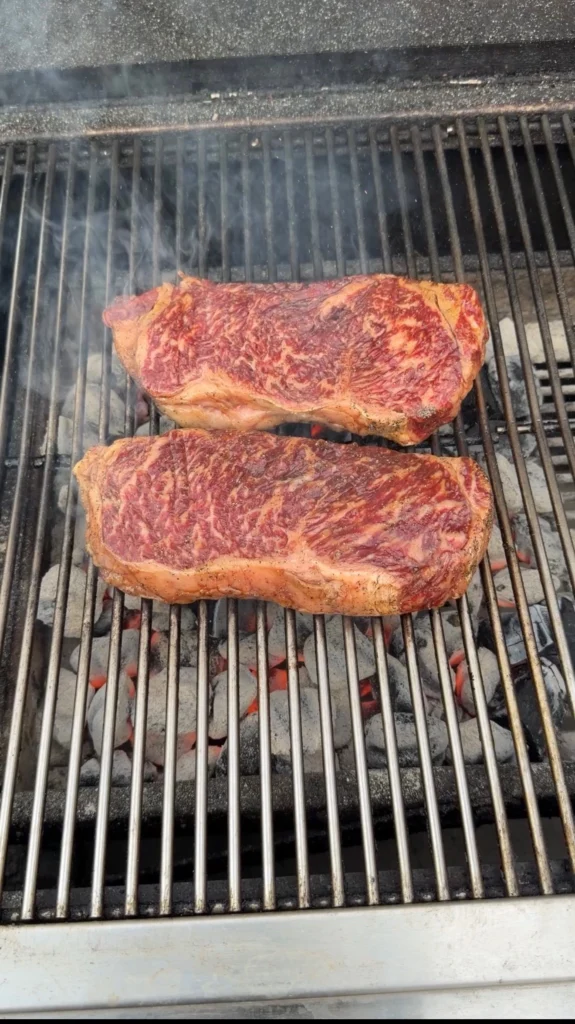
Remove the marinated steaks from the bag or dish, letting excess marinade drip off but don’t wipe them dry – that sticky coating will caramelize beautifully. Place the steaks directly over the hottest part of the coals on your two-zone fire. You should hear aggressive sizzling immediately. Close the grill lid briefly if needed to create an oven effect, but open it if flare-ups become excessive.
Let the steaks sear undisturbed for one to two minutes on the first side. Resist the urge to move or peek at them – they need time to develop a proper crust. The marinade’s sugars will caramelize and may create some flames as fat renders and drips onto the coals. Small flare-ups add desirable char, but spray water on excessive flames that threaten to blacken the meat. After one to two minutes, use tongs to flip the steaks to the second side and sear another one to two minutes. You’re looking for a deep mahogany crust with some charred spots and defined grill marks. The steaks won’t be cooked through yet – this is just crust development.
Finish Cooking Over Indirect Heat
After searing both sides, move the steaks to the cool side of the grill with no coals underneath. This indirect zone cooks the steaks gently through without creating more char. Close the grill lid to maintain heat and create an oven-like environment. Cook for three to five minutes depending on desired doneness and steak thickness, flipping once halfway through.
Start checking internal temperature after three minutes by inserting an instant-read thermometer into the thickest part of each steak. For medium-rare, pull the steaks at 130°F – they’ll rise to 135°F during resting. For medium, pull at 140°F to reach 145°F after resting. The timing varies significantly based on steak thickness, starting temperature, and grill heat, so always use temperature rather than time as your guide. The steaks should feel firm but still have give when pressed. Once they reach your target temperature minus five degrees, remove them immediately to a cutting board or plate.
Rest and Slice Against the Grain
Let the steaks rest on a cutting board for five to ten minutes loosely tented with foil. This rest allows the proteins to relax and reabsorb juices that were pushed to the exterior during cooking. Cutting immediately would cause all those juices to run out onto the board instead of staying in the meat. The internal temperature will rise about five degrees during this rest, finishing the cooking with gentle carryover heat.
After resting, identify the grain of the meat – the direction the muscle fibers run. On strip steaks, the grain typically runs lengthwise from one end to the other. Using a sharp knife, slice the steak crosswise against the grain into quarter-inch thick slices. Cutting against the grain shortens the muscle fibers, making each bite more tender. Slicing with the grain would create chewy, stringy pieces no matter how well you cooked the steak. Arrange the sliced steak on a serving platter, fanning out the pieces to show the pink interior and charred exterior.
Serve with Sticky Rice and Dipping Sauce
Serve the sliced Crying Tiger steak immediately while still warm with the nam jim jaew dipping sauce in a small bowl alongside. Provide sticky rice (Thai-style glutinous rice) on the side – the traditional accompaniment that balances the intensely flavored meat and sauce. To eat Thai-style, take a small piece of steak, dip it lightly in the sauce, and eat it with a bite of sticky rice.
The sauce should be used sparingly – a light dip is enough to add flavor without overwhelming the beef. Some diners prefer more sauce, others less, so let each person control their own dipping. Garnish the platter with fresh cilantro, lime wedges, and sliced cucumber if desired. The cool, mild vegetables provide refreshing contrast to the hot, salty-sour meat and sauce. Any leftover steak can be refrigerated and eaten cold the next day – it’s delicious in salads or wrapped in lettuce with fresh herbs.
FAQ
What if I can’t find toasted rice powder?
You can make your own by toasting uncooked jasmine rice in a dry skillet over medium heat until golden brown and fragrant, about five to seven minutes, stirring constantly. Let it cool, then grind it in a spice grinder or mortar and pestle to a coarse powder. Alternatively, skip it – the sauce will still be delicious, just less authentic and without the nutty, earthy character that toasted rice provides.
Can I use a gas grill instead of charcoal?
You can, but charcoal creates the authentic smoky char that defines Crying Tiger. If using gas, preheat to high heat and follow the same forward sear technique – sear over direct heat, then move to indirect. The results will be good but lack the smoke and intense char that charcoal provides. Consider using a cast iron skillet on your gas grill for better searing.
How spicy is the dipping sauce?
As written with one teaspoon of chili flakes, the heat is moderate – noticeable but not overwhelming. The fish sauce and lime juice balance the heat while the sugar mellows it slightly. For milder sauce, use half a teaspoon of chili flakes. For genuinely spicy, use two teaspoons or add fresh Thai bird chilies. You can always start mild and add more heat at the table.
Can I marinate the steak overnight?
It’s not recommended. The combination of salt from soy sauce and fish sauce plus acid from lime juice will over-tenderize the meat if left too long, making the texture mushy rather than tender. Thirty minutes to two hours is ideal – long enough for flavor penetration without compromising texture. If you want to prep ahead, make the marinade and sauce the day before but only marinate the steaks within two hours of cooking.
What other cuts of beef work for Crying Tiger?
Ribeye, sirloin, or flank steak all work well. Ribeye is richer and more marbled, sirloin is leaner and more affordable, and flank steak is traditional in Thailand but requires careful slicing against the grain for tenderness. Avoid very thick steaks – you want cuts that are one to one and a half inches thick that can develop crust quickly without overcooking inside.
Conclusion
Crying Tiger steak proves that bold marinades and traditional dipping sauces can transform simple grilled beef into an unforgettable eating experience. The Thai-style marinade of soy sauce, fish sauce, and oyster sauce creates layers of savory depth that penetrate the meat, while the nam jim jaew dipping sauce provides explosive flavors that balance salty, sour, sweet, and spicy in perfect harmony. The charcoal grilling technique with forward searing develops the intense char that defines this dish while keeping the interior juicy and tender.
What makes this Thai grilled steak recipe so successful is how each element serves a specific purpose. The marinade tenderizes while adding umami depth, the charcoal creates authentic smoke and char, and the dipping sauce provides customizable flavor intensity that lets diners control their experience. Slicing against the grain creates tender bites that soak up sauce perfectly, while serving with sticky rice provides balance that makes this a complete meal.
This Crying Tiger recipe works beautifully for exploring Southeast Asian flavors or just making incredibly tasty grilled steak. The technique is straightforward enough for beginners but delivers results that impress experienced cooks. Master this dish and you’ll have a signature recipe that transports your backyard to the streets of Bangkok with its bold, balanced flavors and authentic Thai character.
Ready to Take Your Cooking to the Next Level?
This is where I keep all my most-used products, gear, and favorite cooking tools — check it out:
🔥 View My Cooking Gear & ToolsRecipe Categories
If you loved this recipe, you’ll find more to savor across our diverse categories. From beef to pork, chicken to turkey, seafood to appetizers, there’s a wealth of flavors waiting for you. Explore them all at CWFeats.