Cherry Smoked Cheeseburger Skillet with Homemade Cheese Sauce
Recipe Overview: Cherry Smoked Cheeseburger Skillet Ground beef burgers smoked over cherry wood, cut in half and served in cast iron skillet with homemade Velveeta-cheddar cheese sauce and crispy fries
Prep Time: 20 min | Cook Time: 45 min | Total Time: 1 hr 5 min | Servings: 4 | Calories: 980/serving
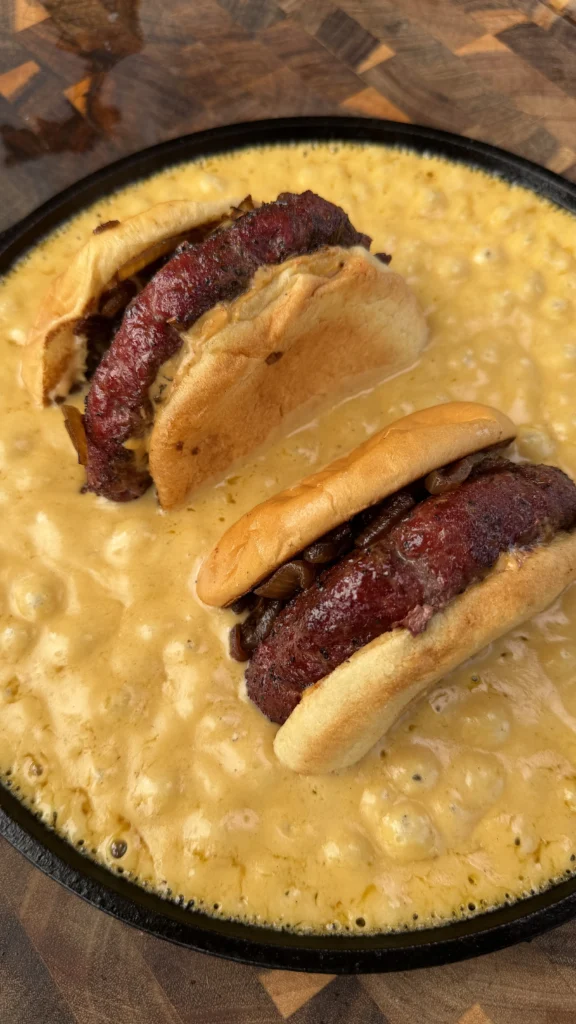
Cherry smoked cheeseburger skillet transforms classic burgers into shareable comfort food through unique presentation and homemade cheese sauce. These smoked burgers start as seasoned 80/20 ground beef patties cooked over cherry wood until they reach your preferred doneness with melted cheddar on top. The burgers then get cut in half and arranged cut-side down in a cast iron skillet filled with rich, creamy cheese sauce made from a butter-flour roux, whole milk, Velveeta, and sharp cheddar. Crispy fries get piled on top and drizzled with more cheese sauce, creating an over-the-top presentation that’s meant for sharing straight from the skillet.
What makes this smoked cheeseburger skillet recipe special is how the mild, sweet cherry wood smoke enhances rather than overwhelms the beef. Cherry wood provides subtle fruity notes that complement the savory burger without the aggressive smoke flavor that heavier woods would create. The homemade cheese sauce combines Velveeta’s smooth melting properties with sharp cheddar’s flavor complexity, creating a sauce that stays creamy and pourable without breaking or becoming grainy. The cast iron skillet presentation turns individual burgers into communal food that encourages gathering around the table.
This cheeseburger skillet with homemade cheese sauce works brilliantly for game day gatherings, casual dinners, or any time you want comfort food that impresses. The technique of smoking burgers adds depth that pan-fried or grilled versions lack, while the skillet presentation creates visual impact that turns simple burgers into an event. The combination of smoky beef, creamy cheese sauce, and crispy fries delivers multiple textures and temperatures in every bite.
Why Cherry Wood for Burgers
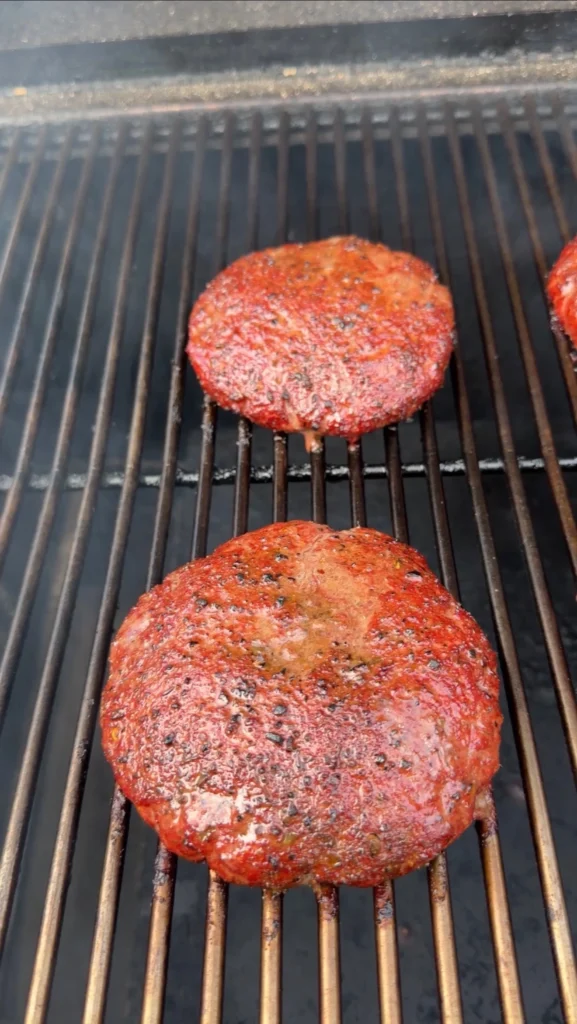
Cherry wood provides the mildest, sweetest smoke of commonly available woods, making it ideal for beef burgers that cook relatively quickly. Unlike hickory or mesquite which can overpower ground beef’s delicate flavor during short cooking times, cherry adds subtle fruity undertones that enhance without dominating. The light smoke also won’t compete with the rich cheese sauce, allowing all the components to shine rather than creating competing flavors.
Cherry wood burns clean and produces consistent, thin blue smoke that’s perfect for proteins that spend less than an hour on the smoker. Heavy smoke from stronger woods can make burgers taste acrid or bitter, especially if they cook longer than expected while waiting for the cheese sauce. Cherry’s gentle character means you can’t really over-smoke burgers even if timing gets extended.
The color development from cherry smoke is also appealing – it creates an attractive reddish-mahogany hue on the burger’s surface that looks appetizing in the final skillet presentation. This visual appeal matters when you’re serving food family-style where everyone sees the whole presentation before digging in.
Understanding 80/20 Ground Beef
The 80/20 ground beef ratio – eighty percent lean meat to twenty percent fat – is the gold standard for burgers because it provides the perfect balance of flavor and moisture. The twenty percent fat content keeps burgers juicy during cooking while providing the rich, beefy flavor that leaner ground beef lacks. During smoking, some of this fat renders out, basting the burger from within and preventing it from drying out in the dry heat environment.
Leaner ground beef like 90/10 or 93/7 creates dry, crumbly burgers that lack flavor and can turn mealy in texture. The fat in 80/20 ground beef also helps bind the meat together, creating burgers that hold their shape on the smoker without falling apart. When you bite into a properly cooked 80/20 burger, you should get juice running down your chin – that’s the rendered fat mixed with meat juices creating the signature burger experience.
The fat content also matters for smoke absorption. Fat is an excellent carrier for smoke flavor, meaning 80/20 burgers develop more pronounced smoke character than leaner versions. The rendered fat on the burger’s surface also helps browning and crust development, creating textural contrast between the crispy exterior and juicy interior.
The Science of Proper Cheese Sauce
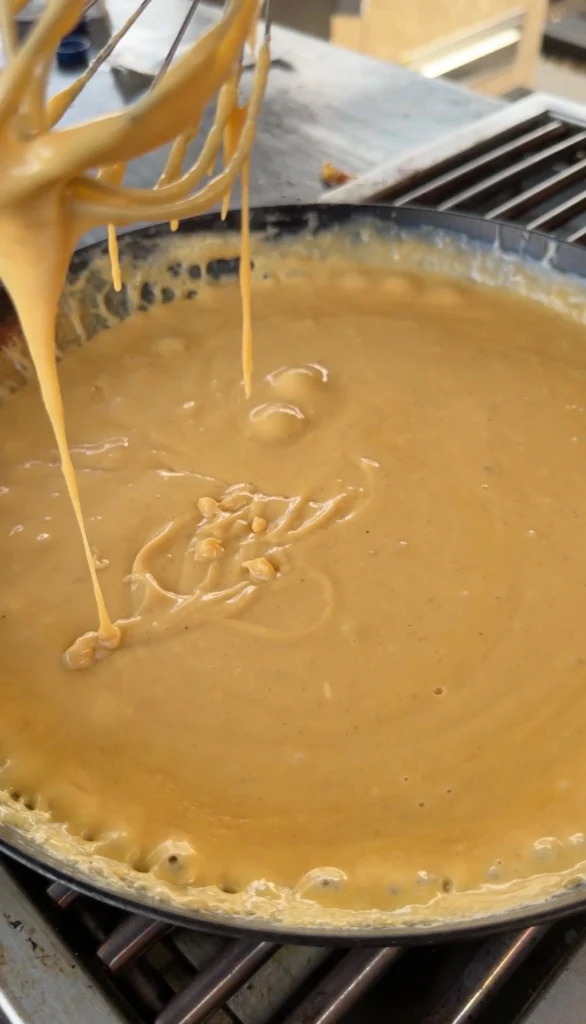
Homemade cheese sauce starts with a roux – equal parts butter and flour cooked together to create a thickening base. The roux serves two purposes: it thickens the milk into a creamy base and it prevents the cheese from breaking and becoming greasy. When cheese melts, the proteins can separate from the fat, creating that grainy, oily texture that ruins cheese sauces. The flour in the roux contains starch that surrounds the cheese proteins, keeping everything emulsified and smooth.
The technique of whisking flour into melted butter and cooking it briefly before adding liquid is crucial. This cooking step eliminates the raw flour taste that would make the sauce taste pasty. Thirty seconds to one minute of cooking is enough – you want the roux to bubble and foam slightly but not brown, which would add unwanted color and nutty flavor to a cheese sauce that should taste purely of dairy and cheese.
Warm milk incorporates into the roux more easily than cold milk, creating a smoother sauce with fewer lumps. As you whisk the milk into the roux, the mixture will seem thin at first, then suddenly thicken as it reaches simmering temperature and the starch granules swell. This thickening happens around 180°F, so patience is important – keep whisking and the sauce will come together.
Why Velveeta Makes Better Cheese Sauce
Velveeta gets dismissed as “processed cheese product” by food snobs, but it serves a crucial purpose in cheese sauces that natural cheese can’t match. Velveeta contains emulsifying salts that keep it perfectly smooth and creamy when melted, never breaking or becoming grainy no matter how long it sits or how many times it’s reheated. These sodium citrate and sodium phosphate salts are the secret to Velveeta’s superior melting properties.
Natural cheddar cheese alone would create a sauce that’s flavorful but prone to breaking – the proteins would clump together and separate from the fat, creating a grainy, oily mess. By combining Velveeta with sharp cheddar, you get the best of both worlds: Velveeta’s smooth, stable texture plus cheddar’s sharp, complex flavor. The ratio of Velveeta to cheddar can be adjusted based on preference, but roughly equal amounts creates good balance.
Smoked paprika adds subtle smokiness that reinforces the cherry wood smoke on the burgers while contributing warm, earthy notes that complement both the beef and cheese. Just half a teaspoon is enough – too much and the sauce tastes more like paprika than cheese.
The Cast Iron Skillet Presentation
Serving in a cast iron skillet transforms individual burgers into shareable comfort food that encourages communal eating. The cast iron retains heat beautifully, keeping the cheese sauce warm and fluid throughout the meal rather than congealing as it would on a regular plate. The rustic, casual presentation also signals that this is relaxed, fun food meant to be enjoyed with your hands rather than formal dining.
Cutting the burgers in half and arranging them cut-side down in the cheese sauce serves both practical and visual purposes. The cut side absorbs cheese sauce, flavoring the burger throughout rather than just coating the exterior. It also creates an interesting cross-section view where diners can see the burger’s doneness and the layers of beef and cheese. The halved burgers are also easier to grab and eat than trying to pick up whole burgers swimming in cheese sauce.
Piling fries on top adds textural contrast – the crispy fries provide crunch against the soft burger and creamy sauce. Drizzling more cheese sauce over the fries creates indulgent excess that defines this dish. Everything in the skillet gets better as components mingle – fries soak up cheese sauce, cheese sauce picks up burger juices, and smoky beef flavor permeates everything.
Ingredients
For the Burgers:
- 2 lbs ground beef (80/20)
- 1 tsp salt
- ½ tsp black pepper
- 1 tsp garlic powder
- 4 slices cheddar cheese
- 1 large onion, sliced
- 4 brioche buns, buttered & toasted
Cheese Sauce:
- 4 tbsp butter
- 4 tbsp all-purpose flour
- 2 cups whole milk (warm)
- 8 oz Velveeta, cubed
- 1 cup shredded cheddar
- ½ tsp smoked paprika
- Salt & pepper to taste
For Serving:
- 1 bag frozen fries (~4 cups)
- Butter or mayo for toasting buns
Step-by-Step Instructions
Preheat the Smoker with Cherry Wood
Load your smoker with cherry wood chunks or pellets depending on your smoker type. Cherry provides mild, sweet smoke that enhances beef without overwhelming it. Preheat the smoker to 250°F with the lid closed, allowing it to reach stable temperature and produce clean, thin blue smoke rather than thick white smoke. This moderate temperature is hot enough to cook burgers through while giving them time to absorb smoke flavor without burning.
Make sure you have enough fuel for approximately forty-five minutes of cooking time, though exact duration will vary based on desired doneness. Clean the grill grates with a brush and lightly oil them to prevent sticking. Have your instant-read thermometer ready for checking burger temperatures accurately.
Form and Season the Burger Patties
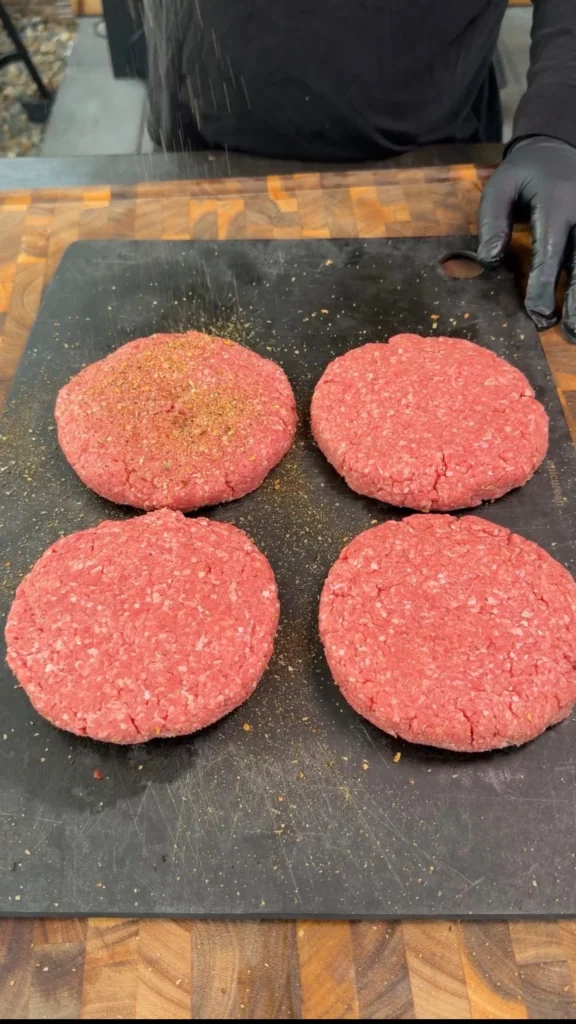
Divide the two pounds of 80/20 ground beef into four equal portions of about eight ounces each. Handle the meat gently – overworking ground beef makes it tough and dense rather than tender and juicy. Form each portion into a patty about three-quarters of an inch thick and slightly wider than your buns, as they’ll shrink during cooking.
Use your thumb to create a shallow dimple in the center of each patty. This indentation prevents the burgers from puffing up into a ball during cooking, keeping them flat for even cooking and better bun fit. Season both sides of each patty generously with salt, black pepper, and garlic powder. The seasoning should be visible on the surface – don’t be shy, as some will fall off during handling.
Let the seasoned patties sit at room temperature while the smoker preheats, about ten to fifteen minutes. This takes the chill off and promotes more even cooking. Cold burgers straight from the refrigerator will cook unevenly with overcooked exteriors before the centers come up to temperature.
Smoke the Burgers to Desired Doneness
Once the smoker reaches 250°F and is producing clean smoke, place the seasoned burger patties directly on the grill grates, spacing them at least two inches apart for air circulation. Close the smoker lid and cook without opening frequently – every time you peek, you lose heat and smoke.
Begin checking internal temperature after fifteen to twenty minutes by inserting an instant-read thermometer horizontally into the center of a burger. You’re looking for specific temperatures based on your preferred doneness: 120-125°F for rare with a very pink center, 130-135°F for medium-rare with a warm red center, 140-145°F for medium with a pink center, 150-155°F for medium-well with a slightly pink center, or 160°F and above for well-done with no pink remaining.
When the burgers are about five degrees below your target temperature, place a slice of cheddar cheese on top of each patty. Close the lid and let them cook the final few degrees while the cheese melts. The residual heat will bring them to target temperature while the cheese becomes gooey and melted. Remove the burgers from the smoker when they reach your desired temperature and set them aside on a plate loosely tented with foil while you prepare the cheese sauce.
Make the Homemade Cheese Sauce
While the burgers smoke, prepare the cheese sauce. In a medium saucepan, melt the four tablespoons of butter over medium heat. Once the butter is completely melted and bubbling, add the four tablespoons of all-purpose flour. Whisk constantly for thirty seconds to one minute, until the mixture becomes smooth and bubbly. This is your roux – the thickening base for the sauce. Cook just long enough to eliminate raw flour taste without browning.
Slowly pour in the two cups of warm whole milk while whisking constantly. Add the milk in a steady stream rather than all at once – this prevents lumps from forming. Continue whisking as the mixture heats. It will seem thin at first, then suddenly thicken as it reaches simmering temperature around 180°F. Once thickened to a creamy consistency that coats the back of a spoon, reduce heat to low.
Add the cubed Velveeta and shredded cheddar to the hot milk mixture. Stir constantly with a wooden spoon or silicone spatula until both cheeses are completely melted and incorporated into a smooth, uniform sauce. The Velveeta will melt first, creating a creamy base, then the cheddar will melt into it. Stir in the smoked paprika, salt, and pepper to taste. The sauce should be thick enough to coat a spoon but still pourable – like thick cream. If it’s too thick, whisk in a tablespoon of milk at a time until you reach the desired consistency. Keep the sauce warm over very low heat, stirring occasionally to prevent a skin from forming.
Sauté the Onions
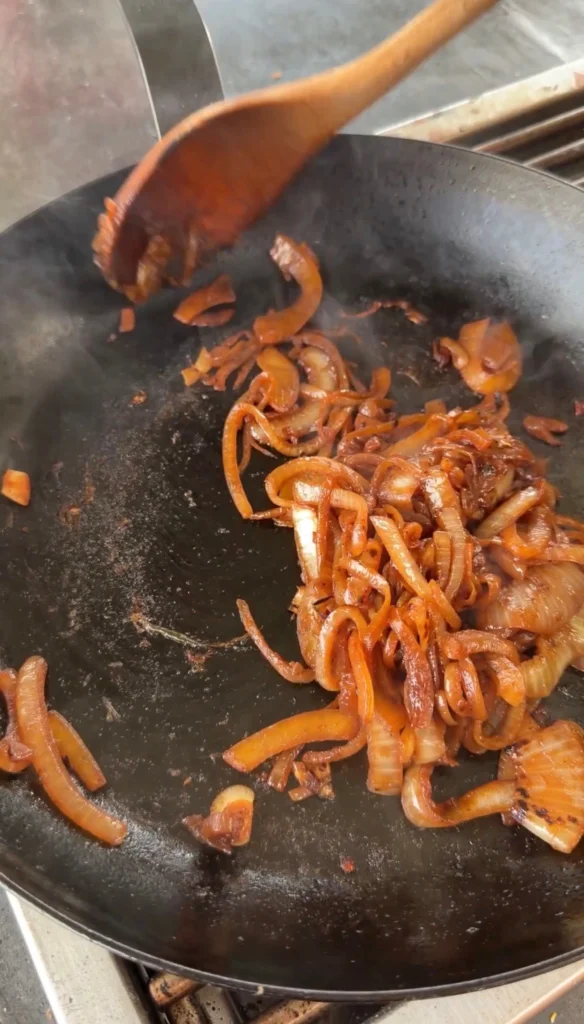
While the cheese sauce stays warm, heat a skillet over medium heat with a tablespoon of butter or oil. Slice the large onion into half-moon shapes about quarter-inch thick. Add the sliced onions to the hot skillet and cook, stirring occasionally, for ten to fifteen minutes until they’re softened and golden brown with some caramelization. Season with a pinch of salt and pepper. The caramelized onions add sweet, savory depth that complements the smoky burgers. Set aside and keep warm.
Cook the Fries
Prepare the frozen fries according to package directions – whether that’s baking in the oven, air frying, or deep frying. You want them hot and crispy for serving. About four cups of cooked fries will be enough to pile on top of the burger skillet. Season the cooked fries with salt while they’re hot so it adheres properly. Keep them warm until ready to assemble the skillet.
Toast the Brioche Buns
Slice the four brioche buns in half and spread the cut sides with softened butter or mayonnaise. Heat a large skillet or griddle over medium heat and place the buns cut-side down. Toast for two to three minutes until golden brown and crispy. The butter or mayo creates a barrier that prevents the buns from getting soggy when dipped in cheese sauce. Set the toasted buns aside for serving.
Assemble the Cheeseburger Skillet
Select a cast iron skillet large enough to hold the burgers and fries – a twelve-inch skillet works well for four burger halves. Pour a generous layer of hot cheese sauce into the bottom of the skillet, about half an inch deep. The sauce should cover the entire bottom surface.
Take each smoked burger and cut it in half using a sharp knife. Carefully place the burger halves cut-side down into the cheese sauce in the skillet, arranging them so they’re partially submerged but the tops are visible. The cut side should be sitting in the cheese sauce, absorbing flavor. Leave a little space between each burger half for the fries.
Pile the hot, crispy fries on top of and around the burgers, filling any gaps in the skillet. The fries should be piled high for dramatic presentation. Drizzle more hot cheese sauce over the top of the fries, letting it cascade down and pool around the burgers. Scatter the sautéed onions over everything for color and flavor. The finished skillet should look indulgent and over-the-top, with cheese sauce visible throughout, steam rising from the hot components, and everything glistening.
Serve Family-Style
Place the hot cast iron skillet in the center of the table on a trivet or heat-resistant surface – the skillet will be extremely hot. Arrange the toasted brioche buns around the skillet. Provide serving utensils and let everyone grab burger halves, fries, and buns to build their own combinations. Some people will make traditional burgers by placing halves on buns, while others will eat directly from the skillet with forks.
The beauty of this presentation is its casual, communal nature – everyone reaches in, components get mixed together, and the meal becomes interactive rather than plated and formal. The cheese sauce stays warm in the cast iron throughout the meal, keeping everything at perfect eating temperature. Encourage diners to dip their buns in the cheese sauce and pile on extra onions and fries.
FAQ
Can I cook the burgers on a regular grill instead of a smoker?
Yes, though you’ll lose the smoke flavor that makes this recipe special. Grill over medium-high direct heat for about four to five minutes per side until they reach your desired internal temperature. The presentation and cheese sauce will still be delicious, just without the cherry wood smoke character. Consider adding a teaspoon of liquid smoke to the cheese sauce for a hint of smokiness.
What if my cheese sauce breaks or gets grainy?
If the sauce breaks and the fat separates, remove it from heat and whisk in a tablespoon of warm milk vigorously. This can often bring it back together. To prevent breaking, make sure to use low heat once the cheese is added and avoid boiling the sauce after the cheese melts. The Velveeta should help stabilize it, but overheating can still cause problems.
Can I use different cheese in the sauce?
Yes, but keep the Velveeta for its superior melting properties. You can swap the cheddar for pepper jack, Gruyère, or smoked gouda for different flavors. Just maintain roughly equal amounts of Velveeta to natural cheese for proper texture. All-natural cheese without Velveeta will be more prone to breaking and graininess.
How do I reheat leftover cheese sauce?
Reheat gently in a saucepan over low heat, whisking constantly and adding a splash of milk to restore the proper consistency. Cheese sauce thickens significantly when refrigerated, so you’ll need to thin it out. Microwave reheating works but can cause hot spots that make the sauce break, so stovetop is preferred.
Can I make this recipe without a smoker?
Yes, pan-fry or grill the burgers using your preferred method. You won’t have the smoke flavor, but the cheese sauce and skillet presentation still create a memorable meal. Season the burgers with a bit of smoked paprika or add liquid smoke to the cheese sauce to approximate smoke flavor without a smoker.
Conclusion
Cherry smoked cheeseburger skillet proves that creative presentation can transform familiar ingredients into something memorable and shareable. The mild cherry wood smoke adds subtle depth to the burgers without overwhelming them, while the homemade cheese sauce combining Velveeta and sharp cheddar creates luxurious creaminess that stays smooth throughout the meal. The cast iron skillet presentation turns individual burgers into communal comfort food that encourages gathering and sharing.
What makes this smoked cheeseburger skillet recipe successful is how each component serves a purpose. The 80/20 ground beef provides the juiciness and flavor that defines great burgers, the roux-based cheese sauce stays creamy without breaking, the cherry smoke adds complexity, and the cast iron retains heat while creating rustic visual appeal. The combination of crispy fries, smoky beef, and creamy cheese sauce delivers multiple textures and temperatures that make this more interesting than standard burgers.
This cheeseburger skillet with homemade cheese sauce works beautifully for casual gatherings where you want comfort food that impresses. The technique is straightforward enough for beginners but delivers results that look and taste restaurant-quality. Master the homemade cheese sauce and you’ll use it for everything from nachos to mac and cheese, while the skillet presentation format can be adapted to other proteins and flavors beyond burgers.
Ready to Take Your Cooking to the Next Level?
This is where I keep all my most-used products, gear, and favorite cooking tools — check it out:
🔥 View My Cooking Gear & ToolsRecipe Categories
If you loved this recipe, you’ll find more to savor across our diverse categories. From beef to pork, chicken to turkey, seafood to appetizers, there’s a wealth of flavors waiting for you. Explore them all at CWFeats.