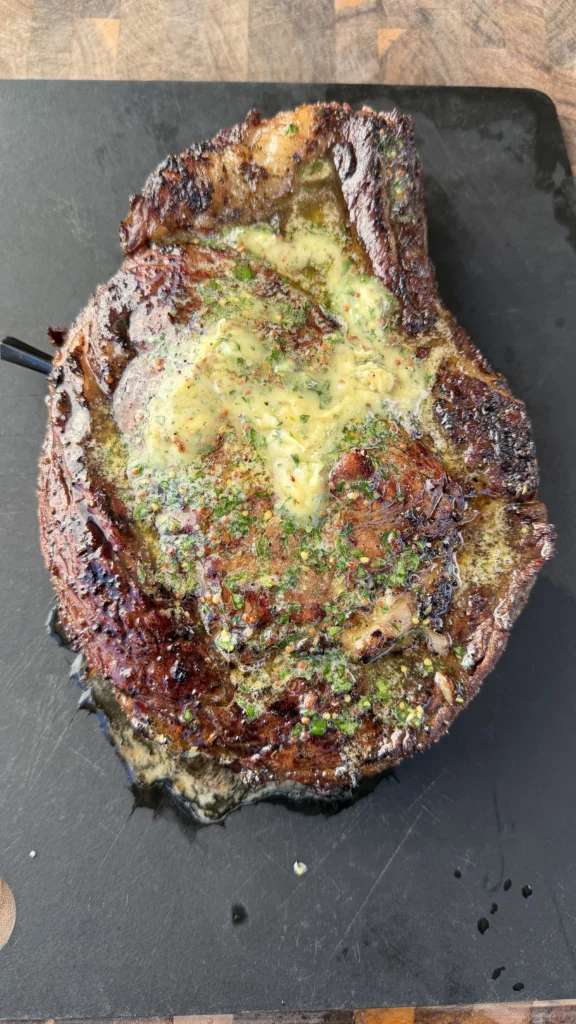
Cowboy steak with truffle honey butter elevates a massive bone-in ribeye through careful dry brining, high-heat searing, and luxurious compound butter that melts into every crevice of the perfectly cooked beef. This recipe starts with a cowboy ribeye – essentially a bone-in ribeye with an extra-long rib bone attached for dramatic presentation – that gets generously salted and refrigerated uncovered for at least two hours or ideally overnight. This dry brine seasons the meat throughout while drying the surface for better crust development. The steak gets seasoned with black pepper, garlic powder, and additional steak seasoning before hitting a scorching hot grill for the forward sear method – intense direct heat first to build crust, then gentle indirect heat to finish cooking to a perfect medium-rare.
What makes this truffle butter steak special is the compound butter that crowns the finished beef. Softened butter gets mixed with truffle oil, honey, whole grain mustard, lemon juice, and fresh parsley to create a complex condiment that’s simultaneously earthy, sweet, tangy, and herbaceous. The truffle oil provides that distinctive mushroom-like aroma that screams luxury, while honey adds subtle sweetness that balances the truffle’s intensity. As the butter melts over the hot steak, it creates a glossy sauce that pools around the sliced beef, adding richness to every bite. This cowboy ribeye recipe delivers steakhouse-quality results that consistently impress while being surprisingly straightforward to execute at home.
Understanding the Cowboy Cut Ribeye
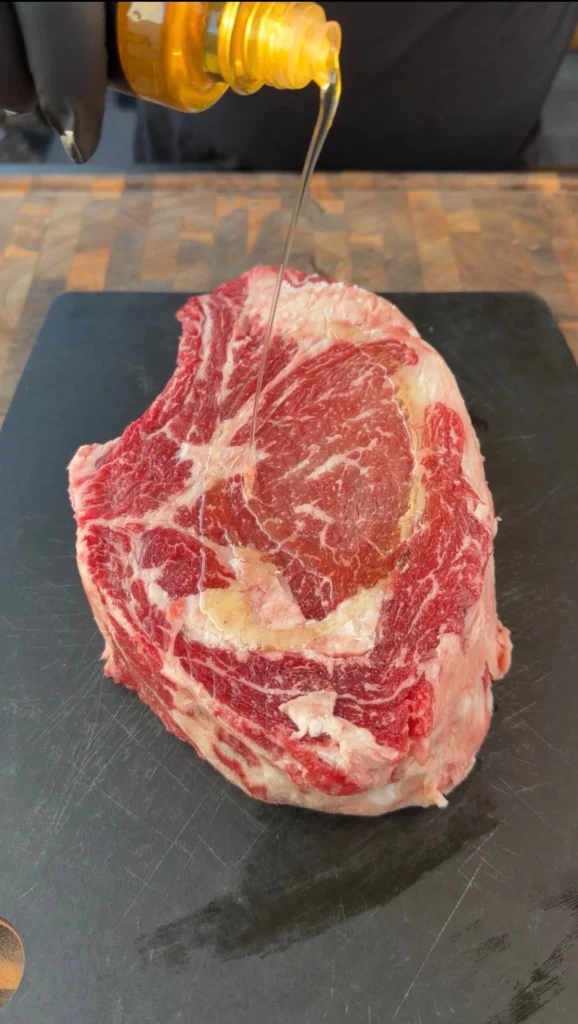
The cowboy cut ribeye is a bone-in ribeye steak with an extended rib bone left intact, typically measuring eight to ten inches long. This “frenched” bone – where the meat has been scraped clean from the bone for presentation – gives the steak its distinctive tomahawk-like appearance that makes for dramatic plating. The bone serves both aesthetic and functional purposes during cooking. While the bone itself doesn’t add flavor through marrow or anything mystical, it does act as an insulator that slows cooking near the bone, creating a gradient of doneness from the well-done exterior to the perfect medium-rare center.
The ribeye portion of a cowboy steak comes from the rib section of the beef, specifically ribs six through twelve. This area contains exceptional marbling – those white streaks of intramuscular fat that melt during cooking and create the ribeye’s characteristic juicy, buttery texture. A quality cowboy steak should show abundant marbling throughout with a nice fat cap on one edge. The steak’s thickness – typically two inches or more – and substantial weight (two and a half to three and a half pounds) means this is truly a special occasion cut meant for sharing or for those with hearty appetites. The combination of marbling, thickness, and bone makes the cowboy cut one of the most impressive steaks you can grill.
The Science of Dry Brining
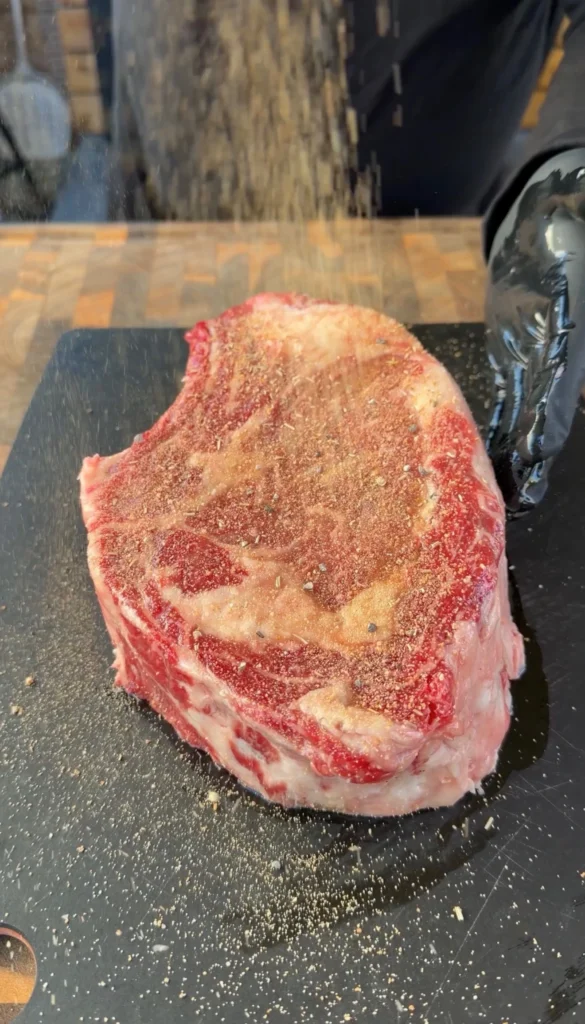
Dry brining – salting meat and letting it rest uncovered in the refrigerator – accomplishes two critical goals that dramatically improve steak quality. First, the salt draws moisture from the meat’s surface through osmosis, then dissolves in that moisture to create a concentrated brine. This brine then works its way back into the meat through reverse osmosis, seasoning the steak throughout rather than just on the surface. The two-hour minimum allows some salt penetration, but overnight (twelve to twenty-four hours) is ideal for thorough seasoning. The salt also partially breaks down muscle proteins, making the meat more tender.
Second, the uncovered refrigeration dries the steak’s surface, which is crucial for developing proper crust during searing. When meat hits a hot grill, any surface moisture must evaporate before the Maillard reaction can begin creating that delicious brown crust. A wet steak will steam rather than sear, producing pale, grey exterior instead of the deep mahogany crust you want. The refrigerator’s low humidity environment gradually wicks moisture from the exposed surface, leaving it dry and ready to sear immediately when it hits the hot grill. The surface should feel dry and slightly tacky to the touch after proper dry brining.
Building the Perfect Truffle Compound Butter
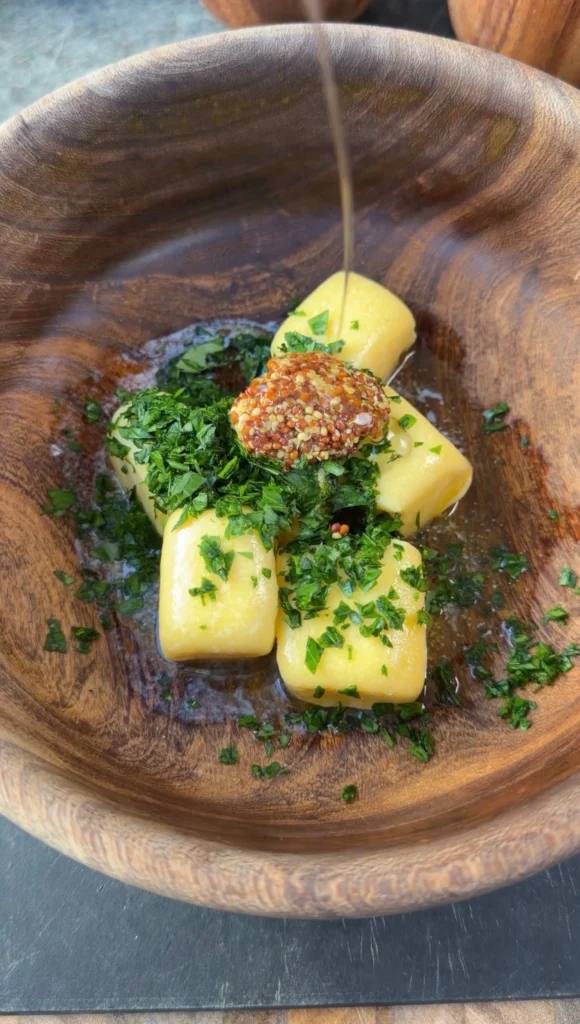
Truffle honey butter creates complex flavor that elevates the steak beyond simple salt and pepper seasoning. Real truffle oil – made by infusing oil with real truffles rather than synthetic compounds – provides that distinctive earthy, musky aroma that people associate with luxury dining. A little goes a long way – one teaspoon is enough to perfume the entire batch of butter without overwhelming it. Too much truffle oil becomes cloying and artificial-tasting. The honey adds subtle sweetness that balances the truffle’s earthiness while contributing viscosity that helps the melted butter cling to the steak.
Whole grain mustard provides tangy punch with interesting texture from the visible mustard seeds. The mustard’s acidity cuts through the butter’s richness and beef’s fattiness, preventing the overall dish from tasting too heavy. Lemon juice reinforces that acidic brightness while adding citrus aroma that lifts all the other flavors. Fresh parsley contributes herbal, slightly peppery notes with vibrant green color that makes the butter more visually appealing. Together, these ingredients create compound butter that tastes far more interesting than plain butter while still letting the beef remain the star.
Forward Sear vs. Reverse Sear Methods
The forward sear method – searing first over high heat, then finishing over indirect heat – works exceptionally well for thick steaks like cowboy ribeye. Searing over direct high heat (500-600 degrees Fahrenheit) for three to four minutes per side creates deep brown crust through Maillard reaction and partial caramelization. This crust provides both incredible flavor and textural contrast to the tender interior. Moving the steak to indirect heat (around 300-350 degrees ambient) allows gentle cooking to your target internal temperature without further darkening the exterior. The result is steak with crusty outside and evenly cooked, juicy interior.
The forward sear particularly suits cowboy steaks because their substantial thickness prevents the seared exterior from overcooking during the indirect finishing stage. Thinner steaks can overcook using this method because by the time the center reaches temperature, the outer layers have spent too long at high heat. But with a two-inch thick cowboy steak, the indirect stage takes twenty to thirty minutes, during which heat gradually penetrates toward the center while the outer layers stay in the “cooked but not overcooked” zone. The bone also helps by insulating one side, creating even more temperature gradient and doneness variation that ensures some portion is perfect for every preference.
Temperature Targets and Carryover Cooking
Understanding proper temperature targets and carryover cooking is essential for achieving perfect doneness. For medium-rare – the ideal doneness for well-marbled ribeye – remove the steak from the grill at 130 degrees Fahrenheit internal temperature. During the resting period, residual heat continues cooking the steak through carryover, potentially raising the temperature another five to ten degrees to 135-140 degrees. This is why you pull the steak several degrees before your target finished temperature rather than waiting until it reaches that temperature on the grill.
Use an instant-read thermometer inserted horizontally into the steak’s center, avoiding the bone which conducts heat differently than meat and gives false readings. Check temperature in multiple spots since thick steaks can have uneven doneness. The area nearest the bone typically reads five to ten degrees cooler than the center of the meat due to the bone’s insulating effect. If different areas show significantly different temperatures, continue cooking and rotate the steak’s position if needed to promote even heat distribution. For medium doneness, pull at 135-140 degrees. For rare, pull at 120-125 degrees. Remember that ribeye’s abundant marbling means it tastes better at medium-rare to medium than leaner cuts which can be enjoyed more rare.
Ingredients
For the Steak:
- 1 cowboy ribeye steak, about 2 inches thick (around 3 lbs)
- Kosher salt (for dry brine)
- 1 tbsp coarse black pepper
- 1 tbsp garlic powder
- Your favorite steak seasoning
- Truffle oil or high-heat cooking oil
For the Truffle Honey Butter:
- 4 oz unsalted butter, softened
- 1 tsp whole grain mustard
- 1 tsp truffle oil
- 1 tsp honey
- ½ tsp lemon juice
- 2 tsp chopped fresh parsley
Step-by-Step Instructions
Dry Brine the Cowboy Steak
Remove the cowboy ribeye from its packaging and pat it completely dry with paper towels, absorbing any surface moisture. Place the steak on a wire rack set over a sheet pan or plate – the rack elevates the steak, allowing air circulation around all surfaces which helps with drying. Generously season both sides of the steak with kosher salt, using more than you think you need. A thick steak this size needs approximately one tablespoon of salt total, distributed across both sides. Don’t be shy – much of this salt will be absorbed into the meat rather than staying on the surface.
Place the salted steak, still on its rack, uncovered in the refrigerator. Refrigerate for at minimum two hours but ideally overnight (twelve to twenty-four hours). During this time, the salt will draw moisture to the surface, dissolve in that moisture, then work its way back into the meat, seasoning throughout. The exposed surface will also dry in the refrigerator’s low-humidity environment. After the dry brine period, the steak’s surface should feel dry and slightly tacky rather than wet. If any moisture has pooled on the surface, pat it dry with paper towels before proceeding.
Season the Steak
Remove the dry-brined steak from the refrigerator thirty minutes before grilling to bring it closer to room temperature. Starting with a steak closer to room temperature promotes more even cooking – a cold steak straight from the refrigerator will have a larger temperature gradient between exterior and interior. Pat the surface dry once more with paper towels if any moisture appeared during warming.
Drizzle truffle oil or another high-heat cooking oil (avocado, grapeseed, or refined olive oil) over both sides of the steak, using your hands to spread it into a thin, even coating. The oil helps seasonings adhere and promotes better crust development. Season both sides generously with one tablespoon of coarse black pepper and one tablespoon of garlic powder, distributing evenly. Add your favorite steak seasoning according to its instructions – if it contains salt, use it lightly since the steak is already salted from dry brining. Press the seasonings gently into the meat to help them adhere. Let the seasoned steak sit at room temperature while you prepare the compound butter and preheat the grill.
Make the Truffle Honey Butter
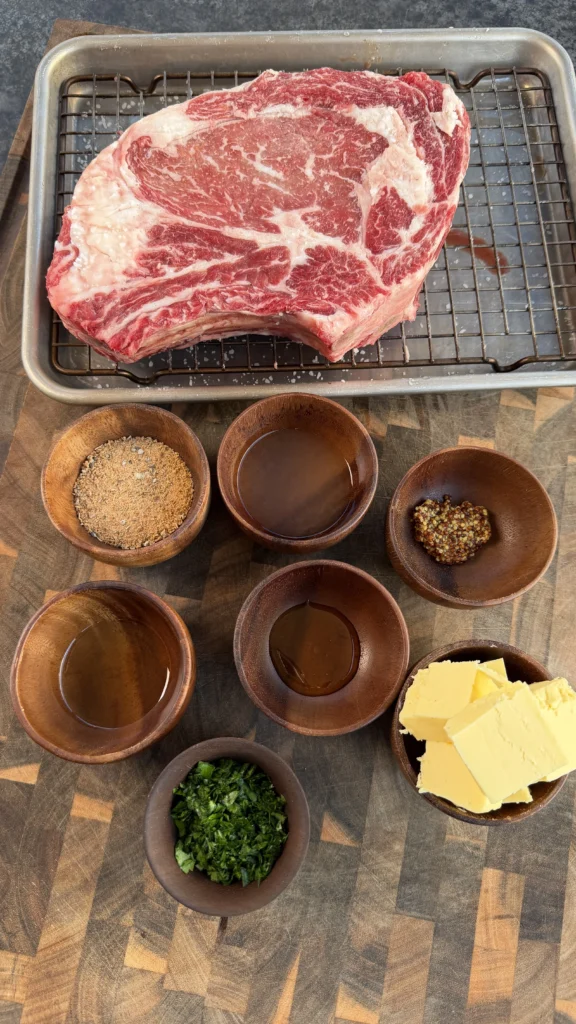
In a small mixing bowl, place four ounces of softened unsalted butter. The butter should be soft enough to easily mix but not melted – leave it at room temperature for one to two hours before using. Add one teaspoon of whole grain mustard, one teaspoon of truffle oil, one teaspoon of honey, and half a teaspoon of fresh lemon juice. Add two teaspoons of finely chopped fresh parsley.
Use a fork to mash and stir all ingredients together vigorously until completely combined and uniform. The butter should be smooth with no streaks of plain butter remaining, and the parsley and mustard seeds should be evenly distributed. Taste a tiny bit – it should have noticeable truffle aroma, subtle sweetness, and tangy brightness. If the truffle flavor is too subtle, you can add another quarter teaspoon of truffle oil, but be careful not to overdo it.
Lay out a piece of parchment paper or plastic wrap on your work surface. Scrape the compound butter onto the parchment in a rough line. Fold the parchment over the butter and use your hands to roll and shape it into a log approximately one and a half inches in diameter. Twist the ends of the parchment to seal. Refrigerate the butter log until firm, at least thirty minutes. The butter can be made several days ahead and kept refrigerated, or frozen for up to three months.
Preheat Grill for Forward Sear
Prepare your grill for two-zone cooking with one side at high direct heat and the other at indirect heat. For a gas grill, turn all burners to high and close the lid, letting it preheat for fifteen minutes until one side is screaming hot (500-600 degrees Fahrenheit). Once hot, turn off the burners on one side completely while leaving the other side on high – this creates your hot and cool zones. For a charcoal grill, build a full chimney of hot coals and pour them all on one half of the grill, leaving the other half empty.
Clean the grill grates thoroughly with a wire brush, removing any stuck-on debris from previous cooking. The grates should be spotless to prevent sticking and off-flavors. Once clean, oil the grates using a paper towel dipped in high-heat oil and held with long tongs. Wipe the oiled towel across the grates on both the hot and cool sides. The grill is ready when the direct heat side is intensely hot – you should only be able to hold your hand five inches above the grates for one to two seconds before needing to pull away.
Sear the Cowboy Steak
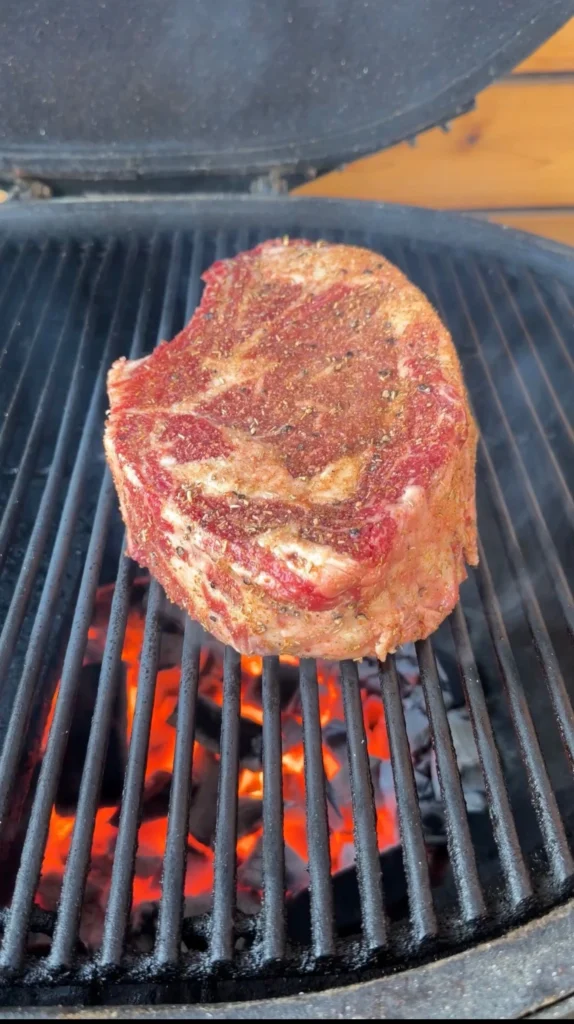
Place the seasoned cowboy steak directly over the hottest part of the grill on the direct heat side. It should sizzle loudly and immediately when it touches the grates. Close the lid and sear for three to four minutes without moving or touching the steak. Resist the urge to peek or flip early – the steak needs uninterrupted contact with the hot grates to develop proper crust and grill marks. If you try to flip too soon, the meat will stick and tear rather than releasing cleanly.
After three to four minutes, open the lid and use tongs to flip the steak to the opposite side. You should see well-developed dark brown crust with defined grill marks on the seared side. Close the lid and sear the second side for another three to four minutes. The goal is deep, crusty browning on both flat surfaces of the steak. Don’t worry about the edges at this point – you’re just searing the two main sides. Watch for flare-ups from dripping fat; if they occur, move the steak temporarily to avoid charring, then return it to direct heat once the flames subside.
Finish Over Indirect Heat
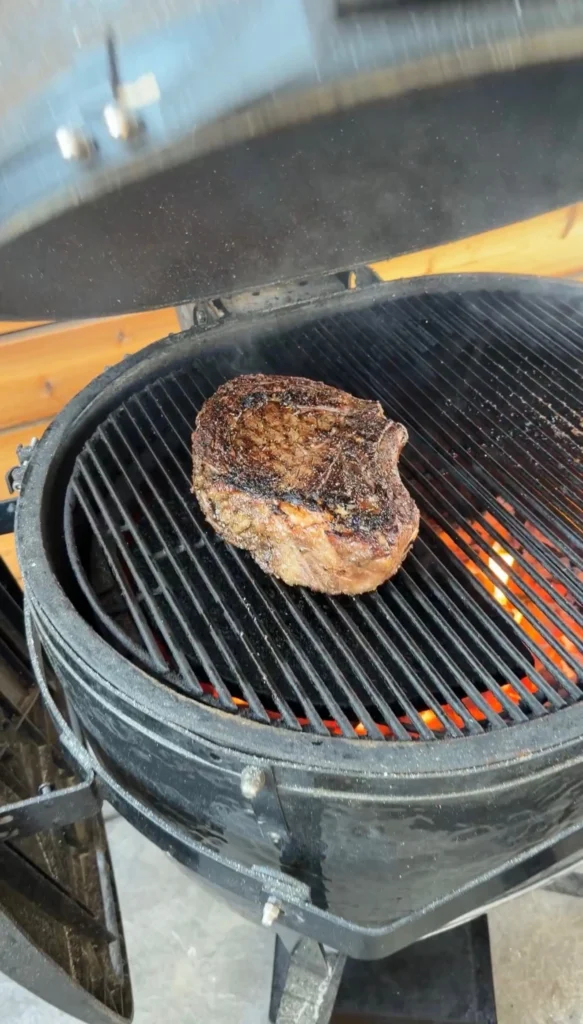
Once both sides are properly seared with deep brown crust, move the cowboy steak to the indirect heat side of the grill – the area with no direct flames or coals underneath. Close the lid and adjust vents or burner if needed to maintain an ambient temperature around 300-350 degrees Fahrenheit. The steak will now cook gently through radiant heat and hot air circulation rather than direct flames.
Insert an instant-read thermometer horizontally into the center of the steak, avoiding the bone. Check the temperature after fifteen minutes of indirect cooking. If it reads 110-115 degrees, continue cooking and check every five minutes. If it reads 120-125 degrees, check every two to three minutes as you’re getting close. For medium-rare, remove the steak when it reaches exactly 130 degrees Fahrenheit internal temperature. The total indirect cooking time will be twenty-five to thirty-five minutes depending on the steak’s exact thickness and your grill’s temperature, but always cook to temperature rather than time.
Rest with Truffle Honey Butter
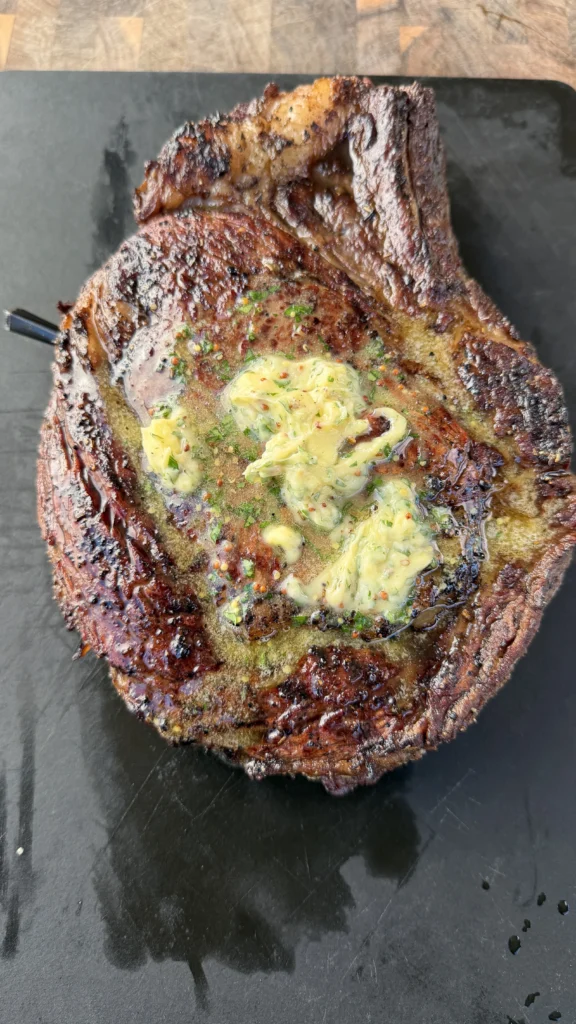
When the steak reaches 130 degrees, immediately remove it from the grill using tongs and transfer to a cutting board. Remove the truffle honey butter log from the refrigerator and unwrap it. Cut off a generous slice – approximately two tablespoons – and place it directly on top of the hot steak. The butter will begin melting immediately from the steak’s residual heat. Tent the steak loosely with aluminum foil, which traps some heat and helps the butter melt completely while the steak rests.
Let the steak rest for a full ten minutes minimum – don’t rush this step. During resting, three important things happen: the juices that were driven toward the center during cooking redistribute throughout the meat, the internal temperature continues rising through carryover to 135-140 degrees, and the muscle fibers relax. Cutting immediately would cause significant juice loss onto the cutting board. The melted truffle honey butter will pool around the steak and seep into any crevices, infusing flavor. After ten minutes, remove the foil. The butter should be completely melted into a glossy sauce puddled around the steak.
Slice and Serve the Cowboy Steak
Place the rested steak on a clean cutting board. Use a sharp carving knife or chef’s knife to slice the meat away from the bone, cutting along where the meat meets the bone to remove the entire ribeye in one piece. Set the bone aside for presentation or gnawing – there’s delicious meat clinging to it. Identify the grain direction in the boneless ribeye – the lines running through the meat indicating muscle fiber direction. Slice perpendicular to the grain in slices approximately half-inch thick.
Arrange the sliced steak on a serving platter or individual plates, fanning the slices attractively. Spoon the melted truffle honey butter generously over all the sliced meat, ensuring every piece gets coated. The butter should have a beautiful golden color with visible flecks of parsley and mustard seeds. If desired, place the bone alongside the sliced meat for dramatic presentation. Serve immediately while hot. The steak should be perfectly medium-rare with a pink center, crusty exterior, and rich truffle butter coating every slice.
Ready to Take Your Cooking to the Next Level?
This is where I keep all my most-used products, gear, and favorite cooking tools — check it out:
🔥 View My Cooking Gear & ToolsRecipe Categories
If you loved this recipe, you’ll find more to savor across our diverse categories. From beef to pork, chicken to turkey, seafood to appetizers, there’s a wealth of flavors waiting for you. Explore them all at CWFeats.