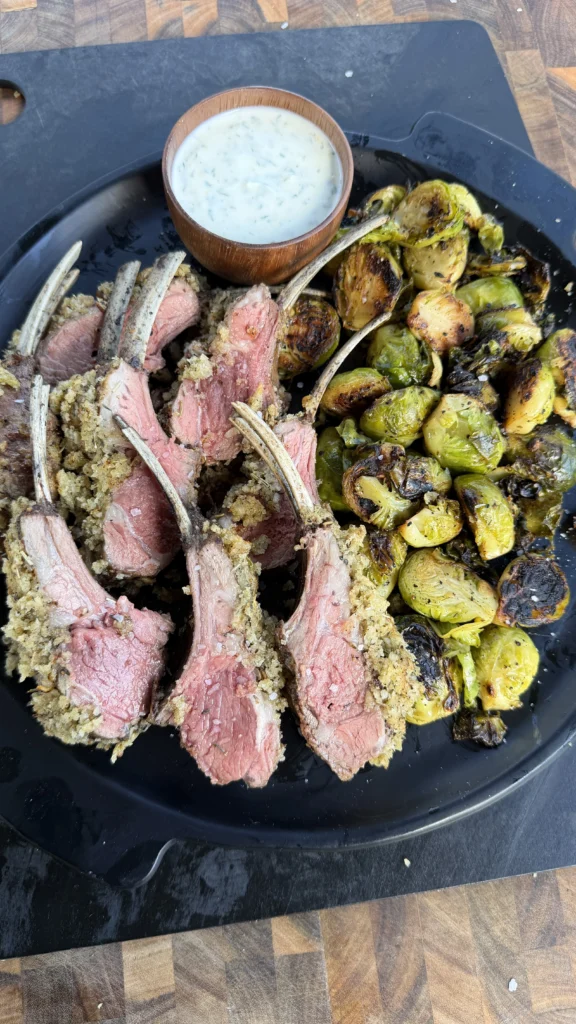
Grilled parmesan crusted lamb is a rack of lamb seared over direct high heat charcoal until deeply caramelized, brushed with tangy Dijon mustard, coated in a golden mixture of Parmesan cheese, panko breadcrumbs, fresh garlic, rosemary, and thyme, then finished over indirect heat at 275°F until the interior reaches 130–135°F for perfect medium-rare tenderness. The searing locks in juices and creates a flavorful crust on the fat cap while the low finishing temperature ensures the Parmesan crust turns golden and crispy without burning. This technique gives you restaurant-quality lamb with a crackling exterior and butter-soft, pink center that’s tender enough to cut with a fork. The combination of charcoal smoke, savory cheese, and fresh herbs makes this herb crusted rack of lamb a showstopper for special occasions or weekend grilling.
The whole process takes about 50 minutes from start to finish including prep, searing, crusting, indirect cooking, and resting. You start by seasoning the lamb racks with salt and pepper, sear them fat-side down over screaming hot coals to render some of that fat and build a crust, then brush with Dijon and press on the Parmesan mixture before moving to cooler indirect heat. The two-zone cooking method prevents the delicate crust from burning while the lamb finishes cooking to your preferred doneness. These grilled lamb chops are perfect served with charred asparagus, roasted potatoes, lemon rice, or Mediterranean couscous for a complete meal that feels elegant but comes together faster than you’d expect.
Why Does Searing Over Direct Charcoal Create Better Flavor Than Starting Low and Slow?
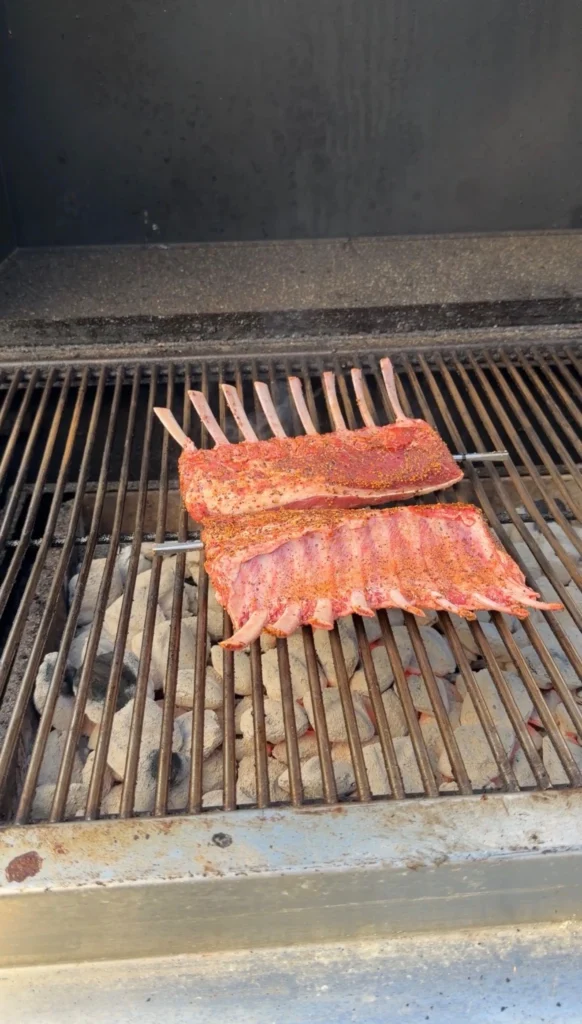
Searing your parmesan crusted rack of lamb over direct charcoal heat before applying the crust is the single most important step for building deep, complex flavor. When lamb fat hits 500°F+ charcoal flames, the Maillard reaction occurs rapidly — proteins and sugars in the meat break down and recombine into hundreds of new flavor compounds that taste savory, nutty, and slightly sweet.
The fat cap on a rack of lamb needs aggressive heat to render properly. When you sear fat-side down first, you accomplish three things: you render excess fat so the meat isn’t greasy, you create a crispy golden surface, and you develop that characteristic lamb flavor that comes from rendering tallow over live fire. Charcoal produces radiant heat that penetrates the surface more effectively than gas burners, which means better browning in less time.
If you skip the searing step and go straight to indirect cooking with the crust already applied, you’ll end up with pale, steamed lamb that lacks depth. The crust might look nice, but the meat underneath will be one-dimensional. Always sear first, then crust, then finish low and slow. This three-stage process is what separates amateur grilled lamb from dijon parmesan lamb that tastes like it came from a high-end steakhouse.
Why Can’t You Use Yellow Mustard or Mayo Instead of Dijon?
Dijon mustard serves two critical functions in this grilled parmesan crusted lamb recipe that you can’t replicate with other ingredients. First, it acts as an adhesive that bonds the Parmesan-panko mixture to the surface of the lamb so the crust stays put during cooking. Second, the acidity and enzymes in mustard help tenderize the outer layer of meat while adding sharp, tangy flavor that cuts through the richness of both the lamb and the cheese.
The science behind mustard as a binder comes down to emulsification. Dijon contains mustard seeds, vinegar, and often egg whites, which create a thick emulsion that’s sticky enough to hold breadcrumbs but thin enough to spread evenly. When you brush it onto warm, freshly seared lamb, it forms a tacky layer that grabs onto both the meat surface and the crust ingredients.
Yellow mustard is too thin and has a harsh, vinegary flavor that doesn’t complement lamb. Whole grain mustard has great texture but the seeds create air pockets that prevent proper adhesion. Mayonnaise works as a binder but lacks the acidity and sharp flavor that balances the richness — you’ll end up with something that tastes heavy and one-note. The acidity in Dijon also plays a flavor role similar to a marinade, helping break down proteins slightly for improved tenderness in the outermost layer.
How Does Two-Zone Cooking Prevent a Burnt Parmesan Crust?
The two-zone grilling method — searing over direct heat then finishing over indirect heat — is absolutely essential for cooking parmesan crusted rack of lamb without burning the delicate cheese and breadcrumb topping. Parmesan cheese begins to scorch at around 350°F, and panko breadcrumbs turn from golden to black in seconds when exposed to direct flame.
During the searing phase, you’re cooking over direct heat between 500-600°F to develop the Maillard reaction and caramelize the fat. This takes only 3-4 minutes per side, which isn’t enough time for the interior to overcook. Once you apply the Dijon and Parmesan crust and move the racks to the indirect zone, you’re cooking with gentle convective heat around 275°F that’s hot enough to brown the crust and bring the internal temperature up gradually without scorching the surface.
At 275°F, the moisture in the butter and mustard evaporates slowly, which allows the Parmesan to toast and the panko to crisp without combusting. The fat from the butter and cheese also conducts heat evenly through the crust, ensuring it sets properly and forms a cohesive coating that won’t crumble when you slice. Trying to cook everything over medium heat won’t give you the same results — you’ll get a pale, soft exterior that lacks caramelization and a crust that steams instead of crisps.
What Happens If You Skip the Resting Period After Grilling?
Resting your grilled parmesan crusted lamb for 5-10 minutes after it comes off the grill determines whether you get juicy, tender meat or dry, disappointing slices. When lamb cooks, the muscle fibers contract and squeeze moisture toward the center of the meat. If you slice immediately, all those juices run out onto your cutting board, leaving you with dry lamb and wasted flavor.
During the resting period, two things happen. First, the muscle fibers relax as the meat cools slightly, which allows the juices to redistribute evenly throughout the entire rack. Second, the proteins that were denatured by heat begin to reabsorb some of the moisture they released during cooking. This process takes time — roughly one minute of rest per ounce of meat.
The internal temperature will also continue to rise during resting, called carryover cooking. If you pull your lamb at exactly 135°F and slice immediately, the residual heat will push the center to 140-145°F, overshooting medium-rare into medium. By pulling at 130-135°F and letting it rest, the final temperature settles around 135-140°F for perfect rosy pink tenderness. Don’t tent the lamb with foil — this makes the crust soggy. Just set the racks on a cutting board uncovered and let them rest in a warm spot.
Parmesan Crusted Lamb
Dijon mustard, fresh herbs, golden Parmesan crust — charcoal seared & finished low
Ingredients
For The Lamb
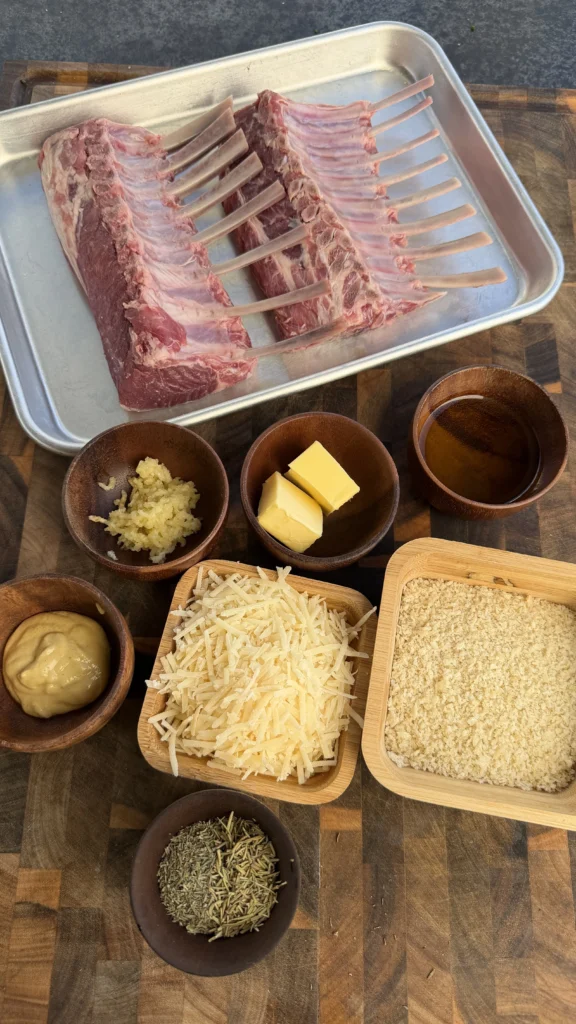
- 2 racks of lamb, Frenched (8 bones each, about 1½–2 lbs per rack)
- 2 tablespoons olive oil
- 1 teaspoon kosher salt
- ½ teaspoon coarse black pepper
For The Parmesan Crust
- 2–3 tablespoons Dijon mustard
- ¾ cup freshly grated Parmesan cheese
- ½ cup panko breadcrumbs
- 3 cloves garlic, minced
- 1 tablespoon fresh rosemary, finely chopped
- 1 tablespoon fresh thyme leaves, chopped
- 2 tablespoons unsalted butter, melted
Dijon mustard isn’t just for flavor — it’s the glue that holds your Parmesan crust in place. The acidity also helps tenderize the surface of the lamb while adding a sharp, tangy contrast to the rich meat. Don’t skip this step or your crust will slide right off during cooking.
Step-by-Step Instructions
Step 1: Prepare the Lamb and Set Up Your Grill
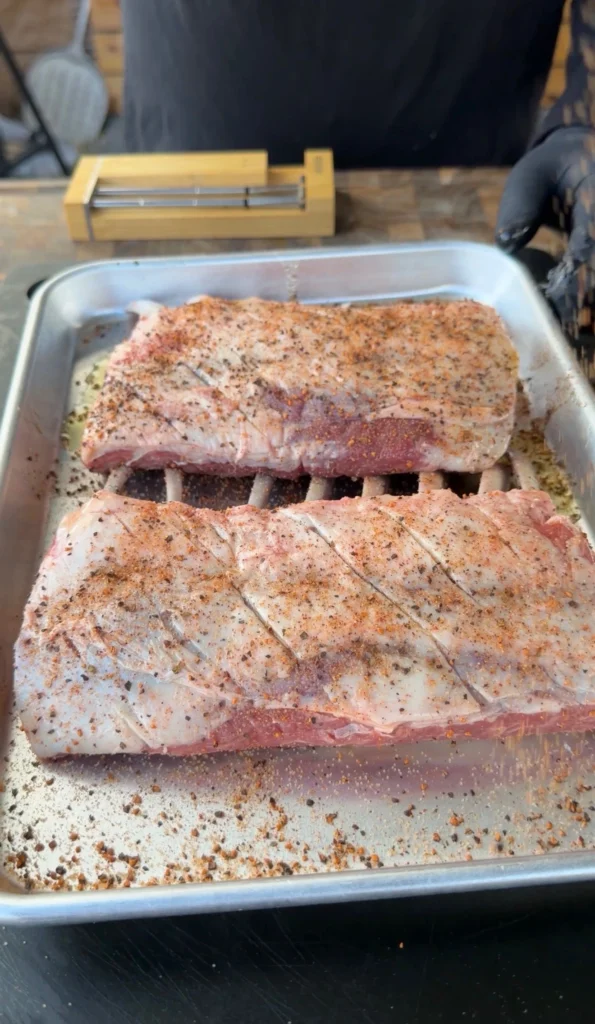
Remove the racks of lamb from the refrigerator 30 minutes before cooking to bring them to room temperature, which ensures even cooking from edge to center. Pat the lamb completely dry with paper towels — any surface moisture will prevent proper browning during the sear. Season both racks generously with kosher salt and coarse black pepper on all sides, pressing the seasoning into the meat so it adheres.
Set up your charcoal grill for two-zone cooking by banking all the coals on one side of the grill. You want a hot direct zone for searing and a cooler indirect zone for finishing. Light the charcoal using a chimney starter and wait until the coals are fully lit and covered with white ash, which indicates they’re at maximum temperature (around 500-600°F). Place the grill grate over the coals and let it preheat for 5 minutes so it’s screaming hot. If you’re using a gas grill, set all burners to high on one side and leave the other side off.
Clean the grill grates with a wire brush and oil them lightly using tongs and a folded paper towel dipped in vegetable oil. This prevents sticking during the sear. The grill is ready when you can hold your hand 6 inches above the grates for only 1-2 seconds before it’s too hot to tolerate.
Step 2: Sear the Lamb Over Direct Heat
Drizzle 2 tablespoons of olive oil over the lamb racks and rub it into the surface — this helps with heat transfer and prevents sticking. Place both racks fat-side down directly over the hottest part of the coals. You should hear an immediate sizzle when the meat hits the grates. Let them sear without moving for 3-4 minutes until the fat cap is deeply golden brown and starting to render.
Use tongs to flip the racks and sear the meat side (the curved underside) for another 3-4 minutes until it’s caramelized and shows clear grill marks. Then sear the ends where the bones are for 1-2 minutes each. The goal here is to build a crust on every exposed surface, not to cook the lamb through. The internal temperature at this point will only be around 80-90°F, which is exactly what you want.
If the lamb is flaring up from dripping fat, move it slightly to the side to avoid charring, but don’t remove it from direct heat until all sides are seared. The rendered fat dripping onto the coals creates aromatic smoke that adds another layer of flavor to the meat. You’ll know the sear is done when the lamb has a deep mahogany color and smells intensely savory with notes of caramelized meat and smoke.
Step 3: Apply the Dijon Mustard Coating
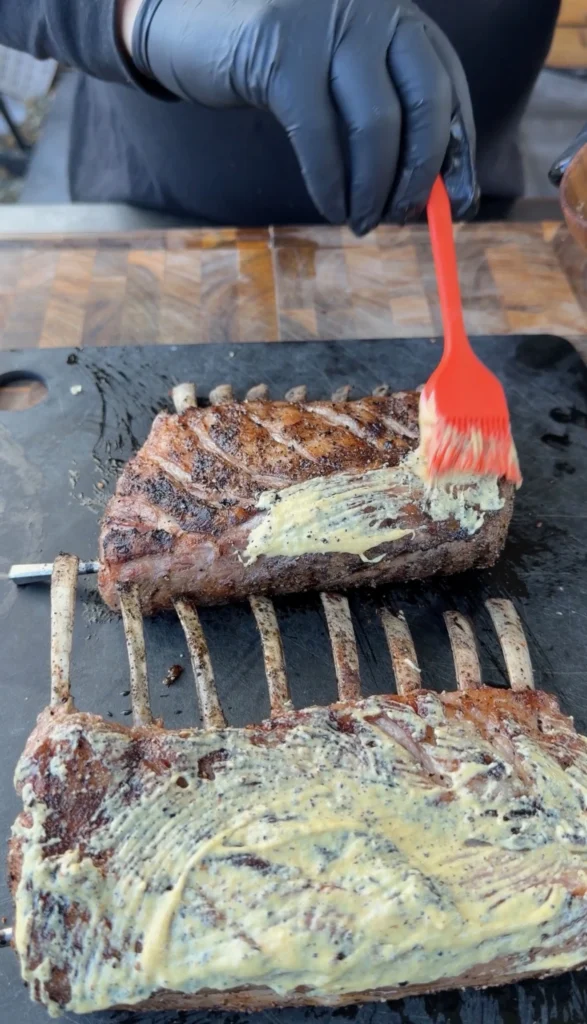
Remove both racks from the grill and place them on a clean plate or cutting board, fat-side up. While the lamb is still hot from searing, use a pastry brush or the back of a spoon to spread 2-3 tablespoons of Dijon mustard evenly across the fat cap in a thin, complete layer. The mustard should cover the entire top surface with no bare spots — this ensures the Parmesan crust will adhere uniformly.
Work quickly while the lamb is still warm. The residual heat from searing helps the mustard spread smoothly and creates a slightly tacky surface as it begins to set. Don’t apply mustard to the underside or ends, only to the fat cap where you’ll be applying the crust. The warmth of the meat also helps the mustard’s flavor mellow slightly and integrate with the lamb’s natural juices.
If your mustard is very thick or cold from the refrigerator, you can thin it with a teaspoon of olive oil to make it easier to spread. Just make sure it’s not so thin that it runs off the sides of the meat. You want a coating that’s visible but not globbed on — about the thickness of a credit card is perfect.
Step 4: Prepare and Apply the Parmesan Crust
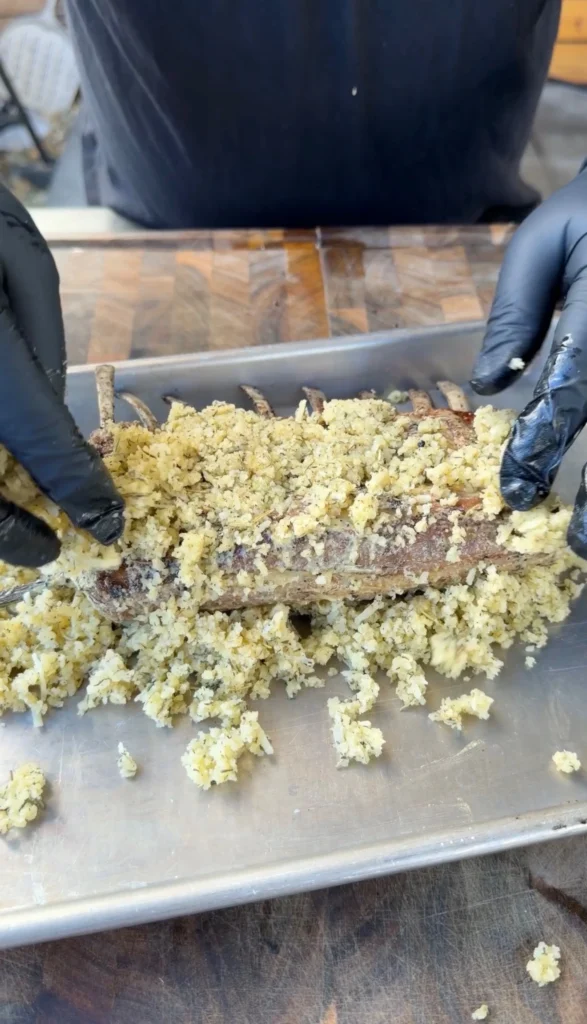
In a medium bowl, combine ¾ cup freshly grated Parmesan cheese, ½ cup panko breadcrumbs, 3 cloves minced garlic, 1 tablespoon chopped fresh rosemary, 1 tablespoon chopped fresh thyme, and 2 tablespoons melted butter. Mix thoroughly with a fork until the mixture resembles wet sand and holds together slightly when squeezed. The butter helps bind everything and will encourage browning during the finishing phase.
Take a generous handful of the Parmesan mixture and press it firmly onto the mustard-coated fat cap of one rack, using your palm to pack it down so it forms a cohesive crust. Repeat with the second rack, using all of the mixture and distributing it evenly between both. The crust should be about ¼-inch thick and completely cover the mustard layer with no gaps.
Press down firmly to compress the crust — this is important. A loosely applied crust will fall off during cooking, but a well-packed crust will set and hold together beautifully. The combination of mustard adhesion and butter binding will keep everything in place as long as you’ve applied enough pressure initially. If any crust falls off while you’re working, just press it back on.
Step 5: Finish the Lamb Over Indirect Heat
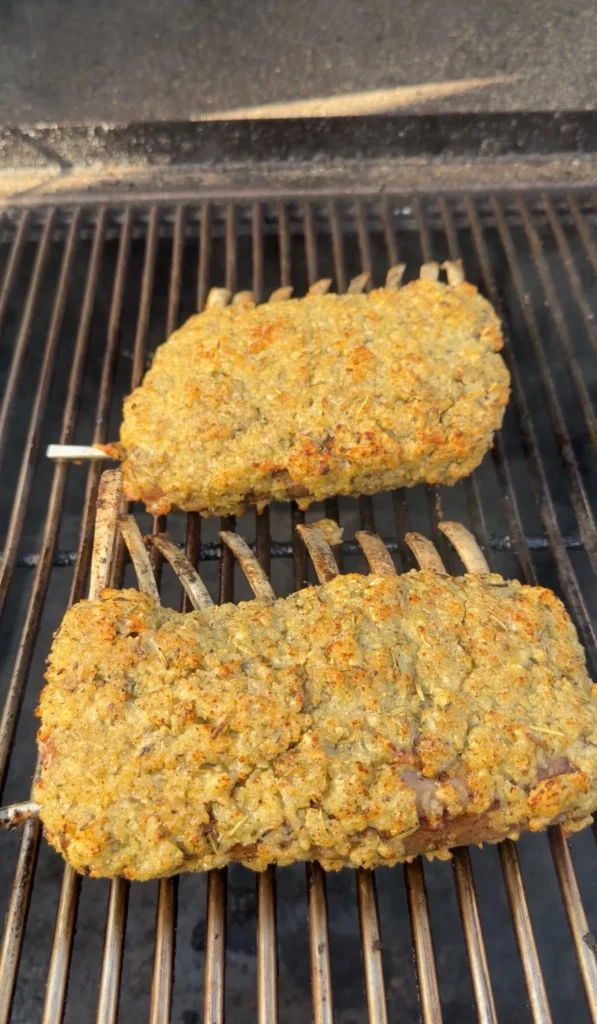
Adjust your grill vents to lower the temperature in the indirect zone to around 275°F. If you’re using charcoal, partially close the bottom vents to reduce airflow. For gas grills, adjust the burners on the direct side to medium-low and leave the indirect side off. Place both racks bone-side down (crust facing up) on the cooler side of the grill, away from direct heat.
Close the grill lid and cook for 15-20 minutes, checking the internal temperature after 12 minutes. Insert an instant-read thermometer into the thickest part of the meat between two bones, making sure not to touch bone (which reads hotter than meat). Pull the lamb when it reaches your target temperature: 125°F for rare, 130-135°F for medium-rare, or 140°F for medium. The crust should be golden brown and crispy to the touch.
If the crust is browning too quickly but the internal temperature isn’t where you want it, you can tent the lamb loosely with foil for the remaining cooking time. If the crust looks pale after 15 minutes but the temperature is good, you can move the racks slightly closer to the heat for the final 2-3 minutes to toast the topping, but watch carefully to prevent burning.
When the lamb reaches your target temperature, transfer both racks to a clean cutting board and let them rest uncovered for 5-10 minutes. The internal temperature will rise another 5 degrees during this time, and the juices will redistribute throughout the meat. Don’t skip this step or you’ll lose all those precious juices when you slice.
Step 6: Slice and Serve
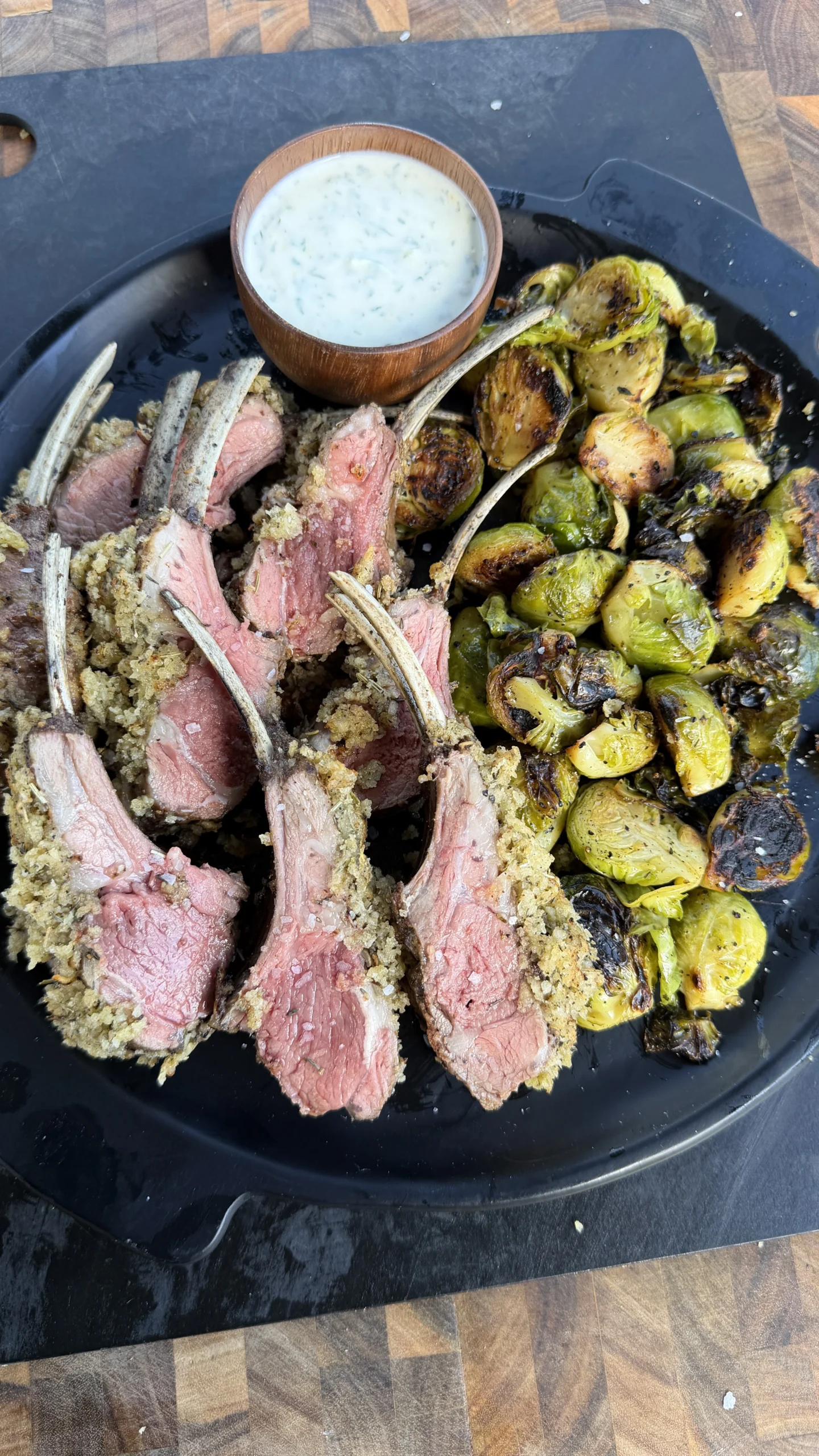
After resting, use a sharp chef’s knife to slice between the bones, cutting straight down to separate the rack into individual chops. You should get 8 chops per rack, each with a perfect golden Parmesan crust on top, a pink medium-rare center, and a caramelized exterior from the initial sear. The crust should stay intact on each chop without crumbling.
Arrange the chops on a serving platter, standing them upright bone-side up for an elegant presentation. You can drizzle them with a little extra-virgin olive oil or a squeeze of fresh lemon juice for brightness, but the lamb is flavorful enough to stand alone. Serve immediately alongside charred asparagus, roasted fingerling potatoes, lemon rice, or Mediterranean couscous.
Each diner should get 3-4 chops depending on appetite. The bones make these easy to pick up and eat with your hands, which is not only acceptable but encouraged — they’re called “lamb lollipops” for a reason. Make sure to have plenty of napkins available, because the combination of crispy crust, juicy meat, and that rich lamb fat is finger-licking good.
Grilled Parmesan Crusted Lamb
Ingredients
Method
- Remove lamb from refrigerator 30 minutes before cooking and pat completely dry. Season both racks generously with salt and pepper. Set up your charcoal grill for two-zone cooking with all coals banked on one side for a hot direct zone and a cooler indirect zone. Preheat grill grates over direct heat until they reach 500-600°F.
- Drizzle olive oil over lamb racks and place fat-side down over direct heat. Sear for 3-4 minutes until deeply golden, then flip and sear the meat side for 3-4 minutes. Sear the ends for 1-2 minutes each until all surfaces are caramelized. The internal temperature should be around 80-90°F at this point.
- Remove racks from grill and brush the fat cap with a thin, even layer of Dijon mustard while the lamb is still hot. In a bowl, combine Parmesan, panko, garlic, rosemary, thyme, and melted butter until the mixture resembles wet sand.
- Press the Parmesan mixture firmly onto the mustard-coated fat cap of both racks, packing it down to form a ¼-inch thick cohesive crust. Make sure there are no gaps and the entire mustard layer is covered.
- Adjust grill to 275°F and place lamb racks bone-side down on the indirect heat side, away from the coals. Close the lid and cook for 15-20 minutes until the internal temperature reaches 130-135°F for medium-rare (or 125°F for rare, 140°F for medium). The crust should be golden brown and crispy.
- Transfer racks to a cutting board and rest uncovered for 5-10 minutes. Slice between the bones to create individual chops and serve immediately with your choice of sides.
Notes
Tried this recipe?
Let us know how it was!Frequently Asked Questions
Can I use bone-in lamb chops instead of a full rack?
Yes, individual bone-in lamb chops work perfectly with this Parmesan crust method, but you’ll need to adjust your cooking times and technique slightly. Use thick-cut chops that are at least 1½ inches thick — anything thinner will overcook before the crust has time to brown properly. Season the chops the same way, sear them for 2-3 minutes per side over direct heat, then apply the Dijon and Parmesan crust to one side only (the top side after flipping).
Move the chops to indirect heat and cook for 8-12 minutes instead of 15-20, checking the internal temperature after 8 minutes. Thinner chops cook faster than a full rack, so watch them carefully to avoid overcooking. The advantage of using individual chops is portion control and faster cooking times, but you lose the dramatic presentation of a full rack that you slice tableside. Both methods give you the same delicious combination of crispy Parmesan crust and tender medium-rare lamb.
If you’re cooking for a crowd, individual chops are actually easier to manage on the grill since you can fit more of them in the indirect zone and pull them as they reach temperature rather than having to watch two large racks simultaneously. Just make sure your butcher cuts them thick enough.
What if I don’t have fresh herbs — can I use dried?
You can substitute dried herbs in a pinch, but you’ll need to use about ⅓ the amount since dried herbs are more concentrated. For this recipe, that means 1 teaspoon dried rosemary and 1 teaspoon dried thyme instead of 1 tablespoon each of fresh. Crush the dried herbs between your fingers before adding them to the Parmesan mixture to release their oils and improve their flavor.
The trade-off is that dried herbs won’t give you the same bright, aromatic quality that fresh herbs provide. Dried rosemary in particular can taste dusty and sharp if it’s old or if you use too much, so make sure your dried herbs are relatively fresh (less than 6 months old) and stored in a cool, dark place. The crust will still work and taste good, but it won’t have the same complexity and depth that fresh herbs bring to the dish.
If you can find fresh rosemary but not fresh thyme (or vice versa), use fresh for whichever one you have and dried for the other. This gives you at least some of that bright fresh herb flavor while still providing the aromatic quality of both herbs. The rosemary is particularly important since it’s the dominant flavor in traditional lamb preparations, so prioritize getting fresh rosemary if you can only get one or the other.
How do I know when the lamb is done without a thermometer?
While an instant-read thermometer is by far the most reliable way to check doneness on grilled lamb, there’s a tactile test you can use if you don’t have one. Press the meat between two bones with your finger or tongs — rare lamb will feel very soft and yielding with almost no resistance, medium-rare will have slight firmness with some give when pressed, and medium will feel firm with less give but still have some bounce back.
For visual cues, you can make a small cut into the thickest part of the rack between two bones to check the color. Medium-rare lamb should be rosy pink throughout with a small bullseye of darker pink at the very center. If you see any gray or brown at the center, it’s past medium-rare and heading toward medium. Keep in mind that cutting into the meat to check doneness releases juices, so only do this as a last resort and only check once.
The timing method is also helpful as a backup: after searing, most racks of lamb need 15-20 minutes at 275°F to reach medium-rare, assuming they started at room temperature and are about 1½-2 pounds each. If your racks are larger or started very cold from the refrigerator, add 5-10 minutes. If they’re smaller or you seared them for longer, subtract 5 minutes. Experience will teach you how lamb feels at different temperatures, but until you’ve cooked dozens of racks, a $15 instant-read thermometer is the best investment you can make for consistent results.
Can I make the Parmesan crust ahead of time?
Absolutely. You can mix the Parmesan, panko, garlic, herbs, and melted butter up to 24 hours in advance and store it in an airtight container in the refrigerator. When you’re ready to use it, let it sit at room temperature for 15-20 minutes to soften the butter slightly, which makes it easier to press onto the lamb. The crust mixture will be slightly firmer when cold, but it will still adhere just fine as long as you’ve applied the Dijon mustard properly.
You can also fully prep the lamb racks in advance by seasoning them with salt and pepper, wrapping them in plastic wrap, and refrigerating them for up to 24 hours. This actually improves flavor since the salt has time to penetrate deeper into the meat through dry brining. Just remember to remove them from the refrigerator 30 minutes before cooking so they come to room temperature.
What you should not do is apply the Dijon and Parmesan crust to the lamb ahead of time and then refrigerate it. The moisture in the mustard will make the breadcrumbs soggy, and the crust won’t crisp properly when you cook it. Always apply the Dijon and crust immediately before finishing the lamb on the grill. This ensures you get that golden, crackling texture that makes this recipe special.
What sides pair best with this lamb?
The rich, savory flavor of parmesan crusted rack of lamb calls for sides that provide either brightness to cut through the fat or earthiness to complement the herbs. Charred asparagus is a classic pairing — the slight bitterness from the char and the vegetal sweetness of the asparagus contrast beautifully with the lamb’s richness. Toss asparagus spears with olive oil, salt, and pepper, then grill them over direct heat for 3-4 minutes until charred and tender.
Roasted fingerling potatoes with rosemary and garlic echo the herbs in the crust and provide a starchy element that balances the meal. Cut the potatoes in half, toss them with olive oil, minced garlic, fresh rosemary, salt, and pepper, then roast at 425°F for 25-30 minutes until golden and crispy. You can also do these on the grill in a cast iron skillet if you want to keep everything over the fire.
For a lighter option, lemon rice or Mediterranean couscous both work wonderfully. The citrus brightness in lemon rice cuts through the lamb fat and refreshes your palate between bites, while couscous with dried fruits, nuts, and fresh herbs provides textural contrast and a hint of sweetness that complements the savory crust. A simple arugula salad with lemon vinaigrette is also excellent — the peppery greens and acidic dressing cleanse your palate and add a fresh element to the rich lamb. Whatever you choose, make sure you have something acidic or bitter on the plate to balance the richness of the meat and cheese.
Ready to Take Your Cooking to the Next Level?
This is where I keep all my most-used products, gear, and favorite cooking tools — check it out:
🔥 View My Cooking Gear & ToolsRecipe Categories
If you loved this recipe, you’ll find more to savor across our diverse categories. From beef to pork, chicken to turkey, seafood to appetizers, there’s a wealth of flavors waiting for you. Explore them all at CWFeats.