See How It’s Done
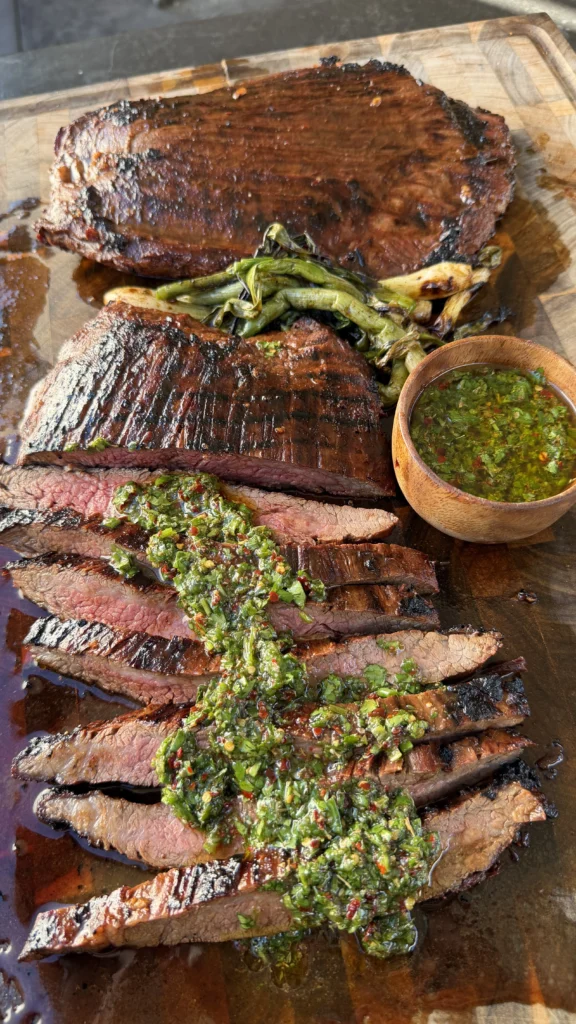
Marinated flank steak is a 1.5-2 lb flank steak marinated for 6-8 hours in soy sauce, olive oil, lime juice, Worcestershire sauce, brown sugar, and garlic, then grilled over high heat with frequent flipping until it reaches 120°F internal temperature. Let it rest to carry over to 130°F for perfect medium-rare doneness. Slice thin against the grain and top with cilantro green onion chimichurri made from fresh cilantro, green onions, garlic, olive oil, red wine vinegar, and lime juice. The long marinade tenderizes the naturally tough flank steak while infusing it with savory, slightly sweet Asian-inspired flavors. The frequent flipping builds a caramelized crust while keeping the interior juicy. This soy marinated flank steak delivers restaurant-quality results that work perfectly for weeknight dinners, meal prep, tacos, salads, or entertaining.
The whole process takes 6-8 hours of mostly hands-off marinating time plus 30 minutes of active cooking and prep. Mix the marinade in 5 minutes, marinate the steak for at least 6 hours or overnight, then grill for 8-10 minutes over high heat. Make the chimichurri while the steak rests. The result is tender, flavorful beef with a sweet-savory crust and bright, herbaceous chimichurri that cuts through the richness. Flank steak is one of the most affordable cuts of beef, making this an economical way to serve impressive steak dinners that taste like they came from an expensive steakhouse.
What Internal Temperature Should Flank Steak Reach
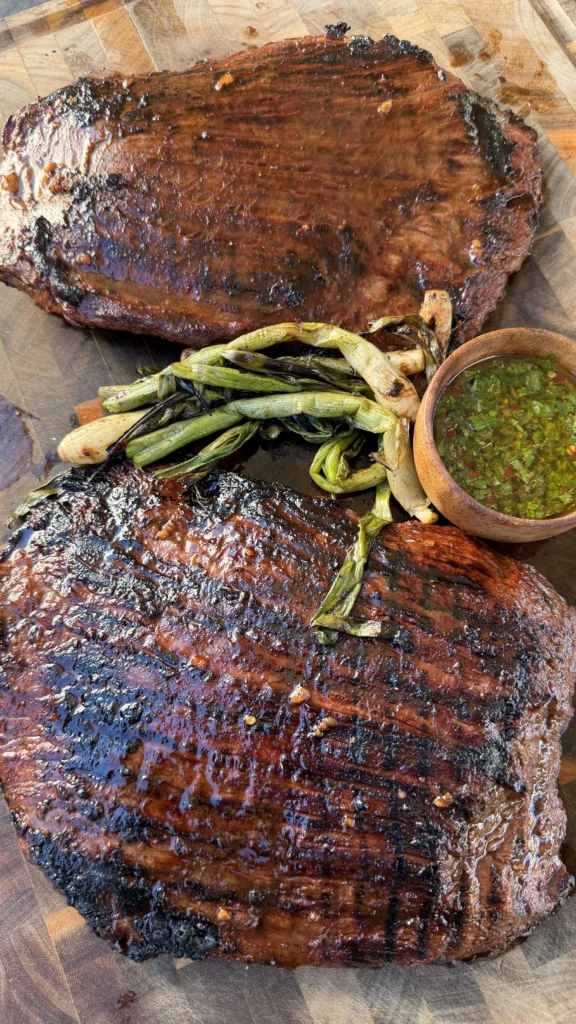
Pull flank steak at 120°F internal temperature for perfect medium-rare after resting. Insert an instant-read thermometer into the thickest part of the steak horizontally from the side. The thin profile of flank steak makes it easy to overcook if you wait until 130°F to pull it. During the 5-10 minute rest, carryover cooking raises the internal temperature another 8-10 degrees, bringing it to 128-130°F. This produces beautiful pink throughout with a thin band of gray around the edges.
Medium-rare is the ideal doneness for flank steak because the cut is naturally lean and tough. Higher temperatures make it progressively chewier and drier. At 135-140°F medium, the steak becomes noticeably tougher and requires more aggressive chewing. At 145°F+ medium-well to well-done, flank steak is borderline inedible, chewy like rubber bands, and dry enough to require sauce for every bite. The lack of intramuscular fat means there’s no marbling to keep it moist at higher temperatures.
If you prefer medium doneness, pull at 125°F for a final temperature of 133-135°F after rest. This is the absolute maximum for flank steak if you want it to remain tender. Beyond this, you’re fighting against the cut’s natural characteristics. Many people who claim they don’t like flank steak have only had it overcooked to medium-well or well-done, which transforms it from tender and juicy to tough and dry.
The thin profile of flank steak means temperature rises quickly. The difference between 120°F and 130°F can be as little as 60-90 seconds on a hot grill. Watch the thermometer carefully once you hit 115°F. Check every 30-60 seconds at that point. Don’t walk away or you’ll overshoot your target. The carryover cooking is aggressive on thin cuts, so pulling early is essential for hitting your final target temperature.
Why Slice Flank Steak Against the Grain
Slicing against the grain cuts through the long muscle fibers that run the length of flank steak, creating shorter fiber segments that are much more tender to chew. The grain in flank steak is very pronounced and visible. Long muscle fibers running parallel create the texture. When you cut parallel to these fibers (with the grain), you’re eating long strings of muscle that require extensive chewing to break down. This makes even perfectly cooked steak feel tough and stringy.
Cutting perpendicular to the grain (against it) shortens these fibers dramatically. Instead of chewing through 3-4 inch long muscle strands, you’re biting through 1/4 inch segments that break apart easily. This single technique transforms the eating experience from tough and chewy to tender and pleasant. The difference is so dramatic that properly sliced flank steak feels like a completely different cut than improperly sliced flank steak at the same doneness.
Always let the steak rest before slicing. If you cut immediately after grilling, juices run out and the meat appears dry on the cutting board. The 5-10 minute rest allows proteins to relax and reabsorb moisture. The slices will be visibly juicier with better color and texture. Use a very sharp knife for clean cuts. Dull knives tear the meat rather than slicing cleanly, creating ragged edges that look unprofessional and release more juices.
How to Tell Which Way the Grain Runs on Flank Steak
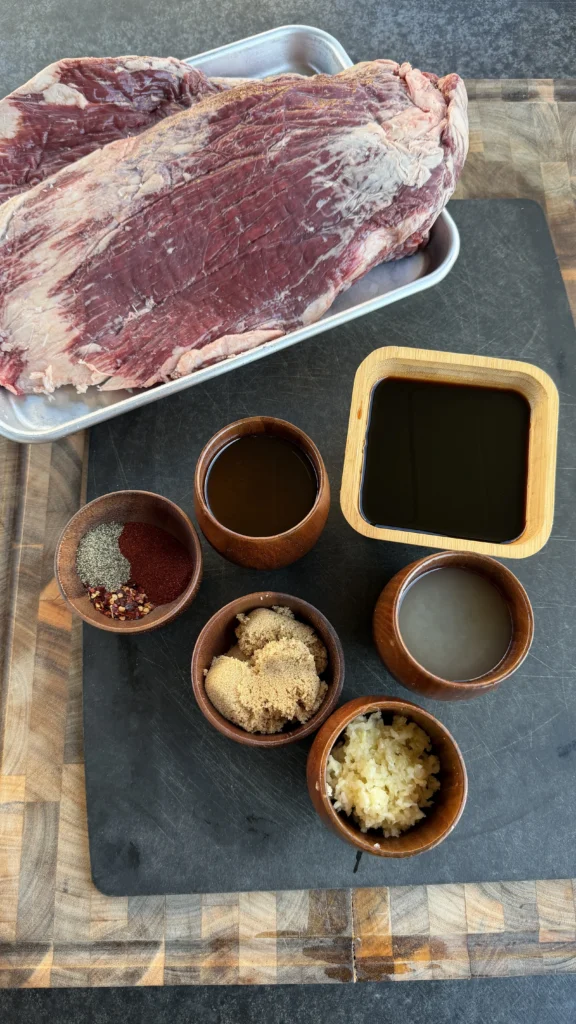
The grain on flank steak runs lengthwise from end to end, parallel to the long sides of the rectangular cut. Look at the surface of the raw or cooked steak. You’ll see clear lines or striations running in one direction like wood grain. These lines are bundles of muscle fibers. On flank steak, these lines are very pronounced and easy to see, running the full length of the cut from one end to the other.
Run your finger across the surface of the steak. You’ll feel ridges or texture in one direction. The grain runs parallel to these ridges. If you run your finger perpendicular to the ridges, it feels bumpy or rough. This tactile test confirms what you see visually. On cooked steak, the grain becomes even more visible as the muscle fibers contract and separate slightly, making the striations more pronounced.
The confusion often comes from the fat striations that run across flank steak perpendicular to the muscle grain. These white lines of connective tissue create a crosshatch pattern that can mislead people into cutting the wrong direction. Ignore the fat lines. Focus on the muscle fiber direction, which runs lengthwise. The fat and connective tissue will cut easily regardless of direction, but the muscle fibers are what determine tenderness.
Before you start slicing, identify the grain direction and position your cutting board so you’re cutting perpendicular to it. Some people rotate the steak 90 degrees on the cutting board to make the against-the-grain direction more obvious. Place the steak so the grain runs left to right, then cut straight down from top to bottom. This simple setup ensures every slice is against the grain without having to think about it for each cut.
What Makes Flank Steak Different from Skirt Steak
Flank steak comes from the bottom abdominal area of the cow, below the loin, and is a single large muscle with pronounced grain running lengthwise. It’s relatively thick (1-1.5 inches), flat, and rectangular in shape. Skirt steak comes from the diaphragm muscle, is much thinner (1/2-3/4 inch), longer, and has a looser, more open grain structure. Both are flavorful, lean cuts that benefit from marinating, but they cook and behave differently.
Flank steak is more uniform in thickness and shape, making it easier to cook evenly. The consistent thickness means you can grill it with predictable results. Skirt steak is thinner and often varies in thickness along its length, creating challenges with even cooking. The thin areas can overcook while thick areas are still rare. Flank’s uniformity makes it more forgiving for beginners and more predictable for meal planning.
Skirt steak is generally considered more flavorful and tender than flank when cooked properly, but it’s also more expensive and harder to find. Flank steak is more widely available in grocery stores and costs less per pound. For marinades and quick grilling, both work excellently. For this marinated flank steak recipe, you could substitute skirt steak but reduce grilling time to 5-7 minutes total since it’s thinner.
Flank steak holds up better for meal prep and leftovers. The thicker cut remains tender when reheated while skirt steak can become tough. Flank also slices more cleanly for presentation purposes. The rectangular shape of flank creates uniform slices while skirt’s irregular shape produces varying slice sizes. For tacos, fajitas, and salads where appearance matters less, skirt works beautifully. For plated dinners where presentation matters, flank is superior.
Marinated Flank Steak
Soy garlic marinade with cilantro green onion chimichurri
Ingredients
Flank Steak & Marinade
- 1 flank steak (1.5-2 lbs)
- 1/3 cup soy sauce
- 1/4 cup olive oil
- 3 tablespoons lime or lemon juice
- 2 tablespoons Worcestershire sauce
- 2 tablespoons brown sugar or honey
- 4 cloves garlic, minced
- 1 teaspoon smoked paprika (optional)
- 1/2 teaspoon black pepper
- 1/2 teaspoon crushed red pepper flakes (optional)
Cilantro Green Onion Chimichurri
- 1/2 cup cilantro, finely chopped
- 2 green onions, chopped
- 2 cloves garlic, minced
- 1/4 cup olive oil
- 1 tablespoon red wine vinegar
- Juice of 1/2 lime (or to taste)
- 1/4 teaspoon salt
- 1/4 teaspoon black pepper
- Pinch of red pepper flakes (optional)
Reserve about 1/4 cup of marinade before adding the raw steak. Use this clean marinade for brushing during the last 10 minutes of grilling. Never brush with marinade that touched raw meat unless you boil it first for food safety.
Step-by-Step Instructions
Step 1: Make the Marinade
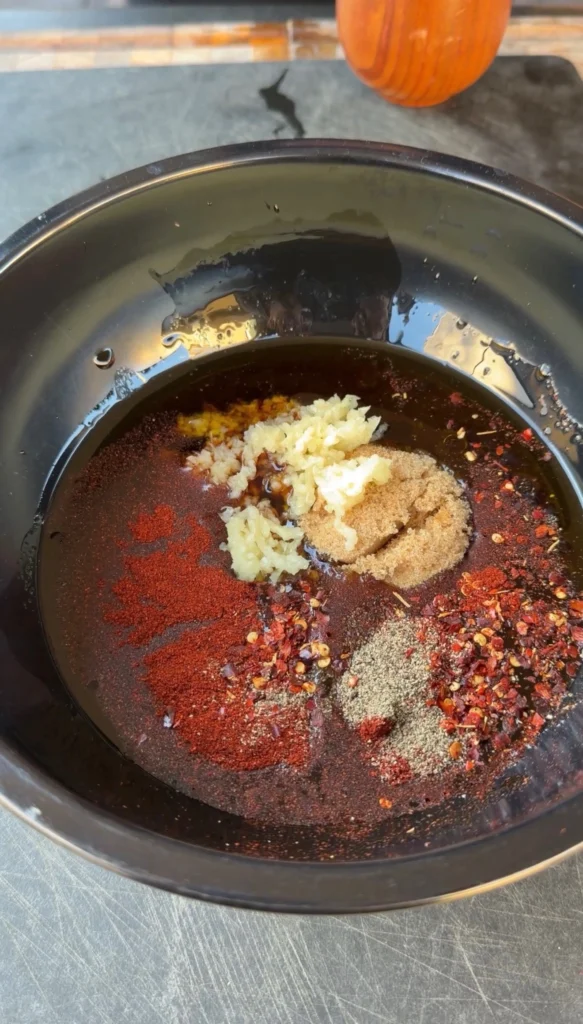
In a medium bowl, whisk together 1/3 cup soy sauce, 1/4 cup olive oil, 3 tablespoons lime or lemon juice, and 2 tablespoons Worcestershire sauce. The soy sauce provides salt and umami depth. The acid from citrus tenderizes the meat. Worcestershire adds complexity with its blend of anchovies, tamarind, and spices. The olive oil carries flavors and keeps the marinade from being too thin.
Add 2 tablespoons brown sugar or honey for sweetness that balances the salty soy sauce and creates caramelization during grilling. Add 4 cloves of minced garlic for aromatic punch. The garlic should be minced very fine so it distributes evenly and doesn’t burn on the grill. Add 1 teaspoon smoked paprika if using for subtle smoke flavor and color. Add 1/2 teaspoon black pepper and 1/2 teaspoon crushed red pepper flakes if you want heat.
Whisk everything together thoroughly until the sugar dissolves completely and the marinade is uniform. The mixture should be thin and pourable, reddish-brown in color with visible garlic pieces. Taste it if you want to check balance. It should be salty, tangy, slightly sweet, and very garlicky. The flavors will seem intense now but will mellow as they penetrate the meat during marinating.
Before adding the steak, pour about 1/4 cup of marinade into a small bowl and refrigerate it. This reserved clean marinade will be used for brushing the steak during the last 10 minutes of grilling. Never use marinade that’s touched raw meat for brushing unless you boil it for at least 1 minute to kill bacteria. Setting aside clean marinade now saves this step later.
Step 2: Marinate the Flank Steak
Remove any silver skin or excess fat from the flank steak using a sharp knife. The silver skin is thin, silvery connective tissue on the surface that doesn’t break down during cooking. Remove it by sliding your knife under it at a shallow angle and cutting it away in strips. Pat the steak dry with paper towels. Dry meat absorbs marinade better than wet meat.
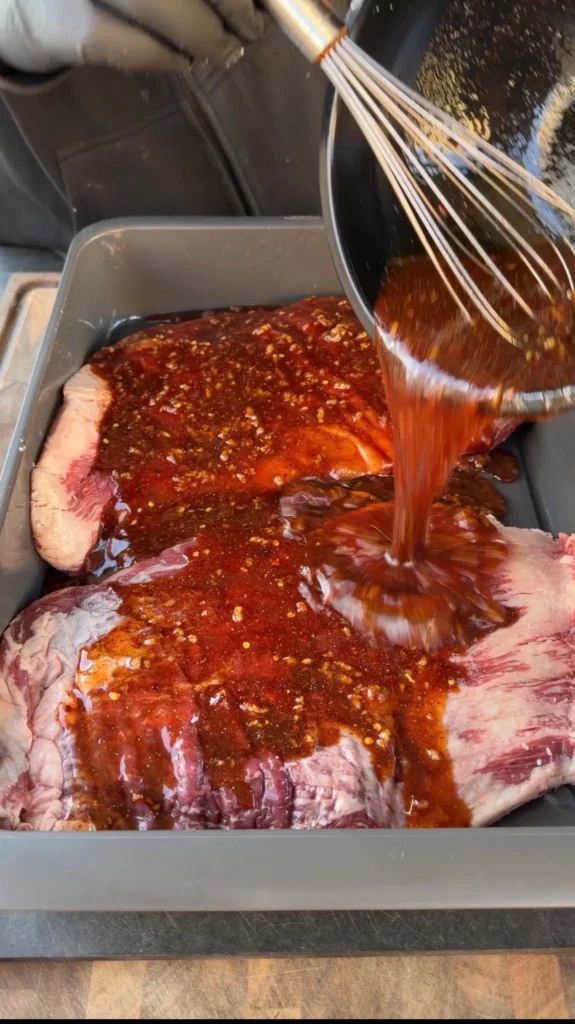
Place the flank steak in a large zip-top bag or shallow dish. Pour the marinade over the steak, making sure it’s completely coated on all surfaces. If using a bag, squeeze out as much air as possible before sealing. This ensures maximum contact between marinade and meat. If using a dish, turn the steak several times to coat thoroughly, then cover tightly with plastic wrap.
Refrigerate for at least 6-8 hours or overnight. Flip the steak halfway through marinating if you remember. The long marinating time allows the acids and enzymes to tenderize the tough muscle fibers while the soy sauce and garlic penetrate deep into the meat. Minimum marinating time is 30 minutes if you’re in a rush, but 6-8 hours produces dramatically better results. Don’t marinate longer than 24 hours or the acid will start making the exterior mushy.
Remove the steak from the refrigerator 30 minutes before grilling to take the chill off. Cold steak hitting a hot grill creates uneven cooking with a cold center and overcooked exterior. Room temperature steak cooks more evenly. Discard the marinade in the bag or dish. Don’t reuse it unless you boil it first. Use the reserved clean marinade you set aside earlier for brushing during grilling.
Step 3: Make the Cilantro Green Onion Chimichurri
While the steak marinates or just before grilling, make the chimichurri. Finely chop 1/2 cup fresh cilantro, including tender stems. The stems have flavor so don’t waste them. Chop until the pieces are very small but not pulverized. You want texture, not paste. Chop 2 green onions, using both white and green parts. Mince 2 cloves of garlic very fine.
In a small bowl, combine the chopped cilantro, green onions, and garlic. Add 1/4 cup olive oil, 1 tablespoon red wine vinegar, and the juice of half a lime. The acid brightens the herbs and cuts through the rich steak. Add 1/4 teaspoon salt, 1/4 teaspoon black pepper, and a pinch of red pepper flakes if you want heat. Stir everything together thoroughly.
Let the chimichurri sit at room temperature while you grill the steak. This allows the flavors to meld and the garlic to mellow slightly. The olive oil will turn bright green from the cilantro and the mixture will become very aromatic. Taste and adjust seasoning if needed. It should be tangy, herby, and garlicky with balanced salt. Add more lime juice if it tastes flat or more salt if the flavors don’t pop.
Chimichurri can be made several hours ahead and refrigerated. Just bring it back to room temperature before serving since cold olive oil is less fluid and flavorful. The fresh herb flavors are best within a few hours of making. After that, the cilantro starts to oxidize and turn darker. Make it fresh the same day you’re serving for best color and flavor.
Step 4: Preheat the Grill to High Heat
Preheat your grill to high heat, aiming for 450-500°F grill grate temperature. For gas grills, turn all burners to high and close the lid for 10-15 minutes. For charcoal grills, build a full chimney of coals, let them ash over, then spread them in an even layer. The grill is ready when you can hold your hand 4-5 inches above the grate for only 2-3 seconds before it’s too hot. That’s high heat.
Clean the grill grates thoroughly with a grill brush while they’re heating. Debris from previous cooks will stick to your steak and create off flavors. Once clean, oil the grates by dipping a wadded paper towel in vegetable oil, gripping it with long tongs, and rubbing it over the hot grates. This prevents sticking and creates better grill marks. Be careful as the oil may flame up briefly.
High heat is essential for marinated flank steak because you want to develop a caramelized crust quickly while keeping the interior rare to medium-rare. The thin profile means the steak cooks fast, so you need aggressive heat to build crust before the interior overcooks. Lower heat produces gray, steamed-looking beef without proper browning. The sugar in the marinade caramelizes beautifully at high heat, creating a sweet-savory glaze.
Have all your tools ready before the steak goes on. You’ll need long tongs for flipping, your instant-read thermometer, the reserved clean marinade with a basting brush, and a clean plate for the finished steak. Grilling goes fast once you start, so having everything within reach prevents scrambling and potential mistakes.
Step 5: Grill the Steak with Frequent Flipping
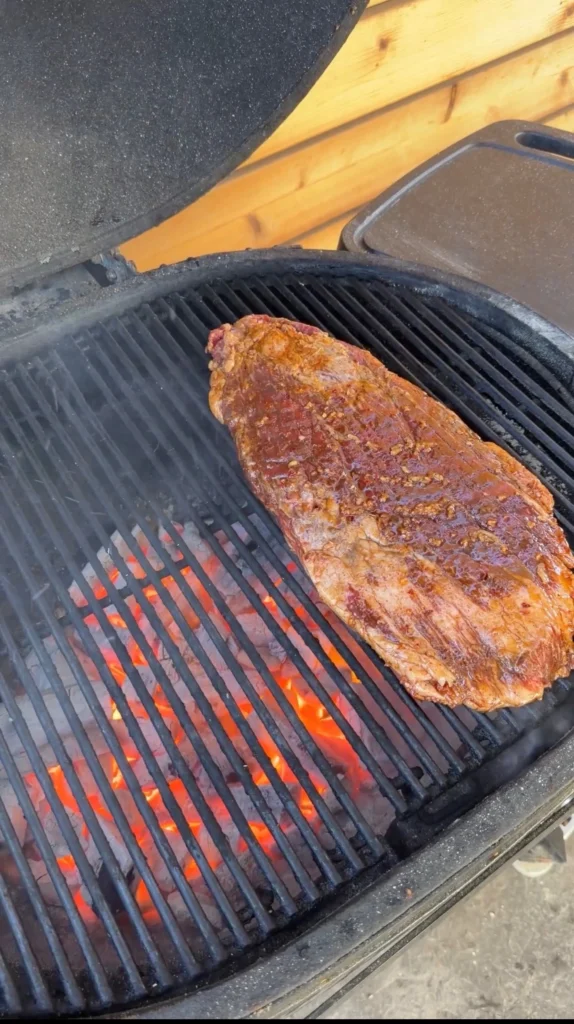
Remove the steak from the marinade and let excess drip off. Don’t pat it dry since the marinade helps create the glaze. Place the steak on the hot grill at a 45-degree angle to the grates for classic diamond grill marks if desired. Close the lid and cook for 2 minutes undisturbed. This initial sear starts building the crust.
After 2 minutes, flip the steak and cook another 2 minutes. Continue flipping every 2 minutes for a total of 8-10 minutes cooking time. This frequent flipping technique creates a more even crust and promotes even cooking throughout the steak. The old “flip once” rule is outdated. Modern grilling science shows that frequent flipping produces better results with more even cooking and better crust development.
During the last 10 minutes of cooking (typically after the third or fourth flip), start brushing the steak with the reserved clean marinade. Brush it on both sides every time you flip. The sugar in the marinade caramelizes into a sticky, glossy glaze. This final glazing step adds another layer of flavor and creates the beautiful mahogany color on the finished steak. Don’t brush too early or the sugar will burn.
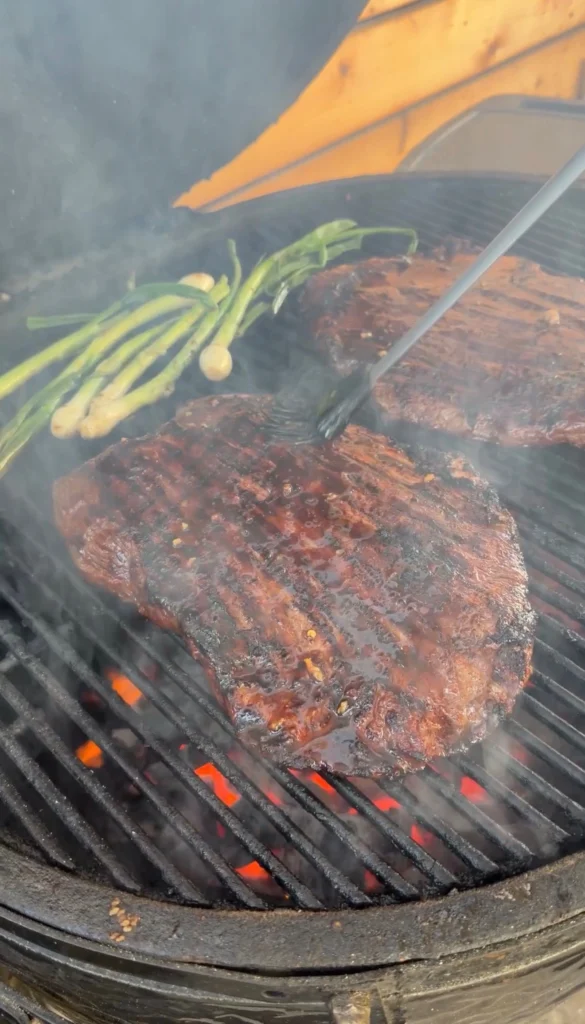
Start checking internal temperature after 6 minutes of total cooking time. Insert an instant-read thermometer horizontally into the thickest part of the steak. Pull the steak when it reaches 120°F for medium-rare. The temperature rises quickly in the final minutes, so check every minute once you hit 115°F. When it reaches 120°F, remove immediately to a clean plate or cutting board.
Step 6: Rest and Slice Against the Grain
Let the soy marinated flank steak rest for 5-10 minutes loosely tented with foil. Don’t wrap tightly or you’ll steam the crust and make it soggy. The rest allows the proteins to relax and reabsorb juices. The internal temperature will rise to 128-130°F during this time through carryover cooking. This rest is critical for juicy, tender results. Cutting immediately causes all the juices to run out onto the cutting board.
While the steak rests, give the chimichurri a final stir. The oil may have separated while sitting. Stirring brings it back together and ensures even distribution of herbs and garlic. Taste and adjust seasoning one more time if needed. The chimichurri should be bright green, very aromatic, and well-balanced between tangy vinegar, herbaceous cilantro, and pungent garlic.
After resting, identify the direction of the grain. The muscle fibers run lengthwise on flank steak. Position your cutting board so you can cut perpendicular to these fibers. Using a very sharp knife, slice the steak against the grain at a 45-degree angle, creating slices about 1/4 inch thick. The bias cut creates attractive wider slices with more surface area. Each slice should show a pink interior with a caramelized crust around the edges.
Arrange the sliced steak on a serving platter, slightly overlapping the pieces for presentation. Spoon the cilantro green onion chimichurri generously over the top, making sure every slice gets some sauce. The bright green chimichurri against the dark caramelized crust creates stunning visual contrast. Serve immediately while the steak is still warm. The combination of savory grilled beef and bright, herbaceous chimichurri is incredible.
Step 7: Serve
Serve the marinated flank steak immediately while warm. The chimichurri can be served on top of the sliced steak or on the side for people to add as much as they want. Provide extra chimichurri in a small bowl for those who want more sauce. The steak is flavorful enough to eat plain, but the chimichurri adds brightness that cuts through the richness and takes it to another level.
This steak works for multiple serving styles. For plated dinners, arrange slices on plates with sides like grilled vegetables, roasted potatoes, or salad. If you are doing a family-style meal, present the whole sliced steak on a platter for people to serve themselves. For tacos, provide warm tortillas and let guests build their own with steak, chimichurri, and toppings like cheese, sour cream, and salsa. For salads, serve the sliced steak over mixed greens with the chimichurri as dressing.
Leftover steak keeps in the refrigerator for 3-4 days in an airtight container. Store the chimichurri separately since the acid can continue to cook the meat. Reheat slices gently in a skillet over medium heat for 1-2 minutes per side or serve cold. Cold sliced flank steak is excellent in sandwiches, wraps, or salads. The marinade and chimichurri flavors actually intensify after a day, making leftovers arguably better than fresh.

Marinated Flank Steak with Cilantro Green Onion Chimichurri
Ingredients
Method
- Whisk together soy sauce, olive oil, lime juice, Worcestershire, brown sugar, garlic, paprika, pepper, and red pepper flakes. Reserve 1/4 cup in a separate bowl for brushing later.
- Place flank steak in a zip-top bag or dish. Pour remaining marinade over steak and coat completely. Refrigerate 6-8 hours, flipping halfway through.
- Make chimichurri by mixing cilantro, green onions, garlic, olive oil, red wine vinegar, lime juice, salt, pepper, and red pepper flakes. Let sit at room temperature.
- Remove steak from refrigerator 30 minutes before grilling. Preheat grill to high heat (450-500°F).
- Place steak on hot grill and cook, flipping every 2 minutes for 8-10 minutes total. Brush with reserved clean marinade during the last 10 minutes. Pull at 120°F internal temperature.
- Rest steak 5-10 minutes loosely tented with foil. Internal temperature will rise to 128-130°F.
- Slice thin against the grain at a 45-degree angle. Top with chimichurri and serve immediately.
Notes
Tried this recipe?
Let us know how it was!Frequently Asked Questions
Can I marinate flank steak for just 30 minutes if I’m in a rush?
Yes, 30 minutes is the absolute minimum for marinated flank steak, but 6-8 hours produces significantly better results. The short marinating time provides surface flavor but doesn’t tenderize the meat or allow deep penetration. The steak will taste good but won’t be as tender or flavorful throughout. If you only have 30 minutes, pierce the steak all over with a fork before marinating to create channels for the marinade to penetrate faster.
For truly quick prep, consider using a vacuum sealer or pressing out all air from a zip-top bag. The pressure forces marinade into the meat more quickly. You can also pound the steak thinner with a meat mallet before marinating. Thinner meat marinates faster since there’s less distance for flavors to travel. These techniques help when time is limited but can’t fully replace the tenderizing effect of long marinating.
What if I don’t have a meat thermometer?
Use the touch test as a backup method. Press the center of the steak with your finger. Rare feels very soft and offers no resistance. Medium-rare offers slight resistance and feels like the fleshy part of your palm below your thumb when you touch your thumb to your index finger. Medium feels firmer like touching thumb to middle finger. For flank steak, you want the medium-rare feel with slight give but some resistance.
Visual cues also help but are less reliable. Cut into the thickest part and check the color. Medium-rare is pink throughout with a thin band of gray around the edges. If you see any red or very bright pink, it needs more time. If it’s gray throughout, it’s overcooked. However, cutting during cooking releases juices and creates an entry point for dryness. Invest in an instant-read thermometer for $15-20. It’s the single most important tool for grilling success.
Can I use this marinade for other cuts of beef?
Absolutely. This soy marinated recipe works excellently for skirt steak, hanger steak, sirloin steak, flat iron steak, or even chicken thighs. Adjust cooking times based on thickness. Thinner cuts like skirt steak cook in 5-7 minutes. Thicker cuts like sirloin need 12-15 minutes. The marinade is versatile enough for any relatively lean, quick-cooking protein that benefits from tenderizing and bold flavor.
For chicken, marinate boneless thighs or breasts for 2-4 hours. Longer marinating times work for beef since it’s denser, but chicken can get mushy if left too long in acidic marinades. For pork, try it on pork chops or pork tenderloin with 4-6 hours marinating. The soy-garlic-lime combination is universally delicious and works across multiple proteins. Just adjust cooking times and temperatures for the specific cut.
How do I reheat leftover flank steak without drying it out?
The best method is gently warming in a skillet over medium-low heat for 1-2 minutes per side. Add a tablespoon of beef broth or water to the pan and cover with a lid to create steam that prevents drying. Don’t overheat or the steak will turn gray and tough. You just want to take the chill off, not cook it further. Alternatively, bring to room temperature for 30 minutes and serve cold.
Cold marinated flank steak is actually excellent for sandwiches, wraps, and salads. The flavors intensify after sitting overnight and the texture firms up slightly, making it easier to slice thin. Make extra intentionally for meal prep. Slice it fresh when needed rather than reheating pre-sliced pieces which dry out faster. Store unsliced if possible and cut portions as you need them throughout the week.
What sides pair well with marinated flank steak?
Grilled or roasted vegetables complement the savory steak beautifully. Try grilled asparagus, zucchini, bell peppers, or corn on the cob. Roasted potatoes or sweet potatoes provide hearty starch. For lighter options, serve over mixed greens for steak salad or with cilantro lime rice. The Asian-inspired marinade pairs well with sesame noodles, fried rice, or Asian slaw.
For Mexican-style meals, serve with warm tortillas, black beans, Mexican rice, and all the taco fixings like cheese, sour cream, salsa, and guacamole. The chimichurri works perfectly in this context despite being Argentinian rather than Mexican. The bright, herby sauce complements Latin American flavors naturally. For simple weeknight dinners, just serve with a green salad and good bread to soak up the chimichurri and meat juices.
Ready to Take Your Cooking to the Next Level?
This is where I keep all my most-used products, gear, and favorite cooking tools — check it out:
🔥 View My Cooking Gear & ToolsRecipe Categories
If you loved this recipe, you’ll find more to savor across our diverse categories. From beef to pork, chicken to turkey, seafood to appetizers, there’s a wealth of flavors waiting for you. Explore them all at CWFeats.