Garlic rosemary lamb chops are individual lamb rib chops cut from a rack of lamb, marinated in fresh minced garlic, finely chopped rosemary, olive oil, and lemon juice for 30 minutes to 4 hours, then grilled at 450-500°F or pan-seared in a cast-iron skillet over medium-high heat for 3-4 minutes per side until they reach an internal temperature of 130°F for medium-rare or 140°F for medium. The marinade creates a flavorful crust when the lamb hits high heat, while the tender meat stays juicy and slightly pink in the center. A final butter baste adds richness and glossy finish to these restaurant-quality chops. This grilled lamb chops recipe delivers impressive results with minimal hands-on time.
The whole process takes about 30 minutes to 4 hours for marinating, plus 15 minutes of prep and just 8 minutes of cooking time. You cut the rack into individual chops, toss them in the garlic-rosemary marinade, let them sit while you preheat your grill or skillet, then cook them quickly over high heat. The key is not overcooking the lamb; these delicate chops need just a few minutes per side to develop a beautiful crust while keeping the interior tender and pink. These rosemary lamb chops work perfectly for date nights, dinner parties, or any time you want an elegant meal that’s ready in under 30 minutes if you use the minimum marinade time.
Why Garlic and Rosemary Are the Classic Pairing for Lamb
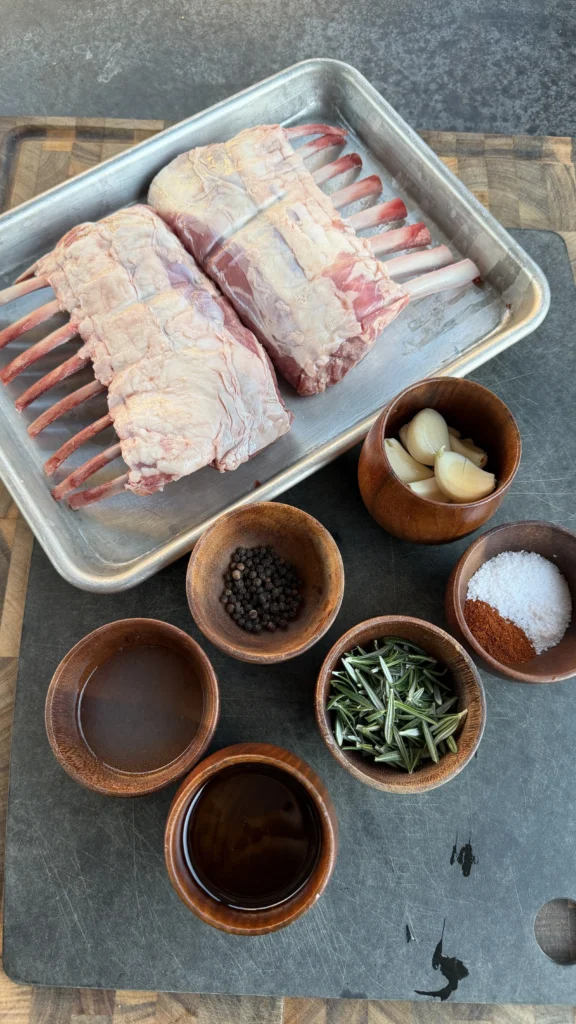
Garlic and rosemary create the most iconic flavor combination for lamb because they complement rather than compete with the meat’s naturally rich, slightly gamey flavor. Lamb has a more pronounced taste than beef or pork, with earthy, mineral notes that can overwhelm delicate herbs or get lost under aggressive spices. Rosemary’s piney, slightly peppery flavor is strong enough to stand up to lamb’s intensity while adding aromatic complexity that enhances rather than masks the meat.
The chemical compounds in rosemary, particularly rosmarinic acid and carnosic acid, also act as natural tenderizers that help break down proteins in the meat while adding antioxidants that prevent the fat in lamb from oxidizing and developing off-flavors. Fresh rosemary releases these compounds more effectively than dried, though dried rosemary works well if you increase the quantity slightly to compensate for reduced potency. The woody, resinous quality of rosemary pairs particularly well with lamb’s fat content, cutting through richness the same way mint does in traditional British preparations.
Garlic adds pungent, savory depth that rounds out rosemary’s sharpness and brings umami richness to the marinade. Raw minced garlic penetrates the meat during marinating, then caramelizes on the surface during high-heat cooking, creating sweet, nutty notes that contrast beautifully with lamb’s savory flavor. The combination of garlic’s sulfur compounds and rosemary’s aromatic oils creates a complex flavor profile that tastes both traditional and sophisticated.
Lemon juice in the marinade brightens the garlic and rosemary while adding acid that gently tenderizes the meat’s surface. The citrus cuts through lamb’s natural fattiness and prevents the herbs from tasting one-dimensional or heavy. This classic Mediterranean combination has endured for centuries because the ingredients work synergistically, each element enhancing the others while creating a balanced, craveable flavor profile.
Why You Should Cut Racks Into Individual Chops Before Marinating
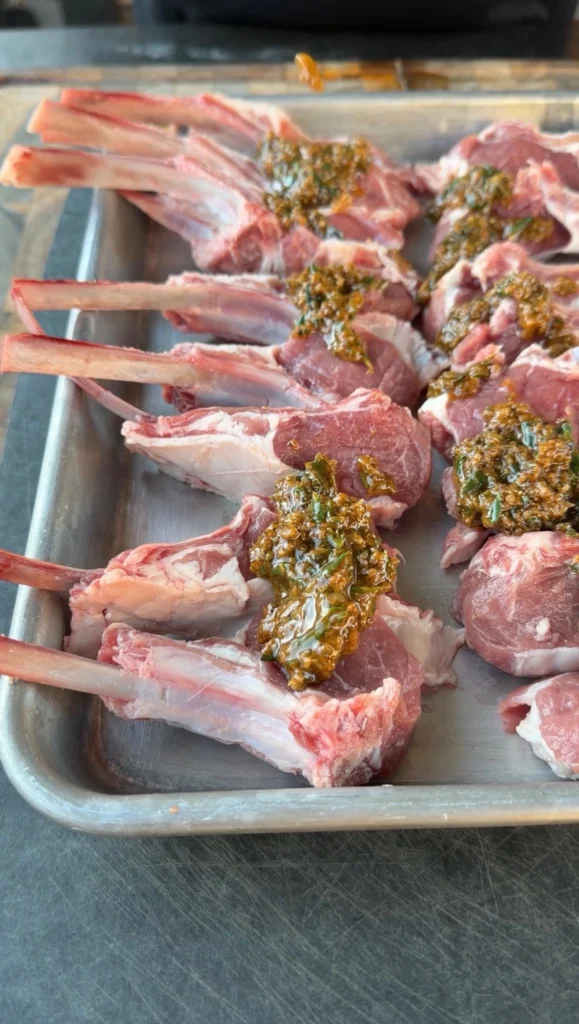
Cutting the rack into individual chops before marinating allows the garlic-rosemary mixture to coat all surfaces of each chop rather than just the exterior of the intact rack. When you marinate a whole rack, only the outside gets seasoned; the surfaces between individual chops where they’re still connected stay unseasoned and bland. By separating the chops first, you create twice as much surface area for the marinade to penetrate, resulting in more flavorful meat throughout.
Individual chops also cook more evenly than whole racks because heat can reach all sides of each piece simultaneously. A whole rack has thickness variations where the eye of the meat is thickest in the center and thinner at the ends, making it nearly impossible to achieve consistent doneness across all chops. When you separate them and arrange them on the grill or in the pan with space between pieces, hot air or heat from the cooking surface circulates around each chop, cooking them uniformly.
Cutting the rack yourself is straightforward and requires no special butchering skills. You simply slice between each rib bone with a sharp knife, creating individual chops that are typically about 1 to 1.5 inches thick. Most racks yield 7-8 chops, so two racks give you 14-16 chops total, which serves 4-6 people depending on appetites and side dishes. The bones make excellent handles for eating and add flavor during cooking.
Pre-cut lamb chops from the butcher counter work fine if you prefer convenience, but they often cost more per pound than whole racks and sometimes come from different racks with inconsistent sizing. Buying whole racks and cutting them yourself ensures all your chops match in size and quality, and you can control the thickness if you prefer thicker or thinner cuts. Either way, cutting before marinating rather than after is the critical step for maximum flavor.
What Internal Temperature Makes Perfect Lamb Chops
The ideal internal temperature for lamb chops is 130°F for medium-rare, which gives you warm pink centers with incredible tenderness and full lamb flavor. At this temperature, the muscle fibers have relaxed enough to be tender but haven’t contracted so much that they squeeze out moisture. The fat has melted just enough to baste the meat from within, creating that melt-in-your-mouth texture you want from premium lamb. Pull the chops from heat at 127-128°F and they’ll coast up to 130°F during the 5-minute rest.
Medium lamb at 140°F internal temperature offers a compromise for those who prefer less pink meat but still want juiciness. The center will be light pink rather than deep rosy pink, and the texture is slightly firmer but still tender. Beyond 145°F, lamb chops start becoming dry and tough as the proteins contract aggressively and squeeze out moisture. Well-done lamb at 160°F or higher has lost most of its natural juiciness and developed a grainy, chalky texture that no amount of marinating can prevent.
Lamb chops are small and thin, typically just 1 to 1.5 inches thick, which means they cook rapidly and can go from perfect to overcooked in less than a minute. You need an instant-read thermometer to catch them at the right moment. Insert the probe horizontally into the center of the thickest part of the meat, avoiding the bone since bone conducts heat differently than meat and can give false readings.
Remember that carryover cooking continues after you remove lamb from heat. The temperature will rise 3-5 degrees during the rest period as residual heat migrates from the exterior toward the center. This means you should pull medium-rare lamb at 125-127°F and medium lamb at 135-137°F, then let them rest for 5 minutes before serving. Skipping the rest means the juices haven’t redistributed through the meat and will run out onto the plate when you cut in, leaving you with drier chops.
Should You Marinate Lamb Chops or Just Season Them
Marinating lamb chops for 30 minutes to 4 hours creates more flavorful, aromatic meat than simple seasoning alone, particularly with the garlic-rosemary combination that needs time to penetrate the surface. The olive oil in the marinade carries fat-soluble flavor compounds from the garlic and rosemary into the meat, while the lemon juice’s acid helps break down surface proteins slightly, allowing seasonings to absorb better. A 30-minute marinade is the minimum for noticeable flavor improvement; 2-4 hours is optimal for maximum herb and garlic penetration.
That said, you shouldn’t marinate lamb chops longer than 4-6 hours because the acid in the lemon juice can start to make the meat’s texture mushy and unpleasant. Unlike tougher cuts that benefit from extended marinating, tender lamb chops have delicate muscle fibers that break down quickly when exposed to acidic marinades. If you want to prep ahead, you can marinate for up to 4 hours maximum, then drain and refrigerate the marinated chops for another day before cooking.
Simple seasoning with just salt, pepper, and olive oil rubbed on right before cooking will still give you delicious lamb chops if you’re short on time. The high-heat cooking method creates plenty of flavor through caramelization and the Maillard reaction, and lamb itself has enough natural flavor that it doesn’t require complex seasoning to taste good. However, you’ll miss the aromatic complexity and depth that marinated chops develop.
The marinade also serves a practical purpose by coating the chops with oil, which prevents sticking on the grill grates or in the pan and helps achieve better browning. The herbs clinging to the surface create flavorful crispy bits where they char slightly, adding textural contrast to the tender meat. If you skip marinating, you should still rub the chops generously with olive oil before seasoning to get similar results.
How to Get a Perfect Sear on Lamb Chops
Getting a perfect sear on lamb chops requires extremely high heat, properly dried meat surfaces, and patience to let the crust develop before flipping. For grilling, preheat your grill to 450-500°F with the lid closed, which takes about 10-15 minutes on a gas grill or 20-30 minutes for charcoal. For pan-searing, preheat a cast-iron skillet over medium-high heat for 3-4 minutes until a drop of water instantly sizzles and evaporates on contact.
The most common searing mistake is putting wet meat on the grill or in the pan. Even though the chops come from an oil-based marinade, you should let them drain for a minute before cooking, and pat off any excess marinade that’s pooling on the surface with a paper towel. Too much liquid creates steam when it hits the hot surface, which prevents browning and can cause dangerous oil spatters. You want the meat coated with a thin layer of marinade with herbs clinging to it, not dripping wet.
Place the chops on the preheated grill grates or in the hot pan and resist the urge to move them. Let them sit completely undisturbed for 3-4 minutes to develop a deep brown crust with visible grill marks or even caramelization. The meat will naturally release from the grates or pan when it’s properly seared; if it sticks when you try to flip it, it’s not ready yet. Give it another 30-60 seconds and try again.
Flip the chops just once halfway through cooking. Constant flipping prevents proper crust development and makes it harder to monitor doneness since you’re constantly disturbing the cooking process. After flipping, cook for another 3-4 minutes for medium-rare, then check the internal temperature. For the butter baste finishing technique, add butter to the pan during the last minute of cooking and tilt the pan to pool the melted butter, then spoon it over the chops repeatedly for 30-45 seconds.
Step-by-Step Instructions
Step 1: Cut the Lamb Racks Into Individual Chops
Place the lamb racks on a cutting board with the bones facing up and the meat side down. Locate the spaces between each rib bone by running your fingers along the rack to feel where the bones are separated. Use a sharp chef’s knife to slice straight down between each bone, cutting through the meat and any connective tissue to create individual chops.
Each rack should yield 7-8 individual lamb chops depending on how the butcher prepared it. You’ll end up with about 16 chops total from two racks, with each chop featuring one curved rib bone and a medallion of tender lamb loin meat. The chops should be roughly 1 to 1.5 inches thick for even cooking.
Trim any excess fat from the outside of the chops if desired, though leaving a thin fat cap adds flavor and helps keep the meat moist during cooking. The fat will render during grilling or searing, basting the meat naturally. You don’t need to french the bones or do any fancy butchering; these chops are for eating, not presentation plating.

Arrange the cut chops in a large bowl or shallow dish where they can sit in a single layer or slightly overlapping. Having them cut before marinating ensures every surface gets coated with the garlic-rosemary mixture rather than just the exterior of an intact rack.
Step 2: Prepare the Garlic and Rosemary Marinade
Mince 8 cloves of garlic as finely as possible using a sharp knife or garlic press. Finely chop ¼ cup fresh rosemary by stripping the leaves from the stems and running your knife through them repeatedly until they’re in small pieces, or measure 2½ tablespoons dried rosemary if using dried herbs instead. The finer you chop the garlic and rosemary, the better they’ll coat the lamb and penetrate the meat.
Combine the minced garlic, chopped rosemary, ¼ cup olive oil, 2 tablespoons fresh lemon juice, 2½ teaspoons kosher salt, 2 teaspoons cracked black pepper, and 1 teaspoon smoked paprika if using in a bowl. Whisk or stir everything together until the olive oil and lemon juice are emulsified and the seasonings are evenly distributed. The mixture should look thick and chunky from all the garlic and rosemary.
Taste the marinade and adjust seasoning if needed. It should taste quite salty and garlicky since it needs to season the entire chop, not just the surface. The lemon juice should provide bright acidity without tasting overwhelmingly tart, and the rosemary should be fragrant and prominent.
Pour the marinade over the lamb chops in the bowl and toss everything together with your hands, making sure every chop is thoroughly coated on all sides. The oil should coat each piece completely, and you should see herbs and garlic clinging to every surface. Massage the marinade into the meat gently to help it penetrate.
Step 3: Marinate the Lamb Chops
Cover the bowl with plastic wrap or transfer the marinated chops to a large zip-top bag, squeezing out excess air before sealing. Refrigerate for at least 30 minutes if you’re in a hurry, or ideally 2-4 hours for the best flavor penetration. Turn the chops once or twice during marinating to ensure even coating, though it’s not critical if you forget.
Don’t marinate longer than 4 hours or the lemon juice’s acid can start to break down the meat’s texture too much, making it mushy. If you need to prepare ahead, you can marinate for the full 4 hours, then drain off the marinade and store the seasoned chops in the refrigerator for up to another 24 hours before cooking.
Remove the chops from the refrigerator 20 minutes before you plan to cook them. Letting them sit at room temperature briefly takes the chill off the meat, which helps them cook more evenly. Cold lamb straight from the fridge will have a cold center that takes longer to heat up, potentially leading to overcooked exteriors by the time the middle reaches temperature.
While the chops are coming to room temperature, preheat your grill to 450-500°F or heat your cast-iron skillet over medium-high heat for 3-4 minutes. You want your cooking surface screaming hot before the lamb touches it.
Step 4: Grill the Lamb Chops
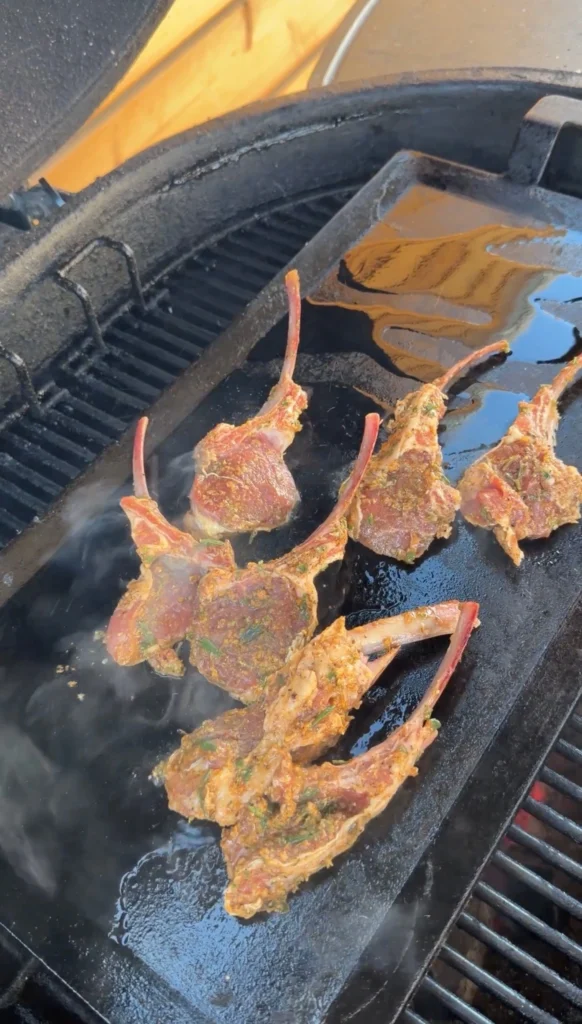
For grilling, oil the grill grates lightly by dipping a folded paper towel in vegetable oil and using tongs to rub it across the hot grates. This prevents sticking and helps create clean grill marks. Remove the lamb chops from the marinade, letting excess drip off but leaving the herbs and garlic clinging to the meat. You can pat off any pooling liquid with a paper towel if the chops are dripping wet.
Place the chops on the hottest part of the grill, arranging them perpendicular to the grates so you get nice grill marks. Leave space between each chop so heat can circulate and they sear rather than steam. Close the lid to maintain high heat if using a gas grill, or leave it open if you prefer to monitor the chops closely.
Grill for 3-4 minutes without moving them. The lamb should develop deep brown grill marks and release easily from the grates when it’s ready to flip. If it sticks, give it another 30-60 seconds. Flip each chop and grill the second side for another 3-4 minutes for medium-rare, or 4-5 minutes for medium.
Check the internal temperature by inserting an instant-read thermometer horizontally into the center of the thickest chop, avoiding the bone. Pull them at 125-127°F for medium-rare or 135-137°F for medium. The temperature will rise 3-5 degrees during resting. Transfer the grilled chops to a clean plate, top with 2 tablespoons butter cut into small pieces, and tent loosely with foil. Rest for 5 minutes before serving.
Step 5: Pan-Sear the Lamb Chops (Alternative Method)
For pan-searing, heat a large cast-iron skillet over medium-high heat for 3-4 minutes until very hot. Add a small amount of oil to the pan if needed, though the marinade on the chops should provide enough fat to prevent sticking. Work in batches if necessary to avoid crowding; the chops should have at least an inch of space around them.
Place the lamb chops in the hot skillet, laying them down gently to avoid splashing. You should hear an immediate sizzle when they hit the pan. Leave them completely undisturbed for 3-4 minutes to develop a deep brown crust on the first side. Resist the urge to peek or move them around.
Flip the chops with tongs and cook the second side for 3-4 minutes for medium-rare. During the last minute of cooking, add 2 tablespoons butter to the pan and let it melt. Tilt the pan slightly to pool the butter on one side, then use a spoon to continuously baste the chops with the melted butter for 30-45 seconds. This butter baste adds richness and helps the exterior develop a glossy, flavorful finish.
Check the internal temperature and pull the chops when they reach 125-127°F for medium-rare or 135-137°F for medium. Transfer to a plate and rest for 5 minutes before serving, allowing the juices to redistribute throughout the meat.
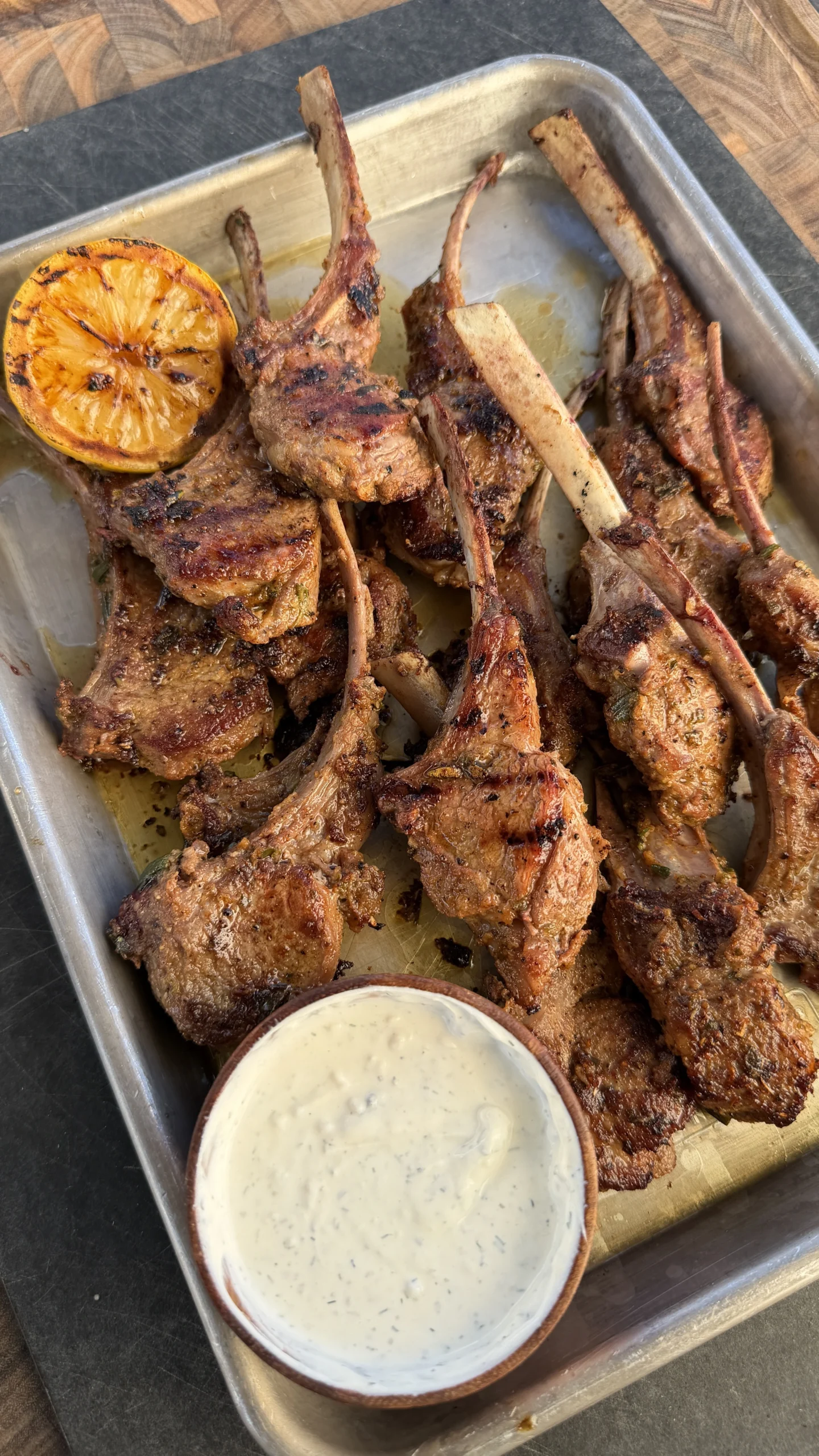
Garlic Rosemary Lamb Chops
Ingredients
Equipment
Method
- Cut the lamb racks into individual chops by slicing between each rib bone with a sharp knife. You should get about 16 chops total from 2 racks. Arrange in a large bowl.
- Mix minced garlic, chopped rosemary, olive oil, lemon juice, salt, pepper, and smoked paprika in a bowl. Pour over lamb chops and toss until every piece is thoroughly coated. Massage the marinade into the meat.
- Cover and refrigerate for 30 minutes to 4 hours. Remove from fridge 20 minutes before cooking to bring to room temperature.
- For grilling: Preheat grill to 450-500°F. Oil the grates, then grill chops 3-4 minutes per side for medium-rare (125-127°F internal temp) or 4-5 minutes per side for medium (135-137°F).
- For pan-searing: Heat cast-iron skillet over medium-high for 3-4 minutes. Sear chops 3-4 minutes per side, adding butter during the last minute to baste.
- Check internal temperature with an instant-read thermometer. Transfer to a plate, top with butter if grilled, and rest 5 minutes before serving.
Nutrition
Notes
Tried this recipe?
Let us know how it was!Frequently Asked Questions
Can You Use Dried Rosemary Instead of Fresh?
You can use dried rosemary instead of fresh rosemary for this marinade, though fresh herbs give superior flavor and aroma. If using dried, reduce the quantity slightly to 2½ tablespoons instead of ¼ cup fresh since dried herbs are more concentrated. Dried rosemary works well in oil-based marinades because the oil helps rehydrate the herbs and extract their essential oils, distributing flavor throughout the marinade.
The main difference between fresh and dried rosemary is texture and intensity. Fresh rosemary has a brighter, more vibrant piney flavor with subtle citrus notes that complement lamb beautifully. Dried rosemary tastes more concentrated and slightly woody, with less aromatic complexity. Fresh herbs also have moisture that helps them cling to the lamb better, while dried rosemary can feel gritty or tough if not chopped finely.
For best results with dried rosemary, crush it between your fingers before adding it to the marinade to release more of its essential oils. You can also bloom it in the olive oil for 2-3 minutes over low heat, then let it cool completely before mixing with the other marinade ingredients. This technique maximizes flavor extraction from dried herbs.
If you have access to fresh rosemary, it’s worth using for special occasion lamb chops. The investment in fresh herbs pays off in noticeably better flavor and aroma. If dried is your only option, the recipe will still work well; just be aware the flavor profile will be slightly different and potentially more intense depending on how old your dried herbs are.
What’s the Best Way to Reheat Leftover Lamb Chops?
The best way to reheat lamb chops is gently in a 300°F oven for 5-7 minutes until just warmed through, which prevents overcooking and keeps them tender. Place the chops on a baking sheet or oven-safe plate, cover loosely with foil to prevent drying out, and warm them slowly until they reach about 110-120°F internal temperature. They should feel warm to the touch but not steaming hot.
Avoid reheating in the microwave if possible. Microwaves heat unevenly and can turn tender lamb chops into tough, rubbery meat in under a minute. The high-intensity microwave energy causes the proteins to contract aggressively, squeezing out all the juices and creating an unpleasant texture. If you absolutely must use a microwave, use 50% power and heat in 15-20 second bursts, checking frequently.
For even better results, you can reheat lamb chops in a skillet over low heat with a tablespoon of butter. This method gives you some control over the reheating process and adds richness back to the meat. Heat the skillet over low heat, add butter, place the chops in the melted butter, and heat gently for 2-3 minutes per side until warmed through.
Leftover lamb chops are also excellent served cold or at room temperature, sliced thin and served over salads or in sandwiches. The garlic-rosemary marinade flavors are still present and delicious even when the meat is chilled. This approach avoids any risk of overcooking during reheating and gives you a completely different way to enjoy the leftovers.
How Do You Know When Lamb Chops Are Done Without a Thermometer?
You can judge lamb chop doneness without a thermometer using the finger test, though this method requires practice and isn’t as accurate as using an instant-read thermometer. Touch the fleshy part of your palm below your thumb while your hand is relaxed; this soft, squishy texture represents rare meat. Make an “OK” sign by touching your thumb to your index finger and touch that same spot on your palm; the slightly firmer texture represents medium-rare. Touch thumb to middle finger for medium, and thumb to ring finger for medium-well.
Press the center of a lamb chop gently with your finger or tongs and compare the resistance to your palm test. Medium-rare lamb should feel like the thumb-to-index-finger test, with some give but definite resistance. If it feels very soft and squishy with little resistance, it’s still rare. If it feels firm with very little give, you’ve gone past medium into medium-well or well-done territory.
Visual cues also help determine doneness. Make a small cut in the thickest part of one chop to peek inside. Medium-rare lamb should be deep pink to rosy red in the center with a brown crust on the outside. Medium lamb is light pink throughout with no deep red color. The juices running from the cut should be slightly pink for medium-rare or clear for medium.
However, these methods are imprecise and can lead to overcooked lamb chops, especially for beginners. An instant-read thermometer costs under $15 and eliminates all guesswork, giving you perfectly cooked lamb every time. The small investment is worth it for expensive cuts like lamb racks where overcooking means wasting money and a special meal.