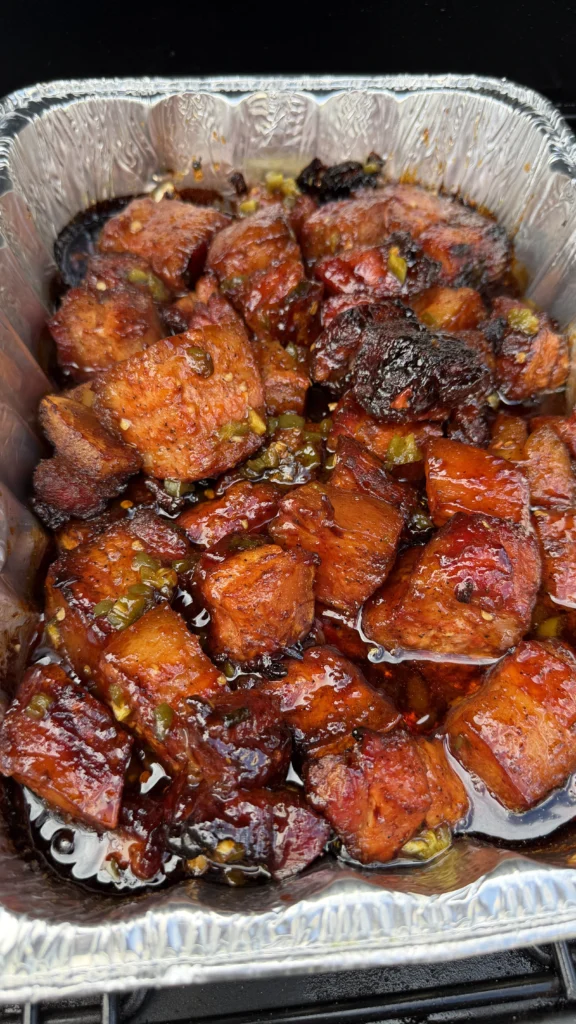
Honey jalapeño pork belly burnt ends is 1-inch cubes of pork belly seasoned with sweet BBQ rub, smoked at 275°F for 2 hours until the bark sets, then braised in a foil pan with sliced jalapeños, honey, BBQ sauce, and butter at 300°F for 1 to 1.5 hours until tender. The foil cover traps steam and breaks down the tough connective tissue in the pork belly. After braising, you remove the foil and return the pan to the smoker for a final 20 minutes. This allows the sauce to reduce and thicken into a sticky, caramelized glaze that coats each cube with layers of sweet heat.
The entire process takes about 3.5 to 4 hours from start to finish. This includes 15 minutes of prep to cube and season the pork belly. You get 2 hours of initial smoking to develop bark and smoke flavor. Then 1 to 1.5 hours of covered braising to tenderize the meat. Finally, 20 minutes of uncovered cooking to set the glaze.
These smoked pork belly burnt ends deliver rich, fatty pork with crispy caramelized edges. The honey provides sweetness that balances the heat from fresh jalapeños. The butter adds richness and helps create that signature sticky texture. Unlike brisket burnt ends which come from the point cut, pork belly burnt ends use the entire slab cut into uniform cubes. This ensures every piece has the perfect ratio of meat to fat.
The two-temperature smoking method is critical for success. You start at 275°F to slowly render the fat without drying out the exterior. Then you increase to 300°F during the braising phase. This higher heat speeds up the breakdown of collagen while keeping the meat moist under the foil. The final uncovered phase at 300°F caramelizes the sugars in the honey and BBQ sauce. You get that glossy, sticky coating that makes burnt ends irresistible.
Jump to RecipeWhy Pork Belly Needs the Two-Temperature Smoking Method
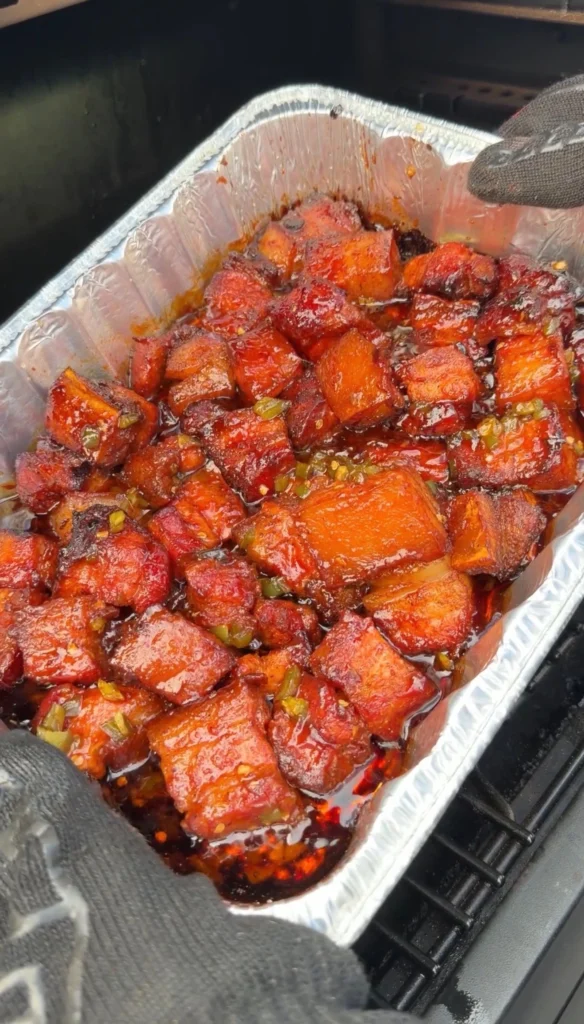
Building Bark at 275°F Without Drying Out
Starting your pork belly burnt ends at 275°F allows you to develop a dark, flavorful bark on the exterior. The meat has time to absorb smoke flavor. The moderate temperature renders the fat slowly without causing the surface to dry out or burn.
Pork belly contains significantly more fat than most other cuts. This fat needs time to render and drip away. If you smoke at temperatures above 300°F from the start, the exterior forms a hard crust. The fat underneath doesn’t have enough time to melt. You end up with greasy, rubbery burnt ends instead of tender, crispy ones.
At 275°F, the subcutaneous fat gradually liquefies over the 2-hour initial smoke. It bastes the meat from the inside as it drips down through the cubes. The proteins in the rub and the natural sugars in the meat undergo the Maillard reaction. This creates complex flavors and that characteristic mahogany color. The bark becomes tacky and set. It’s firm enough to hold up to the braising liquid you’ll add later.
Speeding Up Collagen Breakdown at 300°F
After the bark is set, you increase the temperature to 300°F for the braising phase. This higher heat accelerates the breakdown of tough collagen fibers in the pork belly. It converts them into soft gelatin.
The foil cover traps moisture and creates a steaming environment. The combination of higher heat and trapped steam works faster than low-and-slow smoking alone. What would take 4 to 5 hours at 250°F happens in just 1 to 1.5 hours at 300°F.
The butter in the braising mixture melts and coats every surface of the pork belly. It conducts heat more efficiently than air. It speeds up the tenderizing process. The honey and BBQ sauce provide sugars that penetrate the meat. They create additional flavor layers beyond what the rub provides.
Why You Don’t Start at 300°F
If you tried to smoke pork belly burnt ends at 300°F from the beginning, the exterior would char. The fat wouldn’t render properly. The meat would become dry on the outside while remaining tough on the inside.
The lower initial temperature gives the fat time to render gradually. It allows smoke penetration before you seal everything under foil. The two-stage approach ensures you get both deep smoke flavor and tender texture.
Once you remove the foil for the final 20 minutes, the 300°F heat caramelizes the sugars in the glaze. You get that sticky, lacquered finish. But the meat is already tender from the braising phase. You’re just setting the sauce, not cooking the pork.
What Makes Pork Belly Burnt Ends Different from Brisket Burnt Ends
Fat Content and Texture Differences
Pork belly burnt ends contain significantly more fat than brisket burnt ends. A typical pork belly is about 50% fat by weight. Brisket point is closer to 30% fat. This higher fat content means pork belly stays moist and juicy. It’s harder to overcook compared to brisket.
The fat in pork belly is also distributed differently than in brisket. Brisket has distinct layers of fat and lean meat. Pork belly has fat marbled throughout the entire cut. It also has a thick fat cap on one side. When you cube pork belly, every piece gets a mix of meat and fat. You don’t need to trim or select specific parts like you do with the brisket point.
Brisket burnt ends have a beefy, savory flavor that pairs well with heavy smoke and bold rubs. Pork belly burnt ends have a milder, sweeter pork flavor. They work better with sweet and spicy glazes like honey jalapeño. The richness of the pork belly can handle aggressive sweetness without becoming cloying.
Cooking Time and Temperature Considerations
Brisket burnt ends typically require 6 to 8 hours of total cooking time. This includes the initial smoke and the final braise. Pork belly burnt ends are done in 3.5 to 4 hours. The higher fat content and smaller muscle fibers break down faster.
Brisket burnt ends usually smoke at 250°F throughout the entire process. Pork belly benefits from the two-temperature method starting at 275°F and finishing at 300°F. The higher heat helps render the extra fat more quickly. It prevents the burnt ends from becoming greasy.
You also don’t need to worry as much about hitting a specific internal temperature with pork belly. Brisket needs to reach 203 to 205°F for proper tenderness. Pork belly becomes tender anywhere between 195 and 210°F. The braising process does most of the work. The exact final temperature matters less.
Why Pork Belly Needs More Liquid in the Braise
When you braise brisket burnt ends, you typically add just enough liquid to create steam. Maybe ¼ cup of beef broth or BBQ sauce. Pork belly burnt ends need a full cup of liquid plus honey and butter. The extra fat needs something to mix with. Otherwise, you end up with a greasy pool instead of a cohesive glaze.
The honey and BBQ sauce in the braising mixture emulsify with the rendered pork fat. They create a thick, sticky coating that clings to the meat. The butter adds richness. It helps the sauce coat the cubes evenly. Without enough liquid, the pork belly would fry in its own fat. It wouldn’t develop that signature glazed appearance.
The jalapeños also need liquid to release their heat and flavor. When jalapeños cook in straight fat, their capsaicin compounds concentrate. They become harsh and bitter. When they braise in honey and BBQ sauce, the heat mellows. The flavor becomes rounded and complex.
Why Jalapeños and Honey Create the Perfect Balance
How Capsaicin Interacts with Sugar
The heat from jalapeños comes from capsaicin, a compound that binds to pain receptors in your mouth. It creates that burning sensation. Sugar molecules, including those in honey, help block some of these receptors. They reduce the perceived intensity of the heat without eliminating it completely.
When you braise jalapeños with honey, the capsaicin dissolves into the honey. It distributes evenly throughout the glaze. Instead of getting random bites of intense heat from jalapeño pieces, every cube of pork belly gets a consistent level of warmth. The sweetness of the honey hits your tongue first. Then the heat builds gradually as you chew.
Honey also contains acids and enzymes that slightly break down capsaicin over time. Fresh raw jalapeños have sharp, aggressive heat. Jalapeños braised with honey for 90 minutes develop a rounder, more complex warmth. The heat is still present but it doesn’t overpower the other flavors.
Why Fresh Jalapeños Work Better Than Dried
Fresh jalapeños have a bright, vegetal flavor that complements the richness of pork belly. They contain moisture that helps create the braising liquid. As they cook, they release their juices into the honey and BBQ sauce. This creates a more complex, layered flavor profile.
Dried jalapeños or jalapeño powder would add heat. But they’d lack the fresh, green notes that balance the heavy, fatty pork. They also wouldn’t contribute any moisture to the braise. You’d need to add extra liquid to compensate.
Leaving the jalapeño seeds in increases the heat level significantly. The seeds and the white membranes inside the pepper contain the highest concentration of capsaicin. If you want milder burnt ends, remove the seeds and membranes before slicing. If you want extra heat, leave everything in. The honey will still balance it out. The spice just hits harder.
The Science of Sweet and Spicy Combinations
Your tongue has separate receptors for sweet tastes and for pain sensations like heat. These receptors work independently. But your brain processes their signals together. When both are activated simultaneously, they enhance each other rather than canceling out.
The sweetness from the honey makes the pork belly taste richer and more indulgent. The heat from the jalapeños prevents the honey from becoming cloying or one-dimensional. Together, they create a dynamic flavor that keeps you coming back for another bite.
The fat in the pork belly also plays a role. Capsaicin is fat-soluble, not water-soluble. This means it dissolves into the rendered pork fat during braising. Every fatty bite carries both the honey sweetness and the jalapeño heat. Water-based glazes would leave the heat on the surface. The fat-based glaze makes it penetrate deep into the meat.
Why You Must Remove the Foil for the Final 20 Minutes
How Steam Prevents Caramelization
When pork belly burnt ends braise under foil, the trapped moisture creates a humid, steamy environment. This steam is essential for breaking down collagen and tenderizing the meat. But steam also prevents the Maillard reaction and caramelization from occurring. These chemical processes require dry heat above 300°F.
While the foil is on, the braising liquid stays thin and watery. The sugars in the honey and BBQ sauce remain dissolved in the liquid. They coat the pork belly but they don’t stick or form a glaze. The surface of the meat looks wet and shiny. But it’s not sticky or caramelized.
If you pulled the burnt ends immediately after braising without removing the foil, you’d have tender meat. But the sauce would pool in the bottom of the pan. It would run off the pork belly when you tried to serve it. You wouldn’t get that signature burnt ends appearance with thick, glossy coating on every cube.
The Caramelization Process
When you remove the foil and return the pan to the 300°F smoker, the excess moisture evaporates quickly. The surface of the pork belly and the braising liquid both dry out slightly. This allows the temperature at the surface to climb above the boiling point of water.
The sugars in the honey and BBQ sauce begin to caramelize. They break down and form new compounds. These create deeper, more complex flavors. The sugars also polymerize, or link together into longer chains. These longer sugar chains are thicker and stickier than the original simple sugars. This is what creates the glossy, lacquered appearance.
The Maillard reaction also intensifies during this final phase. The proteins and amino acids in the BBQ sauce and on the surface of the pork react with the caramelizing sugars. They form hundreds of new flavor compounds. These add savory, roasted notes that balance the sweetness.
As the liquid reduces, it concentrates. A cup of thin braising liquid becomes half a cup of thick glaze. This concentrated glaze has more intense flavor. It clings to the pork belly instead of sliding off.
Timing the Final Glaze Set
Twenty minutes is the ideal time for this final uncovered phase. Less than 15 minutes and the sauce won’t reduce enough. It stays too thin. More than 25 minutes and you risk burning the sugars. They turn bitter and acrid.
You’ll know it’s done when the sauce has thickened to the consistency of warm syrup. It should coat the back of a spoon. When you pick up a piece of pork belly, the glaze should cling to it. It shouldn’t drip off immediately.
The edges of the pork belly cubes also crisp up slightly during this final phase. The rendered fat at the surface fries in the concentrated glaze. You get crispy, caramelized bits mixed with tender, juicy interior. This textural contrast is what makes burnt ends so addictive.
If you’re watching the pan and the sauce starts to look too thick or begins sticking to the bottom, you can pull it early. If it’s still too thin after 20 minutes, give it another 5 to 10 minutes. Just watch carefully to prevent burning.
How to Cut Pork Belly Into Uniform Cubes
Why Size Matters for Even Cooking
Cutting your pork belly into uniform 1-inch cubes ensures every piece cooks at the same rate. Smaller cubes would dry out before the larger ones finished tenderizing. Larger cubes would take too long. The exterior would overcook while the center remained tough.
One-inch cubes also provide the ideal surface area to interior ratio. You get enough bark and glaze coating on the outside. But you still have a substantial bite of tender meat and fat on the inside. Half-inch cubes would be mostly bark. Two-inch cubes wouldn’t have enough surface area for proper smoke penetration.
Uniform sizing also ensures even distribution of the braising liquid. If you had some large chunks and some small pieces, the small pieces would be swimming in liquid. The large chunks would barely be covered. The result would be inconsistent texture and flavor across the batch.
The Easiest Method for Uniform Cuts
Start with a whole pork belly slab. If it’s skin-on, remove the skin first. Use a sharp knife to score through just the skin layer. Then grip the skin at one corner and pull it away from the fat. It should come off in one piece.
Place the skinned pork belly fat-cap down on your cutting board. The meat side should be facing up. Use a long, sharp knife to cut the slab into 1-inch strips running the length of the belly. Don’t worry about being perfectly precise. Close to 1 inch is fine.
Stack 2 or 3 strips on top of each other. Cut across the strips every inch. This creates uniform cubes. Repeat with the remaining strips until the entire belly is cubed.
If you end up with some odd-sized pieces from the ends or edges, save those for another use. You want all the cubes going on the smoker to be as close to the same size as possible.
Should You Trim the Fat Cap?
Pork belly has a thick layer of fat on one side. Some people trim this down to about ¼ inch. Others leave it intact. For burnt ends, leave most of the fat cap on. It will render during the smoking process. It bastes the meat from the inside.
If the fat cap is extremely thick, more than 1 inch, you can trim it down to ¾ inch. But don’t remove it completely. The fat is what makes burnt ends so rich and tender. Lean pork belly burnt ends would be dry and disappointing.
When you cube the belly, some pieces will have more fat cap than others depending on where they came from on the slab. This variation is fine. It actually creates textural diversity in the final dish. Some bites will be fattier and more indulgent. Others will be meatier with a better bark.
Honey Jalapeño Pork Belly Burnt Ends
Sweet, spicy, sticky smoked pork belly cubes
Ingredients
Pork Belly
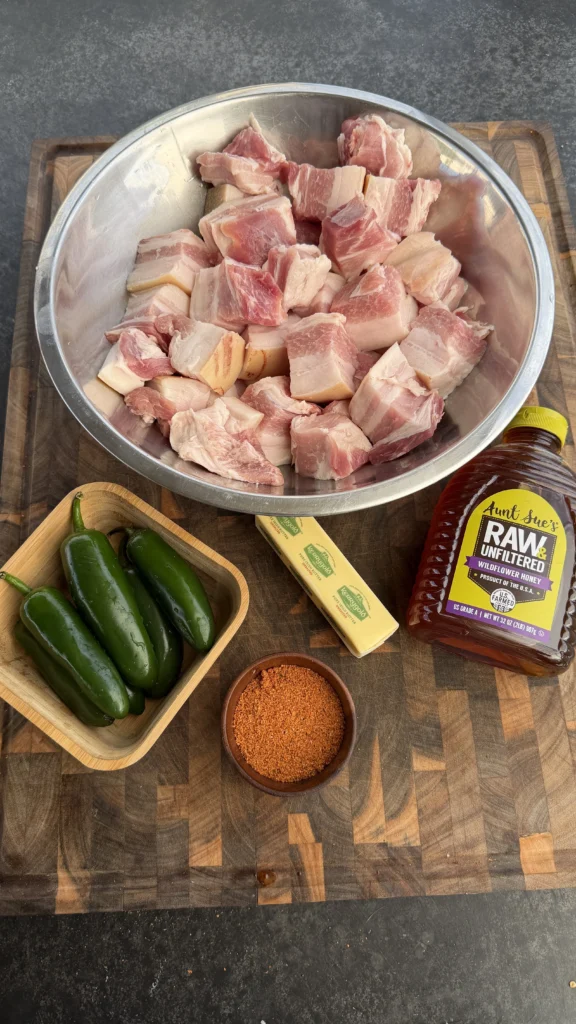
- 4 lbs pork belly, cut into 1-inch cubes
- Sweet BBQ rub (enough to coat generously)
Braising Mixture
- 3 fresh jalapeños, sliced
- ½ cup honey
- 1 cup sweet BBQ sauce
- 1 stick (8 oz) unsalted butter
Don’t skip the foil braising step. This is what transforms tough pork belly into melt-in-your-mouth burnt ends. The butter and honey create a sticky glaze that penetrates every crevice while the meat becomes tender.
Step-by-Step Instructions
Step 1: Prep and Season the Pork Belly
Remove the pork belly from the refrigerator. Let it sit at room temperature for 30 minutes while you prep. This allows the meat to warm slightly. It promotes more even cooking.
If your pork belly still has the skin attached, remove it now. Score through the skin with a sharp knife. Pull it away from the fat layer underneath. It should separate easily.
Cut the pork belly into 1-inch cubes using a sharp knife. Work methodically to keep the pieces as uniform as possible. Place all the cubed pork belly in a large bowl or aluminum pan.
Season all sides of the pork belly cubes generously with your favorite sweet BBQ rub. Use enough rub so you can see a visible coating on every surface. Don’t be shy. The pork belly is rich and fatty. It can handle aggressive seasoning.
Toss the cubes to ensure even coverage. Let them sit for 10 to 15 minutes while the rub begins to adhere to the surface. This allows some of the salt in the rub to penetrate the outer layer of meat.
Step 2: Smoke the Pork Belly at 275°F
Preheat your smoker to 275°F. Use your preferred wood. Hickory, apple, or cherry all work well with pork. Avoid mesquite. It’s too strong for the sweet glaze you’ll add later.
Once the smoker is at temperature and producing clean, thin smoke, place the pork belly cubes directly on the grates. Space them about ½ inch apart so smoke can circulate around each piece. Don’t overcrowd the smoker.
Close the lid and smoke for 2 hours. Resist the urge to open the smoker frequently. Every time you lift the lid, you lose heat and smoke. Check once after 1 hour to make sure the temperature is holding steady.
After 2 hours, the pork belly should have a dark, mahogany bark. The cubes should have shrunk slightly as fat rendered out. The exterior should feel tacky and set, not wet. The color should be deep and glossy.
If the bark doesn’t look dark enough after 2 hours, give it another 15 to 30 minutes. But don’t go much longer than 2.5 hours total. You’re not trying to fully cook the pork belly at this stage. You’re just setting the bark and building smoke flavor.
Step 3: Prepare the Braising Mixture and Increase Temperature
While the pork belly finishes its initial smoke, prepare your braising mixture. Slice 3 fresh jalapeños into rounds about ¼ inch thick. If you want less heat, remove the seeds and white membranes first. If you want more heat, leave them in.
Get a disposable aluminum foil pan. It should be large enough to hold all the pork belly cubes in a single layer with some room to spare. A full-size steam table pan or a large roasting pan works well.
Increase your smoker temperature to 300°F. This usually takes 10 to 15 minutes. Make sure the temperature stabilizes before you add the pork belly back in.
Step 4: Braise the Pork Belly
Once the pork belly has finished its initial 2-hour smoke and developed good bark, transfer all the cubes to the prepared foil pan. Arrange them in a single layer if possible. Some stacking is fine if needed.
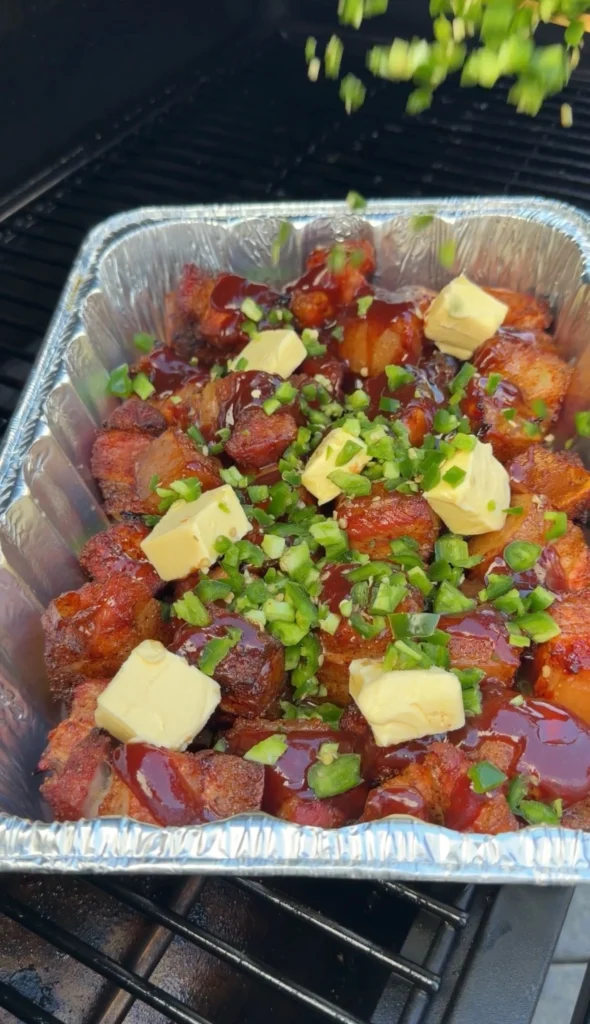
Add the sliced jalapeños on top of the pork belly. Drizzle ½ cup of honey evenly over everything. Pour 1 cup of sweet BBQ sauce over the top. Add 1 stick of unsalted butter cut into several pieces. Drop the butter pieces around the pan.
The ingredients should partially cover the pork belly. They don’t need to fully submerge the cubes. As the butter melts and the pork belly releases fat, there will be plenty of liquid.
Cover the entire pan tightly with heavy-duty aluminum foil. Make sure the seal is tight. You don’t want steam escaping during the braise.
Place the covered pan back in the smoker at 300°F. Close the lid. Cook for 1 to 1.5 hours. The pork belly is done when a butter knife slides through a cube with minimal resistance. The meat should be tender and almost falling apart.
Check after 1 hour by carefully lifting a corner of the foil and inserting a probe or knife into one of the larger cubes. If it’s still firm, re-cover and continue cooking. Check again in 15-minute intervals.
Step 5: Remove Foil and Set the Glaze
Once the pork belly is tender throughout, carefully remove the foil. Be cautious of the steam. It will be extremely hot.
The cubes should be sitting in a pool of liquid. This is a mixture of rendered pork fat, melted butter, honey, and BBQ sauce. The jalapeños should be soft. The liquid should look thin and separated.
Return the uncovered pan to the smoker at 300°F. Leave it uncovered. Cook for 20 minutes. This allows the excess moisture to evaporate. The sauce will reduce and thicken into a sticky glaze.
During this phase, the sugars will caramelize. The edges of the pork belly will develop crispy, lacquered coating. Gently stir or shake the pan once or twice during this 20 minutes. This ensures all sides of the cubes get coated with the reducing glaze.
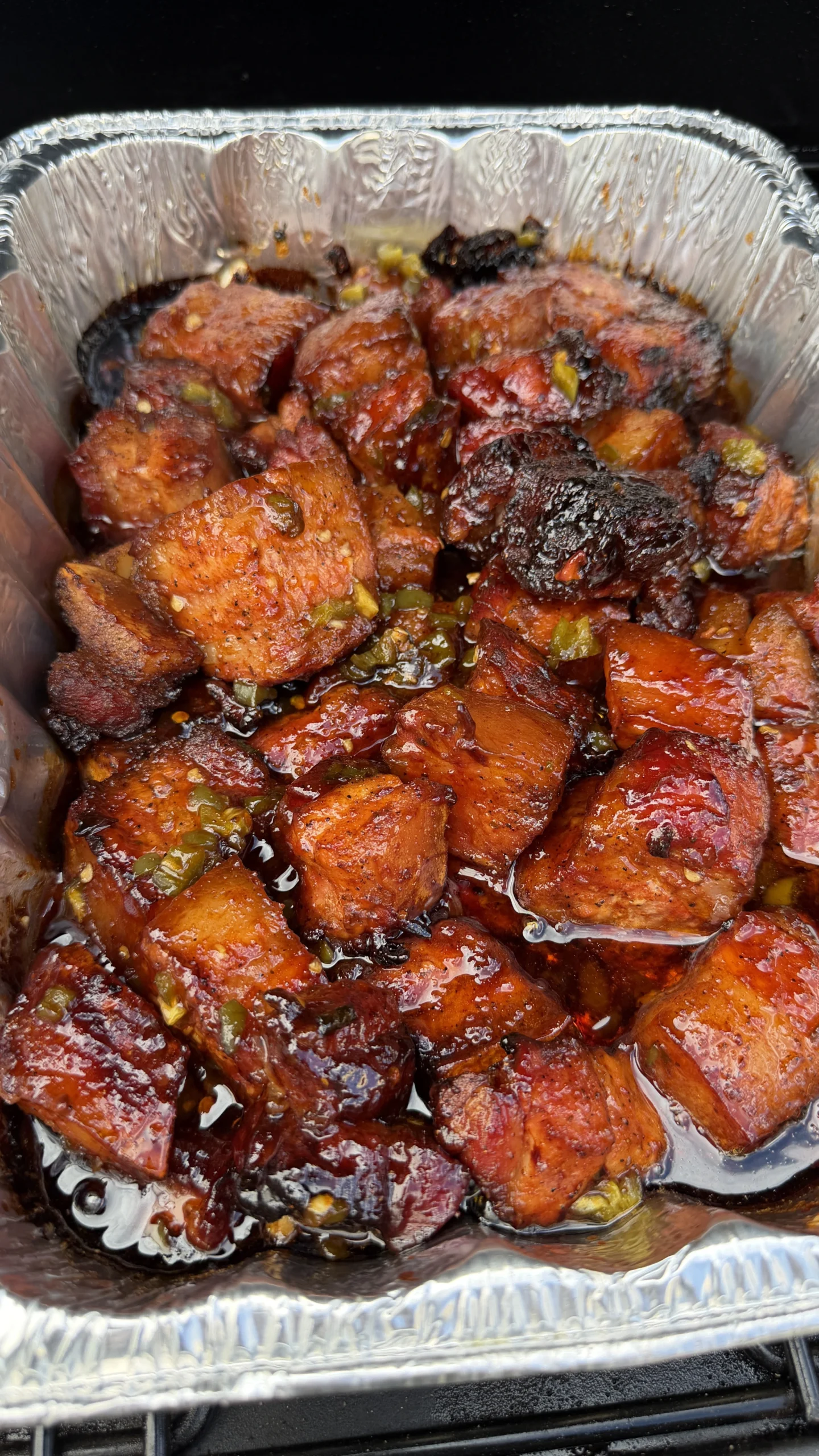
The burnt ends are done when the sauce has thickened to a syrupy consistency. It should coat the back of a spoon. The pork belly should look glossy and sticky. The edges should have visible caramelization.
Step 6: Rest and Serve
Remove the pan from the smoker. Let the burnt ends rest for 5 minutes. This brief rest allows the glaze to set slightly. It makes the burnt ends easier to handle.
Use a slotted spoon or tongs to transfer the burnt ends to a serving platter. Leave most of the excess liquid in the pan. You want the glaze that’s clinging to the meat, not the pooled fat at the bottom.
If desired, drizzle a small amount of the reduced glaze from the pan over the top for extra shine and flavor. But don’t pour all the liquid over the burnt ends. It will make them soggy.
Serve immediately while hot. These are best eaten fresh. The crispy edges soften as they cool. The glaze becomes less sticky.
Honey Jalapeño Smoked Pork Belly Burnt Ends
Ingredients
Equipment
Method
- Cut pork belly into 1-inch cubes. Season all sides generously with sweet BBQ rub. Let sit for 10 to 15 minutes while the rub adheres to the surface.
- Preheat smoker to 275°F using your preferred wood. Place pork belly cubes directly on the grates, spacing them ½ inch apart. Smoke for 2 hours until the bark is set and the color is dark and glossy.
- While pork belly smokes, slice jalapeños into ¼-inch rounds. Prepare a large aluminum foil pan. Increase smoker temperature to 300°F.
- Transfer smoked pork belly to the foil pan. Add sliced jalapeños, honey, BBQ sauce, and butter cut into pieces. Cover tightly with heavy-duty aluminum foil.
- Return covered pan to smoker at 300°F. Cook for 1 to 1.5 hours until pork belly is tender and a knife slides through easily.
- Remove foil carefully. Return uncovered pan to smoker for 20 minutes, allowing sauce to reduce and thicken into a sticky glaze. Stir once or twice for even coating.
- Remove from smoker. Rest for 5 minutes. Transfer to serving platter using a slotted spoon. Serve immediately while hot and sticky.
Nutrition
Notes
Tried this recipe?
Let us know how it was!Smoked Pork Belly Burnt Ends Frequently Asked Questions
Can You Make Pork Belly Burnt Ends Without a Smoker?
You can make pork belly burnt ends in the oven. But you’ll miss the smoke flavor that makes them special. Preheat your oven to 275°F. Place the seasoned pork belly cubes on a wire rack set over a rimmed baking sheet.
Roast for 2 hours until the exterior develops some color and the fat begins to render. The cubes won’t have bark like smoked versions. But they’ll still develop some caramelization.
Transfer the cubes to a foil pan. Add the jalapeños, honey, BBQ sauce, and butter. Cover tightly with foil. Increase the oven temperature to 300°F. Braise for 1 to 1.5 hours until tender.
Remove the foil. Return to the oven for 20 minutes to set the glaze. The texture will be very similar to smoked burnt ends. The main difference is the lack of smoke flavor.
To approximate smoke flavor, you can add 1 teaspoon of liquid smoke to the braising mixture. Or use a heavily smoked BBQ sauce. You can also finish the burnt ends on a hot grill for 5 minutes after the oven braising. This adds char marks and a hint of smoke.
The oven method is convenient for indoor cooking. It works when weather prevents outdoor smoking. But if you have access to a smoker, use it. The smoke flavor is what elevates these from good to exceptional.
How Do You Know When Pork Belly Burnt Ends Are Done?
Pork belly burnt ends are done when a butter knife or probe slides through a cube with minimal resistance. The meat should feel tender and almost falling apart. But the cubes should still hold their shape. They shouldn’t be mushy or disintegrating.
During the covered braising phase, start checking after 1 hour. Carefully lift a corner of the foil. Insert a probe or knife into one of the larger cubes. If it meets significant resistance, re-cover and continue cooking. Check again in 15-minute intervals.
The internal temperature should be between 195 and 210°F when done. But temperature is less important than texture with pork belly. The high fat content means they stay moist over a wide temperature range. Tenderness is the better indicator.
After you remove the foil for the final glaze phase, watch the sauce consistency. The burnt ends are done when the liquid has reduced by about half. It should coat the back of a spoon. The cubes should look glossy and sticky with visible caramelization at the edges.
If you’re unsure, it’s better to slightly overcook than undercook. Undercooked pork belly is chewy and unpleasant. Slightly overcooked burnt ends might be a bit drier. But they’ll still be delicious because of all the fat.
Can You Adjust the Heat Level in This Recipe?
You can easily adjust the heat level to match your preference. For milder burnt ends, remove the seeds and white membranes from the jalapeños before slicing. These parts contain most of the capsaicin. Removing them reduces heat by about 50%.
You can also use fewer jalapeños. Two jalapeños instead of three will give noticeable heat without being overwhelming. One jalapeño will provide just a subtle warmth and the fresh pepper flavor.
For spicier burnt ends, leave all the seeds and membranes in. You can also use hotter peppers. Serrano peppers are about twice as hot as jalapeños. Habaneros are significantly hotter. If using habaneros, start with just one pepper and slice it very thin.
Another option is to add cayenne pepper or red pepper flakes to the braising mixture. Start with ½ teaspoon and adjust from there. These dried peppers add pure heat without changing the flavor profile much.
Remember that the honey will balance whatever heat level you choose. Even very spicy burnt ends won’t be painfully hot. The sweetness takes the edge off. The fat in the pork belly also helps neutralize capsaicin on your tongue.
If you’re serving a crowd with mixed heat preferences, you can make half the batch mild and half spicy. Just use two separate foil pans during the braising phase.
What’s the Best Wood for Smoking Pork Belly Burnt Ends?
The best woods for smoked pork belly burnt ends are fruit woods like apple or cherry. They provide mild, sweet smoke that complements the honey jalapeño glaze without overpowering it. Apple wood gives a light, slightly sweet smoke. Cherry adds a touch more depth with hints of vanilla.
Hickory is also a solid choice if you want a more traditional BBQ flavor. It’s stronger than fruit woods. But it’s not so aggressive that it clashes with the sweet glaze. Hickory pairs particularly well with pork.
Pecan is another excellent option. It falls between fruit woods and hickory in intensity. It adds nutty, slightly sweet smoke that works well with the richness of pork belly.
Avoid mesquite for this recipe. Mesquite produces very strong, assertive smoke. It can become bitter during long cooks. It also tends to overpower delicate flavors like honey. The combination of mesquite smoke and sweet glaze often tastes discordant.
Oak is neutral enough to work. But it doesn’t add much character. If oak is all you have, it’s fine. But fruit woods or hickory would be better choices.
You can also blend woods. A 50/50 mix of cherry and hickory gives you sweetness from the cherry. You get traditional BBQ flavor from the hickory. A mix of apple and pecan provides complexity. Both woods contribute different flavor notes.
Use chunks or chips depending on your smoker type. For pellet grills, stick with one wood type. Pellets are pre-blended. Mixing different pellet brands can cause feeding issues.
How Should You Store and Reheat Leftover Smoked Pork Belly Burnt Ends?
Store leftover pork belly burnt ends in an airtight container in the refrigerator. They’ll keep for up to 3 days. Make sure to include some of the glaze from the pan. This keeps them from drying out.
The glaze will solidify when cold. It may separate and look greasy. This is normal. The butter and rendered pork fat solidify at refrigerator temperatures. Don’t drain it off. It will re-emulsify when you reheat.
To reheat, preheat your oven to 300°F. Spread the burnt ends in a single layer in a foil pan or baking dish. Cover loosely with foil. Heat for 10 to 15 minutes until warmed through.
For the last 2 to 3 minutes, remove the foil. This allows the glaze to tighten back up. It restores some of the sticky coating. The burnt ends won’t be quite as crispy as fresh. But they’ll still be delicious.
You can also reheat in the microwave for quick serving. Use 50% power in 1-minute intervals. But the microwave will make them soft instead of sticky. The oven method is better if you have time.
Don’t reheat on the stovetop. The high direct heat will burn the sugar in the glaze. You’ll end up with bitter, charred coating instead of sweet caramelization.
Frozen burnt ends can be stored for up to 2 months. Freeze them in a single layer on a baking sheet first. Then transfer to a freezer bag. This prevents them from freezing into one solid block.
Thaw overnight in the refrigerator before reheating. Follow the same oven reheating method. Frozen and reheated burnt ends will be noticeably less crispy. But they’re still worth making in large batches if you want to meal prep.
Ready to Level Up?
Take your backyard cooking from good to legendary.
This is where I keep all my most-used smokers, knives, and favorite cooking tools.
Shop My Gear CollectionExplore More Recipes
Find more diverse flavors at CWFeats.com