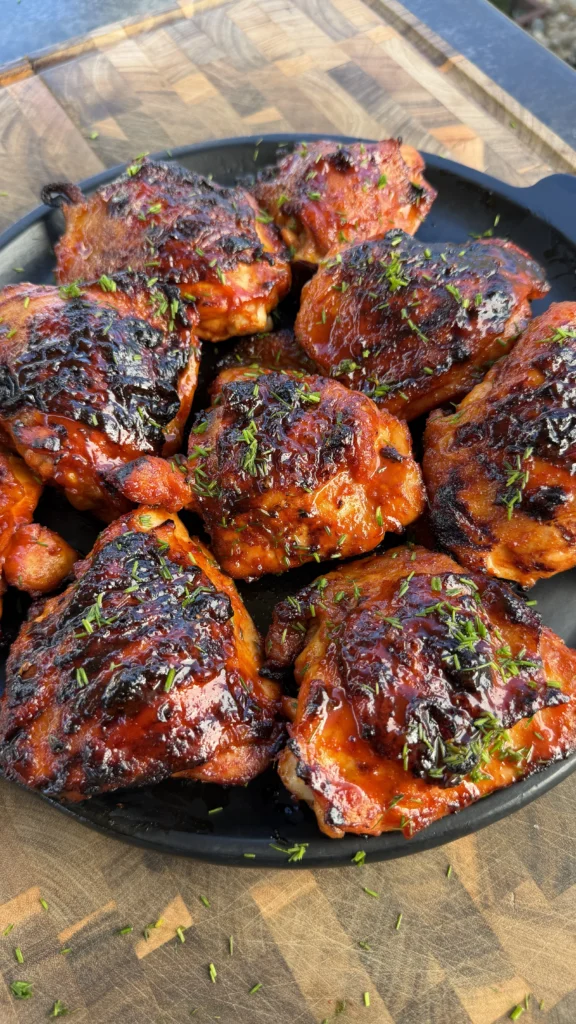
Gochujang grilled chicken thighs is bone-in, skin-on dark meat marinated in Korean chile paste mixed with soy sauce, honey, rice vinegar, sesame oil, garlic, and ginger. The chicken grills over direct heat at 300 to 350°F skin-side down first. This renders the fat and crisps the skin. Then you flip it to the meat side and reduce heat to 275°F. This prevents the sugars from scorching.
During the final 10 minutes, you brush the thighs with reserved gochujang glaze. This creates a sticky, caramelized coating. The chicken cooks to 185°F internal temperature. At this heat, the collagen breaks down into gelatin. The fat fully renders. You get fall-off-the-bone tender meat.
This Korean grilled chicken delivers sweet heat from the gochujang. The fermented chile paste provides complex, savory depth. It’s different from plain hot sauce. The honey balances the spice. The sesame oil adds nutty richness. Fresh garlic and ginger provide aromatic punch that penetrates the meat during marination.
The entire process takes about 2.5 to 3 hours including marination time. You need 15 minutes to prep and mix the marinade. At least 2 hours of marinating is required. Overnight is better for maximum flavor penetration. The actual grilling takes 25 to 30 minutes. A 5-minute rest lets the juices redistribute.
Unlike indirect heat methods that take 45 to 50 minutes, this direct heat approach cooks faster. The constant contact with hot grates creates better char and crisping. You just need to manage the heat carefully. This prevents the sugar-heavy marinade from burning before the meat is done.
Jump to RecipeWhy Gochujang Works Better Than Other Chile Pastes for Grilled Chicken
The Fermentation Advantage
Gochujang is a fermented Korean chile paste made from red peppers, glutinous rice, fermented soybeans, and salt. The fermentation process creates complex umami flavors. These go far beyond simple heat. Regular chile pastes like sriracha or sambal oelek provide spice. But they lack the depth and savory character that fermentation develops.
The fermentation breaks down proteins into amino acids. These create the savory, almost meaty taste. The glutinous rice in gochujang provides subtle sweetness and thick texture. This helps the paste cling to chicken during marinating and grilling. Water-based hot sauces slide off. Gochujang sticks.
The fermented soybeans add additional umami through naturally occurring glutamates. These are the same compounds that make soy sauce and miso taste rich and savory. When you combine gochujang with actual soy sauce in a marinade, you layer multiple sources of umami. This creates intense savoriness that balances the heat.
Heat Level and Flavor Balance
Gochujang has moderate heat, typically ranging from 1,500 to 10,000 Scoville units. This depends on the brand. The heat is present but it doesn’t overpower. You can taste the other flavors in your marinade. The garlic, ginger, and honey all come through clearly.
Compare this to habanero-based sauces that hit 100,000+ Scoville units. Those dominate everything else. Or compare it to mild chile pastes that barely register heat. Gochujang sits in the sweet spot. You get warmth without pain. The fermented complexity means the heat tastes interesting, not just hot.
The thick paste texture also helps moderate the heat perception. The starches from the glutinous rice coat your mouth. They slow down how quickly the capsaicin hits your receptors. The heat builds gradually instead of punching you immediately. This makes it more enjoyable for people who like spice. It’s also more accessible for those who are heat-sensitive.
Sugar Content and Caramelization
Most gochujang contains some natural sugars from the rice fermentation. When you add honey or brown sugar to the marinade, you create a glaze that caramelizes beautifully. The sugars in gochujang are already partially broken down by fermentation. They caramelize faster and more evenly than raw sugar.
This is critical for grilled chicken where you’re working with direct heat. The fermented sugars start caramelizing at slightly lower temperatures. They develop color and flavor without burning. Raw honey alone would scorch. The combination of fermented sugars and added honey creates layers of caramelization. Some areas get deep mahogany color. Others stay lighter and sticky.
The paste consistency also matters. Liquid marinades drip off the chicken. The sugars fall into the fire instead of staying on the meat. Gochujang’s thick texture keeps the marinade in place. More sugar stays on the surface where it can caramelize. You get better color and stickiness.
Why Other Chile Pastes Fall Short
Sriracha is too thin and too vinegary. It doesn’t cling to chicken properly. The high vinegar content can also make the exterior too acidic. The meat develops an unpleasant tang instead of balanced flavor.
Sambal oelek is just ground fresh chiles, vinegar, and salt. It has heat and freshness. But it lacks complexity. There’s no fermentation, no umami, no sweetness. It’s one-dimensional compared to gochujang.
Harissa has different flavor profile entirely. The North African spice blend includes cumin, coriander, and caraway. These are delicious but they don’t create Korean flavor. Harissa also tends to be oilier. It doesn’t have the same sticky glaze properties.
Thai chile paste with shrimp paste has umami from fermentation. But the seafood flavor doesn’t work as universally with chicken. It’s better for seafood or Thai-specific dishes. Gochujang’s fermented soybean base is more neutral. It enhances chicken without fighting it.
Why Direct Heat Creates Better Char Than Indirect Heat for Marinated Chicken
Contact with Hot Grates
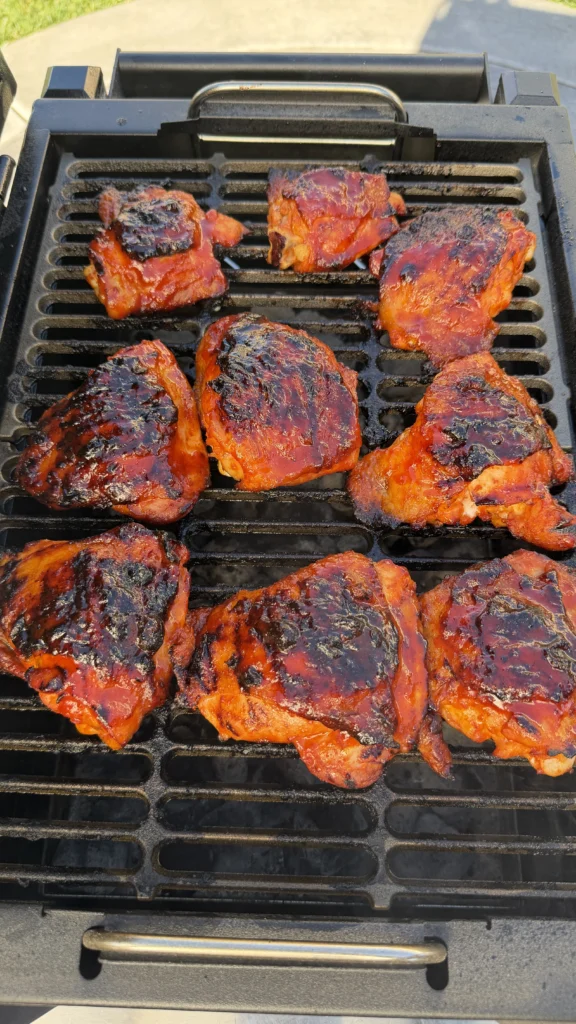
When you cook chicken thighs over direct heat, the skin makes constant contact with grates at 300 to 350°F. This creates Maillard reaction on every point of contact. You get distinct char marks and deep browning. The sugars in the gochujang marinade caramelize where they touch metal. This creates crispy, lacquered patches mixed with tender glazed areas.
With indirect heat, the chicken never touches anything hotter than 350°F air. The heat is gentler and more even. This is great for preventing burning. But it doesn’t create the same level of char. The surface browns gradually. You get even color but no dramatic contrast between charred and glazed areas.
The direct heat method also renders fat more aggressively. When subcutaneous fat hits hot grates, it liquefies immediately. It drips down through the grates instead of pooling under the skin. This creates crispier texture. The skin dehydrates faster. The proteins tighten and form that satisfying crunch.
Managing the Sugar Content
The challenge with direct heat and sweet marinades is preventing burning. The sugars in honey and gochujang want to char at high heat. If you’re not careful, they burn before the meat cooks through. This is why you start skin-side down at 300 to 350°F. The skin protects the marinade underneath. It acts as a barrier.
After you flip to the meat side, you reduce heat to 275°F. This lower temperature lets the chicken continue cooking. But it slows down the caramelization. The sugars brown instead of burning. You’re still working with direct heat. The chicken is still touching the grates. But the reduced temperature gives you control.
The late glazing technique is critical. You apply fresh marinade only during the final 10 minutes. At this point, the chicken is almost done. It just needs to reach 185°F. The fresh glaze has 10 minutes to caramelize. This creates sticky coating without having 30 minutes to burn.
Why Indirect Heat Doesn’t Work as Well
If you tried to cook these chicken thighs entirely with indirect heat, you’d get less char and less crispy skin. The lower temperature and lack of direct contact would make the skin stay soft. It would render some fat but it wouldn’t crisp properly.
The marinade would also behave differently. Without hot grates to caramelize against, the sugars would just dry into a sticky coating. They wouldn’t develop the same depth of color and flavor. You’d get sweet chicken instead of caramelized, charred, complex chicken.
Indirect heat also takes longer. You’d need 45 to 50 minutes instead of 25 to 30 minutes. The longer cooking time means more moisture loss from the meat. Even though dark meat is forgiving, unnecessarily long cooking still dries it out somewhat.
Temperature Management Technique
The key to success with direct heat is active temperature management. You can’t just set the grill to 350°F and walk away. You need to adjust heat throughout the cook. Start hotter for crisping. Reduce heat after flipping. Increase slightly during glazing if needed.
On a gas grill, this means adjusting the burner knobs. On charcoal, it means moving the chicken to cooler or hotter zones. You’re actively managing heat instead of setting it and forgetting it. This gives you the best of both worlds. You get aggressive char from direct heat. But you maintain control over the sugars.
Watch for flare-ups from dripping fat. When fat hits hot coals or burners, it ignites. These flames char the chicken too aggressively. If you see flare-ups, move the chicken temporarily. Let the flames die down. Then return it to position. A spray bottle with water can help control small flare-ups on charcoal grills.
Why Marinating Overnight Makes a Difference
Enzyme Activity and Tenderization
The garlic and ginger in the gochujang marinade contain natural enzymes. These enzymes start breaking down proteins in the chicken over time. A 2-hour marinade gives them enough time to work on the surface. An overnight marinade lets them penetrate deeper into the meat. You get more tender chicken throughout, not just at the edges.
The acidity from the rice vinegar also helps tenderize. Acidic marinades break down muscle fibers. They make the meat less dense and more tender. But acid works slowly. It needs several hours to really penetrate. Two hours gets you about 1/8 inch of penetration. Overnight gets you closer to 1/4 inch.
The salt in the soy sauce also plays a role. Salt dissolves some of the proteins in muscle tissue. This creates a gel that holds moisture. The longer the chicken sits in the salty marinade, the more moisture it can retain during cooking. This is basically a quick dry brine combined with wet marinade.
Flavor Penetration Through the Skin
Chicken skin is a barrier to flavor absorption. Marinades don’t penetrate skin easily. The fat layer under the skin also blocks liquid from reaching the meat. This is why many marinades just flavor the surface. They don’t penetrate to the actual meat.
With bone-in, skin-on thighs, you can work around this. If you loosen the skin and rub marinade directly onto the meat before marinating, the flavor has nowhere to go. It’s trapped between the skin and the meat. Over several hours, it slowly absorbs into the muscle fibers.
The oils in the marinade also help. Sesame oil and neutral oil are fat-soluble flavor carriers. They can pass through the subcutaneous fat layer more easily than water-based liquids. The garlic and ginger compounds dissolve into these oils. They penetrate deeper than they would in a water-only marinade.
The Difference Between 2 Hours and Overnight
A 2-hour marinade is the minimum effective time. You get surface flavor and some tenderization. The chicken tastes good. But the flavor is mostly on the outside. When you bite into the center of the thigh, it tastes like lightly seasoned chicken. The gochujang flavor is strong on the surface but weak in the middle.
An overnight marinade (8 to 12 hours) creates more balanced flavor. The gochujang, garlic, and ginger have time to work their way deeper. Every bite tastes like Korean grilled chicken. Not just the surface. The longer marination also intensifies the overall flavor. The fermented notes in the gochujang become more pronounced. The garlic mellows and becomes sweeter.
There is an upper limit. More than 24 hours can make the texture mushy. The enzymes and acid start breaking down the proteins too much. The meat becomes soft and unpleasant. The ideal window is 8 to 16 hours. This gives maximum flavor and tenderization without over-marinating.
Practical Marinating Tips
Always marinate in the refrigerator. Never at room temperature. Chicken in the temperature danger zone (40 to 140°F) can develop bacteria. Even a few hours at room temperature is risky.
Use a zip-top bag or covered container. Make sure every piece of chicken is coated with marinade. Flip the bag or stir the container halfway through marinating. This ensures even distribution.
If you’re short on time, you can cheat slightly. Score the meat side of the thighs with shallow cuts. This creates channels for the marinade to penetrate faster. You can get overnight-level flavor in 3 to 4 hours. But scoring also means more moisture loss during grilling. The cuts create pathways for juices to escape. It’s a tradeoff.
Reserve some marinade before adding the raw chicken. This becomes your glazing sauce. Never use marinade that touched raw chicken as a glaze unless you boil it first. The boiling kills any bacteria from the raw meat. But it also changes the flavor. Fresh reserved marinade tastes better.
Why You Should Cook Chicken Thighs to 185°F Instead of 165°F
Collagen Breakdown in Dark Meat
Chicken thighs contain significantly more collagen than breast meat. This collagen comes from the connective tissue that holds muscle fibers together. Leg muscles work harder during the chicken’s life. They develop dense, tough connective tissue. At 165°F, this collagen is still mostly intact. The chicken is technically safe to eat. But it feels chewy and stringy.
Collagen starts breaking down around 160°F. But the process accelerates dramatically between 175 and 185°F. At these temperatures, collagen converts into soft gelatin. This gelatin lubricates the muscle fibers. It makes the meat tender and easy to pull apart. The texture goes from chewy to fall-off-the-bone tender.
With the gochujang marinade, you want that extra tenderness. The bold flavors work best when the meat practically melts in your mouth. If the chicken is tough and chewy, you’re fighting the texture instead of enjoying the flavor. Cooking to 185°F ensures tender, succulent meat that complements the sticky glaze.
Fat Rendering for Clean Flavor
Chicken thighs have about three times more fat than breasts. Much of this fat is intramuscular. It’s distributed between muscle fibers. At 165°F, a lot of this fat remains solid and waxy. When you bite into the chicken, you get greasy mouthfeel. The fat coats your tongue unpleasantly.
By cooking to 185°F, you give the fat time to fully render. It liquefies and either drips away or integrates into the meat as moisture. The result is rich, meaty flavor without greasiness. The chicken tastes indulgent but not heavy.
The skin also benefits from higher heat. The subcutaneous fat under the skin needs to render completely. Otherwise you get crispy skin with a thick, rubbery fat layer underneath. Cooking to 185°F ensures this fat melts away. You’re left with thin, crispy skin with minimal fat beneath it.
Why Dark Meat Stays Moist at Higher Temps
You might worry that cooking chicken to 185°F will dry it out. This is a valid concern with white meat. Chicken breasts become dry and chalky above 165°F. The lean meat has very little fat to keep it moist. The proteins squeeze out water as they contract. You’re left with sawdust texture.
Dark meat is different. The higher fat content acts as insurance against drying out. Even as the proteins contract and release some moisture, the rendered fat replaces it. The gelatin from broken-down collagen also holds water in the meat. These two factors work together. They keep thighs moist and juicy even at temperatures that would ruin breasts.
The bone also plays a role. Bone conducts heat slower than meat. The area right next to the bone stays slightly cooler. This creates a gradient. The outer portions might hit 190°F. The area near the bone might be 180°F. This natural variation ensures some parts of the meat stay extra moist.
Visual and Tactile Cues
If you don’t have a thermometer, you can check doneness visually. The meat should pull away from the bone slightly. You should see about 1/4 inch of exposed bone at the end. The juices should run clear when you pierce the thickest part. No pink tinge.
The texture is the best indicator. Press the meat with your finger. It should feel firm but yielding. Not soft and squishy like raw chicken. Not hard and rigid like overcooked breast. There’s a sweet spot where it feels springy. It bounces back slightly when you press it. That’s the gelatin-rich texture you want.
An instant-read thermometer is still the most reliable method. Probe the thickest part of the thigh. Avoid hitting the bone. The bone conducts heat differently and gives false readings. You want to measure the actual meat temperature.
Gochujang Grilled Chicken Thighs
Korean marinade, direct heat, sticky glaze
Ingredients
Chicken
- 8 bone-in, skin-on chicken thighs
- Salt for seasoning
Gochujang Marinade / Glaze
- ¼ cup gochujang
- 2 tablespoons soy sauce
- 2 tablespoons honey (or brown sugar)
- 1½ tablespoons rice vinegar (or apple cider vinegar)
- 1 tablespoon sesame oil
- 1 tablespoon neutral oil (avocado or canola)
- 3 cloves garlic, grated
- 1 tablespoon fresh ginger, grated
Optional Garnish
- Sliced green onions
- Sesame seeds
Don’t flip the chicken until the skin releases naturally from the grates. Trying to force it early tears the skin. Let the fat render and the skin crisp completely before attempting to flip.
Step-by-Step Instructions
Step 1: Prepare the Marinade and Season the Chicken
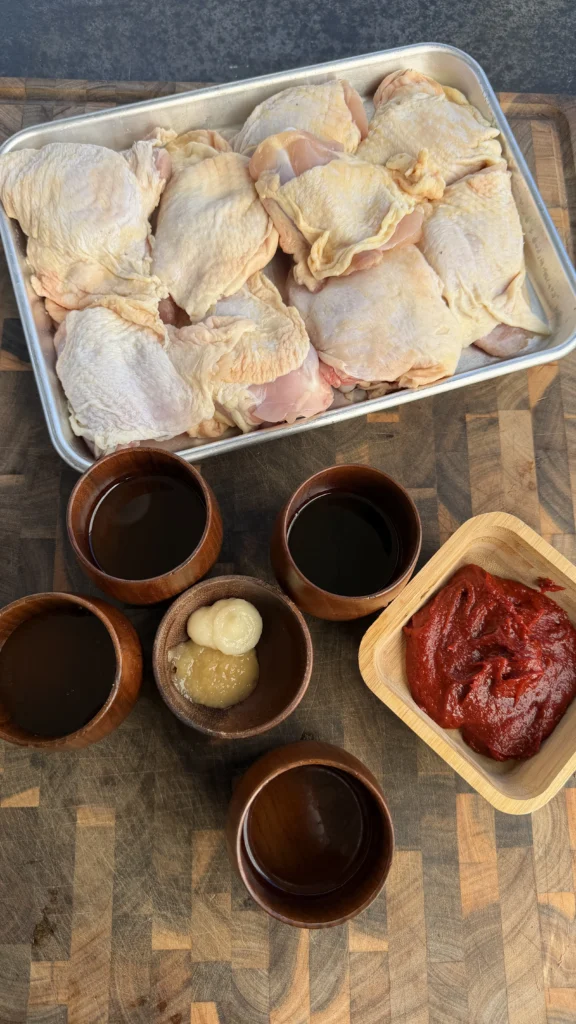
Remove the chicken thighs from the refrigerator. Pat each thigh completely dry with paper towels on both the skin side and meat side. Moisture prevents the marinade from adhering properly. It also dilutes the flavors.
Season both sides of each thigh lightly with salt. Don’t overdo it. The soy sauce in the marinade provides plenty of salt. Just a light sprinkle to help the skin crisp and to start the brining process.
In a medium bowl, combine 1/4 cup gochujang, 2 tablespoons soy sauce, 2 tablespoons honey, 1.5 tablespoons rice vinegar, 1 tablespoon sesame oil, 1 tablespoon neutral oil, 3 cloves grated garlic, and 1 tablespoon grated ginger. Use a microplane or fine grater for the garlic and ginger. This creates a paste that integrates smoothly into the marinade.
Whisk everything together until smooth and well combined. The mixture should be thick but pourable. It should coat the back of a spoon. If it seems too thick, add another half tablespoon of neutral oil or water. If it’s too thin, add a bit more gochujang.
Transfer about 3 tablespoons of the marinade to a small bowl. Cover and refrigerate. This is your glazing sauce for later. Don’t let it touch the raw chicken.
Step 2: Marinate the Chicken
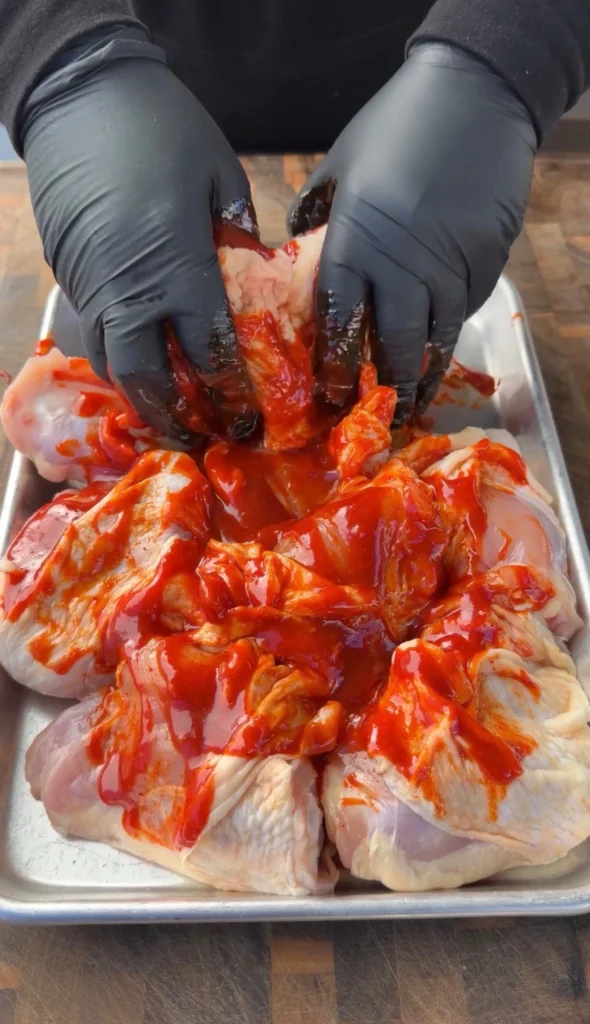
Place the chicken thighs in a large zip-top bag or a shallow dish. Pour the remaining marinade over the chicken. Use your hands to rub the marinade thoroughly into every surface of the chicken.
Try to work the marinade under the skin when possible. Gently loosen the skin with your fingers. Slide a small amount of marinade underneath. This ensures the actual meat gets flavored, not just the skin.
Seal the bag or cover the dish with plastic wrap. Refrigerate for at least 2 hours. For best results, marinate overnight (8 to 12 hours). Flip the bag or stir the chicken once halfway through. This ensures even marination.
Remove the chicken from the refrigerator 20 to 30 minutes before grilling. Let it come to room temperature. Cold chicken straight from the fridge cooks unevenly. The exterior overcooks before the center reaches temperature.
Step 3: Preheat the Grill to 300 to 350°F
Preheat your grill for direct heat cooking. For a gas grill, light all burners and set them to medium-high. For a charcoal grill, arrange hot coals in an even layer across the entire grill. You want uniform heat distribution.
Let the grill heat for 10 to 15 minutes with the lid closed. You’re aiming for a temperature between 300 and 350°F measured at grate level. Use an oven thermometer placed on the grate if your grill doesn’t have a built-in thermometer.
Clean the grates thoroughly with a grill brush. Oil the grates by dipping a paper towel in neutral oil. Use tongs to rub the oiled towel across the hot grates. This prevents sticking. It’s especially important with sugary marinades that want to glue the chicken to the grates.
Step 4: Grill Skin-Side Down First
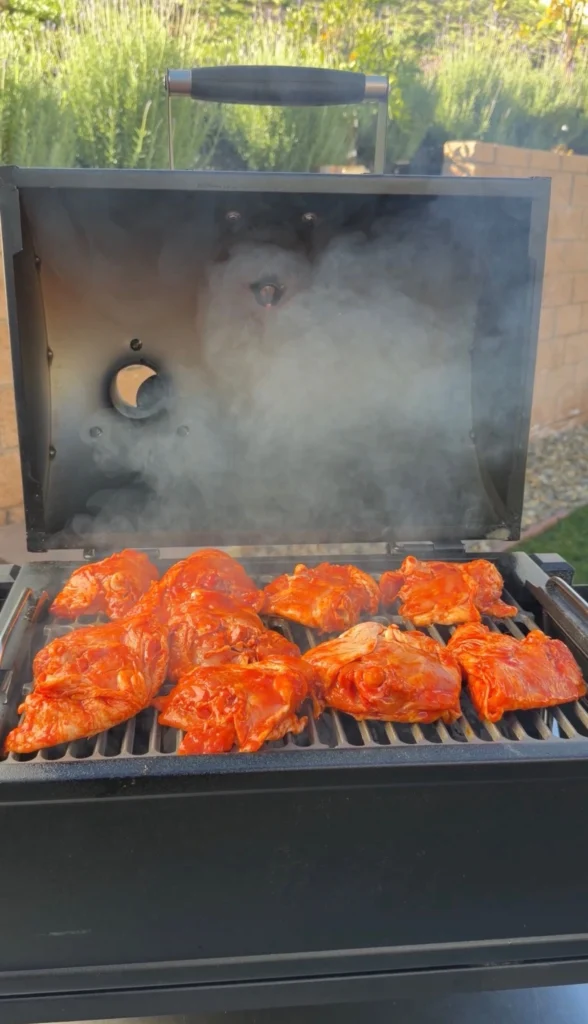
Place the marinated chicken thighs on the hot grates skin-side down. Arrange them so they’re not touching each other. Leave about 1 inch of space between each thigh. This allows heat to circulate. It also gives you room to maneuver if you need to move pieces away from flare-ups.
Close the lid. Let the chicken cook undisturbed for 12 to 15 minutes. Do not attempt to flip or move the chicken during this time. The skin needs to render fat and crisp before it will release from the grates naturally. If you try to flip too early, you’ll tear the skin.
After 12 minutes, lift the edge of one thigh with tongs. If it releases easily, the skin is ready. If it sticks, give it another 2 to 3 minutes. The skin should be deeply golden brown with visible char marks. The fat should be mostly rendered. You should see the skin looking crispy and lacquered.
Step 5: Flip and Reduce Heat
Once the skin is crispy and releases easily, flip all the thighs to the meat side. You should now be cooking the marinated side against the grates. This is where most of the sugar is. You need to be more careful about burning.
Immediately reduce your grill temperature to 275°F. For gas grills, turn the burners down. For charcoal, close the bottom vents partially. This slower heat prevents the sugars from scorching while the meat finishes cooking.
Close the lid and continue cooking for 10 to 12 minutes. The chicken should reach an internal temperature of about 170 to 175°F at this point. Check by inserting an instant-read thermometer into the thickest part. Avoid hitting the bone.
Watch for flare-ups during this phase. The rendered fat dripping down can ignite. If you see flames, move the chicken temporarily to a cooler spot. Or reduce heat further.
Step 6: Apply the Final Glaze
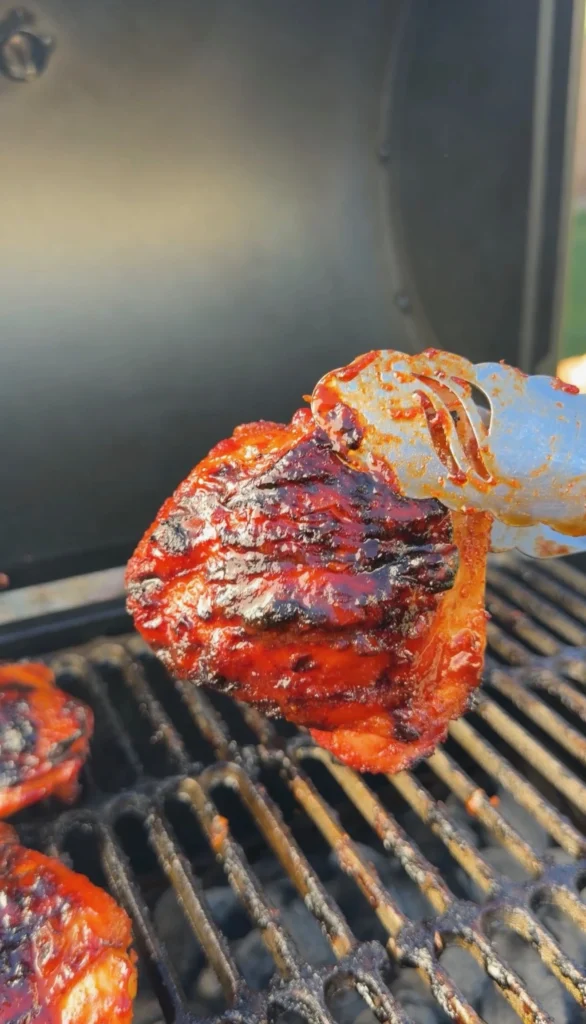
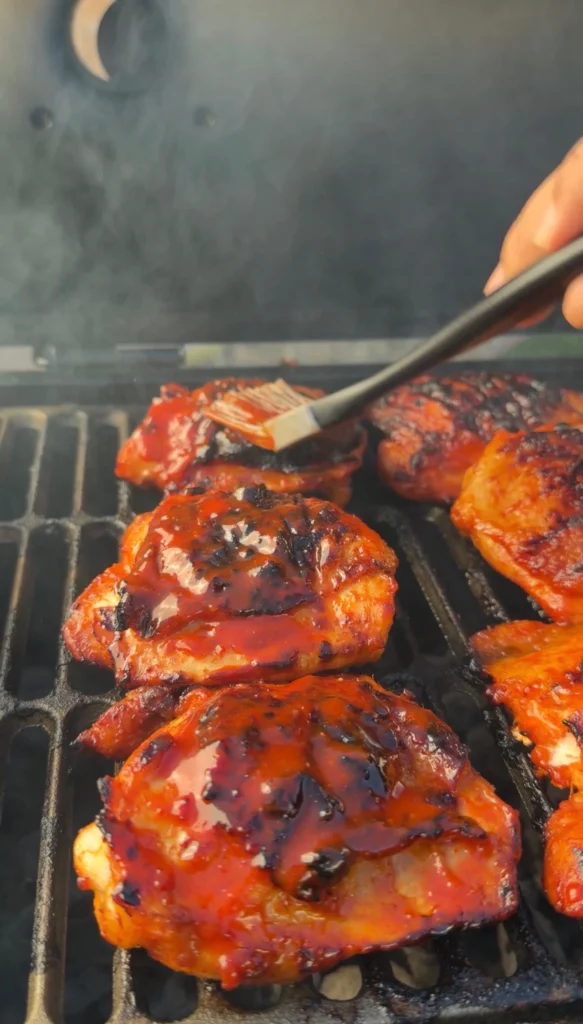
When the chicken reaches 170 to 175°F internal temperature, it’s time to glaze. Retrieve the reserved marinade from the refrigerator. Use a silicone basting brush to apply a generous coat to all exposed surfaces.
Flip the chicken back to skin-side up. Apply another coat of glaze to the crispy skin. The heat will cause the glaze to bubble and caramelize. You want to build up layers of sticky coating.
Continue cooking with the lid closed for another 5 to 8 minutes. Flip once more and glaze the meat side again. Then flip back to skin-side up. The chicken should now read 185°F on your thermometer.
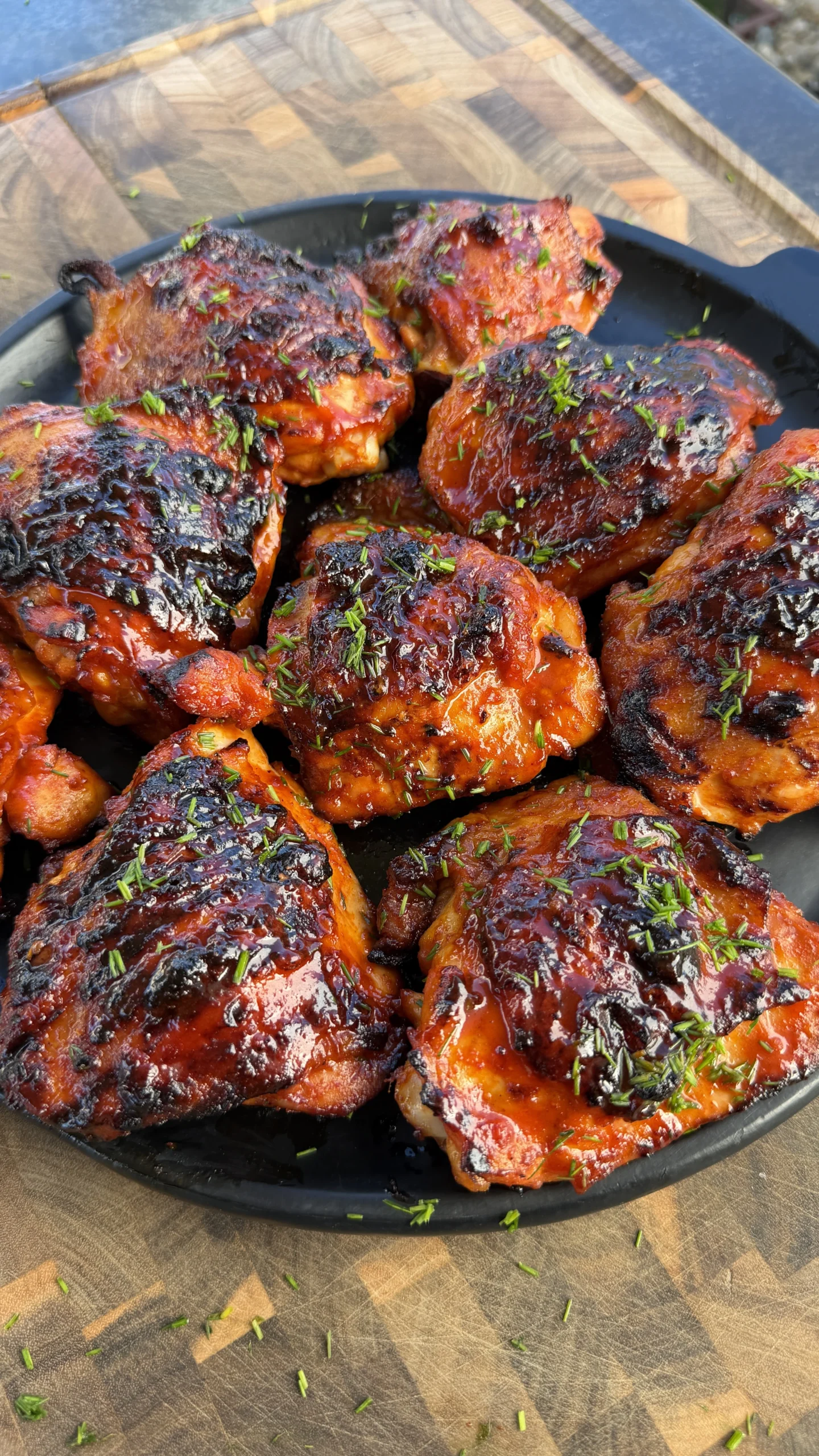
The glaze should be thick, sticky, and deeply caramelized. You should see glossy coating with some charred edges. The chicken should look lacquered and irresistible.
Step 7: Rest and Serve
Remove the chicken from the grill when it reaches 185°F. Transfer to a clean platter. Let rest for 5 minutes uncovered. Don’t cover with foil. The steam will soften your carefully crisped skin.
During the rest, the internal temperature will continue to rise by about 5 degrees due to carryover cooking. The juices will also redistribute through the meat. This makes every bite moist and flavorful.
Garnish with sliced green onions and sesame seeds if desired. Serve immediately while hot. The crispy skin is at its peak texture right after resting. It softens as it cools.
Gochujang Grilled Chicken Thighs (Direct Heat Method)
Ingredients
Equipment
Method
- Pat chicken thighs dry with paper towels. Season lightly with salt on both sides. In a bowl, whisk together all marinade ingredients until smooth. Reserve 3 tablespoons in a separate bowl for glazing later.
- Place chicken in a zip-top bag or dish. Pour remaining marinade over chicken. Rub thoroughly, working marinade under the skin when possible. Refrigerate for at least 2 hours, preferably overnight (8 to 12 hours). Remove from refrigerator 20 to 30 minutes before grilling.
- Preheat grill to 300 to 350°F for direct heat cooking. Clean and oil the grates.
- Place chicken thighs skin-side down on hot grates. Close lid. Cook for 12 to 15 minutes without moving until skin is crispy and releases naturally from grates.
- Flip chicken to meat side. Reduce grill temperature to 275°F. Close lid and cook for 10 to 12 minutes until internal temperature reaches 170 to 175°F.
- Brush reserved glaze on all surfaces of chicken. Flip to skin-side up. Continue cooking and glazing for 5 to 8 minutes until internal temperature reaches 185°F. The glaze should be thick, sticky, and caramelized.
- Remove from grill. Rest for 5 minutes uncovered. Garnish with green onions and sesame seeds. Serve immediately.
Nutrition
Notes
Tried this recipe?
Let us know how it was!Frequently Asked Questions
Can You Use Chicken Breasts Instead of Thighs for This Recipe?
You can use chicken breasts. But you’ll need to adjust the cooking method significantly. Breasts are leaner and cook faster. They also dry out easily above 165°F. The technique designed for thighs won’t work well.
If you want to use breasts, reduce the cooking time. Pull them at 160 to 165°F internal temperature instead of 185°F. The lower final temperature prevents them from becoming dry and chalky. You’ll also need to be more careful about burning the marinade.
The sugars in the gochujang glaze char quickly on the lean surface of breasts. Consider using indirect heat instead of direct heat. Or start with direct heat just to mark the meat. Then move to indirect to finish cooking. This prevents the exterior from burning before the center reaches temperature.
The flavor will still be good. Gochujang works with any chicken. But you’ll miss the rich, fatty texture that makes thighs so satisfying. Breasts are lighter and drier. They don’t have the same indulgent quality. If you’re committed to breasts, pound them to even thickness first. This ensures they cook uniformly without dry edges.
What Can You Substitute for Gochujang If You Can’t Find It?
If you can’t find gochujang, you can make a substitute. But it won’t be quite the same. Mix 2 tablespoons of miso paste with 2 tablespoons of sriracha and 1 tablespoon of sugar. This approximates the fermented umami, heat, and sweetness of gochujang.
The miso provides fermented soybean flavor similar to what’s in gochujang. Sriracha adds chile heat and vinegar tang. Sugar balances the spice. The texture won’t be as thick. The flavor won’t be as complex. But it gets you in the ballpark.
Another option is to use sambal oelek mixed with a small amount of miso and extra honey. Use 3 tablespoons sambal oelek, 1 tablespoon miso, and increase the honey to 3 tablespoons total. This creates sweet-spicy balance with some umami depth.
Thai red curry paste is another alternative. It has different spices (lemongrass, galangal, kaffir lime). But it provides similar heat and thickness. Use 3 tablespoons curry paste and increase honey to 3 tablespoons. The flavor profile will shift toward Thai instead of Korean. But it still tastes excellent.
The best solution is to buy gochujang. It’s increasingly available in regular grocery stores, not just Asian markets. Look in the international aisle or with the Asian sauces. Once you have a tub, it lasts for months in the refrigerator. You can use it in countless other recipes beyond this chicken.
How Spicy Are These Chicken Thighs?
The spice level is moderate, similar to medium buffalo wings. Gochujang provides warmth without being painfully hot. Most people find it pleasantly spicy. It builds as you eat but it doesn’t overwhelm.
If you’re sensitive to heat, you can reduce the gochujang to 2 or 3 tablespoons instead of 1/4 cup. Replace the missing volume with extra honey or a bit of tomato paste. This maintains the marinade consistency while lowering the heat.
You can also choose a mild gochujang brand. Korean brands often list the spice level on the label. Look for labels that say “mild” or show fewer chili peppers. These use less gochugaru (Korean chile flakes). They still have the fermented flavor without as much heat.
For spicier chicken, increase gochujang to 1/3 cup or add 1 teaspoon of gochugaru to the marinade. You can also add a pinch of cayenne pepper. The honey in the recipe helps balance whatever heat level you choose. Even very spicy versions won’t be unbearable because of the sweetness.
Remember that heat tolerance varies widely between people. What’s mild to one person might be very spicy to another. If you’re cooking for a crowd, err on the milder side. You can always serve extra gochujang or sriracha on the side for those who want more heat.
Can You Make This Recipe in the Oven?
You can make these chicken thighs in the oven. But you’ll miss the char and smoke from grilling. Preheat your oven to 425°F. Arrange the marinated thighs skin-side up on a wire rack set over a rimmed baking sheet.
Roast for 35 to 40 minutes until the internal temperature reaches 185°F. The skin will crisp from the oven heat. But it won’t have grill marks or smoky flavor. About 10 minutes before the chicken is done, brush with the reserved glaze. Return to the oven to caramelize.
For better browning, you can finish under the broiler. Move the rack to the upper third of the oven. Turn on the broiler. Broil for 2 to 3 minutes until the glaze bubbles and chars. Watch closely. The sugars can burn quickly under the broiler.
The texture will be good. The flavor will be close. But you’ll notice the absence of char and smoke. If you want to approximate grilled flavor, add 1/4 teaspoon of liquid smoke to the marinade. This won’t replicate actual grilling. But it adds some smokiness.
You can also use a grill pan on the stovetop. Heat the grill pan over medium-high heat. Sear the chicken skin-side down for 3 to 4 minutes. Flip and sear the other side. Then transfer to a 375°F oven to finish cooking. This gives you grill marks. But again, no real smoke flavor.
How Do You Prevent the Marinade from Burning on the Grill?
Preventing burned marinade requires careful heat management and late glazing. Start by removing excess marinade from the chicken before grilling. Let the thighs drain slightly. You want a coating of marinade, not dripping wet chicken. Excess marinade drips onto the fire and causes flare-ups.
Use the two-temperature method described in the recipe. Start at 300 to 350°F for crisping the skin. Then reduce to 275°F after flipping. This lower temperature prevents the sugars from charring while the meat finishes cooking.
Don’t apply fresh glaze until the final 10 minutes. If you glaze too early, the sugars have too much time to burn. By glazing late, the marinade only needs to caramelize. It doesn’t have 30 minutes to char.
Watch for hot spots on your grill. Some areas are hotter than others. If one piece of chicken is browning too fast, move it to a cooler spot. Rotate the chicken as needed for even cooking.
Keep a spray bottle of water nearby for charcoal grills. If flare-ups occur, spray the flames lightly. This knocks them down without drastically reducing your grill temperature. For gas grills, temporarily reduce the burner heat under any chicken that’s charring too aggressively.
If despite all precautions the marinade still burns in spots, don’t panic. Small charred bits add flavor. They create that authentic grilled character. As long as the chicken isn’t completely blackened, it’s fine. Char adds complexity. Total burning tastes bitter. Learn the difference through experience.
Ready to Level Up?
Take your backyard cooking from good to legendary.
This is where I keep all my most-used smokers, knives, and favorite cooking tools.
Shop My Gear CollectionExplore More Recipes
Find more diverse flavors at CWFeats.com