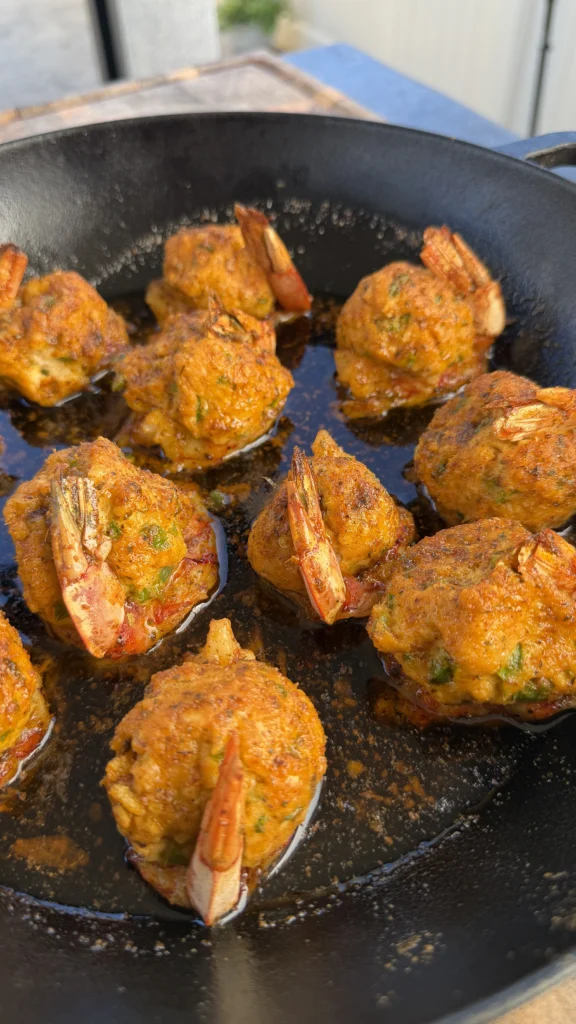
Crab-stuffed smoked shrimp is jumbo shrimp butterflied by slicing down the back, stuffed with golf ball-sized portions of a mixture made from cream cheese, lump crab meat, shredded cheddar cheese, diced jalapeños, panko bread crumbs, and Cajun seasoning. The shrimp wraps around the crab ball with the tail tucked into the stuffing. This holds everything together. You smoke the stuffed shrimp at 225°F for 30 minutes. During the final 10 minutes, you baste with melted butter mixed with Cajun seasoning. This creates a rich, buttery coating over tender shrimp and creamy crab filling.
The entire process takes about 55 minutes from start to finish. This includes 25 minutes to prepare the crab stuffing, butterfly the shrimp, and form the assembled pieces. You get 30 minutes of gentle smoking at low temperature. A brief 2 to 3-minute rest after smoking lets the stuffing set slightly. This makes them easier to handle when serving.
These smoked stuffed shrimp deliver multiple textures in one bite. The shrimp exterior stays tender and juicy from the low smoking temperature. The crab stuffing provides creamy richness from the cream cheese. You get textural contrast from the panko bread crumbs. Sharp cheddar adds saltiness and umami depth. Fresh jalapeños provide heat and brightness that cuts through the richness.
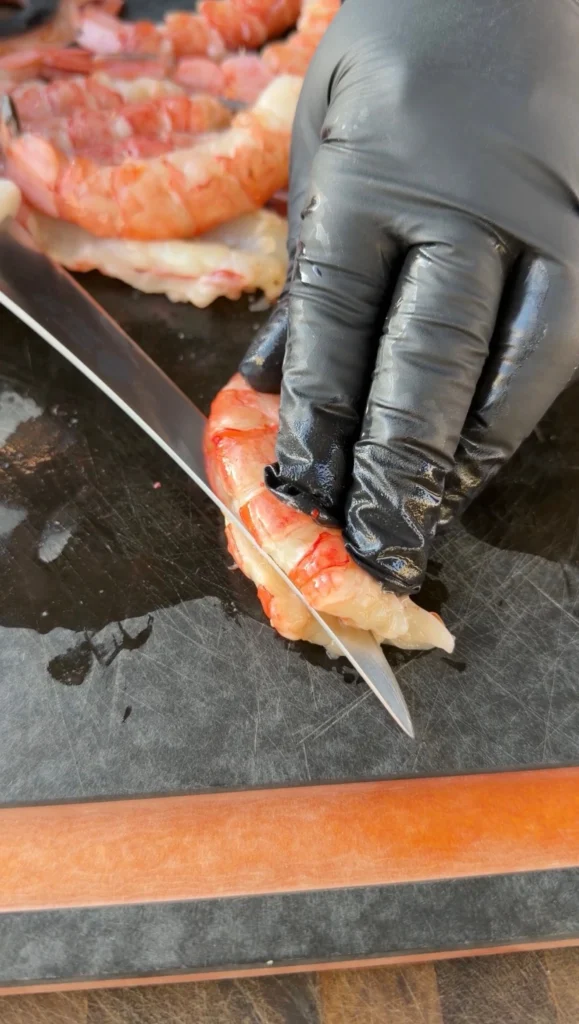
The butterflying technique is critical for holding the stuffing. A simple butterfly cut creates a flat surface that wraps around the crab ball. The cut doesn’t go all the way through. This keeps the shrimp intact as one piece. The tail tucks into the stuffing. This creates additional structural support. The assembled shrimp holds together during smoking without toothpicks or skewers.
Jump to RecipeWhy Butterflying Shrimp Creates Better Stuffing Vehicles
Creating a Flat Surface for Wrapping
Butterflying shrimp means slicing down the back along the vein line without cutting completely through. You stop about three-quarters of the way through the shrimp. When you open the cut shrimp, it lays flat like a book. This flat surface wraps around the crab ball filling.
Un-butterflied shrimp are curved and compact. They don’t have surface area to wrap around anything. If you tried to press a crab ball against a whole shrimp, it would just sit next to it. There’s no way to secure the filling. The shrimp would fall off during handling and cooking.
The butterfly cut also removes the vein in one motion. The dark digestive tract runs along the back of the shrimp. When you slice down the back to butterfly, you expose this vein. You can pull it out easily. This eliminates a prep step. You’re butterflying and deveining simultaneously.
Increasing Contact Area with Filling
A butterflied shrimp has double the surface area of a whole shrimp. When you lay it flat, both halves of the shrimp touch the crab ball. This creates more contact between the shrimp protein and the stuffing. As the shrimp cooks, the proteins tighten slightly. They grip the stuffing better with more contact area.
The increased surface also means more of the shrimp gets flavored by the Cajun butter baste. When you brush butter onto a whole shrimp, you only coat the curved outer surface. A butterflied shrimp has the interior surfaces exposed too. The butter penetrates into the cut areas. You get butter flavor throughout instead of just on the outside.
More surface area also creates more space for the Maillard reaction to occur. The flat shrimp has more contact with hot air and smoke. This creates better browning and more complex flavor development. Whole shrimp stay pale because only the curved exterior is exposed to heat.
Allowing the Tail to Tuck and Secure
When you butterfly a tail-on shrimp, the tail remains attached to one half. After you place the crab ball in the center of the butterflied shrimp, you fold the shrimp around it. The tail naturally tucks into the stuffing. This creates a mechanical lock.
The tail is the firmest part of the shrimp. It’s mostly shell and connective tissue. When you press it into the soft crab mixture, it anchors there. The stuffing molds around the tail. During cooking, the stuffing firms up as the cream cheese sets and the panko absorbs moisture. The tail becomes embedded in the stuffing ball.
This tail-tucking technique eliminates the need for toothpicks or skewers. Traditional stuffed shrimp recipes often require securing with wooden picks. These can char during smoking. They’re also annoying to remove before eating. The butterfly method with tail tucking is self-securing. Nothing extra needed.
Visual Presentation Benefits
Butterflied stuffed shrimp look more impressive than whole stuffed shrimp. You can see the layers clearly. The pink shrimp wraps visibly around the white and orange crab filling. The tail sticks up as a handle. The presentation is elegant and restaurant-quality.
Whole shrimp with stuffing on top look messy. The stuffing can slide off. It’s hard to see where the shrimp ends and the filling begins. Butterflied versions have clear definition. Each component is visible. Guests can see exactly what they’re eating.
The uniform shape also makes plating easier. All the stuffed shrimp are roughly the same size and shape. They arrange neatly on the platter. Whole stuffed shrimp vary more in appearance. Some might be larger. Others have stuffing falling off. Consistency matters for visual appeal.
Why 225°F Smoking Temperature Prevents Shrimp from Overcooking
Gentle Protein Coagulation
Shrimp cook very quickly. The proteins coagulate and firm up at temperatures as low as 140°F. At high heat like 400°F grilling, shrimp go from raw to overcooked in under 5 minutes. The window for perfect doneness is tiny. You can easily overshoot.
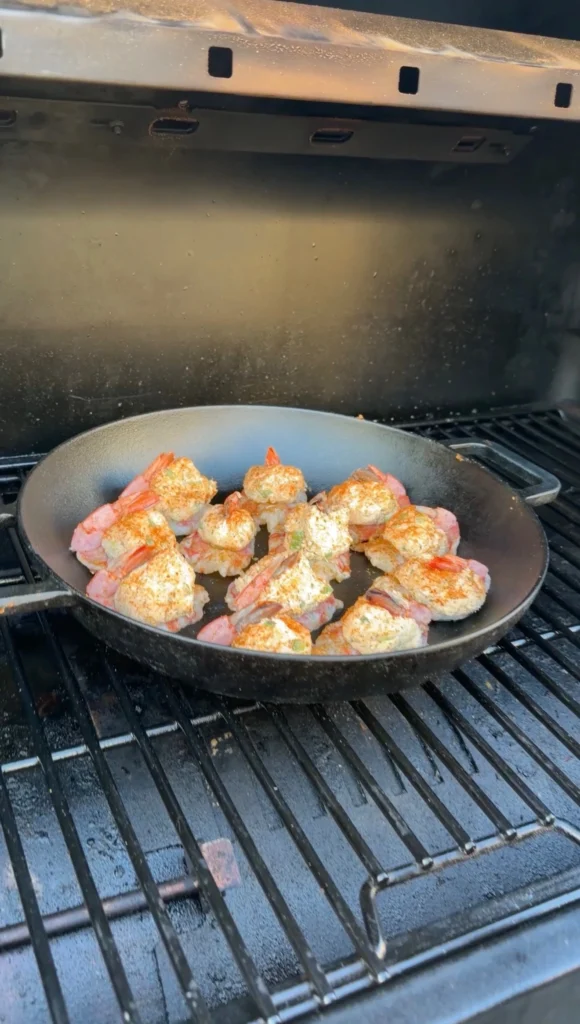
At 225°F smoking temperature, the heat is gentle enough that shrimp cook slowly. They spend 30 minutes coming up to temperature. This gives you a wide margin for error. The slow heat penetrates gradually from outside to center. By the time the outside is fully cooked, the inside has also reached proper doneness. You don’t get the problem of overcooked exterior and raw center.
The low temperature also prevents the proteins from squeezing out too much moisture. Shrimp that cook too fast become rubbery and dry. The proteins contract aggressively. They expel water rapidly. At 225°F, the proteins tighten gradually. They retain more moisture. The shrimp stay plump and juicy.
Matching Shrimp and Stuffing Cook Times
The crab stuffing needs time to heat through and set. The cream cheese needs to warm up. The bread crumbs need to absorb moisture from the cream cheese and crab. The cheddar needs to melt. All of this takes time.
At high heat, the shrimp would finish before the stuffing heated through. You’d pull shrimp that are cooked on the outside. But the center of the stuffing ball would still be cold. At 225°F, both components finish together. The 30-minute smoke gives the stuffing enough time to cook completely. Meanwhile, the shrimp cook gently without overcooking.
The size of the crab balls also matters. Golf ball-sized portions are substantial. They have mass that takes time to heat. Smaller fillings would cook faster. But then you’d have less impressive stuffed shrimp. The 225°F temperature is calibrated for these larger crab balls. It ensures proper cooking throughout.
Smoke Penetration Time
Low-and-slow smoking allows more smoke flavor to penetrate the shrimp. Shrimp are delicate. They have thin flesh. Smoke penetrates easily. But the smoke needs time to adhere to the surface and work its way in.
At 225°F for 30 minutes, the shrimp absorb significant smoke character. You can taste it in every bite. The smoke complements the sweet shrimp meat. It adds complexity to the rich crab filling.
Higher temperatures and shorter cooking times don’t allow as much smoke absorption. Even if you use heavy smoke, quick cooking means the smoke doesn’t have time to integrate. The shrimp might have smoke on the surface. But the interior tastes plain. The 30-minute smoke window is ideal for flavor development.
Preventing Butter Baste from Burning
The Cajun butter baste goes on during the final 10 minutes of smoking. At 225°F, the butter melts and coats the shrimp without burning. The Cajun seasoning in the butter contains spices and sometimes sugar. These can char at high heat.
If you were smoking at 300°F or higher, the butter would brown too quickly. The spices would burn. You’d get bitter flavor instead of rich, seasoned butter taste. The 225°F temperature keeps the butter liquid. It allows it to penetrate into the crevices of the butterflied shrimp. But it doesn’t get hot enough to scorch.
The lower temperature also means the butter stays on the shrimp instead of vaporizing. At high heat, butter can evaporate before it has a chance to flavor the food. At 225°F, the butter stays put. It creates a glossy coating that enhances both flavor and appearance.
Why Cream Cheese Binds the Stuffing Better Than Mayonnaise
Texture When Cold vs When Hot
Cream cheese is solid when cold. Mayonnaise is liquid. When you mix stuffing with cream cheese, you can form it into balls. The cream cheese holds everything together. The mixture has structure. You can shape it and it maintains that shape.
Mayonnaise-based stuffing is too loose to form into balls. It’s more like a spread or dip consistency. You can’t shape it. If you tried to stuff shrimp with mayo-based filling, it would ooze out during smoking. The heat would make it even looser. It would drip off the shrimp and fall through the grates.
When cream cheese heats up during smoking, it softens but doesn’t liquify completely. It goes from firm to creamy. But it still has body. It stays inside the shrimp. The panko bread crumbs also absorb moisture from the melting cream cheese. This creates additional structure. The stuffing sets into a cohesive ball instead of separating.
Fat Content and Richness
Cream cheese is about 33% fat. This high fat content creates rich mouthfeel. When you bite into the stuffed shrimp, the filling tastes luxurious and indulgent. The fat also helps carry flavors from the crab, cheddar, jalapeños, and Cajun seasoning. Fat is a flavor vehicle. It makes everything taste more intense.
Mayonnaise is also high in fat, around 80%. But the fat in mayo is emulsified oil. It tastes different than dairy fat. Cream cheese has that characteristic tangy, slightly sweet dairy flavor. This complements seafood better than mayo’s neutral vegetable oil taste.
The fat in cream cheese also helps the stuffing brown slightly during smoking. The milk solids in cream cheese can undergo Maillard reactions. They create golden color and toasted flavor on the surface of the stuffing balls. Mayo doesn’t brown the same way. It just gets oily.
Protein Structure for Binding
Cream cheese contains milk proteins (casein). These proteins help bind the other ingredients together. When you mix cream cheese with crab, cheddar, panko, and jalapeños, the milk proteins act like glue. They coat the other ingredients and hold them in a matrix.
During cooking, these proteins coagulate slightly. They firm up from the heat. This creates additional structure in the stuffing. The filling goes from soft and moldable to firm and cohesive. It holds together when you bite into the shrimp.
Mayonnaise lacks these binding proteins. It’s just eggs and oil emulsified together. The eggs provide some protein. But not enough to create the structural network you need for stuffing. Mayo-based fillings tend to separate when heated. The oil breaks out of the emulsion. You get greasy instead of creamy.
Flavor Profile with Seafood
Cream cheese has a mild, tangy flavor that pairs well with seafood. The slight acidity from the culture brightens the sweet crab and shrimp. It doesn’t overpower. It enhances.
Mayonnaise has stronger vinegar notes. The acidic tang can clash with delicate seafood. It can also make the overall dish taste too acidic, especially when combined with jalapeños which already provide acidity. Cream cheese balances better. The dairy richness rounds out all the flavors.
The texture of cream cheese also feels more premium. When you bite into cream cheese-based stuffing, it feels smooth and rich. Mayo-based stuffing can feel greasy or slippery. Texture matters almost as much as flavor in determining how people perceive quality.
How Panko Bread Crumbs Improve Stuffing Texture
Absorbing Excess Moisture
As the stuffed shrimp smoke, the cream cheese softens. The crab meat releases some liquid. The jalapeños contain water that escapes during heating. Without something to absorb this moisture, the stuffing would become soupy. It would leak out of the shrimp.
Panko bread crumbs are highly absorbent. They soak up liquid like a sponge. As the stuffing heats up, the panko absorbs the moisture released by other ingredients. This keeps the stuffing cohesive. The bread crumbs swell and soften. But they maintain structure.
Regular fine bread crumbs work too. But panko is coarser. It has more surface area. This makes it even more absorbent. Panko also maintains some texture even after absorbing liquid. Fine crumbs can turn pasty. Panko stays slightly crumbly. This creates better mouthfeel.
Adding Textural Contrast
Crab meat is flaky and soft. Cream cheese is smooth and creamy. Cheddar melts into gooey strands. Without panko, the stuffing would be entirely soft. It would lack textural interest.
Panko provides subtle crunch mixed throughout the filling. As you chew, you encounter small bits that have retained structure. This creates contrast against the smooth cream cheese and tender crab. Your mouth experiences different sensations. This makes the eating experience more engaging.
The panko doesn’t stay fully crispy during smoking. The moisture from the cream cheese and crab softens it. But it retains more texture than completely smooth ingredients. Think of it as tender-crisp rather than crunchy. Enough firmness to notice, but not hard.
Helping the Stuffing Hold Shape
The panko creates a scaffold within the stuffing. The bread crumbs distribute throughout the mixture. They create structure that helps the crab balls maintain their shape.
Without panko, cream cheese and crab mixed together would be too soft to form balls. You’d need much more cream cheese to get formable consistency. But too much cream cheese makes the filling taste like a cheese ball instead of a seafood mixture.
The panko allows you to use less cream cheese. The bread crumbs fill space and add body. You can achieve the right consistency for forming balls without overdoing the cream cheese. This keeps the crab as the star ingredient instead of being buried under dairy.
Browning and Flavor Development
Panko can brown during smoking. The bread crumbs on the surface of the stuffing balls expose to heat and smoke. They undergo Maillard reactions. This creates toasted, nutty flavors. These add complexity to the filling.
The browned bits also look appealing. Golden brown specks throughout the white cream cheese create visual interest. When you cut into a stuffed shrimp, you see the layers of color. Pink shrimp, white stuffing with golden flecks, orange from the cheddar and crab.
Bread crumbs also absorb the Cajun butter baste better than smooth cream cheese would. The porous structure of panko soaks up butter. This carries butter and spice flavor into the center of the stuffing. Every component becomes seasoned, not just the exterior.
Crab-Stuffed Smoked Shrimp
Butterflied jumbo shrimp, crab balls, Cajun butter
Ingredients
Shrimp
- 2 lbs jumbo shrimp, peeled, deveined, tail-on
Crab Stuffing
- 8 oz cream cheese, softened (1 block)
- 16 oz crab meat
- ½ cup shredded cheddar cheese
- 3 jalapeños, finely diced
- 1 cup panko bread crumbs
- 1 tablespoon Cajun seasoning
Butter Baste
- 1 stick (½ cup) unsalted butter, melted
- 1 tablespoon Cajun seasoning
Use jumbo shrimp (16/20 count or larger). Smaller shrimp don’t have enough surface area to hold the crab stuffing. The larger size also prevents overcooking during the 30-minute smoke.
Step-by-Step Instructions
Step 1: Prepare the Crab Stuffing
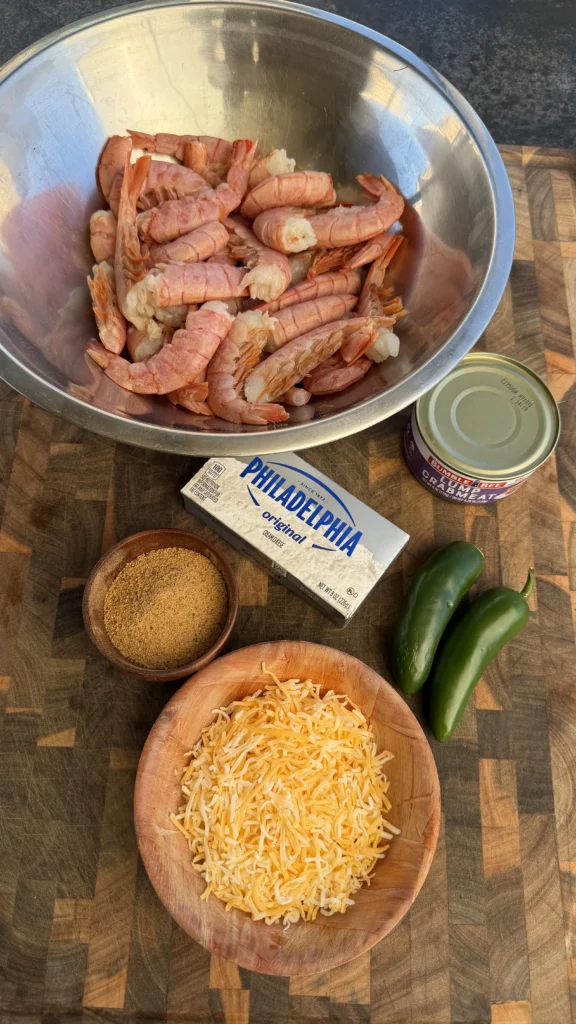
Remove the 8 oz block of cream cheese from the refrigerator. Let it sit at room temperature for 15 to 20 minutes. You want it softened but not melted. Softened cream cheese mixes more easily. Hard cream cheese from the fridge creates lumps.
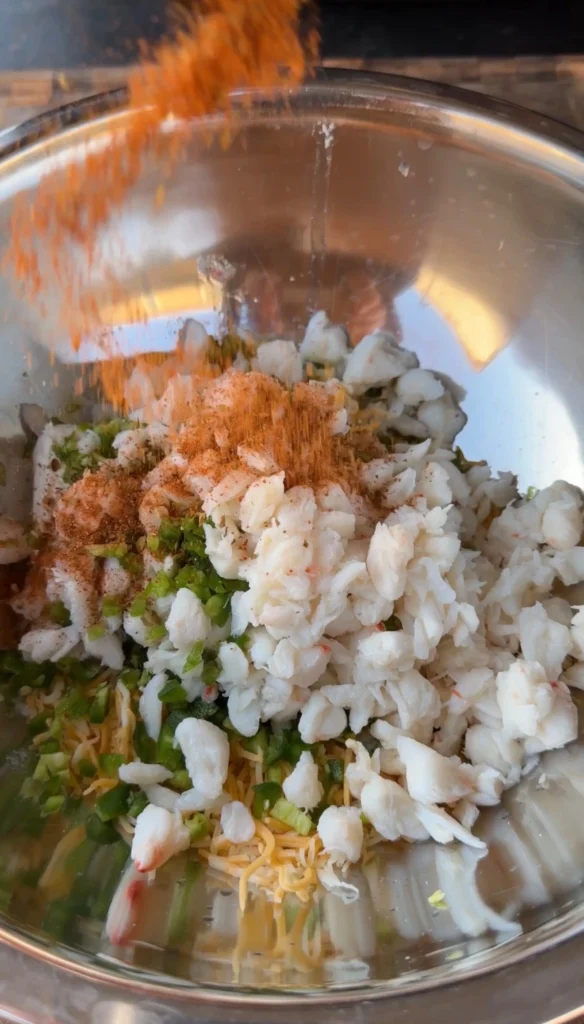
In a large mixing bowl, add the softened cream cheese, 16 oz of crab meat, ½ cup of shredded cheddar cheese, 3 finely diced jalapeños, 1 cup of panko bread crumbs, and 1 tablespoon of Cajun seasoning.
Use your hands or a sturdy spoon to mix everything together. Break up any chunks of cream cheese. Distribute the crab meat evenly throughout. The jalapeños and panko should be thoroughly mixed in. No large pockets of any single ingredient.
The mixture should hold together when you squeeze it. If it seems too loose and wet, add another ¼ cup of panko. If it seems too dry and crumbly, add another ounce of softened cream cheese. The consistency should be like thick cookie dough.
Scoop portions of the mixture with a spoon or cookie scoop. Roll each portion between your palms into a ball about the size of a golf ball. You should get approximately 16 to 18 balls from this amount of mixture. Place the formed balls on a plate or baking sheet. Set aside while you prep the shrimp.
Step 2: Butterfly the Jumbo Shrimp
Remove the shrimp from the refrigerator. Make sure they’re peeled and deveined already. If they still have veins, you’ll remove those during butterflying.
Working with one shrimp at a time, lay it on your cutting board with the curved back facing up. The straighter belly side should be against the board.
Use a sharp knife to slice down the center of the back. Cut along where the vein runs. Cut deep, about three-quarters of the way through the shrimp. Don’t cut all the way through. You want to keep the two halves connected.
If there’s a vein present, remove it now. The cut exposes it completely. You can pull it out with your fingers or the tip of your knife.
Open the cut shrimp like a book. Press it gently to flatten it. The shrimp should lay flat in a butterfly shape. Both halves spread out with the connection point in the middle.
Repeat for all shrimp. You should have about 16 to 18 butterflied shrimp to match your crab balls. Work carefully to keep the butterflies intact. Torn or broken shrimp won’t hold stuffing well.
Step 3: Stuff the Butterflied Shrimp
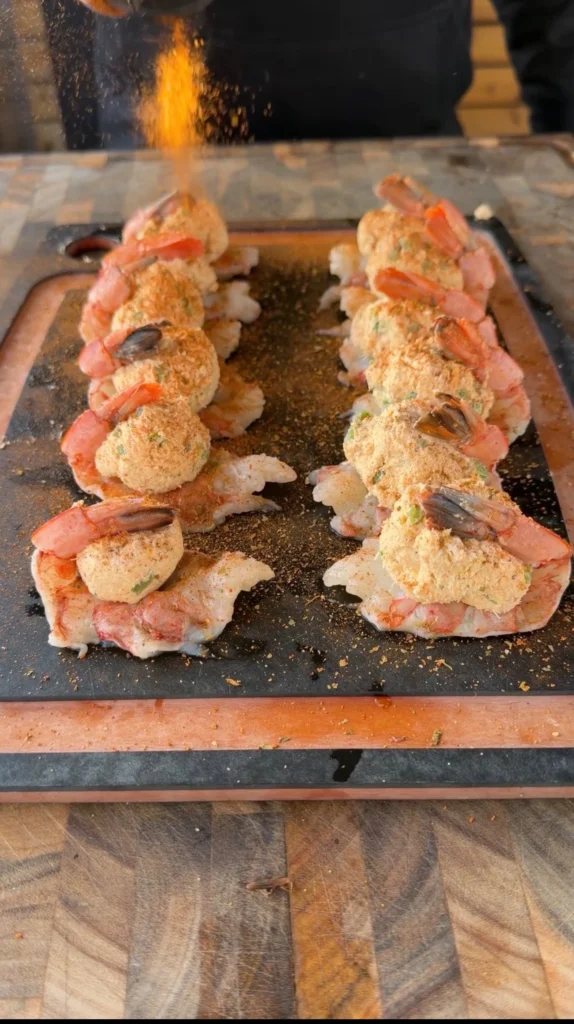
Take one butterflied shrimp. Lay it flat on your work surface, cut side up. Place one crab ball in the center of the butterflied shrimp.
Fold the shrimp around the crab ball. Bring both halves of the shrimp up and around the stuffing. Press gently to conform the shrimp to the ball shape.
Locate the tail of the shrimp. It should still be attached to one half. Tuck the tail down into the crab stuffing. Press it in firmly. The tail should stick into the stuffing ball. Part of the shrimp body near the tail will wrap around and tuck in with it.
Adjust the shrimp to ensure the crab ball is completely wrapped. No large gaps of exposed stuffing. The shrimp should cover most of the ball. Some crab mixture peeking through small gaps is fine. But the shrimp should be the dominant visible exterior.
Place the stuffed shrimp on a lightly oiled baking sheet or smoker-safe tray. Repeat for all remaining shrimp and crab balls. Space them about 1 inch apart on the tray. They’ll expand slightly during cooking. Tight spacing can cause them to stick together.
Step 4: Preheat the Smoker to 225°F
Start your smoker and set the temperature to 225°F. Use a mild wood for smoke. Applewood, cherry, or pecan work well with seafood. Avoid strong woods like hickory or mesquite. They can overpower delicate shrimp.
Let the smoker preheat for 10 to 15 minutes with the lid closed. Make sure it’s producing thin, blue smoke. Not thick white smoke. White smoke tastes bitter and sooty. Blue smoke creates clean, sweet flavor.
Check the temperature with a reliable thermometer. Built-in smoker thermometers can be inaccurate. Verify the actual temperature at grate level where the shrimp will sit. Adjust vents or heat source as needed to maintain 225°F.
If you’re using a grill instead of a dedicated smoker, set it up for two-zone indirect heat. Place a smoker box or wood chips over the heat source on one side. The shrimp will go on the cool side. Maintain 225°F in the cool zone.
Step 5: Smoke the Stuffed Shrimp for 30 Minutes
Once your smoker reaches 225°F and produces clean smoke, place the tray of stuffed shrimp on the grate. Or transfer them directly to lightly oiled grates if not using a tray. Direct grate contact adds nice smoke flavor to the bottom of the shrimp.
Close the smoker lid. Set a timer for 20 minutes. Don’t open the smoker during this time. Every time you lift the lid, you lose heat and smoke. Temperature fluctuations extend cooking time and reduce smoke flavor.
After 20 minutes, check the shrimp. They should be starting to turn pink. The stuffing should be firming up. The surface should look set rather than wet and loose. If they’re not showing color yet, close the lid and give them 5 more minutes.
The stuffing should feel warm when you touch the surface. Not hot yet, but definitely above room temperature. The shrimp should be starting to curl slightly. This is normal. Shrimp proteins contract when they cook. Some curling is expected.
Step 6: Make the Cajun Butter Baste
While the shrimp are smoking, prepare your butter baste. In a small saucepan, melt 1 stick of unsalted butter over low heat. You can do this on the stovetop or on the coolest part of your smoker.
Once the butter is fully melted, stir in 1 tablespoon of Cajun seasoning. Mix well to distribute the spices throughout the butter. The butter should take on a reddish tint from the paprika and cayenne in the Cajun seasoning.
Keep the butter warm but not boiling. If it cools too much, it will solidify. You want it liquid for easy brushing. If it bubbles or browns, it’s too hot. Remove from heat and let it cool slightly. Browned butter tastes different and can burn during the final smoking phase.
Step 7: Baste and Finish Smoking
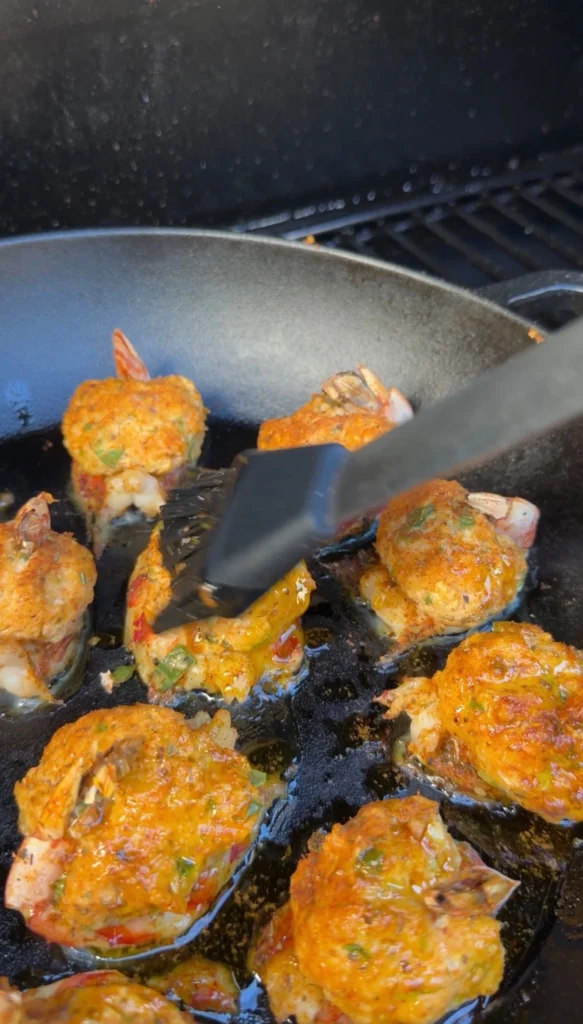
After the shrimp have smoked for 20 minutes and are starting to show color, open the smoker. Use a silicone basting brush to brush Cajun butter generously over each stuffed shrimp. Coat the entire surface. Don’t miss the sides and bottom.
Close the smoker lid. Continue smoking for another 10 minutes. The total smoke time will be 30 minutes. During these final 10 minutes, the butter will melt into the shrimp. The Cajun seasoning will add flavor and color.
After 10 minutes, open the smoker again. Check the shrimp. They should be fully pink with no translucent gray areas. The shrimp should be opaque and firm. The stuffing should be hot in the center. You can insert a probe to check. The center should be 145°F or higher.
If they need more time, give them another 5 minutes. But watch carefully. Overcooked shrimp become rubbery. The window between perfect and overdone is small. Most shrimp will be done after 30 minutes total at 225°F.
Step 8: Rest and Serve
Remove the stuffed shrimp from the smoker. Transfer them to a serving platter. Let them rest for 2 to 3 minutes. This isn’t a long rest like meat. Just enough time for the filling to set slightly and cool to eating temperature.
The stuffing will be extremely hot right out of the smoker. The brief rest prevents burned mouths. It also allows the cream cheese to firm up from its melted state. This makes the shrimp easier to eat. The filling stays inside the shrimp instead of oozing out.
If there’s any leftover Cajun butter, you can drizzle it over the plated shrimp. Or serve it on the side as a dipping sauce. The extra butter enhances richness and adds moisture.
Garnish with chopped fresh parsley or sliced green onions if desired. These add color and freshness. But they’re optional. The stuffed shrimp look impressive enough without garnish.
Serve immediately while still warm. The shrimp are best fresh from the smoker. As they cool, the texture changes. The shrimp firm up more. The stuffing becomes denser. They’re still good at room temperature. But optimal eating is within 10 minutes of pulling from the smoker.
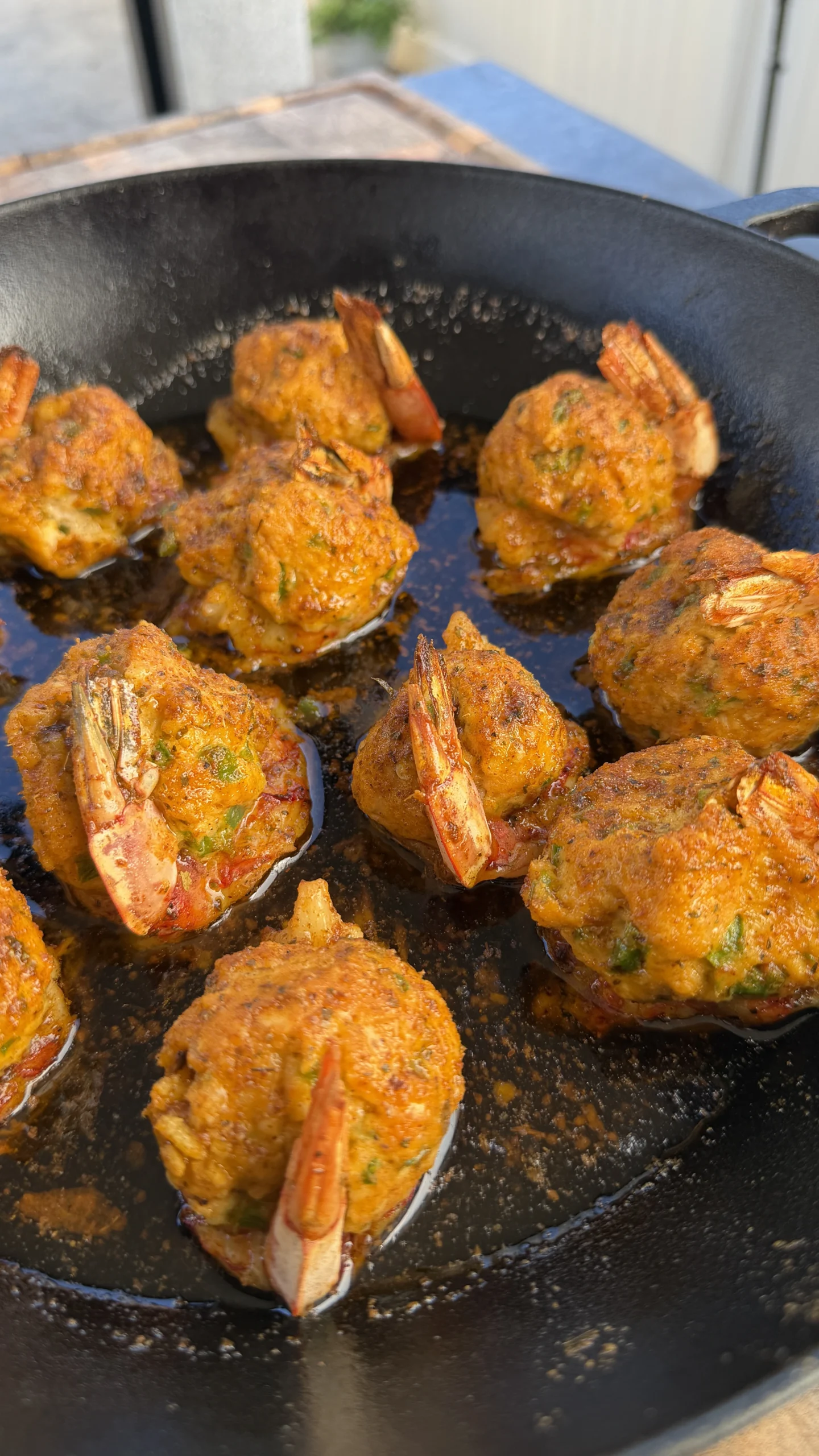
Crab-Stuffed Smoked Shrimp
Ingredients
Equipment
Method
- In a large bowl, mix softened cream cheese, crab meat, shredded cheddar, diced jalapeños, panko bread crumbs, and Cajun seasoning until fully combined. Form into golf ball-sized portions.
- Butterfly each shrimp by slicing down the back about three-quarters of the way through. Do not cut completely. Open the shrimp flat like a book.
- Place one crab ball onto each butterflied shrimp. Fold the shrimp around the stuffing. Tuck the tail into the crab mixture to help hold everything together.
- Preheat smoker to 225°F with applewood or other mild wood. Place stuffed shrimp on lightly greased grates or on a smoker-safe tray.
- Smoke for 20 minutes. The shrimp should start turning pink and the stuffing should begin to firm.
- While smoking, melt butter and mix with Cajun seasoning for the baste.
- After 20 minutes, brush shrimp generously with Cajun butter. Close lid and smoke for 10 more minutes until shrimp are fully cooked and stuffing is hot throughout.
- Remove from smoker. Rest for 2 to 3 minutes. Serve immediately while warm.
Nutrition
Notes
Tried this recipe?
Let us know how it was!Frequently Asked Questions
Can You Use Imitation Crab Instead of Real Crab Meat?
You can use imitation crab. But the flavor and texture will be noticeably different. Imitation crab is made from surimi, which is processed whitefish mixed with flavoring and coloring. It tastes milder than real crab. The texture is also softer and more uniform.
Real crab meat has sweet, briny flavor with distinct flakiness. The chunks break apart in visible pieces. This creates texture variation throughout the stuffing. Imitation crab is more paste-like. It blends into the cream cheese more completely. You lose the distinct crab pieces.
If budget is a concern, imitation crab works fine. The stuffing will still taste good. The cream cheese, cheddar, jalapeños, and Cajun seasoning provide plenty of flavor. The crab becomes one component rather than the star. For special occasions, use real lump crab meat. The quality difference is worth the extra cost.
If using imitation crab, chop it finely before mixing. The long stick shape doesn’t distribute well. Fine pieces integrate better. You might also want to reduce the cream cheese slightly. Imitation crab is softer than real crab. Too much cream cheese makes the filling too loose.
What Size Shrimp Work Best for Stuffing?
Jumbo shrimp sized 16/20 count work best. This means 16 to 20 shrimp per pound. Each shrimp weighs close to 1 ounce. This size is large enough to butterfly properly and wrap around a golf ball-sized crab ball.
Extra-large shrimp at 21/25 count can work. But they’re slightly smaller. You’ll need to make smaller crab balls to match. Or the stuffing will be too large for the shrimp to wrap around completely.
Colossal shrimp at 10/15 count are almost too large. The shrimp dominates the stuffing. You end up with mostly shrimp and a small amount of filling. This changes the ratio. Jumbo strikes the best balance.
Small or medium shrimp (31/40 count or smaller) don’t work. They’re too small to butterfly effectively. The cut shrimp would be tiny. There’s no way to wrap them around a substantial amount of stuffing. You’d need to make stuffing balls the size of peas. This is impractical.
When buying shrimp, look for the count per pound on the bag. Jumbo is usually labeled 16/20 or 21/25. Make sure they’re already peeled and deveined. This saves significant prep time. Tail-on is essential for this recipe. The tail provides the securing mechanism.
How Spicy Are These Stuffed Shrimp?
The heat level is moderate. Three diced jalapeños spread across 16 to 18 stuffed shrimp means each one gets a small amount of pepper. The cream cheese and cheddar dilute the heat. Most people find them pleasantly spicy without being overwhelming.
The Cajun seasoning adds another layer of spice. But Cajun blends vary widely. Some are mild with mostly herbs. Others are quite hot with significant cayenne. Check your specific brand. If it’s very spicy, you might want to reduce it to 2 teaspoons instead of a full tablespoon.
For milder stuffed shrimp, use only 1 or 2 jalapeños. Remove all the seeds and white membranes. These contain most of the capsaicin. You’ll still get jalapeño flavor without much heat. You can also use a milder pepper like Anaheim or poblano instead.
For spicier versions, leave all the jalapeño seeds in. Or use 4 to 5 peppers instead of 3. You can also add a pinch of cayenne pepper to the stuffing mixture. Or use a hot Cajun seasoning with extra kick.
Remember that smoke mellows heat perception slightly. The richness from the butter baste also tempers the spice. What tastes quite spicy raw will taste more balanced after smoking and basting.
Can You Prep These Ahead of Time?
You can prep the components ahead. Make the crab stuffing balls up to 1 day in advance. Store them in an airtight container in the refrigerator. They’ll firm up when cold. This actually makes them easier to handle when stuffing the shrimp.
You can also butterfly the shrimp ahead. Store them in a covered container in the fridge for up to 4 hours. Don’t go much longer. Shrimp are very perishable. Extended storage even in the fridge degrades quality.
Don’t assemble the stuffed shrimp more than 2 hours ahead of smoking. Once assembled, the cream cheese starts to soften from the shrimp moisture. The bread crumbs begin absorbing liquid. The texture changes. The stuffing can become too soft to hold shape.
For best results, stuff the shrimp about 30 minutes before you plan to smoke them. This gives you time to prep without compromising texture. The assembled shrimp can sit at room temperature for up to 30 minutes. Longer than that, refrigerate them.
The Cajun butter can be made days ahead. Store in the fridge. Reheat gently before basting. Cold butter is too firm to brush on smoothly.
For parties, you can have everything prepped and ready. Then do final assembly right before smoking. This keeps the stuffing at optimal texture while saving time during the event.
How Do You Reheat Leftover Stuffed Shrimp?
Reheat leftover stuffed shrimp in a 300°F oven for 8 to 10 minutes. Place them on a baking sheet. Don’t cover with foil. The steam softens the shrimp. Dry heat preserves texture better.
The shrimp won’t be quite as good as fresh. Reheating firms them up more. The stuffing becomes denser. But they’re still tasty. The smoke flavor remains. The Cajun butter coating refreshes during reheating.
Don’t use the microwave. Microwaves cook shrimp unevenly. The exterior overcooks while the center stays cold. The texture becomes rubbery. The stuffing can explode from rapid steam buildup. It’s not worth the convenience.
You can also reheat on the grill. Set up for indirect heat at 300°F. Place the shrimp on the cool side. Heat for 6 to 8 minutes. This adds a little extra char. The smoke flavor intensifies slightly. This method works well if you’re already grilling other food.
Store leftovers properly. Transfer to an airtight container immediately after cooling. Refrigerate within 2 hours of smoking. Seafood is highly perishable. Don’t leave it at room temperature for extended periods.
Properly stored stuffed shrimp last 2 days in the refrigerator. Beyond that, the quality drops significantly. The shrimp texture degrades. The stuffing can develop off flavors. When in doubt, throw it out. Seafood food poisoning is serious.
Ready to Level Up?
Take your backyard cooking from good to legendary.
This is where I keep all my most-used smokers, knives, and favorite cooking tools.
Shop My Gear CollectionExplore More Recipes
Find more diverse flavors at CWFeats.com