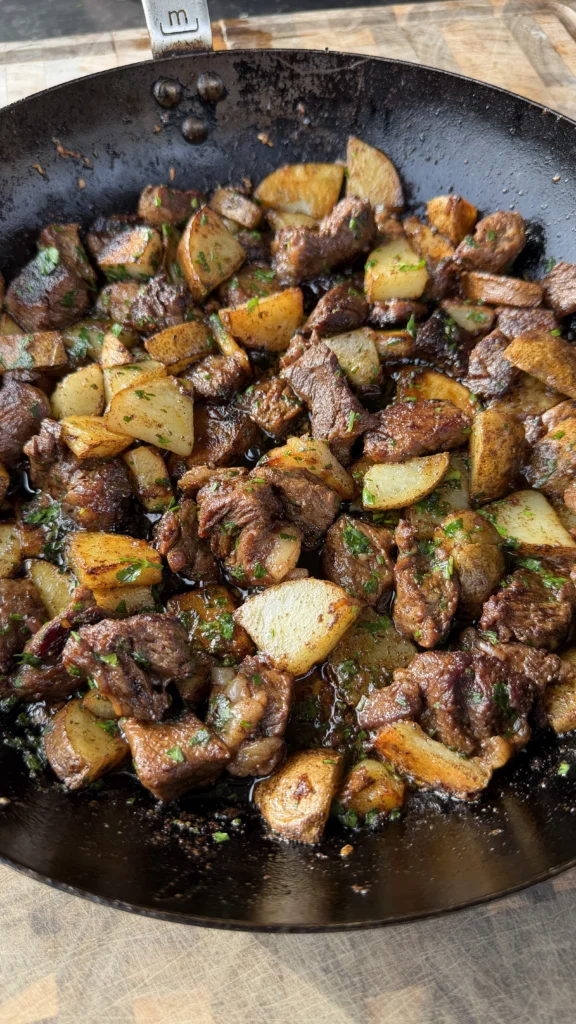
Garlic butter steak bites and crispy potato skillet is 1 pound of ribeye steak cut into 1 to 1½ inch cubes, seasoned with steak seasoning, and seared in a hot skillet with avocado oil until a deep brown crust forms on all sides. You cook cubed russet potatoes first in the same skillet until golden brown and fork-tender, about 12 to 15 minutes, then remove them while you sear the steak over high heat for 3 to 5 minutes. After removing the steak, you reduce heat to medium, melt a full stick of butter, cook minced shallot for 2 to 3 minutes, add minced garlic for 30 to 60 seconds, then return both the steak and potatoes to the skillet and toss everything in the garlic butter until coated and heated through. You finish with fresh chopped chives and parsley.
The entire process takes about 30 minutes from start to finish. This includes 5 minutes to cube the steak and potatoes. The potatoes cook for 12 to 15 minutes. Searing the steak takes 3 to 5 minutes. Making the garlic butter sauce takes another 3 to 4 minutes. The final tossing and heating is 2 to 3 minutes. Everything comes together hot and ready to serve.
This steak bites recipe serves 2 to 3 people as a complete meal. The combination of protein and starch means no sides are required. The dish is self-contained. You get tender, juicy steak pieces with crispy potatoes all coated in rich garlic butter. The fresh herbs add brightness that cuts through the butter’s richness.
Why Ribeye Is the Best Cut for Steak Bites
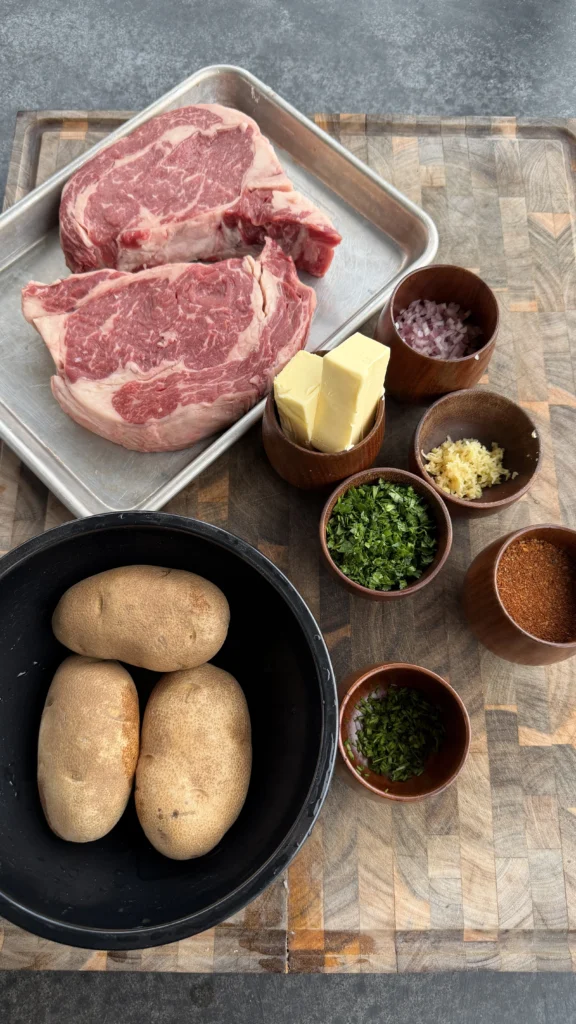
Marbling Creates Self-Basting Effect
Ribeye has extensive intramuscular fat marbling throughout the meat. When you cut ribeye into cubes, each piece contains streaks of fat. During high-heat searing, this fat renders and bastes the meat from inside. The result is steak bites that stay juicy even when cooked to medium or medium-well.
Leaner cuts like sirloin or tenderloin lack this marbling. They cook faster because there’s less fat to render. But they also dry out more easily. Without internal fat basting, lean steak bites can become tough and chewy if overcooked even slightly. The margin for error is much smaller.
The rendered fat from ribeye also contributes flavor. As the fat melts, it carries beef flavor throughout each bite. Lean cuts taste more one-dimensional. The beef flavor is present but not as rich or complex. Ribeye delivers layers of taste from both the muscle and the fat.
Fat Cap Protection During Searing
Many ribeye cubes will have a fat cap on one or two sides when you cut them. This cap of external fat provides additional protection during searing. The fat side can sit against the hot pan without the meat itself touching. This creates a buffer that prevents overcooking.
You can also use the fat cap strategically. Sear the lean sides first to develop crust. Then stand the cubes on their fat cap sides for the final sear. The fat renders and crisps while the meat stays at proper doneness. This technique gives you crispy fat and perfectly cooked meat.
Leaner cuts don’t have this fat cap advantage. Every side is exposed muscle. When you sear, you’re cooking meat directly against hot metal. This aggressive heat can overcook the exterior before the interior reaches temperature. Ribeye’s fat provides insulation and control.
Texture and Tenderness Advantages
Ribeye comes from the rib section of the cow. This area doesn’t do much work during the animal’s life. The muscles stay relatively tender. When you cut ribeye into bites, you’re working with already-tender meat. Brief high-heat searing maintains this tenderness.
Tougher cuts like chuck or round require extended cooking to break down connective tissue. They don’t work well for quick-seared steak bites. The meat stays chewy. You’d need to braise them for hours to achieve tenderness. That defeats the purpose of a 30-minute skillet meal.
Tenderloin is extremely tender but lacks flavor compared to ribeye. It’s also significantly more expensive per pound. For steak bites where you’re cutting the meat into small pieces anyway, the presentation advantage of tenderloin disappears. Ribeye delivers better flavor at lower cost.
Cost Efficiency for Cubed Applications
Ribeye steaks are expensive when you buy them as whole steaks. But you can often find ribeye roasts or less-premium ribeye cuts at better prices. For steak bites where you’re cubing the meat, you don’t need perfectly shaped steaks. Odd-shaped pieces work fine.
Some butchers sell ribeye steak trimmings or ribeye cap meat separately. These pieces are perfect for steak bites. They have all the marbling and flavor of premium ribeye steaks. But they cost less because they’re irregular shapes that don’t present well as whole steaks.
Compare this to filet mignon where you’re paying premium prices for shape and texture that doesn’t matter once cubed. Or sirloin where you save money but sacrifice flavor and juiciness. Ribeye offers the best balance of quality and value for this application.
How to Get Restaurant-Quality Crust on Steak Bites
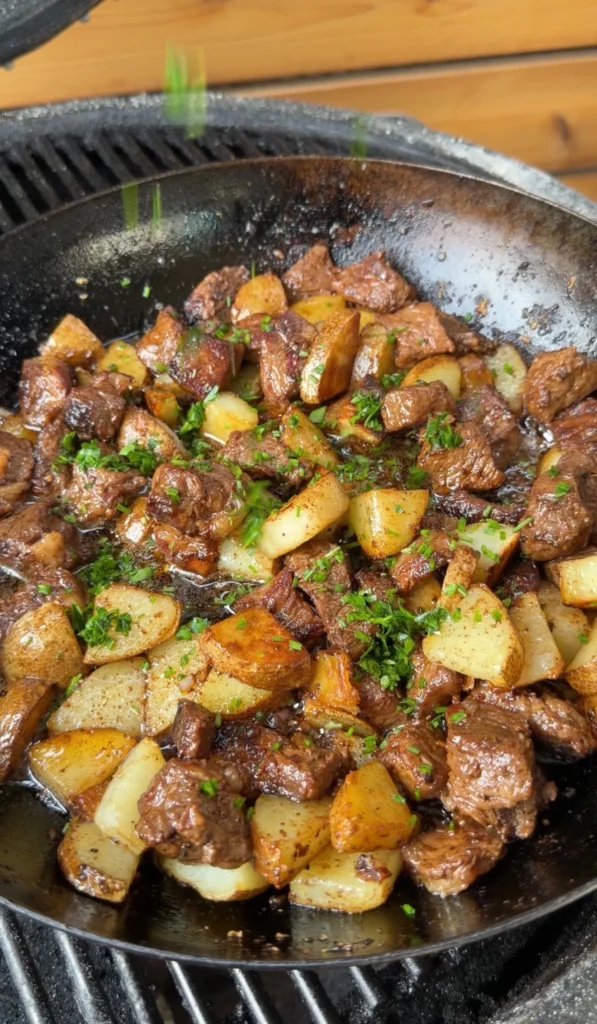
Maximum Heat and Minimal Moisture
Restaurant-quality crust requires extremely high heat. Professional kitchens use burners that output 25,000 to 30,000 BTUs. Home stoves typically produce 9,000 to 15,000 BTUs. You can’t match restaurant heat exactly. But you can optimize your setup.
Use the highest heat setting your stove allows. Let the empty skillet preheat for 3 to 4 minutes before adding oil. The pan should be smoking hot when you add the steak. At this temperature, the Maillard reaction happens rapidly. You develop deep brown crust in minutes instead of slow, gray steaming.
Pat the steak cubes completely dry before seasoning. Surface moisture is the enemy of crust. Wet meat steams instead of searing. The moisture has to evaporate before browning can begin. Dry meat starts browning immediately when it hits the hot pan. Those extra seconds of contact time create noticeably better crust.
Single Layer Without Crowding
Crowding the pan drops the temperature dramatically. Each piece of cold steak absorbs heat. If you add too many pieces at once, the pan temperature plummets below the point where browning occurs. The steak releases moisture. That moisture can’t evaporate fast enough in the cooler pan. You end up with gray, steamed meat.
Work in batches if necessary. A single layer with space between pieces maintains pan temperature. The steak sears instead of steams. You develop crust on all pieces. This takes slightly longer than cooking everything at once. But the quality difference justifies the extra time.
For a 12-inch skillet, cook about 8 to 10 ribeye cubes per batch. This keeps adequate space between pieces. The heat circulates freely. Each cube makes direct contact with the hot pan surface. If your ribeye yields 12 to 15 cubes, plan for two batches.
Minimal Movement During Searing
Once you place the steak in the hot skillet, resist the urge to move it around. Let it sit for 1½ to 2 minutes before flipping. During this time, the crust develops. The meat releases from the pan naturally when it’s ready. If you try to flip too early, the meat sticks and tears.
The sear marks and crust form where the meat contacts the pan. Constant movement prevents this contact. You get spotty browning instead of even crust. The steak takes longer to cook. The texture suffers from the extended time over heat.
Turn each cube only when you see a deep brown crust forming on the down-facing side. Use tongs to rotate to a fresh side. Let that side sear for another 1½ to 2 minutes. Continue until all exposed sides have crust. Four to five turns typically cover all sides of a cube-shaped piece.
Oil Selection and Application
Use high smoke point oil for searing steak. Avocado oil smokes at 520°F. Refined peanut oil smokes at 450°F. Grapeseed oil smokes at 420°F. These oils can handle the extreme heat without breaking down or creating acrid smoke.
Butter has a low smoke point around 350°F. It burns quickly at searing temperatures. Don’t use butter for the initial searing. Save butter for the finishing sauce where you cook at medium heat. Mixing butter with high-heat oil raises the smoke point slightly. But pure high-heat oil performs better.
Add just enough oil to lightly coat the pan bottom. Too much oil deep-fries the steak instead of searing it. You want contact between meat and metal with a thin oil film preventing sticking. About 1 to 2 tablespoons is sufficient for a 12-inch skillet. Swirl to distribute evenly before adding meat.
Why You Cook Potatoes First Instead of Steak
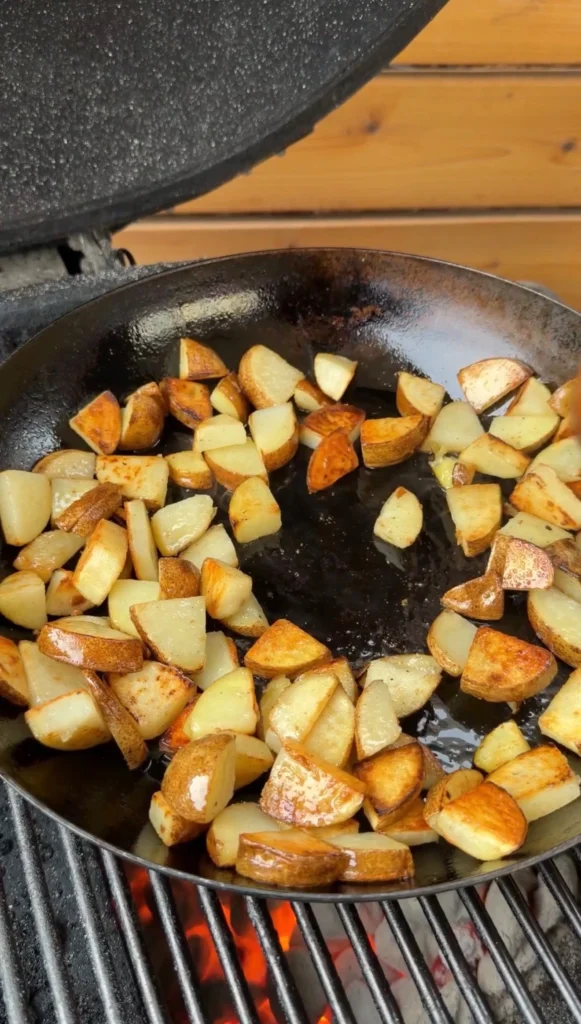
Longer Cooking Time Requirements
Cubed potatoes need 12 to 15 minutes to cook through and crisp up. Steak bites need only 3 to 5 minutes of searing. If you tried to cook them simultaneously, the steak would overcook to well-done while waiting for the potatoes to finish. Or you’d undercook the potatoes to prevent steak from overcooking.
Cooking potatoes first eliminates this timing conflict. They get the full 12 to 15 minutes they need at proper temperature. You can focus entirely on achieving crispy, golden-brown potatoes without worrying about steak. Once potatoes are done, you set them aside and give the steak your full attention.
The sequential cooking also allows you to use different heat levels. Potatoes cook best at medium-high heat for gradual browning and even cooking. Steak needs very high heat for rapid searing. Cooking separately lets you optimize temperature for each ingredient.
Building Fond for Flavor Development
As potatoes cook, they leave behind fond on the pan bottom. Fond is the caramelized bits that stick to the pan. These bits contain concentrated potato starch and browned potato flavor. This fond adds depth to the steak when you sear it in the same pan.
The steak fat and juices mix with the potato fond during searing. This creates layers of flavor. You taste potato, steak, and the combination of both. If you wiped the pan clean between ingredients, you’d lose this flavor integration.
The fond from steak searing also enriches the garlic butter sauce. When you deglaze with butter, you pick up all those caramelized bits. They distribute throughout the sauce. Every component benefits from the flavors that came before.
Temperature Management and Pan Recovery
After removing potatoes, the pan needs a moment to recover temperature. Potatoes absorb heat during cooking. The pan cools slightly. You need to bring it back to screaming hot for steak searing.
If potatoes were still in the pan, maintaining proper searing temperature would be impossible. The potato mass would act as a heat sink. The pan couldn’t get hot enough. Your steak would steam instead of sear.
The empty pan heats back to searing temperature in 1 to 2 minutes. Add a touch more oil if the pan looks dry. Let it heat until it just starts smoking. Then add the steak. This ensures proper searing conditions.
Preventing Potato Sogginess
If you added potatoes and steak together at the end, the potatoes would steam and soften. They’d lose their crispy exterior. The moisture from the steak and the condensation from covering the pan would make everything soggy.
By cooking potatoes first and removing them, they stay crispy while the steak sears. When you add them back at the end, they spend only 2 to 3 minutes in the pan. Just long enough to heat through and coat with garlic butter. Not long enough to lose their texture.
The final toss in butter creates a light coating that enhances crispiness rather than destroying it. The butter clings to the crispy potato surfaces. It doesn’t penetrate and soften them. The potatoes stay crispy on the outside while warming through.
Best Potatoes for Crispy Skillet Cooking
Russet vs Yukon Gold vs Red Potatoes
Russet potatoes have high starch content and low moisture. When you cook them in a skillet, the starch on the cut surfaces converts to sugar. This sugar caramelizes and creates deep brown crispy crust. The interior becomes fluffy and light. This texture contrast is ideal for skillet potatoes.
Yukon Gold potatoes have medium starch and medium moisture. They crisp up reasonably well but not as aggressively as russets. The interior is creamier and denser. They hold their shape better during cooking. This makes them good for applications where you want intact potato cubes. But for maximum crispiness, russets win.
Red potatoes are waxy with low starch and high moisture. They don’t crisp well in a skillet. The excess moisture steams the potatoes instead of frying them. They can become mushy or fall apart. The low starch means less caramelization potential. Red potatoes work better for boiling or roasting whole.
Cube Size and Surface Area
The 1-inch cube size recommended in this recipe balances crispiness and cooking time. Smaller cubes have more surface area relative to volume. This means more crispy exterior per bite. But tiny cubes can overcook and dry out before browning properly.
Larger cubes take too long to cook through. You’d need to extend the cooking time beyond 15 minutes. By the time the interior is tender, you might have burnt the exterior. Or you’d need to reduce heat and lose crispiness potential.
One-inch cubes cook through in 12 to 15 minutes at medium-high heat. They have enough surface area to develop good browning on multiple sides. The interior becomes tender and fluffy. This size works perfectly for a 30-minute total recipe.
Starch Rinsing Considerations
Some recipes tell you to rinse cubed potatoes to remove excess surface starch. This can help with even browning in some applications. But for maximum crispiness in a skillet, don’t rinse. That surface starch is your friend.
The starch converts to sugar during heating. The sugar caramelizes and creates the brown crust you want. Rinsing removes this starch. The potatoes take longer to brown. The crust is thinner and less crispy. You get pale potatoes instead of golden-brown ones.
The starch also helps create fond on the pan. This fond adds flavor to the steak and garlic butter sauce later. Rinsed potatoes leave less fond. The overall dish has less depth of flavor.
Garlic Butter Steak Bites
Ribeye cubes, crispy potatoes, herb garlic butter
Ingredients
Steak & Potatoes
- 1 lb ribeye steak, cut into 1-1½ inch cubes
- 2 medium russet potatoes, cubed
- Your favorite steak seasoning
- Avocado oil (or high-heat cooking oil)
Garlic Butter Sauce
- 1 stick (½ cup) unsalted butter
- 1 shallot, finely minced
- 3 garlic cloves, minced
Garnish
- Fresh chives, finely chopped
- Fresh parsley, finely chopped
Pat the steak cubes completely dry before seasoning. Surface moisture prevents proper crust formation. The steak will steam instead of sear. Dry meat starts browning immediately when it hits the hot pan.
Step-by-Step Instructions
Step 1: Prep the Steak and Potatoes
Remove the ribeye from the refrigerator. Pat it completely dry with paper towels. Cut the ribeye into 1 to 1½ inch cubes. Try to keep the pieces relatively uniform in size. This ensures even cooking.
Season the steak cubes generously on all sides with your favorite steak seasoning. SPG (salt, pepper, garlic) works great. Or use whatever blend you prefer. Make sure every cube is well-coated. Set the seasoned steak aside while you prep the potatoes.
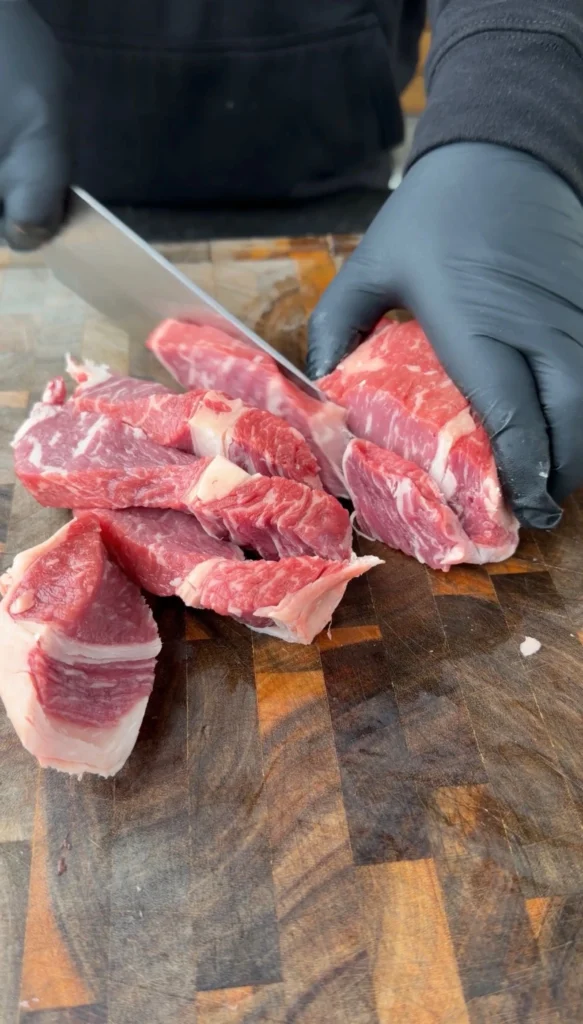
Peel the russet potatoes if desired. You can leave the skin on for more texture and nutrition. Cut the potatoes into cubes roughly the same size as the steak cubes. About 1 inch is ideal. Don’t season the potatoes yet. They’ll pick up flavor from the pan and the garlic butter later.
Step 2: Cook the Potatoes Until Crispy
Heat a large 12-inch skillet over medium-high heat. Add 2 to 3 tablespoons of avocado oil. Swirl to coat the bottom of the pan evenly.
Add the cubed potatoes to the hot oil. Spread them in as close to a single layer as possible. Don’t stir immediately. Let them sit for 2 to 3 minutes to develop browning on the first side.
After the first side browns, stir or flip the potatoes. Let them sit again for another 2 to 3 minutes. Continue this pattern of letting them sit, then stirring, for 12 to 15 minutes total. The potatoes should be golden brown on multiple sides and fork-tender when done.
Check doneness by piercing a cube with a fork. It should slide in easily with minimal resistance. If the potatoes are still firm, continue cooking for another 2 to 3 minutes.
Remove the cooked potatoes from the skillet and place them in a bowl. Set aside while you cook the steak.
Step 3: Sear the Steak Bites at High Heat
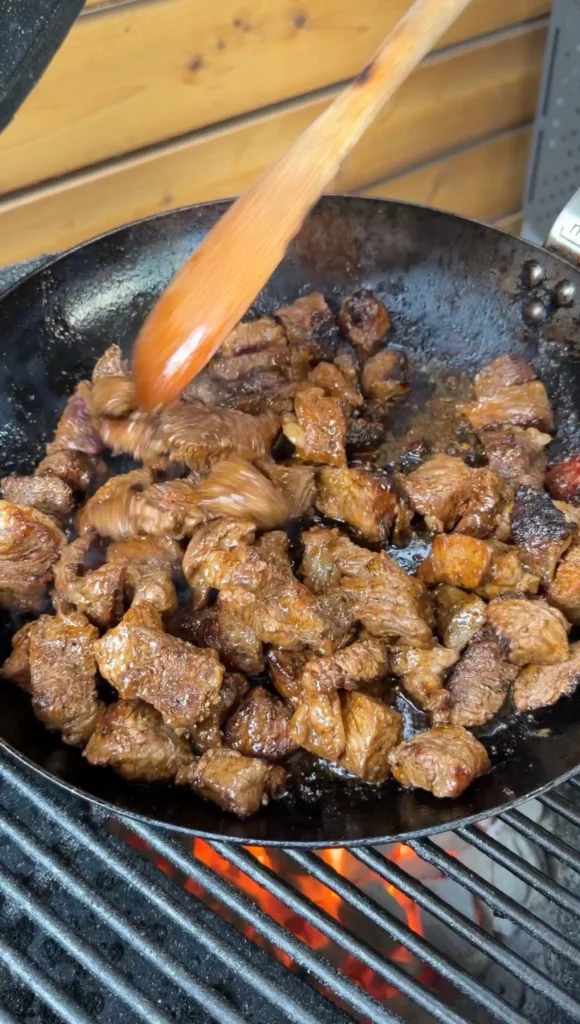
Increase the heat to high. Let the empty skillet heat for 1 to 2 minutes. It should be screaming hot. Add another tablespoon of avocado oil if the pan looks dry.
Add the seasoned steak cubes to the hot skillet in a single layer. Don’t overcrowd. Work in batches if necessary. For a 12-inch skillet, 8 to 10 cubes per batch works well.
Let the steak sear without moving for 1½ to 2 minutes. The meat should develop a deep brown crust on the down-facing side. If you try to flip too early, the meat will stick. When ready, it releases naturally.
Use tongs to flip each cube to a fresh side. Let it sear another 1½ to 2 minutes. Continue rotating until all sides have developed crust. This takes about 3 to 5 minutes total for medium-rare to medium doneness.
Check for doneness by cutting into a cube. It should be pink in the center for medium-rare. Slightly less pink for medium. Don’t cook past medium. The steak will toughen.
Remove the steak from the skillet and place in a bowl. Set aside while you make the garlic butter sauce.
Step 4: Make the Garlic Butter Sauce
Reduce the heat to medium. The pan should cool slightly but still be hot enough to melt butter.
Add the entire stick of unsalted butter to the skillet. Let it melt completely. The butter will pick up all the fond and drippings from the steak and potatoes.
Add the finely minced shallot to the melted butter. Stir and cook for 2 to 3 minutes until the shallot softens and becomes fragrant. The shallot should be translucent, not browned.
Add the minced garlic. Stir and cook for 30 to 60 seconds only. Watch carefully. You want the garlic fragrant and just starting to turn golden at the edges. Don’t let it brown completely or it will taste bitter.
As soon as the garlic is fragrant, you’re ready for the next step. The sauce should be smooth, buttery, and aromatic.
Step 5: Combine Everything in the Garlic Butter
Return the cooked steak bites and crispy potatoes to the skillet with the garlic butter. Toss everything together gently with tongs or a wooden spoon.
Make sure every piece of steak and every potato cube gets coated in the garlic butter. The butter should cling to the food and create a glossy coating.
Cook for 2 to 3 minutes, stirring occasionally, until the steak and potatoes are heated through. The steak will finish cooking to your desired final doneness during this time. If you pulled the steak at medium-rare, it will reach medium during this phase.
Taste a potato. It should be well-seasoned from the garlic butter. If it needs more salt, add a pinch now.
Step 6: Finish with Fresh Herbs and Serve
Remove the skillet from heat. Add the chopped fresh chives and parsley. Toss to distribute the herbs throughout the steak and potatoes.
Transfer everything to a serving platter or individual plates. Spoon any remaining garlic butter from the skillet over the top.
Serve immediately while hot. The steak is best at this moment. As it cools, it can become tough. The potatoes will lose some crispiness as they sit in the butter.
Optionally, sprinkle flaky sea salt or cracked black pepper over the top right before serving. This adds a final layer of seasoning and textural interest.

Garlic Butter Steak Bites and Crispy Potato Skillet
Ingredients
Equipment
Method
- Pat ribeye dry and cut into 1 to 1½ inch cubes. Season generously with steak seasoning. Cube potatoes to similar size. Don’t season potatoes yet.
- Heat a large skillet over medium-high heat with 2 to 3 tablespoons avocado oil. Add potatoes in a single layer. Cook 12 to 15 minutes, stirring occasionally, until golden brown and fork-tender. Remove and set aside.
- Increase heat to high. Add another tablespoon of oil if needed. Add steak cubes in a single layer without crowding. Sear 1½ to 2 minutes per side, rotating until all sides are deeply browned, about 3 to 5 minutes total. Remove and set aside.
- Reduce heat to medium. Add butter and let it melt. Add minced shallot and cook 2 to 3 minutes until softened. Add minced garlic and cook 30 to 60 seconds until fragrant.
- Return steak and potatoes to skillet. Toss in garlic butter for 2 to 3 minutes until everything is coated and heated through.
- Remove from heat. Add chopped chives and parsley. Toss to combine. Serve immediately.
Nutrition
Notes
Tried this recipe?
Let us know how it was!Frequently Asked Questions
Can You Use Sirloin Instead of Ribeye for Steak Bites?
You can use sirloin for a leaner option. Top sirloin works best. It has more flavor than bottom sirloin. The meat will be slightly less tender than ribeye. It also dries out faster because it lacks intramuscular fat.
If using sirloin, watch the cooking time carefully. Pull the steak when it’s closer to rare than medium-rare. The final toss in butter will bring it to medium-rare. Sirloin goes from perfect to overcooked very quickly. The margin for error is smaller.
Season sirloin more aggressively than you would ribeye. The leaner meat benefits from extra flavor. Consider adding Worcestershire sauce to the garlic butter for additional umami. This helps compensate for the reduced beef flavor compared to ribeye.
Sirloin costs less per pound than ribeye. If budget is a concern, it’s a reasonable substitution. Just understand the texture and juiciness won’t match ribeye exactly. Many people prefer ribeye for steak bites specifically because of the superior eating experience.
How Do You Know When Steak Bites Are Done?
The most reliable method is cutting into a cube. Medium-rare shows pink throughout with a warm red center. Medium has more brown with a smaller pink center. Well-done has no pink remaining.
For medium-rare, cook to an internal temperature of 130 to 135°F. The carryover cooking during the butter toss will bring it to 135 to 140°F. For medium, pull at 140 to 145°F. Final temperature will be 145 to 150°F.
Visual cues also help. Medium-rare steak has significant juice pooling when you cut into it. The meat feels soft but springy when you press it. Medium steak releases less juice. It feels firmer. Well-done steak is very firm and releases minimal juice.
Remember that small cubes cook faster than whole steaks. A 1-inch cube reaches medium-rare in 3 to 4 minutes of searing. Check earlier than you think. Overcooked steak bites become chewy and tough. There’s no fixing them once they’re overdone.
Can You Make This Recipe Without a Cast Iron Skillet?
You can use any large skillet. Stainless steel works well for searing steak. It develops good fond. The potatoes crisp nicely. Cleanup requires more scrubbing than nonstick but less than cast iron.
Nonstick skillets work but don’t create as much crust. The surface prevents food from sticking. This also prevents deep browning. You’ll get cooked steak and potatoes. But the flavor and texture won’t be as good. Nonstick is also not ideal for high heat. Many nonstick coatings degrade above 400°F.
Cast iron is preferred for this recipe because it retains heat well. When you add cold steak to a screaming hot cast iron pan, the temperature drops slightly but recovers quickly. Thin stainless steel pans lose more heat. The recovery time is longer. This affects searing quality.
Carbon steel is an excellent alternative to cast iron. It heats evenly like cast iron. It’s lighter and easier to handle. If you have a carbon steel skillet, use it. The results will be nearly identical to cast iron.
What Sides Go Well with Steak Bites and Potatoes?
This dish is fairly complete on its own. The steak provides protein. The potatoes provide starch. You have a balanced meal without additional sides. But if you want to round it out, consider vegetables.
A simple green salad with vinaigrette adds freshness. The acidity cuts through the rich garlic butter. Arugula or mixed greens work well. Dress them lightly. You don’t want to compete with the bold butter flavor.
Roasted or grilled asparagus pairs classically with steak. The slight bitterness balances the beef’s richness. Roasted Brussels sprouts also work. Their caramelized edges complement the caramelized steak crust.
Sautéed green beans with garlic mirror the garlic butter in the main dish. They feel cohesive rather than random. Or serve with grilled or roasted mushrooms. The earthy mushroom flavor enhances beef.
For something lighter, serve with cucumber tomato salad. The cool, crisp vegetables contrast with hot, rich steak and potatoes. This is especially nice in summer when you want something refreshing alongside heavier food.
How Do You Store and Reheat Leftover Steak Bites?
Store leftovers in an airtight container in the refrigerator. They’ll keep for 2 to 3 days. Understand that reheated steak is never as good as fresh. The meat firms up in the cold. It can become tough when reheated.
For reheating, the gentlest method is the oven. Preheat to 250°F. Spread steak and potatoes on a baking sheet. Heat for 10 to 15 minutes until warmed through. Don’t overheat. You’re warming, not cooking again.
Stovetop reheating also works. Use a skillet over low heat. Add a tablespoon of butter or oil. Add the steak and potatoes. Stir gently until heated. This takes 5 to 7 minutes. The added fat helps prevent drying.
Microwave reheating is quickest but produces the worst results. The steak becomes rubbery. Use 50% power if you must microwave. Heat in 30-second intervals. Stir between intervals. This reduces the rubbery texture somewhat.
For best results, only make what you’ll eat immediately. This dish is meant to be enjoyed fresh. The steak is at its best straight from the pan tossed in hot garlic butter. Plan portions accordingly to minimize leftovers.
Ready to Level Up?
Take your backyard cooking from good to legendary.
This is where I keep all my most-used smokers, knives, and favorite cooking tools.
Shop My Gear CollectionExplore More Recipes
Find more diverse flavors at CWFeats.com