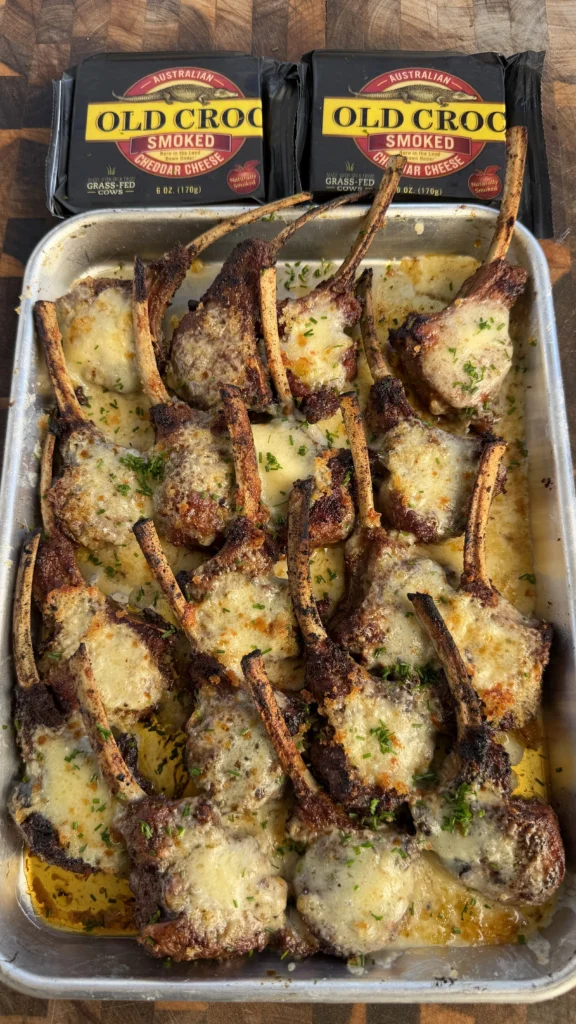
Cheese-crusted grilled lamb chops are individual lamb chops cut from 2 racks of lamb (approximately 16 chops total), seasoned generously with salt, pepper, and garlic seasoning, then grilled at medium-high heat (400 to 450°F) for 3 minutes per side until nicely charred and the internal temperature reaches 125 to 130°F. After a brief rest, you top each grilled chop with a mixture of 1 cup freshly grated smoked applewood cheddar and ¼ cup heavy cream to create a thick, creamy cheese layer, then sprinkle with panko breadcrumbs tossed in melted butter. The assembled chops broil for 2 to 3 minutes until the cheese melts and bubbles and the breadcrumbs turn golden and crispy, finishing at 130 to 140°F internal temperature for medium-rare to medium doneness.
The entire process takes 35 to 40 minutes from start to finish. This includes 10 minutes for cutting the racks into individual chops and seasoning. Grilling takes about 6 minutes total for both sides. Making the cheese mixture and breadcrumb topping takes 5 minutes. Assembling the chops with toppings takes another 5 minutes. Broiling adds 2 to 3 minutes. Resting before serving adds 5 minutes. You can cut the lamb racks and prepare both the cheese mixture and breadcrumb topping ahead of time, then just grill, assemble, and broil when ready to serve.
These smoked cheddar lamb chops serve 4 to 6 people depending on appetite and sides. Each rack of lamb typically has 8 ribs, so 2 racks yield 16 individual chops. For hearty appetites or as a main course without substantial sides, plan 3 to 4 chops per person serving 4 people. For dinner party service with multiple courses or substantial sides, 2 to 3 chops per person serves 6. The chops are rich from the cheese and butter, so they’re quite filling despite being relatively small.
Jump to RecipeWhy Smoked Cheddar Works Better Than Regular Cheddar for Lamb
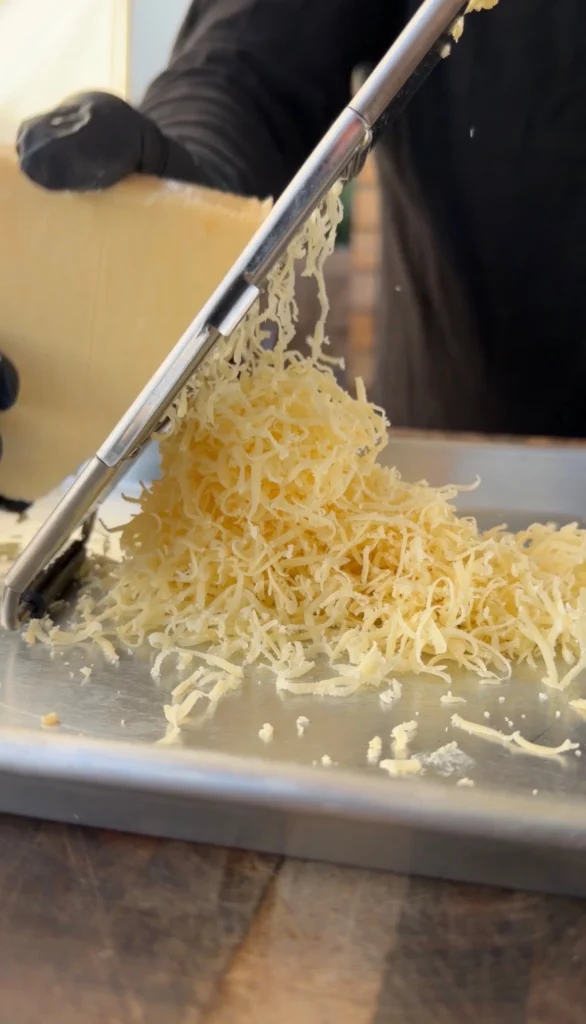
Smoke Flavor Complements Natural Gaminess
Lamb has a distinctive flavor that some people describe as gamy. This comes from branched-chain fatty acids unique to lamb. The intensity varies based on the lamb’s age and diet. Younger lamb is milder. Grass-fed lamb is more pronounced.
Smoked cheddar has its own bold character from the smoking process. The wood smoke compounds interact with lamb’s fatty acids in complementary ways. The smoke mellows the gaminess while enhancing lamb’s richness.
Regular sharp cheddar is too neutral. It provides saltiness and umami but doesn’t have enough personality to stand up to lamb. The lamb dominates and the cheese becomes background. Smoked cheddar holds its own.
The smoke in the cheese also reinforces the smoke and char from grilling. You get layered smoke character from two sources. This creates depth that regular cheddar can’t provide.
Applewood Smoke Is Milder Than Hickory
Different woods create different smoke profiles in smoked cheese. Applewood smoke is sweet and mild. Hickory smoke is strong and bacon-like. Mesquite smoke is intense and can be bitter.
Applewood-smoked cheddar like Old Croc brand provides balanced smoke flavor. It’s noticeable but not overwhelming. This works perfectly with lamb’s delicate meat texture even though the flavor is bold.
Hickory-smoked cheddar would compete with lamb rather than complementing it. The smoke would be too aggressive. Mesquite-smoked cheese is even worse, potentially creating bitter notes.
If you can’t find applewood-smoked cheddar, look for any mild smoked cheddar. Avoid heavily smoked varieties. The smoke should enhance, not dominate.
Fat Content Helps Melting
Good quality smoked cheddar has sufficient fat content to melt smoothly. When combined with heavy cream, it creates a sauce-like consistency that coats the lamb rather than separating into greasy puddles.
Low-fat or reduced-fat cheddar doesn’t melt properly. It becomes grainy or stringy. The proteins clump instead of creating smooth texture. For broiling applications where you need quick, even melting, full-fat cheese is essential.
The cream also prevents the cheese from breaking under the broiler’s intense heat. Cheese alone can separate with its fat pooling separately from proteins. The cream provides extra moisture and fat that maintains emulsion.
Aged Cheddar Provides Umami
Quality smoked cheddar is typically aged for several months. Aging develops complex flavors through protein breakdown. The longer aging creates more umami compounds.
This umami enhances lamb’s natural savory character. Lamb is rich in glutamates. Aged cheese is also rich in glutamates. Combined, they create amplified savory depth.
Young, mild cheddar lacks this complexity. It tastes primarily of milk and salt. Aged smoked cheddar tastes of caramelized proteins, concentrated milk solids, and developed umami. This complexity is worth the higher cost for special recipes.
Why Grilling First Then Broiling Creates Better Results Than Just Broiling
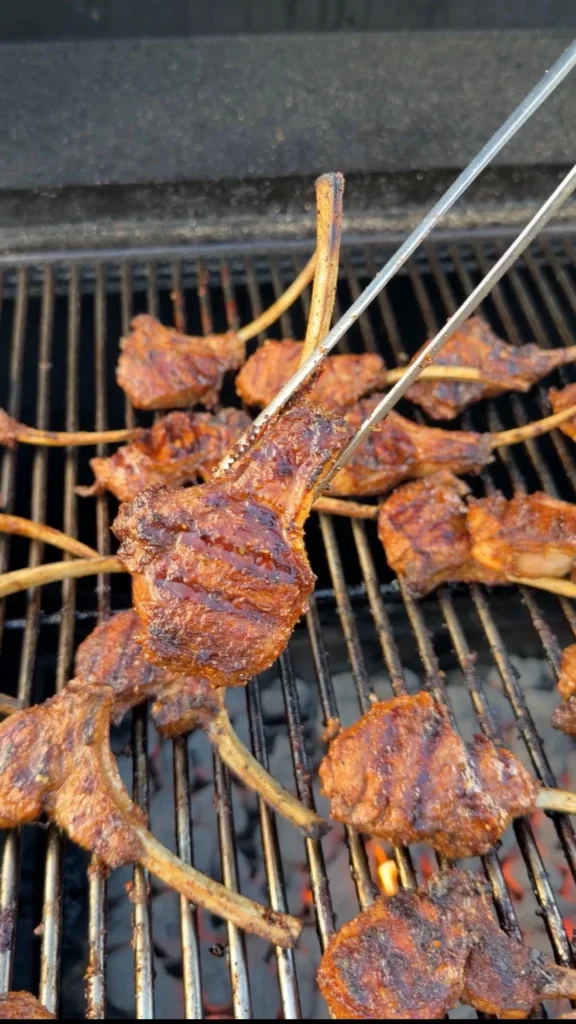
Grill Creates Maillard Reaction and Char
The Maillard reaction happens between 300°F and 500°F when proteins and sugars react. This creates hundreds of flavor compounds including toasted, nutty, caramelized notes. Grilling at 400 to 450°F is perfect for Maillard reaction.
Direct contact with hot grill grates creates distinctive char marks. These dark lines aren’t just visual. They’re areas of intense Maillard reaction with concentrated flavor. The char adds slight bitterness that balances lamb’s richness.
Broilers heat from above without direct contact. Broiling alone doesn’t create the same char pattern. You get browning but not the lines and texture that grill marks provide. The visual presentation is also less appealing without char marks.
The smoke from the grill adds another flavor layer. Even gas grills produce some smoke from vaporized drippings. This smoke penetrates the meat surface. Broilers don’t create any smoke character.
Grilling Renders External Fat
Lamb chops have a fat cap on the edge. This fat needs to render for optimal texture and flavor. Grilling positions the fat cap perpendicular to heat. The fat melts and drips away or crisps on the meat.
The intense heat from grill grates directly crisps this fat. You get rendered, golden fat cap that’s delicious. Broiling from above heats the fat but doesn’t crisp it the same way. The fat can stay flabby or rubbery.
Properly rendered lamb fat tastes mild and pleasant. Unrendered lamb fat can taste waxy or have stronger lamb flavor. The grilling step ensures the fat cap is properly handled.
Broiling Melts Cheese Without Overcooking Meat
After grilling, the lamb chops are already at or near target doneness. The broiling step is purely for finishing the cheese and breadcrumb topping. The brief 2 to 3-minute broil melts cheese and browns breadcrumbs without significantly changing the meat temperature.
If you tried to broil raw lamb chops with cheese topping, you’d need much longer under the broiler. The chops might need 8 to 10 minutes to cook through. By that time, the cheese would be burnt and the breadcrumbs would be carbonized.
The two-step method (grill then broil) optimizes each cooking method for its strength. Grilling handles the meat cooking and char development. Broiling handles the cheese melting and breadcrumb crisping.
Temperature Control and Precision
Grilling gives you control over the meat’s doneness. You can monitor internal temperature. You can remove chops at precise temperature for your preferred doneness. Medium-rare, medium, or medium-well is your choice.
Once the meat is at the right temperature, the broiling becomes a finishing step that doesn’t require precision. You just watch for visual cues: melted, bubbly cheese and golden breadcrumbs. Even if you broil 30 seconds too long, the meat won’t overcook significantly because it’s already done.
How to Tell When Lamb Chops Are Perfectly Cooked
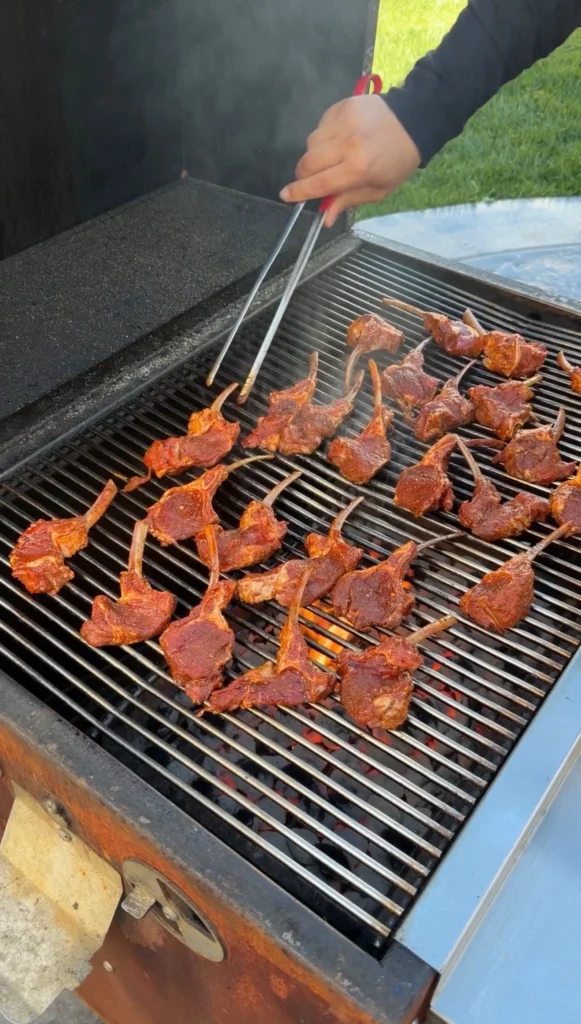
Temperature Guidelines for Different Doneness
Medium-rare lamb chops should read 130 to 135°F internal temperature. This is the most popular doneness for lamb. The meat is warm and pink throughout. The texture is tender with some resistance. The fat is rendered but not dry.
Medium lamb is 135 to 145°F. The pink is less pronounced. More of the meat is light brown. The texture is firmer but still tender. This is acceptable for people who dislike pink meat but want lamb to stay juicy.
Well-done lamb is 145°F and above. The meat is fully brown throughout. The texture is firm and can be dry. Most chefs and lamb enthusiasts don’t recommend well-done for premium cuts like rack of lamb. The delicate meat doesn’t benefit from thorough cooking.
For this recipe specifically, you want to pull lamb off the grill at 125 to 130°F. The broiling step adds another 5 to 10 degrees. Final serving temperature will be 130 to 140°F, which is medium-rare to medium.
The Touch Test for Doneness
You can estimate doneness by pressing the meat with your finger. This requires practice but works once you develop the feel. Rare lamb feels soft and squishy like the fleshy part of your palm below your thumb when your hand is relaxed.
Medium-rare feels like that same spot when you touch your thumb to your index finger. There’s slight resistance but still give. This is the target feel for lamb chops.
Medium feels like thumb to middle finger. Firmer with less give. Medium-well is thumb to ring finger. Well-done is thumb to pinky, very firm with minimal give.
The touch test is approximate. Temperature is more reliable. But the touch test helps when you’re grilling multiple chops and don’t want to poke all of them with a thermometer.
Visual Cues on the Grill
Watch for moisture beading on the surface. When lamb chops start showing moisture droplets on top, they’re approaching doneness. This happens as proteins contract and squeeze out liquid.
Check the sides of the chops. The meat should be brown around the edges with pink center visible when viewed from the side. If you see no pink from the sides, the chops are past medium.
The fat cap should be rendered and golden. If it’s still white and jiggly, the chops need more time. If it’s dark brown or black, they’re overcooking.
Carryover Cooking Considerations
Remove lamb chops from the grill 5 degrees below target temperature. They’ll continue cooking from residual heat. This carryover cooking typically adds 5 to 10 degrees during resting.
For this recipe, the broiling step also adds heat. The chops get two sources of carryover cooking: natural carryover from resting and active cooking under the broiler. This is why pulling at 125 to 130°F is critical even if you want medium doneness.
If you grill to 135°F and then broil, you’ll end up with 145°F+ lamb, which is medium-well to well-done. This overcooks the delicate meat. Trust the lower pull temperature.
Why Panko Creates Better Crust Than Regular Breadcrumbs
Larger Particle Size and Irregular Shape
Panko breadcrumbs are made from crustless white bread processed into large, irregular flakes. Regular breadcrumbs are made from whole bread ground into fine, uniform particles. This size difference matters for texture.
The large panko flakes create pockets of air when applied to food. These air pockets stay crispy during cooking. The irregular shapes don’t pack tightly together. They maintain structure rather than compressing into dense layer.
Regular fine breadcrumbs pack closely together. They create denser coating with less air. When cooked, this density can become hard or tough rather than crispy. The texture is more like hard crust than delicate crunch.
Better Butter Absorption
Panko’s flaky structure absorbs butter differently than regular breadcrumbs. The large flakes have more surface area relative to volume. Each flake soaks up butter and becomes coated rather than saturated.
Regular breadcrumbs can become soggy when mixed with butter. They absorb the butter into their dense structure. This creates greasy texture rather than crispy, buttery flavor.
When you toss panko with melted butter, each flake gets coated but maintains its integrity. The butter adds richness and promotes browning without making the breadcrumbs heavy.
Superior Browning Under Broiler
Panko browns more evenly and attractively than regular breadcrumbs under the broiler’s intense heat. The irregular surfaces create varied browning. You get golden color with darker spots that look appetizing.
The air gaps between panko flakes allow heat circulation. The breadcrumbs toast rather than burning. Regular breadcrumbs, being denser, can burn on the surface while staying pale underneath.
Panko also browns faster than regular breadcrumbs. In the brief 2 to 3-minute broiling time, panko develops good color. Regular breadcrumbs might still be pale when the cheese is done melting.
Texture Retention After Cooking
Panko stays crispier longer than regular breadcrumbs after cooking. The structure that creates initial crispiness also maintains it. Even as the dish sits for a few minutes before serving, panko holds texture.
Regular breadcrumbs can become soft or soggy quickly. Moisture from the cheese underneath migrates into the breadcrumbs. The fine texture absorbs moisture readily. Panko resists this moisture absorption better.
For a dish that goes straight from broiler to table, this matters. You want the breadcrumbs crispy when served. Panko delivers this better than regular breadcrumbs.
Should You French the Lamb Racks Before Cutting Into Chops
What Frenching Means and Why It’s Done
Frenching is the process of scraping meat and fat from the upper portion of the rib bones. This exposes clean, white bone extending from the meat. The result looks elegant and refined.
Butchers French lamb racks for presentation. The exposed bones create visual interest. They also provide handles for eating the chops with your hands at casual meals. This makes lamb chops easier to handle.
Frenching also removes the cap of fat and meat between the bones. This fat can be difficult to render during quick cooking. Removing it ensures the edible portion is primarily the tender loin meat.
Buying Pre-Frenched vs Frenching Yourself
Most lamb racks sold at grocery stores come pre-Frenched. This saves time and effort. The butcher has already done the work. You can cut the rack directly into chops.
Pre-Frenched racks cost slightly more per pound than non-Frenched. You’re paying for the butcher’s labor. But you’re also buying less total weight since the scraped-off meat is removed.
If you buy non-Frenched racks, you can French them yourself. Use a sharp knife to scrape down each bone from where the meat ends to the bone tip. Remove all meat, fat, and membrane. It’s tedious but doable.
For this recipe specifically, Frenching isn’t required. The cheese and breadcrumb topping covers the meat portion. The bones aren’t the focal point. Pre-Frenched is convenient but not essential.
Impact on Cooking and Presentation
Frenched bones cook differently than non-Frenched. The exposed bone doesn’t burn or char. It stays relatively clean. Non-Frenched racks have meat on the bones that can burn during grilling.
For presentation, Frenched chops look more refined. The clean bones extending from the cheese-crusted meat are elegant. Non-Frenched chops are more rustic but still delicious.
If using non-Frenched racks, you might need to trim burnt bits from the bones before serving. Or embrace the rustic look. Either approach works for different presentation styles.
Cheese-Crusted Lamb Chops
Grilled chops, smoked cheddar cream, crispy panko
Ingredients
Lamb Chops
- 2 racks of lamb (cut into individual chops, approximately 16 chops)
- Salt, pepper, garlic seasoning (or your favorite all-purpose blend)
Cheese Topping
- 1 cup freshly grated smoked applewood cheddar (such as Old Croc)
- ¼ cup heavy cream
Breadcrumb Topping
- ½ cup panko breadcrumbs
- 4 tablespoons butter (melted)
Garnish
- 1 tablespoon chopped chives or parsley
Pull lamb chops from the grill at 125 to 130°F, not higher. The broiling step adds 5 to 10 degrees. Smoked applewood cheddar is essential for flavor that complements lamb without overwhelming it. Regular cheddar tastes flat by comparison. Use freshly grated cheese, not pre-shredded.
Step-by-Step Instructions
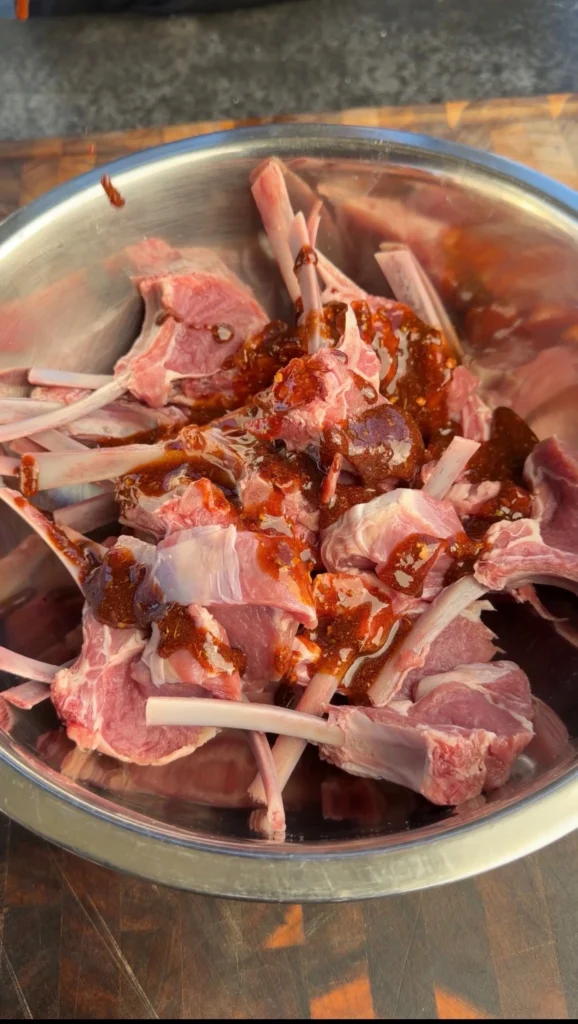
Step 1: Cut and Season the Lamb
Place one rack of lamb on a cutting board bone-side down. Using a sharp chef’s knife, cut between each rib bone to create individual chops. You should get 8 chops per rack.
Repeat with the second rack. You’ll have approximately 16 individual lamb chops total. The chops will vary slightly in size. The center chops are typically largest.
Season both sides of each lamb chop generously with your chosen seasoning. Use salt, pepper, and garlic powder, or your favorite all-purpose seasoning blend. Don’t be shy with seasoning. Lamb can handle aggressive seasoning.
Let the seasoned chops sit at room temperature for 15 to 20 minutes while you preheat the grill and prepare the toppings. This takes the chill off and promotes even cooking.
Step 2: Preheat the Grill
Preheat your grill to medium-high heat, approximately 400 to 450°F. For gas grills, set burners to medium-high. For charcoal, wait until coals are white-hot and glowing.
Clean the grill grates thoroughly with a wire brush. Lamb can stick to dirty grates. Oil the grates lightly using a paper towel dipped in neutral oil held with tongs.
The grill needs to be properly preheated for good sear marks. If you place lamb on a cool grill, it will stick and steam rather than searing. Wait until the grill is at temperature.
Step 3: Grill the Lamb Chops
Place lamb chops on the hot grill grates. Arrange them so they’re not touching. Depending on your grill size, you might need to work in batches.
Grill for 3 minutes on the first side without moving them. The chops need continuous contact with the grates to develop char marks. Don’t flip or move them during this time.
Flip the chops after 3 minutes. Grill the second side for another 3 minutes. Check internal temperature with an instant-read thermometer. Insert into the center of a chop, not touching bone.
Pull the chops from the grill when they reach 125 to 130°F internal temperature. This is 5 to 10 degrees below your target final temperature. The broiling step will finish cooking them.
Transfer grilled chops to a plate. Let them rest while you prepare the toppings. The brief rest allows juices to redistribute.
Step 4: Make the Cheese Topping
In a medium bowl, combine 1 cup freshly grated smoked applewood cheddar and ¼ cup heavy cream. Mix together with a spoon or fork.
The mixture should be thick and paste-like. The cheese absorbs the cream to create cohesive topping. If the mixture seems too dry, add another tablespoon of cream.
Freshly grated cheese works much better than pre-shredded. Pre-shredded cheese has cellulose coating that prevents clumping. This coating also prevents proper melting. Grate the cheese yourself for best results.
Step 5: Make the Breadcrumb Topping
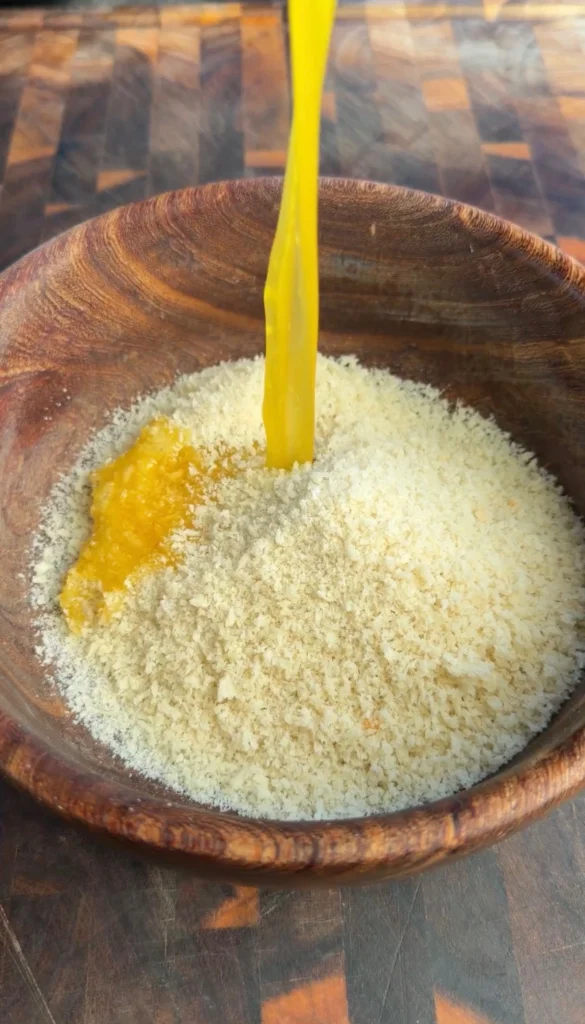
In a separate small bowl, combine ½ cup panko breadcrumbs and 4 tablespoons melted butter. Stir until the breadcrumbs are evenly coated with butter.
Every breadcrumb should glisten with butter. If some breadcrumbs are dry, add another tablespoon of melted butter. The butter promotes browning and creates crispy texture.
Don’t make this mixture too far ahead. The breadcrumbs can absorb all the butter and become soggy if they sit too long. Mix right before assembling.
Step 6: Assemble the Lamb Chops
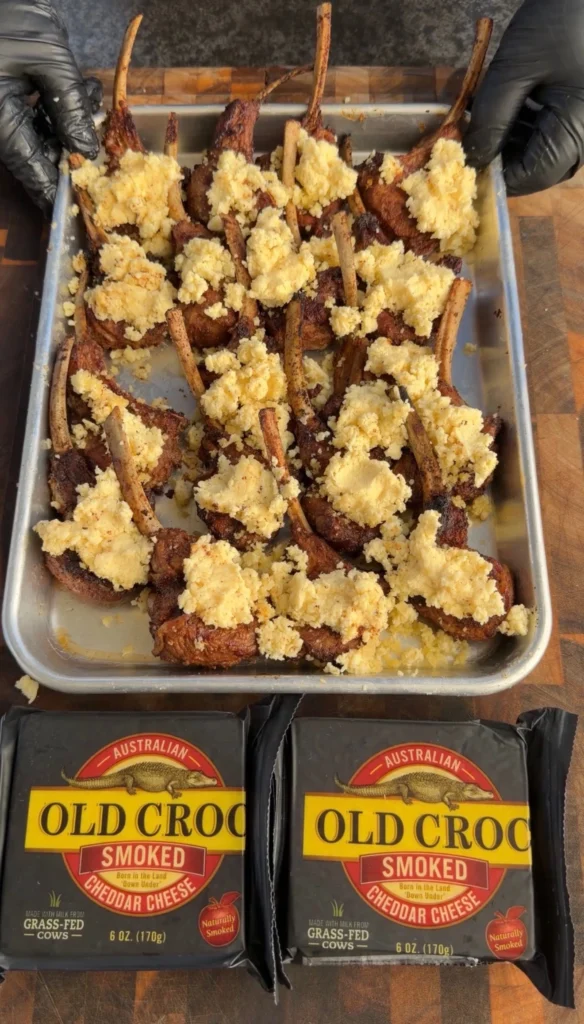
Arrange the grilled lamb chops in a single layer on an oven-safe baking sheet or broiler-safe dish. They can be close together but shouldn’t overlap.
Top each chop with approximately 1 tablespoon of the cheese mixture. Use a spoon to spread it across the meat portion. Don’t worry about being perfectly neat. The cheese will melt and spread during broiling.
Sprinkle the buttered panko breadcrumbs generously over the cheese topping on each chop. Use all the breadcrumbs across all the chops. The layer should be visible and substantial.
Step 7: Broil Until Golden and Bubbly
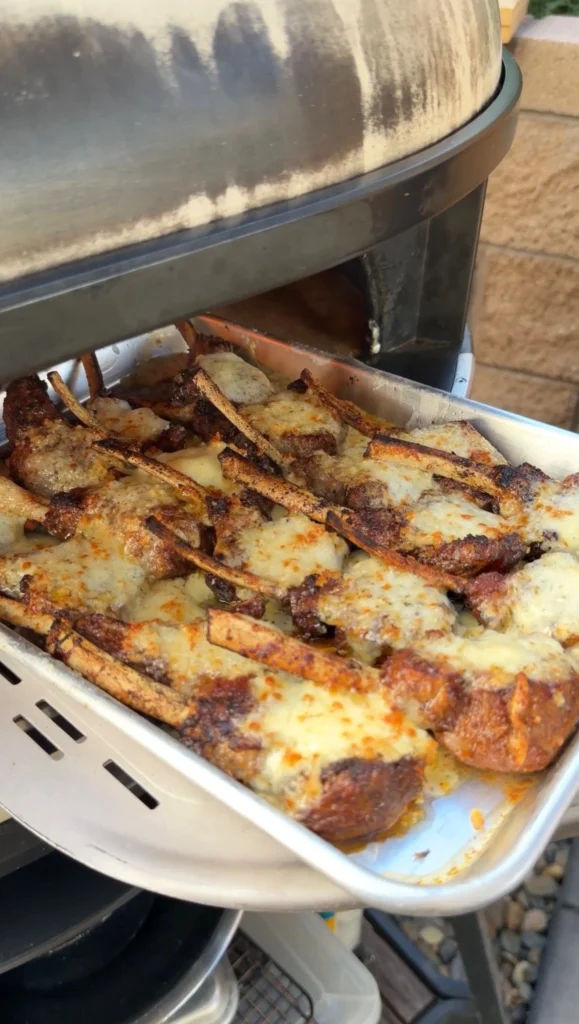
Position an oven rack 4 to 6 inches below the broiler element. Turn the broiler to high and let it preheat for 2 minutes.
Place the assembled lamb chops under the broiler. Watch them constantly. Broilers are intense and can burn food quickly.
Broil for 2 to 3 minutes until the cheese melts and bubbles and the breadcrumbs turn golden brown. You should see the cheese bubbling around the edges and the panko developing golden to light brown color.
If the breadcrumbs brown too quickly in spots, you can rotate the pan. If they’re browning unevenly, adjust the pan position.
Remove from the broiler when the breadcrumbs are golden and the cheese is clearly melted. The internal temperature of the lamb should now be 130 to 140°F for medium-rare to medium.
Step 8: Garnish and Serve
Transfer the broiled lamb chops to a serving platter. Sprinkle with 1 tablespoon chopped fresh chives or parsley. The green herbs provide color contrast and fresh flavor.
Serve immediately while the cheese is hot and the breadcrumbs are crispy. The chops are best within 5 minutes of broiling. The breadcrumbs lose crispiness as they sit.
Provide small plates and encourage guests to pick up the chops by the bone if they’re Frenched. The bones make natural handles. If using knives and forks, the tender meat cuts easily.
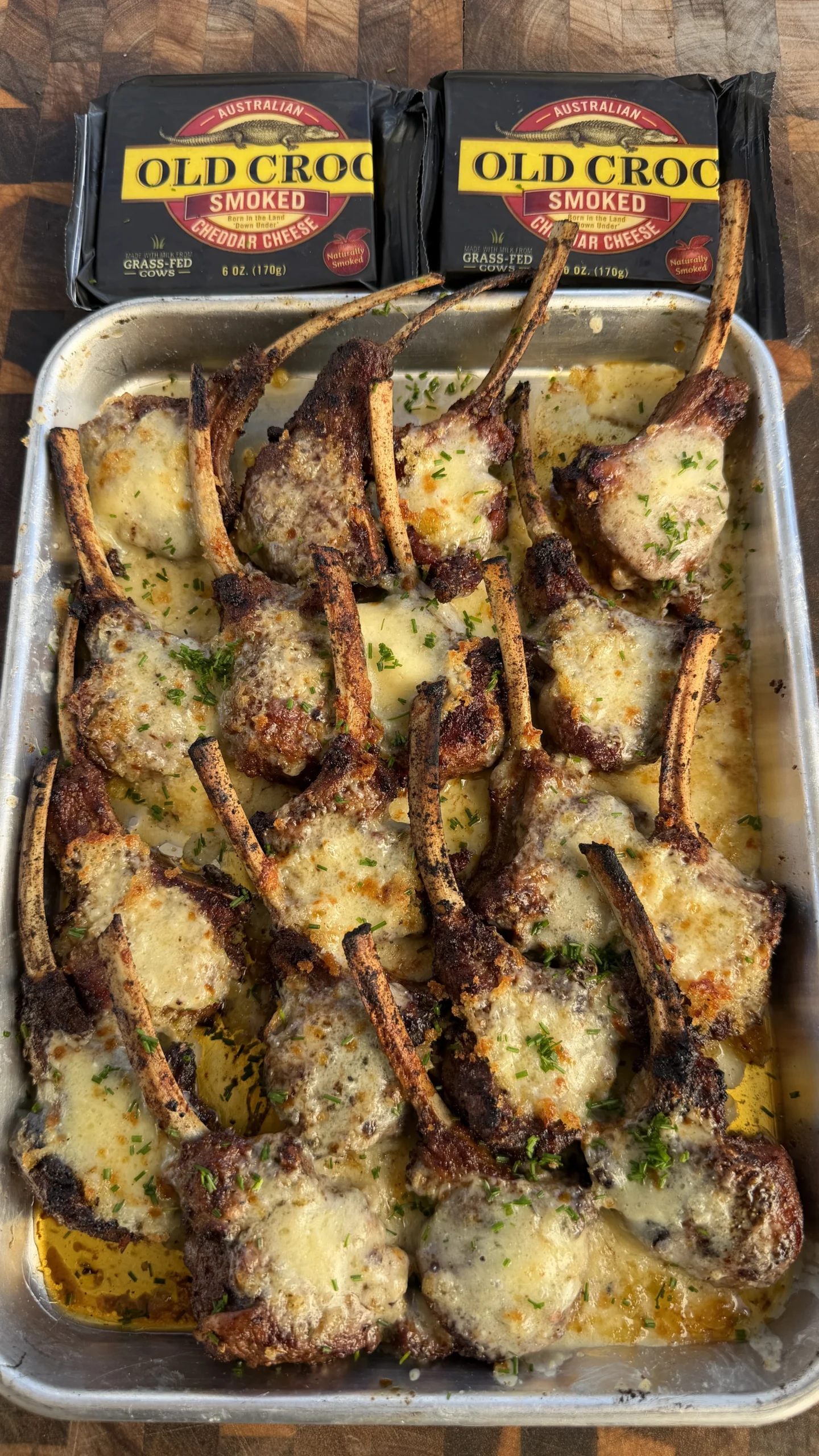
Cheese-Crusted Grilled Lamb Chops
Ingredients
Equipment
Method
- Cut lamb racks between each rib bone to create individual chops (approximately 16 total). Season all sides generously with salt, pepper, and garlic seasoning. Let sit at room temperature 15 to 20 minutes.
- Preheat grill to medium-high heat (400 to 450°F). Clean and oil grill grates.
- Grill lamb chops 3 minutes per side until nicely charred and internal temperature reaches 125 to 130°F. Remove from grill and rest briefly.
- In bowl, mix 1 cup grated smoked cheddar with ¼ cup heavy cream until thick and paste-like.
- In separate bowl, toss ½ cup panko breadcrumbs with 4 tablespoons melted butter until evenly coated.
- Arrange grilled chops on oven-safe baking sheet. Top each with 1 tablespoon cheese mixture, then sprinkle with buttered panko breadcrumbs.
- Preheat broiler to high. Position oven rack 4 to 6 inches from element. Broil 2 to 3 minutes until cheese melts and bubbles and breadcrumbs are golden brown. Final internal temperature should be 130 to 140°F.
- Garnish with chopped chives or parsley. Serve immediately.
Nutrition
Notes
Tried this recipe?
Let us know how it was!Frequently Asked Questions
Can You Use Regular Cheddar Instead of Smoked Cheddar?
Regular sharp cheddar works technically but the flavor is significantly less interesting. Sharp cheddar provides saltiness and umami but lacks the smoky complexity that complements lamb’s natural gaminess.
The smoke flavor in smoked cheddar bridges the grilled char and the rich lamb flavor. It creates layered smoke character. Regular cheddar tastes flat by comparison in this specific application.
If you can’t find smoked applewood cheddar, look for any smoked cheddar. Avoid heavily smoked varieties where smoke dominates. Mild to medium smoke level works best.
You could also add a tiny pinch of smoked paprika to regular cheddar to approximate smoke flavor. Use ⅛ teaspoon smoked paprika mixed into the cheese and cream. This won’t be as good as real smoked cheddar but it’s better than plain cheddar.
What Doneness Temperature Is Best for Lamb Chops?
Medium-rare at 130 to 135°F final temperature is most popular for lamb chops. The meat is warm and pink throughout. The texture is tender with slight resistance. The fat is rendered but the meat stays juicy.
Medium at 135 to 145°F is acceptable for people who don’t like pink meat. The lamb is still relatively tender but firmer. Some people find lamb’s flavor more acceptable at medium doneness.
Well-done above 145°F is not recommended for rack of lamb. The delicate, expensive cut doesn’t benefit from thorough cooking. The meat becomes firm and can be dry. If you prefer well-done meat, choose a different cut.
For this recipe, aim for 130 to 140°F final temperature after broiling. This is medium-rare to medium. Pull from grill at 125 to 130°F to account for the broiling step.
Can You Make the Cheese and Breadcrumb Toppings Ahead?
The cheese mixture can be made up to 4 hours ahead and refrigerated. Mix the grated cheese with cream, cover, and refrigerate. Bring to room temperature before using for easier spreading.
The buttered breadcrumbs are best made right before assembly. If made too far ahead, the breadcrumbs absorb all the butter and become soggy. Mix them while the lamb is grilling for optimal texture.
You can grate the cheese and measure the breadcrumbs ahead. Just don’t combine them with their liquids until close to assembly time.
The lamb racks can be cut into individual chops and seasoned several hours ahead. Keep refrigerated. Bring to room temperature 30 minutes before grilling.
What Sides Pair Best with Cheese-Crusted Lamb Chops?
Roasted vegetables like asparagus, Brussels sprouts, or carrots complement lamb without competing. Roast with olive oil, salt, and pepper at 400°F for 20 to 25 minutes.
Mashed potatoes or potato gratin provide rich, creamy contrast. The mild potato flavor lets the lamb shine. The starchy potato balances the rich meat and cheese.
Green salad with vinaigrette provides fresh, acidic contrast to the rich lamb. Use mixed greens, cherry tomatoes, and lemon vinaigrette. The acid cuts through the fat.
Couscous or rice pilaf with herbs works well. The grain absorbs lamb juices. Add fresh herbs like mint or parsley to the couscous for complementary flavor.
Avoid heavy, rich sides. The lamb chops already have cheese and butter. Lighter sides create better balance than additional richness.
How Do You Reheat Leftover Lamb Chops?
Reheat leftover lamb chops gently in a 350°F oven for 8 to 10 minutes. Place on a baking sheet. The gentle heat warms the meat without overcooking. The cheese will melt again but the breadcrumbs won’t be as crispy.
For crispier breadcrumbs, finish under the broiler for 1 minute after oven reheating. Watch carefully to prevent burning. This re-crisps the topping.
Microwave reheating works but affects texture significantly. The breadcrumbs become soft and chewy. The cheese can separate. Use 50% power and heat in 30-second intervals if microwaving is your only option.
Don’t reheat lamb chops on the grill or stovetop. They’ll overcook quickly and become tough. Gentle oven heat is the best method for maintaining quality.
Store leftover chops in airtight container in refrigerator for up to 3 days. The cheese topping helps keep the meat moist during storage.
Ready to Level Up?
Take your backyard cooking from good to legendary.
This is where I keep all my most-used smokers, knives, and favorite cooking tools.
Shop My Gear CollectionExplore More Recipes
Find more diverse flavors at CWFeats.com