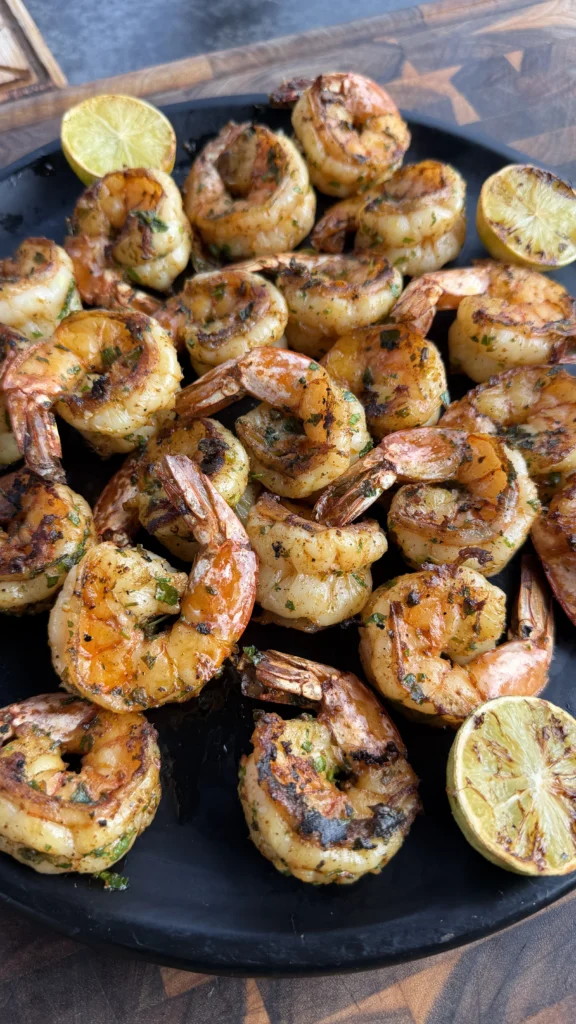
Grilled garlic lime shrimp are made by marinating 2 pounds of peeled and deveined jumbo shrimp in ½ cup avocado oil, 4 minced garlic cloves, 1 diced jalapeño, 1 tablespoon chopped fresh parsley, zest of 2 limes, 2 teaspoons coarse salt, 1 teaspoon paprika, and ½ teaspoon black pepper for 20 minutes to 1 hour, then grilling over medium-high heat at 400°F for 2 to 3 minutes per side until the shrimp turn pink and develop slight char. You finish the grilled shrimp immediately by squeezing fresh lime juice from 2 limes over the top while they’re still hot, creating bright, garlicky shrimp with layers of citrus flavor from both the zest in the marinade and the fresh juice finish.
The entire process takes 45 minutes to 1 hour 30 minutes from start to finish depending on marinating time. This includes 10 minutes for preparing the marinade by mixing all ingredients in a bowl. Marinating requires minimum 20 minutes but up to 1 hour produces better flavor without risking the texture issues that longer marinating causes with shrimp. Grilling takes just 4 to 6 minutes total for both sides. There’s no resting period needed since shrimp are served immediately after finishing with lime juice. You can prepare the marinade several hours ahead and refrigerate, then add shrimp 20 minutes to 1 hour before grilling.
These garlic lime shrimp serve 4 to 6 people depending on whether they’re an appetizer or main course. Two pounds of jumbo shrimp yield approximately 1¾ pounds after cooking due to moisture loss. As an appetizer or party food, ¼ to ⅓ pound per person serves 6 to 8 people. As a main course with substantial sides like cilantro lime rice, grilled vegetables, or inside tacos, ½ to ¾ pound per person serves 4 to 6 people. The shrimp are flavorful and satisfying, so smaller portions work well when served with complementary sides.
Jump to RecipeWhy Avocado Oil Works Better Than Olive Oil for Grilling Shrimp
Smoke Point and High Heat Performance
Avocado oil has a smoke point of 500 to 520°F. This is significantly higher than extra virgin olive oil at 350 to 410°F. When grilling at 400°F, you need oil that won’t break down and smoke.
Olive oil starts smoking and breaking down at grill temperatures. The oil oxidizes, creating acrid smoke and off-flavors. The shrimp can taste burnt or bitter even if they’re not actually overcooked. The marinade also tends to drip and cause flare-ups as the oil burns.
Avocado oil remains stable at 400°F and even higher. It doesn’t smoke or oxidize. The oil creates clean char and caramelization rather than burnt, bitter coating. The shrimp taste like grilled garlic and lime, not burnt oil.
This stability also affects texture. Broken-down oil creates sticky, gummy coating on shrimp. Stable avocado oil creates light coating that crisps slightly on the grill. The shrimp have clean surface rather than heavy, oily exterior.
Neutral Flavor Profile
Avocado oil is virtually flavorless with very mild, buttery undertones. It doesn’t compete with the garlic, lime, and jalapeño in the marinade. The oil serves as carrier for flavors rather than adding its own strong taste.
Extra virgin olive oil has pronounced fruity, peppery, sometimes bitter flavor. This flavor can overpower delicate shrimp. The olive flavor also clashes with the bright citrus and garlic combination. The result is muddled rather than clean and focused.
With avocado oil, you taste the garlic prominently. The lime zest and juice shine through. The jalapeño heat and parsley freshness are clear. The oil enhances these flavors by carrying them into the shrimp without adding competing taste.
Regular olive oil (not extra virgin) is more neutral but still has the low smoke point problem. It’s better than extra virgin for flavor but still breaks down at grill temperatures. Avocado oil solves both issues.
Oil Penetration and Moisture
Avocado oil has different molecular structure than olive oil. It penetrates shrimp flesh more effectively. The oil carries garlic and spices into the shrimp rather than just coating the surface.
This penetration keeps shrimp moist during the quick, high-heat grilling. The oil creates moisture barrier that prevents rapid water loss. Shrimp cooked with avocado oil stay juicier than shrimp cooked with no oil or with water-based marinades.
The oil also helps achieve even cooking. Oil conducts heat better than air or water. The oil coating helps heat transfer uniformly around each shrimp. This prevents hot spots and cold spots that create uneven doneness.
After grilling, the avocado oil on the shrimp carries flavor when you bite in. The garlic and lime coat your palate. With olive oil, the broken-down oil creates unpleasant mouthfeel. With avocado oil, the mouthfeel is clean and pleasant.
Health Benefits Comparison
Avocado oil is high in monounsaturated fats, similar to olive oil. Both are considered heart-healthy fats. The nutritional profiles are comparable. Neither has significant advantage over the other for basic nutrition.
However, avocado oil’s high smoke point means it doesn’t create harmful compounds during high-heat cooking. When olive oil breaks down at high heat, it can form oxidized compounds. These aren’t dangerous in small amounts but they’re not ideal.
Avocado oil also contains vitamin E and lutein. These antioxidants remain stable during cooking. They don’t degrade at grill temperatures the way they might in oils with lower smoke points.
The stability means avocado oil is simply safer and more appropriate for grilling. You get clean cooking without worrying about oil degradation or harmful byproducts.
Why Marinating Shrimp for More Than 1 Hour Damages Texture
Protein Denaturation From Acid
Lime zest contains some acidic compounds, and the marinade environment is slightly acidic. Even without lime juice in the marinade itself, there’s enough acid to affect shrimp proteins during extended marinating.
Shrimp proteins are delicate and denature (unwind and change structure) quickly when exposed to acid. In the first 20 to 60 minutes, this denaturation is beneficial. It tenderizes slightly and helps flavors penetrate. The shrimp remain firm and spring.
Beyond 1 hour, especially approaching 2 to 3 hours, the acid continues denaturing proteins excessively. The shrimp begin “cooking” chemically, similar to ceviche. The exterior becomes opaque and the texture shifts from firm to mushy.
When you then grill these over-marinated shrimp, they’re already partially “cooked” from the acid. The heat continues breaking down proteins that are already weakened. The result is shrimp that fall apart, turn mealy, or become paste-like.
Size and Surface Area Considerations
Shrimp are small with high surface area relative to volume. This means marinade affects them much faster than larger proteins. A whole chicken breast can marinate overnight without issues. Shrimp can’t.
The marinade penetrates the entire shrimp in 20 to 30 minutes. By 1 hour, the flavors are fully distributed. Additional marinating time doesn’t add more flavor. The garlic, lime, and jalapeño have already reached maximum penetration.
Extended marinating beyond 1 hour only risks texture damage without flavor benefit. You get all the downside (mushy texture) with no upside (no additional flavor). This is why the 20 minute minimum to 1 hour maximum window is critical.
Jumbo shrimp might handle slightly longer marinating than small shrimp, but even jumbo shrimp shouldn’t exceed 90 minutes. The difference between 1 hour and 90 minutes is marginal for flavor but significant for texture risk.
Salt’s Effect on Moisture
The marinade contains 2 teaspoons coarse salt for 2 pounds of shrimp. Salt draws moisture out of shrimp through osmosis. In the first 20 to 40 minutes, this is minimal and actually beneficial. The salt seasons the shrimp and helps flavors penetrate.
After 1 hour, the salt begins drawing significant moisture from the shrimp. The shrimp weep liquid into the marinade. They become slightly drier and less plump. This moisture loss concentrates proteins, making them more prone to toughening during cooking.
When you grill shrimp that have been over-marinated, they’ve already lost some moisture to the marinade. They start cooking in a slightly dehydrated state. They reach their final cooked texture more quickly and can easily overshoot into dry, rubbery territory.
The ideal marinating time balances flavor penetration with minimal moisture loss. Twenty minutes gives good flavor with almost no moisture loss. One hour gives maximum flavor with acceptable minimal moisture loss. Beyond 1 hour, moisture loss accelerates without flavor gain.
Visual and Textural Changes
You can see when shrimp have been marinated too long. They look slightly opaque rather than completely translucent. The flesh appears cooked on the exterior. When you touch them, they feel softer and less springy than fresh shrimp.
These visual and textural changes indicate protein damage. The shrimp are already compromised before hitting the grill. No amount of careful grilling can restore texture to over-marinated shrimp.
In contrast, shrimp marinated for 20 minutes to 1 hour look barely different from fresh shrimp. They’re still translucent and glassy. They feel firm and spring back when touched. These shrimp will grill perfectly with ideal texture.
How to Tell When Grilled Shrimp Are Perfectly Cooked
The C-Shape vs O-Shape Rule
Perfectly cooked shrimp form a loose C-shape. The tail curls toward the head but doesn’t touch or overlap. This C-shape indicates the proteins have contracted just enough for doneness without over-contracting.
Undercooked shrimp are nearly straight or have very gentle curve. The proteins haven’t contracted fully. The shrimp are still translucent in the center. They need more time on the grill.
Overcooked shrimp curl into tight O-shapes. The tail curls around and nearly touches the head. The proteins have contracted excessively. The shrimp are tough and rubbery. Once you see O-shapes forming, you’ve gone too far.
Watch the shrimp as they grill. When they first hit the grill, they’re nearly straight. As they cook, they begin curling. Pull them when they reach the C-shape, before they curl further into O-shapes. This visual cue is more reliable than timing.
Color Change Indicators
Raw shrimp are translucent gray or blue-gray. As they cook, they turn opaque white with pink or orange overtones (depending on species). This color change is dramatic and easy to see.
The color change starts at the exterior and moves inward. When shrimp first go on the grill, the bottom surface starts turning opaque and pink. This happens within the first 60 to 90 seconds. When you flip, the second side does the same.
Perfectly cooked shrimp are opaque throughout with no translucent core. If you cut a shrimp in half, the center should be opaque white, not translucent gray. However, you shouldn’t need to cut them. Properly cooked shrimp are uniformly opaque on the exterior, indicating the interior is done.
If shrimp are still translucent anywhere when you pull them from the grill, they’re undercooked. If they’re opaque but have brown or dark gray areas (beyond light char marks), they’re overcooked. Perfect shrimp are uniformly opaque white-pink with light grill marks.
Texture and Firmness Test
Raw shrimp feel soft and squishy when pressed. As they cook, the proteins firm up. Perfectly cooked shrimp feel firm but still have slight give when pressed gently.
Press a shrimp gently with tongs or your finger. The texture is firm-tender.
Overcooked shrimp feel hard and rubbery. When you press them, there’s no give. They bounce back aggressively. The texture is all wrong. These shrimp will be chewy and unpleasant.
This tactile test works but requires some experience. If you’re new to grilling shrimp, rely more on the C-shape and color cues. As you gain experience, you’ll develop feel for the correct firmness.
Internal Temperature Precision
The USDA recommends cooking shrimp to 145°F for food safety. However, shrimp are best at 120 to 140°F. They’re fully cooked and safe at this temperature but still tender and juicy.
At 145°F, shrimp are starting to overcook. They’re safe but the texture is becoming tough. At 150°F and above, shrimp are definitely overcooked and rubbery. The narrow window between perfect and overcooked is just 10 to 20 degrees.
Checking temperature is difficult with shrimp because they’re small. Insert an instant-read thermometer into the thickest part of the largest shrimp. Pull all shrimp when the largest ones hit 135 to 140°F. Smaller shrimp will be at similar temperature.
In practice, the C-shape and color cues are more practical than temperature for shrimp. By the time you get a thermometer in and out, you could miss the perfect doneness window. Use visual cues primarily and temperature occasionally to verify.
Garlic Lime Shrimp
Avocado oil marinade, grilled 400°F, 2-3 min per side
Ingredients
Shrimp
- 2 lbs jumbo shrimp (peeled and deveined)
Marinade
- ½ cup avocado oil
- 4 garlic cloves (minced)
- 1 jalapeño (diced)
- 1 tablespoon fresh parsley (finely chopped)
- Zest of 2 limes
- 2 teaspoons coarse salt
- 1 teaspoon paprika
- ½ teaspoon black pepper
Finish
- Juice of 2 fresh limes
Don’t marinate longer than 1 hour. Extended marinating makes shrimp mushy. Watch for the C-shape curl. Pull shrimp when they form loose C, not tight O. Use avocado oil, not olive oil. Avocado oil’s 520°F smoke point won’t break down at grill temps.
Step-by-Step Instructions
Step 1: Make the Marinade
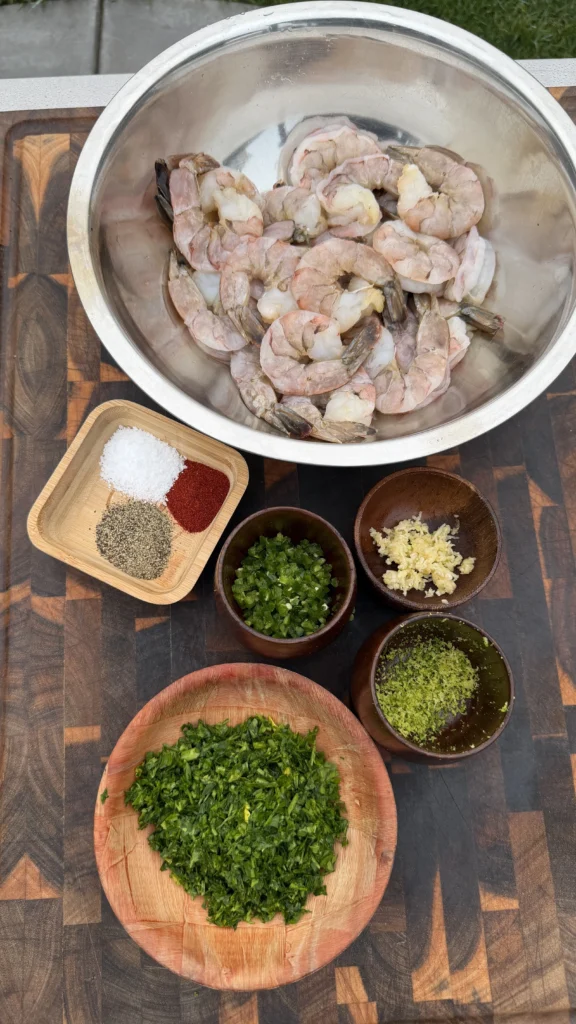
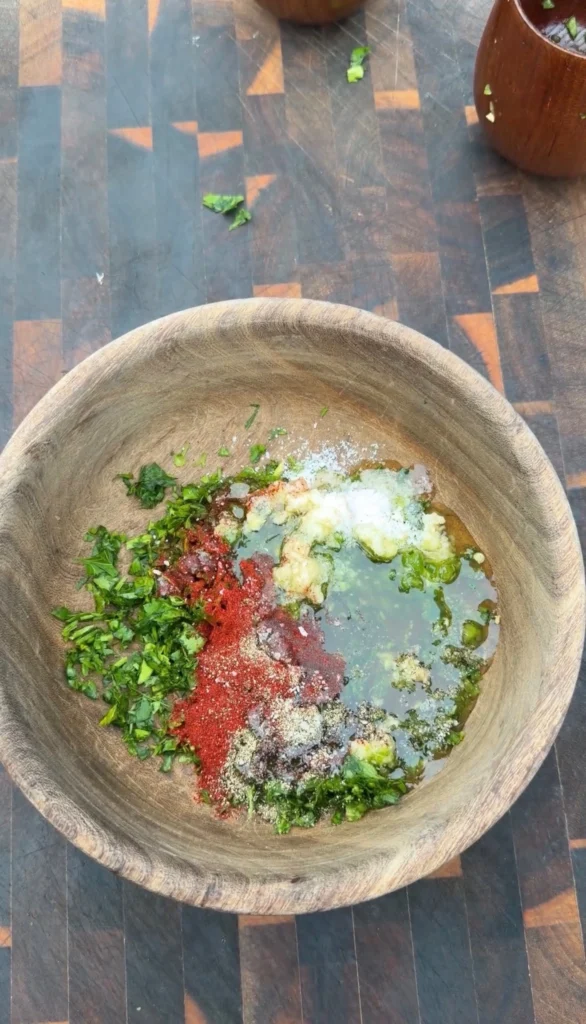
In a large mixing bowl, combine ½ cup avocado oil, 4 minced garlic cloves, 1 diced jalapeño, 1 tablespoon finely chopped fresh parsley, zest of 2 limes, 2 teaspoons coarse salt, 1 teaspoon paprika, and ½ teaspoon black pepper.
Mix all ingredients thoroughly with a whisk or spoon. The goal is to distribute the garlic, jalapeño, and parsley evenly throughout the oil. The mixture should be well combined with no separation.
The lime zest will infuse the oil with aromatic compounds. As you mix, you’ll smell the bright citrus fragrance combining with the pungent garlic. This aromatic combination is the foundation of the marinade’s flavor.
The coarse salt will begin dissolving into the oil and other ingredients. Some will remain grainy, which is fine. The salt seasons the shrimp and helps draw flavors into the flesh during marinating.
Step 2: Marinate the Shrimp
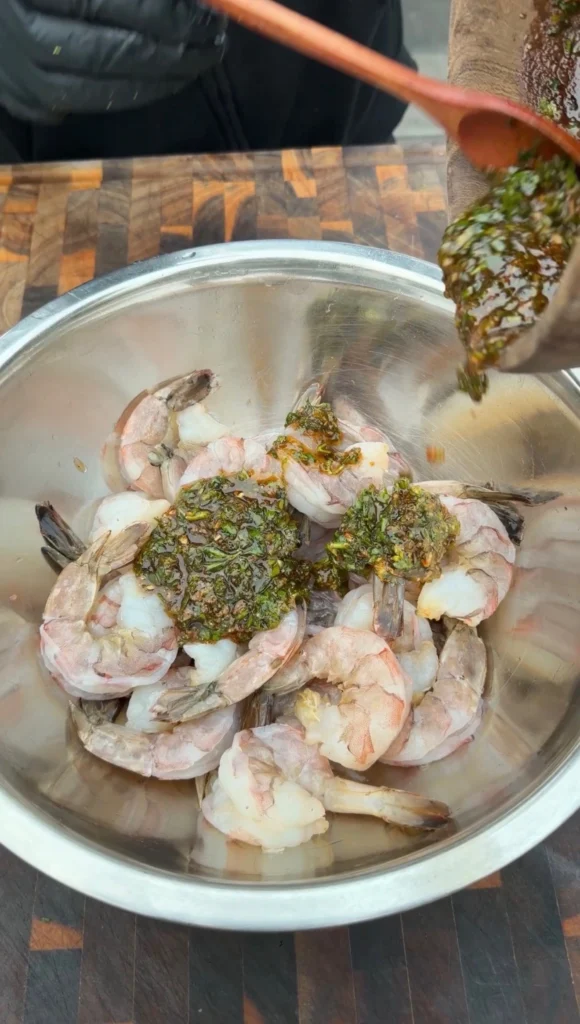
Add 2 pounds of peeled and deveined jumbo shrimp to the bowl with the marinade. The shrimp should be completely thawed if previously frozen. Pat them dry with paper towels before adding. Surface moisture dilutes the marinade.
Toss the shrimp in the marinade using your hands or a large spoon. Ensure every shrimp is completely coated. The oil should coat all surfaces. The bits of garlic, jalapeño, and parsley should distribute among the shrimp.
Cover the bowl with plastic wrap or transfer everything to a large zip-top bag. Refrigerate for minimum 20 minutes, maximum 1 hour. Set a timer to avoid over-marinating.
Turn or toss the shrimp once during marinating if you remember. This redistributes the marinade for even coverage. But this isn’t essential since the shrimp are already fully coated.
Step 3: Preheat the Grill
About 10 minutes before you’re ready to cook, preheat your grill to medium-high heat. You’re targeting 400°F. For gas grills, set burners to medium-high. For charcoal, use about three-quarters of a chimney of coals spread in an even layer.
Clean the grill grates thoroughly with a wire brush while they’re heating. Debris from previous grilling can stick to delicate shrimp. Clean grates prevent sticking and ensure clean grill marks.
Oil the grates lightly using a paper towel dipped in neutral oil held with tongs. Drag the oiled paper towel across the grates. This creates non-stick surface. The oil in the marinade also helps prevent sticking, but oiled grates provide extra insurance.
Have a clean platter ready near the grill for the cooked shrimp. Also have the 2 limes cut in half and ready for squeezing. Everything should be set up before the shrimp hit the grill since they cook so quickly.
Step 4: Grill the Shrimp
Remove the shrimp from the refrigerator. Shake off any excess marinade but don’t wipe the shrimp clean. You want the garlic, jalapeño, and oil coating to stay on the shrimp. Just remove large pools of marinade.
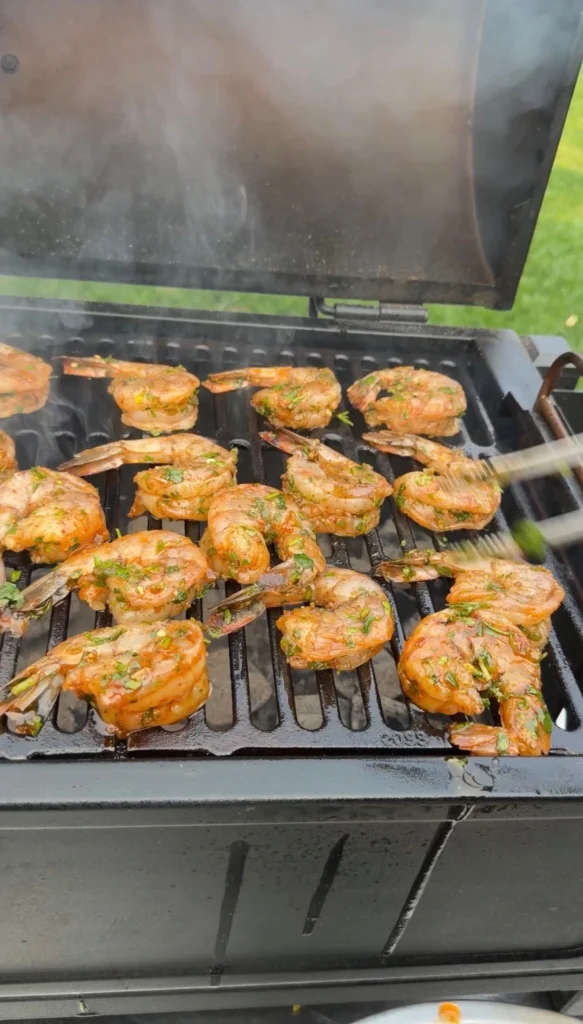
Place shrimp directly on the preheated grill grates. If using skewers, thread the shrimp onto metal or soaked wooden skewers before grilling. Arrange shrimp so they’re not touching. Leave space for heat circulation.
Close the grill lid. Let the shrimp cook undisturbed for 2 to 3 minutes. You’ll see the bottom halves turn from translucent gray to opaque pink through the grates. Resist the urge to move or flip them early.
After 2 to 3 minutes, open the lid and flip each shrimp using tongs. They should have light grill marks and the bottom sides should be opaque and pink. If they’re still translucent, give them another 30 to 60 seconds before flipping.
Step 5: Finish the Second Side
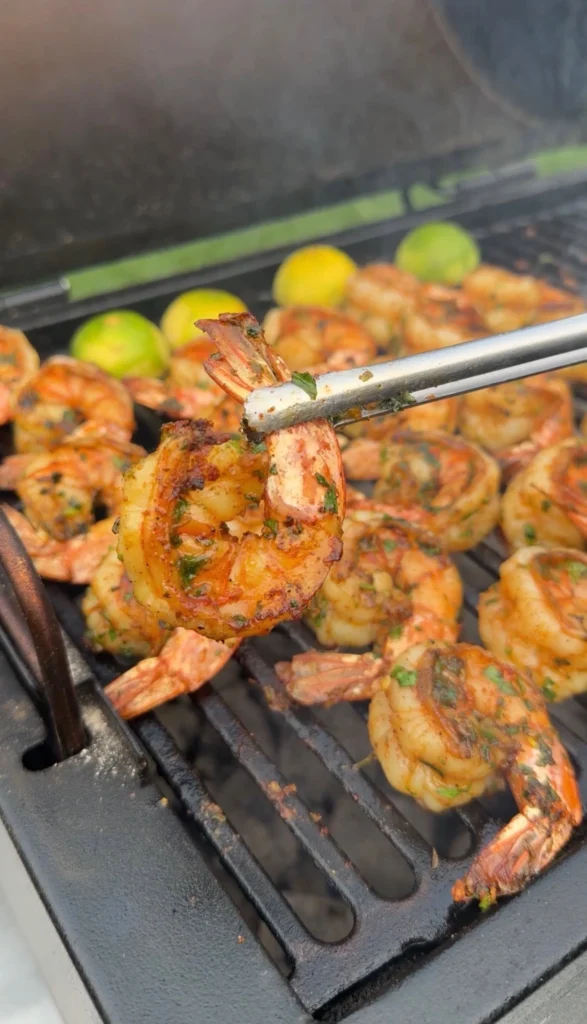
After flipping, close the lid again. Cook for an additional 2 to 3 minutes on the second side. Watch the shrimp start to curl into C-shapes. This curling indicates the proteins are cooking and contracting.
When the shrimp have curled into loose C-shapes (tail toward head but not touching), they’re done. The entire shrimp should be opaque pink with no translucent gray areas. The flesh should look white and firm.
If some shrimp are smaller than others, they may finish first. Pull individual shrimp as they reach doneness rather than waiting for all of them. Transfer finished shrimp to the clean platter.
The total cooking time is typically 4 to 6 minutes. Larger jumbo shrimp may take the full 6 minutes. Smaller shrimp may finish in 4 minutes. Visual cues (C-shape and opaque color) are more reliable than exact timing.
Step 6: Finish with Fresh Lime Juice
Immediately after removing all shrimp from the grill, squeeze the juice of 2 fresh limes over the hot shrimp. Squeeze generously. The shrimp should be coated with fresh lime juice while they’re still steaming hot.
The hot shrimp will sizzle slightly as the lime juice hits them. Some of the juice will vaporize, releasing intense lime aroma. The juice that doesn’t vaporize coats the shrimp with bright acidity.
Toss the shrimp gently on the platter to distribute the lime juice. Every shrimp should get some fresh juice. The juice combines with the oil and marinade remnants on the shrimp to create complex flavor coating.
Serve immediately. Grilled shrimp are best eaten hot off the grill. The combination of hot grilled shrimp, fresh lime juice, and residual garlic oil is at peak flavor right after cooking.
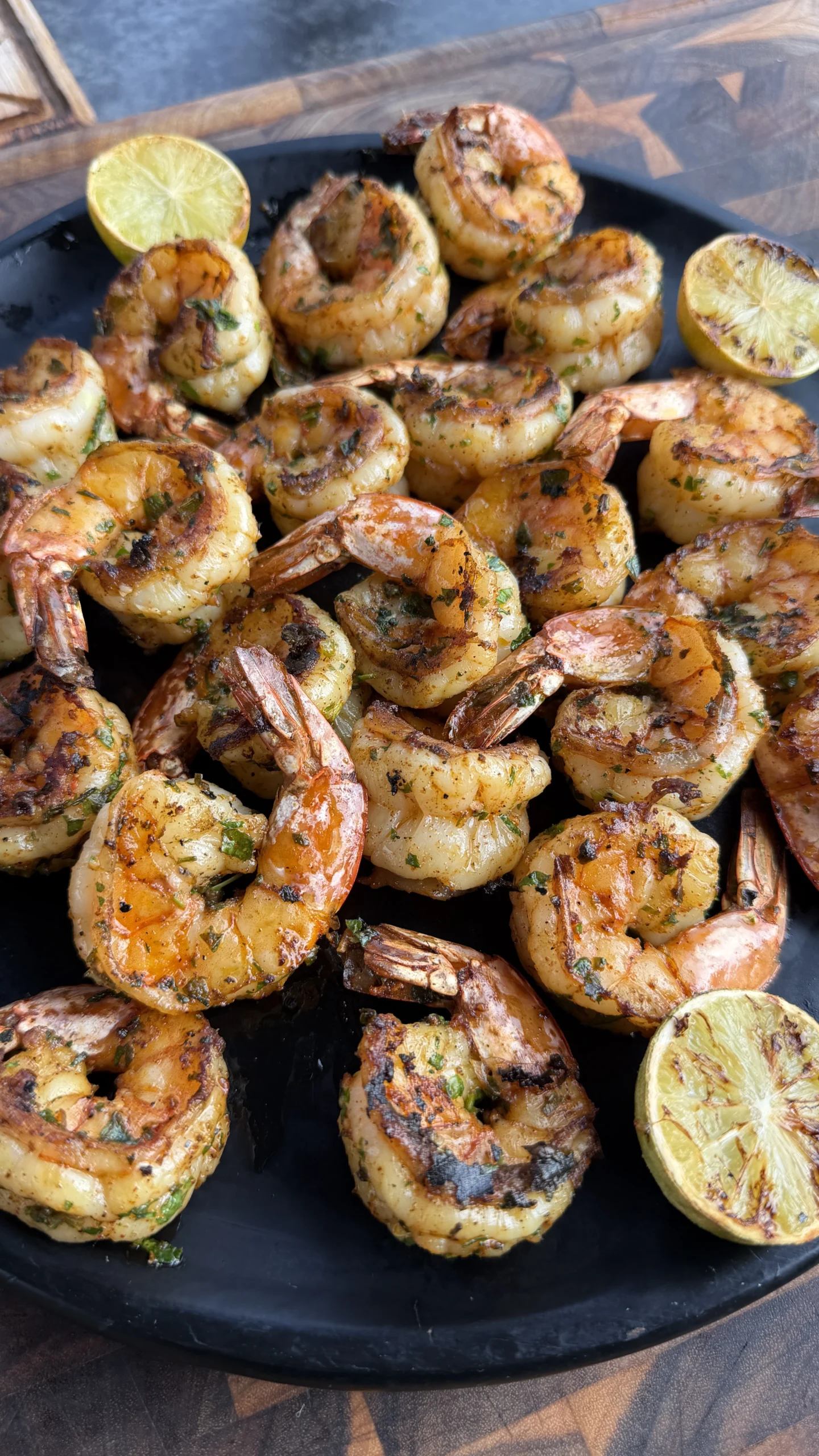
Grilled Garlic Lime Shrimp
Ingredients
Equipment
Method
- In large mixing bowl, combine ½ cup avocado oil, 4 minced garlic cloves, 1 diced jalapeño, 1 tablespoon chopped parsley, zest of 2 limes, 2 teaspoons salt, 1 teaspoon paprika, and ½ teaspoon black pepper. Mix thoroughly.
- Add 2 lbs peeled and deveined shrimp to marinade. Toss to coat completely. Cover and refrigerate 20 minutes to 1 hour maximum.
- Preheat grill to medium-high heat, approximately 400°F. Clean grates and oil lightly.
- Remove shrimp from marinade. Place directly on grill grates or on skewers. Grill 2 to 3 minutes with lid closed.
- Flip shrimp. Grill additional 2 to 3 minutes until shrimp form loose C-shapes and are opaque throughout.
- Transfer to platter. Immediately squeeze juice of 2 fresh limes over hot shrimp. Toss gently and serve.
Nutrition
Notes
Tried this recipe?
Let us know how it was!Frequently Asked Questions
Can You Use Frozen Shrimp for This Recipe?
Frozen shrimp work perfectly for this recipe. Most shrimp sold in stores are previously frozen anyway, even in the “fresh” seafood case. Buying frozen gives you control over thawing and ensures the shrimp haven’t been sitting thawed for unknown time.
Thaw frozen shrimp in the refrigerator overnight. Place the sealed bag in a bowl to catch any liquid. This slow thawing preserves texture better than quick thawing. For faster thawing, place sealed bag in cold water for 30 to 60 minutes. Change water every 15 minutes.
Never thaw shrimp in warm or hot water. This partially cooks the exterior while the interior stays frozen. The texture becomes mushy and uneven. Always use cold water or refrigerator thawing.
After thawing, pat shrimp completely dry with paper towels before marinating. Excess water dilutes the marinade. Dry shrimp also grill better with cleaner char marks.
What Size Shrimp Should You Use?
Jumbo shrimp (16-20 count per pound) are ideal for grilling. They’re large enough to handle easily on the grill without falling through grates. They also have margin for error in cooking time since they don’t overcook as quickly as smaller shrimp.
Extra-large shrimp (21-25 count) also work well. They’re slightly smaller but still manageable. Cooking time might be 30 to 60 seconds less per side.
Large shrimp (26-30 count) are borderline. They cook very quickly and can easily overcook. If using large shrimp, watch them extremely carefully and pull at the first sign of C-shape curling.
Medium shrimp (31-40 count) and smaller are not recommended for grilling. They fall through standard grill grates. They also overcook in seconds, making them nearly impossible to cook perfectly.
The count per pound is more reliable than labels like “jumbo” or “large” which vary between brands. Look for the actual count number on the package.
Can You Make This Recipe Without a Grill?
Pan-seared shrimp work when grilling isn’t possible. Heat a large cast iron skillet over medium-high heat until very hot. Add marinated shrimp in single layer without overcrowding. Cook 1 to 2 minutes per side until C-shaped and opaque.
Work in batches if necessary. Overcrowding the pan drops temperature and the shrimp steam rather than sear. You want high heat and space between shrimp for proper searing.
You won’t get grill marks or smoky flavor, but the garlic-lime flavor is still excellent. The high-heat sear creates some caramelization on the garlic and oil, mimicking grilled char.
Broiling is another option. Arrange marinated shrimp on a baking sheet in single layer. Broil on high 4 to 5 inches from heat for 2 to 3 minutes per side. Watch closely to prevent burning.
For closest approximation of grilled flavor without a grill, use a grill pan on the stovetop. Heat the grill pan until smoking hot. Cook shrimp 2 to 3 minutes per side. You’ll get grill marks and some char.
How Do You Prevent Shrimp From Sticking to the Grill?
Proper grill preparation prevents sticking. Clean grates thoroughly with a wire brush while hot. Debris from previous grilling creates sticky surface. Clean grates provide smooth surface that releases shrimp easily.
Oil the grates right before adding shrimp. Use a paper towel dipped in neutral oil held with tongs. Wipe across all grates where shrimp will sit. The oil creates non-stick barrier.
The oil in the marinade also helps prevent sticking. The avocado oil coats the shrimp and creates barrier between shrimp and grates. Don’t wipe marinade off before grilling.
Let shrimp cook undisturbed for the full 2 to 3 minutes before flipping. Shrimp release naturally from grates once they’ve seared. If you try to flip too early, they stick. Wait until they’ve developed crust.
If shrimp do stick, slide a thin metal spatula gently underneath to release rather than yanking with tongs. Yanking tears the shrimp. Gentle sliding preserves the flesh.
Using skewers can help if sticking is a recurring problem. Thread shrimp onto metal skewers. The skewers provide handles and keep shrimp off the grates in some spots, reducing sticking.
What Should You Serve With Garlic Lime Shrimp?
Cilantro lime rice is classic pairing. The bright citrus in the rice complements the garlic lime shrimp. The rice also soaks up any marinade and juice that drips from the shrimp.
Grilled vegetables work excellently. Zucchini, bell peppers, and red onion grilled alongside the shrimp create complete meal. The vegetables pick up smoky flavor that matches the shrimp.
Serve shrimp in warm tortillas for tacos. Add shredded cabbage, diced avocado, and fresh salsa. The shrimp’s bold flavor holds up in taco format. This makes great casual dinner or party food.
Black beans and corn salad provides Southwestern-inspired side. The creamy beans and sweet corn balance the shrimp’s garlic heat and lime brightness.
Simple green salad with lime vinaigrette keeps the meal light. The shrimp are rich from the oil, so acidic salad provides contrast. This works well for lighter summer meals.
Grilled bread or garlic bread soaks up marinade and juices. Toast thick bread slices on the grill alongside the shrimp. Serve shrimp over the bread with all the garlicky oil.
Ready to Level Up?
Take your backyard cooking from good to legendary.
This is where I keep all my most-used smokers, knives, and favorite cooking tools.
Shop My Gear CollectionExplore More Recipes
Find more diverse flavors at CWFeats.com