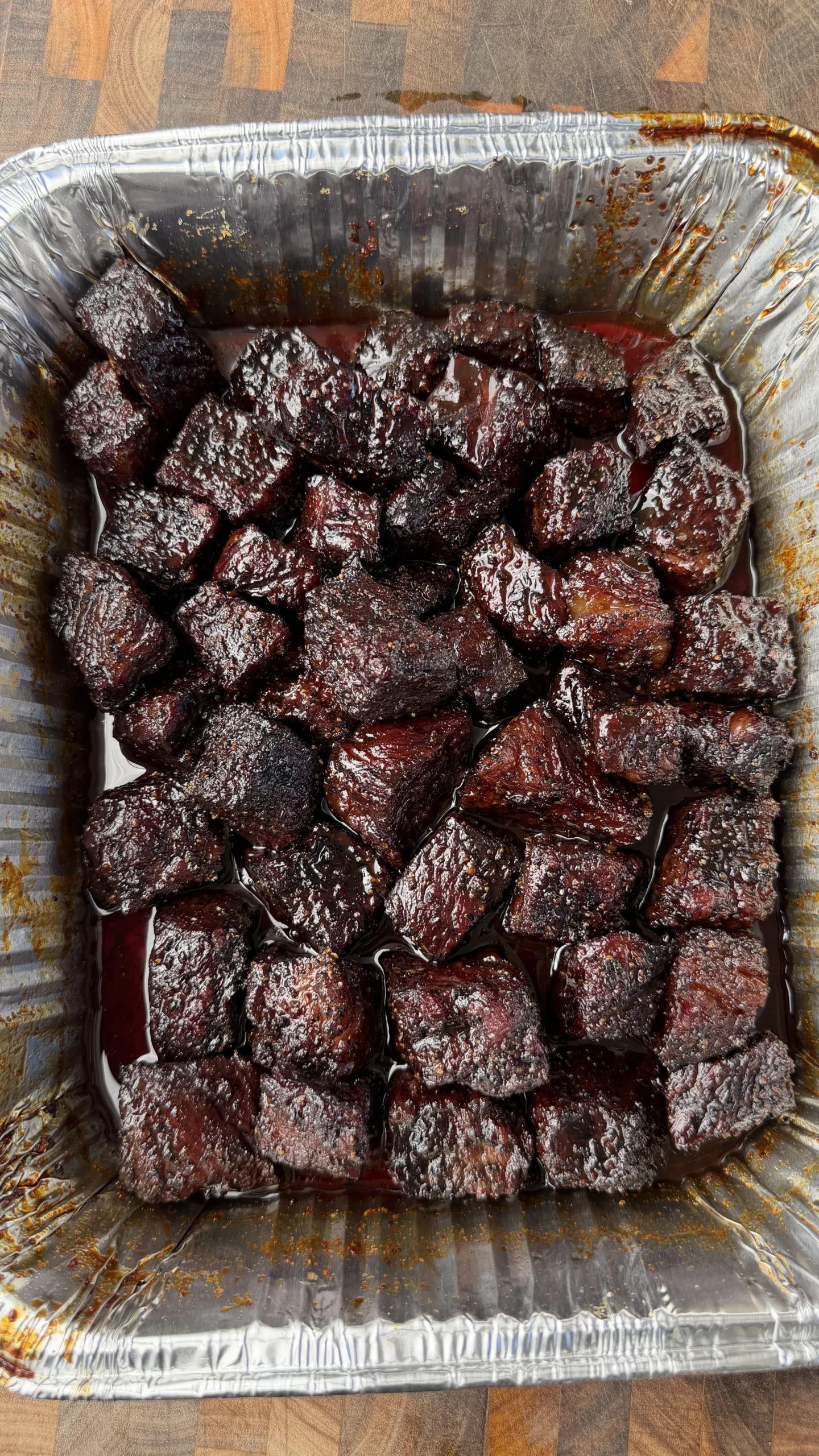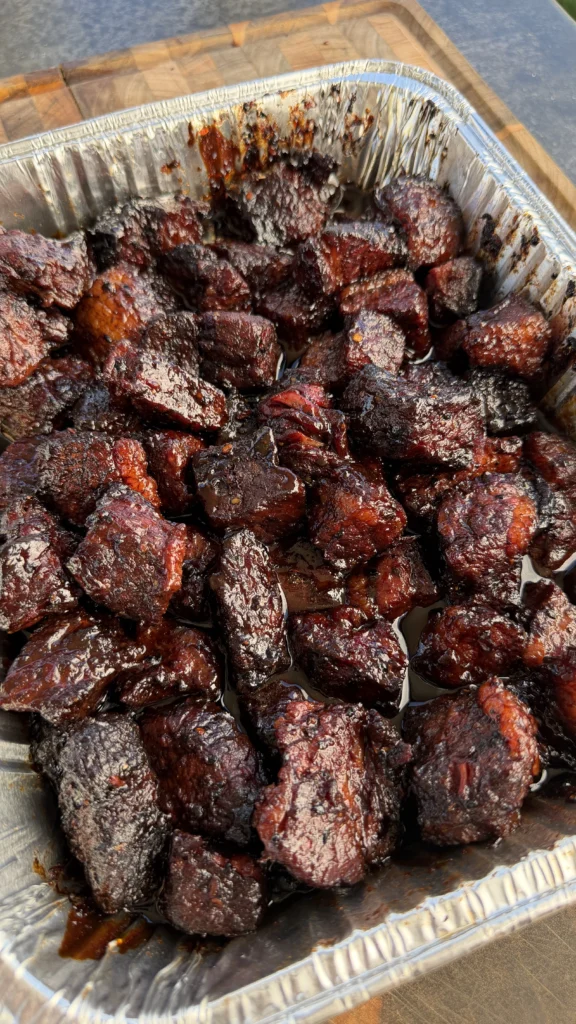
Smoked brisket burnt ends are the crown jewel of BBQ, and this hot-and-fast method delivers them in about 4 hours instead of the usual 12+. You start with a 3 to 4 lb brisket point (not the flat), cut it into 1 to 1.5-inch cubes, and season generously with your favorite BBQ rub. The cubes smoke at 275 to 300°F over pecan wood for about 2 hours until a deep bark forms. Then you braise them in BBQ sauce and butter for another 2 hours until probe-tender. A final 15 to 20 minutes uncovered sets the glaze into sticky, caramelized meat candy. Serves 6 to 8.
Jump to RecipeWhy Brisket Point Makes the Best Smoked Brisket Burnt Ends
The Fat Content of the Point
A whole packer brisket has two muscles: the flat and the point. The point is the thicker, fattier end loaded with intramuscular marbling and connective tissue. That fat is exactly what makes smoked brisket burnt ends work. During the low-and-slow cook, the fat renders into the meat, creating cubes that are impossibly tender and juicy. The flat is too lean for burnt ends. It dries out when cubed and braised.
Why Pre-Cubing the Point Works for Hot and Fast
Traditional burnt ends recipes smoke a whole brisket for 12+ hours, then separate the point and cube it at the end. This hot-and-fast method flips that approach. You cube the brisket point before it goes on the smoker. Consequently, every cube develops bark on all six sides instead of just the top and bottom. More bark means more concentrated smoky flavor per bite. The trade-off is slightly less moisture retention, but the braise step with BBQ sauce and butter compensates completely.
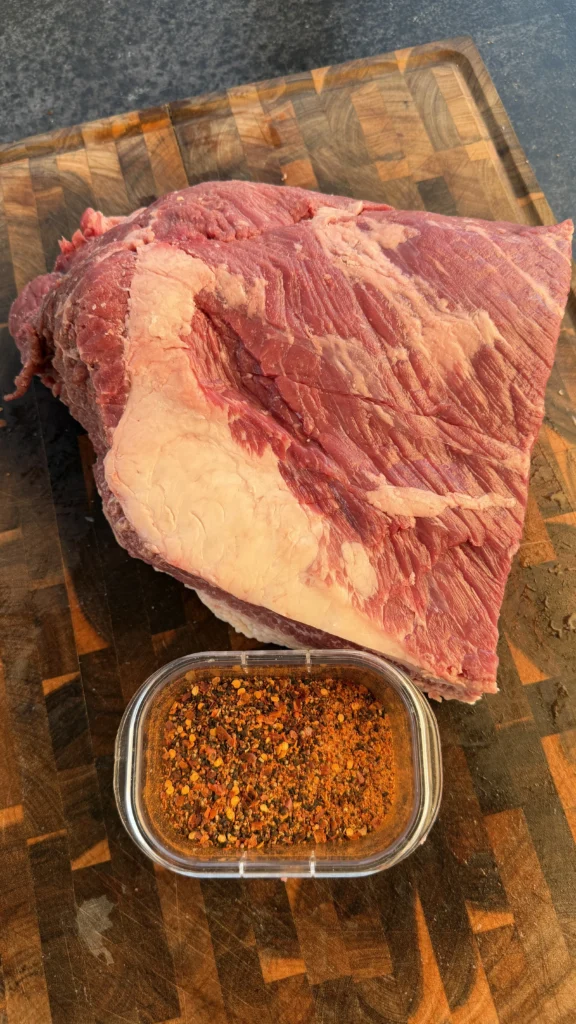
How to Cut and Season Brisket for Burnt Ends
Cube Size for Smoked Brisket Burnt Ends
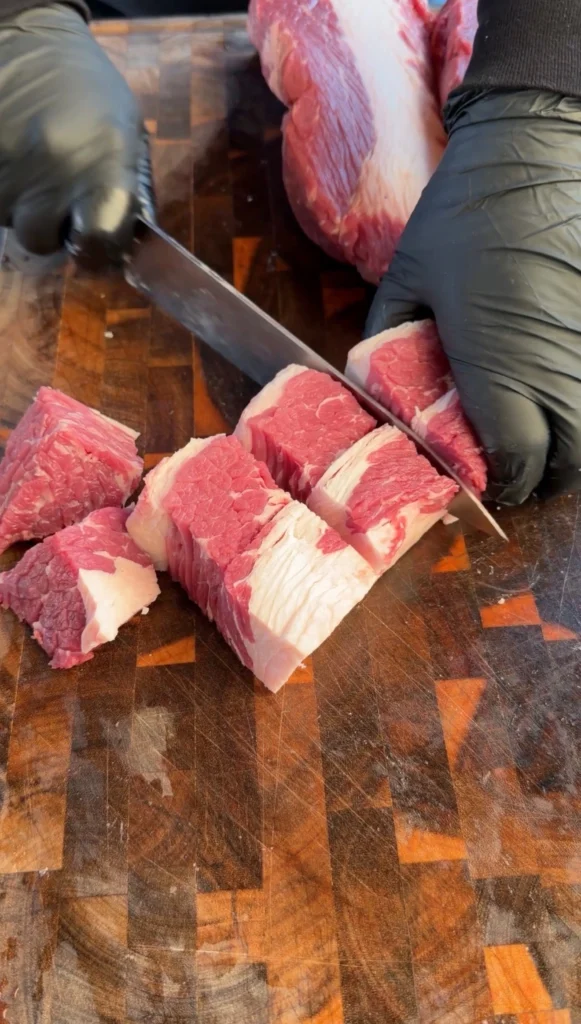
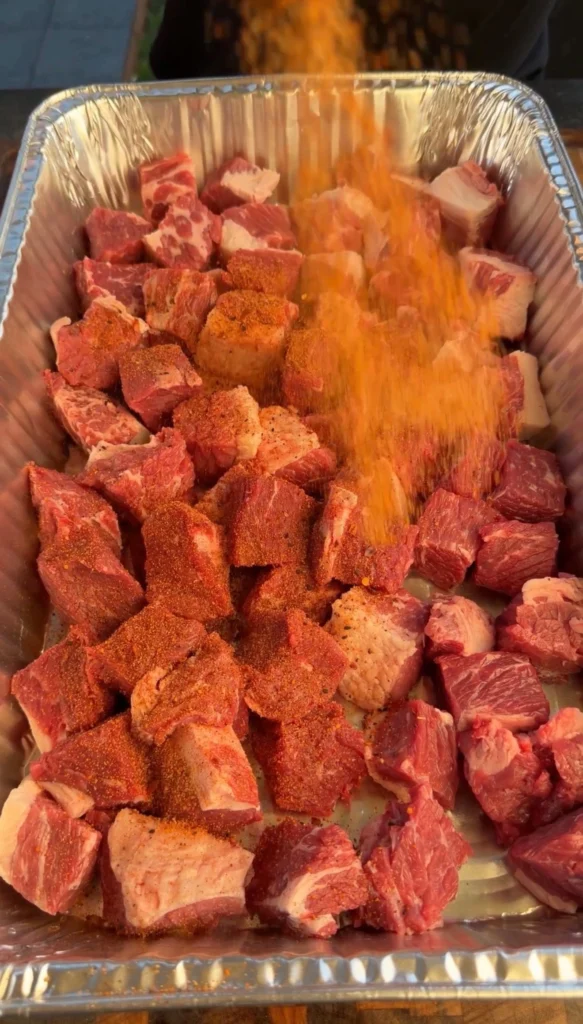
Cut the brisket point into 1 to 1.5-inch cubes. This size gives you enough surface area for bark development while keeping enough mass to stay juicy through the braise. Cubes smaller than 1 inch dry out during smoking. Cubes larger than 2 inches take significantly longer to become tender and don’t develop bark on all sides as efficiently.
Trimming Before Cubing
Remove any hard, white external fat that won’t render at smoking temperatures. Leave the intramuscular marbling and any soft fat intact. That soft fat melts during cooking and bastes the meat from the inside. Additionally, remove any silverskin or membrane before cubing. These tough connective tissues don’t break down during a 4-hour cook.
Seasoning All Six Sides
Apply your BBQ rub generously to the cubed brisket. Since every cube has six exposed faces, toss them in a bowl or foil pan to distribute the rub evenly across all surfaces. The rub is the foundation of the bark. More rub coverage means more flavor development during the smoke phase of these smoked brisket burnt ends.
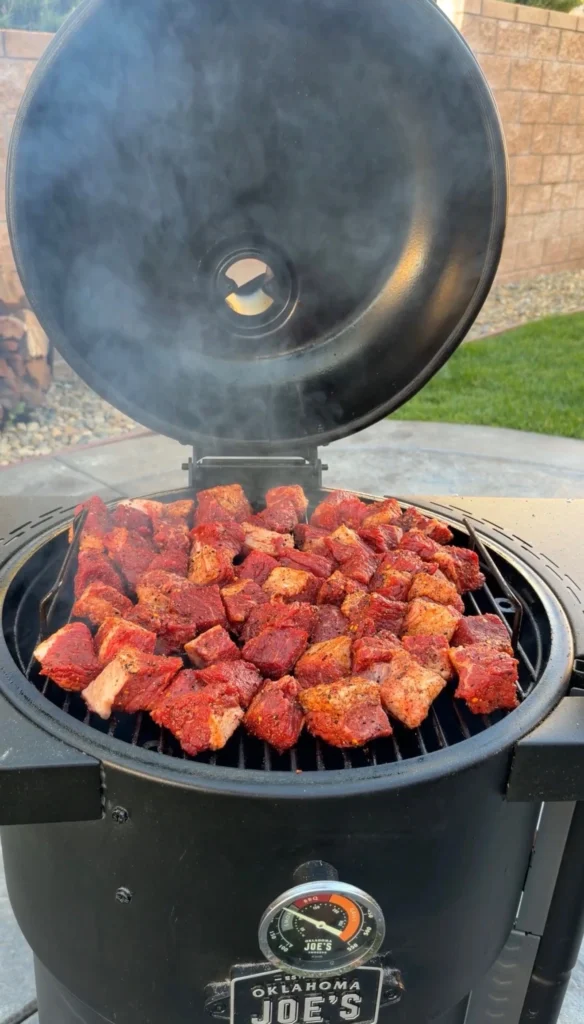
Smoking Brisket Burnt Ends: The Bark-Building Phase
Temperature and Wood Selection
Preheat your smoker to 275 to 300°F. This is hotter than traditional brisket smoking (225°F), which is why this method is called “hot and fast.” Pecan wood is the ideal choice for smoked brisket burnt ends. It delivers a medium smoke flavor that’s nutty and slightly sweet without overpowering the beef. Hickory and oak are stronger alternatives. Cherry adds color but less smoke intensity.
What to Look for After 2 Hours
Place the seasoned cubes directly on the smoker grates. After approximately 2 hours, you’re looking for three visual cues: deep, dark bark formation on all sides, visible fat starting to render on the surface, and a caramelized color that looks almost lacquered. If the cubes still look light or moist on the surface, give them another 30 minutes. The bark locks in moisture and provides the textural contrast that makes these smoked brisket burnt ends addictive.
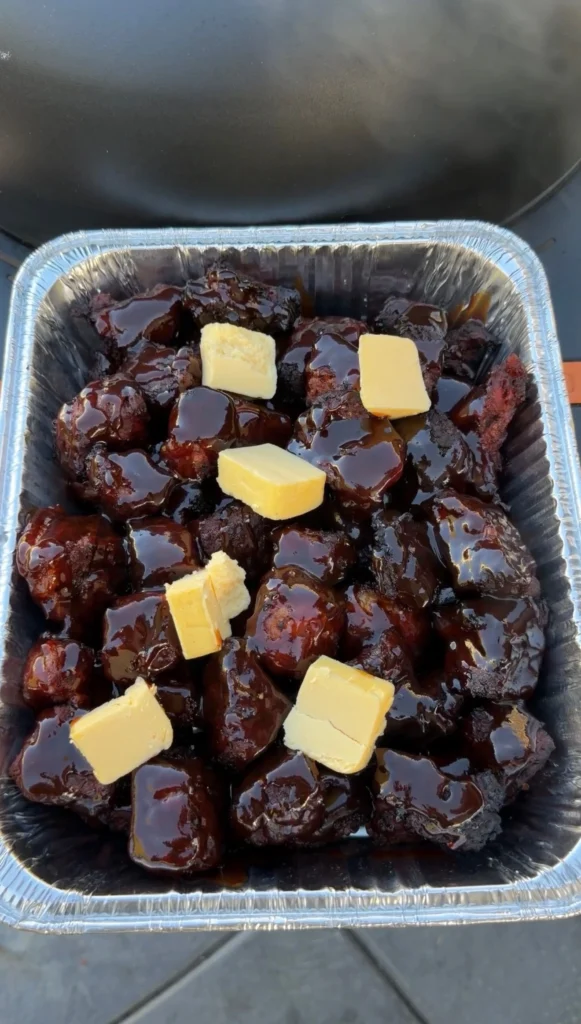
The Braise: BBQ Sauce and Butter for Tender Brisket Burnt Ends
Building the Braising Liquid
Transfer the barked cubes into a foil pan. Add 1 cup of your favorite BBQ sauce and slice 2 sticks (1 cup) of butter over the top. The BBQ sauce provides the sweet, tangy flavor base. The butter adds richness and creates a glossy, sticky glaze as it melts into the sauce. Together, they produce the signature “meat candy” finish that defines smoked brisket burnt ends.
Cover and Braise for 2 Hours
Cover the foil pan tightly with aluminum foil. Return to the smoker at 275 to 300°F. The covered pan traps steam and creates a braising environment. The combination of heat, steam, BBQ sauce, and melted butter breaks down the remaining connective tissue in the brisket point. After 2 hours, the cubes should be probe-tender. A thermometer should slide into any cube with zero resistance.
Setting the Glaze and Serving Smoked Brisket Burnt Ends
The Uncovered Finish
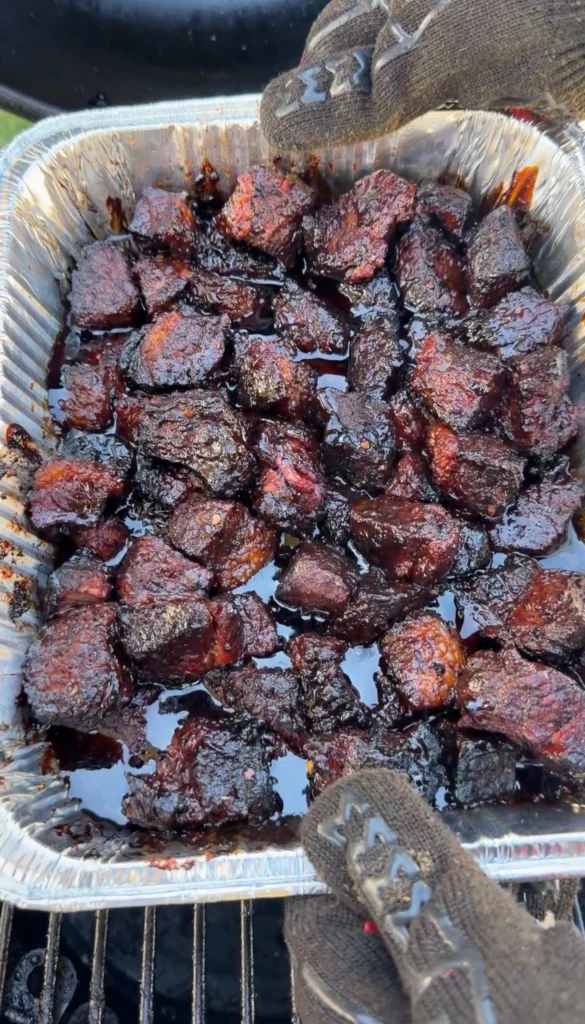
Remove the foil. Gently toss the burnt ends in the sauce that has collected in the pan. Return uncovered to the smoker for 15 to 20 minutes. This final step does two things. First, it reduces the sauce into a thick, sticky glaze that coats each cube. Second, the exposed surface firms up slightly, giving you a tacky exterior with a melt-in-your-mouth interior. This is the moment your smoked brisket burnt ends transform into meat candy.
Rest Before Serving
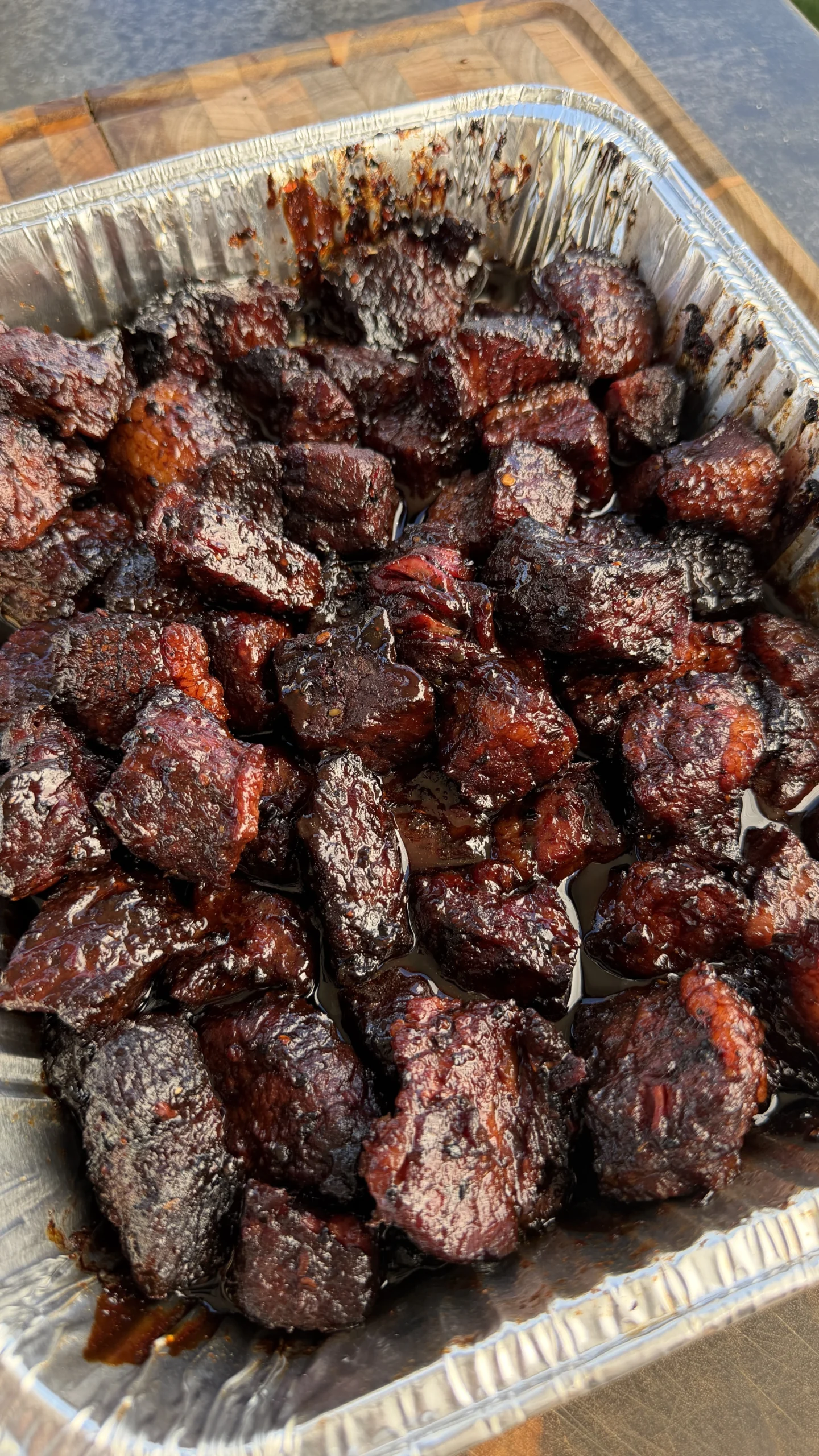
Remove the pan from the smoker and let the burnt ends rest for 10 to 15 minutes. This brief rest allows the sauce to thicken further as it cools and the meat to relax. The burnt ends should be sticky to the touch, deeply caramelized on the outside, and impossibly soft on the inside.
How to Serve
Serve hot as a main course with classic BBQ sides like mac and cheese, coleslaw, or baked beans. They also work as an appetizer on toothpicks, stuffed into slider buns, or piled on top of nachos. Smoked brisket burnt ends disappear fast, so plan accordingly.
Smoked Brisket Burnt Ends
Hot & fast · Pecan wood · 275-300°F · BBQ sauce & butter braise
Ingredients
Brisket
- 3-4 lbs brisket point (not the flat)
- 2-3 tbsp your favorite BBQ seasoning
- Pecan wood for smoking
Braise
- 1 cup BBQ sauce
- 2 sticks (1 cup) butter, sliced
Instructions
- 1
Cut brisket point into 1 to 1½-inch cubes. Season all sides generously with BBQ rub.
- 2
Preheat smoker to 275-300°F with pecan wood. Place cubes directly on grates. Smoke for ~2 hours until dark bark forms, fat renders, and color is deep and caramelized.
Braise, Glaze & Serve
- 3
Transfer to a foil tray. Add 1 cup BBQ sauce and 2 sticks sliced butter. Cover tightly with foil. Return to smoker at 275-300°F for ~2 hours until probe-tender.
- 4
Remove foil. Gently toss burnt ends in the sauce. Cook uncovered for 15-20 minutes to set the glaze.
- 5
Rest 10-15 minutes. Serve hot and sticky.
Point, Not Flat
The point has the fat and marbling needed for tender burnt ends. The flat is too lean and dries out when cubed.
Watch the Bark
Don’t braise until all six sides have deep, dark bark. Light bark means less flavor in every bite.
Butter = Glaze
The butter melts into the BBQ sauce during braising and creates the signature sticky, glossy meat candy finish.
Step-by-Step Instructions
Step 1: Cube and Season the Brisket Point
Cut a 3 to 4 lb brisket point into 1 to 1.5-inch cubes. Remove any hard external fat or silverskin, but leave the intramuscular marbling intact. Season all sides generously with your BBQ rub, tossing in a foil pan to get even coverage on every surface.
Step 2: Smoke to Build the Bark
Preheat your smoker to 275 to 300°F with pecan wood. Place the seasoned cubes directly on the grates. Smoke for approximately 2 hours until a deep, dark bark forms on all sides. The fat should be visibly rendering and the color should look caramelized.
Step 3: Braise in BBQ Sauce and Butter
Transfer the smoked cubes into a foil pan. Add 1 cup BBQ sauce and slice 2 sticks of butter over the top. Cover tightly with aluminum foil and return to the smoker at 275 to 300°F. Braise for 2 hours until the meat is probe-tender and the butter has melted into the sauce.
Step 4: Set the Glaze
Remove the foil. Gently toss the burnt ends in the sauce. Return uncovered to the smoker for 15 to 20 minutes to let the sauce reduce into a sticky, caramelized glaze.
Step 5: Rest and Serve
Remove from the smoker and let rest 10 to 15 minutes. The burnt ends should be sticky, deeply caramelized, and impossibly tender. Serve hot.
Smoked Brisket Burnt Ends (Hot & Fast)
Ingredients
Equipment
Method
- Cut brisket point into 1 to 1½-inch cubes. Season all sides generously with BBQ rub.
- Preheat smoker to 275-300°F with pecan wood. Place cubes directly on grates. Smoke for approximately 2 hours until dark bark forms on all sides.
- Transfer to a foil tray. Add 1 cup BBQ sauce and 2 sticks sliced butter. Cover tightly with foil. Return to smoker and cook another 2 hours until probe-tender.
- Remove foil. Gently toss burnt ends in the sauce. Cook uncovered for 15-20 minutes to set the glaze.
- Rest 10-15 minutes. Serve hot and sticky.
Notes
Tried this recipe?
Let us know how it was!Smoked Brisket Burnt Ends — FAQ
Common questions about making perfect brisket burnt ends hot and fast.
Your Questions, Answered
Not recommended. The flat is too lean for burnt ends. It dries out when cubed and braised. The brisket point has the intramuscular fat and marbling needed to stay juicy and tender through the full cook.
Pre-cubing gives you bark on all six sides of every piece instead of just the top and bottom. More bark means more concentrated smoky flavor per bite. The butter braise compensates for any moisture lost from the extra surface area.
275 to 300°F for both the smoke phase and the braise phase. This hot-and-fast approach delivers finished burnt ends in about 4 hours total instead of the 12+ hours required by traditional low-and-slow methods.
Look for three things: deep dark color on all sides, visible fat rendering on the surface, and a caramelized appearance that looks almost lacquered. If the cubes still look light or moist, give them more time before braising.
Braising, Serving & Storage
Butter melts into the BBQ sauce during braising and creates a rich, glossy glaze that coats each cube. It adds richness and creates the signature “meat candy” finish. The combination of butter and BBQ sauce is what separates good burnt ends from great ones.
Use the squeeze test. Pick up a cube with tongs and press gently. If it shreds apart easily, it’s done. A probe thermometer should also slide into any cube with zero resistance. The cubes should feel super soft and jiggly.
Pecan is the choice for this recipe. It delivers a medium, nutty smoke that complements beef beautifully. Hickory and oak are stronger alternatives. Cherry adds color but less smoke intensity. Avoid mesquite for long cooks as it can turn bitter.
Classic BBQ sides: mac and cheese, coleslaw, baked beans, or cornbread. They also work on slider buns, over nachos, or as a topping for loaded fries. The sticky glaze pairs well with sharp, acidic sides like pickled onions or vinegar slaw.
Ready to Level Up?
Take your backyard cooking from good to legendary.
This is where I keep all my most-used smokers, knives, and favorite cooking tools.
Shop My Gear CollectionExplore More Recipes
Find more diverse flavors at CWFeats.com