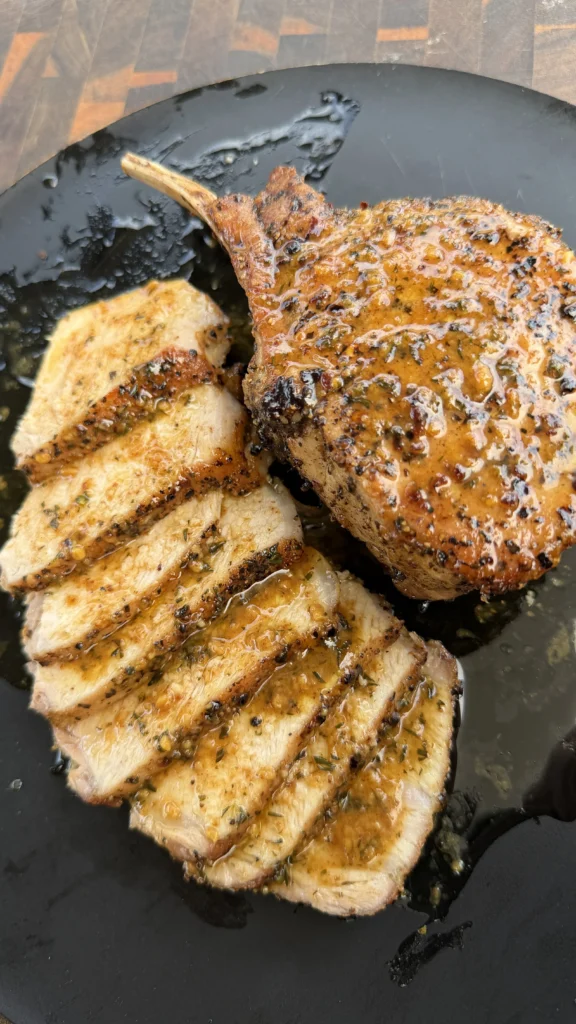
Oven-finished pan-seared double bone pork chops with garlic herb butter sauce take thick-cut, 2-inch bone-in pork chops through a hard sear on both sides, a gentle oven finish at 300°F to 145°F internal, and a pan sauce built from butter, smashed garlic, fresh herbs, Dijon mustard, honey, and lemon. You score the fat cap in a crosshatch pattern for even rendering, sear 2 to 3 minutes per side until golden, finish low and slow in the oven so the thick chops cook evenly without drying out, then build the sauce in the same pan with all the fond and drippings. Spoon the sauce over the chops while they rest. Serves 2 to 4.
Jump to RecipeWhy Double Bone Pork Chops Need the Sear-Then-Oven Method
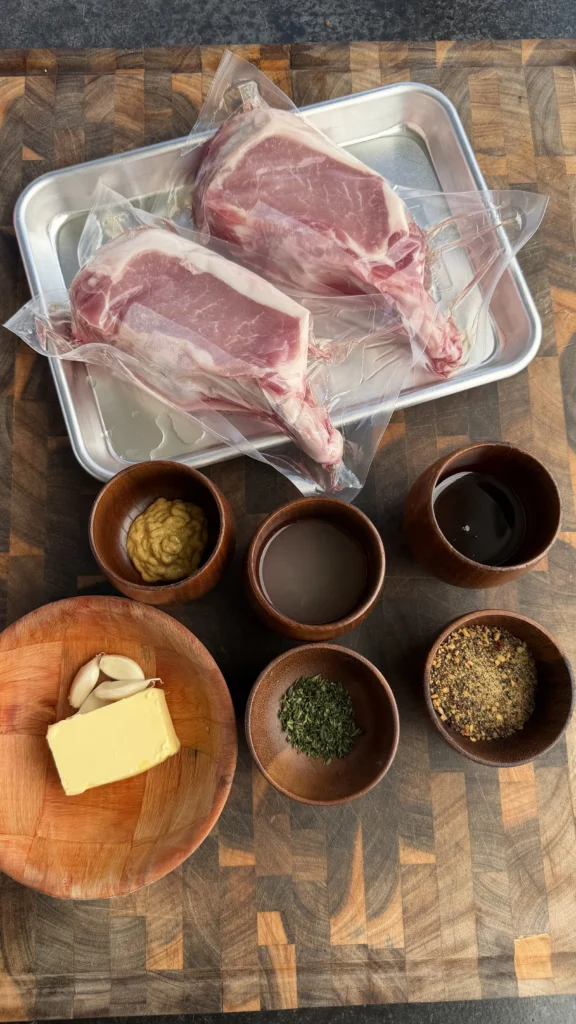
Thick Chops Can’t Cook Through on the Stovetop Alone
A double bone pork chop is roughly 2 inches thick. If you try to cook it entirely on the stovetop, the outside burns or dries out before the center reaches 145°F. The sear-then-oven method solves this by splitting the cook into two phases. The stovetop sear at high heat creates a deep golden Maillard crust on both flat sides in 2 to 3 minutes each. The oven at 300°F gently brings the interior up to temperature without overcooking the exterior. The low oven temperature is intentional for double-cut chops because higher temperatures (375°F+) cook the outer layers too fast relative to the thick center.
The Bone Adds Flavor and Insulation
The bone in a double-cut pork chop doesn’t just look impressive on the plate. Bone is a poor conductor of heat, which means the meat closest to the bone cooks more slowly than the rest. This acts as a natural insulation layer that keeps the interior juicier. The bone also adds flavor to the meat during the oven phase as the marrow and connective tissue surrounding the bone render and release savory compounds.
Scoring the Fat Cap for Even Rendering
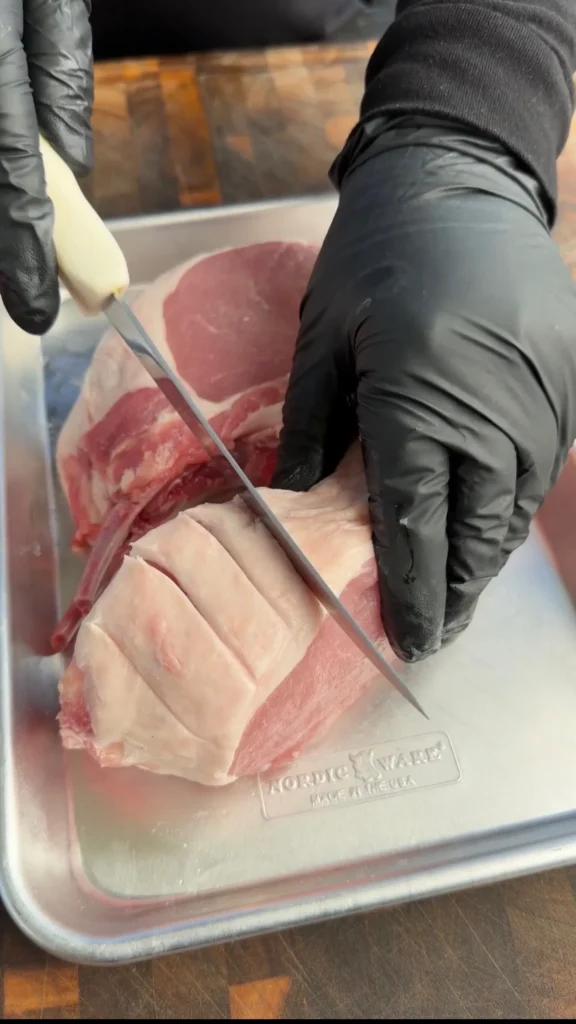
Why Score in a Crosshatch Pattern
The fat cap on the outside of a bone-in pork chop is dense. Without scoring, the fat contracts during searing and causes the chop to curl, lifting the center of the meat off the pan surface. This creates uneven browning where the edges sear but the center stays pale. Scoring the fat in a crosshatch pattern (shallow cuts about 1/4 inch deep, spaced 1/2 inch apart) breaks the tension in the fat layer. The scored chop stays flat against the pan, which means even contact and even browning.
Scoring Also Improves Texture
The crosshatch cuts expose more surface area of the fat to the heat. More exposed surface area means faster, more complete rendering. Rendered fat adds flavor to the sear and creates crispy edges at each cut line. Unscored fat stays rubbery and chewy because the heat can’t penetrate the dense layer fast enough during a 2 to 3 minute sear.
Building the Garlic Herb Butter Sauce in the Same Pan
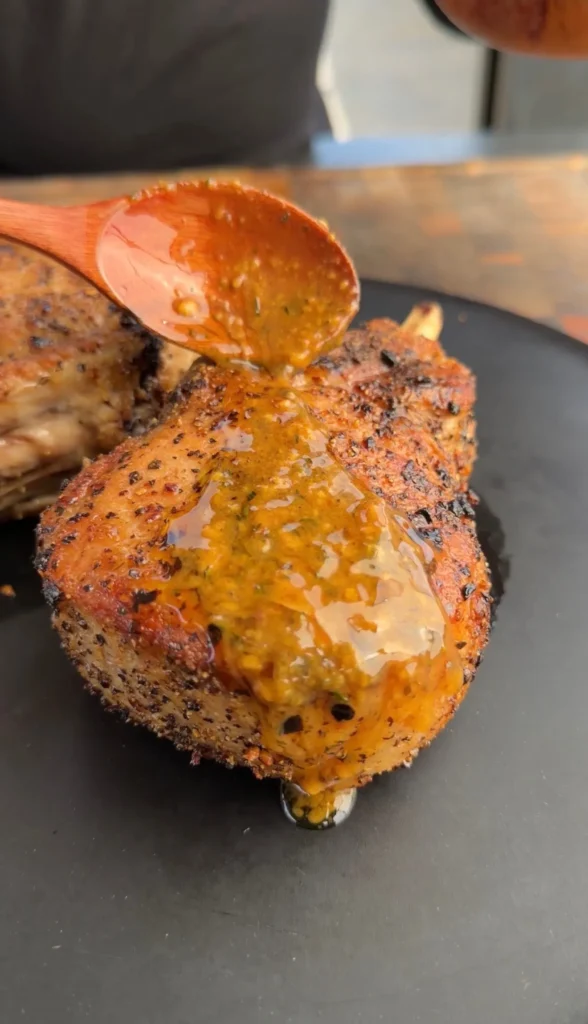
Why the Same Pan Matters
After searing the chops and transferring them to the oven, the pan is coated with fond (brown bits stuck to the surface) and rendered pork fat. These are concentrated flavor deposits. When you add butter, smashed garlic, and herbs to this pan, the fond dissolves into the sauce. This process is called deglazing. The result is a sauce that tastes like the pork chop itself, not just butter and garlic. Cleaning the pan and starting fresh in a different saucepan would discard all that flavor.
The Sauce Components
Melt 3 tablespoons of unsalted butter over medium-low heat in the same pan. Add 4 to 5 smashed garlic cloves and fresh thyme or rosemary. Let the garlic and herbs infuse the butter for about a minute until fragrant. Add 1 tablespoon of Dijon mustard, 1 teaspoon of honey (optional), and a squeeze of lemon juice. The Dijon adds sharpness and depth. The honey adds a subtle sweetness that rounds out the butter. The lemon juice adds acidity that brightens the entire sauce and prevents it from tasting heavy. Simmer for 2 to 3 minutes until the sauce is cohesive and slightly thickened.
Resting and Saucing the Double Bone Pork Chops
Rest Before Slicing
Remove the chops from the oven at 145°F and let them rest for 5 to 8 minutes. Thick double-cut chops hold more residual heat than thin chops, which means the carryover cooking is more significant. Resting allows the internal temperature to climb 3 to 5 degrees while the muscle fibers relax and reabsorb the juices. Cutting into a thick pork chop immediately after pulling from the oven causes a significant juice loss because the proteins are still contracted from the heat.
Spoon Sauce Over While Resting
While the chops rest, spoon the warm garlic herb butter sauce over the top. The resting meat is still hot enough to absorb the butter as it pools on the surface. The sauce seeps into the scored fat cap and along the surface of the sear, adding another layer of flavor that penetrates the meat during the rest. By the time you slice, every cut releases garlic-herb-infused juices instead of plain pork juice.
Slice Against the Grain
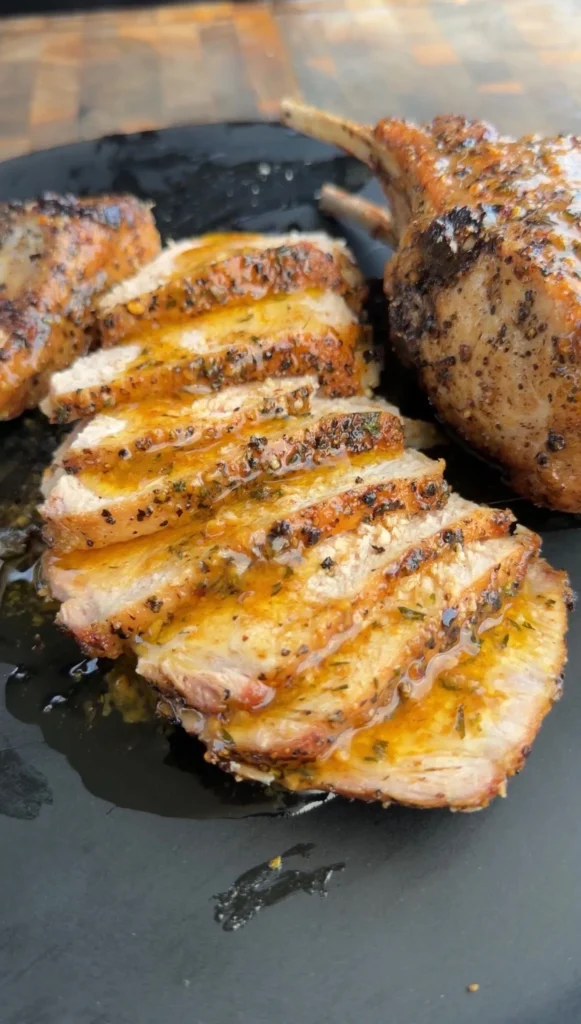
After resting, slice the double bone pork chop thin against the grain. The grain on a pork chop runs parallel to the bone. Cutting perpendicular to those fibers shortens them, which makes each slice tender instead of chewy. Pour any remaining sauce from the pan over the sliced chop for maximum flavor coverage.
Pan-Seared Double Bone Pork Chops with Garlic Herb Butter
2-inch thick · Scored fat cap · Sear + oven at 300°F · Dijon garlic butter sauce
Ingredients
Pork Chops
- 2-4 double bone pork chops (~2 inches thick)
- Salt & black pepper
- Garlic powder or favorite pork seasoning
- 1 tbsp oil (avocado or vegetable)
Garlic Herb Butter Sauce
- 3 tbsp unsalted butter
- 4-5 cloves garlic, smashed
- 1 tsp fresh thyme or rosemary
- 1 tbsp Dijon mustard
- 1 tsp honey (optional)
- Squeeze of lemon juice
Score the Fat
Crosshatch cuts in the fat cap prevent curling, promote even rendering, and create crispy edges at every cut line.
Sauce While Resting
Spoon the butter sauce over the chops while they rest. The hot meat absorbs the garlic and herb flavors into every fiber.
Slice Against the Grain
Cut perpendicular to the bone. This shortens the muscle fibers so every slice is tender, not chewy.
Step-by-Step: How to Make Pan-Seared Double Bone Pork Chops
Step 1: Prep the Pork Chops
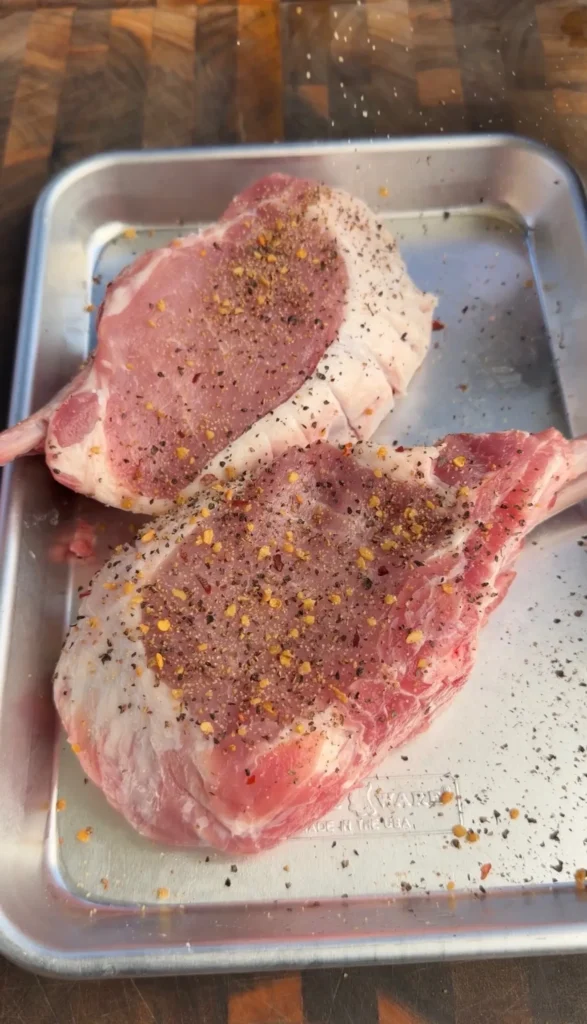
Take 2 to 4 double bone pork chops (about 2 inches thick) out of the fridge 30 minutes before cooking. Letting them come closer to room temperature ensures more even cooking from edge to center.
Score the fat cap in a crosshatch pattern. Use a sharp knife to make shallow cuts about 1/4 inch deep, spaced 1/2 inch apart, in both directions. This prevents curling during the sear and helps the fat render evenly. Pat the chops completely dry with paper towels. Season both sides generously with salt, black pepper, and garlic powder (or your favorite pork seasoning).
Step 2: Sear Both Sides
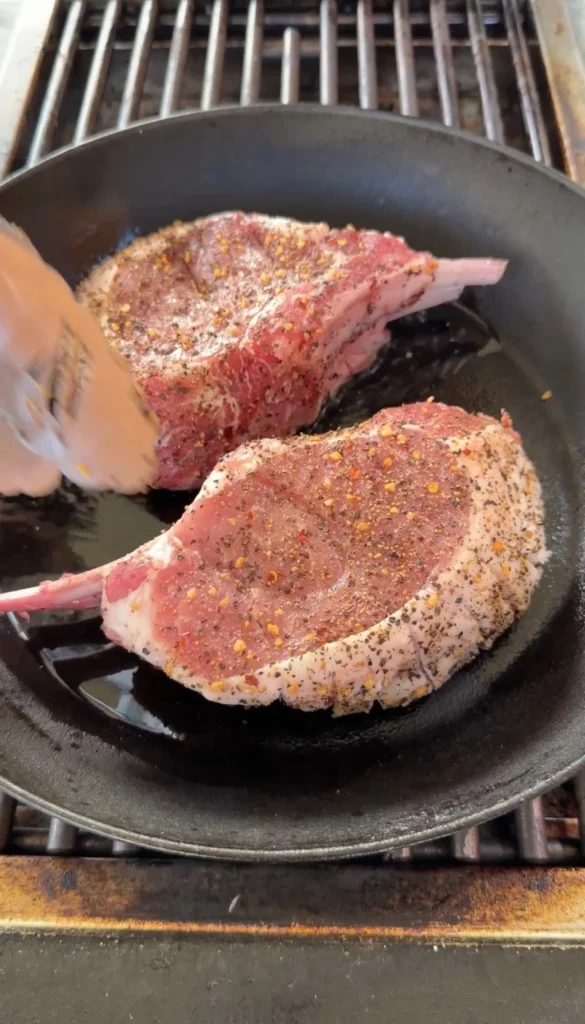
Preheat oven to 300°F. Heat 1 tablespoon of oil in an oven-safe skillet (cast iron is ideal) over medium-high heat until the oil shimmers and just begins to smoke. Place the pork chops in the pan. Do not move them for 2 to 3 minutes. A deep golden crust should form on the bottom. Flip and sear the other side for another 2 to 3 minutes. If the fat cap is thick, use tongs to hold the chop on its side for 30 seconds to render and crisp the fat edge directly.
Step 3: Oven Finish to 145°F

Transfer the skillet directly to the 300°F oven. The low temperature cooks the thick chops gently and evenly. Cook until the internal temperature reads 145°F at the thickest part of the meat (avoiding the bone, which reads cooler). This takes roughly 15 to 25 minutes depending on the exact thickness. Check with an instant-read thermometer starting at the 15-minute mark.
Remove the skillet from the oven. Transfer the chops to a plate or cutting board and let them rest for 5 to 8 minutes. The carryover heat will bring the internal temperature up to about 148 to 150°F during the rest.
Step 4: Build the Garlic Herb Butter Sauce
Place the same skillet (with all the fond and drippings) back on the stovetop over medium-low heat. Add 3 tablespoons of unsalted butter. As the butter melts, add 4 to 5 smashed garlic cloves and 1 teaspoon of fresh thyme or rosemary. Let the garlic and herbs cook in the butter for about 1 minute until fragrant. Do not brown the garlic.
Add 1 tablespoon of Dijon mustard, 1 teaspoon of honey (optional), and a squeeze of fresh lemon juice. Stir everything together and let the sauce simmer for 2 to 3 minutes. The fond from the sear dissolves into the sauce, adding concentrated pork flavor. The sauce should be glossy, cohesive, and coat the back of a spoon.
Step 5: Sauce and Serve
While the chops are still resting, spoon the warm garlic herb butter sauce generously over the top of each chop. The sauce soaks into the scored fat cap and the seared surface. After the rest, slice each chop thin against the grain (perpendicular to the bone). Fan the slices on a plate and pour any remaining sauce from the pan over the top. Serve immediately.
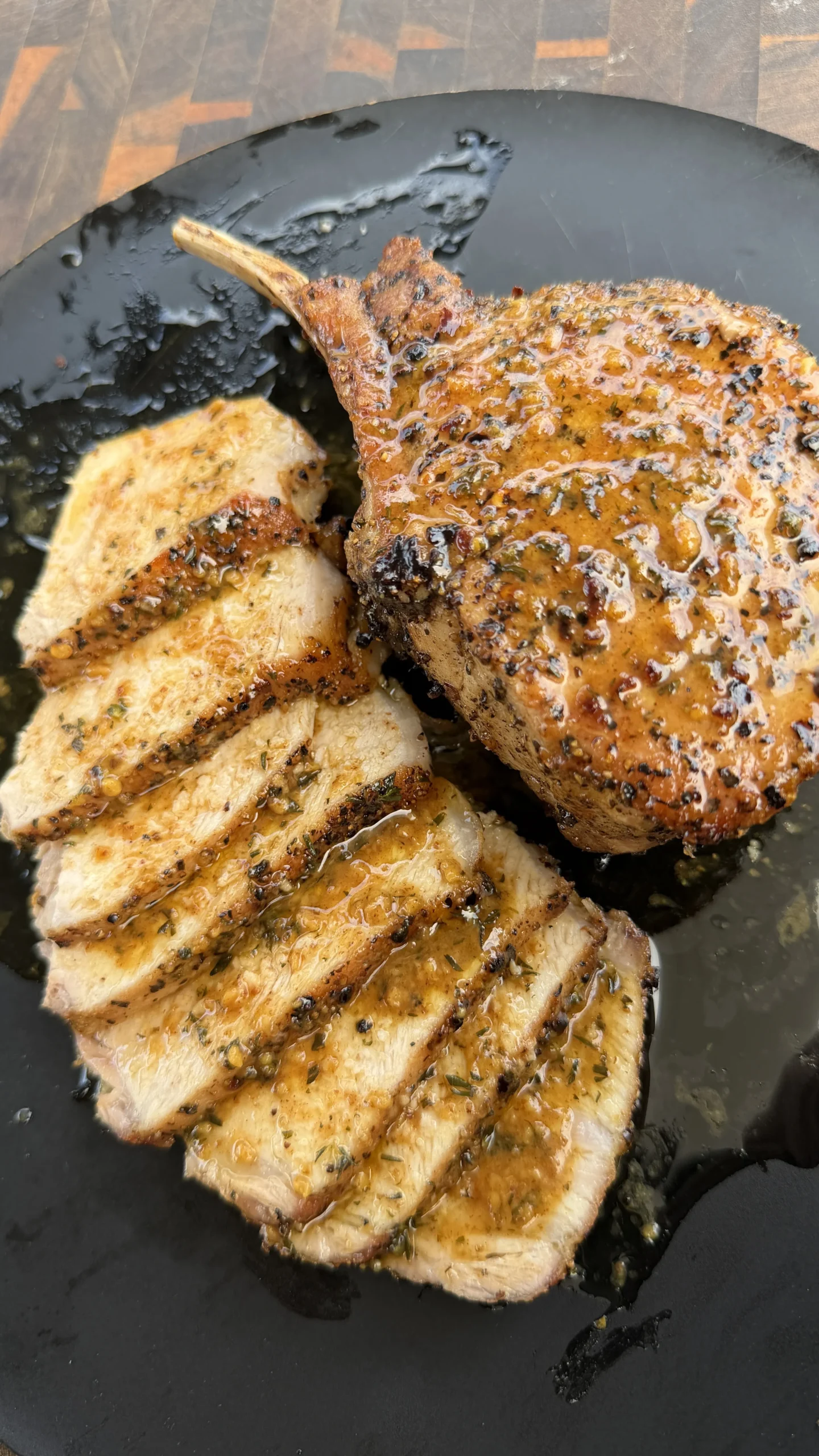
Pan-Seared Double Bone Pork Chops with Garlic Herb Butter Sauce
Ingredients
Equipment
Method
- Score fat cap in crosshatch pattern. Pat chops dry. Season both sides with salt, pepper, and garlic powder.
- Sear in hot oil over medium-high heat, 2-3 minutes per side until golden brown crust forms.
- Transfer skillet to 300°F oven. Cook until internal temperature reaches 145°F, about 15-25 minutes. Rest 5-8 minutes.
- In the same pan, melt butter over medium-low. Add smashed garlic and herbs, cook until fragrant. Add Dijon, honey, and lemon juice. Simmer 2-3 minutes.
- Spoon sauce over resting chops. Slice thin against the grain and pour extra sauce over slices.
Notes
Tried this recipe?
Let us know how it was!Pan-Seared Double Bone Pork Chops — FAQ
Common questions about searing, oven finishing, and saucing thick-cut pork chops.
Your Questions, Answered
A double bone (or double-cut) pork chop is cut about 2 inches thick instead of the standard 3/4 to 1 inch. The extra thickness means more meat around the bone, which stays juicier during cooking. The bone adds flavor and acts as insulation, preventing the meat closest to it from overcooking.
Unscored fat contracts during searing and causes the chop to curl, lifting the center off the pan. Scoring in a crosshatch pattern breaks the tension in the fat layer so the chop stays flat for even browning. The cuts also expose more surface area for rendering, which creates crispy edges at every cut line instead of a rubbery, chewy fat cap.
A 2-inch thick chop needs time for heat to travel from the exterior to the center. A higher oven temperature (375°F+) overcooks the outer layers before the center reaches 145°F. At 300°F, the heat moves slowly and evenly through the thick meat, producing a chop that’s uniformly juicy from edge to center instead of dry on the outside and undercooked in the middle.
At 300°F, a 2-inch thick double bone pork chop takes roughly 15 to 25 minutes to reach 145°F internal. The exact time depends on the starting temperature of the meat and exact thickness. Start checking with an instant-read thermometer at the 15-minute mark. Probe the thickest part of the meat, avoiding the bone.
Sauce & Serving
After searing, the pan is coated with fond (brown bits) and rendered pork fat. These are concentrated flavor deposits. When you add butter, garlic, and herbs, the fond dissolves into the sauce. This process gives the butter sauce a deep pork flavor that you can’t replicate by starting in a clean pan.
You can, but the sauce will taste flatter. Dijon adds sharpness and depth that balances the richness of the butter. Without it, the sauce is essentially garlic herb butter, which is still good but one-dimensional. If you don’t have Dijon, a teaspoon of whole grain mustard or even a splash of apple cider vinegar adds a similar acidic counterpoint.
The resting meat is still hot enough to absorb the butter as it pools on the surface. The sauce seeps into the scored fat cap and along the seared crust, adding garlic-herb flavor that penetrates the meat during the rest. By the time you slice, every cut releases garlic-infused juices instead of plain pork juice.
Yes, but the cook time drops significantly. Boneless chops are leaner and cook faster, so they’re easier to overcook. Reduce the oven time and start checking the temperature 5 to 8 minutes earlier. Bone-in chops are preferred for this recipe because the bone adds flavor and helps the meat retain moisture during the low oven finish.
Ready to Level Up?
Take your backyard cooking from good to legendary.
This is where I keep all my most-used smokers, knives, and favorite cooking tools.
Shop My Gear CollectionExplore More Recipes
Find more diverse flavors at CWFeats.com