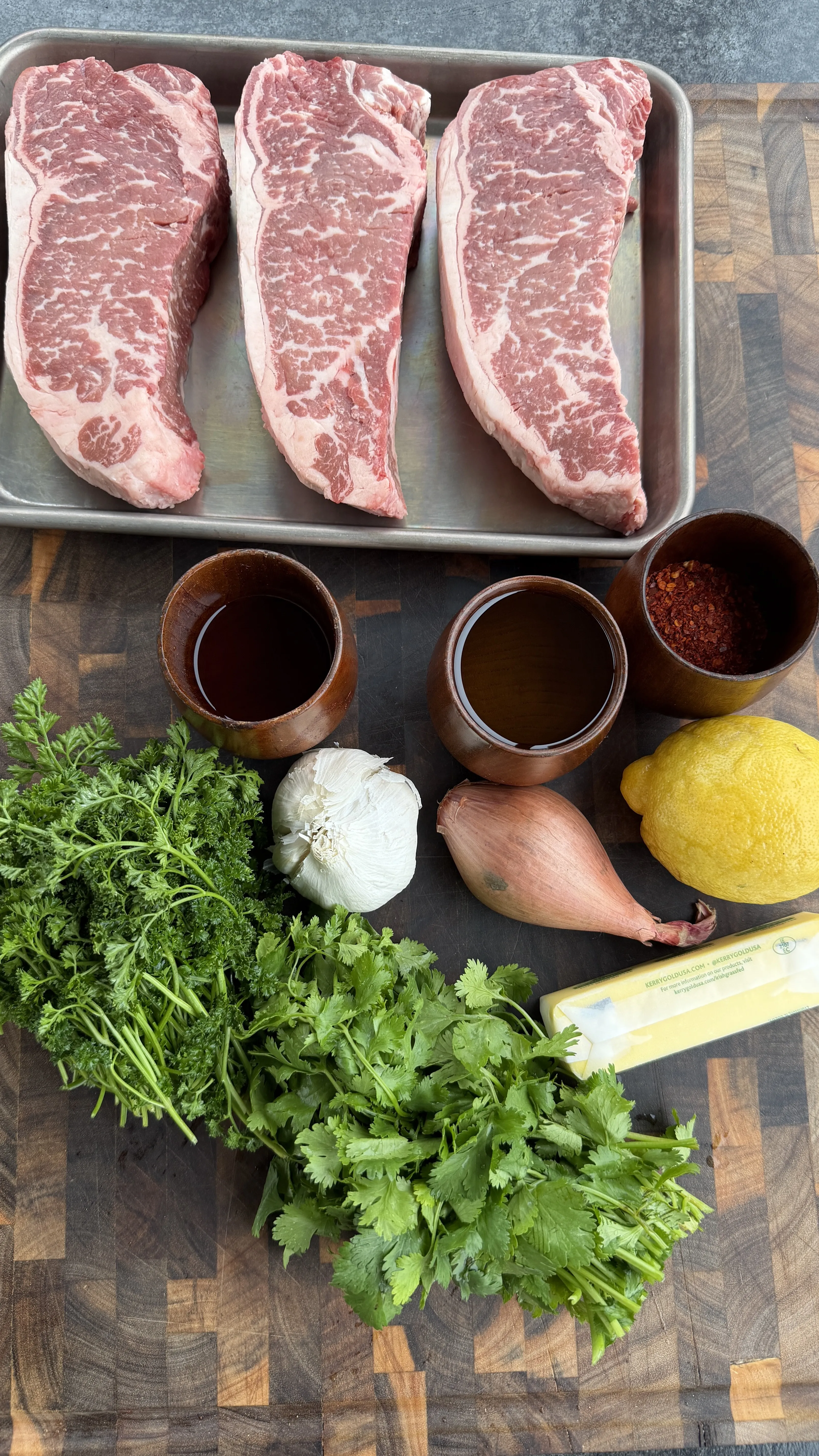
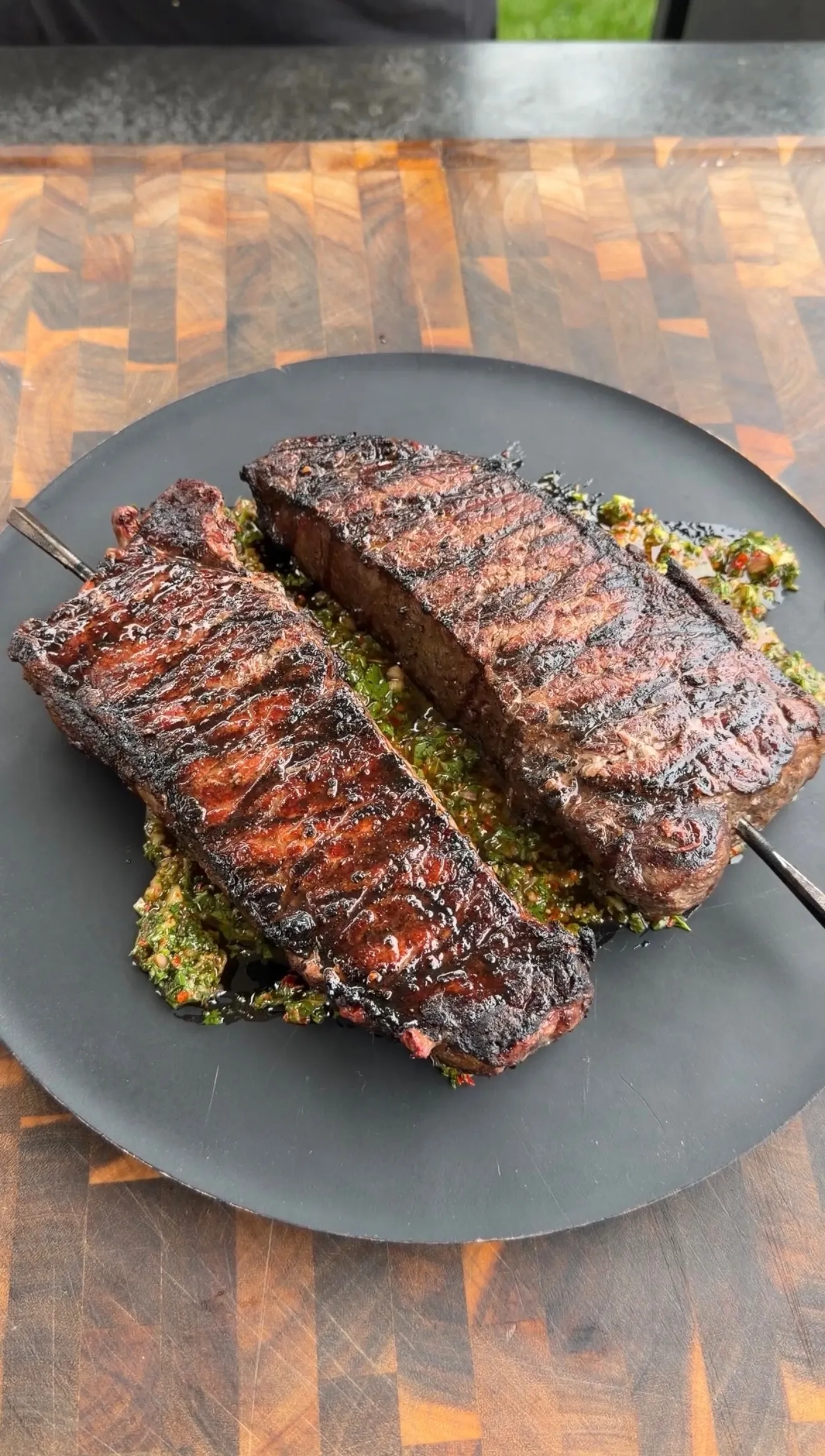
Grilled strip steaks with board sauce use a chimichurri-style sauce made from fresh parsley, cilantro, garlic, shallot, red wine vinegar, lemon juice, olive oil, and red pepper flakes, but instead of serving it on the side, you spread the sauce directly onto the cutting board, rest the hot steaks right on top for 5 to 10 minutes, then slice against the grain and toss every piece through the sauce so it coats all sides. Three 8 oz strip steaks get seasoned simply with salt, pepper, and garlic, then grilled over high heat with a flip every minute to build an even crust on all sides. The board sauce technique turns the resting step into the flavor step, and every slice picks up the herbs, acid, and olive oil as you cut through the pool of sauce and steak juices. Serves 4 to 6.
Jump to Recipe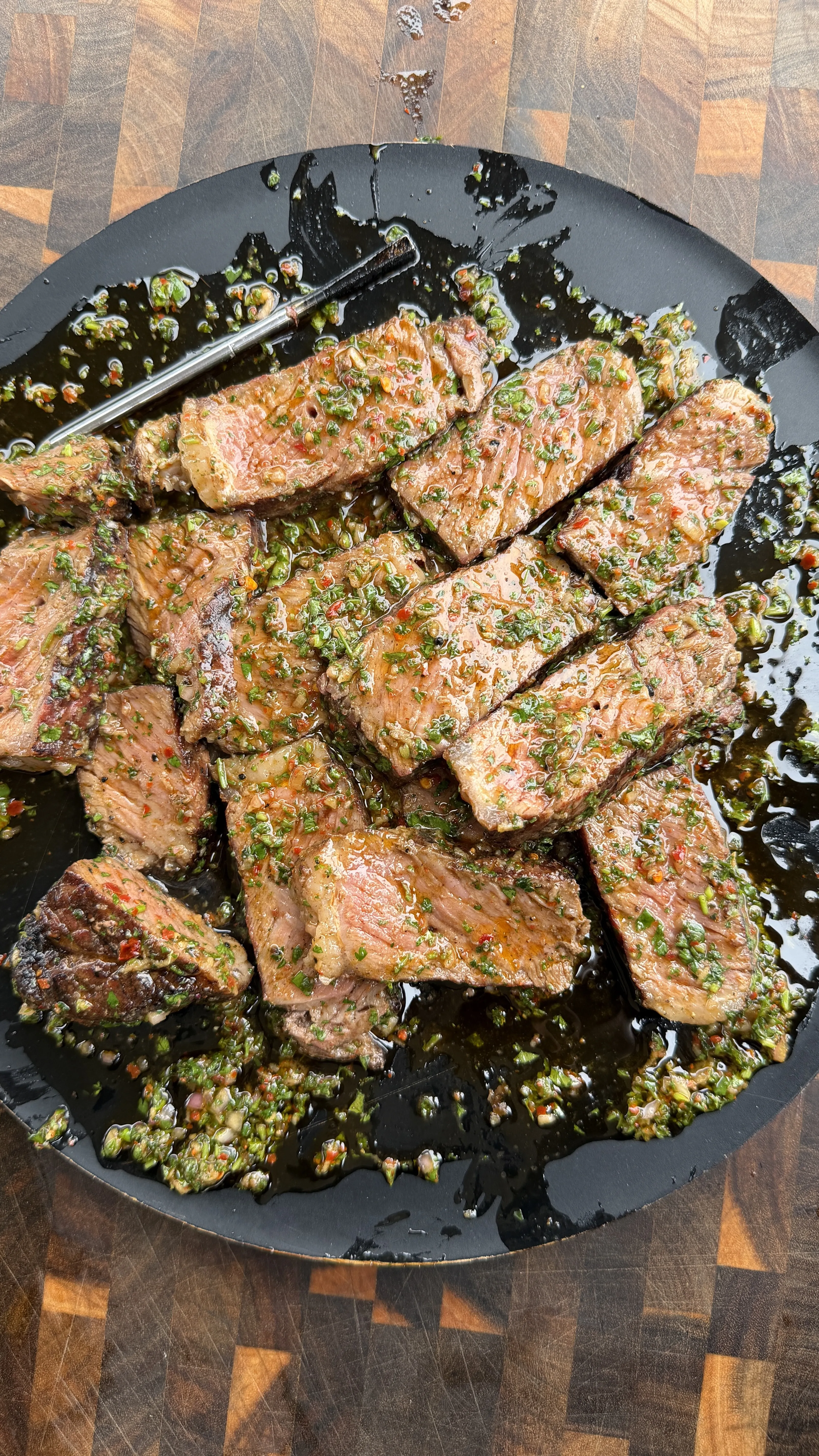
What Board Sauce Is and Why It Works Better Than a Side Dish
Sauce on the Board, Not in a Bowl
Board sauce is a chimichurri-style herb sauce that gets spread directly onto the cutting board before the steak rests on it. As the hot steak sits on the sauce for 5 to 10 minutes, the heat softens the raw garlic and shallot, the steak juices bleed into the herbs and olive oil, and the two merge into a single concentrated flavor pool on the board. When you slice against the grain, every cut drags through that pool and picks up sauce on all exposed surfaces.
A traditional side sauce only touches the top of the steak where you spoon it. Board sauce coats the bottom, the sides, and every freshly cut interior face because you toss the slices through it after cutting. Every piece gets an even distribution of herbs, acid, garlic, and olive oil mixed with concentrated steak juices.
Keep It Rustic, Not Blended
Board sauce should be hand-chopped, not blended in a food processor. A food processor turns the herbs into a smooth paste and emulsifies the olive oil, which changes the texture into something closer to pesto. Hand-chopping keeps the parsley, cilantro, garlic, and shallot in distinct, visible pieces that create a rustic, chunky texture. You want to see and feel the individual herb pieces in every bite alongside the steak.
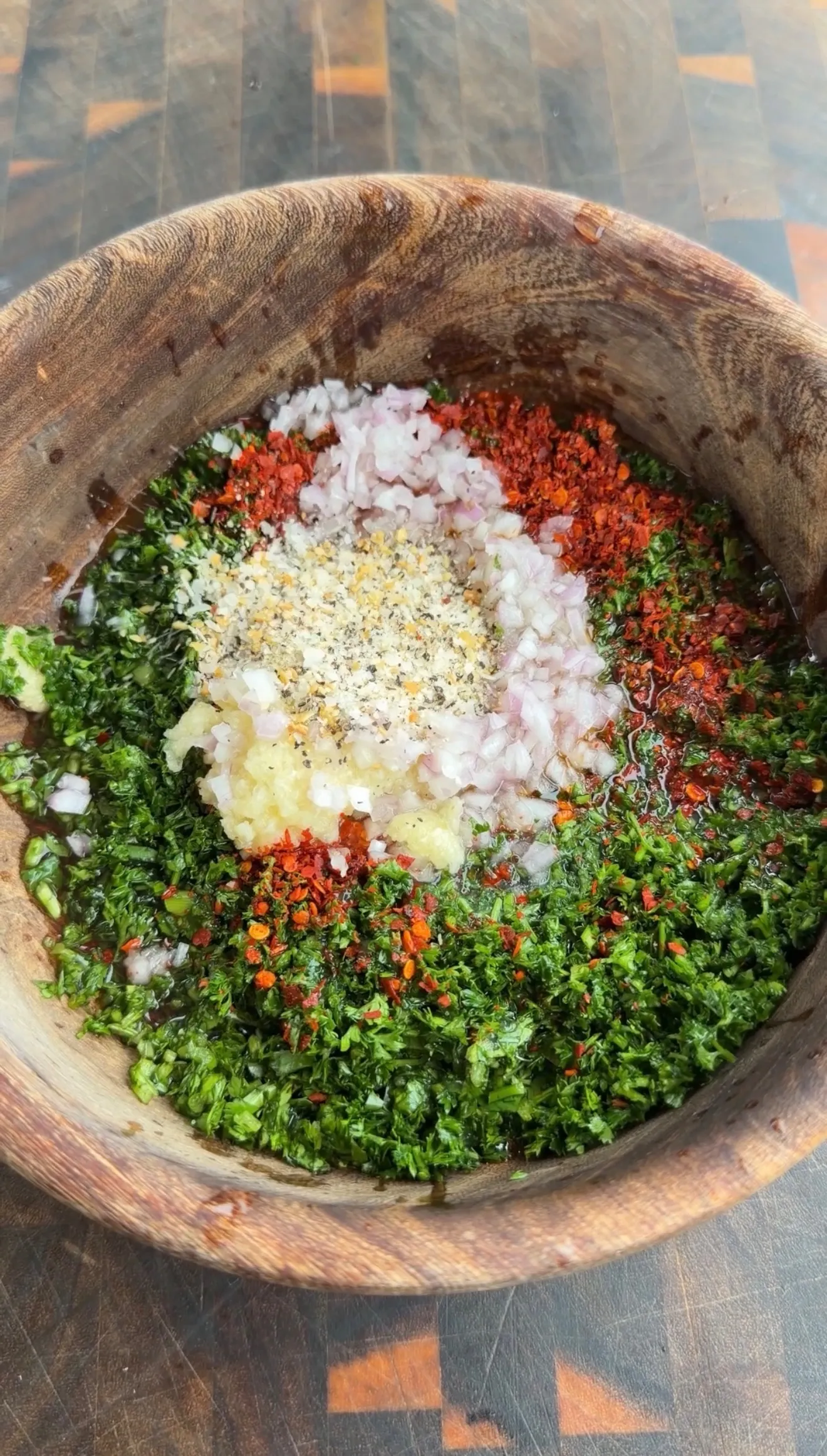
Building the Board Sauce
Fresh Herbs, Acid, and Heat
Finely chop 1 cup fresh parsley and 1/4 cup fresh cilantro, then mince 3 to 4 cloves of garlic and 1 small shallot. Combine everything in a bowl with 1 teaspoon red pepper flakes, 2 tablespoons red wine vinegar, juice of 1 lemon, and 1/2 cup olive oil. Season with salt and black pepper. Stir together and let the sauce sit while the steaks cook so the olive oil absorbs the garlic and herb flavors.
Why Red Wine Vinegar and Lemon Together
Red wine vinegar adds a deep, rounded acidity that mellows during the rest. Lemon juice adds a brighter, sharper acidity that lifts the flavor at the front of each bite. Using both creates a layered acid profile where you taste the brightness first and the depth second. Either one alone works, but together they produce a more complex sauce that stands up to the richness of a well-marbled strip steak.
Why Strip Steaks Are Ideal for This Recipe
Marbling and Fat Cap
Strip steaks (also called New York strips) have a strip of fat along one edge and consistent marbling through the center. As the steak grills over high heat, the marbling renders and bastes the meat from the inside while the fat cap crisps and adds flavor. Board sauce needs a rich, well-marbled steak to balance the acidity from the vinegar and lemon. A lean cut like a filet mignon would be overwhelmed by the sauce. A strip steak has enough fat to stand up to the herbs and acid while still tasting like beef.
Three Steaks for a Crowd
Three 8 oz strip steaks, sliced against the grain and tossed through the board sauce, serve 4 to 6 people as the centerpiece of a meal. Slicing the steaks into strips and presenting them in the board sauce gives everyone access to the same flavor-coated pieces, which works better for a shared table than plating whole steaks individually.
Grilling Strip Steaks Over High Heat with the Flip-Every-Minute Method
Why Frequent Flipping Builds a Better Crust
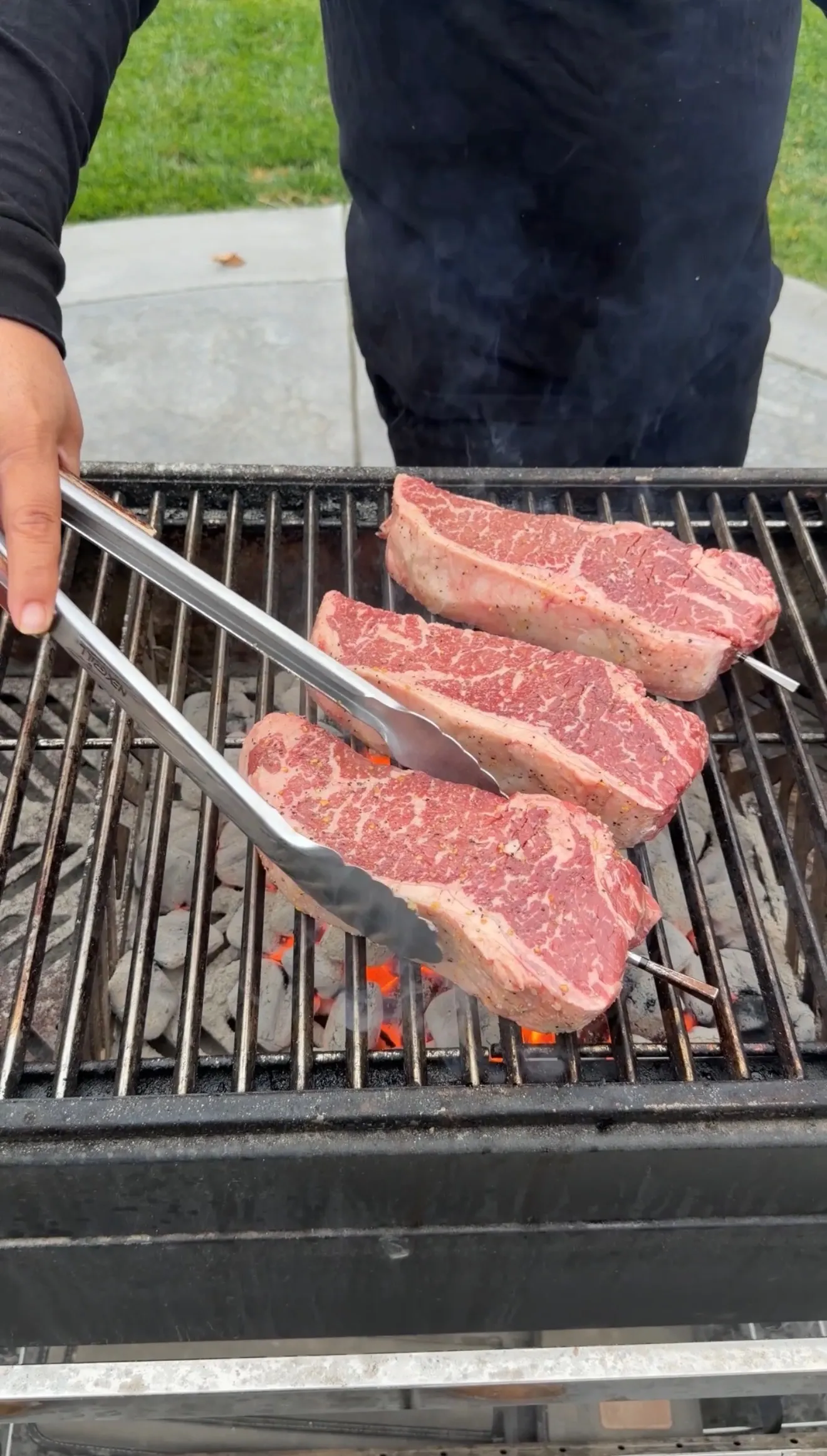
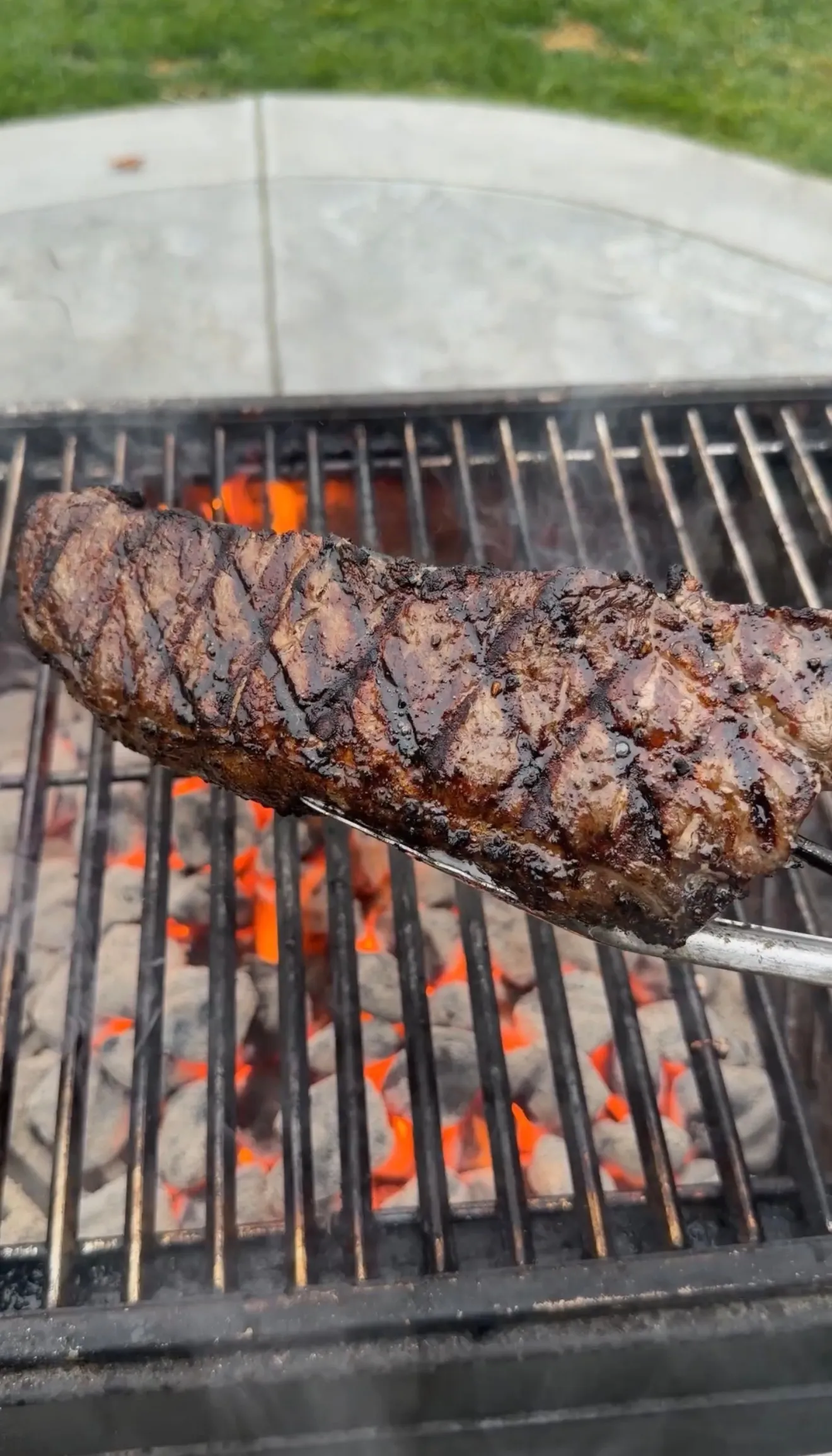
Most grilling advice says to flip your steak once, but frequent flipping (every minute) actually produces a more even crust and a more evenly cooked interior. Each flip exposes one side to the heat while the other side rests briefly, which prevents the outer layer from overcooking before the center reaches temperature. After 8 to 10 total minutes of minute-by-minute flipping over high heat, you get a uniform sear on both sides with a consistent medium-rare interior from edge to edge.
Temperature Targets for Your Preferred Doneness
Use an instant-read thermometer and pull the steaks a few degrees below your target since carryover heat will bring them up during the rest. Rare is 120°F (finishes around 125°F), medium-rare is 128°F (finishes around 133°F), and medium is 135°F (finishes around 140°F). Medium-rare is the recommended doneness for strip steaks because the marbling renders fully without the interior drying out.
Resting on the Board Sauce and Slicing Through It
Spread the Sauce, Place the Steaks, Wait
Spread the board sauce evenly across a large cutting board, then place the hot steaks directly on top. Let them rest for 5 to 10 minutes. During the rest, the heat from the steaks warms the raw garlic and softens its sharp bite, the steak juices bleed out and mix into the olive oil and vinegar, and the herbs start to wilt slightly at the contact points. By the time you slice, the sauce and the steak juices have merged into a single flavorful pool.
Slice Against the Grain, Then Toss
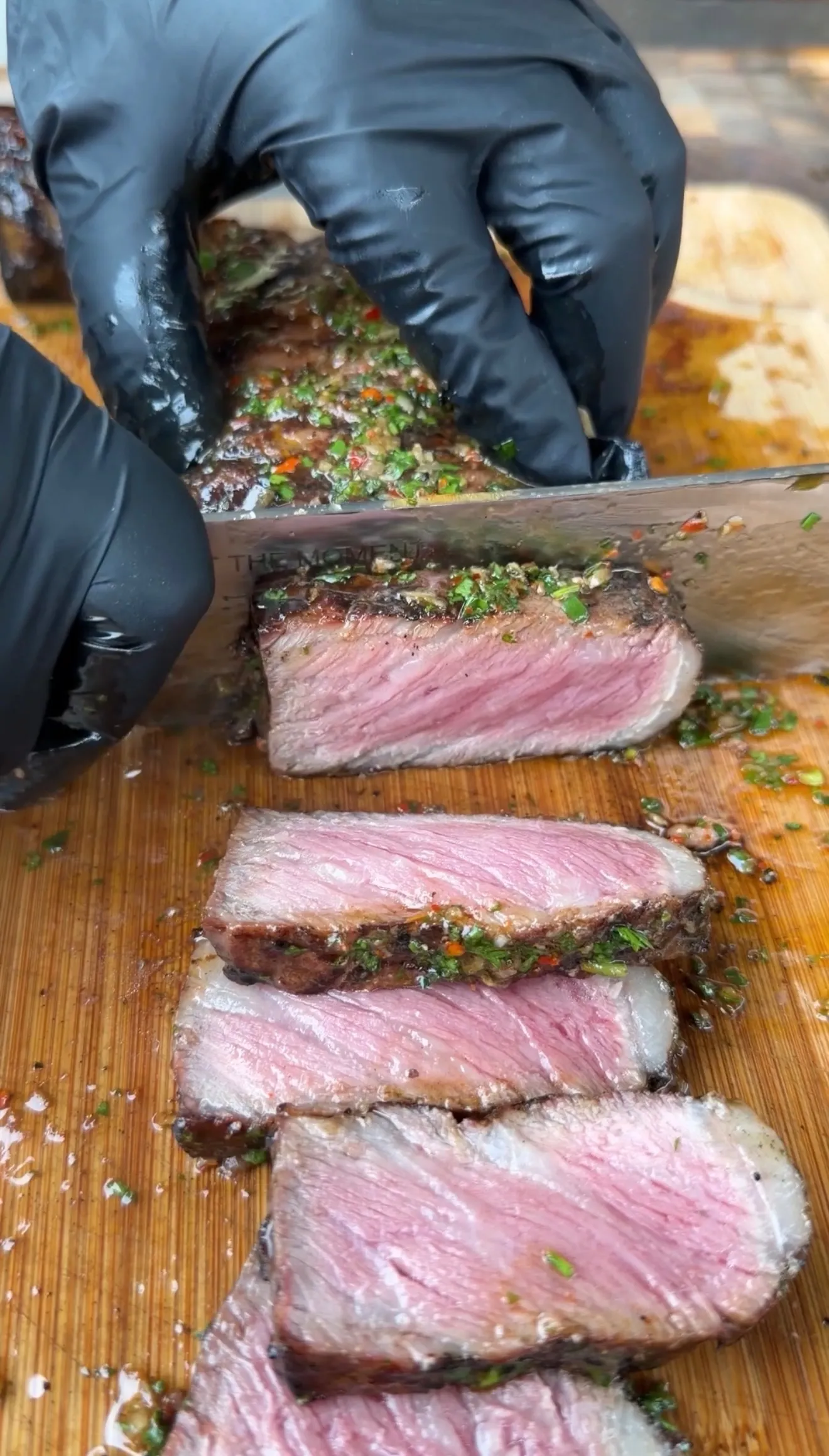
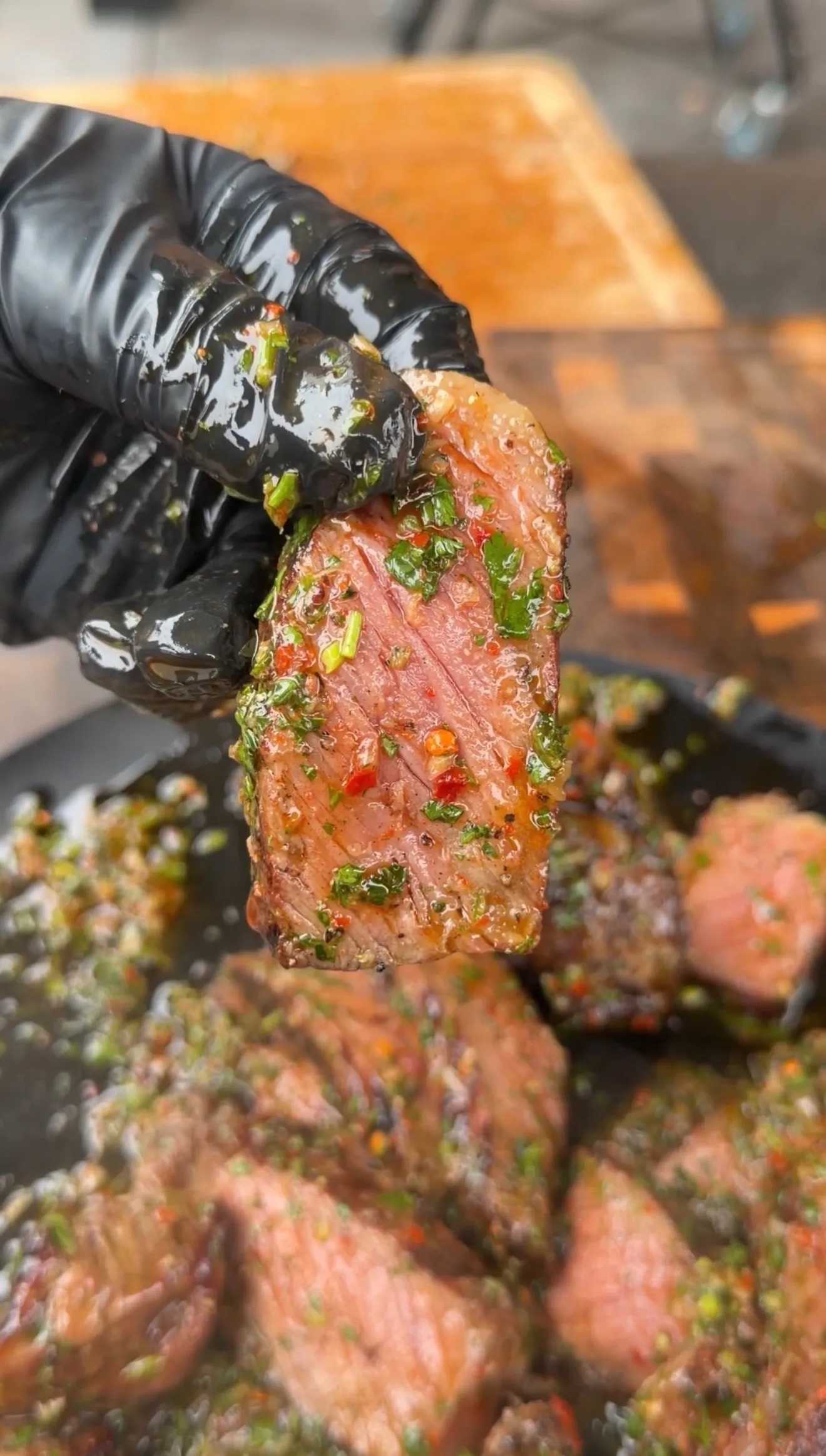
After resting, slice each steak against the grain into 1/2-inch strips. As you cut, each slice drags through the sauce pool and picks up herbs, oil, and juices on the newly exposed interior surface. After all the steaks are sliced, use tongs or a fork to gently toss everything together on the board so every piece is evenly coated. Serve directly from the board with the remaining sauce pool spooned over the top.
Step-by-Step: How to Make Grilled Strip Steaks with Board Sauce
Step 1: Season the Steaks
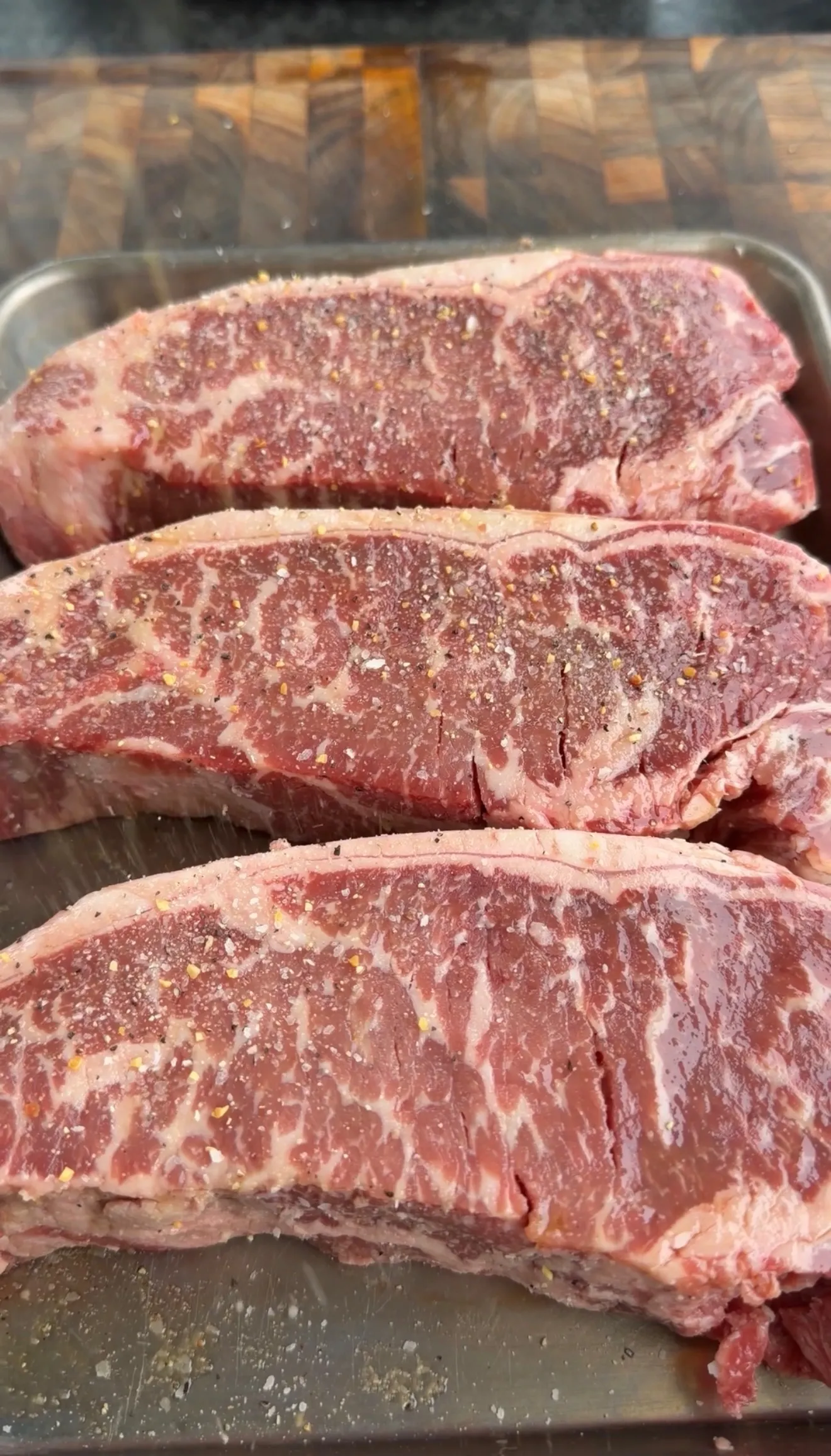
Pat 3 strip steaks (about 8 oz each) completely dry with paper towels and season on all sides with salt, pepper, and garlic to taste. You can also use your favorite steak seasoning if you prefer. Let the seasoned steaks sit at room temperature for 20 to 30 minutes while the grill preheats and you build the board sauce.
Step 2: Make the Board Sauce
Finely chop 1 cup parsley and 1/4 cup cilantro by hand (keep it rustic, not blended). Mince 3 to 4 garlic cloves and 1 small shallot. Combine the herbs, garlic, shallot, and 1 teaspoon red pepper flakes in a bowl, then add 2 tablespoons red wine vinegar, juice of 1 lemon, and 1/2 cup olive oil. Season with salt and black pepper and stir together. Let the sauce sit while the steaks cook so the olive oil absorbs the garlic and herb flavors.
Step 3: Grill Over High Heat
Preheat your grill to high heat. Place the steaks directly over the heat and flip every minute to build an even crust on all sides. After 8 to 10 total minutes of frequent flipping, check the internal temperature with an instant-read thermometer. Pull at 120°F for rare, 128°F for medium-rare, or 135°F for medium. Carryover heat will bring the steaks up another 3 to 5 degrees during the rest.
Step 4: Rest the Steaks on the Board Sauce
Spread the board sauce evenly across a large cutting board, then place the hot steaks directly on top. Let them rest for 5 to 10 minutes. During the rest, the steak juices bleed into the herbs and olive oil, the heat softens the raw garlic, and the sauce and juices merge into a single concentrated flavor pool on the board.
Step 5: Slice Against the Grain and Toss
After resting, slice each steak against the grain into 1/2-inch strips, dragging each cut through the sauce pool on the board. Once all the steaks are sliced, use tongs to gently toss everything together so every piece is evenly coated with herbs, oil, vinegar, and steak juices. Serve directly from the board with the remaining sauce spooned over the top.
Grilled Strip Steaks with Board Sauce
Ingredients
Equipment
Method
- Pat steaks dry. Season with salt, pepper, and garlic on all sides. Let sit at room temperature 20-30 minutes.
- Hand-chop parsley, cilantro, garlic, and shallot. Combine with red pepper flakes, red wine vinegar, lemon juice, olive oil, salt, and pepper. Let sit while steaks cook.
- Grill steaks over high heat, flipping every minute for 8-10 minutes total. Pull at 128°F for medium-rare.
- Spread board sauce across a cutting board. Place hot steaks directly on top and rest 5-10 minutes.
- Slice against the grain. Toss slices through the board sauce so every piece is coated. Serve from the board.
Notes
Tried this recipe?
Let us know how it was!Grilled Strip Steaks with Board Sauce FAQ
Common questions about board sauce, grilling technique, steak cuts, and the flip method.
Your Questions, Answered
Board sauce is a chimichurri-style herb sauce that gets spread directly onto a cutting board before the steak rests on it. As the hot steak sits on the sauce, the juices bleed into the herbs and olive oil, the heat softens the raw garlic, and the two merge into a concentrated flavor pool. When you slice and toss the steak through the sauce, every piece gets coated on all sides instead of just the top.
Frequent flipping produces a more even crust and a more consistently cooked interior. Each flip exposes one side to the heat while the other rests briefly, which prevents the outer layer from overcooking before the center reaches temperature. After 8 to 10 minutes of minute-by-minute flipping, you get a uniform sear on both sides with medium-rare color from edge to edge instead of a gray band around the outside.
Yes. Ribeye, flank steak, skirt steak, or flat iron all work well with board sauce. Ribeye has more marbling and richness, while flank and skirt are leaner and benefit from the olive oil and acid in the sauce. Whichever cut you choose, make sure to slice against the grain after resting so the pieces are tender, especially with leaner cuts where the grain direction matters more.
A food processor turns the herbs into a smooth paste and emulsifies the olive oil, which changes the texture into something closer to pesto. Hand-chopping keeps the parsley, cilantro, garlic, and shallot in distinct, visible pieces that create a rustic, chunky texture. You want to see and feel the individual herb pieces in every bite alongside the steak.
Serving and Variations
Yes. The sauce keeps in the fridge for up to 2 days in an airtight container. Bring it back to room temperature before spreading it on the board, since cold sauce will cool the steak too quickly during the rest. The flavors actually improve after sitting overnight as the olive oil absorbs more of the garlic and herb compounds.
Red wine vinegar adds a deep, rounded acidity that mellows during the rest, while lemon juice adds a brighter, sharper acidity that lifts the flavor at the front of each bite. Using both creates a layered acid profile where you taste the brightness first and the depth second. Either one alone works, but together they produce a more complex sauce that stands up to a rich, well-marbled strip steak.
Keep the sides simple so the board sauce stays the focal point. Grilled asparagus, charred broccolini, roasted potatoes, or crusty bread for soaking up the sauce pool on the board all work well. A simple arugula salad with lemon and olive oil echoes the acid and herb flavors in the sauce without competing with the steak.
Ready to Level Up?
Take your backyard cooking from good to legendary.
This is where I keep all my most-used smokers, knives, and favorite cooking tools.
Shop My Gear CollectionExplore More Recipes
Find more diverse flavors at CWFeats.com