
Apple Cider Glazed Pork Chops with Grilled Apples
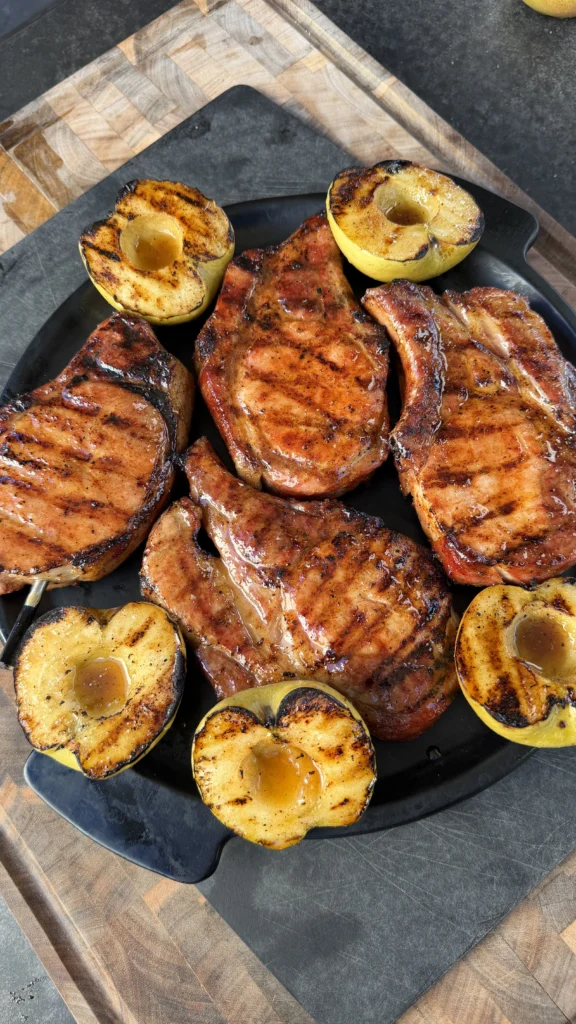
Apple cider glazed pork chops with grilled apples bring together the quintessential flavors of fall in one beautifully balanced dish. This recipe starts with four thick-cut pork chops seasoned generously with sweet BBQ seasoning, then seared on both sides to develop a golden crust before moving to indirect heat for gentle smoking. Fresh apples get halved, cored, and sprinkled with cinnamon and brown sugar, then seared cut-side down until caramelized before joining the pork chops on the cooler side of the grill. While everything cooks at 250 degrees with apple or cherry wood smoke, a glaze simmers on the stovetop – apple cider reduces by half with apple cider vinegar, Dijon mustard, and brown sugar, then gets enriched with butter for glossy, flavorful sauce.
What makes these smoked pork chops with apple cider special is how the glaze ties everything together with concentrated apple flavor that complements both the pork and the grilled fruit. The cider reduction creates sweet-tart complexity with subtle tang from Dijon and vinegar that cuts through the pork’s richness. Brushing the glaze on during the final ten minutes of cooking creates a sticky, lacquered coating that caramelizes slightly from the heat. The grilled apples provide textural contrast – soft, sweet, and slightly smoky – that pairs perfectly with the tender, juicy pork. This fall pork chop recipe delivers restaurant-quality results that showcase seasonal ingredients without complicated techniques.
See How It’s Done
Choosing the Right Pork Chops
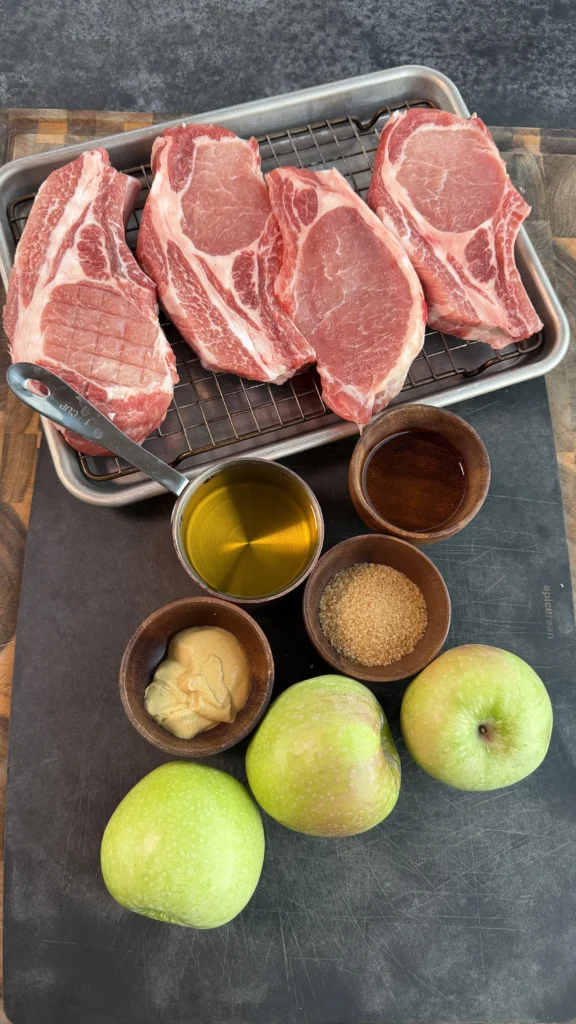
Thick-cut pork chops – ideally one to one and a half inches thick – are essential for this smoking method because they can withstand the cooking time needed to reach proper temperature without drying out. Thin chops cook too quickly and become tough and dry before you can develop proper smoke flavor. The thickness also allows for better searing – you get good crust development without overcooking the interior. Each eight to ten ounce chop provides a substantial, satisfying portion.
Bone-in pork chops work best because the bone adds flavor and helps insulate the meat, slowing cooking slightly and creating more even doneness. The bone also provides visual appeal and gives diners something to hold while eating. Rib chops come from the rib section and contain the most marbling, making them the juiciest and most flavorful option. Loin chops from the center cut are leaner but still tender. Avoid thin-cut or boneless chops which don’t have enough substance for this cooking method. Look for chops with some visible marbling and a pinkish color rather than very pale meat which indicates lower quality.
The Science of Apple Cider Reduction
Reducing apple cider by half concentrates its flavor while thickening the consistency through evaporation and natural pectin concentration. Fresh apple cider contains natural sugars, acids, and pectin that all intensify as water evaporates during simmering. What starts as one cup of relatively thin, mildly sweet cider becomes half a cup of syrupy, intensely apple-flavored liquid. The reduction process also caramelizes some of the natural sugars, adding deeper, more complex sweetness beyond the fresh cider’s simple apple character.
The reduction takes approximately ten minutes at a steady simmer – not a rolling boil which would evaporate too quickly and potentially scorch the sugars. You’re looking for gentle bubbles breaking the surface consistently. The cider is properly reduced when it coats the back of a spoon and measures approximately half its original volume. Adding Dijon mustard provides tangy, sharp notes that prevent the glaze from tasting cloying, while apple cider vinegar reinforces acidity and adds subtle fermented complexity. Brown sugar contributes molasses depth and additional sweetness. Whisking in butter at the end creates glossy, emulsified texture and adds rich, dairy flavor that rounds out all the other components.
Why Apple or Cherry Wood Works Best
Apple wood and cherry wood are the ideal smoking woods for pork chops because their mild, fruity smoke complements rather than overwhelms the delicate pork flavor and harmonizes beautifully with the apple cider glaze. Apple wood provides clean, slightly sweet smoke with subtle apple notes that obviously pair naturally with the apples in this dish. The smoke is gentle enough that even one to two hours of smoking creates pleasant flavor without becoming too intense. Cherry wood offers similar mild character with slightly more robust, almost wine-like fruity notes and produces gorgeous mahogany color on the meat.
Avoid aggressive woods like mesquite or hickory which would overpower the pork’s delicate flavor and compete with the apple cider glaze rather than complementing it. Oak is too neutral and doesn’t add much character. Pecan works as an alternative with nuttier smoke, though it’s slightly stronger than apple or cherry. The goal is gentle smoke presence that you notice as background flavor rather than dominant smoke taste. If using a gas grill, add soaked wood chips in a smoker box or foil packet with holes. For charcoal grills, add a few wood chunks directly to the coals.
Grilling Apples for Perfect Caramelization
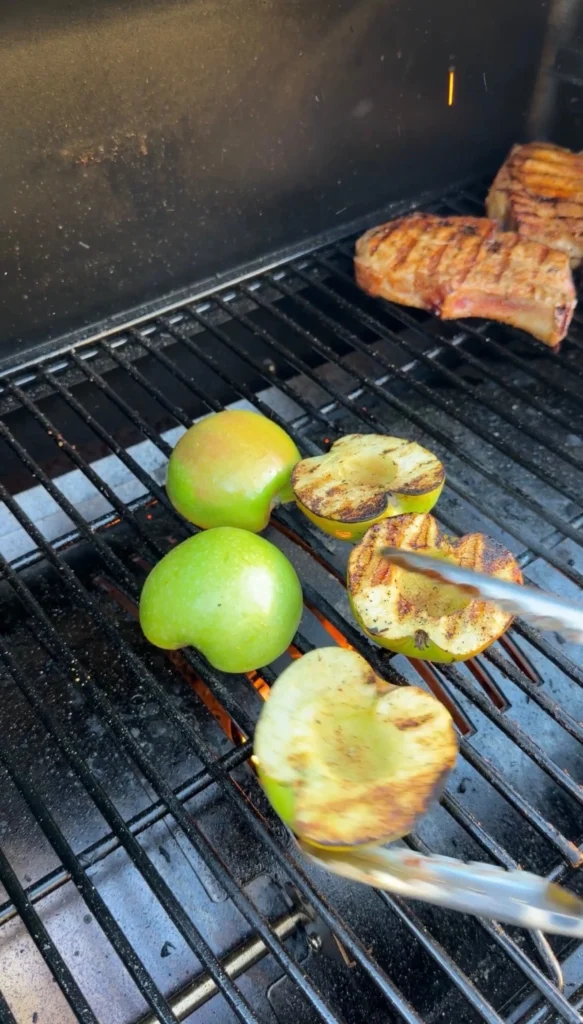
Grilling apples transforms their texture and flavor through caramelization of natural sugars and slight smokiness from the fire. Choose firm, tart apple varieties that hold their shape during cooking rather than becoming mushy. Granny Smith, Honeycrisp, Pink Lady, or Braeburn all work excellently. Avoid soft varieties like Red Delicious or Golden Delicious which turn to applesauce on the grill. The apples should be halved and cored but not peeled – the skin helps them maintain structure during cooking.
Sprinkling the cut surfaces with cinnamon and brown sugar before searing creates a spiced crust that caramelizes beautifully. The sugar melts and browns while the cinnamon adds warming spice notes. Searing the apples cut-side down over direct heat for three to four minutes develops deep golden-brown color and slightly crispy edges before they move to indirect heat. During the indirect cooking phase, the apples soften and become tender while picking up subtle smoke flavor. They should be soft enough to cut with a fork but not falling apart – maintaining their half-moon shape with caramelized, golden surfaces.
Temperature Targets and Carryover Cooking
Understanding proper pork temperature is crucial for juicy, safe results. The USDA-recommended safe temperature for pork is 145 degrees Fahrenheit measured at the thickest part of the chop, avoiding bone contact which would give a false reading. At 145 degrees, pork is safe to eat with a slight pink blush in the center – no longer the 160-degree recommendation from decades past when trichinosis was a concern. Modern pork production has essentially eliminated that risk, allowing for juicier pork cooked to medium rather than well-done.
Remove the pork chops at exactly 145 degrees, accounting for carryover cooking during the five-minute rest period. The internal temperature will continue rising three to five degrees from residual heat, potentially reaching 148-150 degrees. Pulling at 145 rather than waiting for 150 ensures the final temperature doesn’t exceed the sweet spot for juicy pork. Use an instant-read thermometer for accuracy rather than relying on timing, as cooking rates vary based on chop thickness, grill temperature, and outdoor conditions. Insert the thermometer horizontally into the center of the thickest chop for the most accurate reading.
Ingredients
For the Pork Chops:
- 4 pork chops (about 8-10 oz each)
- Your favorite sweet barbecue seasoning
- Apple or cherry wood for smoke
For the Grilled Apples:
- 2 apples, halved and cored
- 1 tbsp brown sugar
- ½ tsp cinnamon
For the Apple Cider Glaze:
- 1 cup apple cider
- 2 tbsp apple cider vinegar
- 2 tbsp Dijon mustard
- 2 tbsp brown sugar (packed)
- 2 tbsp butter
Step-by-Step Instructions
Season the Pork Chops
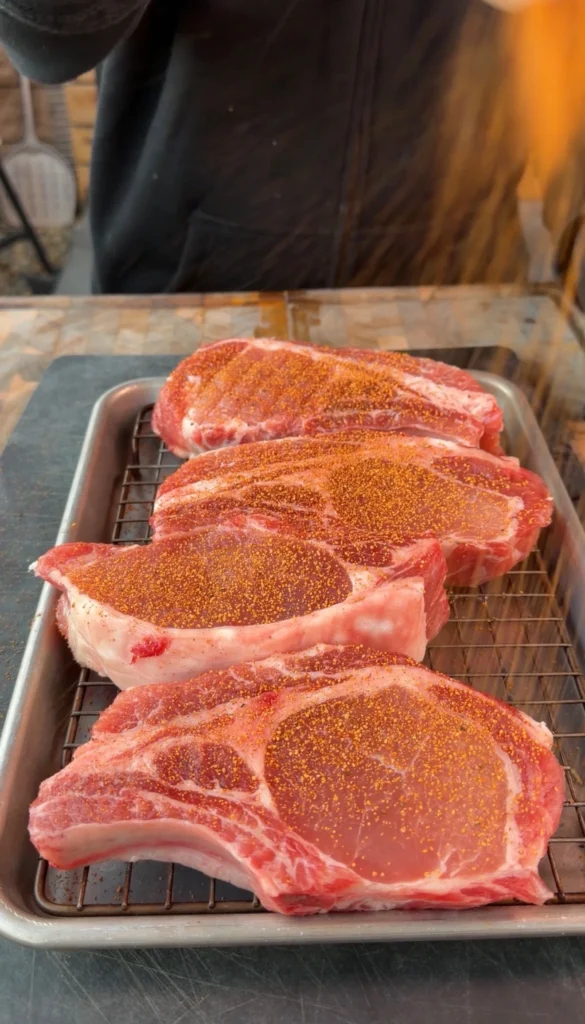
Remove four thick-cut pork chops from refrigerator thirty minutes before cooking to bring them closer to room temperature, which promotes more even cooking. Pat each chop completely dry with paper towels on both sides – surface moisture prevents proper searing and bark formation. Any dampness will cause steaming rather than browning when the chops hit the hot grill.
Season both sides of each pork chop generously with your favorite sweet BBQ seasoning. Use more than you think you need – much of it will form the bark rather than staying in the meat. Press the seasoning gently into the meat to help it adhere. Sweet BBQ rubs typically contain brown sugar, paprika, garlic powder, and spices that complement the apple cider glaze beautifully. Let the seasoned chops sit while you prepare the apples and preheat the grill.
Prep the Apples
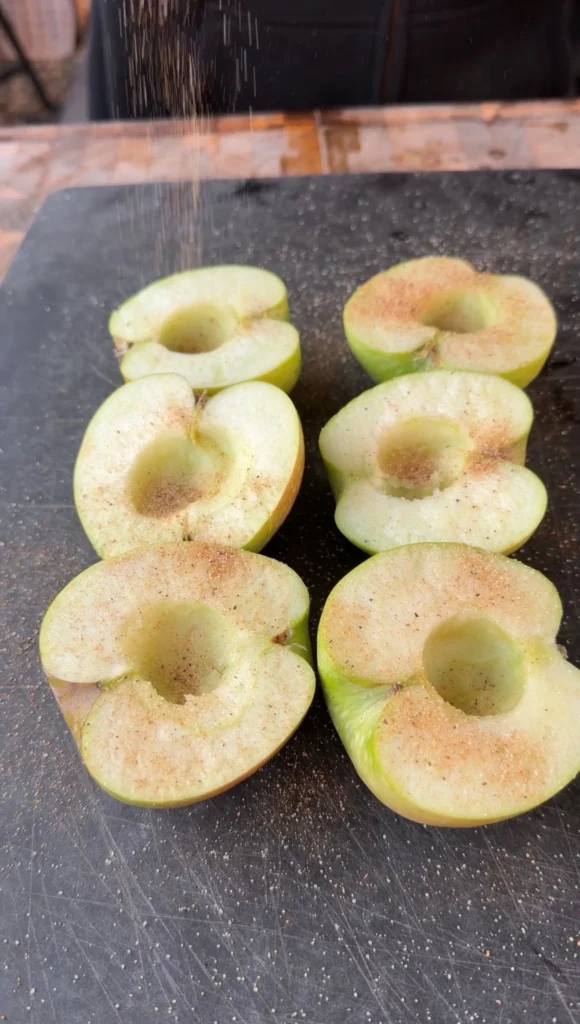
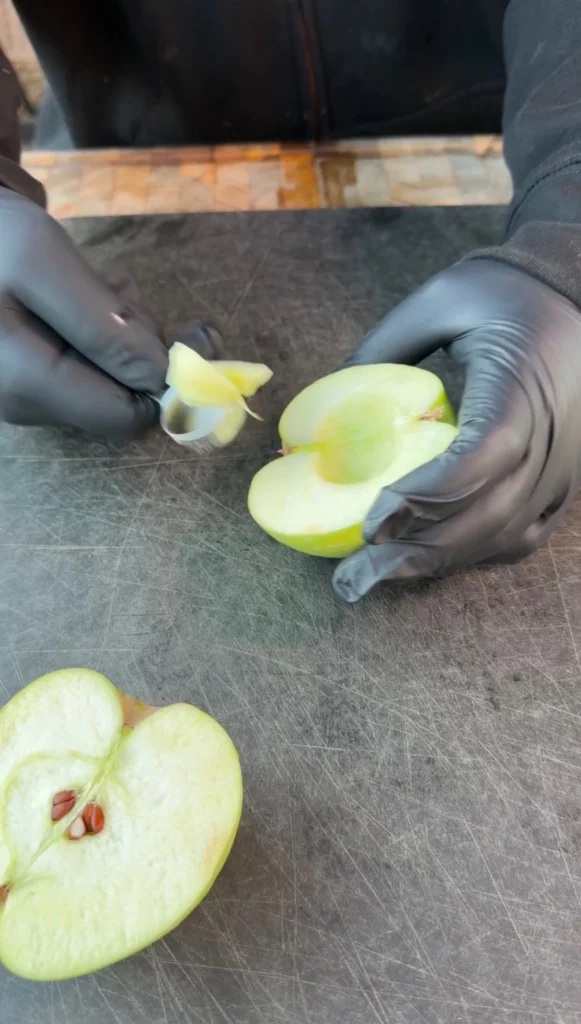
Wash two firm, tart apples like Granny Smith or Honeycrisp. Cut each apple in half from top to bottom, creating four halves total. Use a melon baller or small spoon to scoop out the core and seeds from each half, creating a small cavity. Leave the skin on – it helps the apples maintain their structure during grilling and adds rustic appeal.
In a small bowl, mix one tablespoon of brown sugar with half a teaspoon of ground cinnamon. Sprinkle this mixture evenly across the cut surfaces of all four apple halves. The sugar will help caramelize the apples during searing while the cinnamon adds warming spice that complements the pork. Set the prepared apples aside while you preheat the grill.
Preheat Grill and Sear Apples
Prepare your grill for two-zone cooking with one side at high direct heat and the other at indirect heat with no flames or coals underneath. For a gas grill, turn all burners to high and close the lid. Once hot (about fifteen minutes), turn off burners on one side while leaving the other on high. For charcoal, pile all hot coals on one half of the grill. If using a smoker, preheat to 250 degrees Fahrenheit and have a searing surface ready. Add apple or cherry wood chunks or chips for smoke flavor.
Place the four apple halves cut-side down directly over high heat. The sugar coating should sizzle immediately. Let them sear without moving for three to four minutes until the cut surfaces are deeply caramelized with golden-brown color. Use tongs to flip them and sear the skin side briefly for one minute. Transfer the seared apples to the indirect heat side of the grill, positioning them where they’ll stay warm but won’t cook too quickly. Keep the grill open for now while you sear the pork chops.
Sear the Pork Chops
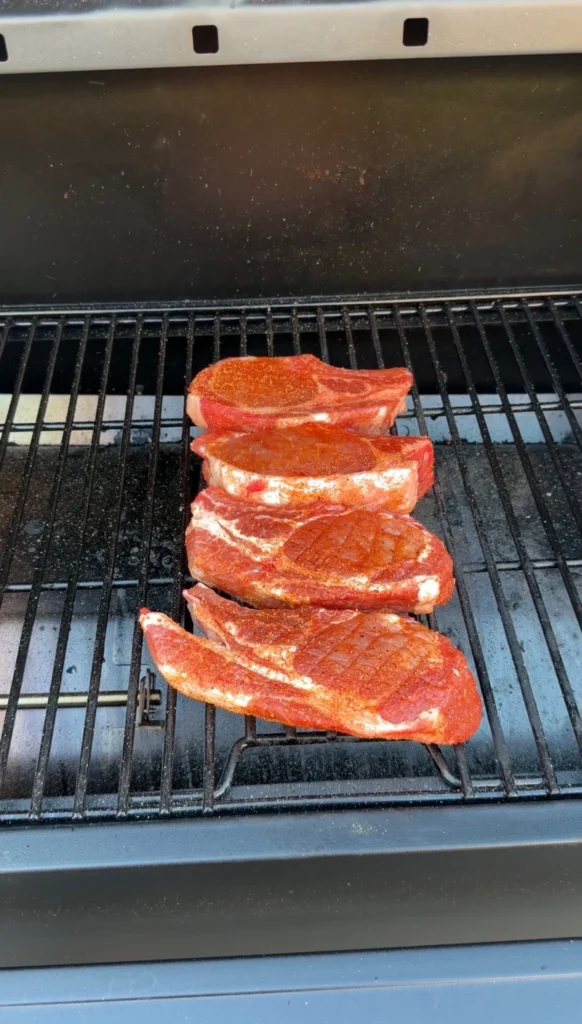
Place all four seasoned pork chops directly over high heat where you just seared the apples. They should sizzle aggressively when they hit the grates. Close the lid and sear for two to three minutes without moving them – they need uninterrupted contact with hot grates to develop proper crust. When you open the lid, the bottoms should show good browning with defined grill marks.
Use tongs to flip each chop to the opposite side. Close the lid and sear for another two to three minutes. You’re just looking for good surface color and crust at this stage – the chops won’t be cooked through yet. The searing develops flavor through Maillard reaction while creating textural contrast between the crusty exterior and tender interior. After searing both sides, move all four pork chops to the indirect heat side of the grill, positioning them away from direct flames or coals.
Smoke Until 145 Degrees
Close the grill lid and adjust vents or burners to maintain approximately 250 degrees Fahrenheit in the indirect zone where the pork chops are cooking. If using a dedicated smoker, the chops can go directly into the 250-degree smoker after searing. The combination of gentle indirect heat and smoke will cook the chops through while adding flavor.
Insert an instant-read thermometer into the thickest part of one chop, avoiding the bone. The chops will take approximately twenty to thirty minutes to reach 145 degrees internal temperature, though this varies based on thickness and your grill’s temperature. Check temperature after twenty minutes, then every five minutes once you’re past that point. The grilled apples will continue cooking gently alongside the pork, becoming soft and picking up smoke flavor. When the thickest chop reaches 140-143 degrees, it’s time to apply the glaze.
Make the Apple Cider Glaze
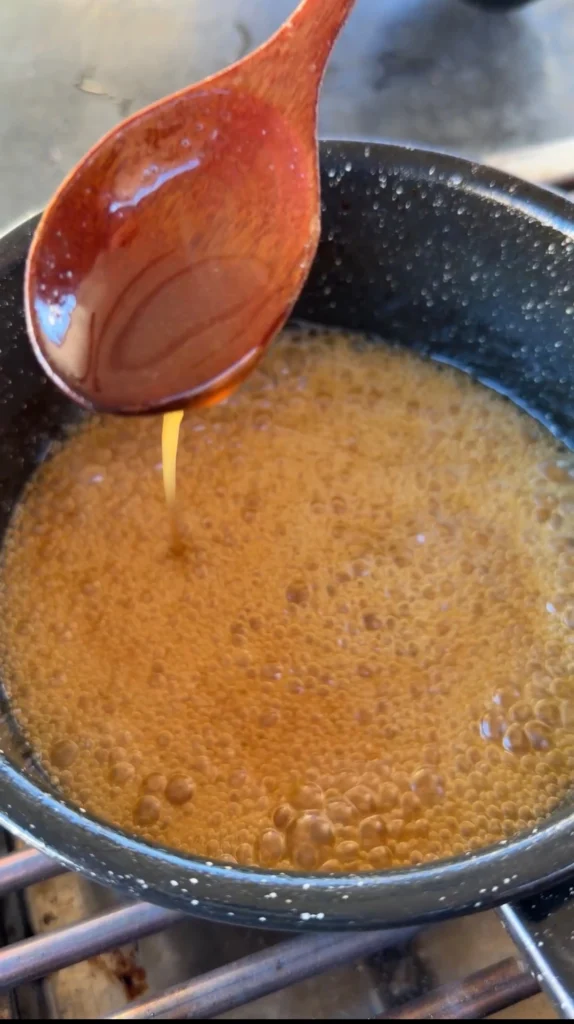
While the pork chops smoke, prepare the apple cider glaze on your stovetop. In a small saucepan, combine one cup of apple cider with two tablespoons of apple cider vinegar, two tablespoons of Dijon mustard, and two tablespoons of packed brown sugar. Whisk together until the sugar and mustard are incorporated into the cider.
Place the saucepan over medium heat and bring to a gentle simmer – you want consistent small bubbles breaking the surface rather than a rolling boil. Simmer uncovered for approximately ten minutes, stirring occasionally, until the liquid has reduced by half to about half a cup. The glaze should coat the back of a spoon and look syrupy rather than watery. Remove from heat and whisk in two tablespoons of butter until melted and fully incorporated. The butter creates glossy, emulsified texture. Taste the glaze – it should be intensely apple-flavored with sweet-tart balance. Set aside and keep warm.
Glaze and Finish
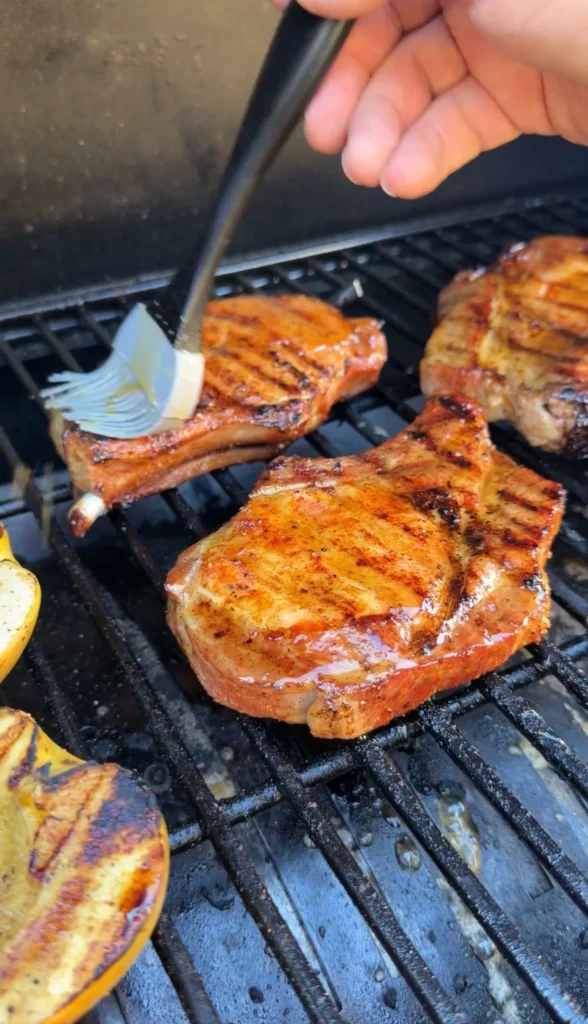
When the pork chops reach 140-143 degrees internal temperature, use a basting brush to generously coat the top surface of each chop with the apple cider glaze. Reserve some glaze for serving. Close the grill lid and continue cooking for approximately five to ten more minutes until the internal temperature reaches exactly 145 degrees Fahrenheit. The glaze will caramelize slightly on the surface, creating a sticky, lacquered coating.
Check the apples – they should be very soft and easily pierced with a fork but still holding their shape. If they’re not quite tender, give them a few more minutes. Once the pork reaches 145 degrees, immediately remove all four chops and the grilled apples from the grill using tongs. Transfer to a platter or cutting board.
Rest and Serve
Tent the pork chops loosely with aluminum foil and let rest for five minutes before serving. During this rest, the juices redistribute throughout the meat and the internal temperature continues rising slightly through carryover to 148-150 degrees. The muscle fibers relax, making the meat more tender and easier to cut. Don’t skip this rest – cutting immediately would cause significant juice loss.
After resting, serve each pork chop with one grilled apple half alongside. Drizzle any remaining apple cider glaze over the pork and apples. The pork should be juicy with a slight pink blush in the center, crusty bark on the exterior, and sticky glaze coating. The apples should be soft, caramelized, and slightly smoky. This dish is perfect with sides like roasted Brussels sprouts, mashed sweet potatoes, wild rice, or a simple green salad. The combination of savory glazed pork and sweet grilled apples creates balanced, satisfying fall flavors.

Apple Cider Glazed Pork Chops with Grilled Apples
Ingredients
Method
- Pat pork chops dry and season both sides generously with sweet BBQ seasoning. Let sit 30 minutes at room temperature.
- Halve and core apples. Mix brown sugar with cinnamon and sprinkle over cut surfaces.
- Preheat grill for two-zone cooking – one side high direct heat, other side indirect. Add apple or cherry wood for smoke.
- Sear apple halves cut-side down over direct heat 3-4 minutes until caramelized. Move to indirect side.
- Sear pork chops over direct heat 2-3 minutes per side until golden with good crust. Move to indirect side with apples.
- Close lid and smoke at 250°F until pork reaches 145°F internal temperature, about 20-30 minutes.
- While pork smokes, combine cider, vinegar, mustard, and brown sugar in saucepan. Simmer over medium heat 10 minutes until reduced by half. Whisk in butter.
- When pork reaches 140-143°F, brush with glaze. Continue cooking to 145°F, about 5-10 more minutes.
- Remove pork and apples from grill. Tent chops loosely with foil and rest 5 minutes. Serve pork with grilled apple halves and drizzle remaining glaze over top.
Notes
Granny Smith, Honeycrisp, or Pink Lady apples hold shape best
Don’t overcook past 145°F or pork becomes dry
Glaze can be made 2 days ahead and reheated
Substitute maple syrup for brown sugar in glaze for different flavor
Can finish in 375°F oven if outdoor grilling isn’t possible
Leftover pork reheats well in covered pan with splash of broth
Tried this recipe?
Let us know how it was!FAQ
Can I use boneless pork chops instead?
Yes, though bone-in chops provide better flavor and the bone helps prevent overcooking. If using boneless, choose chops at least one inch thick and watch temperature carefully as they cook faster than bone-in. Boneless chops tend to curl during cooking, so make small cuts through any visible fat cap to help them lie flat. Reduce cooking time by five to ten minutes and check temperature frequently after fifteen minutes of indirect cooking.
What if I don’t have apple cider?
Apple juice can substitute though it’s less complex in flavor. For better results, use unfiltered apple juice if available. You can also use pear cider or white grape juice with a tablespoon of lemon juice added. The glaze won’t taste exactly the same but will still provide sweet-tart balance. Avoid using hard cider (alcoholic) as the alcohol needs time to cook off and the flavor profile is quite different from fresh cider.
My pork chops are dry – what went wrong?
Dry pork chops almost always result from overcooking past 145 degrees. Lean modern pork has very little fat marbling, so every degree over 145 progressively dries it out. Use a reliable instant-read thermometer and remove at exactly 145 degrees. Also ensure you’re not cooking over direct heat the entire time – the indirect smoking stage is essential for gentle, even cooking. Searing for too long initially can also dry out the exterior before the interior cooks.
Can I make this in the oven?
Yes, though you’ll miss the smoke flavor and char from grilling. Preheat oven to 375°F. Sear chops in an oven-safe skillet over high heat 2-3 minutes per side, then transfer the entire skillet to the oven. Add the prepared apple halves to the skillet around the chops. Roast 15-20 minutes until pork reaches 145°F. Brush with glaze and roast 5 more minutes. For some smoke flavor, add a teaspoon of liquid smoke to the glaze.
What other fruits work with pork?
Pears, peaches, and plums all pair beautifully with pork and can be grilled the same way as apples. Pears are especially good as they have similar texture and sweetness to apples. Stone fruits like peaches and plums should be halved and pitted but not peeled. They caramelize quickly so watch them carefully. Grilled pineapple also works though it’s quite different in flavor profile – more tropical than fall-inspired.
How do I know when apples are done?
Properly cooked grilled apples should be soft enough to pierce easily with a fork but still holding their half-moon shape rather than falling apart into applesauce. The cut surfaces should be deeply caramelized to golden brown. The cooking time alongside the pork (20-30 minutes at 250°F) is usually perfect. If they’re not quite tender when the pork finishes, you can move them directly over low heat for a few more minutes while the pork rests.
Can I use pork tenderloin instead of chops?
Pork tenderloin works but requires different technique. The whole tenderloin should be seared on all sides, then smoked to 145°F which takes approximately twenty to thirty minutes depending on thickness. Slice the cooked tenderloin and serve with the glaze and grilled apples. Tenderloin is leaner than chops so watch temperature even more carefully. One tenderloin (about 1-1.5 lbs) serves two to three people, so you’d need two for four servings.
What if my glaze is too thin?
If your glaze hasn’t thickened enough after the initial reduction, continue simmering for a few more minutes until it coats the back of a spoon. You can also add a teaspoon of cornstarch mixed with a teaspoon of water (slurry) and simmer one more minute to thicken. The glaze thickens further as it cools, so it should be slightly looser than your desired final consistency while hot. If it becomes too thick, thin with a tablespoon of cider or water.
How do I reheat leftover pork chops?
Leftover pork chops reheat best in a covered pan with a splash of chicken broth or water over medium-low heat for five to seven minutes until warmed through. The liquid creates steam that prevents drying. You can also reheat in a 300°F oven wrapped in foil for ten to fifteen minutes. Microwave works but can make the meat tough – use fifty percent power and heat in thirty-second intervals. Slice leftover pork and use in salads, sandwiches, or quesadillas.
Can I make the glaze ahead?
Yes, the apple cider glaze can be made up to two days ahead and refrigerated in an airtight container. Reheat gently in a saucepan over low heat before using, whisking to reincorporate the butter. You may need to add a tablespoon of water if it’s become too thick during storage. Making the glaze ahead actually allows the flavors to meld and develop, often resulting in even better taste than freshly made glaze.
Ready to Take Your Cooking to the Next Level?
This is where I keep all my most-used products, gear, and favorite cooking tools — check it out:
🔥 View My Cooking Gear & ToolsRecipe Categories
If you loved this recipe, you’ll find more to savor across our diverse categories. From beef to pork, chicken to turkey, seafood to appetizers, there’s a wealth of flavors waiting for you. Explore them all at CWFeats.