Cherry Cola Smoked Party Ribs

Cherry cola smoked party ribs are individual pork spare rib bones coated heavily in brown sugar rub, smoked at 275°F for two hours until caramelized, braised with cherry cola BBQ glaze and butter for one hour until tender, then finished with a sticky glossy glaze that tacks up in the final ten minutes. The brown sugar rub contains turbinado sugar for extra crunch and caramelization, while the cherry cola glaze combines cherry preserves, BBQ sauce, and Worcestershire for a sweet, tangy, and slightly spicy finish. Slicing the ribs into individual bones before smoking gives you perfect party-sized portions with maximum bark on every piece. The three-hour process transforms tough spare ribs into tender, pull-apart bites with a sticky candy-like exterior that makes them impossible to put down.
The whole process takes about three and a half hours from start to finish, including prep, smoking, braising, and glazing. You coat the individual rib bones in brown sugar rub, smoke them for two hours to set the color and caramelize the sugars, braise them in a foil pan with butter and cherry cola glaze for one hour to make them tender, then finish with a heavy coat of glaze for ten minutes to create that signature sticky surface. The cherry cola glaze reduces while the ribs smoke, concentrating the cherry flavor and creating a thick, glossy coating. These smoked party ribs are perfect for game day, cookouts, or any gathering where you want finger food that looks impressive but comes together with simple ingredients and straightforward technique.
Why Individual Rib Bones Make Better Party Food
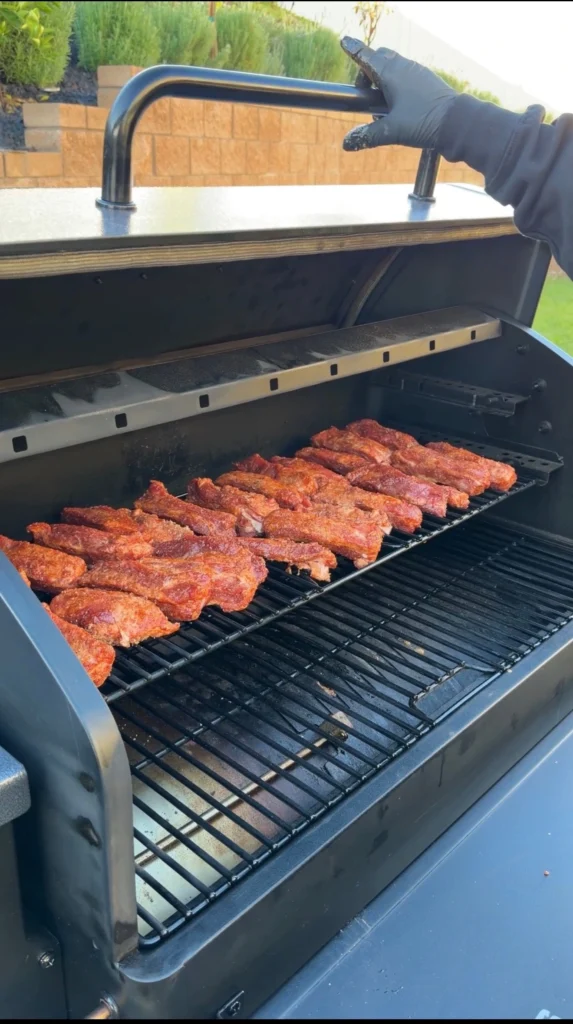
Slicing spare ribs into individual bones before smoking transforms them from a sit-down meal into perfect handheld party food. When you leave ribs in full racks, guests struggle with cutting them at the table, and the bark only forms on the top and bottom surfaces. Individual bones get bark on all sides because smoke and heat circulate around each piece completely. You also get more caramelization from the brown sugar rub because every surface is exposed to direct heat and smoke.
The individual bone format makes portion control automatic. Each guest can grab two or three bones without needing plates, knives, or napkins beyond what’s necessary for sticky fingers. You avoid the awkward moment where someone tries to separate ribs with their hands and ends up pulling off too much meat or leaving bones attached. Individual bones also stack beautifully on serving platters, making your presentation look professional even though the prep work is just cutting between bones.
Cutting the ribs before smoking instead of after prevents meat loss. When you try to separate smoked ribs after cooking, the bark cracks and falls off, taking seasoning and glaze with it. Pre-cutting lets the bark form on the cut edges, sealing in moisture and creating more surface area for glaze to cling to. The smaller pieces also cook slightly faster and more evenly because heat penetrates from all directions instead of just two.
Why Brown Sugar Rub Creates the Perfect Bark
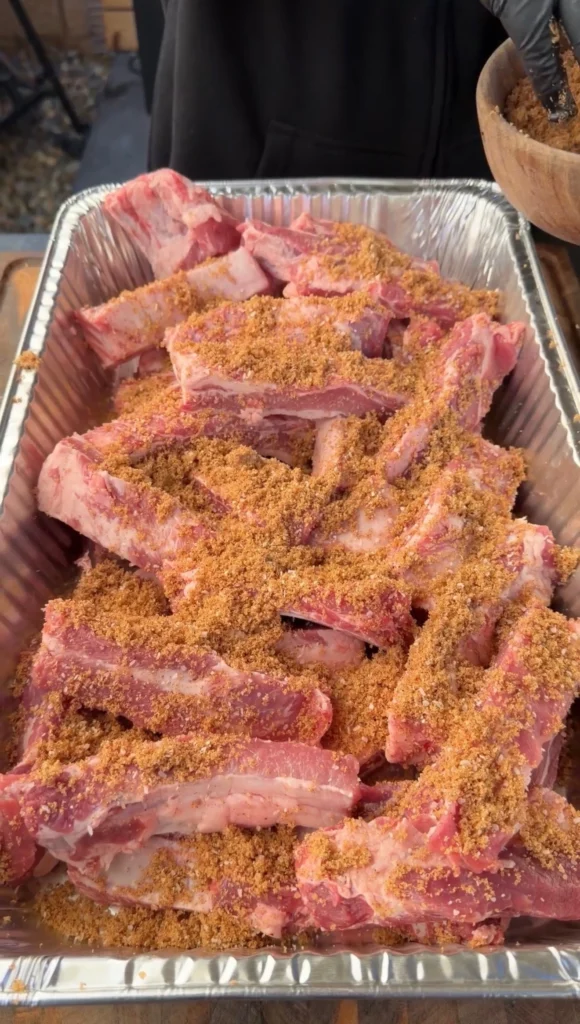
The brown sugar and turbinado sugar combination in this rub serves a specific purpose beyond just adding sweetness. Brown sugar contains molasses, which caramelizes at smoker temperatures and creates a sticky base that holds the other spices in place. Turbinado sugar has larger crystals that take longer to melt, giving you textural crunch even after three hours of cooking. The two sugars together create layers of caramelization, with the brown sugar forming the first candy-like coating and the turbinado adding crispy bits that stay crunchy even under the glaze.
Sugar-heavy rubs work perfectly at 275°F because that temperature is hot enough to caramelize sugars without burning them. If you tried this same rub at 350°F, you’d get bitter burnt spots instead of sweet caramelized bark. The lower temperature gives the sugars time to melt slowly and form that candy shell while the meat cooks through. The smoked paprika adds color and a subtle smoky note that complements the wood smoke, while the black pepper cuts through the sweetness with sharp heat.
The salt content in this rub is deliberately low compared to most rib rubs because you’re coating the meat heavily and the ribs will braise in buttery glaze later. Too much salt in the initial rub would make the final product overseasoned after the braising step concentrates flavors. The small amount of salt here draws out just enough surface moisture to help the sugars stick and form bark, but not so much that you end up with salty ribs after the glaze adds its own sodium from the BBQ sauce and Worcestershire.
Why Cherry Cola BBQ Glaze Works for Braising and Finishing
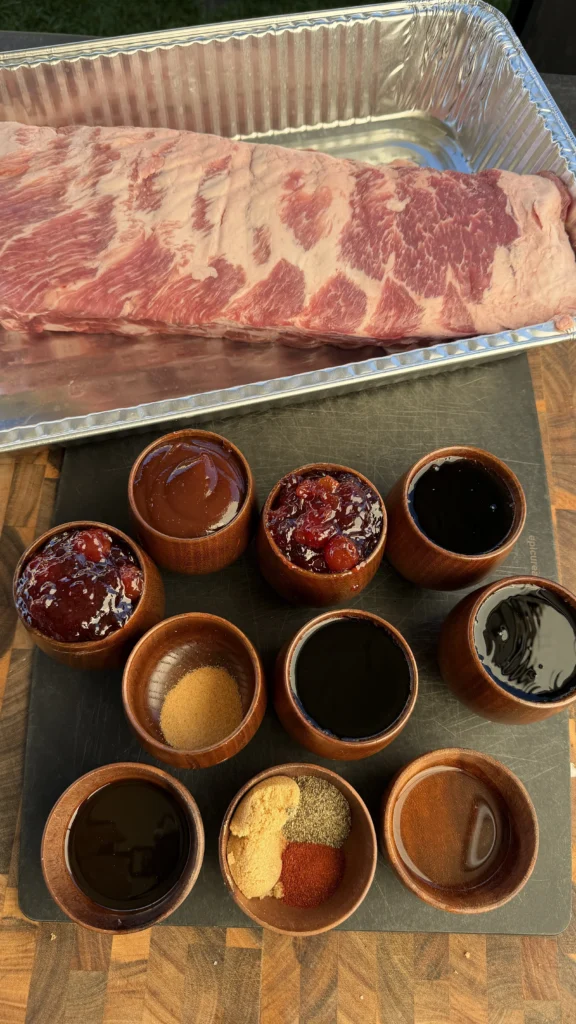
Most rib recipes use different liquids for braising and glazing, but this cherry cola glaze serves both purposes because of how it’s built. The cherry cola provides sweetness and carbonation, which helps tenderize the meat during the braise by creating a slightly acidic environment. The cherry preserves add concentrated fruit flavor and pectin, which thickens the glaze naturally without needing cornstarch or other additives. The BBQ sauce brings tomato depth, vinegar tang, and spices that balance the sweetness from the cola and preserves.
When you simmer all these ingredients together for 15 to 20 minutes, the liquid reduces by about a third and the flavors concentrate. The carbonation cooks off, leaving behind cherry sweetness without the fizzy bite of fresh soda. The preserves break down and distribute evenly through the sauce, creating a glossy finish that clings to the ribs instead of running off. This reduction is what makes the glaze work for both braising and finishing because it’s thick enough to coat but loose enough to create steam in the covered foil pan.
Using the same glaze for both steps gives you flavor consistency throughout the ribs. The butter you add to the braising liquid melts into the glaze and creates richness that soaks into the meat, while the second application of glaze at the end adds a fresh layer of concentrated cherry flavor that hasn’t been diluted by meat juices. The Worcestershire sauce and apple cider vinegar keep the glaze from being cloyingly sweet by adding umami depth and acidity, which brightens the cherry flavor instead of making it taste like candy.
Why Braising in Foil After Smoking Guarantees Tender Ribs
The two-hour smoke at 275°F sets the bark and develops smoke flavor, but it doesn’t fully tenderize spare ribs because they’re a tougher cut than baby backs. Spare ribs have more connective tissue and fat that needs time and moisture to break down. The foil-covered braise creates a steam environment where the ribs cook in their own juices mixed with butter and glaze, which speeds up the breakdown of collagen without drying out the meat.
Covering the pan tightly with foil traps all the moisture from the butter and glaze, creating essentially a sealed cooking chamber. The temperature stays at 275°F, but the humidity inside the foil is much higher than it was during the open smoke, which helps the meat fibers relax and become tender. The butter adds fat that bastes the ribs continuously as it bubbles in the pan, preventing any dry spots. The glaze contributes sugars and acids that help break down the proteins while adding flavor directly to the meat.
You braise for one hour because that’s the sweet spot where the ribs become tender but don’t fall apart. Less than an hour and the ribs will still be chewy in spots. More than an hour and the meat starts to disintegrate and lose its texture, which makes the ribs mushy instead of tender with a slight pull. The individual bone format helps here too because smaller pieces cook faster and more evenly than full racks, so you get consistent tenderness across every rib.
See How It’s Done
Cherry Cola Smoked Party Ribs
Individual rib bones with brown sugar rub, cherry cola glaze, and butter braise
Ingredients
Brown Sugar Rib Rub
- 1½ cups packed light brown sugar
- 1 cup turbinado sugar
- 1 tbsp kosher salt
- 1 tbsp black pepper
- 1 tbsp smoked paprika
- 1 tsp garlic powder
- 1 tsp onion powder
- ½ tsp cayenne (optional)
Ribs
- 3 racks pork spare ribs, sliced into individual bones
Cherry Cola BBQ Glaze
- 2 cups cherry cola
- 1½ cups cherry preserves
- 1½ cups BBQ sauce
- 3 tbsp Worcestershire sauce
- 2 tbsp apple cider vinegar
- 2 tbsp brown sugar
- 2 tsp smoked paprika
- 2 tsp black pepper
- 1 tsp garlic powder
- ½ tsp salt
- ½ tsp cayenne (optional)
Braising
- 1 stick (8 tbsp) butter
- 1 cup of the Cherry Cola BBQ Glaze
Slicing ribs into individual bones before smoking creates perfect finger food for parties and gives every piece maximum bark and glaze coverage. The brown sugar rub caramelizes during the smoke, creating a candy-like crust that locks in moisture during the braise.
Step-by-Step Instructions
Step 1: Prep the Ribs and Make the Rub
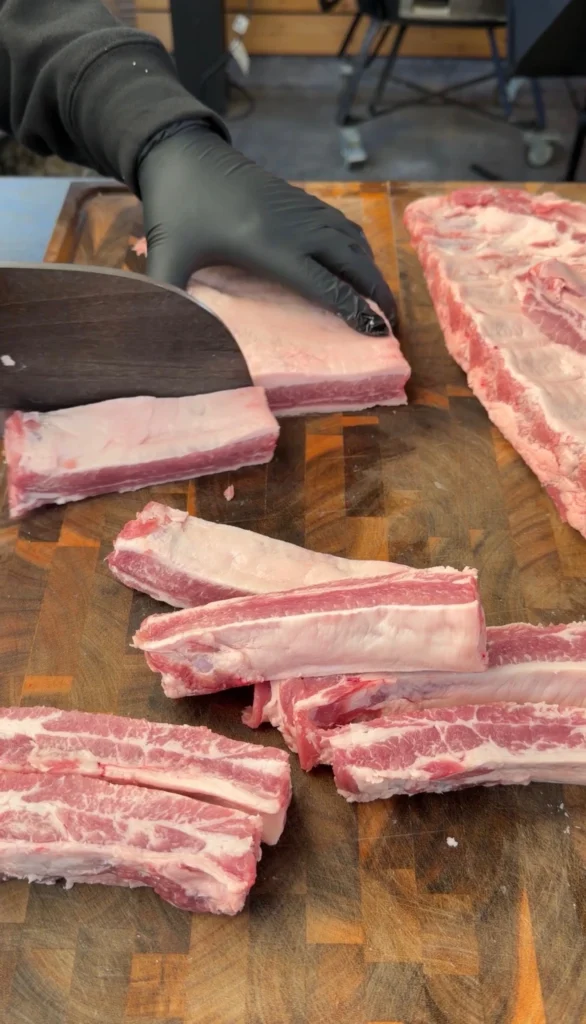
Start by slicing your three racks of spare ribs into individual bones. Use a sharp knife and cut between each bone, following the natural lines where the bones separate. You want clean cuts through the meat without sawing back and forth, which can tear the muscle fibers and make the edges ragged. Lay all the individual bones on a large cutting board or sheet pan where you can coat them evenly.
Mix your brown sugar rub in a medium bowl by combining the light brown sugar, turbinado sugar, kosher salt, black pepper, smoked paprika, garlic powder, onion powder, and cayenne if you’re using it. Whisk everything together until the spices are evenly distributed through the sugars. You want a consistent color throughout the mixture with no clumps of brown sugar or pockets of unmixed spices.
Coat each rib bone heavily with the brown sugar rub, making sure to cover all sides including the cut edges. Pack the rub onto the meat with your hands, pressing it into the surface so it sticks. Don’t be shy with the rub because a good portion of it will melt off during smoking and braising. The sugar will start to draw moisture from the meat immediately, creating a sticky surface that holds the seasoning in place. Let the coated ribs sit at room temperature while your smoker preheats, which gives the rub time to dissolve slightly and penetrate the surface.
Step 2: Smoke the Ribs at 275°F
Preheat your smoker to 275°F using your preferred wood. Fruit woods like apple or cherry work perfectly with the cherry cola glaze, but hickory or oak add nice depth if you want more traditional smoke flavor. Get the temperature stable before you add the ribs because fluctuating heat will prevent proper bark formation.
Place the individual rib bones directly on the smoker grates with space between each piece. You want airflow around every rib so the smoke can penetrate all sides evenly. Don’t stack them or let them touch because the spots where they overlap won’t develop bark. If you’re using multiple racks in your smoker, rotate the pans halfway through the smoke to account for hot spots.
Smoke the ribs for two hours without opening the smoker unless you need to adjust temperature. You’re looking for the brown sugar rub to caramelize into a dark mahogany bark with visible smoke ring development. The edges should look slightly crispy and the sugar should have formed a candy-like coating. The meat will shrink back from the bones slightly, but you’re not looking for fall-off-the-bone tenderness yet because that happens during the braise.
Step 3: Make the Cherry Cola BBQ Glaze
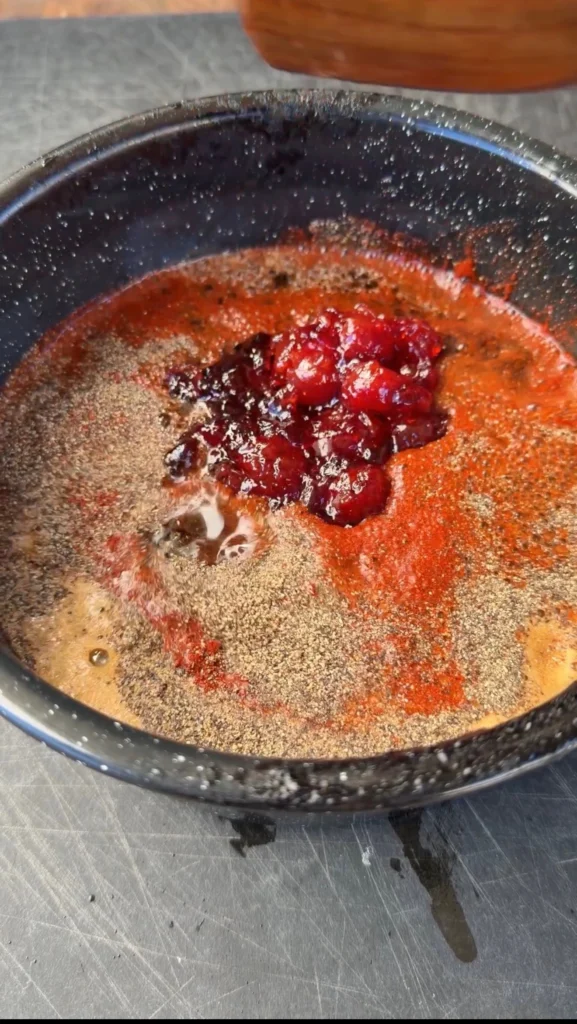
While the ribs smoke, combine all your glaze ingredients in a medium saucepan. Add the cherry cola, cherry preserves, BBQ sauce, Worcestershire sauce, apple cider vinegar, brown sugar, smoked paprika, black pepper, garlic powder, salt, and cayenne if you’re using it. Whisk everything together over medium heat until the cherry preserves dissolve and the mixture is smooth.
Bring the glaze to a simmer and reduce the heat to medium-low. Let it cook for 15 to 20 minutes, stirring occasionally, until it reduces by about a third and becomes thick enough to coat the back of a spoon. You’ll see the glaze darken slightly and become glossy as the sugars concentrate. The consistency should be like warm syrup, not as thin as soda but not as thick as ketchup.
Once the glaze reaches the right consistency, remove it from heat and set aside one cup for the braising step. Keep the remaining glaze in the pan for the final coating. If the glaze thickens too much as it sits, you can thin it with a splash of cherry cola or water. The glaze will continue to thicken as it cools, so don’t worry if it seems slightly loose when hot.
Step 4: Braise the Ribs with Cherry Cola Glaze and Butter
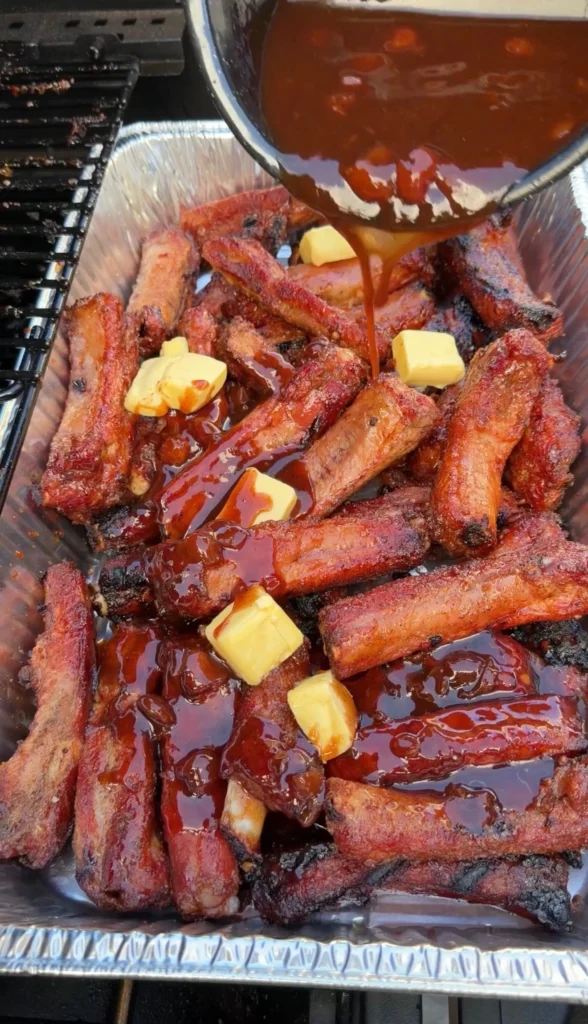
After two hours of smoking, carefully transfer all the rib bones to a large foil pan. A disposable aluminum pan works perfectly because you’ll have sticky glaze residue that’s hard to clean. Arrange the ribs in a single layer if possible, or stack them loosely if your pan isn’t big enough. Cut the stick of butter into tablespoon-sized pieces and scatter them over the ribs.
Pour the one cup of cherry cola glaze you set aside over the ribs and butter. The liquid should cover the bottom of the pan and come partway up the sides of the ribs, but it doesn’t need to completely submerge them. The steam from the liquid and butter will do most of the work. Tilt the pan slightly to distribute the glaze evenly.
Cover the pan tightly with heavy-duty aluminum foil, crimping the edges to create a seal. You want to trap as much steam as possible inside the pan. Place the covered pan back in the smoker at 275°F for one hour. The ribs will finish cooking in the moisture-rich environment, becoming tender while absorbing the cherry cola flavor and butter richness. You’ll hear the liquid bubbling inside the foil, which is exactly what you want.
Step 5: Apply Final Glaze and Finish
After one hour of braising, carefully remove the foil from the pan. Watch out for the steam that will escape because it’s hot enough to burn. The ribs will be sitting in a pool of reduced glaze, melted butter, and rendered fat. Use tongs to lift each rib bone out of the braising liquid and place them back on the smoker grates. Let the excess liquid drip off but don’t shake them dry because some of that braising liquid adds flavor.
Brush each rib heavily with the remaining cherry cola glaze using a silicone pastry brush. You want a thick coat that covers every surface. The glaze will look wet and glossy at first. Place the glazed ribs back in the smoker uncovered for ten minutes. During this time, the glaze will tack up and become sticky as the sugars caramelize one final time. The surface will transform from wet and loose to tight and glossy.
Watch the ribs during these final ten minutes because the sugar-heavy glaze can burn quickly. If you see any spots starting to blacken instead of darken, remove the ribs immediately. The finished ribs should have a deep mahogany color with a shiny, slightly tacky surface that reflects light. The glaze should be set but still sticky to touch.
Step 6: Rest and Serve
Remove the finished cherry cola smoked party ribs from the smoker and transfer them to a serving platter. Let them rest for five minutes before serving, which allows the glaze to set completely and makes them easier to handle. The ribs will still be hot but not so hot that the glaze slides off when people pick them up.
Arrange the ribs on your platter in a single layer or stack them loosely to show off the glossy finish. You can drizzle any remaining glaze over the top if you have extra, or serve it on the side for dipping. Provide plenty of napkins because these ribs are intentionally messy and sticky. The meat should pull away from the bone with a slight tug but not fall apart completely, and each bite should deliver sweet cherry flavor, smoky depth, and that characteristic brown sugar bark.

Cherry Cola Smoked Party Ribs
Ingredients
Method
- Slice spare ribs into individual bones and coat heavily with brown sugar rub mixture. Let sit at room temperature while smoker preheats to 275°F.
- Place individual rib bones directly on smoker grates with space between pieces. Smoke at 275°F for 2 hours until brown sugar rub caramelizes into dark mahogany bark.
- While ribs smoke, combine all glaze ingredients in saucepan and simmer 15-20 minutes until thick and glossy. Set aside 1 cup for braising.
- Transfer smoked ribs to foil pan, add butter pieces and 1 cup glaze. Cover tightly with foil and return to smoker for 1 hour at 275°F.
- Remove foil, lift ribs from braising liquid, and brush heavily with remaining glaze. Return to smoker grates uncovered for 10 minutes until glaze tacks up and becomes sticky.
- Remove from smoker, let rest 5 minutes, and serve immediately. Ribs should have glossy finish and pull from bone with slight tug.
Notes
Tried this recipe?
Let us know how it was!Frequently Asked Questions
Can I use baby back ribs instead of spare ribs?
Yes, you can use baby back ribs for this recipe, but you’ll need to adjust the cooking times because they’re smaller and more tender than spare ribs. Cut the smoking time to 1.5 hours instead of 2 hours and the braising time to 45 minutes instead of a full hour. Baby backs have less connective tissue and fat, so they’ll become tender faster and can overcook more easily. The trade-off is that spare ribs have more meat and fat, which gives you richer flavor and more forgiving cooking times.
Watch the baby backs closely during the final glazing step because their thinner profile means they can burn faster. The same brown sugar rub and cherry cola glaze work perfectly with baby backs, but you’ll get a slightly less robust flavor because there’s less surface area for bark to form. If you’re feeding a crowd and want maximum meat per bone, stick with spare ribs. If you want faster cooking and more delicate texture, baby backs are a solid choice.
What if I don’t have cherry cola?
Regular cola works as a substitute, but you’ll lose the cherry flavor that makes this recipe distinctive. If you use regular cola, increase the cherry preserves to 2 cups to compensate for the missing cherry notes in the soda. You can also use Dr. Pepper, which has cherry undertones, or make your own cherry cola substitute by mixing regular cola with ¼ cup of cherry juice. The carbonation in the soda is what matters most for tenderizing the meat during the braise, so any carbonated beverage with sugar will work in a pinch.
Avoid diet or zero-sugar sodas because they don’t have the real sugar needed for caramelization and glaze thickness. The sugar in regular soda reduces during simmering and creates the syrupy consistency that makes the glaze stick to the ribs. If you’re completely out of cola, you can substitute with 2 cups of apple juice mixed with 2 tablespoons of brown sugar and 1 tablespoon of apple cider vinegar, though this changes the flavor profile significantly.
How do I know when the ribs are done?
The ribs are done when the meat pulls away from the bone with a slight tug but doesn’t fall off completely. After the one-hour braise, test a rib by picking it up with tongs. The meat should bend slightly under its own weight but maintain its shape. If you twist the bone gently, it should release from the meat with minimal resistance but still require a deliberate pull. This is the sweet spot between tough and mushy.
You can also check doneness with a thermometer, though it’s less reliable with individual bones than full racks. The internal temperature should read 195-203°F in the thickest part of the meat. Below 195°F and the connective tissue hasn’t fully broken down. Above 203°F and you’re moving into overcooked territory where the meat becomes mushy. The texture test is more accurate than temperature for these party ribs because the small size makes it hard to get consistent thermometer readings.
Visual cues also tell you when ribs are ready. The meat should have shrunk back from the ends of the bones by about ¼ inch, exposing clean white bone tips. The bark should be dark and set, not wet or loose. The glaze should look glossy and tacky rather than runny. If you see any raw-looking spots or the meat looks tight against the bone without any pullback, the ribs need more time.
Can I make the cherry cola glaze ahead of time?
Yes, the cherry cola glaze can be made up to three days ahead and stored in an airtight container in the refrigerator. The glaze will thicken as it cools, so you’ll need to reheat it gently before using it for braising and glazing. Warm it in a saucepan over low heat or in the microwave at 50% power in 30-second intervals, stirring between each interval until it reaches the right consistency again.
Making the glaze ahead actually improves it because the flavors have time to marry and develop complexity. The cherry preserves fully dissolve and distribute evenly, the spices bloom, and the overall flavor becomes more balanced. Just make sure to store it in a container with a tight-fitting lid because the cherry aroma is strong and can transfer to other foods in your refrigerator.
When you’re ready to use the refrigerated glaze, remember to set aside one cup for the braising step before you start coating the ribs for the final glaze. Cold glaze from the refrigerator won’t stick to hot ribs, so warming it to at least room temperature is essential. If the glaze has separated during storage, whisk it vigorously while warming to bring it back together.
What wood should I use for smoking these ribs?
Fruit woods like apple or cherry complement the cherry cola glaze perfectly and add mild, sweet smoke that doesn’t overpower the brown sugar bark. Cherry wood gives you the most flavor consistency because it echoes the cherry notes in the glaze, while apple wood adds a slightly different fruit dimension that creates complexity. Both woods produce a beautiful mahogany color on the bark that matches the glossy glaze.
Hickory and oak work well if you want more traditional BBQ smoke flavor with deeper, more robust notes. Hickory is stronger and more assertive, which can stand up to the sweet glaze without getting lost. Oak is milder but still provides solid smoke flavor that adds depth without competing with the cherry and brown sugar. Avoid mesquite because it’s too strong and can make the ribs taste bitter when combined with the sugar-heavy rub.
Pecan is another excellent option that splits the difference between fruit woods and hickory. It’s nutty and slightly sweet, which complements both the brown sugar and cherry flavors while adding its own character. You can also mix woods by using hickory or oak for the first hour to build a strong smoke base, then switching to cherry or apple for the second hour to add the fruity notes. Just avoid using too much wood overall because the sugar in the rub can trap smoke and make the ribs taste sooty if you overdo it.
Ready to Take Your Cooking to the Next Level?
This is where I keep all my most-used products, gear, and favorite cooking tools — check it out:
🔥 View My Cooking Gear & ToolsRecipe Categories
If you loved this recipe, you’ll find more to savor across our diverse categories. From beef to pork, chicken to turkey, seafood to appetizers, there’s a wealth of flavors waiting for you. Explore them all at CWFeats.