
Disco Steak & Papas con Jalapeños
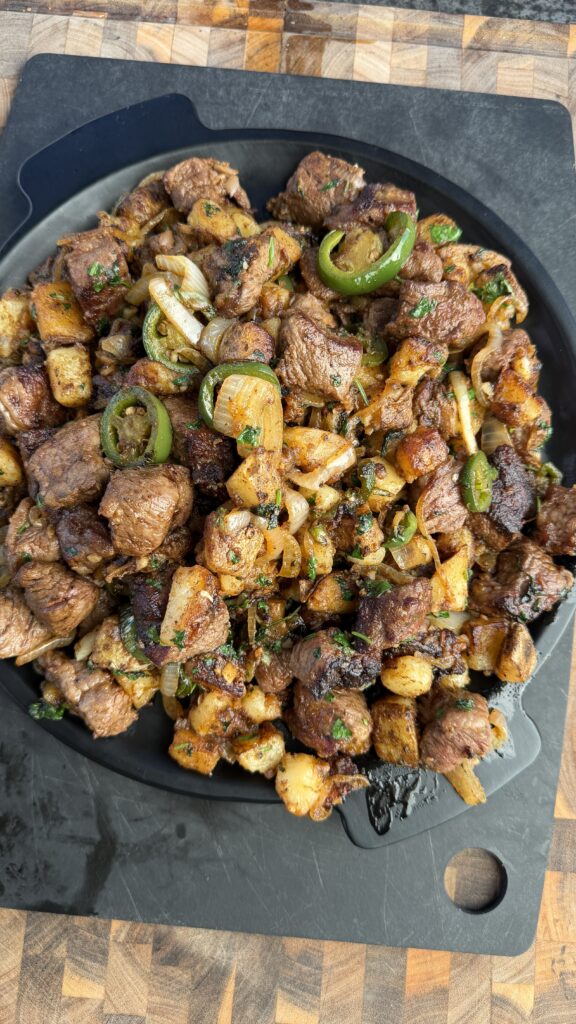
Disco steak and papas con jalapeños brings together crispy fried potatoes, juicy seared steak, and spicy jalapeños cooked on a disco – a shallow, concave steel cooking surface used throughout Latin America for outdoor cooking over open fire. This recipe starts with russet potatoes diced into quarter-inch pieces and fried in beef tallow or high-heat oil until golden and tender. New York strip steak gets cut into one-inch chunks for quick searing and maximum surface area for caramelization. Jalapeños and onions get cooked until softened, then the steak chunks sear in the hot fat until browned outside and juicy inside. Everything comes together with minced garlic, smoked paprika, salt, pepper, and fresh cilantro for a simple but incredibly flavorful dish that’s greater than the sum of its parts.
What makes this disco cooking recipe special is how the shallow, wide cooking surface allows everything to fry rather than steam, creating crispy potatoes and beautifully seared steak rather than soggy, boiled results. The disco’s shape concentrates heat at the center where the fire is hottest while the sloped sides provide cooler zones for moving ingredients around as they cook. This natural heat zoning gives you incredible control – sear the steak aggressively at center, then push it to the edges to rest while you cook the garlic. The communal, interactive nature of disco cooking makes it perfect for entertaining, with everyone gathered around the fire watching and smelling the food as it cooks. This Latin American steak and potatoes delivers bold, simple flavors that showcase quality ingredients without heavy sauces or complicated techniques.
See How It’s Done
Understanding Disco Cooking and Equipment
The disco – also called a discada or disco plow – originated in northern Mexico and South Texas as an improvised cooking surface made from repurposed disc harrow blades. These concave steel discs, originally designed for plowing fields, proved perfect for outdoor cooking when placed over fire. Modern discos are purpose-built for cooking but maintain the same basic design: a shallow, bowl-shaped steel surface approximately twenty-four to thirty-six inches in diameter that sits over a propane burner or open fire. The steel is typically one-eighth to one-quarter inch thick, providing substantial heat retention and even heating across the surface.
The disco’s shape creates distinct cooking zones with the center being hottest and the sloped sides progressively cooler. This allows you to sear meat aggressively at center while simultaneously cooking vegetables more gently on the sides, or to keep finished items warm at the edges while searing new ingredients in the middle. The shallow depth – typically three to four inches – means ingredients fry in minimal oil rather than deep-frying, creating crispy exteriors without greasiness. The wide surface area allows cooking large quantities at once, making discos ideal for feeding crowds. If you don’t have a disco, a very large cast iron skillet or wok can approximate the cooking style, though you’ll lose some of the heat zoning advantages.
Choosing the Right Oil for High-Heat Cooking
Beef tallow – rendered beef fat – is the traditional and ideal choice for disco cooking because of its high smoke point (400 degrees Fahrenheit), rich flavor, and ability to create superior crisping. Tallow adds subtle beefy richness that complements steak beautifully while helping potatoes develop incredibly crispy, golden exteriors. The saturated fat content makes tallow very stable at high heat, resisting breakdown and off-flavors even during prolonged cooking. If beef tallow isn’t available, several high-heat oils work excellently as substitutes.
Avocado oil has the highest smoke point of common cooking oils at 520 degrees, making it extremely stable for high-heat disco cooking. Its neutral flavor won’t compete with the steak and seasonings. Peanut oil smokes at 450 degrees and adds subtle nutty character that complements the dish. Canola oil reaches 400 degrees and provides neutral flavor at economical price. Avoid olive oil (smoke point too low around 350 degrees), butter (burns quickly), or delicate oils like sesame or walnut that break down at high heat. The oil or fat should shimmer and ripple when hot but not smoke – if you see smoke, reduce heat slightly as you’re breaking down the oil and creating off-flavors.
Why New York Strip Works Best
New York strip steak provides the ideal balance of tenderness, beefy flavor, and texture for this quick-cooking application. The strip comes from the short loin and contains moderate marbling – less than ribeye but more than sirloin – creating steaks that are tender without being overly fatty. When cut into one-inch chunks, the strip cooks quickly over high heat, developing excellent crust while staying medium-rare to medium inside. The uniform muscle grain makes the chunks hold together well during aggressive stirring and tossing without falling apart into stringy pieces.
Ribeye also works beautifully if you prefer richer, fattier meat – the abundant marbling creates incredibly juicy, flavorful chunks though some may find them too rich in this preparation. Sirloin provides a leaner, more economical option with good beef flavor, though it’s slightly tougher and benefits from not overcooking past medium. Avoid tender cuts like filet mignon which are wasted in this application where they’d be chopped and cooked aggressively. Also avoid tough cuts like chuck or round which won’t become tender in the brief cooking time. The key is cutting against the grain into uniform one-inch pieces so all chunks cook at the same rate and remain tender when bitten.
The Role of Jalapeños and How to Control Heat
Jalapeños provide the spicy kick that defines this dish while adding fresh, vegetal flavor distinct from dried chili powders. Fresh jalapeños have moderate heat – typically 2,500 to 8,000 Scoville units – that builds gradually rather than hitting aggressively. The heat comes from capsaicin concentrated in the seeds and white membrane (placenta) inside the pepper. For milder heat, slice the jalapeños lengthwise and scrape out all seeds and membrane before slicing. For maximum heat, leave everything intact. The amount of heat also varies significantly between individual peppers – some jalapeños are quite mild while others pack serious punch.
Cooking jalapeños mellows their heat slightly while developing sweeter, more complex flavor through caramelization. The high heat of the disco chars the jalapeño skin slightly, adding pleasant smokiness. Slicing rather than dicing creates larger pieces with more textural presence – you want to see and taste distinct jalapeño slices rather than having them disappear into the dish. Two jalapeños provides noticeable but not overwhelming heat for most palates. Increase to three or four for spicier results, or substitute with serrano peppers for significantly more heat. Remove the jalapeños entirely if feeding heat-sensitive guests, though you’ll lose some of the dish’s character.
Creating Crispy Potatoes on the Disco
Achieving truly crispy potatoes on the disco requires proper preparation and technique. Russet potatoes are essential because their high starch content and low moisture create the fluffiest interior and crispiest exterior. Waxy potatoes like red or Yukon gold contain more moisture and less starch, making them gummy and greasy rather than crispy when fried. Cut the potatoes into uniform quarter-inch dice so all pieces cook at the same rate – larger pieces won’t cook through before the exterior burns, while smaller pieces become too crispy and dry.
After dicing, you can optionally rinse the potato pieces under cold water to remove excess surface starch, then pat completely dry. This step creates slightly crispier results by removing starch that would otherwise create a gummy coating, though it’s not essential. The most critical factor is using sufficient fat – the potatoes should be generously coated and almost shallow-frying rather than just being tossed in minimal oil. They need ten to twelve minutes of cooking with occasional stirring to develop golden color and tender interior. Resist the urge to stir constantly – let them sit undisturbed for two to three minutes at a time to develop proper browning. The potatoes are done when they’re golden brown with crispy edges and tender when pierced with a fork.
Ingredients
- 2 New York strip steaks, cut into 1-inch chunks (ribeye or sirloin also work)
- 2 large russet potatoes, diced into ¼-inch pieces
- 2 jalapeños, sliced
- ½ onion, diced
- 4 garlic cloves, minced
- Beef tallow or high-heat oil (avocado, peanut, or canola), as needed
- 1 tsp smoked paprika
- 1 tsp kosher salt
- ½ tsp black pepper
- Fresh cilantro, chopped
- Lime wedges, for serving
Step-by-Step Instructions
Prep the Ingredients
Cut both New York strip steaks into uniform one-inch chunks, cutting against the grain for maximum tenderness. The chunks should be relatively square and consistent in size so they cook evenly. Trim any large pieces of exterior fat but leave some marbling for flavor. Season the steak chunks lightly with salt and set aside at room temperature while you prepare the vegetables.
Scrub two large russet potatoes under cold water to remove any dirt. Peel them if desired, though leaving the skin on adds texture and nutrients. Cut the potatoes into quarter-inch dice as uniformly as possible. If you have time, rinse the diced potatoes under cold water to remove excess starch, then pat completely dry with paper towels. Slice two jalapeños into thin rounds – for milder heat, remove the seeds and white membrane first. Dice half an onion into quarter-inch pieces. Mince four garlic cloves finely. Chop a handful of fresh cilantro. Have lime wedges ready for serving. Organize all ingredients near your cooking area before lighting the fire.
Fire Up the Disco and Fry Potatoes
Set up your disco over a propane burner or build a fire underneath if using wood or charcoal. Heat the disco over medium-high heat for five to ten minutes until the steel is hot – you should feel strong heat radiating from the surface when you hold your hand six inches above it. Add two to three generous spoonfuls of beef tallow or your chosen high-heat oil to the center of the hot disco. The fat should immediately shimmer and ripple.
Add all the diced potatoes to the hot fat, spreading them across the disco’s surface in a relatively even layer. Let them cook undisturbed for two to three minutes to develop browning on the bottom, then stir or toss them. Continue cooking for ten to twelve minutes total, stirring every two to three minutes, until the potatoes are golden brown with crispy edges and tender when pierced with a fork. The potatoes should have good color all over with some darker, extra-crispy bits. Use a large spatula or metal spoon to scoop the cooked potatoes to the outer edge of the disco or transfer them to a plate. They’ll stay warm at the disco’s edge while you cook the remaining ingredients.
Cook Jalapeños and Onions
Add another spoonful of beef tallow or oil to the center of the disco if needed – there should be visible fat coating the cooking surface. Add the sliced jalapeños and diced onion to the hot fat. Cook, stirring frequently, for three to four minutes until the onions soften and turn translucent and the jalapeños begin to char slightly at the edges. The onions should have some golden color but not be fully caramelized. The jalapeños will brighten in color and develop some dark spots where they contact the hot steel.
Push the cooked jalapeños and onions to the outer edge of the disco alongside the potatoes, or transfer to the plate with the potatoes. These vegetables will stay warm while you sear the steak. The center of the disco should now be clear and very hot, ready for the steak.
Sear the Steak Chunks
Add one more spoonful of beef tallow or oil to the center of the disco – you want the surface generously coated for proper searing. Let the fat heat until it shimmers. Add all the seasoned steak chunks to the hot center of the disco, spreading them out so they’re not crowded. Crowding causes steaming rather than searing, so if your disco isn’t large enough to accommodate all the steak in one layer, cook it in two batches.
Let the steak sear undisturbed for two to three minutes to develop good crust on the bottom. Don’t move or stir during this time – the meat needs uninterrupted contact with the hot steel to brown properly. After two to three minutes, use a spatula to flip or stir the chunks, exposing new surfaces to the hot disco. Continue cooking for another three to five minutes, stirring occasionally, until the steak is browned all over but still medium-rare to medium inside. The total cooking time should be five to seven minutes. The chunks should have crusty, caramelized exteriors with juicy, slightly pink interiors. Remove a chunk and cut it open to check doneness – adjust cooking time based on your preference.
Add Garlic and Combine Everything
Once the steak is seared to your liking, add the four minced garlic cloves directly to the center of the disco where the steak is cooking. Stir the garlic into the steak and cook for just thirty seconds to one minute until the garlic becomes fragrant and aromatic. Don’t let the garlic burn – it should soften and release its oils without browning significantly. Burnt garlic tastes bitter and acrid.
As soon as the garlic is fragrant, push the cooked potatoes, jalapeños, and onions from the outer edges back toward the center, combining them with the steak and garlic. Add one teaspoon of smoked paprika, one teaspoon of kosher salt, and half a teaspoon of black pepper. Toss and stir everything together thoroughly so the seasonings coat all the ingredients evenly. Add a generous handful of chopped fresh cilantro and fold it through the mixture.
Final Cook and Serve
Let everything cook together for another five minutes, stirring occasionally, so the flavors meld and any remaining moisture evaporates. During this time, the potatoes will pick up color and flavor from the steak drippings, the jalapeños will soften further, and all the components will become coated in the seasoned fat. Taste and adjust seasoning if needed – add more salt, pepper, or smoked paprika to your preference.
When everything is hot, well-combined, and the flavors have melded, turn off the heat or remove the disco from the fire. Squeeze fresh lime juice generously over the entire dish – the acidity brightens all the flavors and cuts through the richness of the beef tallow. Serve immediately, directly from the disco if dining outdoors, or transfer to a large serving platter. Provide additional lime wedges on the side. This dish is perfect on its own or served with warm tortillas for making tacos, or alongside rice and beans for a complete meal. The combination of crispy potatoes, juicy steak, spicy jalapeños, and bright cilantro-lime creates bold, satisfying flavor in every bite.