Garlic Herb Butter Crusted Tomahawk Rib Roast
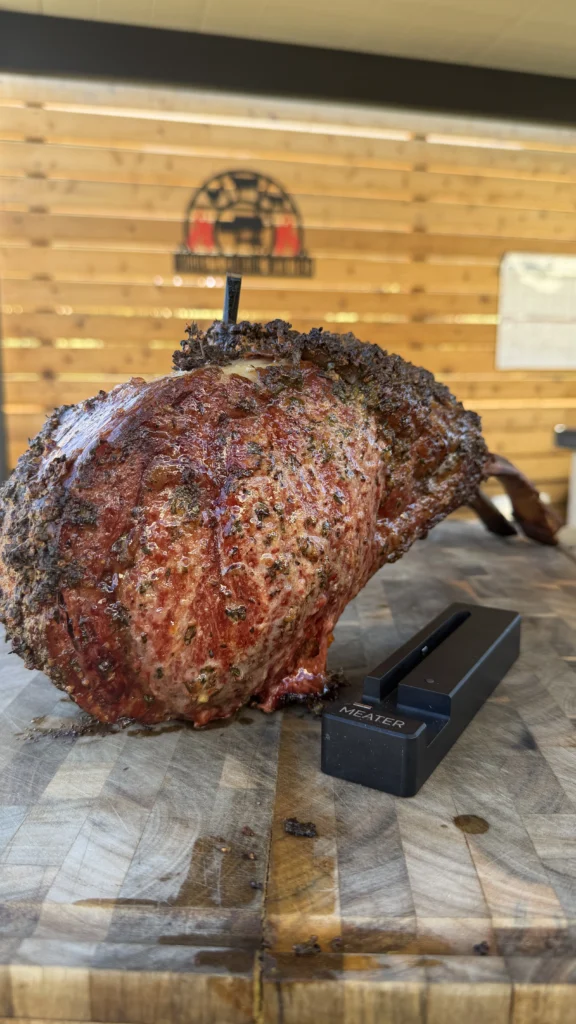
Tomahawk rib roast uses a 2-bone, 8 lb bone-in rib roast coated completely with 1 lb of garlic herb butter paste made from room temperature butter, kosher salt, steak seasoning, whole grain mustard, minced garlic, fresh rosemary, thyme, and parsley mixed until smooth. Place bone-side down on a smoker at 275°F with a drip tray underneath to catch melted butter. Smoke until internal temperature reaches 120°F for medium-rare, approximately 2.5-3 hours. Rest for 20-30 minutes, then optionally blast at 450-500°F for 10-15 minutes to tighten the exterior crust. Slice between the bones and spoon the melted herb butter from the drip tray over the meat. This garlic butter rib roast delivers steakhouse elegance with dramatic presentation from the long tomahawk bones and incredibly rich flavor from the pound of seasoned butter that bastes the roast continuously during cooking.
The whole process takes about 3.5-4 hours from start to finish. Spend 20 minutes making the butter paste and coating the roast. Smoke for 2.5-3 hours depending on exact size and starting temperature. Rest for 20-30 minutes while the internal temperature rises to perfect 125-130°F final through carryover cooking. Optional high-heat crust takes 10-15 minutes. The generous butter coating keeps the exterior from drying during the long cooking time while infusing every bite with garlic and herbs. The drip tray collects this rendered butter mixed with beef drippings, creating the ultimate finishing sauce that elevates already excellent roast into something extraordinary.
What Is a Tomahawk Rib Roast?
A tomahawk rib roast is a bone-in ribeye roast where the long rib bones (6-8 inches) are left attached and exposed, creating a dramatic presentation that looks like a tomahawk axe. It’s the exact same meat as prime rib, just with the bones “frenched” which means the meat between the bones is trimmed away to show clean white bone. The meat comes from the rib section of the cow and has heavy marbling throughout, making it one of the most tender and flavorful cuts available.
The long bones are mostly for show since they don’t add much flavor during the relatively short cooking time. They do make the roast easier to handle on the grill and create that wow factor for special occasions and holidays. A 2-bone tomahawk weighing about 8 lbs will feed 8-10 people generously, making it perfect for gatherings where you want one impressive centerpiece instead of cooking multiple smaller cuts.
You’ll pay more per pound for tomahawk rib roast compared to regular prime rib because of the extra butchering work and the presentation value. The bones themselves don’t provide much eating, but for holidays and celebrations, the dramatic look justifies the premium pricing. When you carve between the bones, each person gets a massive bone-in ribeye steak that’s been slow-cooked to perfection.
Why Use Butter Instead of Oil on Rib Roast?
Butter creates much richer flavor than oil while basting the meat as it melts during cooking. The milk solids in butter brown and caramelize, developing nutty, complex flavors that plain oil can’t match. As the 1 lb of butter slowly melts at 275°F, it runs down the roast continuously coating and moistening the meat. This self-basting effect keeps the exterior from drying out during the 2.5-3 hour cook time.
The pound of butter is intentionally excessive for maximum impact. About half of it will melt off into the drip pan below, creating an incredible finishing sauce loaded with garlic, herbs, and beef drippings. If you only used a few tablespoons of butter, you’d get coating but not enough rendered butter to spoon over sliced meat at the end. The generous amount is what makes this recipe special and restaurant-quality.
Room temperature butter also acts like paste, clinging to the roast much better than liquid oil. You can pack it on thick with all the garlic and herbs suspended throughout, creating a crust that stays put during the entire cook. Oil would just run off immediately, taking your expensive herbs and garlic with it. The butter holds everything in place while adding its own rich flavor.
The whole grain mustard mixed into the butter adds tangy depth and helps everything stick together even better. Mustard has natural properties that help emulsify the butter and seasonings into a smooth paste. It also cuts through the richness with acidity that enhances the beef flavor. This combination of butter, mustard, garlic, and fresh herbs creates compound butter that’s way more interesting than basic oil and salt.
What Temperature Should I Smoke Rib Roast?
Smoke rib roast at 275°F for the best balance of cooking time, smoke flavor, and tender results. This temperature cooks the roast gently enough that the interior stays pink and juicy while the exterior develops attractive color. Lower temps like 225°F take too long and can dry out the outside before the center reaches temperature. Higher temps like 325°F+ cook the meat too fast, creating gray overcooked bands around a rare center.
At 275°F, figure about 20-25 minutes per pound for an 8 lb roast to hit 120°F internal temperature. This gives you roughly 2.5-3 hours of smoking, which is enough time for smoke flavor to penetrate without becoming overwhelming. Beef takes on smoke more aggressively than pork, so you don’t need low-and-slow BBQ temperatures. The moderate 275°F gives you smoke flavor without making it taste like a campfire.
The thick butter coating protects the meat from drying out at this temperature. Without the butter, 275°F might create too much surface drying over 3 hours. The melting butter keeps the surface moist while the milk solids brown and caramelize into mahogany color. This combination of protection and browning is why butter-crusted roasts can handle slightly higher temps than dry-rubbed ones.
Use a probe thermometer stuck into the thickest part of the meat, avoiding bone contact since bone conducts heat differently and gives wrong readings. Start checking temperature around 2 hours. When the thickest part away from bone hits exactly 120°F, pull it immediately. Don’t wait for higher temps or it will overshoot during the rest period.
Do I Rest the Roast Before or After the High-Heat Crust?
Rest the roast first for 20-30 minutes after pulling at 120°F, then optionally do the high-heat crust. This lets the internal temperature rise to 125-130°F through carryover cooking while the juices redistribute throughout the meat. The initial rest also firms up the meat structure, so the exterior won’t overcook as much when you blast it with high heat. If you crust first then rest, the outside gets way too done.
The optional high-heat blast at 450-500°F for 10-15 minutes crisps up the butter-coated exterior after it’s already rested. This quick, aggressive heat tightens and browns the crust while the interior stays at perfect temperature since it already rested and stabilized. You’re only affecting the outer layer, creating nice contrast between crusty outside and pink tender inside.
The high-heat finish is totally optional since the roast is already fully cooked and delicious after smoking and resting. Some people prefer the softer butter-basted crust from smoking alone without the extra crunch. Others want maximum browning and texture contrast that high heat provides. It depends on whether you want steakhouse-style crust or traditional roast finish.
If you skip the high-heat step, rest the full 30 minutes. If you’re doing the crust, you can rest for just 20 minutes since the meat will firm up more during the high-heat blast. Either way, resting before slicing is non-negotiable or you’ll lose all the juices when you cut into it.
Why Do I Need a Drip Tray Under the Roast?
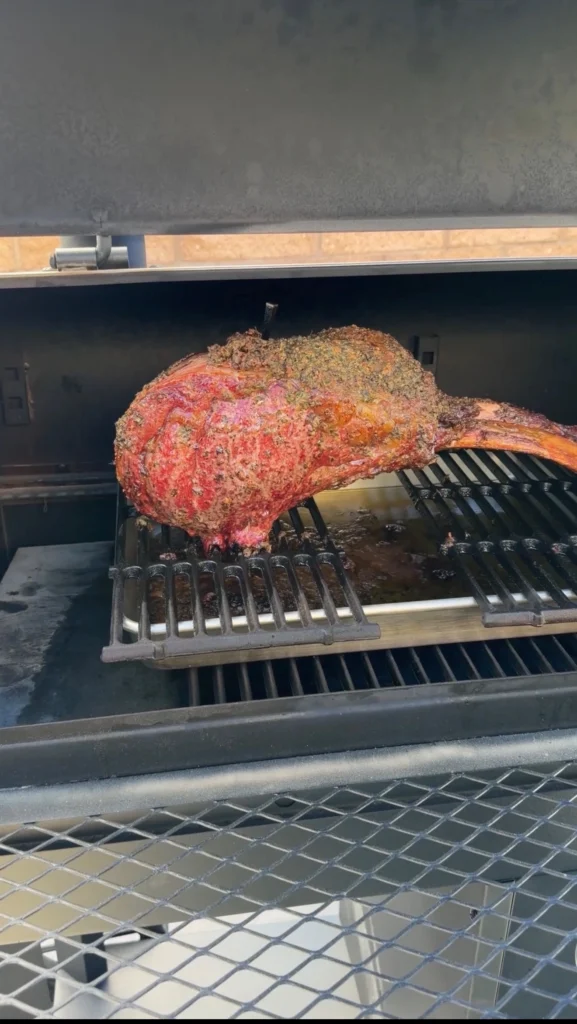
The drip tray catches all the melted garlic herb butter that drips off during cooking, preventing greasy mess in your smoker while creating amazing finishing sauce. As the roast cooks at 275°F for 3 hours, about half that pound of butter melts and runs off, carrying garlic, herbs, and beef fat with it. Without a drip tray, this liquid drips onto your smoker grates or heat source, causing flare-ups that can char the roast and creating burnt butter smoke.
The butter that collects in the drip tray is pure gold for serving. It’s essentially clarified butter infused with roasted garlic, fresh herbs, and concentrated beef drippings. This is way too valuable to waste. After pulling the roast, strain this butter through a fine-mesh sieve to remove any burnt herb bits, then spoon the clean golden butter over sliced meat. It’s like built-in au jus but richer.
The drip tray also saves you from cleaning butter residue off your smoker grates and surfaces, which is a nightmare. The tray contains all the mess in one disposable aluminum pan you just throw away after straining the butter. This makes cleanup easy despite using a whole pound of butter in the recipe.
Position the drip tray directly under the roast with a couple inches of clearance. Use a disposable aluminum roasting pan big enough to catch drippings from all sides. Most of the butter will collect rather than evaporate. Check it once or twice during cooking to make sure the pan hasn’t shifted and is still positioned to catch drips.
Step-by-Step Instructions
Step 1: Make the Garlic Herb Butter Paste
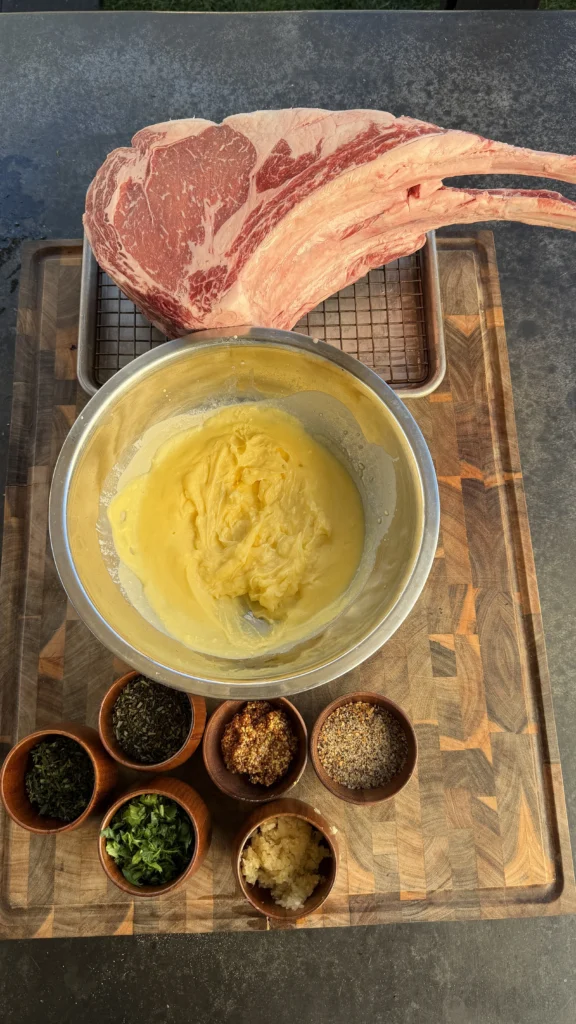
Take 1 lb of unsalted butter (4 sticks) out of the fridge 1-2 hours before you start so it comes to room temperature. Room temp butter should be soft enough to spread easily but not melted or greasy. If you forgot to soften it, cut the butter into tablespoon-sized chunks which will soften faster, or microwave on low power in short 10-second bursts, being super careful not to melt it.
Put the soft butter in a large bowl with 1 teaspoon kosher salt, 1-2 tablespoons steak seasoning, and 2 tablespoons whole grain mustard. Mince 6-8 cloves of garlic very fine – large pieces can burn during the long cook so chop them small. Finely chop 2 tablespoons fresh rosemary, 2 tablespoons fresh thyme, and 1 tablespoon fresh parsley. Add all the garlic and herbs to the bowl.
Mix everything together with a spatula or wooden spoon until completely combined and smooth. The butter should be uniform in color with herbs and garlic distributed evenly throughout. It should look like thick, herb-flecked paste. If you want extra pepper kick, add freshly cracked black pepper to taste. This makes way more butter than will stay on the roast, but that’s intentional since the excess creates your finishing sauce.
Step 2: Coat the Tomahawk Rib Roast
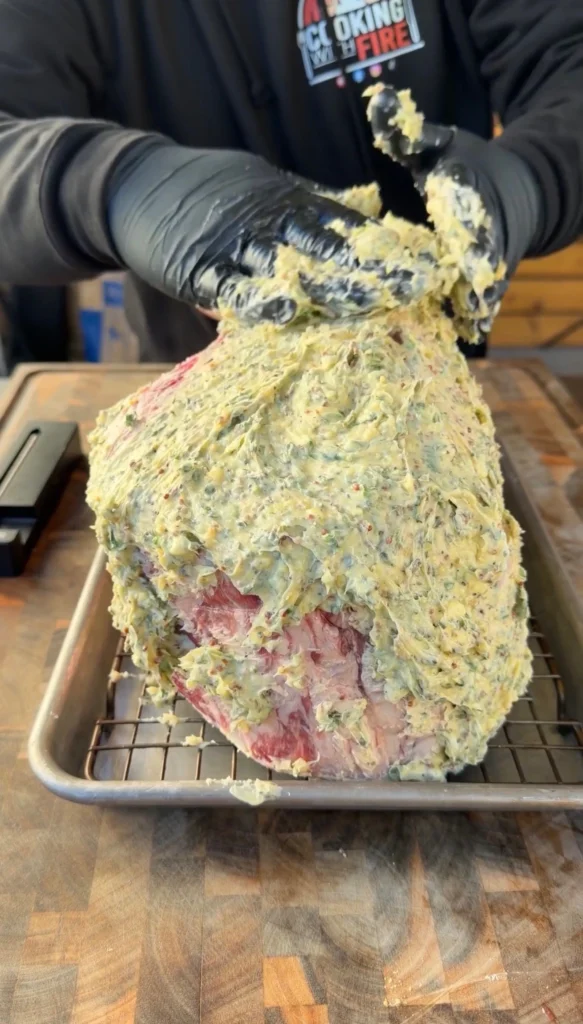
Remove the 8 lb tomahawk rib roast from packaging and pat completely dry with paper towels. Moisture prevents the butter from sticking properly and causes steam instead of browning. Dry every surface including around the bones. The roast should feel dry to the touch. Don’t season the meat itself – all the seasoning is in the butter paste.
Using your hands, scoop generous amounts of the garlic herb butter and pack it all over the roast. Coat every surface of the meat thickly and evenly. Don’t be shy – use all the butter paste to create a heavy crust. Press it firmly into the meat so it adheres well. The bones don’t need coating since you won’t be eating them. Focus on covering all the exposed meat surfaces.
The roast should look completely encased in thick herb butter when you’re done. It might seem like an excessive amount, but remember that half of it will melt off during cooking. What seems like too much right now will cook down to the perfect amount. The heavy coating is what creates the continuous basting effect and provides enough rendered butter for the drip tray sauce.
Step 3: Set Up Smoker and Drip Tray
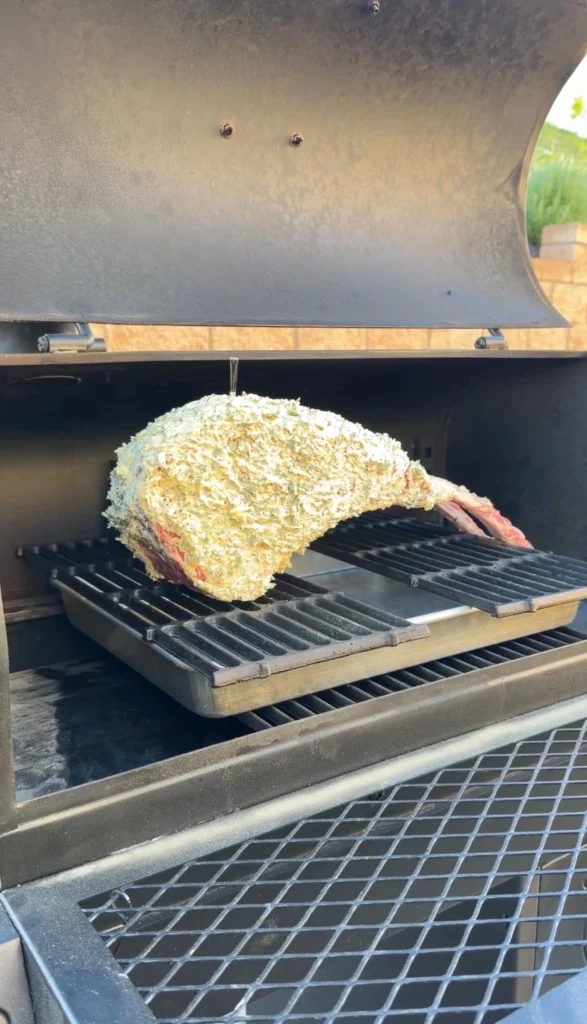
Preheat your smoker to 275°F using oak, cherry, or pecan wood. Avoid strong woods like mesquite or hickory which can overpower beef. Let the smoker stabilize completely at 275°F with clean thin blue smoke before adding meat. This takes 15-20 minutes for most smokers. Heavy white smoke will make the roast taste bitter.
Place a large disposable aluminum roasting pan on the grate below where the tomahawk will sit. This drip tray needs to be positioned directly underneath the roast to catch all the melting butter. Make sure there’s at least 2-3 inches of vertical clearance between the drip tray and the meat so heat can circulate. The pan should be large enough to catch drippings from all sides of the roast.
Position the butter-coated tomahawk rib roast bone-side down on the grate above the drip tray. The bones act as a natural roasting rack, elevating the meat slightly and allowing heat to circulate. Insert a leave-in probe thermometer into the thickest part of the meat, making sure it’s not touching bone which gives false readings. The tip should be in the center of the thickest area.
Step 4: Smoke to 120°F Internal Temperature
Close the smoker lid and let the tomahawk cook undisturbed for the first 1.5-2 hours. Don’t keep opening to check since every time you open the lid, you lose heat and extend cooking time. The roast needs consistent 275°F temperature to cook properly. You’ll see butter starting to drip into the pan below as it slowly melts.
Start checking internal temperature around 2 hours. An 8 lb roast usually takes 2.5-3 hours total to reach 120°F at 275°F, but exact timing varies based on starting temperature and smoker variations. When the probe thermometer reads 115°F, check every 10-15 minutes. Temperature accelerates in the final stage.
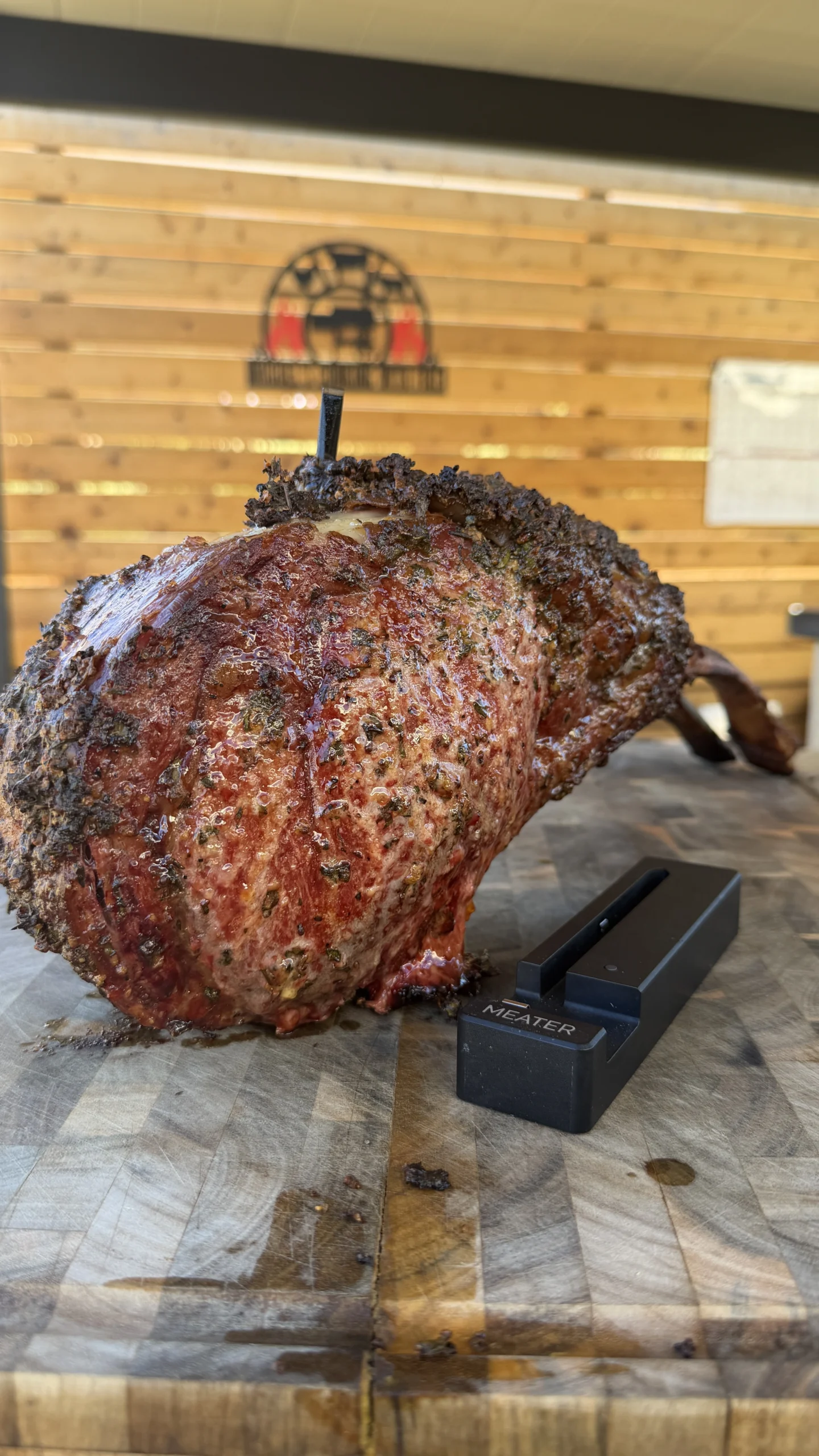
The roast is ready when the thickest part (away from bone) reaches exactly 120°F internal temperature. The exterior should have mahogany color with some areas where the butter has browned. Some of the garlic and herbs may look dark or toasted, which is normal and adds flavor. When it hits 120°F, immediately remove from smoker.
Step 5: Rest the Roast
Transfer the smoked tomahawk to a cutting board or large platter. Tent loosely with aluminum foil – don’t wrap tightly or you’ll steam the exterior and soften the crust. Let it rest for 20-30 minutes. During this time, the internal temperature will rise to 125-130°F through carryover cooking, reaching perfect medium-rare.
The rest period allows juices to redistribute throughout the meat. If you cut into it immediately, those juices would spill out onto the cutting board instead of staying in the meat. The resting also allows proteins to relax, making the meat more tender. Don’t skip this step or rush it.
While the roast rests, carefully remove the drip tray from the smoker. It will be very hot and full of liquid, so use heavy gloves or pot holders. Place a fine-mesh strainer over a heat-proof bowl and pour the butter through to catch any burnt herb bits or charred pieces. The strained butter should be golden and aromatic. Keep this warm for spooning over sliced meat.
Step 6: Optional High-Heat Crust
If you want extra crust, preheat your grill or oven to 450-500°F after the roast has rested for 20 minutes. The rested roast can handle this high heat without overcooking since it’s already at target temperature and the meat has stabilized. Place the rested tomahawk in the 450-500°F environment for 10-15 minutes.
Watch it closely during this high-heat blast. You’re looking for the butter-crusted exterior to tighten, crisp, and develop darker browning. Rotate the roast halfway through if one side is browning faster than the other. The interior won’t overcook because the rest period already brought it to final temperature and the meat is firm. Only the outer layer is affected by this brief high heat.
Remove when the crust looks tight and well-browned with some caramelization. It might sizzle slightly from the butter. The high-heat finish creates textural contrast between the crispy exterior and tender pink interior. This step is optional but adds visual appeal and steakhouse-quality crust.
Step 7: Slice and Serve
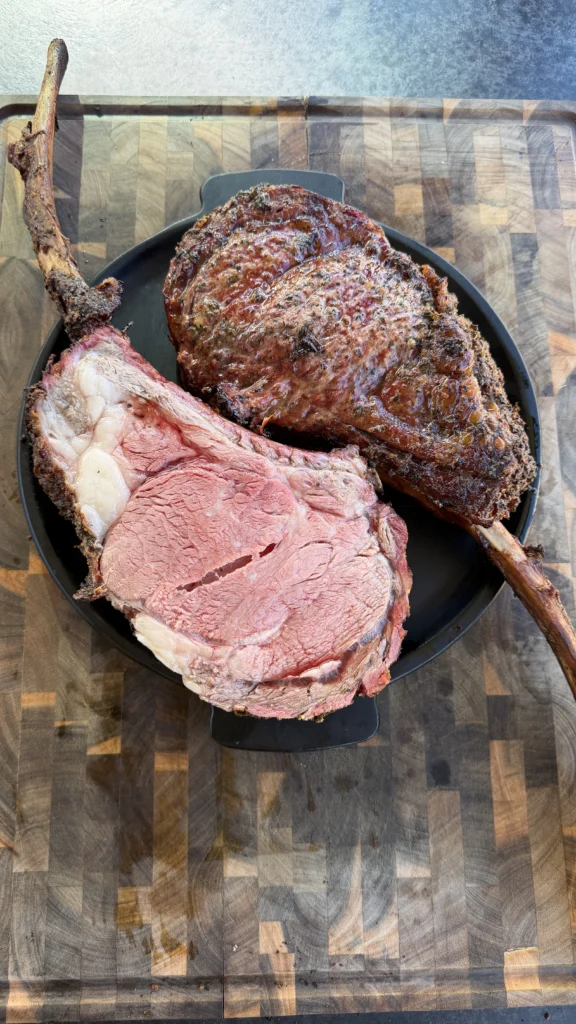
Place the rested (and optionally crusted) tomahawk on a cutting board. Using a sharp carving knife, slice between the bones to separate the roast into individual bone-in ribeye steaks. You’ll get 2 massive bone-in steaks from a 2-bone tomahawk. Each steak weighs 3-4 lbs with the bone, easily feeding 4-5 people per steak.
Slice each bone-in section across the grain into thick slices about 1/2 to 3/4 inch thick. The grain runs perpendicular to the bone, so slice parallel to the bone to cut across the grain. This creates tender slices rather than chewy ones. Each person should get 2-3 thick slices depending on appetite.
Arrange the sliced meat on a serving platter, slightly overlapping the pieces. Spoon the warm strained herb butter from the drip tray generously over the sliced meat. The golden butter will pool around the slices, creating rich sauce for dipping or spooning over each bite. Garnish with fresh herbs if desired. Serve immediately while hot.
Garlic Herb Butter Crusted Tomahawk Rib Roast
Ingredients
Method
- Bring 1 lb butter to room temperature. Mix with salt, steak seasoning, whole grain mustard, minced garlic, rosemary, thyme, parsley, and optional pepper until smooth paste forms.
- Pat tomahawk rib roast completely dry. Coat entire roast thickly with all the garlic herb butter paste, pressing firmly so it adheres. Do not season meat directly.
- Preheat smoker to 275°F with oak, cherry, or pecan wood. Place large drip pan on lower grate directly under where roast will sit.
- Place butter-coated tomahawk bone-side down on grate above drip pan. Insert probe thermometer into thickest part, avoiding bone.
- Smoke at 275°F until internal temperature reaches 120°F, approximately 2.5-3 hours. Remove from smoker.
- Rest roast loosely tented with foil for 20-30 minutes. Internal temperature will rise to 125-130°F.
- Optional: For extra crust, place rested roast in 450-500°F oven or grill for 10-15 minutes until exterior is well-browned and crispy.
- Slice between bones, then slice each section across the grain. Strain butter from drip pan through fine-mesh sieve and spoon over sliced meat. Serve immediately.
Notes
Tried this recipe?
Let us know how it was!Frequently Asked Questions
Can I use a regular boneless prime rib instead?
Yes, boneless prime rib works great with this butter crust method. Use the exact same butter paste and cooking technique. The only difference is presentation since you won’t have the dramatic long bones. Boneless roasts are actually easier to slice evenly since you don’t need to carve around bones. Figure the same cooking time of about 20-25 minutes per pound at 275°F.
The butter crust works even better on boneless prime rib in some ways since you can coat the entire surface including the ends. Tomahawk bones don’t get coated since you don’t eat them. For pure eating and easier carving, boneless might actually be preferable despite less visual drama. The flavor and texture will be identical.
How far ahead can I make the garlic herb butter?
The garlic herb butter can be made up to 3 days ahead and refrigerated in an airtight container. Let it come back to room temperature before using so it’s spreadable. You can also freeze the butter paste for up to 3 months. Thaw in the refrigerator overnight, then bring to room temperature before coating the roast.
Making the butter ahead actually improves flavor since the garlic and herbs have more time to infuse the butter. The only thing you must do fresh is coating the roast and cooking it. Don’t coat the roast more than 2-3 hours before cooking or the salt in the butter will start pulling moisture from the meat.
What if I don’t have fresh herbs?
Fresh herbs are strongly recommended for this recipe since you’re using a full pound of butter that needs bright, aromatic flavor. Dried herbs won’t provide the same impact. If you absolutely must substitute, use 1 tablespoon dried rosemary, 1 tablespoon dried thyme, and 1 teaspoon dried parsley. Dried herbs are much more concentrated than fresh.
The texture will also be different with dried herbs since they don’t incorporate into the butter as smoothly. The fresh herbs provide little flecks of green and bursts of flavor throughout. Dried herbs tend to clump. For a special occasion roast like tomahawk, it’s worth making the trip to get fresh herbs.
What sides go well with tomahawk rib roast?
Classic steakhouse sides complement this rich roast perfectly. Mashed potatoes, loaded baked potatoes, or au gratin potatoes provide starchy comfort. Roasted or creamed vegetables like asparagus, Brussels sprouts, or green beans add color and balance. Yorkshire pudding or popovers are traditional with prime rib and soak up the herb butter beautifully.
For lighter options, serve a simple arugula salad with lemon vinaigrette or Caesar salad. Roasted garlic, caramelized onions, and sautéed mushrooms make excellent toppings. Horseradish sauce or creamy horseradish provides traditional sharp contrast to the rich beef. This roast is naturally a centerpiece for holiday meals alongside traditional sides.
Can I cook this in the oven instead of smoker?
Yes, roast in a 275°F oven with the same drip tray setup underneath. The cooking time and internal temperature targets remain identical – pull at 120°F after about 2.5-3 hours. You won’t get smoke flavor, but the garlic herb butter crust will still be incredible. Place the roast on a rack in a roasting pan to allow air circulation.
For some smoke character without a smoker, add 1 teaspoon liquid smoke to the butter paste. This approximates smoke flavor in the butter that bastes the meat. Or start the roast on a grill with wood chips for 30-45 minutes to develop smoke ring, then transfer to oven to finish. The oven provides more temperature control which some people prefer for expensive roasts.
Ready to Take Your Cooking to the Next Level?
This is where I keep all my most-used products, gear, and favorite cooking tools — check it out:
🔥 View My Cooking Gear & ToolsRecipe Categories
If you loved this recipe, you’ll find more to savor across our diverse categories. From beef to pork, chicken to turkey, seafood to appetizers, there’s a wealth of flavors waiting for you. Explore them all at CWFeats.