
Grilled Greek Chicken Thighs
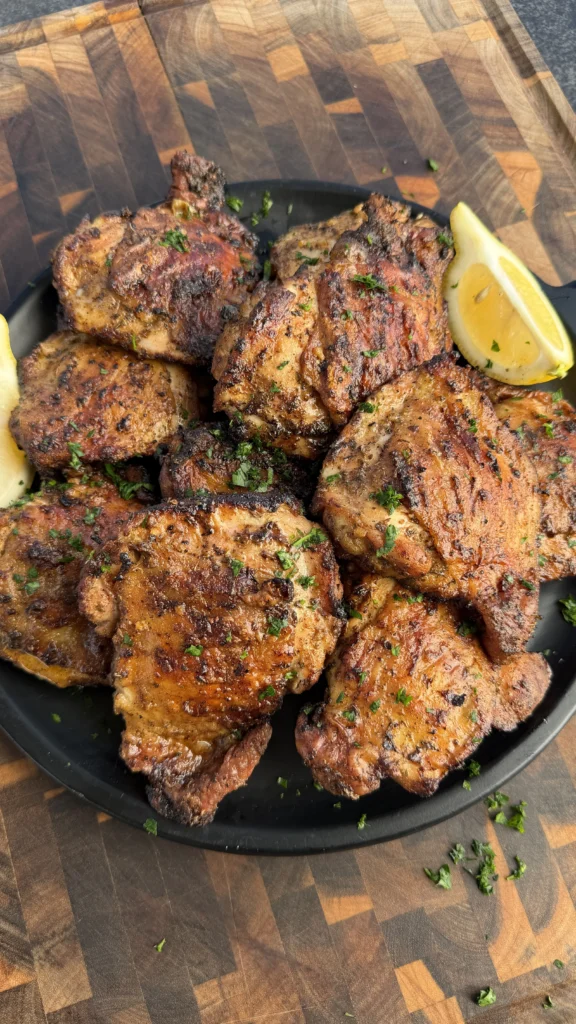
Grilled Greek chicken thighs are 10 bone-in, skin-on chicken thighs marinated in a mixture of ½ cup olive oil, juice of 3 large lemons, zest of 2 lemons, 6 cloves minced garlic, 1½ tablespoons dried oregano, 2 teaspoons salt, 2 teaspoons black pepper, 2 teaspoons paprika, 1 teaspoon dried thyme, and optional 1 teaspoon red pepper flakes for a minimum of 1 hour or preferably overnight. You grill the marinated thighs on a two-zone setup at 375 to 400°F, starting skin-side down over direct heat for 6 to 8 minutes to crisp the skin, then moving to indirect heat to finish cooking until the internal temperature reaches 175 to 185°F, which takes 30 to 40 minutes total. The thighs rest for 10 minutes before serving.
The entire process takes 1 hour 50 minutes to 13+ hours depending on marinade time. This includes 10 minutes for prep and making the marinade. The minimum 1-hour marinade is acceptable for weeknight cooking but overnight marinating (8 to 12 hours) produces significantly better flavor penetration. Grilling takes 30 to 40 minutes total with the two-zone method. Resting adds 10 minutes. You can make the marinade and prep the chicken the night before, then grill when ready to eat.
These Greek marinated chicken thighs serve 5 to 10 people depending on appetite and sides. Each bone-in thigh weighs approximately 6 to 8 ounces raw, yielding about 4 to 5 ounces cooked meat per thigh. For hearty appetites or main course without substantial sides, plan 2 thighs per person serving 5 people. For family-style meals with multiple sides like Greek salad, rice, or roasted vegetables, 1 thigh per person serves 10. The thighs pair well with tzatziki sauce, pita bread, lemon potatoes, or Greek-style rice.
Jump to RecipeWhy Lemon and Olive Oil Create the Perfect Greek Chicken Marinade
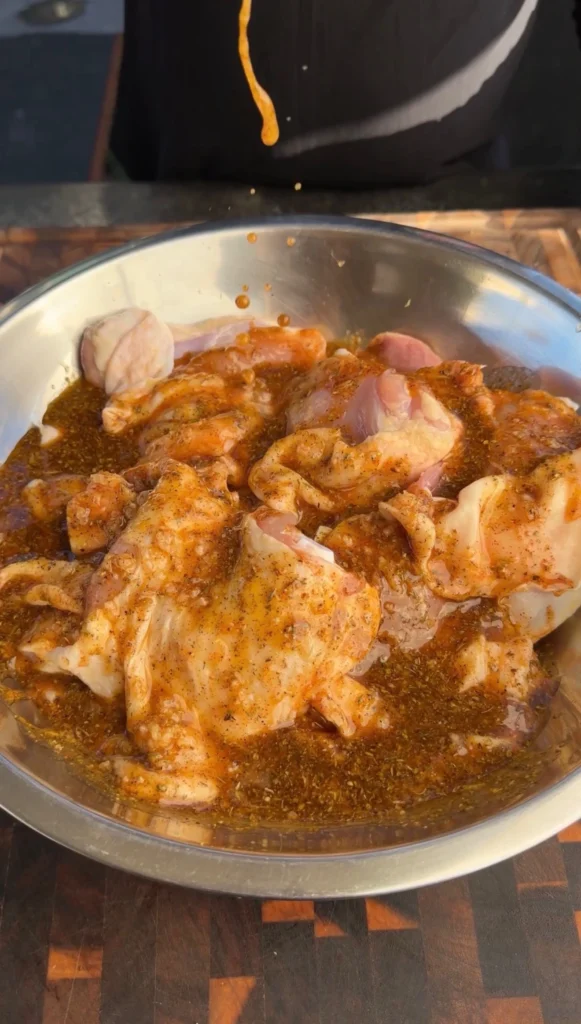
Acid Tenderization Without Over-Softening
Lemon juice contains citric acid at approximately 5 to 6% concentration. This acid denatures proteins on the chicken surface, creating a tenderizing effect. The acid breaks down protein bonds, making the meat more tender when cooked.
The key is using the right amount of acid for the marinade time. Three lemons’ worth of juice (approximately ¾ to 1 cup) in ½ cup olive oil creates balanced acidity. For 10 thighs over 1 hour, this ratio tenderizes without turning the surface mushy.
Excessive acid or extended marinade time can over-tenderize chicken. The surface becomes mealy or spongy. The 1-hour minimum to overnight maximum window prevents this. The olive oil dilutes the acid and creates a coating that moderates acid contact.
Compared to vinegar-based marinades which can be harsh, lemon juice provides gentler tenderization. The citrus flavor is also more complementary to chicken than vinegar’s sharp tang. Greek cooking traditionally uses lemon rather than vinegar for this reason.
Fat-Soluble Flavor Distribution
Olive oil is the carrier for fat-soluble flavor compounds from garlic, oregano, thyme, and paprika. These aromatics dissolve better in fat than water. The oil extracts and distributes these flavors across the chicken surface.
When you marinate chicken in olive oil with aromatics, the oil penetrates the skin and coats the meat. During cooking, this oil layer crisps the skin while infusing flavor. The fat also helps browning through the Maillard reaction.
Water-based marinades don’t carry fat-soluble flavors as effectively. The aromatics stay on the surface rather than integrating. Oil-based marinades create deeper, more complex flavor throughout the chicken.
The ½ cup of olive oil for 10 thighs provides sufficient coating without excess. Each thigh gets approximately 2½ teaspoons of oil mixed with acid and spices. This creates even distribution when you toss the thighs in the marinade.
Moisture Barrier During Cooking
Olive oil on the chicken surface creates a moisture barrier during grilling. As the chicken cooks, this oil layer prevents excessive moisture evaporation. The chicken stays juicier than uncoated chicken grilled at the same temperature.
The oil also prevents the chicken from sticking to grill grates. The fat creates lubrication between metal and meat. This makes flipping easier and prevents skin tearing, which would compromise presentation and moisture retention.
During the initial direct-heat sear, the oil helps conduct heat evenly across the skin. It prevents hot spots that would burn some areas while leaving others pale. The result is uniformly golden-brown, crispy skin.
Traditional Greek Flavor Profile
Lemon and olive oil are foundational to Greek cuisine. This combination appears in countless Greek dishes from souvlaki to grilled fish. The bright citrus and fruity olive oil create recognizable Greek character.
The oregano is equally important. Greek oregano is more pungent and earthy than Italian or Mexican oregano. It provides the distinctive herbal note that defines Greek seasoning. Combined with garlic, lemon, and olive oil, you get authentic Greek flavor.
This marinade doesn’t need exotic ingredients or complex technique. The simplicity is part of its brilliance. Quality olive oil, fresh lemons, good garlic, and dried oregano create restaurant-quality results at home.
Why 175 to 185°F Creates Better Texture Than 165°F for Chicken Thighs
Collagen Content in Dark Meat
Chicken thighs contain significantly more collagen than chicken breasts. Collagen is connective tissue that surrounds muscle fibers. Raw collagen is tough and chewy. Cooked collagen converts to gelatin, which is tender and provides richness.
This collagen conversion happens between 160°F and 180°F. At 165°F, the USDA minimum safe temperature, the collagen has begun converting but isn’t complete. The thighs are safe to eat but the texture is slightly tough or rubbery.
At 175 to 185°F, the collagen has fully converted to gelatin. The texture transforms from tough to tender. The meat pulls away from the bone easily. The bite is clean and satisfying rather than requiring chewing.
Chicken breasts have minimal collagen. They’re already tender at 165°F. Higher temperatures dry them out. But thighs benefit from the extra heat because the collagen conversion improves texture more than the slight additional moisture loss harms it.
Fat Rendering and Mouthfeel
Chicken thighs have intramuscular fat and pockets of fat between muscles. This fat needs to render for optimal texture and flavor. Rendered fat is liquid and luxurious. Unrendered fat is solid and waxy.
At 165°F, some fat has rendered but not completely. You can encounter pockets of unrendered fat that feel greasy or unpleasant. The chicken tastes less rich than it could.
At 175 to 185°F, the fat renders thoroughly. It melts and either drips away or incorporates into the meat. The result is juicy chicken without greasy texture. The fat that remains is liquid and coats your palate pleasantly.
The rendered fat also bastes the meat from inside during cooking. This internal basting keeps thighs moist even at higher temperatures. Breasts don’t have this same fat content to protect them.
Moisture Retention in Dark Meat
Dark meat retains moisture better than white meat at higher temperatures. The fat content helps, but the muscle structure is also different. Dark meat has more myoglobin, the protein that makes it dark. This protein structure holds moisture differently.
At 165°F, thighs are moist but can be slightly tight. The proteins have contracted but the collagen hasn’t fully relaxed. At 175 to 185°F, the collagen conversion creates gelatin that holds moisture. The meat is actually juicier at the higher temperature because the gelatin binds water.
This seems counterintuitive. Higher temperature should mean more moisture loss. But collagen’s water-binding capacity when converted to gelatin compensates for the moisture lost through evaporation. The net result is juicier meat.
Breasts don’t have this same collagen content. They rely solely on avoiding overcooking to stay moist. That’s why breast temperature targets are lower than thigh targets.
The Bone-In Advantage
Bone-in thighs have heat distribution advantages over boneless. The bone conducts heat into the meat from the inside. This creates more even cooking. The meat nearest the bone cooks at similar rate to the exterior.
The bone also provides structure that prevents the meat from overcooking. Boneless thighs can tighten excessively at higher temperatures. The bone prevents this compression, helping the meat stay tender.
For bone-in thighs, pulling at 175 to 185°F ensures the meat near the bone is fully cooked. If you pull at 165°F, the exterior might be done but the meat closest to bone might be slightly undercooked in texture if not temperature.
The Best Way to Scale Greek Marinade for Larger Batches
Maintaining Proper Coating Ratio
The marinade ratio for 10 thighs uses ½ cup olive oil and approximately ¾ cup lemon juice (from 3 large lemons). This creates roughly 1¼ cups liquid total. For 10 thighs weighing about 5 pounds total, this provides adequate coating.
The key metric is approximately ¼ cup total marinade per pound of chicken. This ensures every piece is coated without excessive waste. Too little marinade means uneven coating. Too much is wasteful and doesn’t improve results.
For scaling up or down, maintain this ratio. Five thighs (2.5 pounds) need about ⅝ cup marinade. Twenty thighs (10 pounds) need about 2½ cups marinade. The proportions of oil to lemon juice stay the same.
The solid ingredients (garlic, oregano, spices) scale linearly. If you double the chicken, double the garlic, oregano, and spices. The flavors stay balanced across batch sizes.
Mixing and Distribution Challenges
Ten thighs fit in a gallon zip-top bag or large mixing bowl. You can toss or massage to distribute marinade evenly. Every thigh makes contact with marinade on all surfaces.
For larger batches like 20 to 30 thighs, distribution becomes harder. A single bag or bowl might not fit everything. Thighs at the bottom get more marinade than thighs at the top.
The solution is using multiple bags or dividing into batches. Two bags with 10 thighs each is better than one bag with 20 thighs. You can ensure even distribution in each bag independently.
Alternatively, use a large roasting pan. Layer thighs, drizzle marinade, flip thighs, drizzle more marinade. Repeat until all thighs are coated. Cover with plastic wrap or foil. Flip the whole pan halfway through marinating to redistribute.
Marinade Efficiency vs Waste
Some marinade stays in the bag or bowl after removing chicken. This is expected and doesn’t represent failure. The marinade has done its job of coating the chicken.
For maximum efficiency, you could use slightly less marinade and ensure it all adheres to the chicken. But this creates risk of incomplete coating. It’s better to have ¼ cup leftover marinade than to have some thighs insufficiently seasoned.
The leftover marinade cannot be reused on other chicken due to food safety. It contains bacteria from raw chicken. Don’t be tempted to save it for later batches.
If you want to make sauce for serving, reserve some marinade before adding chicken. Or make a fresh batch of lemon-olive oil-oregano mixture for drizzling. The flavors will be similar to the marinade without the food safety concern.
Adjusting for Different Chicken Parts
This marinade works for other chicken parts with slight adjustments. Drumsticks need the same marinade ratio as thighs. Whole chicken legs (thigh and drumstick together) might need slightly more due to increased surface area.
Chicken breasts need less marinade time due to lower collagen. One hour is sufficient for breasts. Overnight marination can make breast texture too soft. For breasts, use the same marinade ratio but reduce time.
Wings need less marinade due to their size. For 20 wings (similar meat weight to 10 thighs), use the same total marinade amount. The smaller pieces need less marinade per piece but more coverage per pound.
Greek Chicken Thighs
Lemon-oregano marinade, two-zone grill, 175-185°F
Ingredients
Chicken
- 10 bone-in, skin-on chicken thighs
Greek Marinade
- ½ cup olive oil
- Juice of 3 large lemons
- Zest of 2 lemons
- 6 cloves garlic (minced)
- 1½ tablespoons dried oregano
- 2 teaspoons salt
- 2 teaspoons black pepper
- 2 teaspoons paprika
- 1 teaspoon dried thyme
- 1 teaspoon red pepper flakes (optional)
Optional Lemon Butter Glaze
- 2 tablespoons butter (melted)
- Squeeze of lemon
- Pinch of oregano
Overnight marination creates significantly better flavor than 1-hour minimum. The lemon and garlic penetrate deeply into the meat. For crispy skin, start skin-side down over direct heat for 6 to 8 minutes before moving to indirect. Pull thighs at 175 to 185°F for tender texture, not just 165°F minimum.
Step-by-Step Instructions
Step 1: Make the Greek Marinade
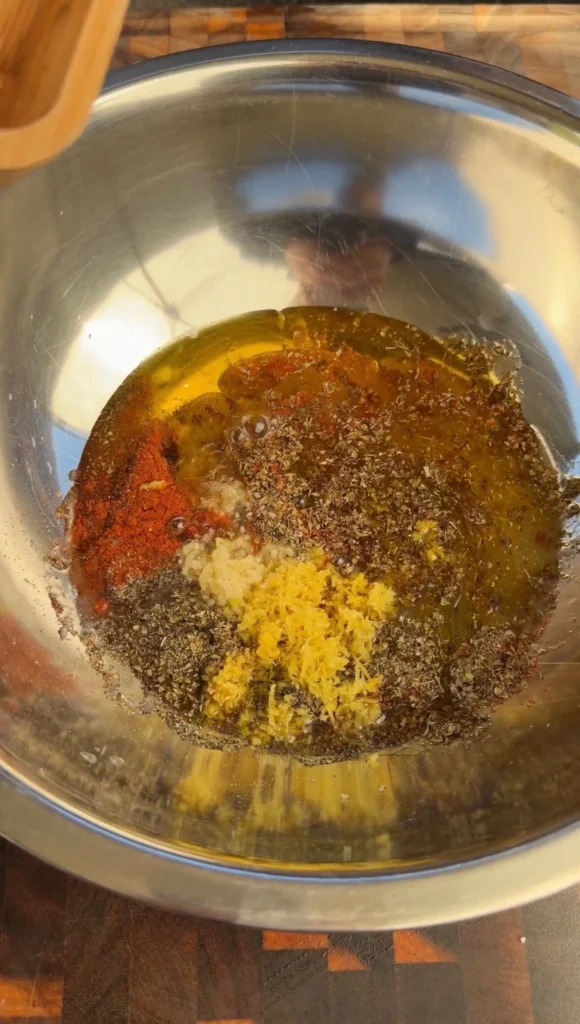
In a large mixing bowl, combine ½ cup olive oil, juice of 3 large lemons (approximately ¾ cup), zest of 2 lemons, and 6 cloves minced garlic. Whisk together until the oil and lemon juice are somewhat emulsified.
Add 1½ tablespoons dried oregano, 2 teaspoons salt, 2 teaspoons black pepper, 2 teaspoons paprika, 1 teaspoon dried thyme, and optional 1 teaspoon red pepper flakes if you want heat.
Whisk all ingredients together thoroughly. The marinade should be well combined with the spices distributed evenly. The mixture will be thin and liquidy. This is correct.
Taste the marinade. It should be very acidic, salty, and intensely flavored. Don’t worry about it being too strong. The flavors will mellow during marinating and cooking.
Step 2: Marinate the Chicken Thighs
Place 10 bone-in, skin-on chicken thighs in a gallon-size zip-top bag or large mixing bowl. The bag is easier for coating but the bowl works if you toss thoroughly.
Pour the marinade over the chicken thighs. Seal the bag if using, or cover the bowl with plastic wrap.
Massage the marinade into the chicken if using a bag. Turn and squeeze to ensure every thigh is coated on all sides. If using a bowl, toss the thighs with your hands or tongs to coat completely.
Refrigerate for minimum 1 hour. For significantly better results, marinate overnight (8 to 12 hours). Turn or shake the bag once during marinating to redistribute.
Remove from refrigerator 30 to 45 minutes before grilling. Let the chicken come closer to room temperature. This promotes even cooking.
Step 3: Set Up Two-Zone Grill
Preheat your grill to 375 to 400°F. For gas grills, turn burners on one side to medium-high and leave the other side off or on low. For charcoal, pile coals on one side and leave the other side empty.
The direct heat zone should be hot enough to sear. Hold your hand 6 inches above the grates. You should only be able to hold it there for 2 to 3 seconds before it’s too hot.
The indirect zone should have no direct flame underneath. This is where the chicken will finish cooking after the initial sear.
Clean the grill grates with a wire brush. Oil the grates lightly using a paper towel dipped in neutral oil held with tongs. This prevents sticking.
Step 4: Sear Chicken Skin-Side Down
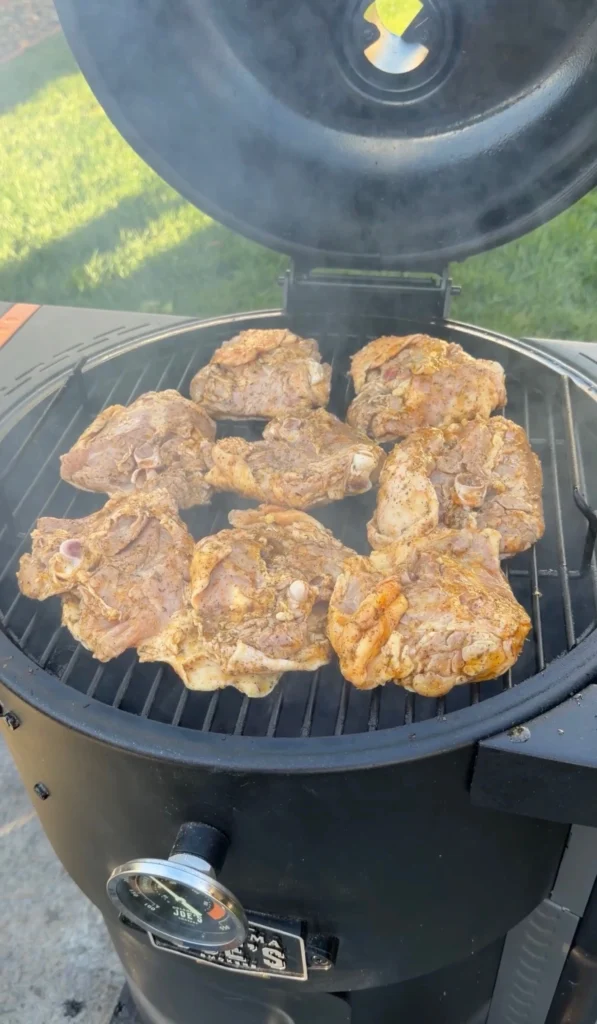
Remove chicken thighs from marinade. Let excess marinade drip off but don’t wipe the thighs dry. The marinade coating should stay on.
Place thighs skin-side down over direct heat. Arrange them so they’re not touching or overlapping. You might need to work in batches if all 10 don’t fit.
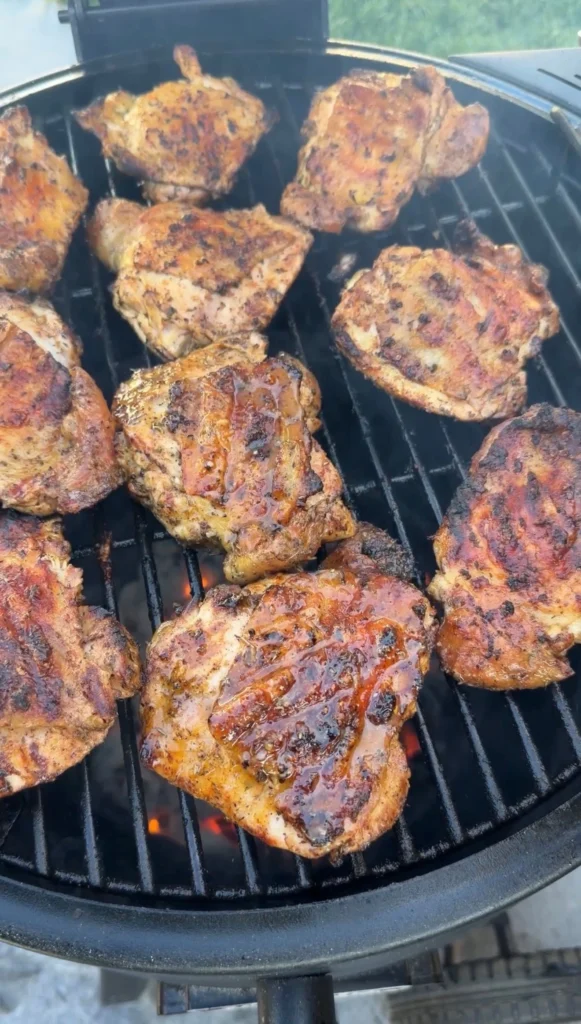
Close the grill lid. Let the thighs sear undisturbed for 6 to 8 minutes. Don’t peek or move them. The skin needs continuous heat contact to crisp.
After 6 to 8 minutes, lift one thigh with tongs to check. The skin should be golden brown to deep brown with grill marks. If still pale, continue for another 2 minutes.
When the skin is properly seared and crispy, flip the thighs bone-side down. They’re now ready to move to indirect heat.
Step 5: Finish on Indirect Heat
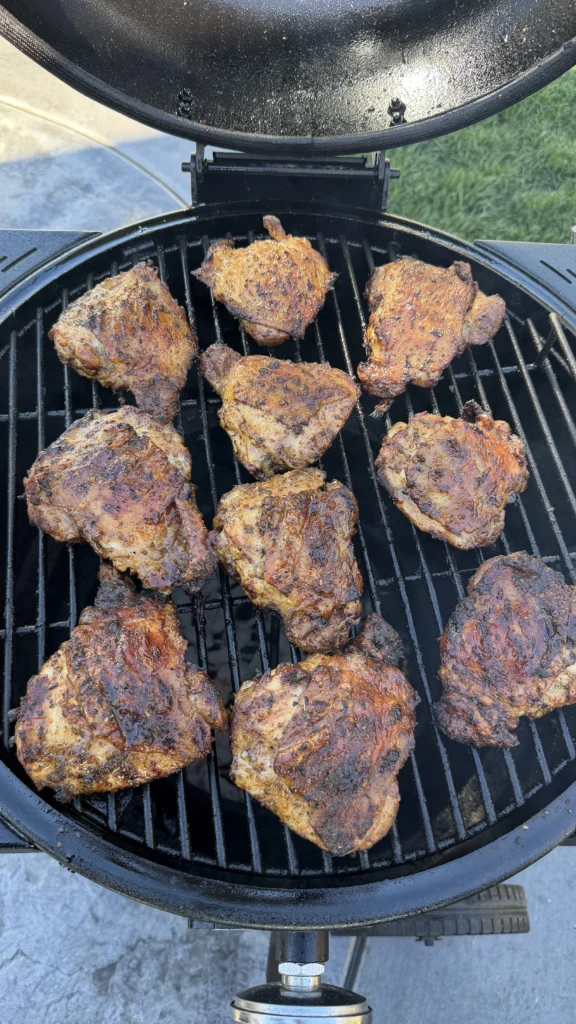
Move all seared thighs to the indirect heat zone. Place them bone-side down with the seared skin facing up. The skin won’t be in contact with grates anymore.
Close the grill lid. Maintain grill temperature at 375 to 400°F by adjusting burners or vents. The chicken will cook through with gentle, indirect heat.
Insert an instant-read thermometer into the thickest part of one thigh without touching bone after 15 minutes. You’re looking for 175 to 185°F.
Continue cooking, checking temperature every 5 minutes after the initial check. Different-sized thighs will finish at different times. Remove each thigh when it reaches target temperature.
Total time on indirect heat is typically 20 to 30 minutes. Smaller thighs might be done in 20 minutes. Larger thighs might need 30 minutes.
Step 6: Optional Lemon Butter Glaze
If using the optional lemon butter glaze, make it during the last 10 minutes of cooking. Melt 2 tablespoons butter in a small bowl or pan. Add a squeeze of fresh lemon and a pinch of oregano. Stir to combine.
During the last 5 minutes on indirect heat, brush the thighs with the lemon butter glaze. Use a silicone brush. Apply a thin coating to the skin side.
The butter creates glossy finish and adds subtle richness. The lemon and oregano reinforce the Greek flavors. This step is purely for appearance and slight flavor boost.
Don’t apply the glaze earlier or over direct heat. The butter would burn. Only apply on indirect heat at the very end.
Step 7: Rest the Chicken
When the thighs reach 175 to 185°F internal temperature, remove them from the grill. Place on a serving platter or clean plate.
Let the chicken rest for 10 minutes before serving. Cover loosely with aluminum foil if desired, but don’t seal tightly. You don’t want to steam the crispy skin.
During rest, the juices redistribute throughout the meat. The temperature will continue rising 2 to 3 degrees from carryover cooking. The meat firms up slightly, making cleaner presentation.
After 10 minutes, the chicken is ready to serve. The skin should still be crispy. The meat should be tender and juicy throughout.
Step 8: Serve
Arrange the rested chicken thighs on a serving platter. Garnish with lemon wedges and fresh oregano or parsley if desired.
Serve with traditional Greek sides like tzatziki sauce, Greek salad, lemon potatoes, or rice pilaf. Pita bread is excellent for soaking up any juices.
Each person gets 1 to 2 thighs depending on appetite. The thighs are rich and flavorful. One thigh with substantial sides is satisfying for many people.
Store leftovers in an airtight container in the refrigerator for up to 4 days. Reheat in a 350°F oven for 12 to 15 minutes to maintain crispiness.

Grilled Greek Chicken Thighs
Ingredients
Equipment
Method
- In large bowl, whisk together olive oil, lemon juice, lemon zest, minced garlic, oregano, salt, pepper, paprika, thyme, and optional red pepper flakes.
- Place chicken thighs in gallon zip-top bag or large bowl. Pour marinade over chicken. Massage to coat all sides. Refrigerate minimum 1 hour, preferably overnight (8 to 12 hours).
- Remove chicken from refrigerator 30 to 45 minutes before grilling. Preheat grill to 375 to 400°F. Set up two-zone configuration with direct and indirect heat.
- Remove thighs from marinade. Place skin-side down over direct heat. Close lid. Sear 6 to 8 minutes until skin is golden brown and crispy.
- Flip thighs and move to indirect heat zone. Place bone-side down with skin facing up. Close lid. Cook 20 to 30 minutes until internal temperature reaches 175 to 185°F.
- Optional: During last 5 minutes, brush thighs with lemon butter glaze made from melted butter, lemon squeeze, and oregano.
- Remove from grill when thighs reach temperature. Rest 10 minutes before serving.
Nutrition
Notes
Tried this recipe?
Let us know how it was!Frequently Asked Questions
Can You Use Boneless Skinless Chicken Thighs Instead?
Boneless skinless thighs work with this marinade but the cooking method changes. Without skin, you can’t crisp anything. The thighs are just marinated and grilled.
Cook boneless thighs entirely over direct medium heat, not two-zone. They’re thinner without the bone. They cook faster, typically 5 to 6 minutes per side to reach 165 to 170°F.
Pull boneless thighs at 165 to 170°F, not 175 to 185°F. Without the bone providing structure and moisture, higher temperatures dry them out. The lower target prevents this.
The flavor from the marinade will be excellent but you lose the crispy skin and the moisture protection from bone-in cooking. Boneless are more convenient but bone-in produces superior results for this recipe.
What Can You Substitute for Dried Oregano?
Fresh oregano can replace dried but you need more. Use 4 to 5 tablespoons fresh oregano instead of 1½ tablespoons dried. Fresh herbs are less concentrated than dried.
Italian seasoning can work in a pinch. Use 2 tablespoons Italian seasoning to replace the oregano. Italian seasoning contains oregano plus basil, thyme, and rosemary. The flavor will be slightly different but acceptable.
Greek seasoning blend is actually ideal if you have it. Use 2 to 3 tablespoons Greek seasoning and reduce or eliminate the separate salt, pepper, and thyme. Greek seasoning already contains these.
Don’t use fresh basil or cilantro as oregano substitute. They have completely different flavor profiles. The dish won’t taste Greek. Oregano is non-negotiable for authentic Greek flavor.
How Do You Grill Greek Chicken on a Gas Grill vs Charcoal?
Gas grills are easier for temperature control. Set one side to medium-high (direct heat) and the other to low or off (indirect heat). The temperature holds steady without adjustment.
Charcoal grills provide better flavor from the charcoal smoke. Pile coals on one side for direct heat. Leave the other side empty for indirect. You’ll need to adjust vents to maintain 375 to 400°F.
For charcoal, the chicken might finish slightly faster due to the radiant heat from coals. Check temperature at 25 minutes instead of 30. Otherwise the technique is identical.
Both grill types work well. Charcoal has slight flavor advantage. Gas has convenience advantage. Choose based on what you have and your preference.
Can You Make This Recipe in the Oven?
Oven-roasted Greek chicken works but won’t have crispy skin like grilled. Preheat oven to 425°F. Place marinated thighs skin-side up on a wire rack over a baking sheet.
Roast for 35 to 45 minutes until internal temperature reaches 175 to 185°F. The skin will brown but not crisp the same way grilled skin does.
For crispier skin, broil the thighs for the last 3 to 5 minutes. Watch carefully to prevent burning. The broiler creates browning similar to grilling.
The flavor will be excellent from the marinade. The texture will be good. But grilled chicken has superior skin texture and subtle smoke flavor that oven can’t replicate.
What Greek Sides Pair Best with These Chicken Thighs?
Tzatziki sauce is essential. The cool, creamy cucumber-yogurt sauce contrasts perfectly with the lemony chicken. Make it with Greek yogurt, cucumber, garlic, dill, and lemon.
Greek salad with tomatoes, cucumbers, red onion, kalamata olives, and feta provides fresh, bright contrast to the rich chicken. Dress with olive oil and red wine vinegar.
Lemon potatoes are traditional. Roast potato wedges with olive oil, lemon juice, garlic, and oregano. The flavors echo the chicken marinade.
Rice pilaf with orzo, chicken broth, and herbs soaks up chicken juices beautifully. Or serve with warm pita bread for a more casual presentation.
Ready to Level Up?
Take your backyard cooking from good to legendary.
This is where I keep all my most-used smokers, knives, and favorite cooking tools.
Shop My Gear CollectionExplore More Recipes
Find more diverse flavors at CWFeats.com