
Honey Bourbon Pork Belly Burnt Ends
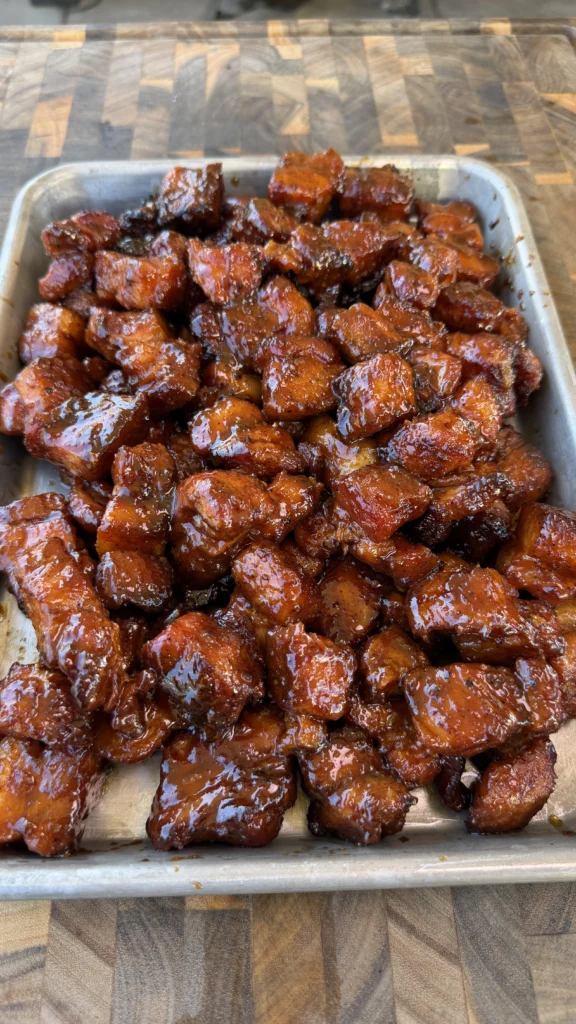
Honey bourbon pork belly burnt ends take the concept of traditional brisket burnt ends and apply it to rich, fatty pork belly for results that are even more indulgent and flavorful. This recipe starts with pork belly cut into perfect one-and-a-half-inch cubes that get seasoned with BBQ rub and smoked for three hours until the exterior develops deep caramelization and bark. The cubes then get tossed in a sweet and boozy honey bourbon glaze made from BBQ sauce, real bourbon, honey, brown sugar, and butter, then braised covered in a foil pan until the pork becomes so tender it nearly melts on your tongue.
What makes these pork belly burnt ends special is how the smoking and braising processes transform tough pork belly into candy-like bites with crispy, caramelized exteriors and impossibly tender interiors. The initial smoking period creates bark and renders much of the fat, while the braising in the bourbon honey sauce allows the meat to absorb those sweet, smoky, boozy flavors while becoming fork-tender. The final uncovered smoking period thickens the glaze into a sticky, lacquered coating that clings to every cube. These bourbon BBQ burnt ends deliver intense flavor in every bite – smoky, sweet, savory, and just boozy enough to taste the bourbon without being overwhelming.
Honey Bourbon Pork Belly Burnt Ends
Pork belly cut into cubes, seasoned with BBQ rub, smoked for three hours until caramelized, then braised in foil pan with honey bourbon glaze made from BBQ sauce, bourbon, brown sugar, and butter until tender and candy-like
Ingredients
For the Pork Belly:
- 4-5 lbs pork belly, skin removed, cut into 1½-inch cubes
- 2 tbsp olive oil (as a binder)
- ¼ cup BBQ rub
For the Honey Bourbon Glaze:
- ½ cup BBQ sauce
- ¼ cup honey
- ¼ cup bourbon
- 3 tbsp brown sugar
- 2 tbsp butter
- 1 tbsp apple cider vinegar
Why Pork Belly Makes Perfect Burnt Ends
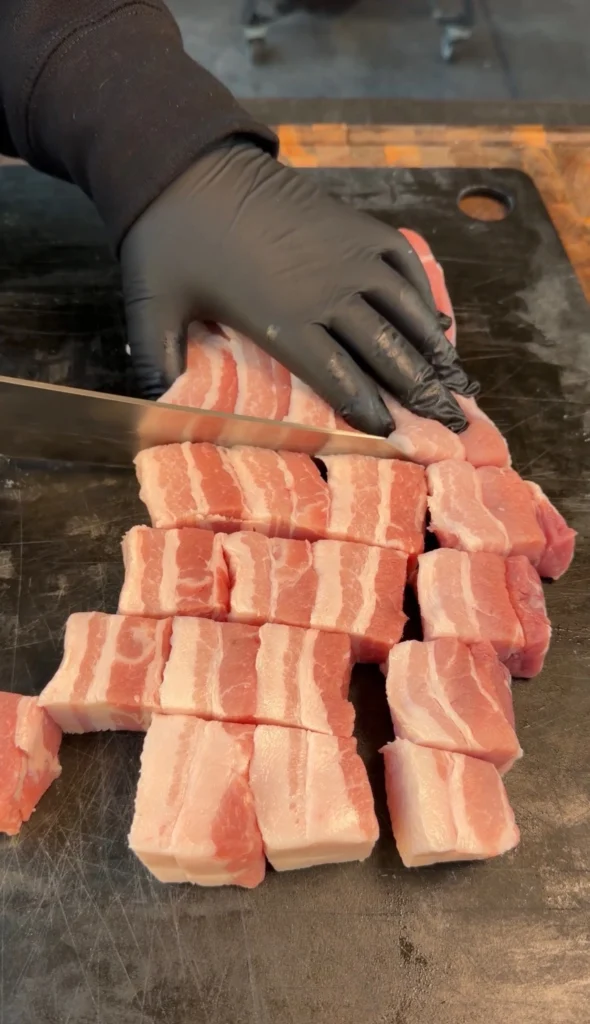
Pork belly is the ideal cut for burnt ends because of its high fat content and uniform thickness that ensures even cooking throughout. Unlike brisket point which has variable thickness and requires careful trimming, pork belly comes in consistent slabs that cube easily into uniform pieces. The generous marbling throughout pork belly means every cube contains ribbons of fat that render during smoking, self-basting the meat and creating incredibly moist, rich texture. As the fat renders, it concentrates the pork flavor while the remaining meat becomes tender without drying out.
The fat-to-meat ratio in pork belly – approximately sixty percent fat to forty percent meat – is perfect for the long cooking time required for burnt ends. Leaner cuts would dry out and become tough during the five-plus hours of total cooking, but pork belly’s abundant fat keeps everything moist and succulent. The rendered fat also helps the BBQ rub and bourbon glaze penetrate into the meat rather than just sitting on the surface, creating flavor throughout rather than just on the exterior. This makes smoked pork belly cubes more forgiving than traditional brisket burnt ends which require precise temperature control to avoid drying out the leaner meat.
The Science of Smoking and Rendering Fat
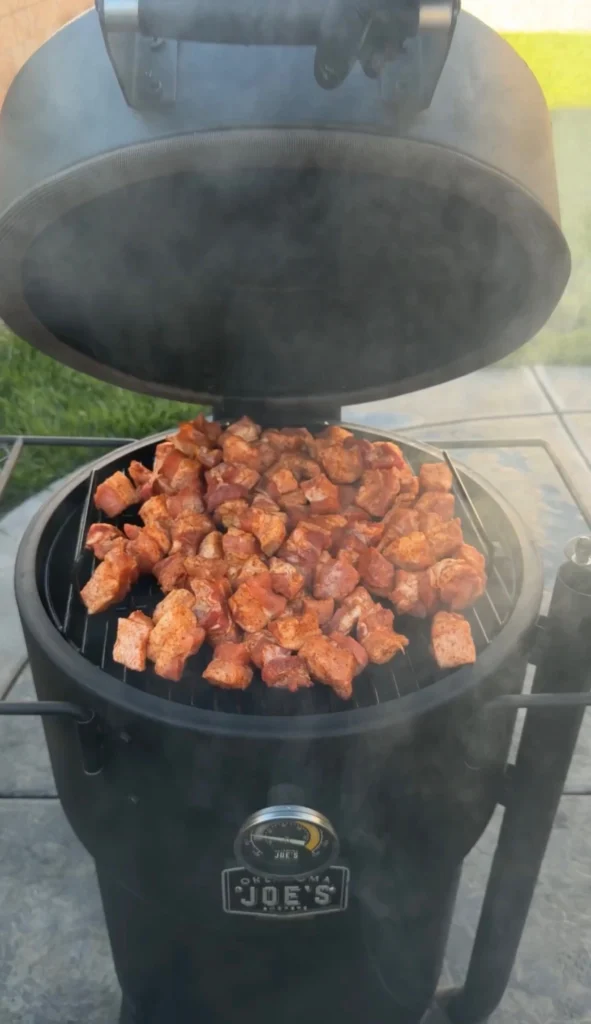
Smoking pork belly at 250 degrees Fahrenheit provides the optimal temperature for fat rendering while developing proper bark. At this temperature, the fat slowly liquefies and drips away over the three-hour initial smoking period, concentrating the meat and creating space for smoke penetration. Too high a temperature would render the fat so quickly that the exterior burns before the interior becomes tender. Too low and the fat won’t render adequately, leaving you with greasy, unpleasantly fatty burnt ends rather than tender, rich ones with balanced texture.
The smoke itself contributes far more than just flavor – it creates the bark that gives burnt ends their characteristic texture and appearance. Smoke particles adhere to the moist, fatty surface of the pork belly cubes, forming a tacky layer that gradually dries and darkens. The Maillard reaction between proteins and sugars in the rub creates hundreds of new flavor compounds that taste roasted, caramelized, and complex. The smoke ring – that pink layer just beneath the bark – forms when nitrogen dioxide from wood smoke reacts with myoglobin in the meat, creating a visual indicator of proper smoke penetration.
Building the Perfect Honey Bourbon Glaze
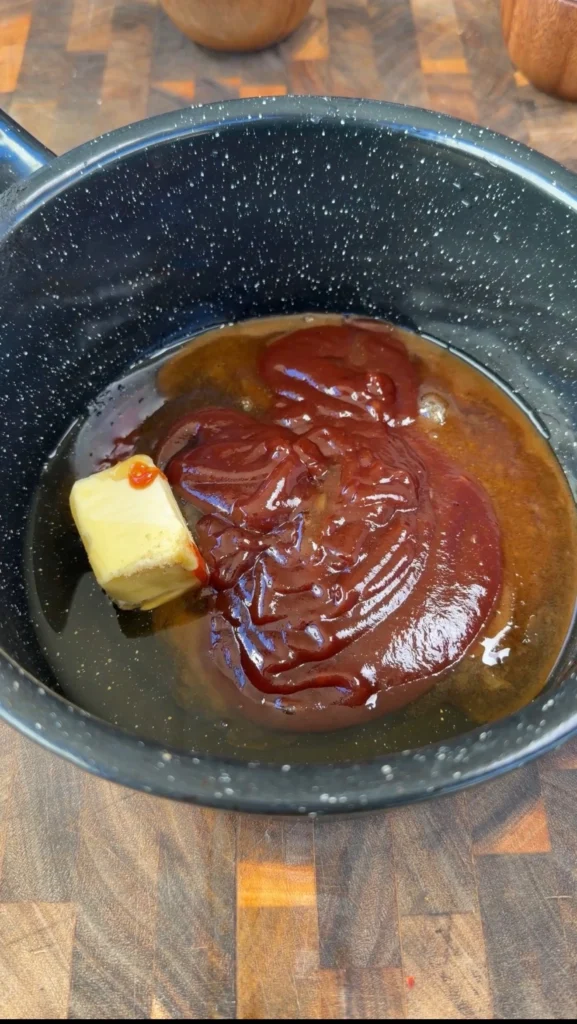
The honey bourbon glaze is what transforms good smoked pork belly into exceptional burnt ends by adding layers of sweetness, acidity, and boozy complexity. BBQ sauce provides the tangy, tomato-based foundation with balanced sweet and savory notes. Honey adds floral sweetness with viscosity that helps the glaze cling to the meat rather than running off. Real bourbon – not artificial bourbon flavoring – contributes oaky, vanilla, caramel notes with slight heat from the alcohol that complements the smokiness. Brown sugar reinforces sweetness while adding molasses depth.
Butter in the glaze serves multiple purposes beyond richness. It helps emulsify the sauce components into smooth, uniform texture rather than a separated mixture of oil and water. The fat carries flavor compounds throughout the glaze, making them more readily perceptible to your taste buds. Butter also adds subtle dairy richness that rounds out the sharper flavors from vinegar and bourbon. Apple cider vinegar provides crucial acidity that cuts through the fat and sweetness, preventing the burnt ends from tasting cloying or one-dimensional. The vinegar also helps tenderize the meat during braising by partially breaking down tough connective tissue.
The Two-Stage Cooking Method
The two-stage cooking method – initial open smoking followed by covered braising – is essential for achieving the proper texture in pork belly burnt ends. The first stage (three hours uncovered) develops bark, renders fat, and infuses smoke flavor throughout the meat. During this period, the exterior of each cube dries slightly and caramelizes, creating the foundation for the final texture. The fat renders and drips away, concentrating the pork flavor and creating space for the glaze to penetrate later.
The second stage (ninety minutes to two hours covered in the bourbon glaze) transforms the texture from firm and chewy to tender and yielding. The foil covering traps moisture and creates a braising environment where the pork belly essentially stews in the bourbon honey sauce. The liquid prevents further drying while the sustained heat breaks down remaining connective tissue. The alcohol in the bourbon partially evaporates during this stage, leaving behind its flavor compounds without harsh alcohol taste. The covered environment also allows the pork to absorb the glaze flavors deeply rather than just coating the surface.
Achieving the Perfect Candy-Like Texture
The final thirty-minute uncovered smoking period is what gives bourbon pork belly burnt ends their signature candy-like glaze and slightly crispy exterior. After the braising stage, the pork is tender and saturated with glaze, but the sauce is thin and liquid. Removing the foil and returning the pan to the smoker allows moisture to evaporate from the sauce while heat caramelizes the sugars. The glaze thickens and concentrates, coating each cube in a sticky, lacquered layer that’s glossy and deeply colored.
During this final stage, watch carefully to prevent burning – the high sugar content in the glaze can quickly go from beautifully caramelized to burnt and bitter. Stir the cubes gently every ten to fifteen minutes to ensure even glazing and to prevent any pieces from sticking to the bottom of the pan where they might scorch. The pork belly is done when the glaze has thickened to syrup consistency, coating the cubes with a glossy sheen, and the edges have slight crispiness while the interiors remain tender. A properly finished burnt end should hold its cube shape when picked up but yield easily to gentle pressure.
Ingredients
For the Pork Belly:
- 4-5 lbs pork belly, skin removed, cut into 1½-inch cubes
- 2 tbsp olive oil (as a binder)
- ¼ cup BBQ rub
For the Honey Bourbon Glaze:
- ½ cup BBQ sauce
- ¼ cup honey
- ¼ cup bourbon
- 3 tbsp brown sugar
- 2 tbsp butter
- 1 tbsp apple cider vinegar
Step-by-Step Instructions
Prep the Pork Belly Cubes
Start by selecting quality pork belly with good fat distribution – look for pieces with even layers of fat and meat rather than chunks that are mostly fat or mostly lean. If your pork belly still has skin attached, remove it with a sharp knife by sliding the blade between the skin and fat layer, angling slightly upward to avoid removing too much fat with the skin. The skin won’t render properly during smoking and creates unpleasant, rubbery texture, so it must be removed completely.
Cut the skinned pork belly into uniform one-and-a-half-inch cubes using a sharp chef’s knife. Consistent sizing is crucial for even cooking – smaller pieces will dry out before larger pieces become tender, while oversized cubes won’t develop proper bark in the allotted smoking time. Aim for cubes that are as close to exact as possible, trimming odd-shaped end pieces to match. You should get approximately twenty-five to thirty-five cubes depending on the size of your pork belly slab. Place all the cubed pork belly in a large bowl and drizzle with two tablespoons of olive oil, tossing to coat every surface. The oil acts as a binder that helps the BBQ rub adhere uniformly rather than falling off during smoking.
Season with BBQ Rub
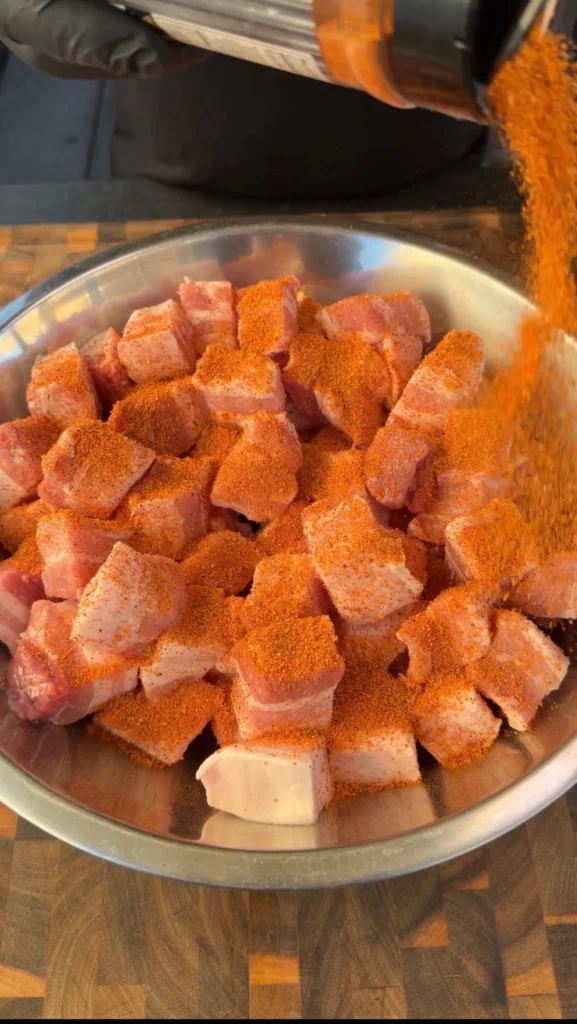
Sprinkle the quarter cup of BBQ rub over the oiled pork belly cubes, then use your hands to toss and massage the rub into every surface of each cube. Don’t just shake the rub over the top – actually work it into the meat with your fingers, ensuring complete coverage on all six sides of each cube. Pay special attention to any crevices or folds in the meat where rub might miss. The oil binder will help the rub form a paste-like coating that sticks firmly to the pork.
Let the seasoned pork belly rest at room temperature for fifteen to thirty minutes while you prepare your smoker. This rest period allows the salt in the rub to begin dissolving and penetrating into the outer layer of meat, starting the seasoning process. It also takes the chill off refrigerator-cold pork belly, which helps it cook more evenly. During this rest, some moisture will be drawn to the surface by the salt, creating a slightly tacky texture that will help develop good bark during smoking.
Smoke the Pork Belly
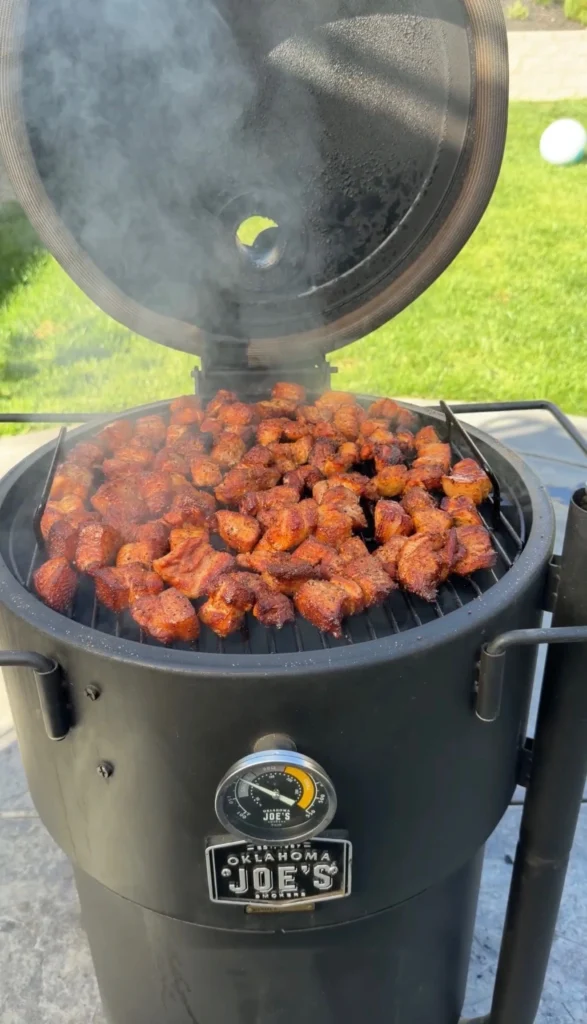
Preheat your smoker to 250 degrees Fahrenheit, using your choice of wood – apple, cherry, or hickory all work beautifully with pork. Let the smoker come to stable temperature and ensure you’re seeing thin blue smoke rather than thick white smoke, which indicates clean combustion that produces good flavor without bitter, acrid notes. Arrange the seasoned pork belly cubes on a wire rack set over a sheet pan, or place them directly on the smoker grates with space between each cube to allow smoke and heat circulation on all sides.
Smoke the pork belly uncovered for two and a half to three hours, maintaining steady 250-degree temperature throughout. During this initial smoking stage, resist the urge to open the smoker frequently or move the cubes around – every time you open the door, you lose heat and smoke, extending the cooking time. The pork belly will gradually darken as bark develops, the edges will begin to crisp and caramelize, and you’ll see significant fat rendering and dripping from the cubes. You’re looking for deep mahogany color with slightly darker, crispy edges and visible bark formation. The cubes will have shrunk noticeably as fat renders away.
Make the Honey Bourbon Sauce
While the pork belly smokes, prepare the honey bourbon glaze so it’s ready when needed. In a small saucepan over medium heat, combine half cup BBQ sauce, quarter cup honey, quarter cup bourbon (use decent quality bourbon – it doesn’t need to be premium, but avoid bottom-shelf versions with harsh alcohol taste), three tablespoons brown sugar, two tablespoons butter, and one tablespoon apple cider vinegar. Whisk everything together as the butter melts and the mixture comes to a gentle simmer.
Reduce heat to medium-low and let the sauce simmer gently for five to ten minutes, stirring occasionally, until it thickens slightly and the alcohol smell mellows. You’ll know it’s ready when the sauce coats the back of a spoon and the raw alcohol aroma has been replaced by sweet, oaky bourbon scent mixed with caramelized sugar. The sauce will thicken further as it cools, so don’t reduce it too much at this stage. Taste the glaze carefully (it will be hot) and adjust if needed – add more honey if it’s too tangy, more vinegar if it’s too sweet, or more bourbon if the alcohol flavor cooked off too much.
Wrap and Braise in Bourbon Glaze
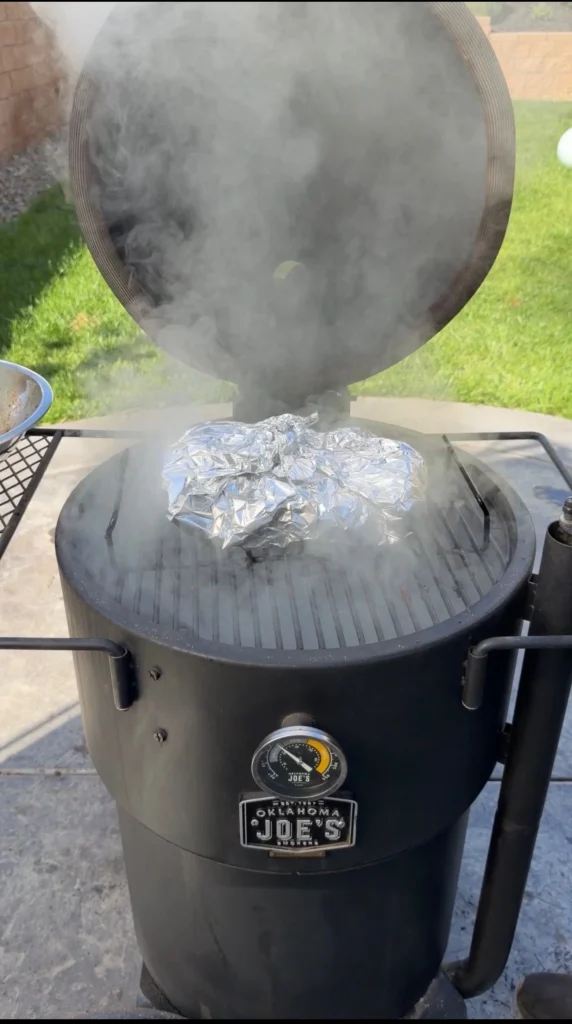
Once the pork belly cubes have developed good bark and color after three hours, carefully transfer them to a disposable aluminum foil pan large enough to hold them in a relatively single layer – overcrowding will prevent even glazing. Pour the prepared honey bourbon sauce over the pork belly cubes, using a spoon or spatula to toss and coat every piece thoroughly in the glaze. Make sure the sauce reaches the bottom of the pan and surrounds the cubes – you want them braising in liquid rather than sitting above it.
Cover the pan tightly with heavy-duty aluminum foil, crimping the edges firmly to create a seal that will trap moisture and heat. Return the covered pan to the smoker and continue cooking for one and a half to two hours. During this braising stage, the pork belly will absorb the bourbon honey flavors while the enclosed, moist environment breaks down remaining connective tissue and tenderizes the meat. The liquid prevents any drying while the sustained gentle heat transforms the texture from firm to tender and yielding. Check after ninety minutes by carefully uncovering a corner of the foil and testing a cube – it should be very tender and nearly falling apart when picked up with tongs.
Finish and Glaze the Burnt Ends
When the pork belly is properly tender, carefully remove the foil cover completely – be cautious of the hot steam that will escape. The sauce in the pan will be thin and liquid at this point, and the pork will be swimming in glaze. Return the uncovered pan to the smoker for a final thirty to forty-five minutes, allowing the excess liquid to evaporate and the sauce to reduce and thicken into a sticky glaze.
During this final stage, use a spoon or heat-resistant spatula to gently stir and turn the pork belly cubes every ten to fifteen minutes. This ensures even glazing on all sides and prevents any pieces from sticking to the bottom where they might burn. The glaze will gradually thicken and darken, coating each cube in a glossy, lacquered layer. The burnt ends are finished when the sauce has reduced to syrup consistency, the cubes have a beautiful mahogany glaze, and the edges show slight caramelization and crispiness. The finished burnt ends should be tender enough to pull apart easily but still hold their cube shape. Remove from the smoker and let rest for five to ten minutes before serving – this allows the glaze to set slightly and makes them easier to handle.

Honey Bourbon Pork Belly Burnt Ends
Ingredients
Method
- Remove skin from pork belly if attached. Cut into uniform 1½-inch cubes. Toss with olive oil in large bowl, then season all sides with BBQ rub. Let rest 15-30 minutes at room temperature.
- Preheat smoker to 250°F with apple, cherry, or hickory wood. Arrange pork belly cubes on wire rack or directly on grates with space between each piece.
- Smoke uncovered 2½-3 hours until cubes develop deep mahogany bark, edges caramelize, and significant fat renders. Don’t open smoker unnecessarily.
- While pork smokes, combine BBQ sauce, honey, bourbon, brown sugar, butter, and apple cider vinegar in saucepan over medium heat. Simmer 5-10 minutes, stirring occasionally, until slightly thickened.
- Transfer smoked pork belly cubes to foil pan. Pour bourbon glaze over top and toss to coat thoroughly. Cover pan tightly with heavy-duty foil.
- Return covered pan to smoker for 1½-2 hours until pork belly is very tender and nearly falling apart. Check at 90 minutes.
- Remove foil cover and continue smoking uncovered 30-45 minutes, stirring every 10-15 minutes, until glaze thickens to syrup consistency and coats cubes with glossy sheen. Remove when edges show slight caramelization and crispiness.
Notes
Uniform cube size is critical for even cooking
Don’t skip the final uncovered period – this creates the candy-like glaze
Burnt ends can be made 1-2 days ahead and reheated gently
Leftover burnt ends reheat well in 300°F oven for 15 minutes
For spicier version, add cayenne pepper to the rub
Substitute maple syrup for honey for different flavor profile
Keep extra sauce on side for dipping or drizzling
Tried this recipe?
Let us know how it was!FAQ
Can I use pork shoulder instead of pork belly?
While pork shoulder will work, it produces different results because it’s much leaner than pork belly. Shoulder lacks the abundant fat that makes pork belly burnt ends so rich and tender, so the finished product will be less moist and have chewier texture. If using shoulder, choose a well-marbled piece, cube it slightly larger (two-inch cubes), and monitor closely during braising to prevent drying out. You may need to add additional butter or oil to the glaze to compensate for the missing fat. The flavor will still be excellent but the signature candy-like texture of pork belly burnt ends won’t be quite as pronounced.
Do I really need to use bourbon or can I substitute?
Real bourbon makes a significant flavor difference and is worth using, but substitutions work in a pinch. Whiskey can replace bourbon with slightly different flavor – it will be less sweet with more pronounced oak and grain notes. Dark rum provides sweeter, molasses-like character that complements the brown sugar nicely. For non-alcoholic version, substitute apple juice or apple cider mixed with a teaspoon of vanilla extract to mimic bourbon’s vanilla notes. The glaze will still be delicious but will lack the complex oaky, caramel depth that bourbon provides. Don’t use bourbon extract or flavoring – they taste artificial and chemical.
Why is my pork belly still tough after braising?
Tough pork belly after the full braising time usually means the temperature was too low or the braising period wasn’t long enough. Verify your smoker temperature with a secondary thermometer – many smokers run twenty-five to fifty degrees cooler than their built-in thermometer indicates. If temperature is accurate but pork is still tough, simply continue braising covered for another thirty to sixty minutes, checking every twenty minutes. Pork belly is very forgiving and difficult to overcook during the covered braising stage because of its high fat content. Better to braise too long than not long enough.
Can I make these in the oven instead of a smoker?
Yes, oven-made pork belly burnt ends are delicious, though they’ll lack the smoke flavor. Preheat oven to 275°F. Follow the same prep and seasoning, then roast the cubes uncovered on a wire rack over a sheet pan for two hours. Transfer to a foil pan with the glaze, cover, and braise for ninety minutes. Finish uncovered for thirty minutes. For smoke flavor without a smoker, add one to two teaspoons of liquid smoke to the bourbon glaze. Alternatively, you could smoke the cubes for an hour to develop some bark and smoke flavor, then finish in the oven using the times above.
How do I prevent the glaze from burning during the final stage?
Burning during the final uncovered stage happens when the temperature is too high or the cubes sit in one position too long. Ensure your smoker maintains 250°F – higher temperatures will caramelize the sugars too quickly, causing burning before the glaze thickens properly. Stir the burnt ends every ten to fifteen minutes to redistribute the glaze and rotate pieces from the edges (which cook faster) to the center. If you notice any pieces starting to char, remove the pan from heat immediately and stir vigorously. The glaze should darken to deep mahogany but never turn black or develop bitter, burnt smell.
Can I make these ahead of time for a party?
Absolutely – pork belly burnt ends actually reheat beautifully and can be made one to two days ahead. Complete the entire recipe through the final glazing, then cool completely and refrigerate in an airtight container with any remaining glaze. When ready to serve, spread the burnt ends in a foil pan, cover loosely with foil, and reheat in a 300°F oven or smoker for fifteen to twenty minutes until heated through. You can also reheat in a slow cooker on low for one to two hours. The texture may soften slightly during reheating, but the flavor often improves as it has more time to develop.
What’s the best wood for smoking pork belly burnt ends?
Fruit woods like apple and cherry are excellent choices because their mild, slightly sweet smoke complements pork without overwhelming it. Apple provides clean, subtle smoke with slight fruity sweetness, while cherry adds mild smoke with beautiful mahogany color. Hickory offers stronger, more traditional BBQ smoke with bacon-like character – it works well but can overpower the bourbon and honey if you’re not careful. Pecan provides middle-ground between fruit woods and hickory. Avoid mesquite which is too strong and can make pork taste bitter. Oak is safe but somewhat boring – it works but doesn’t add much character.
Why are my burnt ends greasy instead of tender?
Greasy burnt ends result from insufficient fat rendering during the initial smoking stage. This happens when the temperature is too low (under 225°F) or the smoking time is too short. The fat needs adequate time and heat to render and drip away – at proper temperature, you should see significant fat dripping from the cubes during the first three hours. If your burnt ends are greasy, return them to the smoker uncovered at 275°F for thirty to sixty minutes to render more fat. You can also carefully pour off excess liquid fat from the foil pan before the final glazing stage, though this removes some flavor along with the fat.
How do I know when the burnt ends are done?
Properly finished burnt ends should have several visual and textural indicators. The glaze should coat each cube in a glossy, syrup-like layer that’s slightly tacky to the touch but not wet or runny. The color should be deep mahogany to nearly black at the edges, but without any actual charring or burnt spots. When you pick up a burnt end with tongs, it should hold its cube shape but yield easily to gentle pressure – almost falling apart but not quite. The interior should be tender enough to pull apart with minimal effort. If you bite into one (careful – it’s hot), the texture should be similar to candy – giving way easily with rich, melt-in-your-mouth quality.
Can I freeze leftover pork belly burnt ends?
Yes, burnt ends freeze well for up to three months. Let them cool completely after cooking, then portion into freezer-safe containers or bags with some of the glaze. Remove as much air as possible to prevent freezer burn. To reheat from frozen, thaw overnight in the refrigerator, then warm in a covered foil pan at 300°F for twenty to thirty minutes. You can also reheat directly from frozen by adding them to a foil pan with a few tablespoons of water, covering tightly, and baking at 325°F for forty-five to sixty minutes. The texture will be slightly softer than fresh-made but still delicious.
Ready to Take Your Cooking to the Next Level?
This is where I keep all my most-used products, gear, and favorite cooking tools — check it out:
🔥 View My Cooking Gear & ToolsRecipe Categories
If you loved this recipe, you’ll find more to savor across our diverse categories. From beef to pork, chicken to turkey, seafood to appetizers, there’s a wealth of flavors waiting for you. Explore them all at CWFeats.