
Lemon Pepper Shrimp
Lemon pepper crispy shrimp take 2 lbs of jumbo shrimp tossed in oil and lemon pepper seasoning, coated in cornstarch, and pan-seared in a hot skillet with oil until the edges are golden and crispy, then finished with butter, fresh parsley, and a squeeze of lemon juice. The cornstarch creates a thin, crackling crust on the surface of each shrimp that holds up against the melted butter baste at the end. The entire cook takes about 2 to 3 minutes per side, and the butter goes in after the flip so it bastes the already-crispy exterior without softening it. Oil in the pan is the difference between a crispy sear and a soggy shrimp. Serves 4 to 6 as a main or appetizer.
Jump to Recipe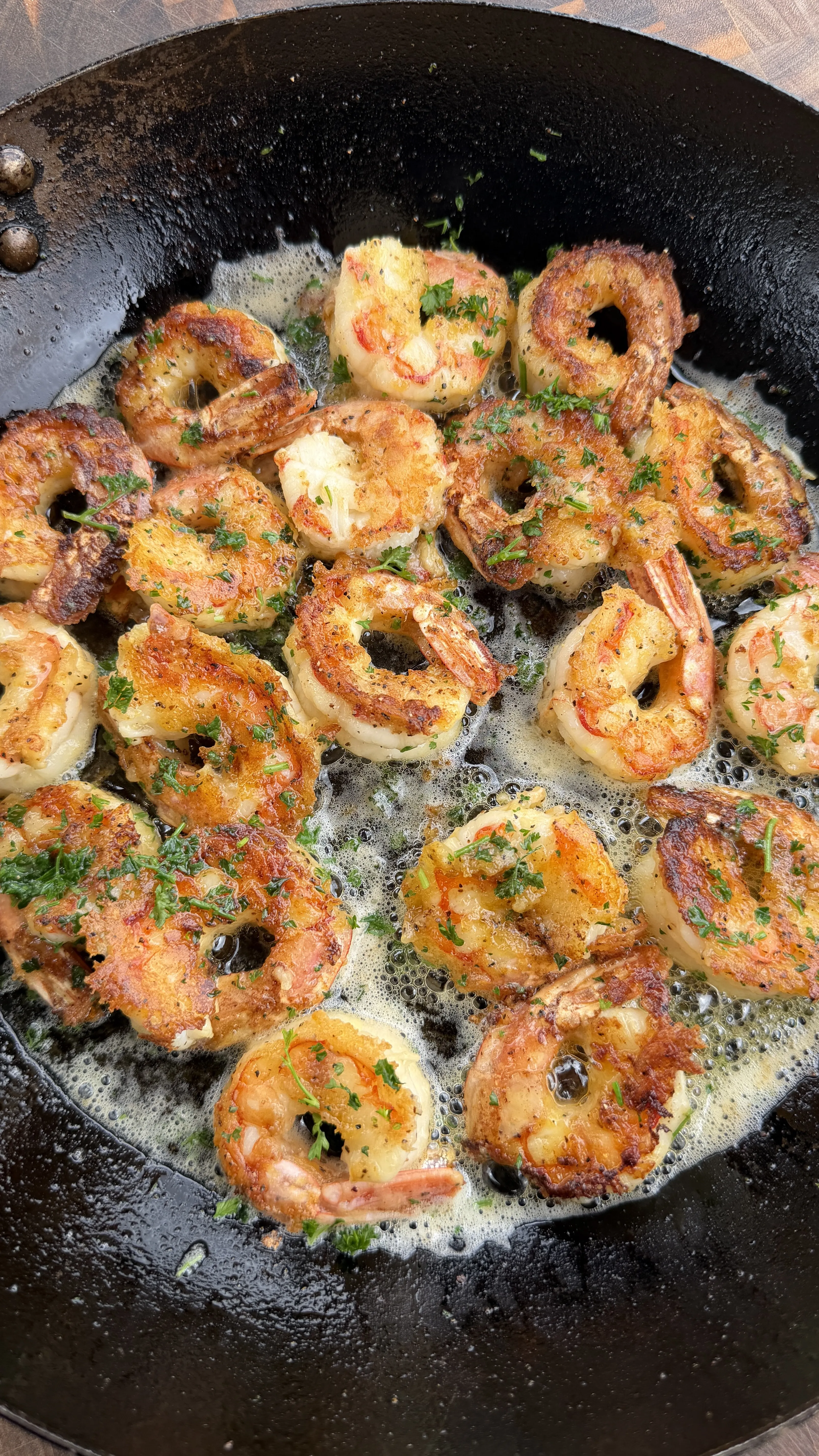
Why Cornstarch Creates Crispier Shrimp Than Flour
A Lighter, Crunchier Coating
Cornstarch produces a thinner, lighter crust than all-purpose flour because it contains no gluten. Flour-coated shrimp develop a thicker, breadier coating that absorbs more oil and can turn soggy quickly. Cornstarch creates a delicate, glass-like shell on the surface that stays crispy even after the butter baste at the end. The coating is thin enough that you still taste the shrimp underneath, not just the breading.
Oil First, Then Cornstarch
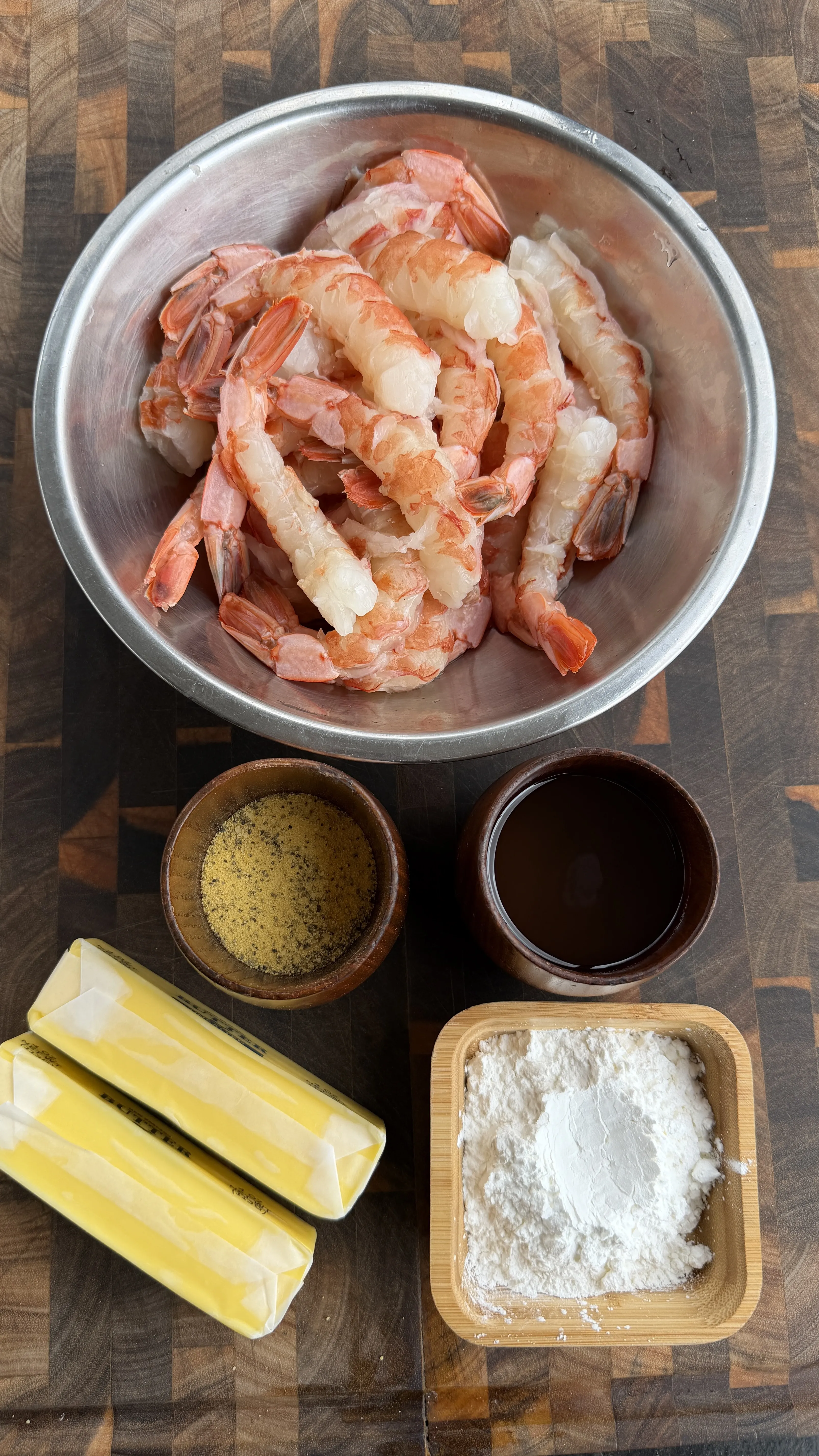
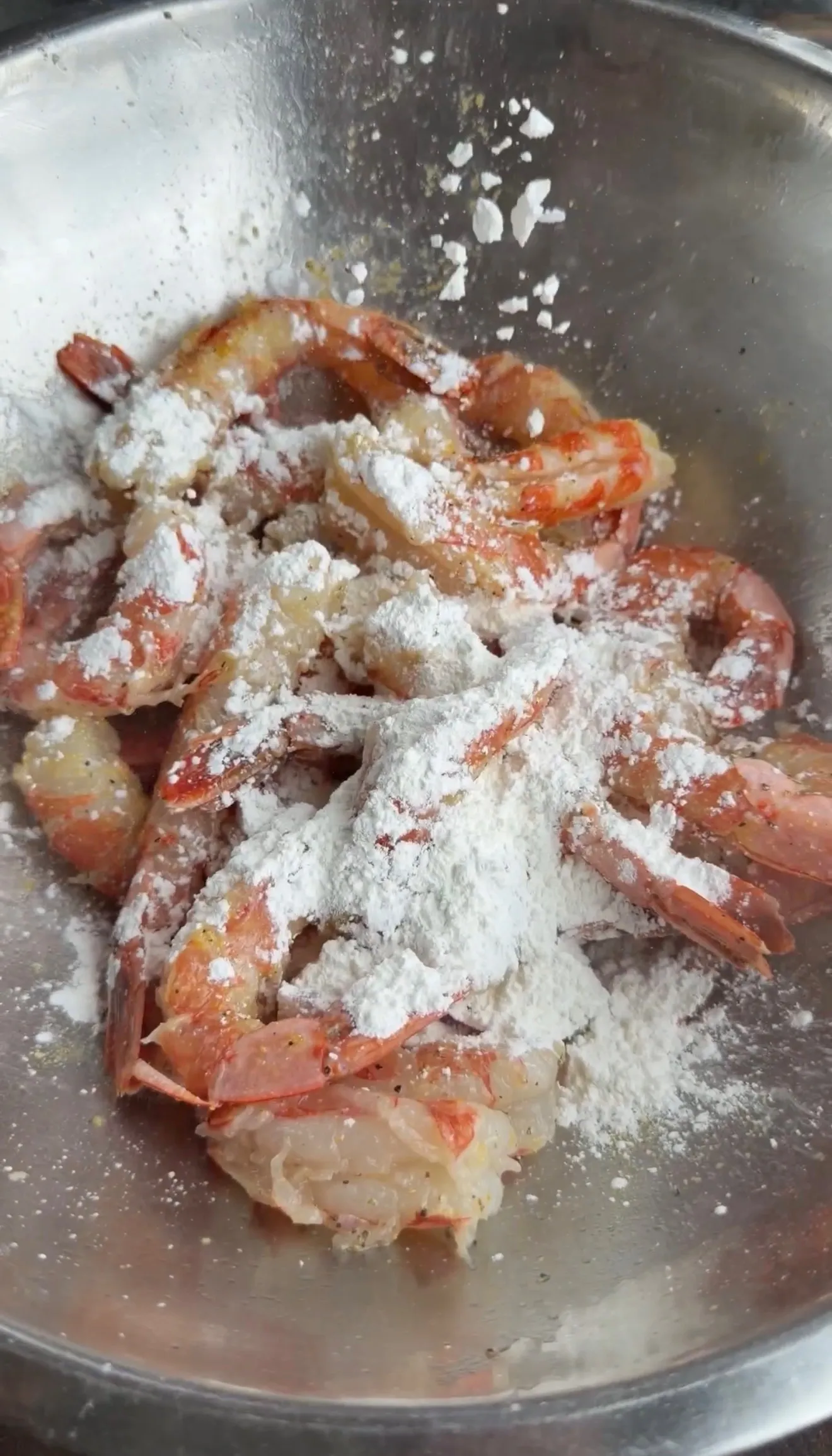
Tossing the shrimp in oil and lemon pepper seasoning before adding the cornstarch ensures the seasoning adheres directly to the surface of the shrimp. The cornstarch then goes on as the outermost layer, which is where it needs to be to interact with the hot oil in the pan and form the crispy crust. If you add the cornstarch first and the seasoning on top, the lemon pepper sits on the outside of the starch layer and can fall off during cooking.
Drying the Shrimp Is the Most Important Prep Step
Moisture Is the Enemy of Crispiness
Surface moisture on the shrimp creates steam when it hits the hot pan, and steam prevents the Maillard reaction that produces browning and crispiness. Pat each shrimp thoroughly dry with paper towels before tossing with oil and seasoning. This step takes 2 minutes and makes the difference between shrimp that sear golden and crispy versus shrimp that steam and turn rubbery in a puddle of released liquid.
Peeled, Deveined, and Ready
Start with shrimp that are already peeled and deveined, or clean them yourself before drying. The shell prevents the cornstarch from adhering to the surface, so peeled shrimp are necessary for this technique. Jumbo shrimp (16 to 20 count per pound) work best because they have enough surface area for the cornstarch coating and enough mass to develop a crispy exterior before the interior overcooks.
Oil in the Pan Is What Makes the Sear Work
No Oil Equals Soggy Shrimp
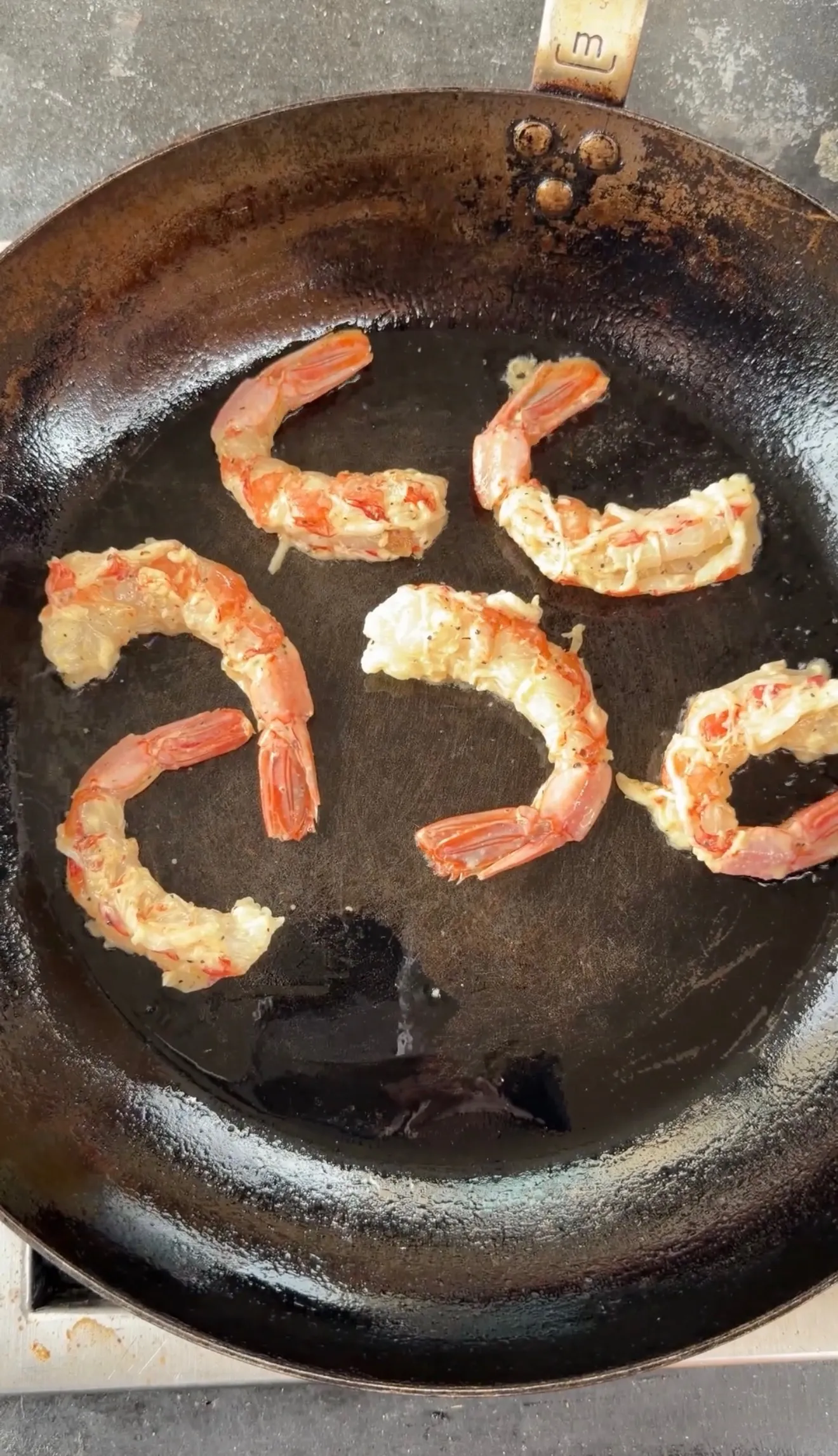
The 2 tablespoons of oil on the shrimp help the seasoning and cornstarch adhere, but they are not enough to create a proper sear on the pan surface. Adding 1 to 2 tablespoons of oil directly to the hot pan before the shrimp go in creates a thin layer of hot fat that the cornstarch-coated surface contacts immediately. This contact produces the golden, crispy crust that defines the dish. Without oil in the pan, the cornstarch sticks to the dry surface, tears when you flip, and the shrimp steam instead of sear.
Medium-High Heat and a Single Layer
Preheat the pan over medium-high heat until the oil shimmers. Lay the shrimp in a single layer with space between each one so they sear instead of steam. Crowding the pan drops the temperature and releases too much moisture at once, which turns the oil into a shallow braise instead of a sear. For 2 lbs of shrimp, you will likely need to cook in two or three batches to keep the pan hot enough.
The Butter Baste Finish
Butter Goes in After the Flip
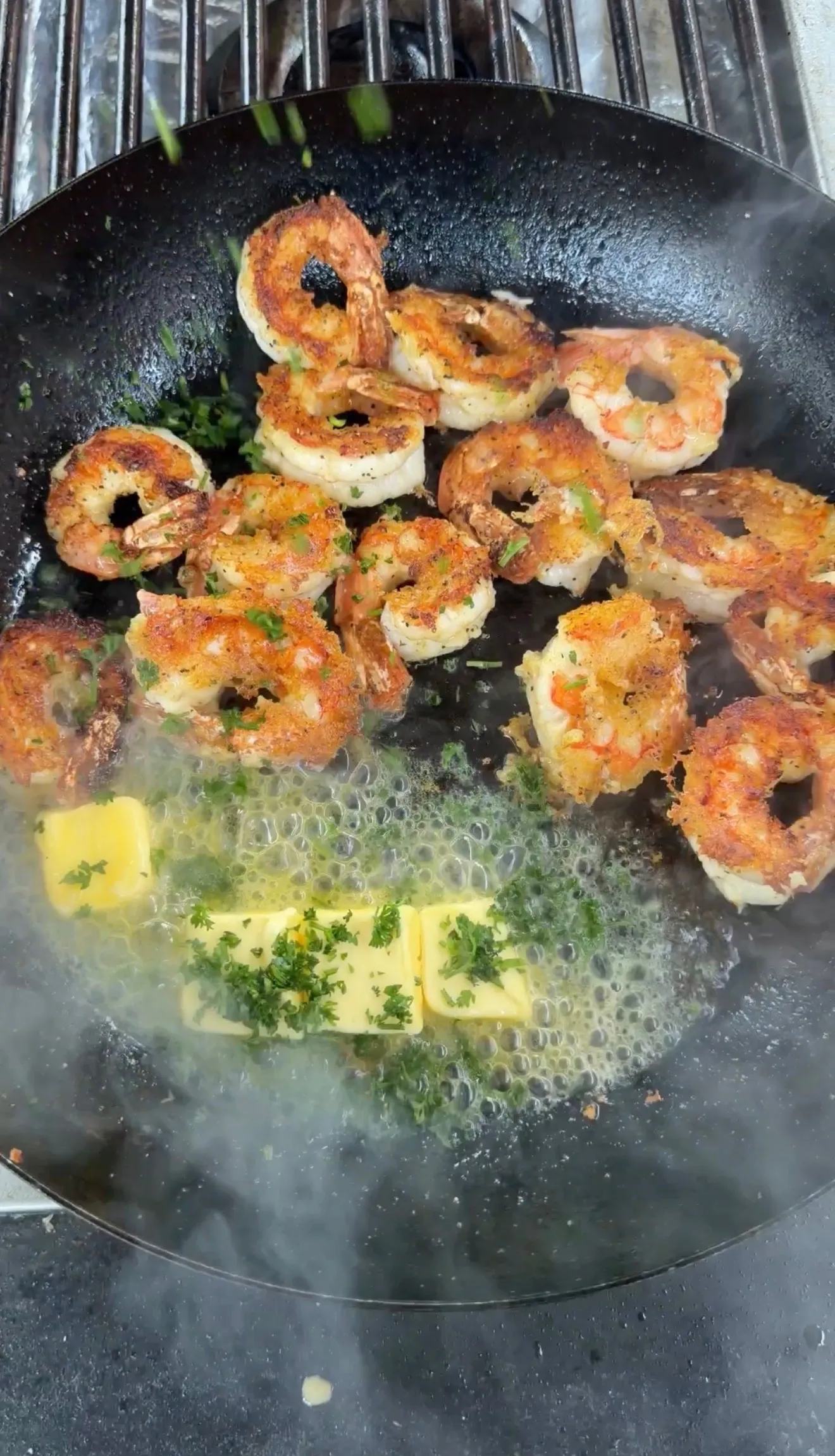
After the shrimp cook undisturbed for 1 to 1.5 minutes and develop a crispy crust on the bottom, flip them and immediately add 2 tablespoons of butter and fresh parsley to the pan. The butter melts and pools around the shrimp, and you can tilt the pan and spoon the melted butter over each shrimp to baste them. Adding butter at the beginning would burn at medium-high heat and prevent the crispy sear from forming, so it goes in only after the flip when the cook is almost done.
Fresh Lemon Juice at the Very End
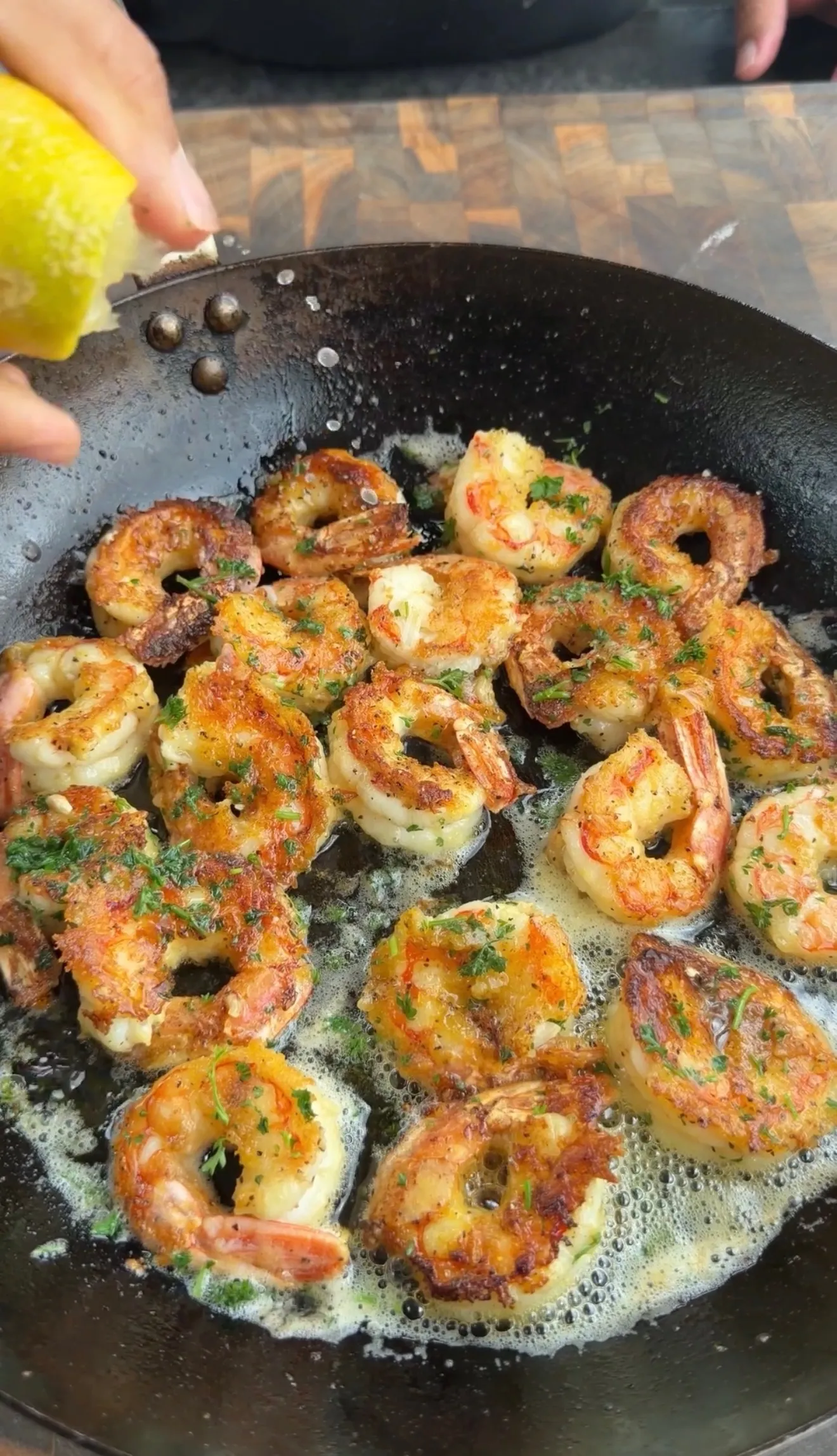
After 1 more minute of cooking with the butter baste, squeeze fresh lemon juice over the shrimp and pull them off the heat immediately. The lemon juice adds a bright acidity that cuts through the richness of the butter and amplifies the lemon pepper seasoning. If you add the lemon juice too early, the acid releases moisture from the shrimp and softens the crispy coating. A quick squeeze right at the end preserves the crunch while delivering the lemon flavor.
Step-by-Step: How to Make Lemon Pepper Crispy Shrimp
Step 1: Dry and Season the Shrimp
Make sure 2 lbs of jumbo shrimp are clean, deveined, and fully dried with paper towels. In a bowl, toss the dry shrimp with 2 tablespoons oil and 2 teaspoons lemon pepper seasoning until evenly coated. Then add 3 tablespoons cornstarch and mix until everything is uniformly coated. The oil goes on first so the seasoning adheres to the shrimp, and the cornstarch goes on last as the outermost layer where it can form the crispy crust.
Step 2: Sear in a Hot Pan with Oil
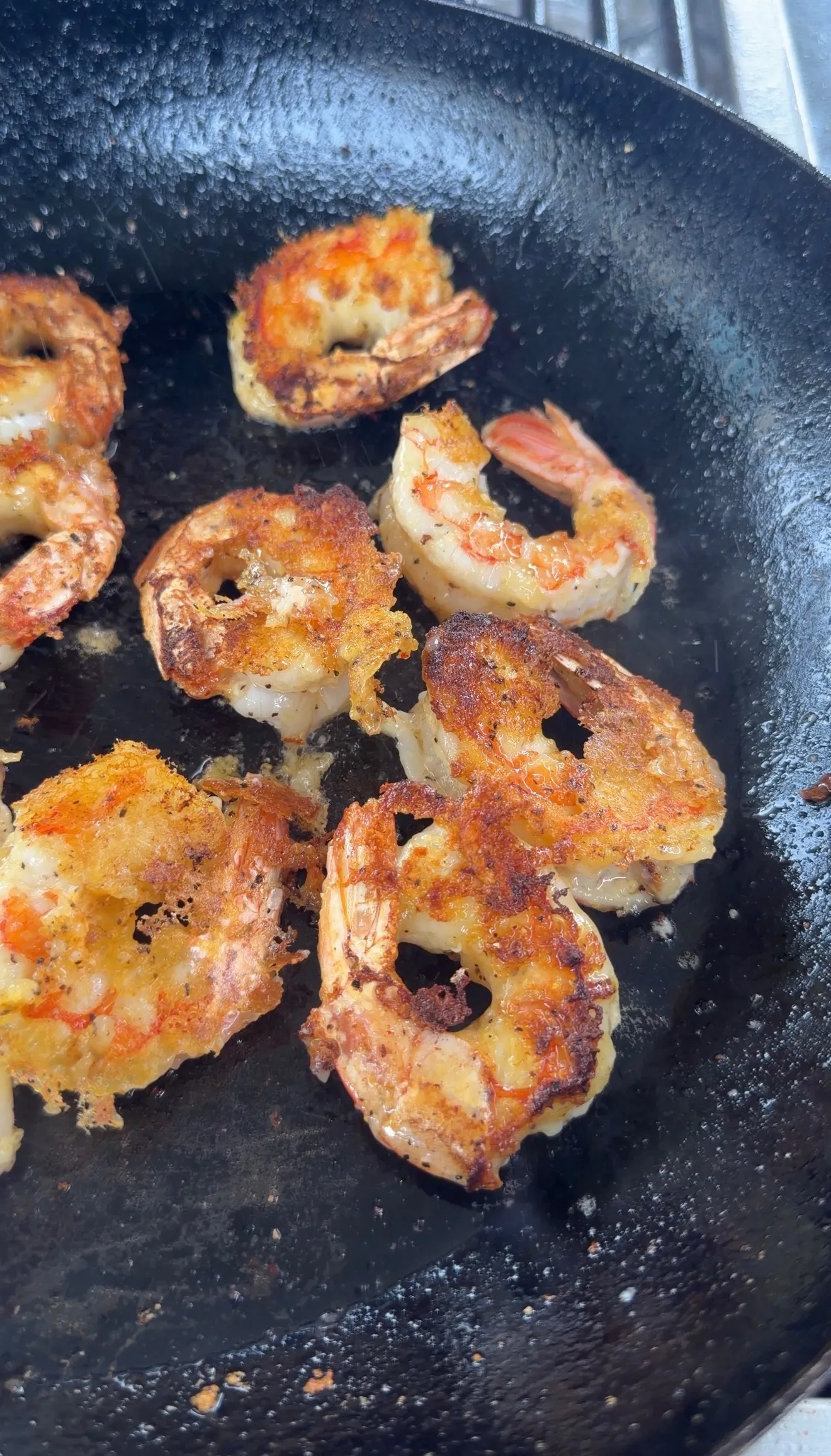
Heat a pan (cast iron works best) over medium-high heat and add 1 to 2 tablespoons of oil. Once the oil shimmers, lay the shrimp in a single layer with space between each one. Cook for 1 to 1.5 minutes without moving them so the cornstarch coating develops a golden, crispy crust on the bottom. Work in batches if needed since 2 lbs is too much for one pan without crowding.
Step 3: Flip, Add Butter, and Baste
Flip each shrimp, then add 2 tablespoons butter and fresh parsley to the pan. As the butter melts, tilt the pan and spoon the melted butter over each shrimp to baste them. Cook for another 1 minute while basting continuously. The butter adds richness and helps the parsley adhere to the crispy surface without softening the cornstarch crust since it only spends about 60 seconds in contact with the coating.
Step 4: Finish with Fresh Lemon and Serve
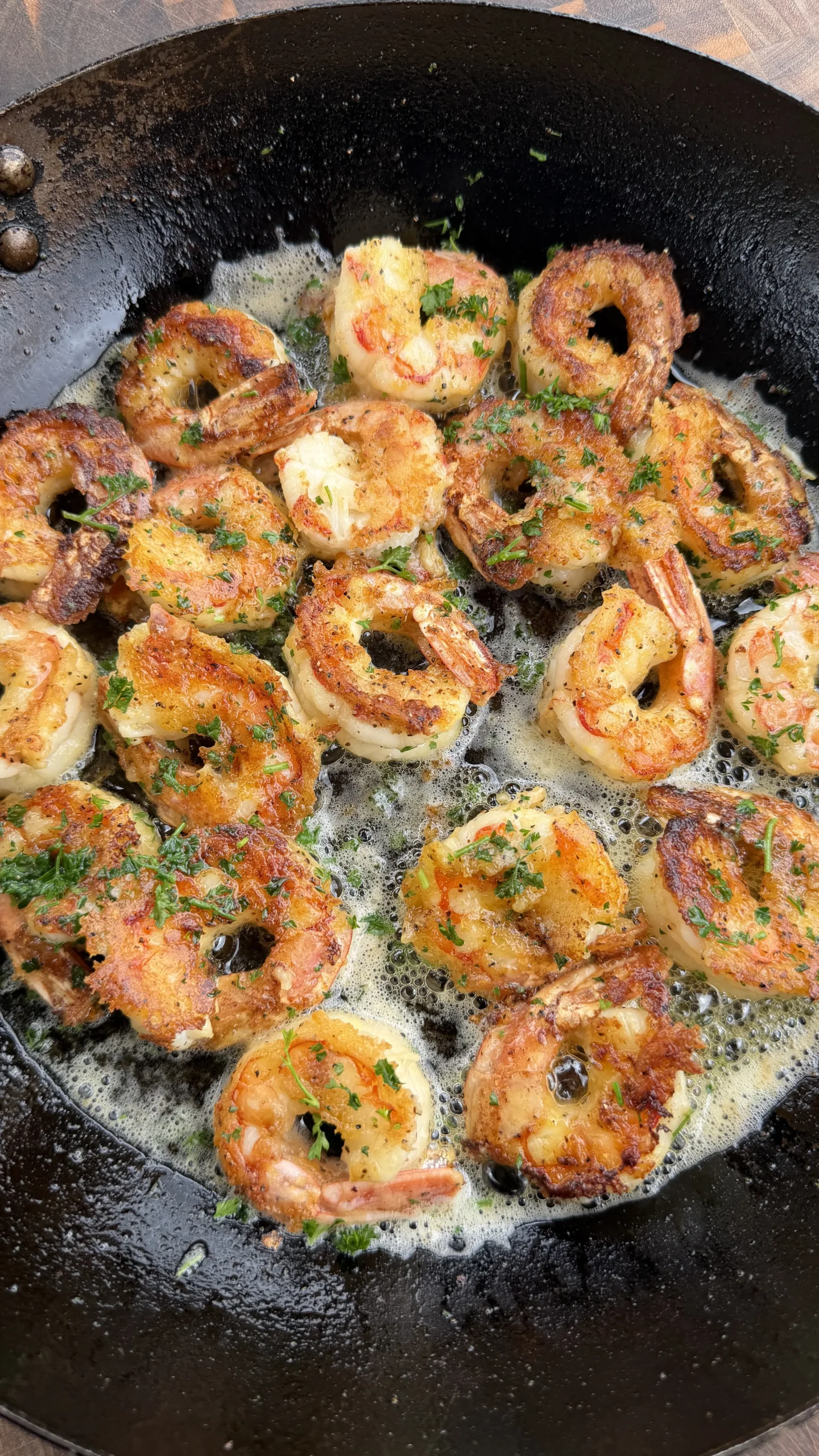
Squeeze fresh lemon juice over the shrimp and pull them off the heat immediately. The lemon juice adds a bright acidity that amplifies the lemon pepper seasoning and cuts through the butter. Serve right away while the coating is still crispy, since shrimp lose their crunch quickly as they cool and the residual steam softens the cornstarch shell.
Lemon Pepper Crispy Shrimp
Ingredients
Equipment
Method
- Pat shrimp completely dry. Toss with 2 tbsp oil and lemon pepper seasoning. Add cornstarch and mix until evenly coated.
- Heat pan over medium-high heat with 1-2 tbsp oil. Lay shrimp in a single layer. Cook 1-1.5 minutes undisturbed until golden and crispy on the bottom.
- Flip shrimp. Add butter and fresh parsley. Baste with melted butter for about 1 minute.
- Squeeze fresh lemon juice over the shrimp and pull off heat immediately. Serve right away.
Notes
Tried this recipe?
Let us know how it was!Lemon Pepper Crispy Shrimp FAQ
Common questions about cornstarch coating, pan-searing technique, butter baste, and serving.
Your Questions, Answered
You can, but cornstarch produces a thinner, lighter, crunchier coating than flour because it contains no gluten. Flour creates a thicker, breadier shell that absorbs more oil and can turn soggy faster. If you want the lightest, crispiest result with a glass-like crunch, cornstarch is the better choice for pan-seared shrimp.
The oil on the shrimp helps the seasoning and cornstarch adhere to the surface. Oil in the pan creates a thin layer of hot fat that the cornstarch contacts immediately, which is what produces the golden, crispy sear. Without oil in the pan, the cornstarch sticks to the dry surface, tears when you flip, and the shrimp steam instead of sear.
Butter has a lower smoke point than cooking oil and would burn at medium-high heat before the shrimp finish cooking. Adding it after the flip means the crispy crust is already set, and the butter only spends about 60 seconds in contact with the shrimp. This is enough time to baste and add richness without the butter burning or softening the cornstarch coating.
Yes, but thaw them completely first and dry them very thoroughly before coating. Run frozen shrimp under cold water for 5 to 10 minutes until fully thawed, then pat dry with paper towels multiple times. Frozen shrimp release more moisture than fresh, so extra drying is critical. Any surface water will prevent the cornstarch from crisping and cause the shrimp to steam in the pan.
Cooking and Serving
Shrimp cook very fast, usually 2 to 3 minutes total at medium-high heat. They are done when the exterior is golden and crispy, the flesh has turned from translucent gray to opaque white/pink, and they curl into a loose C-shape. A tight O-shape means they are overcooked. Pull them off the heat as soon as the lemon juice goes on since they continue cooking from residual heat.
Two pounds of shrimp is too much for one pan without crowding the surface and dropping the temperature. When shrimp are packed together, they release moisture that pools in the pan and steams the coating instead of searing it. Working in 2 to 3 batches keeps the pan hot, maintains a single layer with space between each shrimp, and produces an even, golden crust on every piece.
These shrimp work as an appetizer on their own or as the protein in a full meal. Rice, pasta, grilled asparagus, or a simple arugula salad with lemon vinaigrette all complement the lemon pepper and butter flavors. For a lighter option, serve them over a bed of mixed greens with the pan butter drizzled over the top as the dressing.
Ready to Level Up?
Take your backyard cooking from good to legendary.
This is where I keep all my most-used smokers, knives, and favorite cooking tools.
Shop My Gear CollectionExplore More Recipes
Find more diverse flavors at CWFeats.com