CWF Eats - Header

Smoked Beef Ribs

Table of Contents

Smoked beef ribs cooked hot and fast at 300 to 350°F with hickory wood produce incredible bark on the outside while keeping the meat rich, beefy, and juicy on the inside. A rack of 4-bone beef plate ribs gets trimmed, separated into individual ribs, seasoned with a sweet barbecue rub, and smoked bone-side down until the internal temperature reaches 185°F. The ribs then get wrapped in foil and returned to the smoker for about 2 more hours until they hit 210°F and are completely probe tender. A final barbecue sauce glaze gets brushed on and tacked up for 10 minutes before resting. The membrane on the bone side stays on because it crisps up during the cook and helps hold the rib together.

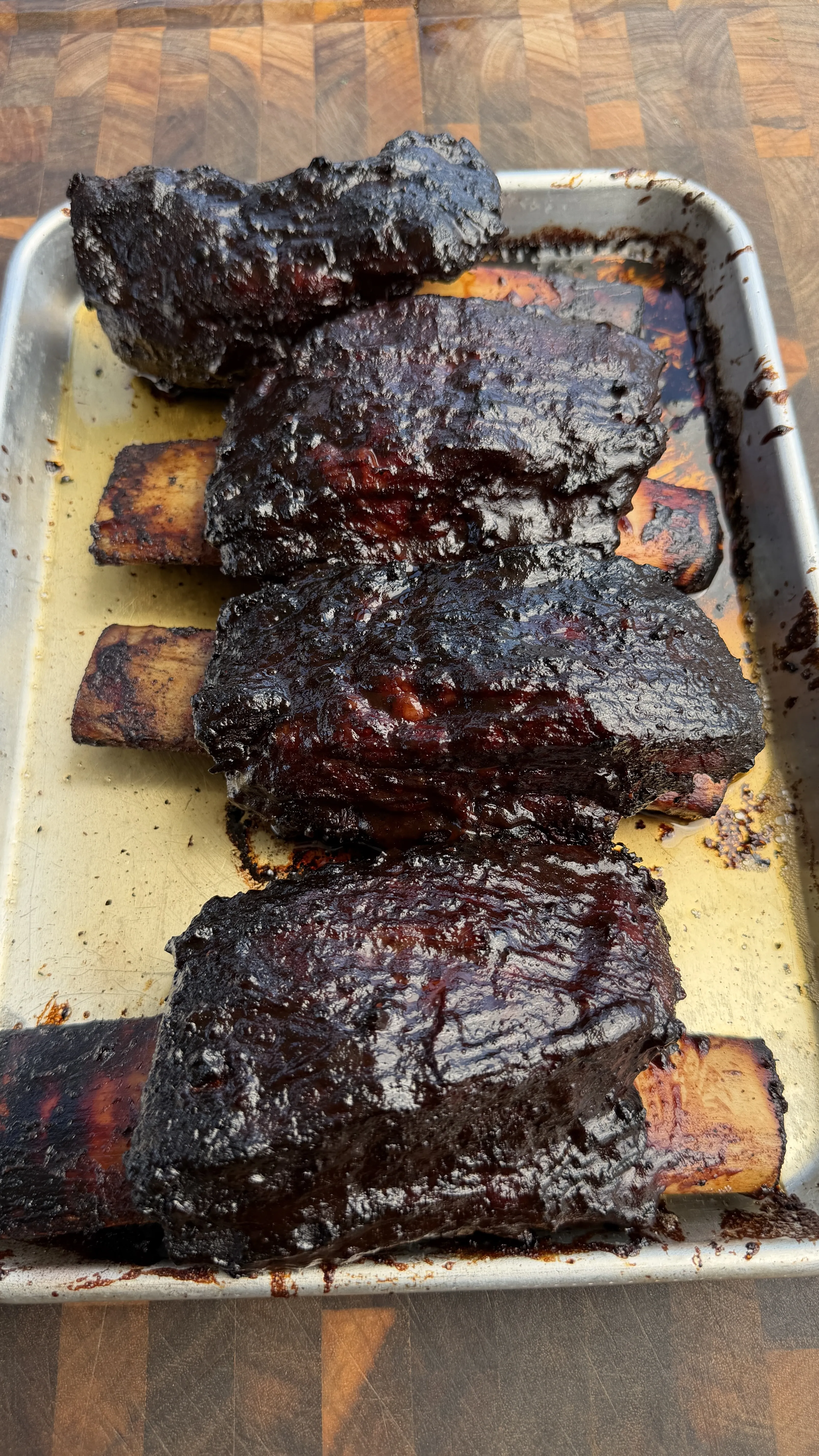
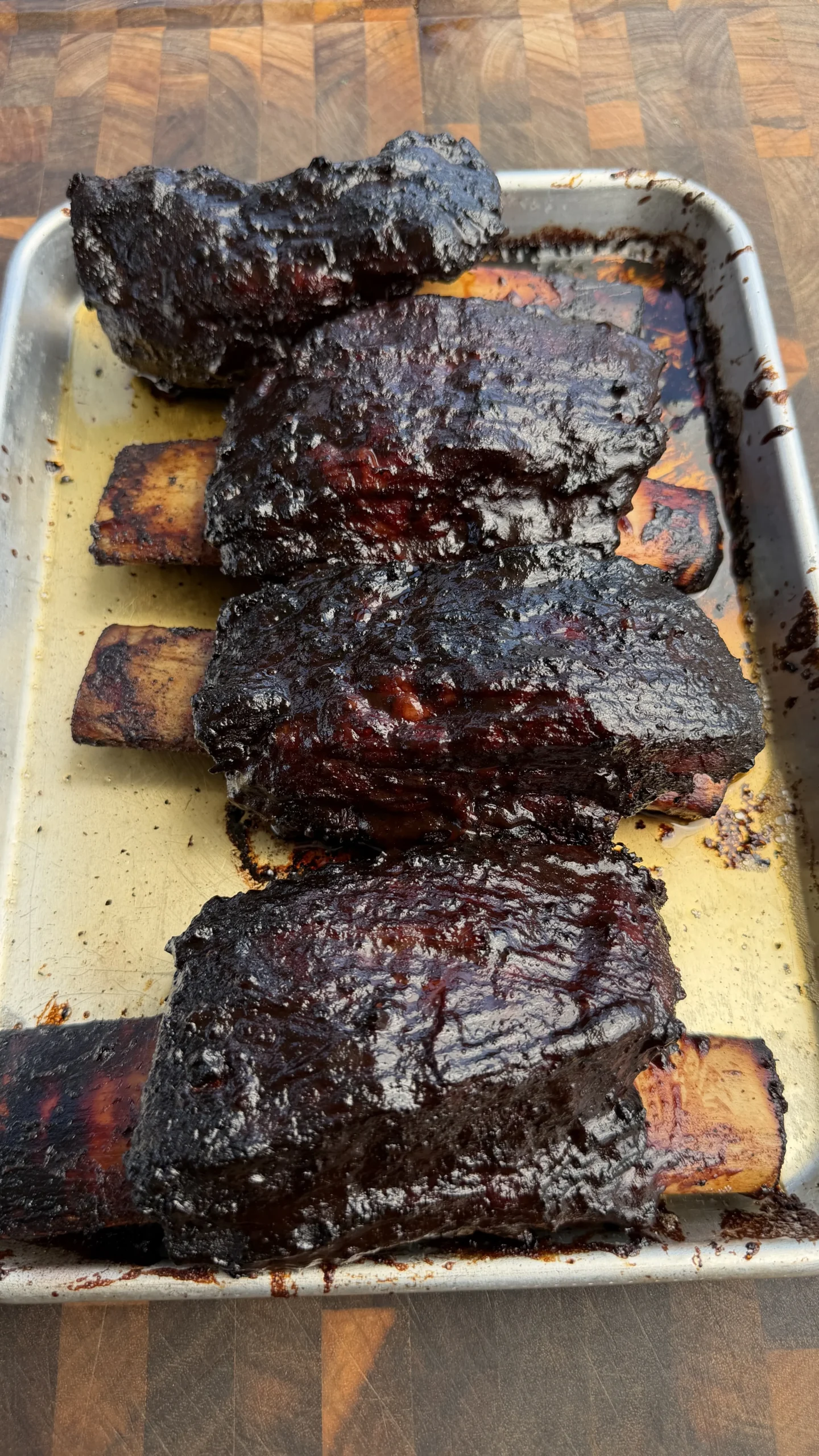
Jump to Recipe Dark smoky barbecue beef ribs with charred exterior in aluminum baking pan on wooden surface

Why Hot and Fast Works for Smoked Beef Ribs

300 to 350°F Builds Bark Without Drying Out the Meat

Traditional low-and-slow smoking at 225°F works well for pork ribs, but beef plate ribs carry significantly more intramuscular fat and connective tissue. Smoking at 300 to 350°F renders that fat faster and develops a thick, crusty bark on the exterior while the interior stays moist from the rendered fat basting the meat from inside. The higher temperature also shortens the total cook time from 8 to 10 hours down to roughly 4 to 5 hours total, including the wrap phase.

Hickory Adds the Right Smoke Profile for Beef

Hickory produces a strong, assertive smoke flavor that stands up to the rich, beefy flavor of plate ribs. Milder woods like apple or cherry can get lost behind the intensity of the beef. Hickory provides the classic barbecue smoke taste without overpowering the meat, and it pairs naturally with sweet barbecue rubs and sauces. If you prefer a slightly milder smoke, oak is a good alternative that still has enough strength to complement beef.

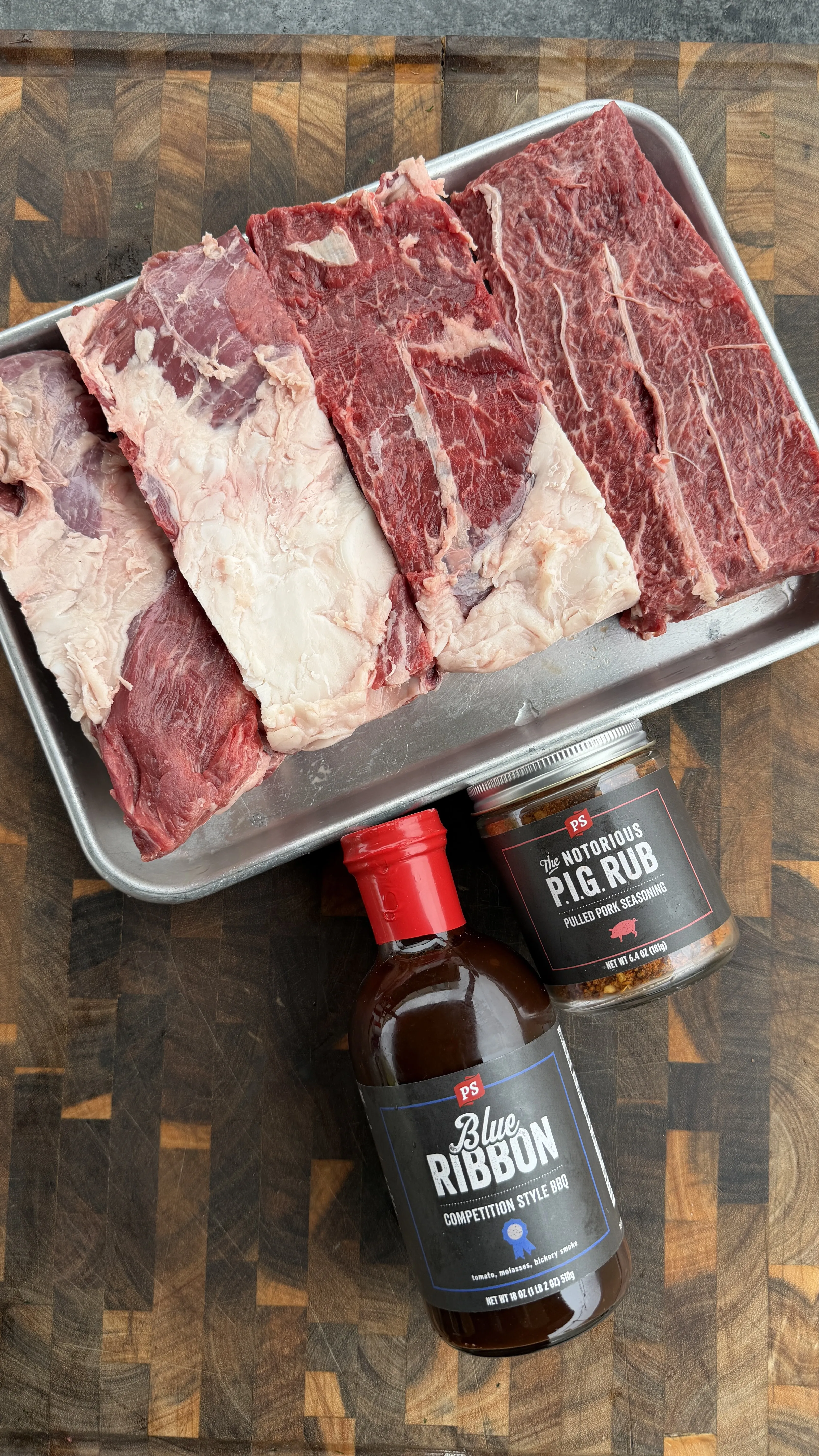
Raw beef ribs on metal tray with barbecue sauce and seasoning on wooden cutting board

How to Trim and Prep Beef Plate Ribs

Trim Excess Fat and Silver Skin, Keep the Membrane

Remove any thick pads of hard fat from the top of the rack and peel off any silver skin. However, leave the membrane on the bone side intact. Unlike pork ribs where the membrane stays tough and chewy, the membrane on beef plate ribs crisps up during the hot and fast cook and adds a satisfying crunch to the bone side while helping hold the rib together structurally. Removing it on beef ribs is unnecessary and can cause the meat to fall apart too early.

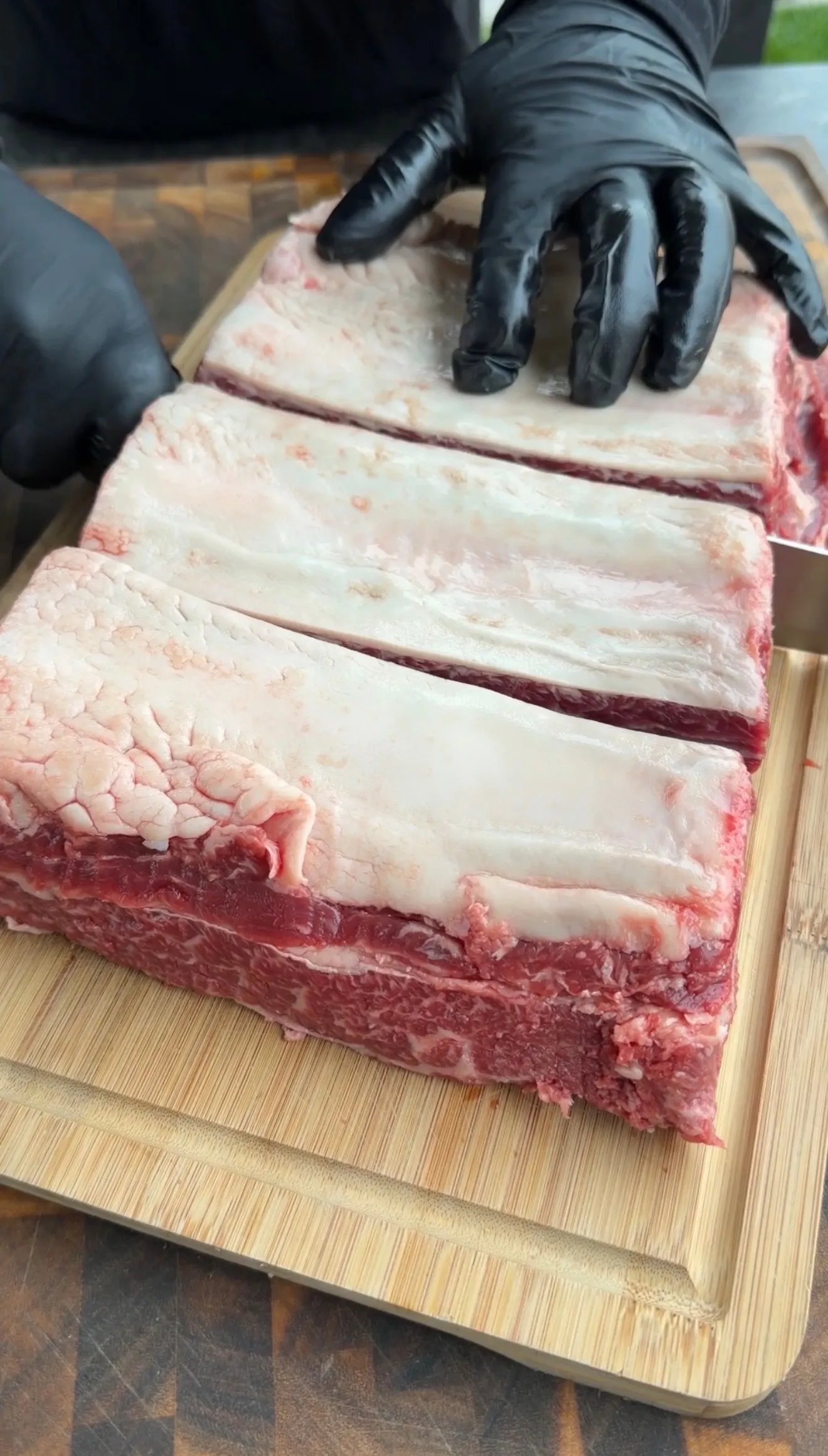
Raw beef ribs being scored with knife on wooden cutting board

Separate Into Individual Ribs for Maximum Bark

Slice the rack into individual ribs before seasoning. Separating the ribs exposes all four sides of each rib to the smoke and heat, which means bark develops on every surface instead of just the top and bottom. This is the biggest difference between smoking a full rack versus individual ribs. The additional exposed surface area produces significantly more flavorful bark per bite.

Season with a Sweet Barbecue Rub

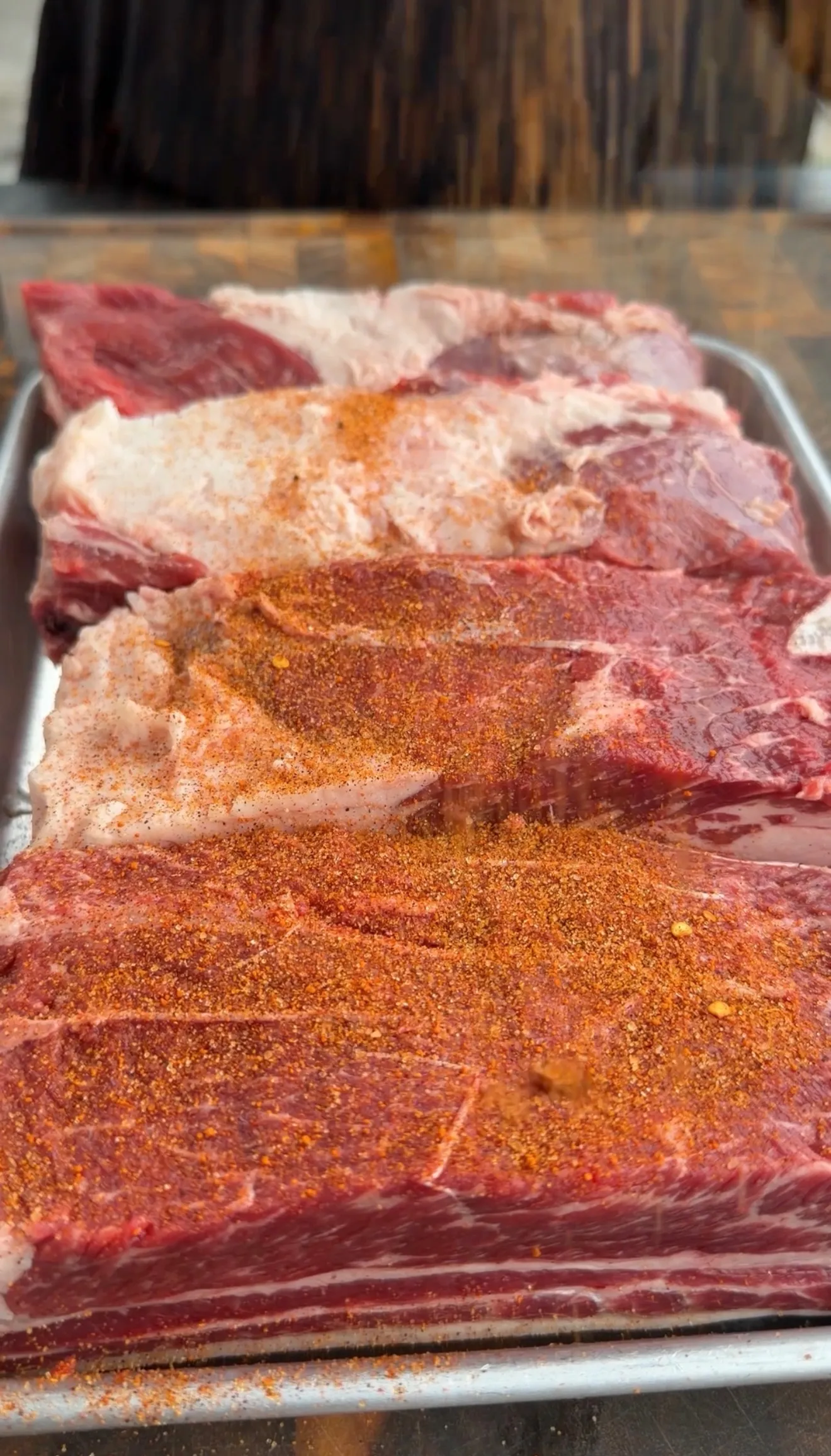
Coat each rib lightly with yellow mustard or oil as a binder if you prefer, then season generously on all sides with a sweet barbecue rub. The mustard flavor cooks off completely during the smoke and simply helps the seasoning stick to the meat surface. A sweet rub works particularly well on beef ribs because the sugar caramelizes during the cook and contributes to the bark formation. The sweetness also balances the intense beefy, smoky flavor.

Raw beef ribs coated with barbecue spice rub on metal tray ready for smoking

The Smoke Phase: Bone-Side Down to 185°F

Bone-Side Down Protects the Meat

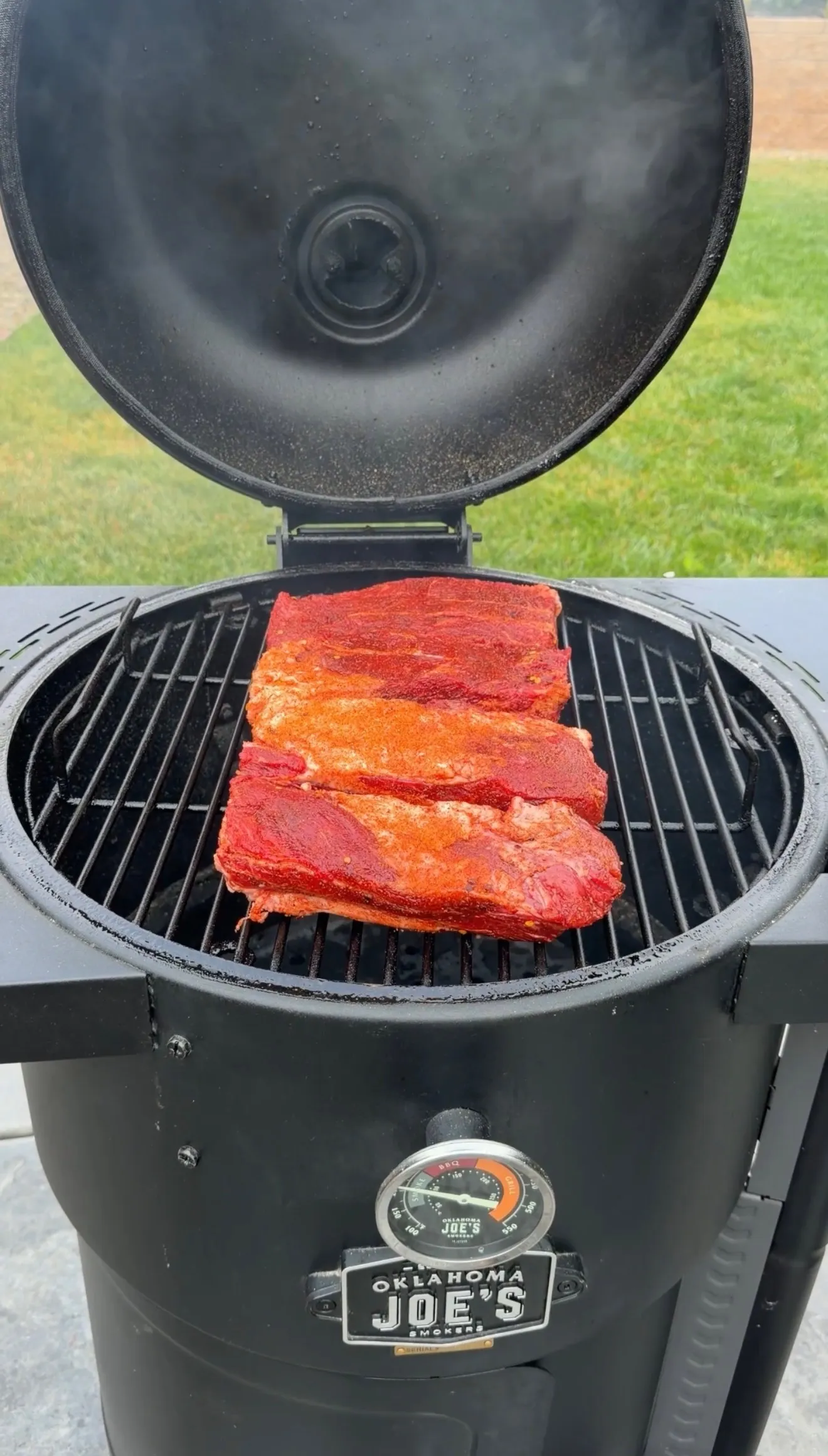
Place the ribs bone-side down directly on the smoker grates. The bones act as a heat shield between the fire and the meat, which prevents the bottom from cooking too fast and drying out. Meanwhile, the exposed meat side faces the circulating smoke and heat, building bark on the top and sides. Maintain your smoker at 300 to 350°F throughout this phase.

Smoked barbecue beef ribs with red seasoning rub cooking on Oklahoma Joe's smoker grill grates

When to Pull for the Wrap

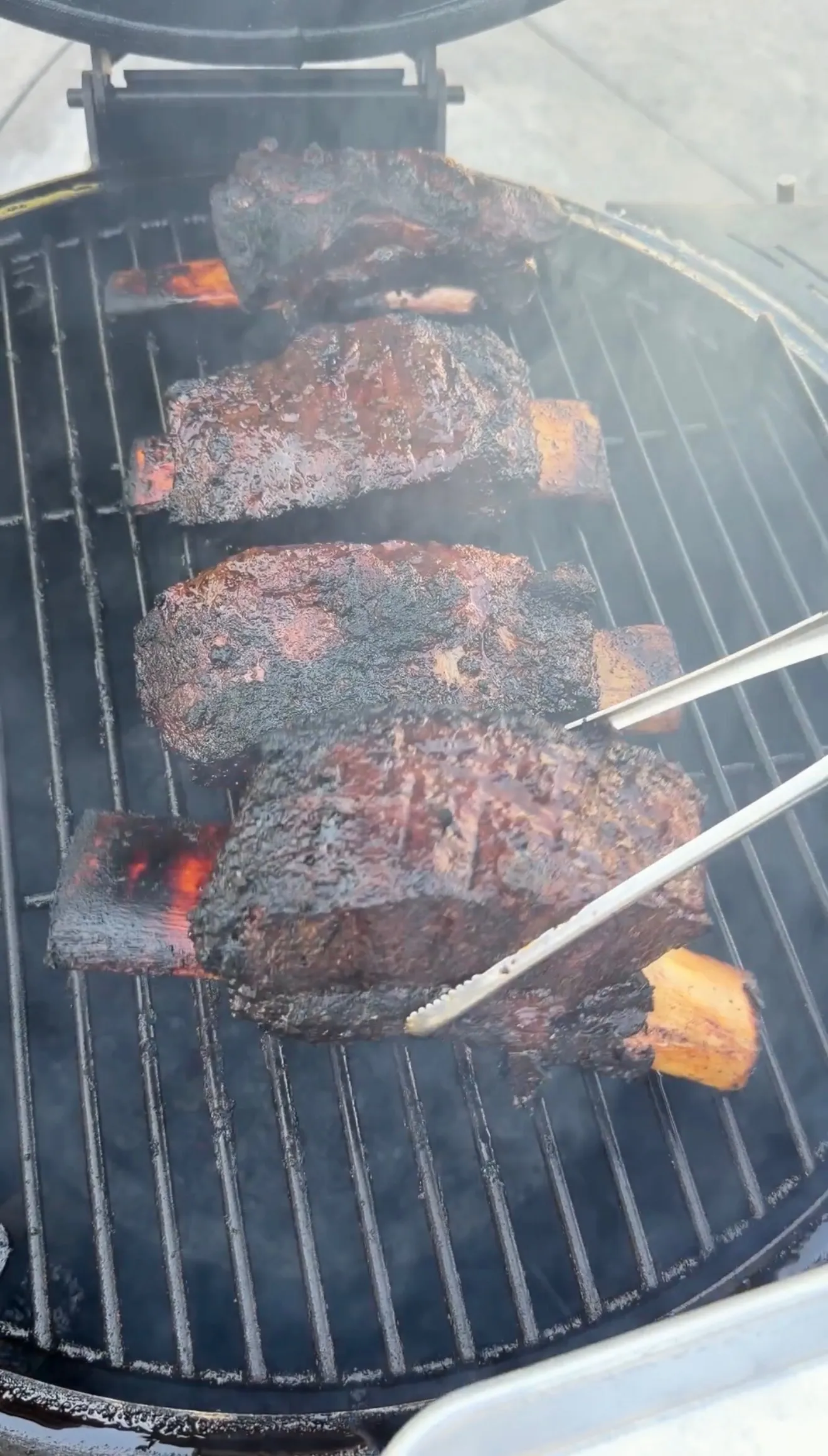
Smoke the ribs until the internal temperature reaches around 185°F. At this point the bark should be deeply set, the exterior should be a dark mahogany color, and the fat on the surface should be visibly rendered. The meat will have stalled in the 150 to 170°F range during the cook. Pushing through to 185°F before wrapping ensures the bark is fully locked in and will not soften excessively during the wrapped phase.

Smoked barbecue beef ribs with dark crust cooking on outdoor grill grates

Wrapping and Finishing to Probe Tender

Foil Wrap Breaks Down the Remaining Connective Tissue

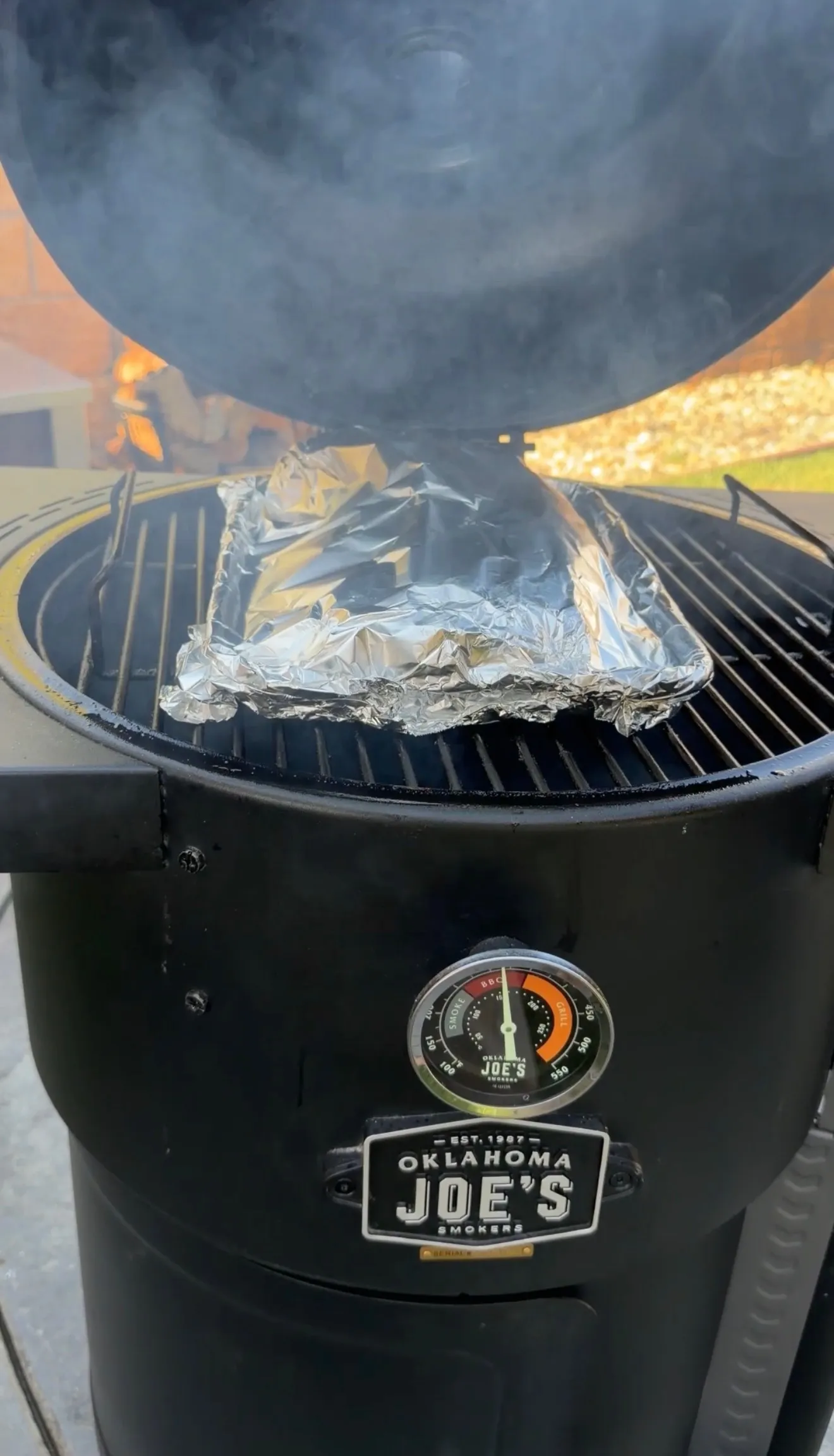
Transfer the ribs to a foil tray and wrap tightly with aluminum foil. Return them to the smoker and continue cooking for about 2 more hours. The foil traps moisture and steam around the ribs, which accelerates the breakdown of the remaining collagen and connective tissue. The ribs should reach a final internal temperature of around 210°F and be completely probe tender, meaning a thermometer probe or toothpick slides into the meat with no resistance.

Beef ribs wrapped in aluminum foil smoking on Oklahoma Joe's smoker with temperature gauge visible

Probe Tender Is the Real Doneness Indicator

Temperature is a guide, but probe tenderness is the actual indicator that the ribs are done. Two racks at the same temperature can have different levels of tenderness depending on the specific cut, fat distribution, and thickness. The probe should slide into the thickest part of the meat like a hot knife through butter with zero resistance. If there is any grab or tug, wrap them back up and give them another 20 to 30 minutes.

Glazing, Resting, and Serving Smoked Beef Ribs

Glaze with Barbecue Sauce and Tack Up

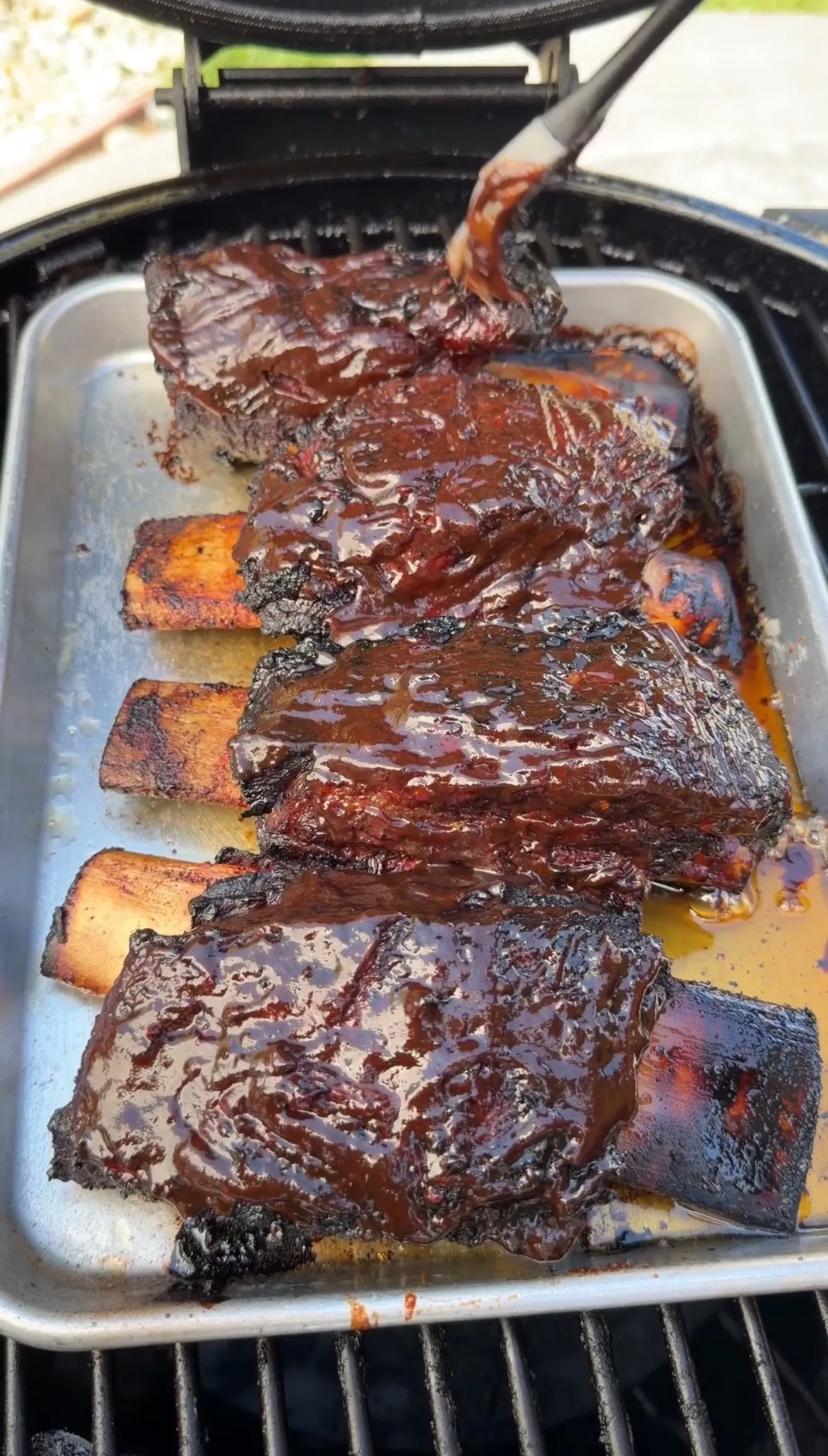
Remove the foil and brush the ribs with your favorite barbecue sauce on all exposed sides. Return them to the smoker unwrapped for about 10 minutes to let the sauce tack up and become sticky. The residual heat from the smoker caramelizes the sugars in the sauce and creates a glossy, lacquered finish over the bark.

Glazed smoked beef ribs in barbecue pan

Rest 15 to 20 Minutes Before Serving

Remove the ribs from the smoker and let them rest for 15 to 20 minutes. Resting allows the juices to redistribute throughout the meat and the internal temperature to stabilize. Cutting into the ribs immediately after pulling them from the smoker causes the juices to run out onto the cutting board instead of staying in the meat. After resting, slice between the bones or serve as individual bone-in ribs.

CWF Eats Original

Smoked Barbecue Beef Ribs

Beef plate ribs · Hickory smoke · Hot & fast at 300-350°F · Wrapped to 210°F probe tender

Prep15 min
Smoke4-5 hrs
Smoker300-350°F
Internal210°F
Servings4

Ingredients

Beef Ribs

  • 1 rack beef plate ribs (4 bones)
  • Yellow mustard or oil (binder, optional)
  • PS Seasoning Pig Rub or your favorite sweet BBQ rub
  • Salt, pepper, garlic seasoning (optional)

Smoke + Glaze

  • Hickory wood for smoking
  • Your favorite barbecue sauce for glazing
Pro Tips

Separate the Ribs

Cut into individual ribs before seasoning. All four sides get bark instead of just the top and bottom.

Keep the Membrane

Leave the membrane on the bone side. It crisps up during the hot and fast cook and helps hold the rib together.
Probe Tender, Not Just Temp

210°F is the guide, but probe tenderness is the real indicator. The probe should slide in like butter with zero resistance.

Step-by-Step: How to Smoke Barbecue Beef Ribs

Step 1: Trim and Separate

Trim excess fat and silver skin from the top. Leave the membrane on the bone side. Slice the rack into individual ribs for maximum bark on all sides.

Trimming and separating beef ribs on cutting board

Step 2: Season Generously

Coat with mustard or oil if desired, then season generously on all sides with a sweet barbecue rub.

Seasoned beef ribs on tray ready for smoker

Step 3: Smoke Bone-Side Down to 185°F

Preheat smoker to 300 to 350°F with hickory. Place ribs bone-side down and smoke until internal temperature reaches 185°F. The bark should be deep mahogany and firmly set.

Beef ribs smoking on Oklahoma Joe's Beef ribs with dark bark on grill

Step 4: Wrap and Finish to 210°F Probe Tender

Transfer to a foil tray, wrap tightly, return to the smoker. Cook about 2 more hours until probe tender at approximately 210°F. The probe should slide in with zero resistance.

Wrapped beef ribs in foil on smoker

Step 5: Glaze, Rest, and Serve

Remove foil, brush with barbecue sauce, let tack up 10 minutes uncovered. Rest 15 to 20 minutes before slicing or serving.

Glazed smoked beef ribs in pan
Dark smoky barbecue beef ribs with charred exterior in aluminum baking pan on wooden surface

Smoked Barbecue Beef Ribs

Smoked beef plate ribs cooked hot and fast at 300 to 350°F with hickory wood, seasoned with a sweet barbecue rub, smoked bone-side down to 185°F, wrapped in foil until probe tender at 210°F, then glazed with barbecue sauce.
Prep Time 15 minutes
Cook Time 5 hours
Wrap Time 2 hours
Total Time 5 hours 15 minutes
Servings: 4 people
Course: Main Course
Cuisine: American, BBQ

Ingredients
  

Beef Ribs
  • 1 rack beef plate ribs 4 bones
  • Yellow mustard or oil binder, optional
  • PS Seasoning Pig Rub or your favorite sweet barbecue rub
  • Salt, pepper, and garlic seasoning optional
Smoke + Glaze
  • Hickory wood for smoking
  • Your favorite barbecue sauce for glazing

Equipment

  • Smoker
  • Instant-Read Thermometer
  • Aluminum foil tray
  • Basting brush

Method
 

  1. Trim excess fat and silver skin from the top. Leave the membrane on the bone side. Slice the rack into individual ribs.
  2. Coat with mustard or oil if desired. Season generously on all sides with sweet barbecue rub.
  3. Preheat smoker to 300-350°F with hickory. Place ribs bone-side down and smoke until internal temperature reaches 185°F.
  4. Transfer ribs to foil tray. Wrap tightly with foil. Return to smoker and cook about 2 more hours until probe tender at approximately 210°F.
  5. Remove foil. Brush with barbecue sauce. Let sauce tack up 10 minutes uncovered on the smoker.
  6. Remove from smoker and rest 15-20 minutes before slicing or serving.

Notes

Keep the membrane: The bone-side membrane crisps up during hot and fast cooking and helps hold the rib together.
Separate the ribs: Individual ribs build bark on all four sides instead of just top and bottom.
Probe tender is the real test: 210°F is a guide. The probe should slide in with zero resistance like butter.
Wrap at 185°F: Ensures the bark is locked in before the moist wrap phase.

Tried this recipe?

Let us know how it was!
CWF Eats – Smoked Beef Ribs FAQ
CWF Eats

Smoked Beef Ribs FAQ

Common questions about smoking temps, wrapping, wood choice, and doneness.

6 Questions Answered
Click to expand

Your Questions, Answered

The target is approximately 210°F, but probe tenderness is the real indicator. A thermometer probe or toothpick should slide into the thickest part of the meat with zero resistance. Two racks at the same temperature can have different tenderness levels depending on fat distribution and thickness, so always test with a probe before pulling.
Yes, but the cook will take 8 to 10 hours instead of 4 to 5. Low-and-slow at 225°F produces excellent results, but the hot and fast method at 300 to 350°F renders the heavy intramuscular fat in beef plate ribs more efficiently and builds a thicker bark in less time. Both methods end at the same internal temperature and probe tenderness.

No. Leave the membrane on the bone side. Unlike pork ribs where the membrane stays tough, the membrane on beef plate ribs crisps up during the hot and fast cook and adds crunch to the bone side. It also helps hold the rib together structurally during the long cook.

Wrapping and Serving

Wrap when the internal temperature reaches around 185°F and the bark is deeply set. The exterior should be a dark mahogany color with visibly rendered fat. Wrapping before the bark is locked in will cause it to soften too much during the steaming phase inside the foil.

Hickory is the top choice because it produces a strong smoke flavor that stands up to the rich, beefy taste of plate ribs. Milder woods like apple or cherry tend to get lost behind the beef. Oak is a solid alternative if you want something slightly less assertive than hickory while still complementing the meat.

Beef plate ribs (also called beef short ribs, dino ribs, or NAMP 123A) are typically found at butcher shops, Costco, or specialty meat markets. They are cut from the short plate section of the cow with 3 to 4 bones per rack. If your regular grocery store does not carry them, ask the butcher to special order a full plate short rib rack.

Got more questions? Drop them in the comments and CWF Eats will answer every one.
CWF Eats

Ready to Level Up?

Take your backyard cooking from good to legendary.

This is where I keep all my most-used smokers, knives, and favorite cooking tools.

Shop My Gear Collection

Explore More Recipes

Never Miss A Recipe!

Sign up for our email list and get alerted with new recipes!

Newest Recipes

Want to Work With Miguel?