Smoked Brisket Platter
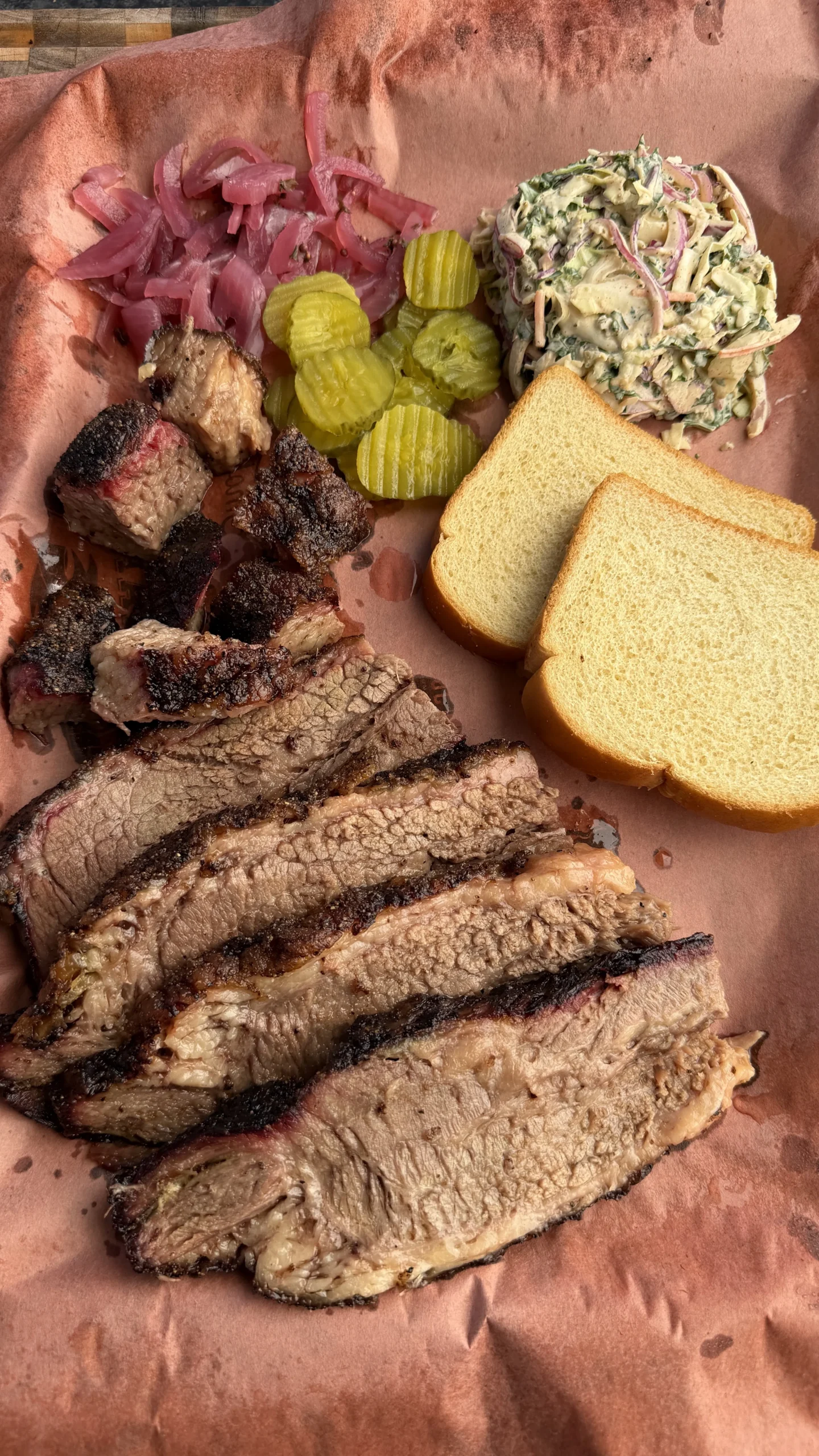
This smoked brisket recipe takes a whole packer brisket, seasons it heavily with salt, pepper, and garlic, then smokes it low and slow at 250°F fat side up with no wrap until the internal temperature hits 195°F. After a controlled rest down to 165°F, the brisket goes back into the smoker on warm mode overnight for next-level tenderness. The next day it gets sliced and arranged on a brisket platter alongside creamy kale slaw, pickled red onions, dill pickles, soft sandwich bread, and barbecue sauce on the side. Total cook runs 12 to 14 hours plus an 8 to 12 hour overnight hold, and serves 10 to 12.
Why This Smoked Brisket Recipe Skips the Wrap and Rests Overnight
No Wrap Builds the Deepest Bark Possible
Most smoked brisket recipes call for wrapping in butcher paper or foil around 165°F to push through the stall. That technique trades bark for speed. Skipping the wrap and running the brisket naked from start to finish gives the surface continuous exposure to smoke and convection heat, which builds a darker, deeper, more textured bark. Consequently, the trade-off is a longer cook, but the crust is unmatched and the smoke ring runs deeper into the meat.
Overnight Rest Pushes Tenderness to Another Level
A standard brisket rest runs 1 to 2 hours in a cooler. This smoked brisket recipe holds the meat at 150°F to 170°F for 8 to 12 hours overnight, which gives the connective tissue and rendered fat extended time to redistribute through the muscle. As a result, the slices come out with a juicy texture and pull-apart tenderness that a short rest cannot replicate. Texas barbecue joints like Franklin’s have used long warm holds for years for exactly this reason.
Choosing and Trimming a Whole Packer Brisket
Look for Marbling and Flexibility, Not Just Size
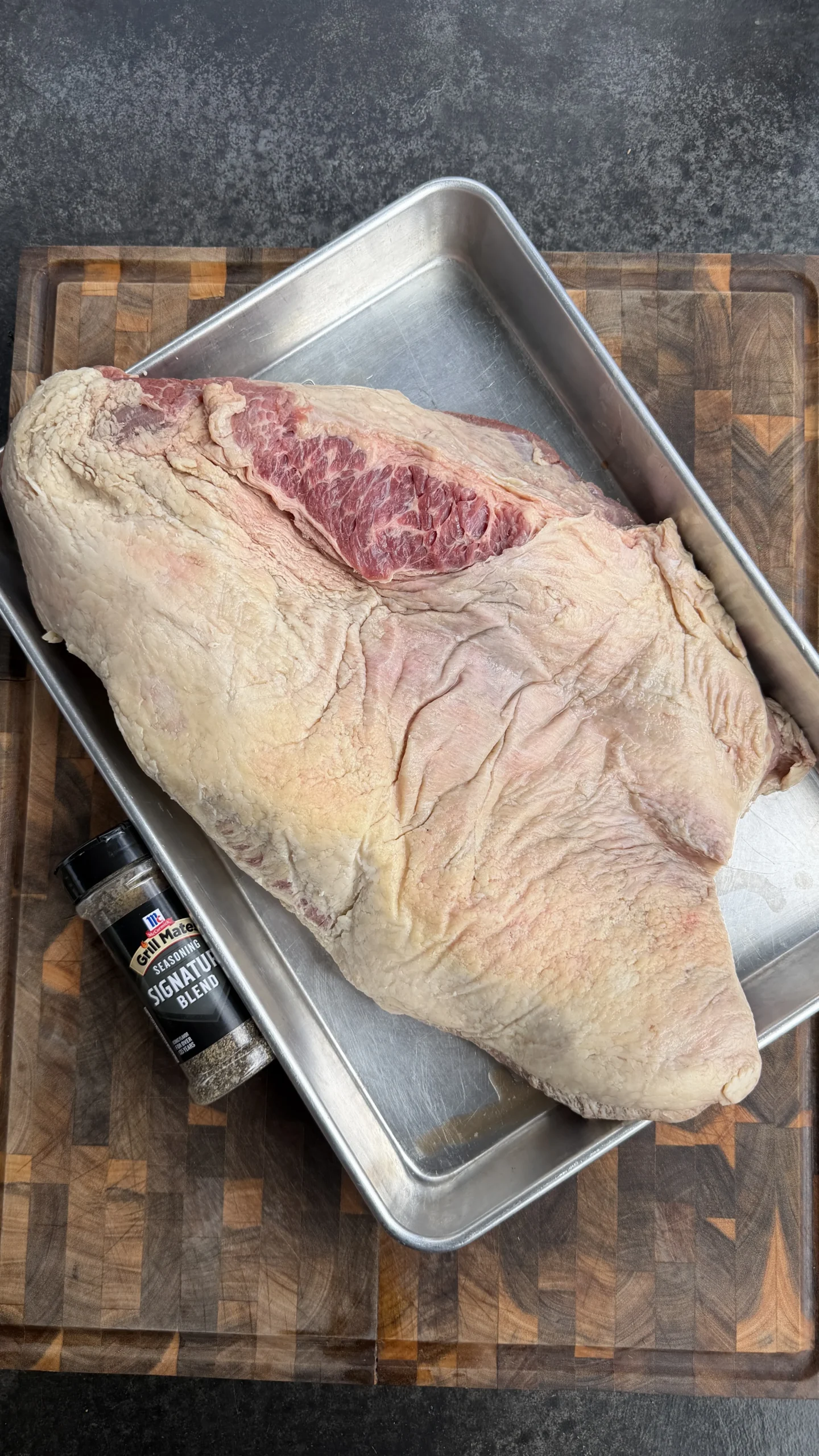
A whole packer brisket runs 12 to 16 pounds and includes both the flat and the point connected by a layer of fat. When picking one at the butcher, prioritize visible marbling in the flat and a brisket that bends easily when held by one end. Furthermore, a flexible brisket has less connective tissue strain and renders more evenly during the long smoke. Stiff briskets indicate older or tougher cuts that resist tenderizing.
Trim the Hard Fat, Leave a 1/4 Inch Cap
Trim away the hard, waxy fat that will not render at smoking temperatures. Specifically, target the thick fat seam between the point and flat, the silverskin on the flat, and any fat thicker than 1/4 inch on the fat cap. Additionally, leave 1/4 inch of fat on top so it can baste the meat as it renders during the cook.

The SPG Seasoning Philosophy on a Smoked Beef Brisket
Salt, Pepper, and Garlic Let the Beef Speak
Central Texas barbecue tradition built the SPG rub for one reason: high-quality beef does not need anything else. Salt seasons the meat, coarse black pepper builds bark and adds a slight bite, and garlic powder adds depth without competing with the smoke. In contrast, sugar-heavy rubs caramelize early and can burn before the bark sets, while complex spice blends mask the beef flavor that a 14-hour smoke worked so hard to develop.
Season Heavily Without Going Too Far
Apply the SPG seasoning generously enough that the surface looks evenly coated with a slight grain visible through the rub. A 50/50 ratio of coarse pepper to kosher salt with a teaspoon of garlic powder per tablespoon works well. Moreover, the rub should adhere on its own from the moisture in the meat. Skip the binder unless the brisket surface looks dry from a long fridge stay.

Smoking the Brisket Low and Slow at 250°F Fat Side Up
Why Fat Side Up Works on a Smoker That Heats From Below
The fat side up versus fat side down debate is one of barbecue’s oldest arguments. On most pellet and offset smokers where heat comes from below, placing the brisket fat side up lets the fat cap render slowly down through the meat, basting it as it goes. Therefore, the muscle stays moist while the bottom of the brisket gets the direct heat exposure needed to build bark. If your smoker fires from above, flip the orientation.
Push to 195°F Internal, Then Hold Through the Overnight Rest
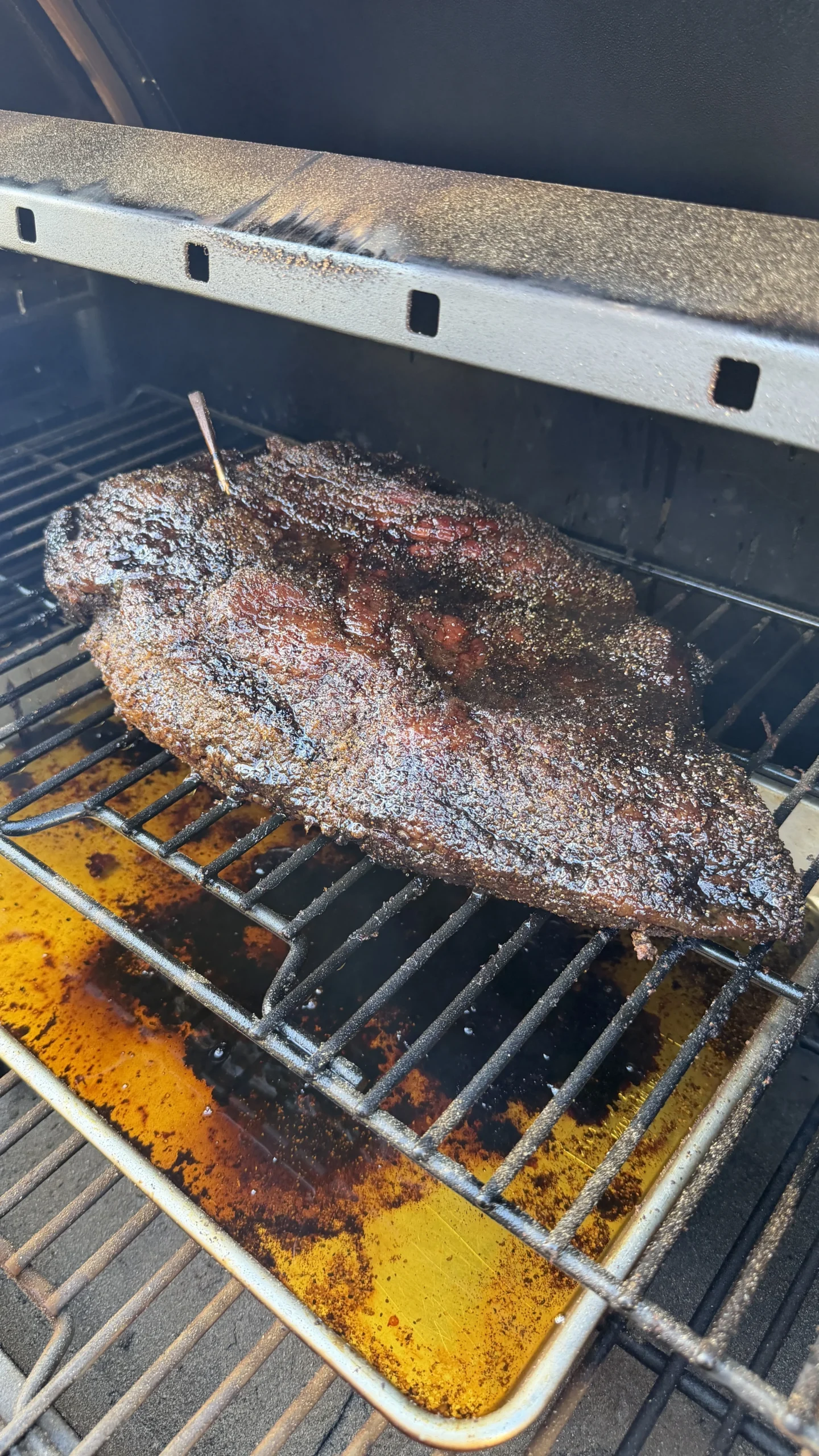
Smoke at 250°F until the internal temperature in the thickest part of the flat reads 195°F and a probe slides through with light resistance. This usually takes 12 to 14 hours for a 14-pound brisket without a wrap. Then remove the brisket and let the internal temperature drop to 165°F before placing it back in the smoker on warm mode or an oven set to its lowest temperature. As a result, the brisket holds in the 150°F to 170°F range overnight without overcooking.

The Kale Slaw and Building the Brisket Platter
Kale Gives Structure That Plain Coleslaw Cannot
Standard mayo-based coleslaw goes limp under hot brisket and turns watery within an hour of being dressed. Kale has fibrous, sturdy leaves that hold their crunch for hours after dressing, which makes it the better base for a barbecue platter. Furthermore, the bitterness in the kale balances the richness of the fatty brisket in a way that sweet cabbage slaw cannot, and the pickled jalapeños add the acid and heat needed to cut through the fat.

Build the Brisket Platter Family Style With Sauce on the Side
Arrange the sliced brisket on a large board or platter and surround it with the kale slaw, pickled red onions, pickles, and a stack of soft sandwich bread or Texas toast. Keep the barbecue sauce in a small bowl on the side rather than poured over the meat. Consequently, each guest can build their own sandwich, taste the bark first without sauce, then add it to the bites that need it. The setup respects 14 hours of smoke instead of drowning it.

Step-by-Step: How to Make This Smoked Brisket Recipe
Step 1: Trim and Season the Brisket
Trim the brisket as needed, removing the hard fat seam between the point and flat and any silverskin on the flat. Leave 1/4 inch of fat cap on top. Then season generously on all sides with salt, pepper, and garlic seasoning, pressing the rub into the surface so it adheres.
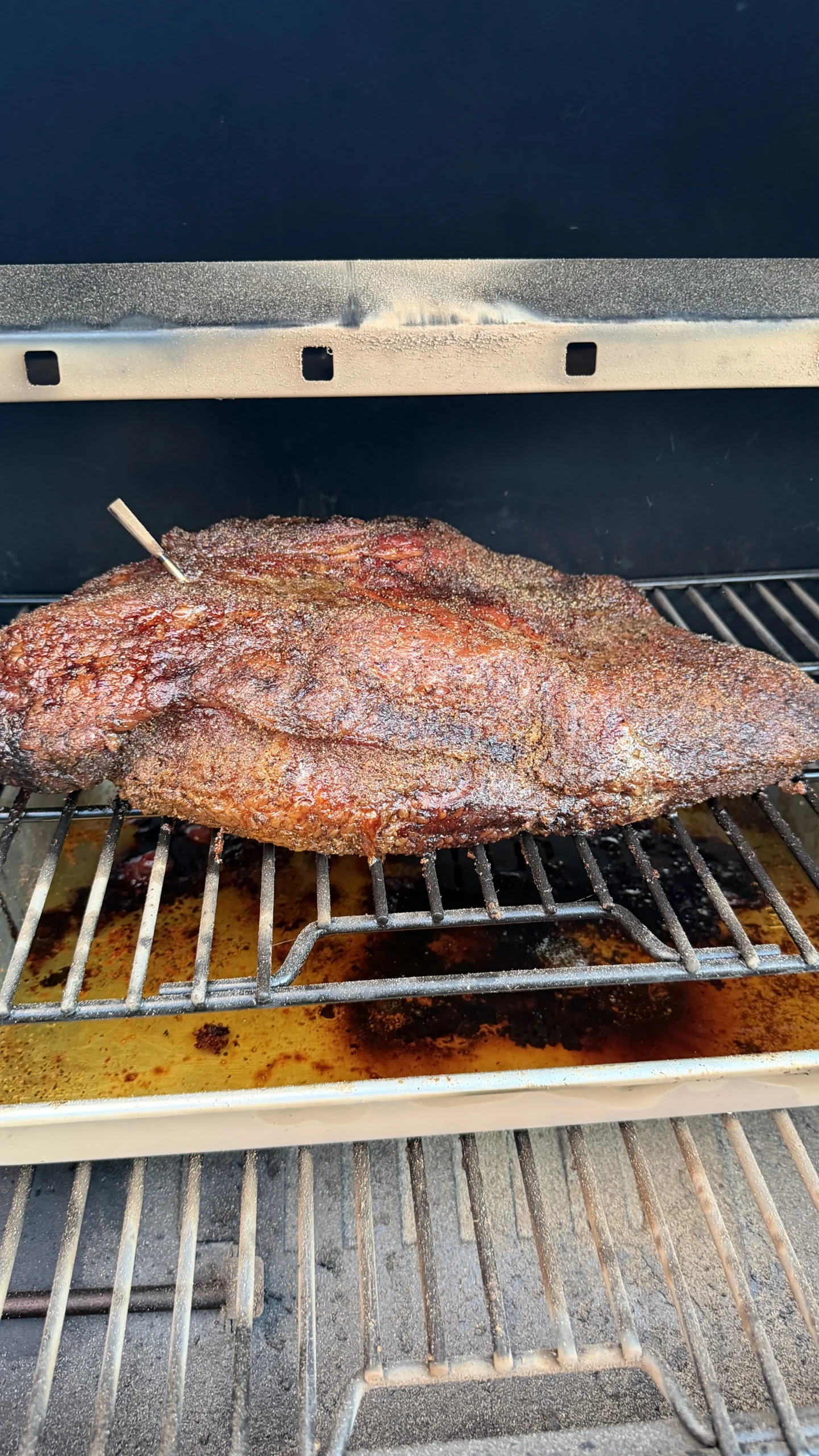
Step 2: Smoke at 250°F Fat Side Up to 195°F Internal
Preheat the smoker to 250°F. Place the brisket directly onto the smoker grates fat side up and smoke low and slow all day until the internal temperature in the thickest part of the flat reaches around 195°F. No wrapping needed. This helps create that deep, textured bark and keeps the outside crusty and flavorful. Plan on 12 to 14 hours for a 14-pound brisket.
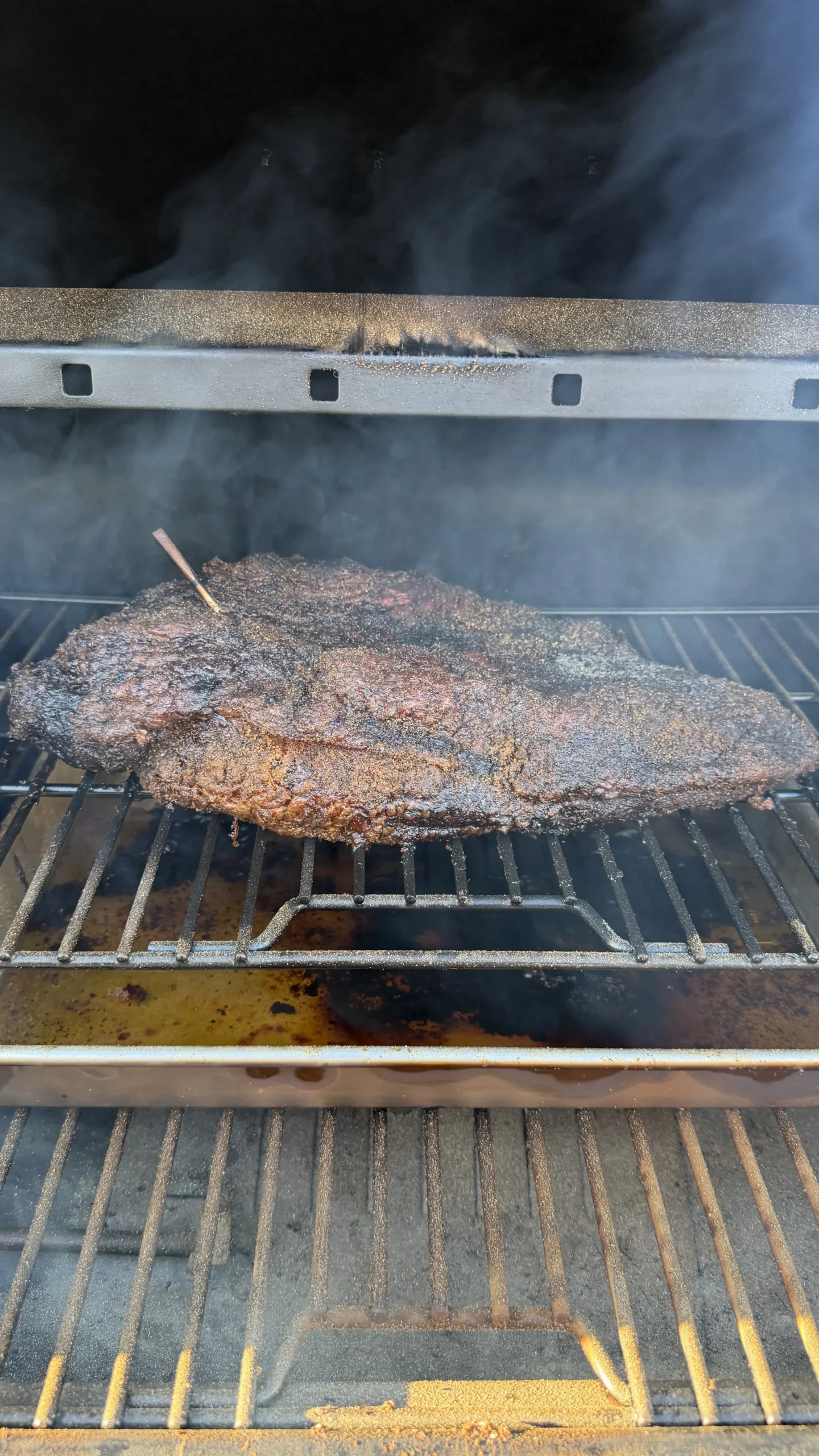
Step 3: Rest Down to 165°F Internal
Once the brisket reaches 195°F and probes tender, remove it from the smoker. Let the internal temperature come down naturally to around 165°F at room temperature. This typically takes 45 minutes to an hour and prepares the brisket for the safe overnight hold.
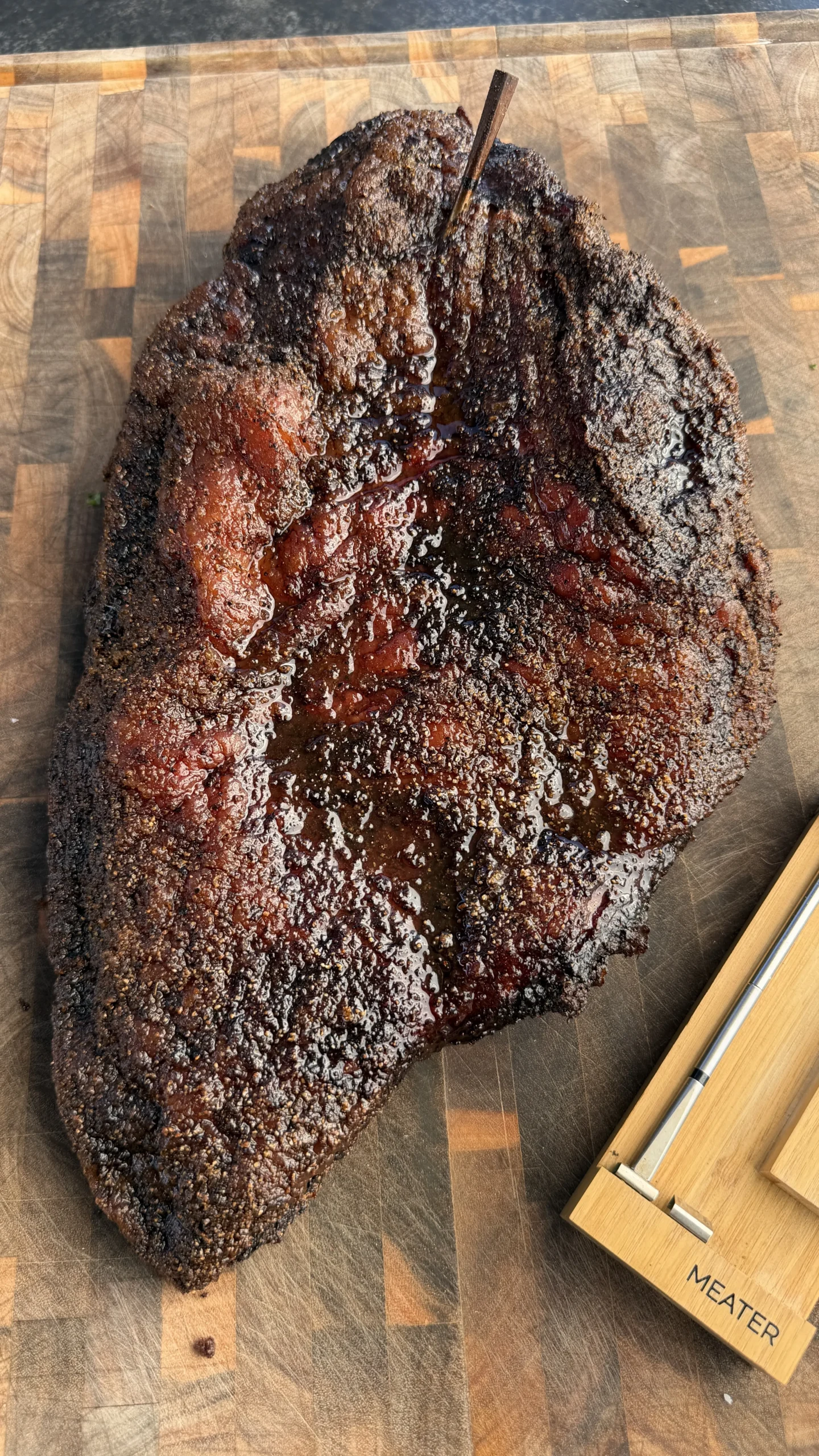
Step 4: Hold Overnight in a Warm Smoker or Oven
Place the brisket back into the smoker on warm mode or into the oven on its lowest warm setting (around 150°F to 170°F) for 8 to 12 hours overnight. This long warm hold lets the connective tissue and rendered fat redistribute through the muscle for unmatched tenderness.
Step 5: Make the Kale Slaw Dressing
While the brisket holds overnight or shortly before serving, whisk together the mayo, sour cream, apple cider vinegar, honey, brown sugar, celery seed, black pepper, smoked paprika, and a pinch of salt in a small bowl until smooth and emulsified.
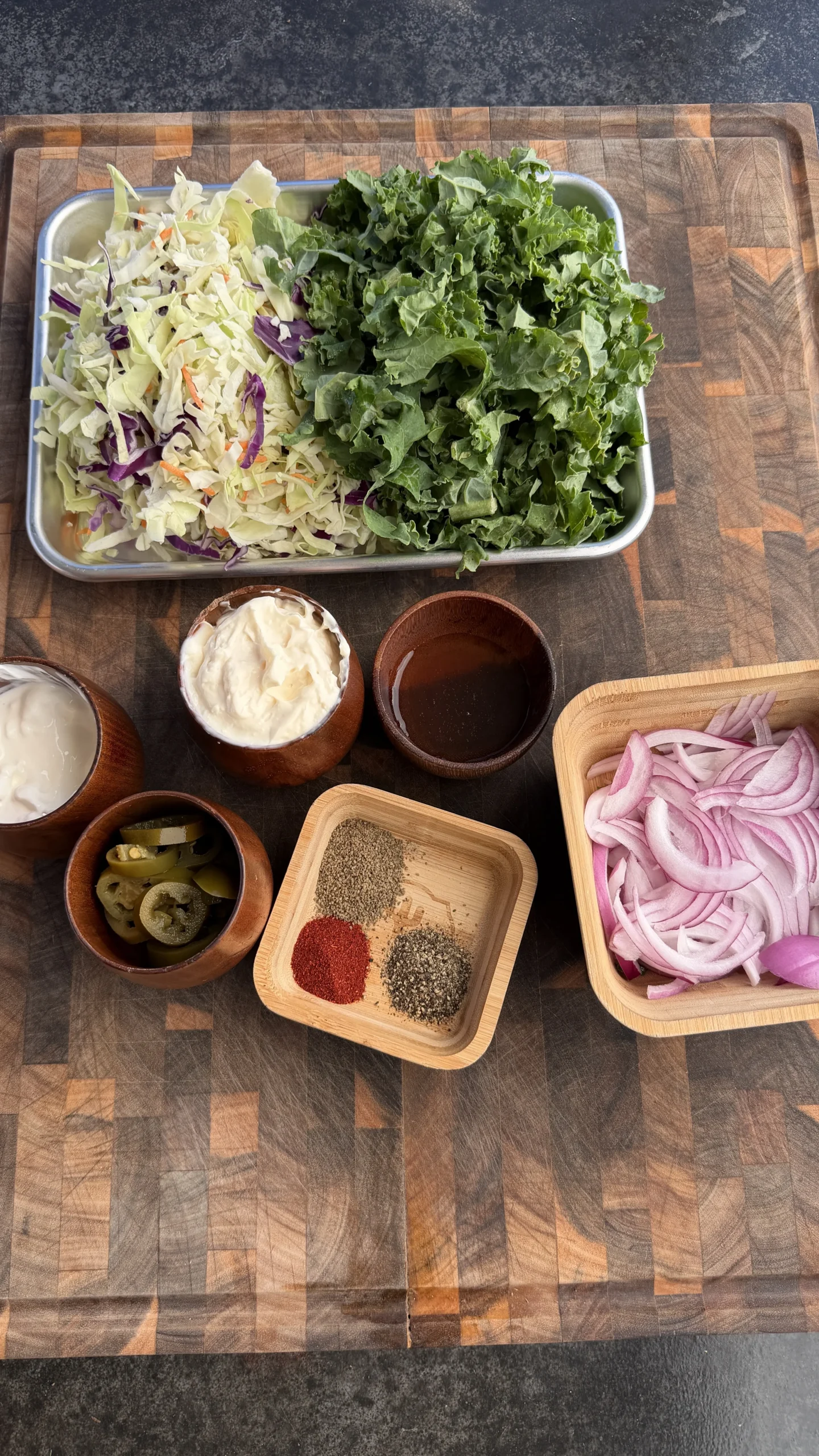
Step 6: Toss the Slaw and Chill
In a large bowl, combine the sliced kale, coleslaw mix, red onion, and chopped pickled jalapeños. Pour the dressing over the slaw and toss until everything is evenly coated. Cover and chill for at least 30 minutes before serving so the kale softens slightly and the flavors meld.

Step 7: Slice the Brisket the Next Day
When ready to serve, remove the brisket from the warm hold and transfer to a cutting board. Separate the point from the flat along the natural fat seam. Slice the flat against the grain into pencil-thick slices and the point into thicker cubes or slices. The slices should be juicy and tender with an incredible bark.

Step 8: Build the Brisket Platter Family Style
Arrange the sliced brisket on a large board or serving platter alongside the kale slaw, pickled red onions, pickles, a stack of soft sandwich bread or Texas toast, and barbecue sauce in a small bowl on the side. Serve family style and let everyone build their own sandwiches.

Smoked Barbecue Brisket Platter
Ingredients
Equipment
Method
- Trim the brisket as needed. Remove the hard fat seam between point and flat, the silverskin on the flat, and any fat thicker than 1/4 inch on the fat cap. Season generously on all sides with salt, pepper, and garlic seasoning, pressing the rub into the surface.
- Preheat the smoker to 250°F. Place the brisket directly onto the smoker grates fat side up. Smoke low and slow all day until the internal temperature in the thickest part of the flat reaches around 195°F. No wrapping needed. This builds the deep, textured bark and keeps the outside crusty and flavorful. Plan on 12 to 14 hours for a 14-pound brisket.
- Remove the brisket from the smoker and let the internal temperature drop naturally to around 165°F, about 45 minutes to an hour at room temperature.
- Place the brisket back into the smoker on warm mode or into the oven on its lowest warm setting (150°F to 170°F) for 8 to 12 hours overnight. This long warm hold lets the connective tissue and rendered fat redistribute through the muscle for unmatched tenderness.
- Combine the sliced kale, coleslaw mix, sliced red onion, and chopped pickled jalapeños in a large bowl.
- In a separate bowl, whisk together the mayo, sour cream, apple cider vinegar, honey, brown sugar, celery seed, black pepper, smoked paprika, and a pinch of salt until smooth.
- Pour the dressing over the slaw and toss until everything is evenly coated. Cover and chill at least 30 minutes before serving.
- Remove the brisket from the warm hold and transfer to a cutting board. Separate the point from the flat along the natural fat seam. Slice the flat against the grain into pencil-thick slices and the point into thicker cubes or slices.
- Arrange the sliced brisket on a large board or serving platter alongside the kale slaw, pickled red onions, pickles, a stack of soft sandwich bread or Texas toast, and barbecue sauce in a small bowl on the side. Serve family style and let everyone build their own sandwiches.
Notes
Tried this recipe?
Let us know how it was!Smoked Brisket Recipe — FAQ
Everything you need to nail the no-wrap brisket and overnight rest.
Setup & Basics
A whole packer brisket includes both the flat (the lean, rectangular muscle) and the point (the fatty, marbled muscle) connected by a thick fat seam. Look for one between 12 and 16 pounds with visible marbling in the flat and a brisket that bends easily when held by one end. Flexibility signals less connective tissue strain and more even rendering during the long smoke.
SPG stands for salt, pepper, and garlic, the classic Central Texas brisket rub. To make your own, combine equal parts kosher salt and coarse 16-mesh black pepper plus 1 teaspoon of granulated garlic per 2 tablespoons of the salt/pepper blend. This 50/50 SPG ratio lets the beef and smoke flavor lead instead of getting buried under complex spice mixes.
Plan on 12 to 14 hours with no wrap, plus a 45-minute rest down and an 8 to 12 hour overnight hold. A common rule is roughly 1 hour per pound at 250°F unwrapped, but always cook to temperature and probe feel instead of time. Bigger briskets, colder starting temps, and high humidity can all extend the cook beyond the estimate.
It depends on your smoker. On most pellet and offset smokers where heat comes from below, fat side up works because the rendering fat bastes the meat as it drips through the muscle. The bottom takes the direct heat and builds bark. If your smoker fires from above (rare, but possible with some vertical units), flip the orientation so the fat shields the meat from direct heat.
Technique & Troubleshooting
Yes, as long as the brisket stays above 140°F throughout the hold to stay outside the food safety danger zone. A warm setting of 150°F to 170°F on a smoker or oven keeps the meat well above that threshold. Use a leave-in probe thermometer with an alarm set at 140°F as a safety backstop, and confirm your appliance holds steady at the warm setting before committing.
Use an oven set to its lowest temperature (usually 150°F to 170°F), or a commercial warming drawer if you have one. Some home ovens go as low as 100°F on a “proof” setting, which is too cold to stay food-safe. Test your oven’s lowest setting with a separate thermometer before relying on it for an overnight hold. If neither option works, shorten the rest to 2 to 4 hours in a sealed cooler wrapped in foil and towels.
Ready to Level Up?
Take your backyard cooking from good to legendary.
This is where I keep all my most-used smokers, knives, and favorite cooking tools.
Shop My Gear CollectionExplore More Recipes
Find more diverse flavors at CWFeats.com