Smoked Prime Rib
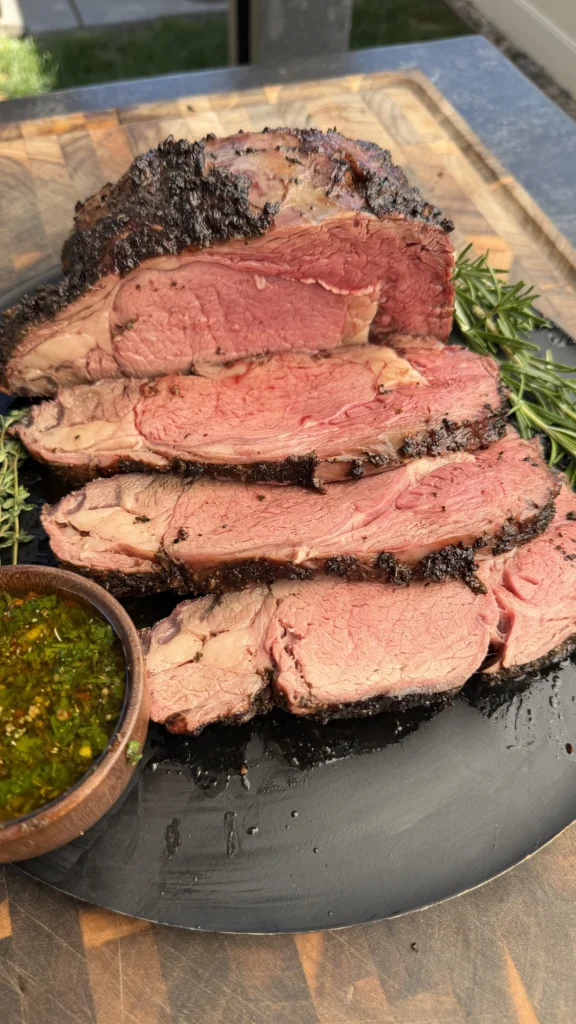
Smoked prime rib with garlic herb crust delivers a bold, aromatic crust of fresh rosemary, thyme, garlic paste, and Dijon mustard over a 4 to 6 lb bone-in prime rib roast smoked at 250°F with oak or pecan wood until the internal temperature hits 125°F for medium-rare. The garlic herb paste creates a flavorful crust that’s herby and slightly charred without the dry bark you get on brisket. A bright chimichurri made with fresh parsley, red wine vinegar, garlic, and red pepper flakes cuts through the richness of the beef. Rest 10 minutes, slice, and spoon chimichurri on top. Serves 6 to 8.
See How It’s Made
Watch Miguel walk through the recipe step by step.
Why a Garlic Herb Paste Creates a Better Crust Than Dry Rub
Wet Paste Sticks and Builds Flavor
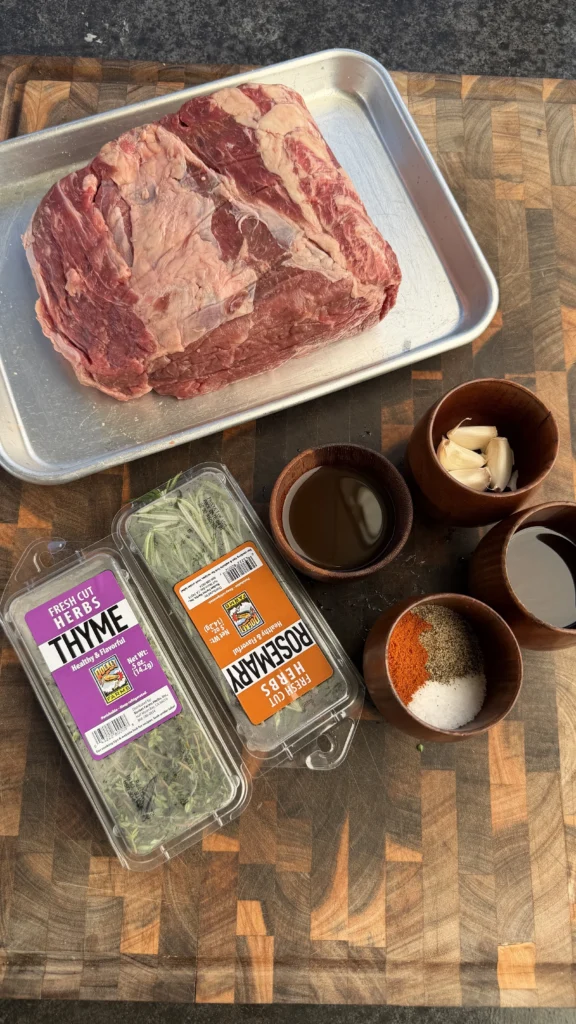
A dry rub sits on the surface and relies on rendered fat and smoke to adhere. A wet garlic herb paste, made with olive oil, fresh minced garlic, rosemary, thyme, Dijon mustard, and coarse salt and pepper, clings to every contour of the roast. The oil carries the herb and garlic flavors directly into the surface of the meat. During the smoke, the oil helps conduct heat evenly across the crust, producing a more uniform browning. The fresh herbs toast in the smoker heat, concentrating their aromatic oils into the crust.
Dijon Mustard as a Binder
The optional tablespoon of Dijon mustard in the paste serves two purposes. First, it acts as a tacky binder that helps the paste adhere during the long smoke. Second, the mustard flavor cooks off almost entirely, leaving behind a subtle tangy depth in the crust without tasting like mustard. Many pitmasters use yellow mustard as a binder on brisket for the same reason. On prime rib, Dijon works better because it’s smoother and blends into the herb paste without clumping.
Smoking Prime Rib at 250°F for Consistent Results
Why 250°F Is the Sweet Spot
Prime rib is a thick, expensive roast. Smoking at 250°F allows the heat to penetrate slowly and evenly from the outside toward the center. Lower temperatures (200 to 225°F) extend the cook time significantly and risk drying out the outer layers before the center reaches temperature. Higher temperatures (275 to 300°F) cook the roast faster but produce a thicker gray band of overcooked meat around the edges. At 250°F, you get a thin seared crust with edge-to-edge pink.
Oak or Pecan for Clean Smoke
Oak provides a medium-strength smoke that complements beef without overpowering the garlic and herb crust. Pecan is slightly sweeter and milder, which works well if you want the herb flavors to remain the dominant profile. Avoid mesquite because its aggressive smoke can turn bitter during the long cook time required for a prime rib. Fruitwoods like apple and cherry are too mild for a roast this size and won’t contribute noticeable smoke flavor.
Pull at 125°F for Medium-Rare
Insert an instant-read thermometer into the thickest part of the roast, avoiding the bone. The bone conducts heat faster and gives a false high reading. Pull the prime rib when the center reads 125°F. During the 10-minute rest, carryover cooking will push the internal temperature to 130 to 135°F, which is perfect medium-rare. The meat should be rosy pink from edge to edge with a thin, flavorful crust on the outside.
Resting Prime Rib Before Slicing
Why 10 Minutes Minimum
When you pull the prime rib from the smoker, the muscle fibers are contracted from the heat and the juices are concentrated near the surface. Resting allows the fibers to relax and the juices to redistribute evenly throughout the roast. If you slice immediately, the juices pool on the cutting board instead of staying in the meat. A 10-minute rest is the minimum. Some pitmasters rest for 20 to 30 minutes loosely tented with foil for even juicier results.
Carryover Cooking During the Rest
The internal temperature continues to rise 5 to 10 degrees during the rest period. This is why you pull at 125°F instead of 130°F. If you wait until 130°F to pull, the roast will carryover to 135 to 140°F, which pushes into medium territory. For a 4 to 6 lb roast, plan for approximately 5 to 8 degrees of carryover.
Making Chimichurri for Smoked Prime Rib
Hand Chop, Don’t Over-Process
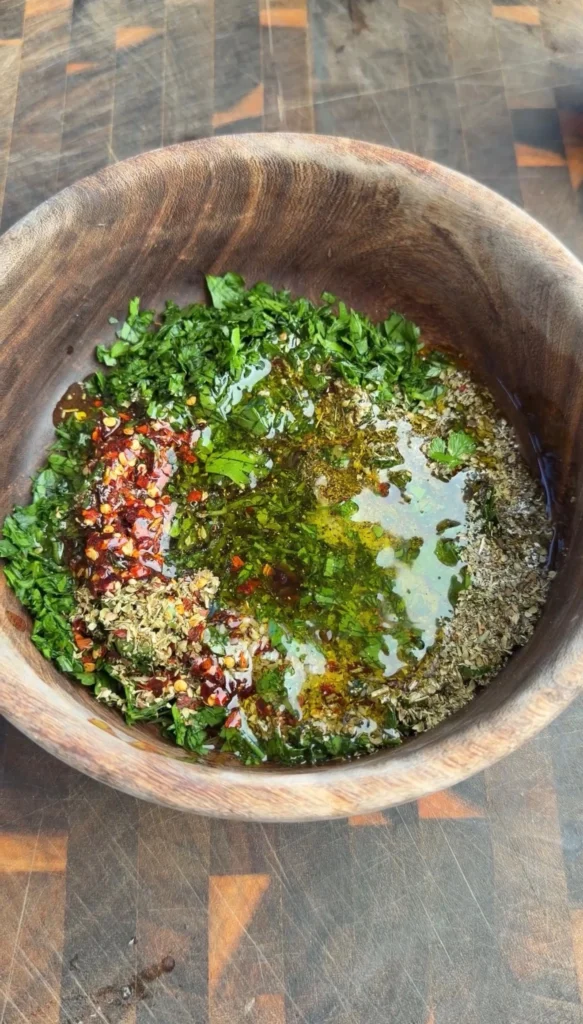
Chimichurri should have visible texture. Finely chop the parsley by hand rather than pulsing in a food processor. A food processor turns the herbs into a green paste and releases too much chlorophyll, making the chimichurri taste bitter and look muddy. Hand-chopped chimichurri has distinct herb pieces suspended in the olive oil and vinegar, which creates a better visual and more varied flavor in each bite.
Let It Sit 15 to 30 Minutes
After combining the parsley, garlic, red wine vinegar, olive oil, red pepper flakes, salt, pepper, and lemon juice, let the chimichurri sit at room temperature for 15 to 30 minutes before serving. This resting time allows the garlic and red pepper flakes to infuse into the oil and vinegar. The flavors meld and the sharp raw garlic edge softens into something more balanced. Chimichurri made and served immediately tastes harsh. Chimichurri that rests tastes complete.
Why Chimichurri Works Better Than Horseradish on Smoked Prime Rib
Horseradish cream is the traditional pairing for prime rib. Chimichurri is a better match for smoked prime rib specifically because the bright acidity from the vinegar and lemon juice, the fresh herb notes, and the subtle heat from the red pepper flakes complement the smoky, herby crust. Horseradish provides heat but no acidity or freshness. The chimichurri balances the fat-rich beef and the deep smoke flavor simultaneously.
Smoked Prime Rib with Garlic Herb Crust & Chimichurri
Bone-in · Garlic herb paste · Smoked at 250°F to 125°F medium-rare
Ingredients
Prime Rib & Herb Paste
- 1 bone-in prime rib roast (4-6 lbs)
- 4-5 cloves garlic, minced into paste
- 1 tbsp fresh rosemary, finely chopped
- 1 tbsp fresh thyme, chopped
- 2 tbsp olive oil
- 2 tbsp kosher salt
- 2 tbsp coarse black pepper
- 1 tsp smoked paprika
- 1 tsp granulated garlic
- 1 tsp Dijon mustard (optional)
Chimichurri Sauce
- 1 cup fresh parsley, finely chopped
- 3 cloves garlic, minced
- 2 tbsp red wine vinegar
- ½ cup olive oil
- 1 tsp red pepper flakes
- Salt + black pepper to taste
- Juice of ½ lemon
Instructions
- 1
Mix all herb paste ingredients together. Slather the prime rib on all sides. This creates a bold, flavorful crust as it smokes.
- 2
Set smoker to 250°F with oak or pecan wood. Place prime rib directly on grates. Smoke until internal temp reaches 125°F for medium-rare.
- 3
Remove from smoker and rest 10 minutes. Internal temp will carry over to ~130-132°F.
Chimichurri & Serve
- 4
While smoking: mix parsley, garlic, red wine vinegar, olive oil, red pepper flakes, salt, pepper, lemon juice. Let sit 15-30 min for flavors to meld.
- 5
Slice prime rib thick. Spoon chimichurri generously over each slice. Serve immediately.
Pull at 125°F
Carryover cooking adds 5-7°F during the rest. Pulling at 125°F lands you at a perfect medium-rare 130-132°F.
Paste, Not Powder
Fresh garlic, rosemary, and thyme in olive oil create a wet herb paste that builds a flavorful crust, not a dry bark.
Rest the Chimichurri
15-30 minutes of resting lets the vinegar, oil, and herbs marry together. Fresh-mixed chimichurri tastes flat.
Step-by-Step: How to Make Smoked Prime Rib with Garlic Herb Crust
Step 1: Make the Garlic Herb Paste
In a small bowl, combine 4 to 5 cloves of garlic (minced into a paste), 1 tablespoon finely chopped fresh rosemary, 1 tablespoon chopped fresh thyme, 2 tablespoons olive oil, 2 tablespoons kosher salt, 2 tablespoons coarse black pepper, 1 teaspoon smoked paprika, 1 teaspoon granulated garlic, and 1 teaspoon Dijon mustard (optional). Mix everything into a thick, spreadable paste. The olive oil binds the herbs and spices together so they adhere to the roast during the long smoke.
Step 2: Season the Prime Rib
Pat the prime rib completely dry with paper towels. Remove any excess surface moisture, which inhibits crust formation. Slather the garlic herb paste over the entire roast, covering all sides including the fat cap, the meat surfaces, and between the bones if accessible. Press the paste into the surface to help it adhere. For deeper flavor, season the roast and refrigerate uncovered overnight. If time is short, season at least 1 to 2 hours before cooking and let the roast come to room temperature.
Step 3: Set Up the Smoker
Preheat the smoker to 250°F. Use oak or pecan wood for a clean, medium-strength smoke that complements the garlic and herb crust without overpowering it. Avoid mesquite because it turns bitter during long cooks. Place a drip pan underneath the grate to catch rendered fat and prevent flare-ups.
Step 4: Smoke Until 125°F Internal
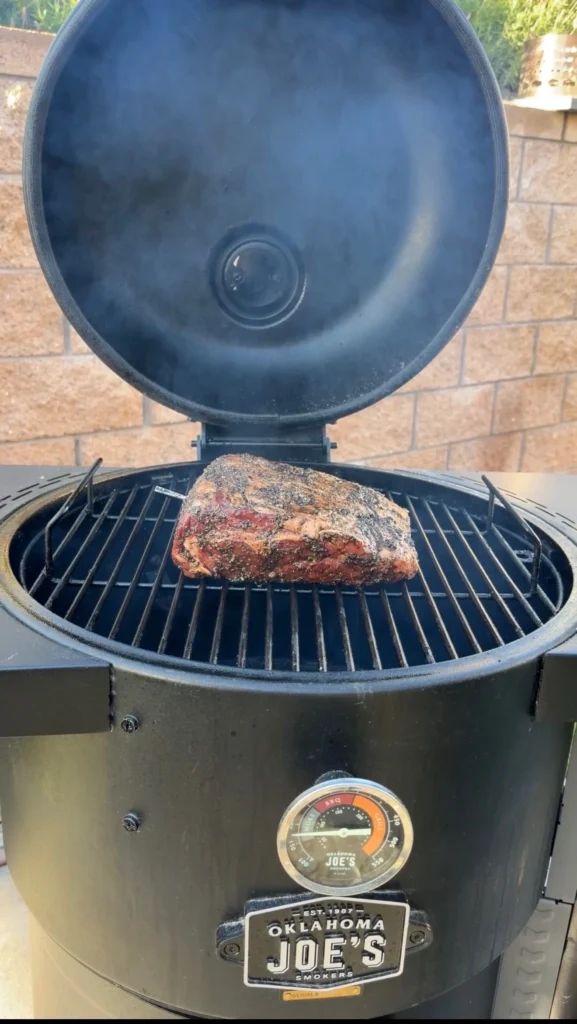
Place the prime rib directly on the grates, fat side up. Insert a probe thermometer into the thickest part of the roast, avoiding the bone. Close the lid and maintain 250°F throughout the cook. A 4 to 6 lb bone-in prime rib takes roughly 3 to 4 hours at 250°F to reach 125°F internal. The exact time depends on the thickness of the roast and how cold it was when it went on. Trust the thermometer, not the clock.
During the smoke, the garlic herb paste toasts and forms a flavorful crust on the exterior. The rosemary and thyme release their aromatic oils into the crust. The smoked paprika deepens the color. The result is a crust that’s herby and garlicky with a slight char, not the heavy bark you see on brisket.
Step 5: Rest for 10 Minutes
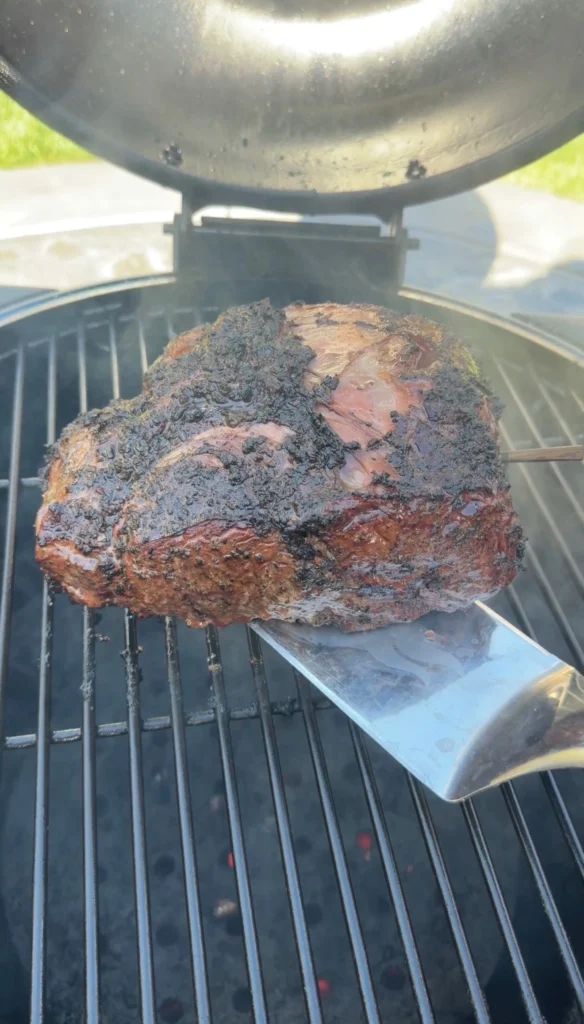
Pull the prime rib when the internal temperature reads 125°F. Transfer to a cutting board. Let it rest uncovered for at least 10 minutes. During this time, carryover cooking pushes the internal temperature to 130 to 135°F, which is perfect medium-rare. The juices redistribute throughout the roast during the rest. Slicing too early causes the juices to run out onto the cutting board instead of staying in the meat.
Step 6: Make the Chimichurri
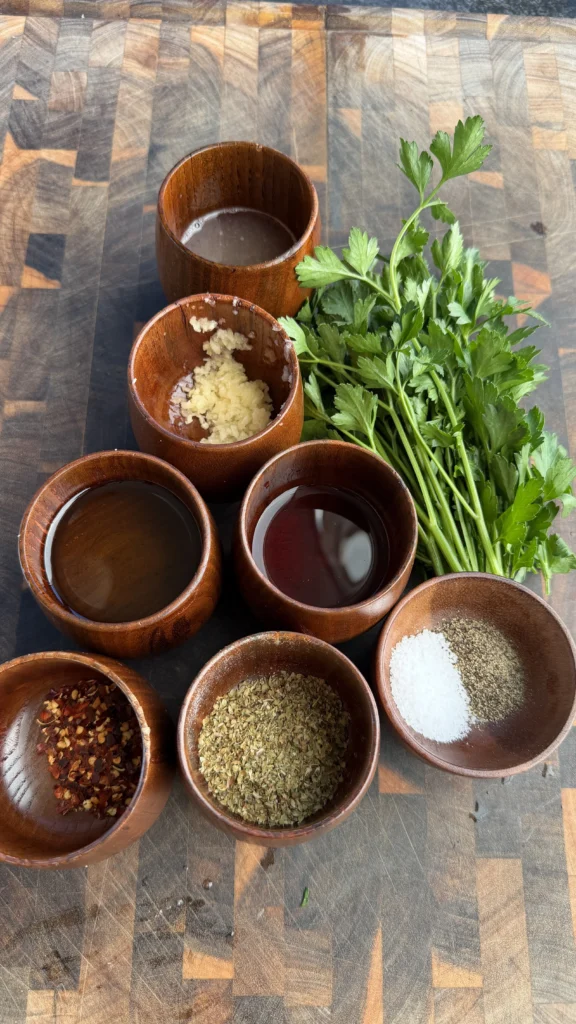
While the prime rib smokes, make the chimichurri. Finely chop 1 cup of fresh parsley by hand. Add it to a bowl with 3 cloves of minced garlic, 2 tablespoons red wine vinegar, 1/2 cup olive oil, 1 teaspoon red pepper flakes, salt and black pepper to taste, and the juice of 1/2 lemon. Stir everything together and let it sit at room temperature for 15 to 30 minutes. The resting time allows the garlic and pepper flakes to infuse into the oil and vinegar. Taste and adjust the salt and vinegar before serving.
Step 7: Slice and Serve
Slice the rested prime rib into thick or thin slices, depending on preference. If bone-in, cut along the bone to remove it in one piece, then slice the roast. Spoon chimichurri generously over each slice. The bright, tangy, garlicky chimichurri cuts through the rich beef fat and complements the smoky herb crust. Serve immediately.
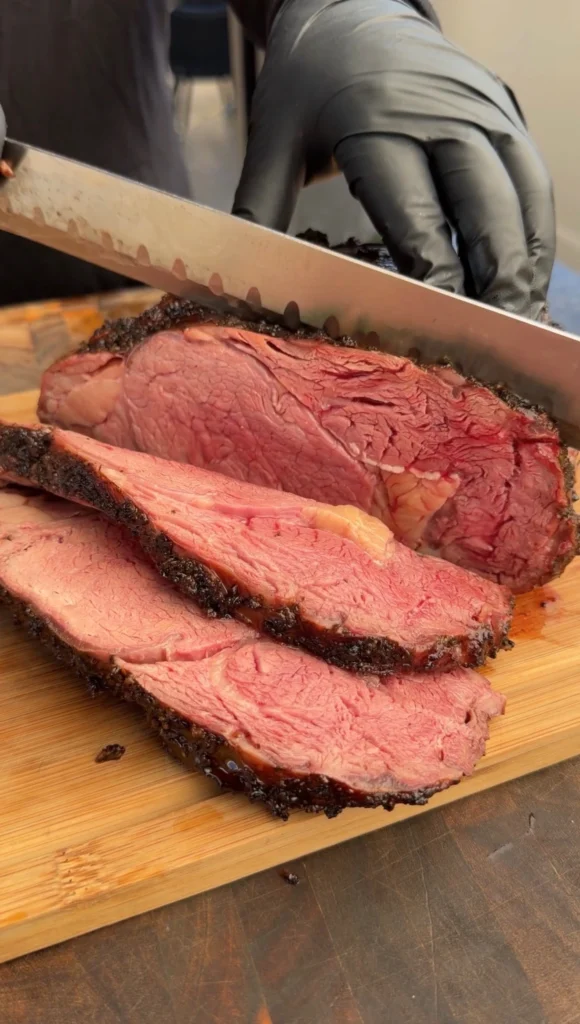
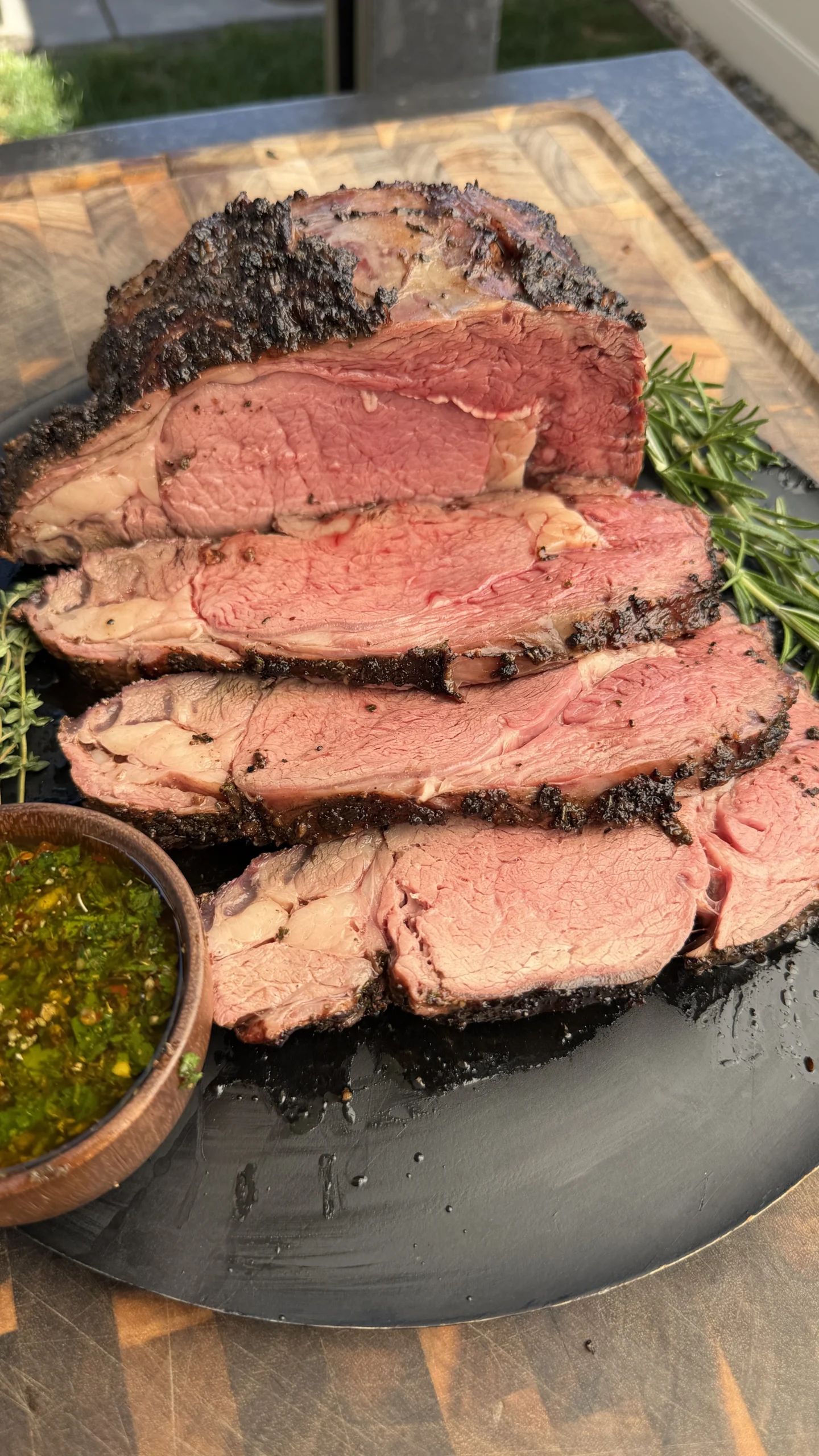
Smoked Prime Rib with Garlic Herb Crust & Chimichurri
Ingredients
Equipment
Method
- Mix all herb paste ingredients together. Slather the prime rib on all sides. Let sit 1-2 hours at room temperature or overnight in the fridge.
- Smoke at 250°F with oak or pecan wood. Place directly on grates. Cook until internal temperature reaches 125°F.
- Rest for 10 minutes. Carryover cooking brings the internal temperature to 130-135°F (medium-rare).
- Combine parsley, garlic, red wine vinegar, olive oil, red pepper flakes, salt, pepper, and lemon juice. Let sit 15-30 minutes.
- Slice the prime rib. Spoon chimichurri generously over each slice and serve.
Notes
Tried this recipe?
Let us know how it was!Smoked Prime Rib — FAQ
Common questions about smoking prime rib with garlic herb crust.
Your Questions, Answered
Approximately 35 to 45 minutes per pound at 250°F. A 4 to 6 lb bone-in prime rib typically takes 3 to 4 hours to reach 125°F internal. Always cook to temperature, not time. Use a probe thermometer for accuracy.
Carryover cooking raises the internal temperature 5 to 7°F during the rest. Pulling at 125°F lands you at 130 to 132°F after resting, which is a perfect medium-rare. Pulling at 130°F means you’ll end up closer to medium.
Both work well. Oak delivers a medium-intensity, clean smoke that doesn’t overpower the beef. Pecan is slightly sweeter and nuttier. Either complements the garlic herb crust without competing with it. Avoid mesquite, which can turn bitter on long cooks.
Not required. The garlic herb paste forms a flavorful crust during the smoke. If you want a harder sear, you can finish under a broiler or on a ripping hot grill for 1 to 2 minutes per side after resting. This is optional and purely a texture preference.
Chimichurri & Serving
The 15 to 30 minute rest lets the vinegar, oil, and herbs marry. Freshly mixed chimichurri tastes sharp and disjointed. After resting, the flavors meld into a cohesive sauce where the parsley, garlic, and red pepper flakes work together instead of competing.
Yes. Chimichurri keeps in the fridge for up to 3 days. The flavor actually improves overnight. Bring it to room temperature before serving so the olive oil is fluid and the sauce pours easily over the sliced prime rib.
Classic pairings include creamy mashed potatoes, roasted garlic green beans, or Yorkshire pudding. A simple arugula salad with lemon vinaigrette also works well because the peppery greens complement the richness of the beef and the brightness of the chimichurri.
Ready to Level Up?
Take your backyard cooking from good to legendary.
This is where I keep all my most-used smokers, knives, and favorite cooking tools.
Shop My Gear CollectionExplore More Recipes
Find more diverse flavors at CWFeats.com