
Smoked St. Louis Style Ribs
Smoked St. Louis Style Ribs with Perfect BBQ Glaze – Classic Smoking Recipe
These smoked St. Louis style ribs with perfect BBQ glaze deliver tender, fall-off-the-bone results using traditional low-and-slow smoking methods that create authentic barbecue flavors. This recipe features the classic three-phase smoking process that builds incredible smoke flavor, ensures perfect tenderness through foil braising, and finishes with a beautiful caramelized glaze. The St. Louis cut provides optimal marbling and uniform thickness that makes them ideal for smoking while being more affordable than premium baby back ribs. Whether you’re hosting a weekend BBQ, planning a summer cookout, or simply craving authentic smoked ribs, this traditional method delivers restaurant-quality results every time.
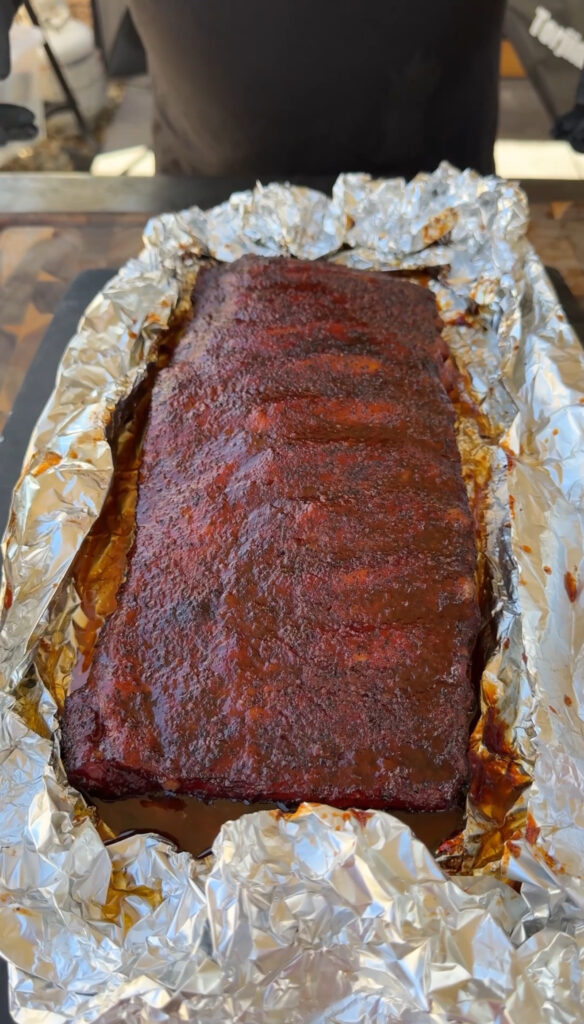
The 5.5-hour smoking process requires patience but rewards you with incredibly flavorful, tender ribs that showcase the art of traditional barbecue. This recipe works perfectly for feeding crowds while allowing you to master fundamental smoking techniques. The combination of dry rub seasoning, wood smoke, and butter braising creates layers of flavor that develop throughout the cooking process. Perfect for impressing guests who appreciate authentic BBQ craftsmanship and bold, smoky flavors.
Mastering Traditional St. Louis Rib Smoking Techniques
The secret to exceptional smoked St. Louis style ribs lies in understanding the three-phase cooking method that builds smoke flavor while ensuring perfect tenderness and attractive presentation. St. Louis style ribs are spare ribs trimmed to remove the sternum, cartilage, and rib tips, creating a uniform rectangular rack that cooks evenly and presents beautifully. The initial 4-hour smoking phase at 225°F allows maximum smoke penetration while developing the characteristic bark that defines great barbecue.
This temperature provides the ideal balance between smoke absorption and controlled cooking without drying out the meat. Proper wood selection is crucial – fruit woods like apple and cherry provide mild, sweet smoke while hickory offers more intense flavor. The membrane removal technique is essential for proper seasoning penetration and easier eating. Using a paper towel for grip, slide a knife under the membrane and pull it off in one piece. The dry rub should be applied generously and allowed to rest for at least 30 minutes, though overnight seasoning produces even better results. The foil braising phase, often called the “Texas Crutch,” accelerates cooking while guaranteeing tender results. The final glazing phase creates the glossy, caramelized finish that makes ribs visually appealing and adds concentrated flavor.
The Science Behind Low-and-Slow Smoking and Foil Braising
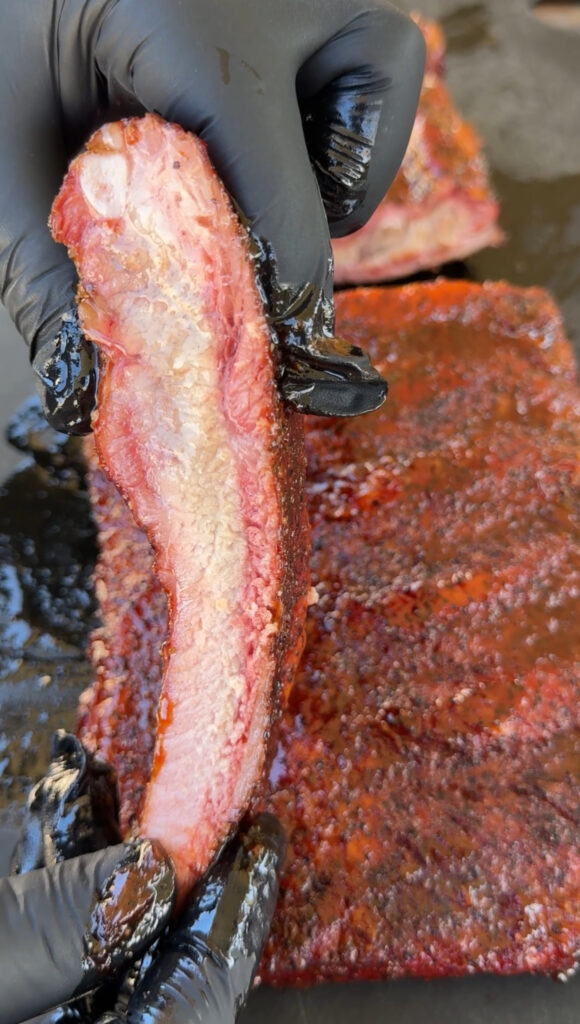
The distinctive appeal of smoked St. Louis style ribs comes from the perfect combination of smoke penetration, collagen breakdown, and surface caramelization that occurs during the extended cooking process. The 225°F smoking temperature is optimal for breaking down tough connective tissues without overcooking the meat proteins. At this temperature, collagen gradually converts to gelatin over several hours, creating the tender texture that makes great ribs. Wood smoke contains aromatic compounds that penetrate the meat during the first few hours of cooking, when the surface is most receptive to smoke absorption. The dry rub creates a flavorful crust while helping to form the pellicle – a tacky surface that attracts and holds smoke compounds. The foil braising phase uses steam and butter to accelerate the breakdown of remaining connective tissues while adding richness and moisture.
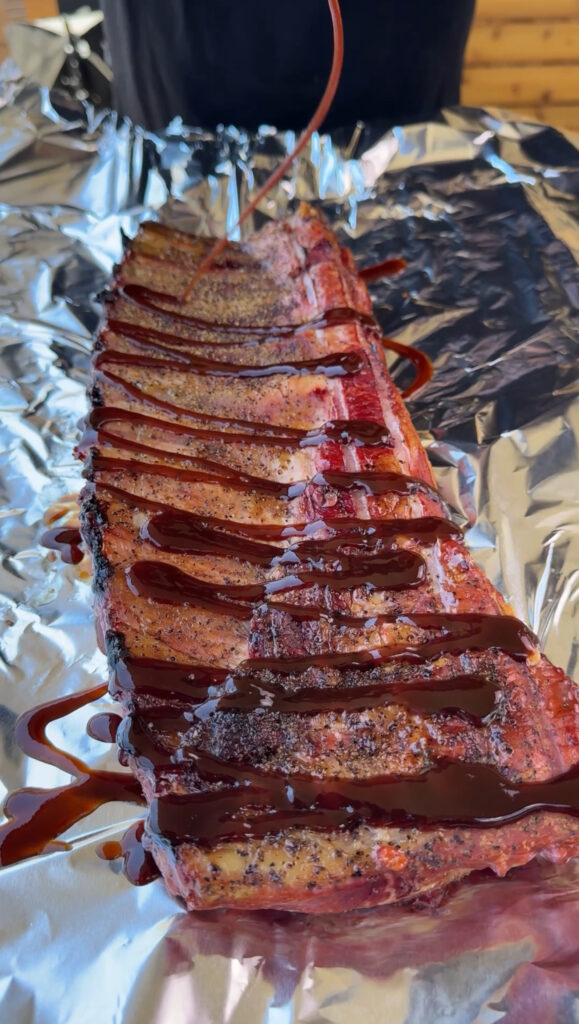
This technique prevents the ribs from drying out during the final cooking phase while ensuring they reach optimal tenderness. The butter serves multiple purposes – conducting heat efficiently, adding flavor, and preventing the BBQ sauce from burning during the final glazing. The last 20-minute glazing phase allows the sauce to caramelize and concentrate while creating the glossy finish that makes ribs visually appealing. This scientific approach ensures consistent results every time.
Essential Tips and Variations for Perfect Smoked Ribs
Several key techniques ensure your smoked St. Louis style ribs turn out perfectly every time with competition-quality results. Choose ribs with good marbling and avoid packages with excessive fat or damaged bones. The ideal weight is 2.5-3 pounds per rack for optimal cooking consistency. Remove the membrane completely for better seasoning penetration and easier eating. Apply the dry rub generously, massaging it into all surfaces including the edges and bone side. Maintain consistent smoker temperature throughout the cooking process using a reliable thermometer. Add wood chunks every hour during the first 3 hours for maximum smoke flavor, then stop adding wood to prevent over-smoking.
Use heavy-duty aluminum foil for the braising phase to prevent tearing and steam loss. Create a tight seal around the ribs to trap steam effectively. The butter and sauce in the foil should create enough liquid to partially steam the ribs. Check for doneness using the bend test – lift the rack with tongs and if it bends and cracks slightly, they’re ready. Internal temperature should reach 195-203°F for optimal tenderness. For variations, try different wood combinations like apple and hickory for complex smoke flavors. Experiment with different dry rub blends or add brown sugar for extra caramelization. These ribs pair excellently with classic BBQ sides like mac and cheese, coleslaw, baked beans, and cornbread. Store leftover ribs refrigerated for up to 4 days and reheat gently to maintain tenderness.
Ingredients
- 2 racks St. Louis style spare ribs (2.5-3 lbs each)
- ¼ cup pork dry rub (your favorite blend)
- Wood chunks or chips (apple, cherry, or hickory)
For the Foil Braising:
- ½ stick (4 tablespoons) unsalted butter
- ¼ cup BBQ sauce (your favorite brand)
- Heavy-duty aluminum foil
Final Glaze:
- ½ cup BBQ sauce (additional)
- Optional: 2 tablespoons honey for extra shine
Serving:
- Extra BBQ sauce
- Classic BBQ sides (coleslaw, beans, cornbread)
- Pickles and onions
-
Step-by-Step Instructions
Step 1: Prepare the Ribs and Apply Seasoning
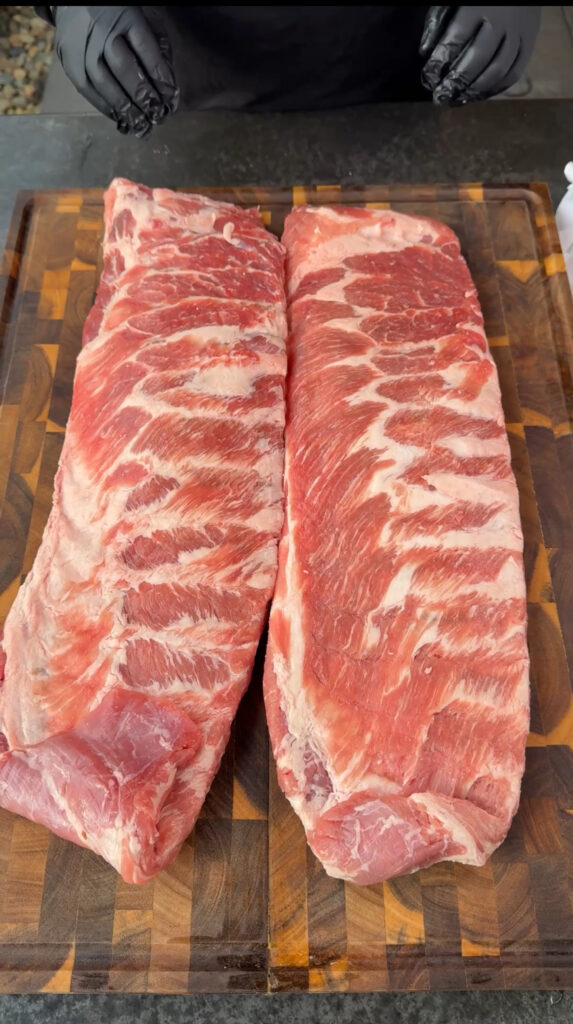
Remove the ribs from packaging and pat completely dry with paper towels. Turn the ribs bone-side up and locate the thin, silvery membrane covering the bones. Using a butter knife, slide under one corner of the membrane and lift it slightly. Grip the membrane with a paper towel for better hold and pull it off in one piece – this step is crucial for proper seasoning penetration and easier eating. Trim any excess fat, leaving some for flavor and moisture. Season both sides of the ribs generously with your favorite pork dry rub, massaging the seasonings into the meat and working them into all crevices. Pay special attention to the edges and bone side. Let the seasoned ribs rest at room temperature for 30-60 minutes while you prepare the smoker, allowing the rub to penetrate and form a tacky surface.
Step 2: Prepare Smoker and Begin Smoking
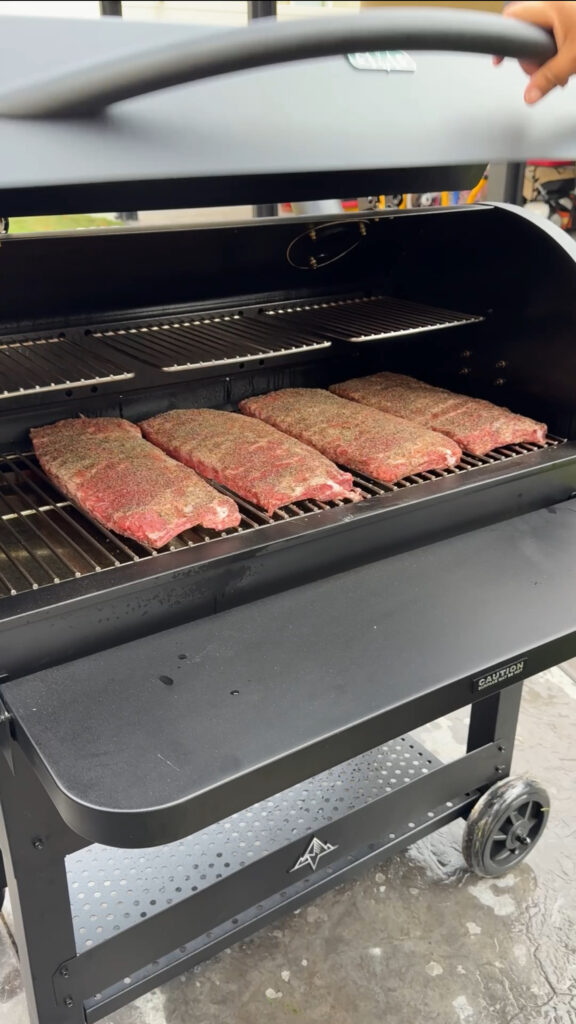
Preheat your smoker to 225°F using your preferred method and add wood chunks or chips for smoke production. Apple and cherry provide mild, sweet smoke while hickory offers more intense flavor. Maintain clean, white smoke rather than thick, billowing smoke which can create bitter flavors. Once the smoker reaches stable temperature, place the seasoned ribs bone-side down on the cooking grates, leaving space between racks for proper air circulation. Close the lid and maintain steady temperature throughout the smoking process. Avoid opening the smoker frequently as this releases heat and smoke. Add fresh wood chunks every hour for the first 3 hours to maintain consistent smoke production. The ribs should develop a deep, mahogany-colored bark and reach an internal temperature of approximately 165°F after 4 hours of smoking.
Step 3: Wrap in Foil with Butter and Sauce
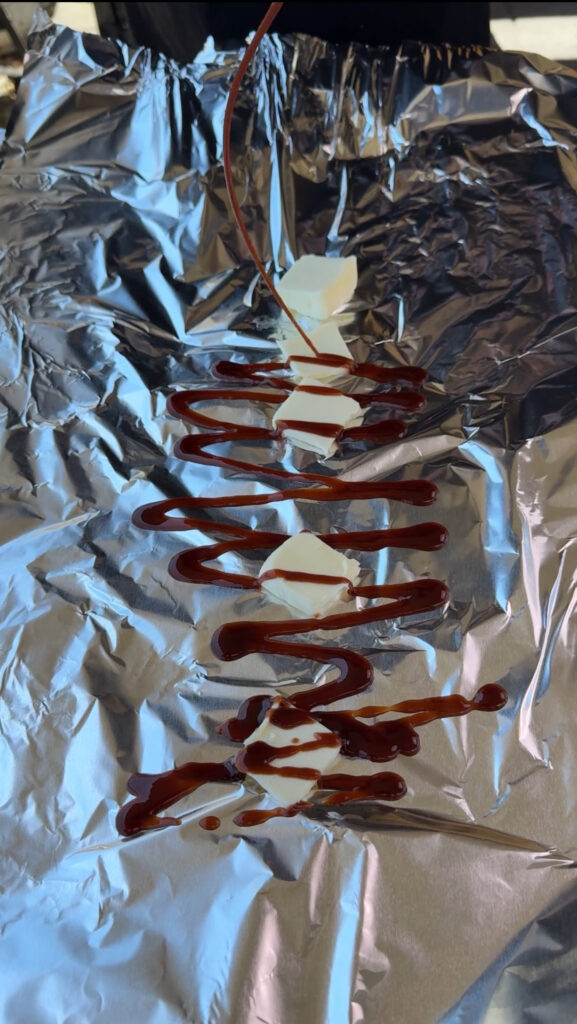
After 4 hours of smoking, remove the ribs from the smoker and place each rack on a large sheet of heavy-duty aluminum foil. The ribs should have good color and bark formation at this point. Add 2 tablespoons of butter and 2 tablespoons of BBQ sauce to each rack, distributing them evenly across the meat surface. The butter will help conduct heat and add richness while the sauce provides moisture and flavor. Wrap each rack tightly in foil, creating sealed packets that will trap steam during the braising phase. Ensure the foil is completely sealed to prevent steam and liquid from escaping. Return the wrapped ribs to the smoker and continue cooking for 1.5 hours. This braising phase accelerates cooking while guaranteeing tender results through moist heat.
Step 4: Unwrap and Apply Final Glaze
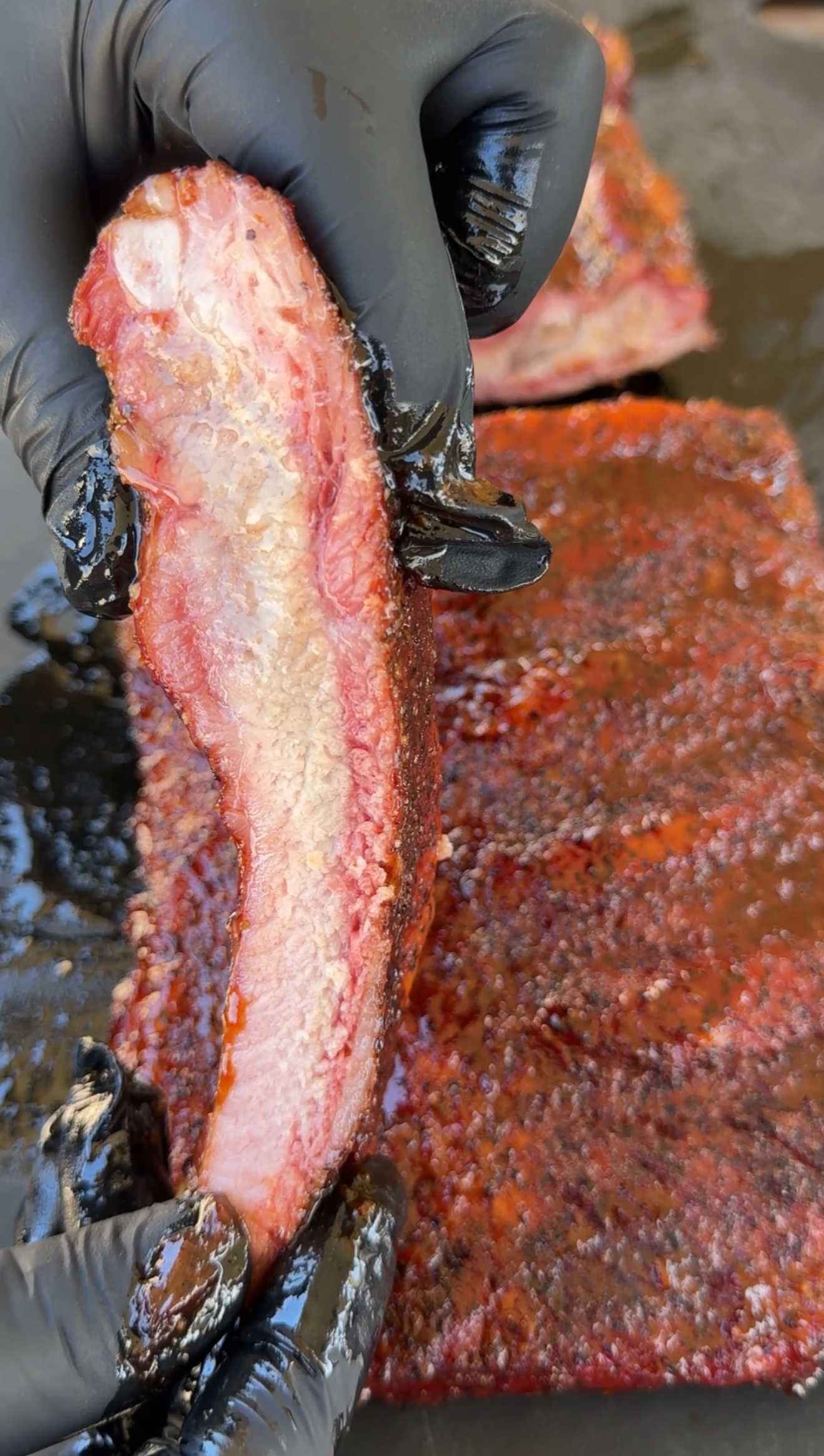
After 1.5 hours of foil braising, carefully remove the wrapped ribs from the smoker. Open the foil packets carefully as they will release very hot steam. The ribs should be very tender and nearly falling off the bone at this point. Remove the ribs from the foil and place them back on the smoker grates, discarding the foil and accumulated liquids. Brush the ribs generously with fresh BBQ sauce, covering all surfaces for even glazing. If using honey for extra shine, mix it with the sauce before applying. Return the sauced ribs to the smoker uncovered and cook for an additional 20 minutes to allow the sauce to set and caramelize. The surface should develop a glossy, slightly sticky glaze that’s characteristic of perfect barbecue ribs.
Step 5: Check for Doneness and Rest
Test the ribs for doneness using the bend test – lift one end of the rack with tongs and if it bends easily and shows slight cracking on the surface, they’re ready. The internal temperature should reach 195-203°F for optimal tenderness. Remove the finished ribs from the smoker and let them rest for 10-15 minutes before cutting. This resting period allows the juices to redistribute throughout the meat for optimal flavor and texture. The ribs should have an attractive mahogany color with a glossy glaze and should feel tender when gently pressed. The meat should have pulled back from the bone ends slightly, indicating proper cooking.
Step 6: Slice and Serve with Traditional Sides
Using a sharp knife, cut between the bones to separate individual ribs, slicing cleanly through any remaining connective tissue. Arrange the cut ribs on a serving platter, showing off the beautiful bark and glaze. Serve immediately while hot, providing extra BBQ sauce on the side for guests who prefer more sauce. These ribs are perfect for hands-on eating, so provide plenty of napkins and wet wipes. Present alongside traditional BBQ sides like creamy coleslaw, baked beans, mac and cheese, and cornbread that complement the rich, smoky flavors. Consider offering pickles and sliced onions to cut through the richness. These ribs work excellently for casual dining and outdoor entertaining where guests can enjoy authentic barbecue at its finest.
Ultimate Smoked St. Louis Style Ribs with Perfect BBQ Glaze
Ingredients
Method
- Remove membrane from ribs and pat dry. Season generously with dry rub and rest 30-60 minutes.
- Preheat smoker to 225°F with wood chunks. Smoke ribs bone-side down for 4 hours.
- Wrap ribs in foil with butter and BBQ sauce. Continue cooking 1.5 hours.
- Unwrap ribs, brush with fresh BBQ sauce, and cook uncovered 20 minutes.
- Test for doneness using bend test. Rest 10-15 minutes before slicing.
- Cut between bones and serve with traditional BBQ sides.
Notes
- Use bend test to check doneness - ribs should crack slightly when lifted
- Add wood chunks only during first 3 hours to prevent over-smoking
Tried this recipe?
Let us know how it was!Conclusion
These smoked St. Louis style ribs with perfect BBQ glaze represent the pinnacle of traditional American barbecue with their authentic preparation methods and incredible flavor development. The classic three-phase smoking technique ensures optimal smoke penetration, perfect tenderness, and beautiful presentation that rivals the best BBQ restaurants. Whether you’re serving these alongside other barbecue favorites for a complete feast or featuring them as the centerpiece of your next gathering, these ribs are guaranteed to impress even the most discerning barbecue enthusiasts. That traditional smoking method is so effective, you’ll want to apply it to other cuts of meat or adapt the technique for different BBQ applications. The beauty of this recipe lies in its authentic approach to barbecue that transforms simple ingredients into extraordinary results through patience, proper technique, and respect for traditional methods. Fire up your smoker, gather your favorite rubs and sauces, and prepare to create some of the most authentic and delicious smoked ribs you’ve ever tasted!
👉 This is where I keep all my most-used products, gear, and favorite cooking tools — check it out:
https://linktr.ee/cooking_with_fire___
If you loved this recipe, you’ll find more to savor across our diverse categories. From beef to pork, chicken to turkey, seafood to appetizers, there’s a wealth of flavors waiting for you. Explore them all at CWFeats. Dive into our delicious collections!
Recipe Categories: