Ingredients
Equipment
Method
Prep and Skewer
- Place the whole picanha fat-cap side up on a cutting board. Score the fat in a 1-inch crosshatch pattern with a sharp knife, cutting through the fat but stopping before the meat.
- Slice the picanha against the grain into 1.5-inch thick steaks. A 3-pound roast yields about 3 steaks.
- Bend each steak into a horseshoe shape with the fat cap facing outward. Thread a large Brazilian-style skewer through both ends so the curve holds. If using smaller skewers, place one steak per skewer.
- Season all sides generously with the 2 tablespoons of coarse kosher salt. Picanha needs more salt than other steaks because of the thick fat cap.
Cook Over Open Fire
- Position the skewer 8 to 12 inches above an open fire (charcoal or wood with active flames). Rotate every 2 to 3 minutes to expose all sides evenly. Cook until the internal temperature in the thickest part reads 120°F, about 15 to 20 minutes.
- Remove the skewer from the fire and rest the picanha for 5 to 10 minutes. Carryover cook will bring the internal temperature from 120°F to 130°F (medium-rare) during the rest.
Char Jalapeños, Build Chimichurri, and Serve
- While the picanha rests, char the 2 jalapeños directly over the open fire until the skin is blistered and lightly blackened on all sides. Cool briefly, then finely dice.
- In a bowl, combine the diced charred jalapeños with the parsley, cilantro, minced garlic, olive oil, red wine vinegar, lime juice, kosher salt, black pepper, and red pepper flakes (if using). Mix well.
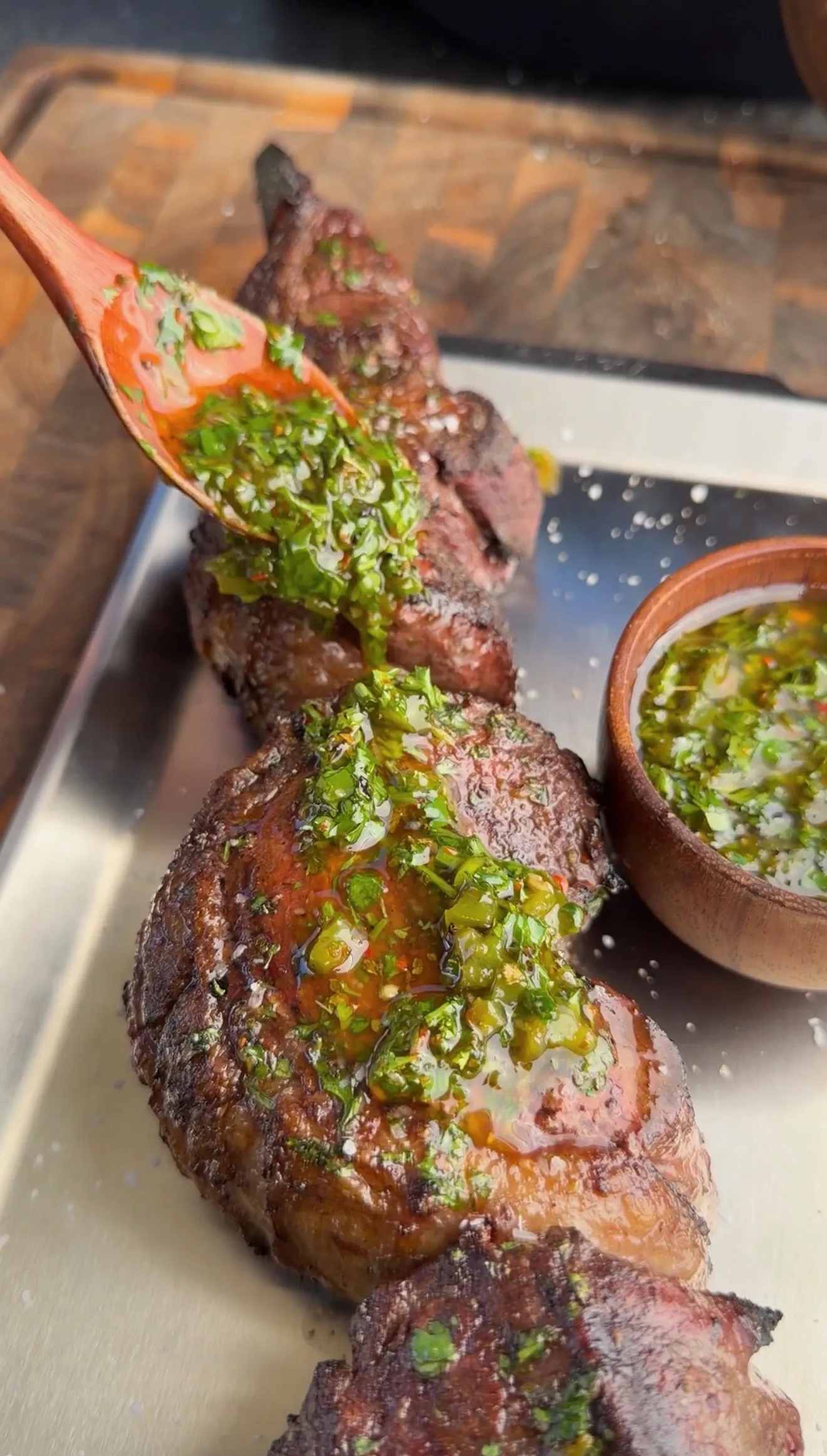
- Remove the rested steaks from the skewer and slice each against the grain into 1/4-inch slices. Arrange on a platter and spoon the charred jalapeño chimichurri generously over the top. Serve immediately with extra chimichurri on the side.
Notes
Score the Fat Cap: Crosshatch scoring through the fat layer (stopping before the meat) is essential. Without it, the fat curls during the cook and the top layer stays raw and rubbery while the inside finishes. Scoring lets the fat render evenly and creates a caramelized geometric pattern on the finished steak.
Pull at 120°F (Not 130°F): Standard medium-rare beef pulls at 130°F. Picanha pulls 10°F cooler because the thick fat cap continues to transfer heat into the meat during the rest. Pulling at 120°F lands the finished steak at 130°F (true medium-rare) after a 5 to 10 minute rest. Pulling at 130°F overshoots to medium-well.
Char the Jalapeños First: Blistering the peppers directly over open fire before dicing accomplishes two things. The char removes the sharp raw bite of fresh jalapeño, and the smokiness from the flames absorbs into the pepper flesh, adding depth that raw chili cannot deliver.
This Chimichurri Is Cuban-Inspired: Traditional Argentine chimichurri uses parsley only with dried oregano and red pepper flakes. This recipe takes a Cuban-inspired approach with parsley plus cilantro for brighter citrus notes that complement the lime juice and pair differently with the picanha.
Coarse Salt Beats Fine: Use coarse kosher salt, not fine table salt or sea salt. The larger grains adhere to the fat cap better, dissolve gradually during the cook, and build a more textured crust.
Open Fire Means Variable Heat: Rotate the skewer every 2 to 3 minutes and lift it higher above the flames if a section of fat starts flaring up. The picanha should sit close enough to char but far enough that the fat renders gradually without dripping into the fire.