Ingredients
Equipment
Method
Season and Smoke
- Cut the boneless beef ribs into 1-inch cubes and season evenly on all sides with the kosher salt, coarse black pepper, and garlic powder.
- Preheat the smoker to 250°F with applewood. Place the cubes directly on the grates with space between them and smoke for 2 to 3 hours, until they develop a deep mahogany color, a set bark, and an internal temperature of 175°F.
Sauce and Braise
- While the beef smokes, combine the ketchup, molasses, brown sugar, coffee, apple cider vinegar, Worcestershire, Dijon, garlic powder, onion powder, black pepper, and smoked paprika in a saucepan. Cook over medium heat, stirring occasionally, for about 5 minutes until fully combined.
- Transfer the smoked cubes to a foil pan and pour the sauce over the top. Toss until all the pieces are evenly coated, then cover the pan tightly with foil.
- Return the covered pan to the smoker at 250°F and cook for about 2 hours, until the beef is fall-apart tender. The cubes should offer no resistance when pressed with tongs.
Set the Glaze and Serve
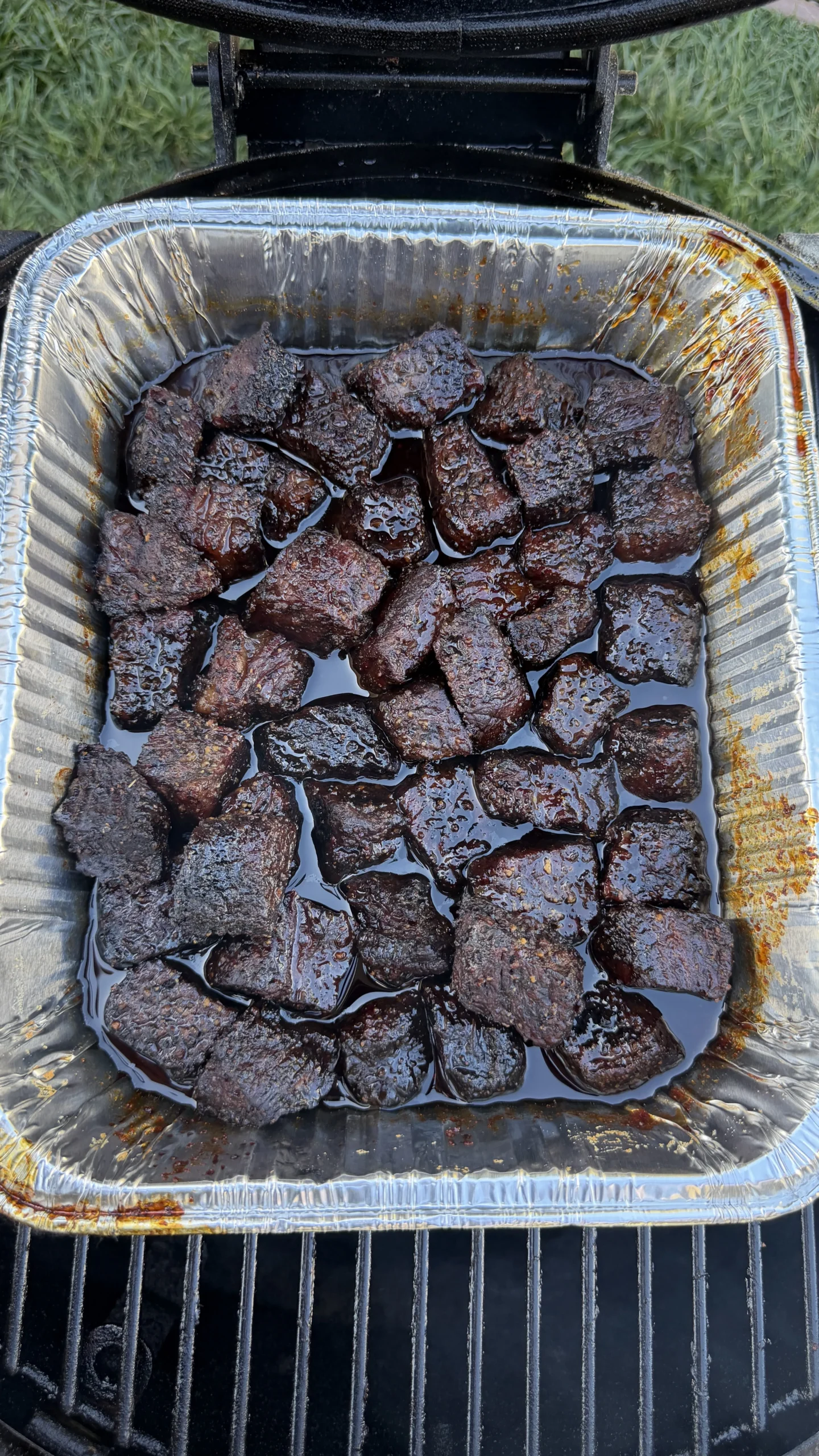
- About 10 minutes before the beef is done, remove the foil and continue cooking uncovered so the sauce reduces and sets onto the meat into a rich, glossy, sticky glaze.
- Remove from the smoker and gently toss the burnt ends in the sauce one final time. Serve hot with your favorite BBQ sides.
Notes
175°F Is a Bark Target, Not Doneness: The smoke-phase pull temperature signals that the surface has dried and set into a mahogany crust that will survive the braise. Tenderness comes later, in the covered pan, as the cubes pass through the 195 to 205°F collagen-conversion range.
Brew the Coffee Strong: The 1/4 cup of coffee counterweights the molasses and brown sugar sweetness and amplifies the roasted beef flavors. Weak coffee just waters the sauce down. Espresso works great.
Applewood, Not Hickory or Mesquite: Applewood's mild sweetness layers with the molasses sauce. Heavier smoke woods fight it.
Space the Cubes on the Grates: Smoke and airflow need to reach all six faces of each cube to build bark everywhere. Crowded cubes steam where they touch.
Don't Peek During the Braise: Every time the foil comes off mid-braise, the moist heat escapes and the cook extends. Seal it, leave it, and check at the 2-hour mark.
Toss Gently at the Finish: Post-braise, the cubes are tender enough to shred under rough handling. One gentle final toss in the set glaze is all they need.
Leftovers: Hold 3 to 4 days refrigerated. Reheat covered at 300°F with a splash of water to loosen the glaze. Leftover burnt ends make an elite sandwich filling or topping for loaded fries and mac and cheese.