Ingredients
Equipment
Method
Prep
- Pat the salmon dry and season it all over with a sesame chili citrus rub or your favorite seafood seasoning. If making your own, combine the salt, black pepper, garlic powder and brown sugar and season evenly.
- Place both blocks of cream cheese on a foil tray. Score the tops in a crosshatch pattern with a knife, then season. Score first so the seasoning falls down into the cuts.
Smoke
- Preheat your smoker to 250°F and add a small piece of applewood. Place the salmon and the cream cheese on at the same time.
- Smoke until the salmon reaches an internal temperature of 135°F. The cream cheese will be softened and smoked by that point. Watch the salmon closely, it cooks fast, and pull based on temperature rather than time.
Build the Dip
- Remove both from the smoker. Flake the salmon apart with a fork, shredding it enough to mix but leaving some nice pieces.
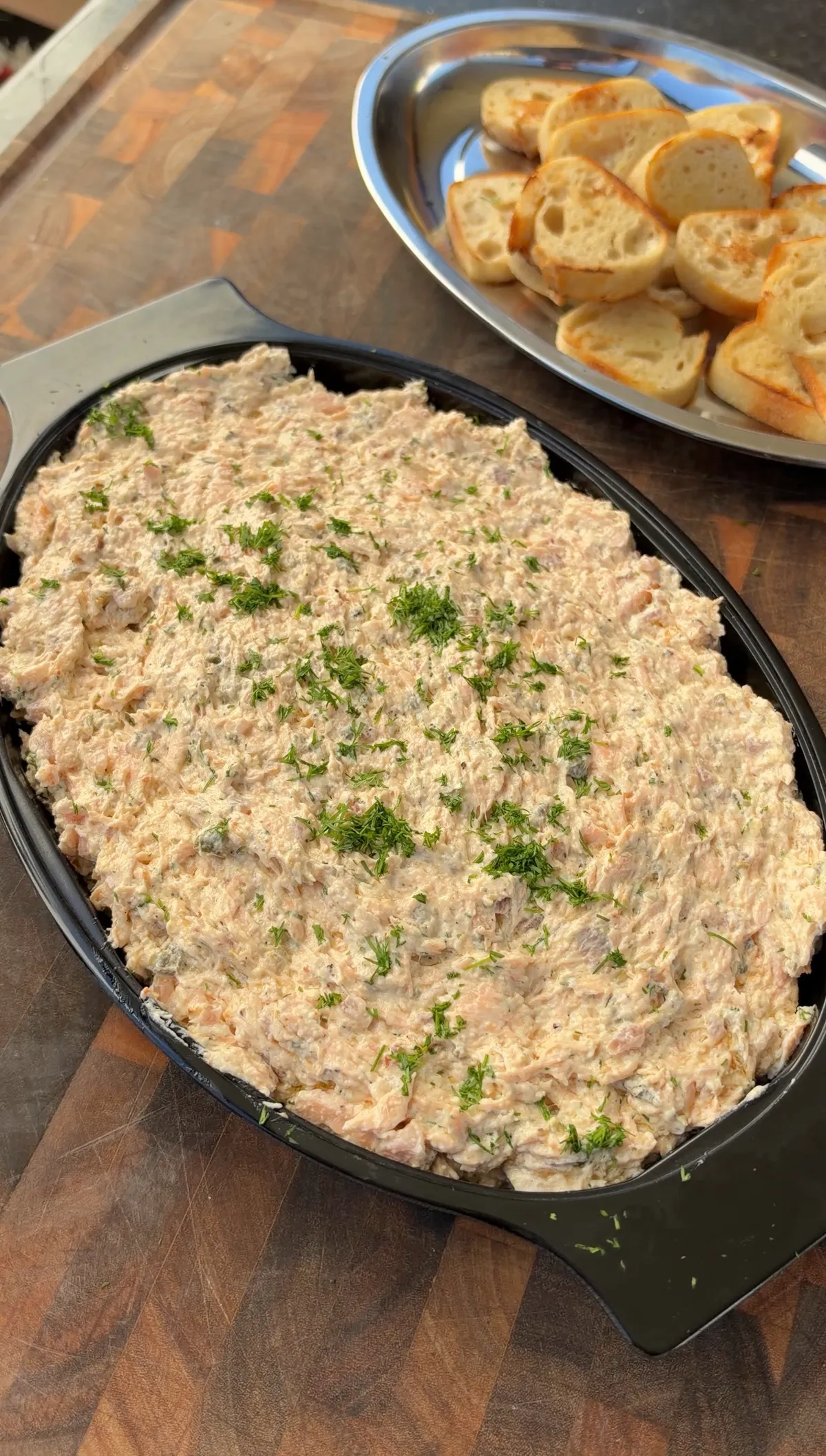
- Add the flaked salmon straight into the warm cream cheese along with the chopped capers, diced pickled red onion and fresh dill. Mix until well combined and taste.
- Transfer to a serving dish. Drizzle honey over the top if you want it sweeter and garnish with extra dill and pickled red onion. Serve with small pieces of toasted bread or crackers.
Notes
Doneness: Miguel pulls the salmon at 135°F. The USDA recommends 145°F for fish. Cook to the temperature you are comfortable with, and use a thermometer because salmon cooks quickly.
Score the cream cheese: A whole block has very little surface for smoke to reach. Crosshatching opens channels that widen as it softens, and it lets the seasoning fall inside rather than sitting on top.
Both go on together: A fillet reaching 135°F at 250°F takes about as long as two blocks of cream cheese need. Mixing them warm also makes the salmon far easier to fold in.
Go light on smoke: Salmon is mild and a small piece of applewood is plenty.
Seasoning: Miguel used a sesame chili citrus wing rub on both the salmon and the cream cheese. Any seafood seasoning works in its place.
Timing: Times and servings are estimates and vary with the thickness of your fillet. The 250°F and 135°F are as given.