Garlic guajillo smoked chicken delivers deep Mexican flavors through a marinade made from rehydrated dried chilies blended with fresh garlic, lime juice, and warm spices. This smoked chicken recipe starts by removing the backbones from two whole chickens through spatchcocking, then cutting each bird in half along the breastbone to create four manageable pieces that cook evenly. The chile marinade combines twelve guajillo and six ancho chilies that have been soaked until soft, then blended with twelve cloves of garlic, apple cider vinegar, olive oil, lime juice, and Mexican spices into a thick, brick-red paste. The chicken halves marinate for at least two hours – preferably overnight – allowing the chile flavors to penetrate deeply before hitting the smoker at 350°F where they cook for forty-five to sixty minutes until the skin caramelizes and the meat reaches 165°F.
What makes this guajillo chicken marinade recipe special is how the dried chilies provide complex flavor impossible to achieve with chili powder or fresh peppers. Guajillo chilies contribute bright, tangy heat with fruity undertones while ancho chilies add sweet, smoky depth reminiscent of raisins and chocolate. Together they create a marinade that’s simultaneously spicy, sweet, earthy, and slightly acidic – hitting multiple flavor notes that make every bite interesting. The garlic reinforces the savory elements while lime juice provides brightness that prevents the rich chile flavors from tasting heavy.
This Mexican smoked chicken recipe works brilliantly for meal prep and entertaining alike. Smoking two whole chickens at once feeds eight people generously or provides protein for multiple meals throughout the week. The spatchcocked and halved format creates uniform thickness that cooks evenly while maximizing the surface area exposed to smoke. The result is chicken with deeply flavored, caramelized skin and juicy meat infused with smoky chile complexity that elevates simple grilled chicken into something memorable.
Understanding Guajillo and Ancho Chilies
Guajillo and ancho chilies are foundational dried peppers in Mexican cooking, each bringing distinct characteristics that complement each other beautifully. Guajillo chilies are bright red, smooth-skinned, and relatively large – about four to six inches long. They provide moderate heat on the Scoville scale – noticeable but not overwhelming – with flavor notes of green tea, berries, and tomato. The heat is clean and sharp rather than lingering, making guajillos approachable even for those who don’t typically enjoy spicy food. Their bright, tangy character provides the forward flavor in this marinade.
Ancho chilies are dried poblano peppers with completely different personality than guajillos. They’re wide, wrinkled, and nearly black with very mild heat – barely perceptible to most palates. What anchos lack in spice they make up for in complexity, providing sweet, earthy flavor reminiscent of raisins, prunes, dried cherries, and dark chocolate. This sweetness balances the guajillos’ sharper character while adding depth that prevents the marinade from tasting one-dimensional. Anchos also contribute body and richness that make the marinade coat the chicken more effectively.
The ratio of twelve guajillos to six anchos creates balanced flavor where neither chili dominates. More guajillos would make the marinade too sharp and hot, while more anchos would make it too sweet and heavy. This two-to-one ratio provides moderate heat with underlying sweetness – spicy enough to be interesting but accessible to most diners. The combination also creates the characteristic brick-red color that makes Mexican-marinated chicken so visually appealing.
Both chilies benefit from proper rehydration before blending. The soaking softens their leathery skins and makes them pliable enough to break down smoothly in the blender. Under-soaked chilies create grainy, chunky marinade with bits of tough skin that don’t integrate well. The fifteen to twenty minute soak ensures complete softening while the warm water helps dissolve some of the chilies’ water-soluble flavor compounds.
The Role of Fresh Garlic
Twelve cloves of garlic might seem excessive for a marinade, but when blended with acidic ingredients and then cooked, garlic mellows significantly from its raw sharpness into sweet, savory depth. Fresh garlic contains sulfur compounds that taste pungent and almost burning when raw, but these compounds transform during cooking into nutty, caramelized flavors. The marinade’s acidity from vinegar and lime juice also helps tame garlic’s harshness while enhancing its aromatic qualities.
The garlic serves multiple purposes beyond flavor. It contains enzymes that help tenderize the chicken’s proteins, making the meat more tender after marinating. Garlic also contributes to the Maillard reaction during smoking – the interaction between amino acids and sugars that creates complex browning and flavor development. The garlic’s natural sugars caramelize along with the chicken’s proteins, creating that desirable golden-brown color on the skin.
Using whole cloves rather than pre-minced garlic is crucial for best flavor. Pre-minced garlic in jars has been processed and preserved, losing much of the volatile aromatic compounds that make fresh garlic so impactful. Fresh cloves provide sharp, clean garlic flavor that becomes mellow and sweet during the smoking process. The cloves just need to be peeled before blending – the blender will break them down completely into the marinade.
The twelve cloves distribute through enough marinade to coat four chicken halves, so each piece gets substantial garlic flavor without being overwhelmed. As the chicken smokes, the garlic compounds volatilize and mix with the smoke, creating aromatic complexity that permeates the meat. The finished chicken should taste noticeably garlicky but not raw or sharp – the heat transforms the garlic into something mellow and savory.
Why Spatchcocking and Halving Works Best
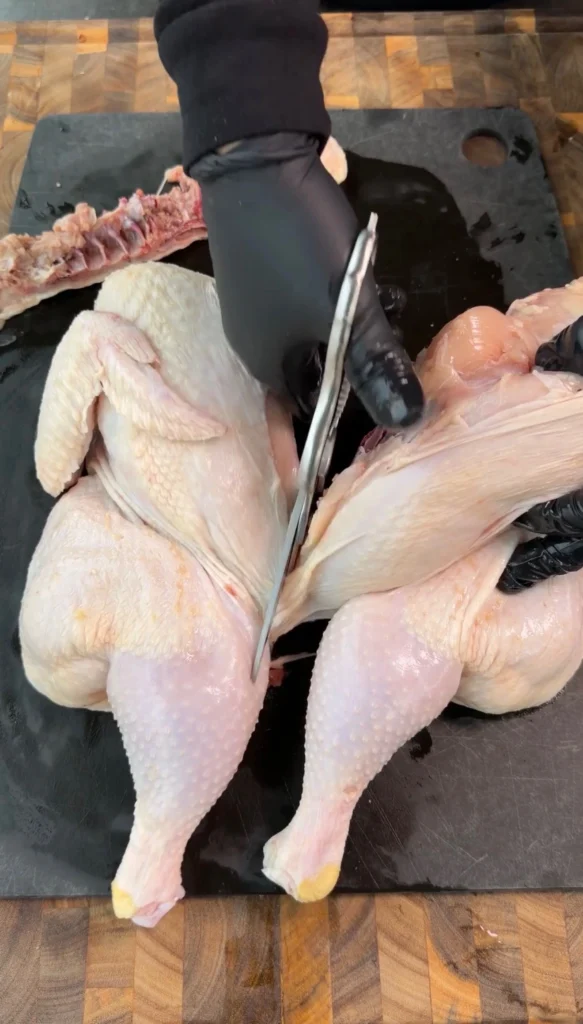
Spatchcocking – removing the backbone so the chicken lays flat – has become popular for good reason. The technique creates uniform thickness from breast to thigh, allowing everything to cook at the same rate. Traditional whole chickens have the breast stacked above the legs with varying thickness, meaning the breast overcooks while waiting for the thighs to reach safe temperature. Flattening solves this fundamental problem by spreading everything into a single plane.
Taking spatchcocking one step further by cutting the bird in half along the breastbone creates even more advantages. Each half is manageable in size – easier to handle when marinating, placing on the grill, and serving. The halves also provide more surface area for marinade contact and smoke penetration compared to keeping the bird whole. With four pieces (two chickens split in half), you can arrange them efficiently on the grill grates while ensuring each piece gets adequate smoke exposure.
The halving also makes serving easier. Each half provides roughly two portions – one breast quarter and one leg quarter. You can serve whole halves for dramatic presentation or cut them into individual breast and leg portions for easier eating. The flat shape makes carving straightforward compared to navigating around a rounded whole chicken. Simply cut through the joint where the leg meets the breast to separate into portions.
The exposed surfaces from spatchcocking and halving also mean more chicken skin gets crispy and caramelized. Whole chickens have the underside that stays pale and flabby, wasting potential crispy skin. The halves sit relatively flat on the grates with most of the skin exposed to heat and smoke, creating maximum crispy surface area. This is especially important with a sugar-containing marinade that caramelizes beautifully during cooking.
Building the Marinade Flavor Profile
Apple cider vinegar provides sharp acidity that brightens all the other ingredients while helping tenderize the chicken’s proteins. The acetic acid in vinegar denatures proteins slightly, opening up the meat’s structure to absorb flavor while creating more tender texture. The slight apple character in cider vinegar (versus white vinegar) adds subtle fruit notes that complement the chilies’ inherent fruitiness. The half cup of vinegar provides assertive tang without making the marinade taste pickled.
Olive or avocado oil serves multiple crucial functions. It helps the marinade cling to the chicken rather than running off, creating better coverage and flavor penetration. The fat carries fat-soluble flavor compounds from the chilies and spices, making them taste more intense. Oil also helps conduct heat during smoking, promoting better browning and caramelization. Avocado oil has a higher smoke point than olive oil, making it slightly better for high-heat applications, though either works well.
Lime juice adds bright citrus acidity that’s more complex than vinegar alone. Where vinegar provides sharp, clean tang, lime juice contributes floral, aromatic acidity with subtle bitterness from the oils in the peel. The combination of vinegar and lime creates more interesting acid profile than either alone. Fresh lime juice is essential – bottled lacks the aromatic oils and vibrant flavor. Juice two whole limes for about a quarter cup of juice.
The spice blend of smoked paprika, cumin, Mexican oregano, and coriander creates the warm, earthy background that defines Mexican flavor. Smoked paprika reinforces the smokiness from the ancho chilies while adding color intensity. Cumin provides earthy, slightly bitter warmth that’s essential to Mexican cuisine. Mexican oregano (different from Mediterranean oregano) has citrusy, floral character that’s traditional in Mexican cooking. Coriander adds lemony, slightly sweet notes that brighten the heavier spices.
Brown sugar is optional but recommended for better caramelization. The sugar doesn’t make the chicken taste sweet – two tablespoons distributed across four chicken halves is barely perceptible. Instead, the sugar promotes Maillard reaction and caramelization during smoking, creating deeper browning and more complex flavor. The sugar also helps balance the marinade’s acidity and the chilies’ slight bitterness.
Marinating Time and Technique
Two hours represents the minimum marinating time for adequate flavor penetration, though overnight marinating produces superior results. The acids in the marinade need time to penetrate the meat’s surface while the oil-soluble compounds from the chilies and spices gradually work their way into the proteins. Two hours allows surface-level penetration that flavors the outer quarter-inch of meat. Overnight marinating (eight to twelve hours) allows flavor to penetrate deeper, creating chicken that’s well-seasoned throughout rather than just on the surface.
However, there is a limit to beneficial marinating time. Leaving chicken in acidic marinade for more than twenty-four hours can make the texture mushy as the acids break down proteins too aggressively. The sweet spot is eight to twelve hours – long enough for deep flavor penetration without textural degradation. If you must marinate longer, reduce the vinegar and lime juice slightly to lower overall acidity.
Marinating in a large dish or heavy-duty plastic bag ensures the marinade contacts all surfaces evenly. Turn the chicken halves once or twice during marinating to ensure even coverage. The marinade should be thick enough to cling to the chicken rather than pooling in the bottom of the container. If it seems too thin, blend for another minute to break down the chilies more completely, or add slightly less soaking liquid when blending.
Always marinate in the refrigerator rather than at room temperature for food safety. Chicken is particularly prone to bacterial growth at warm temperatures. The cold environment also slows the acid’s tenderizing effect slightly, giving you more control over texture. Remove the marinated chicken from the refrigerator thirty to forty-five minutes before smoking to take the chill off, which promotes more even cooking.
Smoking Temperature and Technique
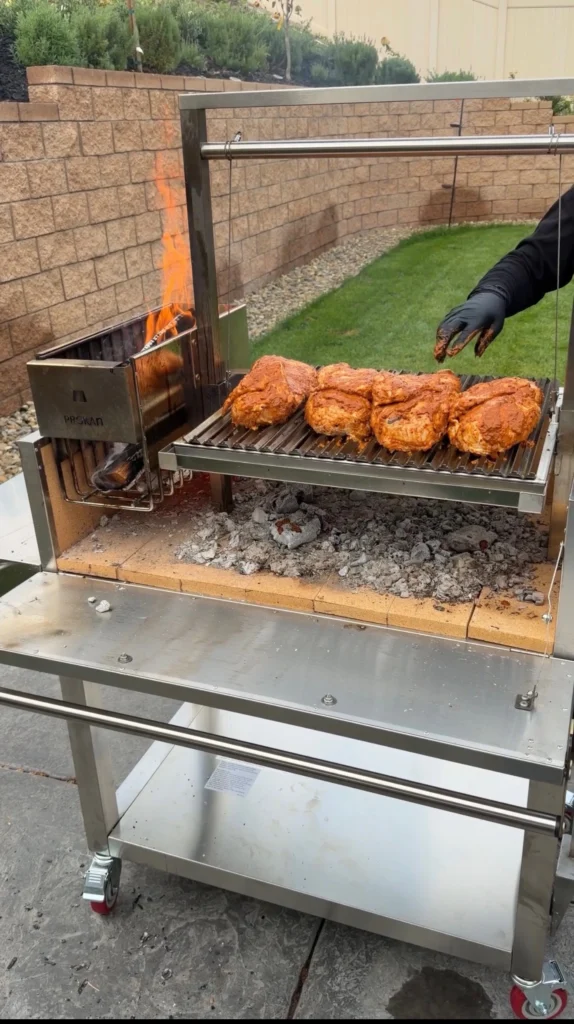
The 350°F smoking temperature represents the sweet spot for chicken – hot enough to render fat and crisp the skin but not so hot that the exterior burns before the interior cooks through. Lower temperatures around 225-250°F (traditional low-and-slow smoking) can work but take significantly longer and risk rubbery skin. Higher temperatures above 400°F cook too quickly, potentially burning the sugar in the marinade before the chicken reaches safe internal temperature.
At 350°F, spatchcocked and halved chickens take forty-five to sixty minutes to reach 165°F internal temperature. The exact time depends on the size of your chickens, the accuracy of your smoker’s temperature, and how often you open the lid (which loses heat). Start checking temperature after forty-five minutes by inserting an instant-read thermometer into the thickest part of the breast and the thickest part of the thigh on each half.
The chicken is done when the breast reaches 165°F and the thighs reach 175°F. The different target temperatures reflect the different muscle structures in white versus dark meat. Breast meat dries out above 165°F while thigh meat needs higher temperature to break down its connective tissue completely. The spatchcocked format helps achieve both temperatures simultaneously since the thighs extend outward where they receive more heat while the breasts are somewhat protected over the center.
Wood choice matters for smoke flavor. Oak provides medium smoke that’s not too aggressive, complementing rather than overwhelming the chile marinade. Pecan offers similar medium smoke with slightly sweet, nutty character. Hickory is stronger – use it if you want more pronounced smoke flavor. Avoid mesquite which can be overpowering. Use two to three wood chunks for moderate smoke, or more if you want heavier smoke presence.
Flip the chicken halves halfway through cooking for even browning and smoke exposure. Start skin-side up so the marinade doesn’t drip off immediately, then flip to skin-side down for the second half of cooking. This ensures both sides get caramelized crust and smoke penetration. Use tongs or a large spatula to flip carefully – the marinated chicken can be slippery and delicate.
Achieving Caramelized Skin
The brown sugar and natural sugars in the chilies caramelize during smoking, creating glossy, mahogany-colored skin with complex sweet-savory flavor. This caramelization is the Maillard reaction and sugar browning working together to create hundreds of new flavor compounds. The result is chicken that looks professionally cooked with deep color and appetizing appearance rather than pale, steamed-looking skin.
However, the sugar can also burn if not monitored. If you notice the skin getting too dark before the internal temperature reaches target, move the chicken to indirect heat (away from the fire) or reduce the smoker temperature slightly. A little char is desirable and adds flavor, but truly burnt skin tastes bitter and acrid. The goal is deep mahogany color with some darker spots but not black, burnt patches.
Basting with reserved marinade during cooking can enhance caramelization and add moisture, though it’s optional. If basting, reserve marinade that hasn’t touched raw chicken, or boil used marinade for five minutes to kill bacteria before brushing it on. Baste during the last fifteen to twenty minutes of cooking for best results – basting too early just washes off the marinade already on the chicken.
The skin should be crispy and slightly tacky when done – not flabby or rubbery. If the skin isn’t crispy enough after the chicken reaches temperature, increase heat to 400-425°F for the last five to ten minutes to finish crisping. Watch carefully during this high-heat finish to prevent burning.
Ingredients
For the Marinade (for 2 whole chickens):
- 12 dried guajillo chiles, stems and seeds removed
- 6 dried ancho chiles, stems and seeds removed
- 12 cloves garlic, peeled
- 1 ½ cups warm water (for soaking chiles)
- ½ cup apple cider vinegar
- ½ cup olive oil or avocado oil
- Juice of 2 limes
- 2 tbsp kosher salt
- 1 tbsp black pepper
- 1 tbsp smoked paprika
- 1 tbsp ground cumin
- 2 tsp Mexican oregano
- 1 tsp ground coriander
- 2 tbsp brown sugar (optional, helps with caramelization)
For the Chicken:
- 2 whole chickens (about 3.5-4 lbs each)
Optional for Serving:
- Fresh lime wedges
- Fresh cilantro
- Mexican rice
- Charred corn (elote)
Step-by-Step Instructions
Prepare and Rehydrate the Dried Chilies
Remove the stems from all twelve guajillo and six ancho chilies by tearing or cutting them off at the top. Cut or tear the chilies open lengthwise and shake out as many seeds as possible. You can leave a few seeds if you want extra heat, but removing most creates smoother marinade with better flavor balance. The seeds contribute bitterness along with heat, so removing them creates cleaner chile flavor.
Place the cleaned chilies in a large heat-safe bowl. Pour one and a half cups of warm water (around 180-200°F – just off the boil) over the chilies to cover them completely. Place a small plate or bowl on top to weight them down and keep them submerged, as they’ll float otherwise. Let soak for fifteen to twenty minutes until the chilies are very soft and pliable, like soft leather rather than stiff cardboard.
After soaking, drain the chilies in a colander, reserving about half a cup of the soaking liquid for blending. The soaking liquid contains dissolved flavor compounds from the chilies and can help thin the marinade if needed. Gently squeeze excess water from the softened chilies – you want them soft but not waterlogged.
Blend the Garlic Guajillo Marinade
Add the rehydrated chilies to a blender along with twelve peeled garlic cloves, half cup of apple cider vinegar, half cup of olive or avocado oil, the juice of two limes (about a quarter cup), two tablespoons of kosher salt, one tablespoon of black pepper, one tablespoon of smoked paprika, one tablespoon of ground cumin, two teaspoons of Mexican oregano, one teaspoon of ground coriander, and two tablespoons of brown sugar if using.
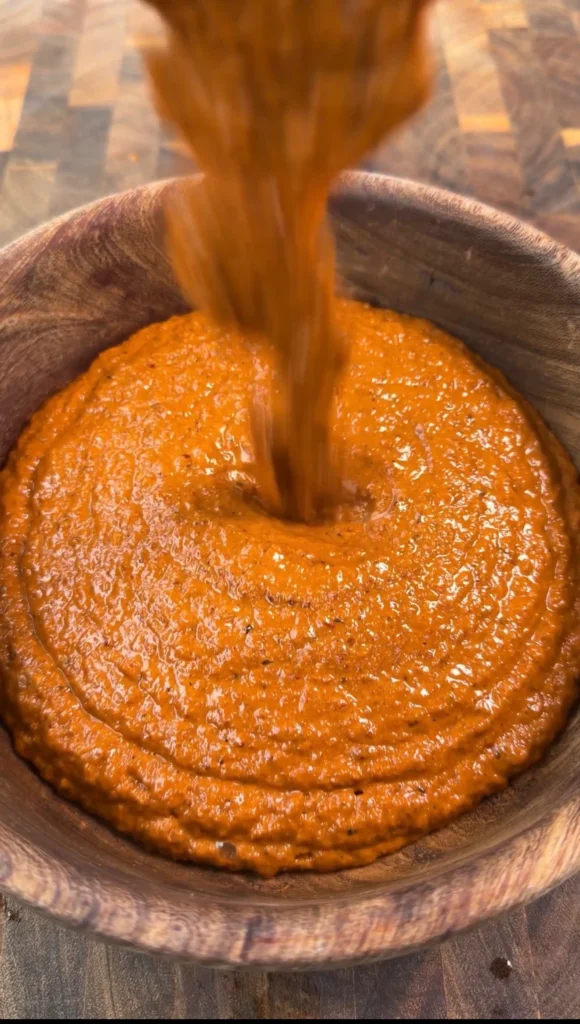
Add about half cup of the reserved chile soaking liquid to help the mixture blend smoothly. Start blending on low speed, then gradually increase to high. Blend for one to two minutes, stopping to scrape down the sides as needed, until the marinade is completely smooth and uniform with a thick, paste-like consistency. The color should be deep brick red to burgundy.
The marinade should be thick enough to cling to chicken rather than running off like water, but not so thick that it won’t spread. If it’s too thick to blend smoothly, add more soaking liquid or water one tablespoon at a time. If it’s too thin, blend longer to break down the chilies more completely – their natural pectin will thicken the mixture.
Taste the marinade carefully (just a tiny taste as it’s raw). It should be intensely flavored with prominent chile presence, sharp garlic, tanginess from the vinegar and lime, and warming spice notes. The flavor will seem strong now but will mellow during marinating and smoking while distributing across four chicken halves. If needed, adjust seasoning – more salt if it tastes flat, more vinegar or lime if it needs brightness, more sugar if the chilies are particularly bitter.
Spatchcock and Halve the Chickens
Remove both whole chickens from refrigeration and remove any giblets or neck from the cavities. Pat the chickens dry inside and out with paper towels. Place the first chicken breast-side down on a large cutting board so the backbone is facing up.
Using sharp kitchen shears or poultry shears, cut along one side of the backbone from the tail end to the neck end, cutting through the ribs. Repeat on the other side of the backbone to completely remove it. Save the backbones for making stock if desired. Flip the chicken over so the breast side is up. Press down firmly on the breastbone with both hands until you hear a crack – this breaks the cartilage and allows the chicken to lay flat.
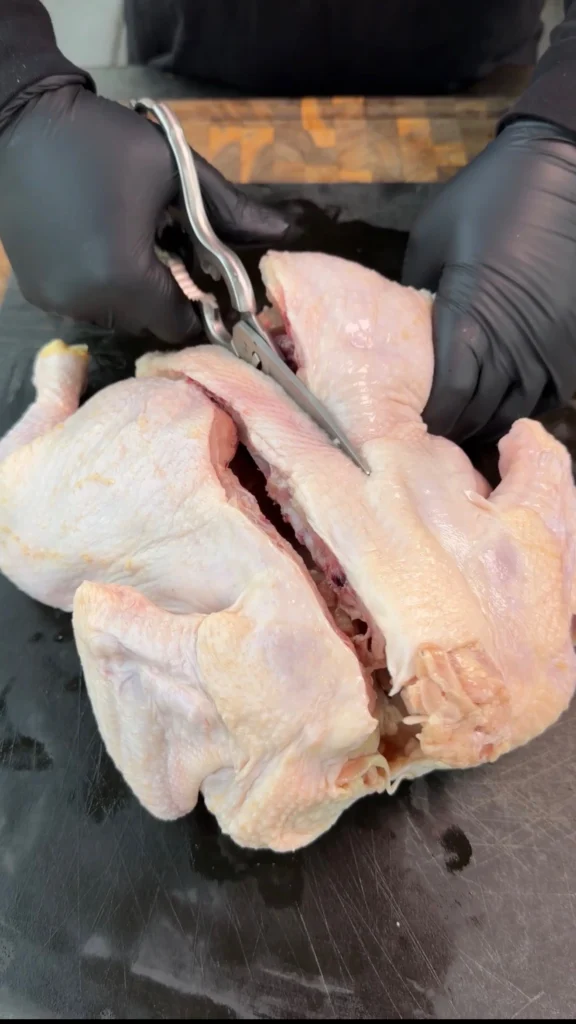
Now cut the spatchcocked chicken in half. Using a sharp chef’s knife, cut straight down through the center of the breastbone, splitting the chicken into two equal halves. Each half should have one breast quarter and one leg quarter attached. Repeat this entire process with the second chicken. You should now have four chicken halves total.
Marinate the Chicken Halves
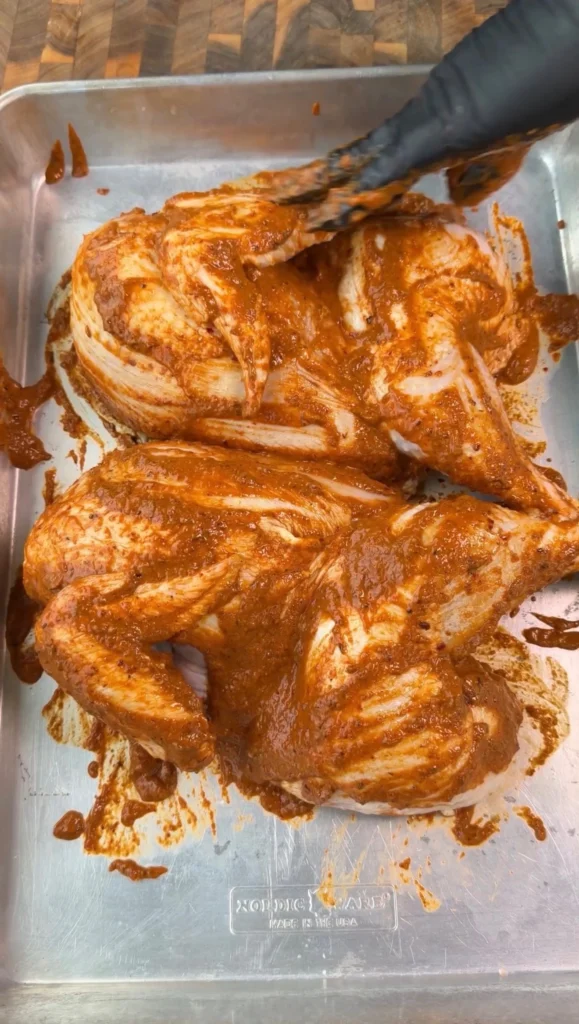
Place all four chicken halves in a very large dish or divide between two large heavy-duty plastic bags. Pour the guajillo-garlic marinade over the chicken halves, using your hands to rub the marinade all over every surface – skin side, meat side, and into any crevices. Make sure each piece is completely coated with thick layer of marinade. The marinade should cling to the chicken rather than pooling at the bottom.
If using a dish, turn the pieces to ensure even coverage. If using bags, squeeze out excess air, seal, and massage the marinade around to distribute evenly. Cover the dish with plastic wrap or seal the bags. Refrigerate for at least two hours, though overnight (eight to twelve hours) produces significantly better flavor. Turn or massage the chicken once during marinating to ensure all surfaces get equal exposure.
Prepare the Smoker
About forty-five minutes before cooking, remove the marinated chicken from the refrigerator to take the chill off. This promotes more even cooking. Preheat your smoker to 350°F. If using a charcoal smoker, light enough coals to maintain this temperature. If using a gas or electric smoker, set the temperature accordingly and allow adequate preheat time.
Add two to three wood chunks (oak, pecan, or hickory) to the fire for smoke flavor. If using a gas smoker with a wood box, fill it with chips or chunks. The wood should start smoking within five to ten minutes of adding it. Once the smoker is at stable 350°F and producing light smoke, it’s ready for the chicken.
Oil the grill grates lightly using a paper towel dipped in oil and held with tongs to prevent sticking. The marinade contains oil which helps, but a light coating on the grates provides extra insurance.
Smoke the Chicken Halves
Remove the chicken halves from the marinade, letting excess drip off but leaving a substantial coating on the chicken. Discard any remaining marinade that’s touched raw chicken, or boil it for five minutes if you want to use it for basting.
Place the chicken halves on the preheated grill grates skin-side up, spacing them with a few inches between pieces for smoke circulation. Close the smoker lid and smoke undisturbed for twenty-five to thirty minutes. Resist the urge to open the lid frequently – each opening loses heat and extends cooking time.
After twenty-five to thirty minutes, open the smoker and flip each chicken half to skin-side down. Close the lid and continue smoking another twenty to thirty minutes. The total cooking time will be forty-five to sixty minutes depending on the size of your chickens and your smoker’s accuracy.
Start checking internal temperature after forty-five minutes. Insert an instant-read thermometer into the thickest part of the breast and the thickest part of the thigh on each half, avoiding bones which conduct heat and give false readings. The chicken is done when breasts reach 165°F and thighs reach 175°F. If some pieces finish before others, remove them and tent with foil while the remaining pieces finish cooking.
Rest and Serve
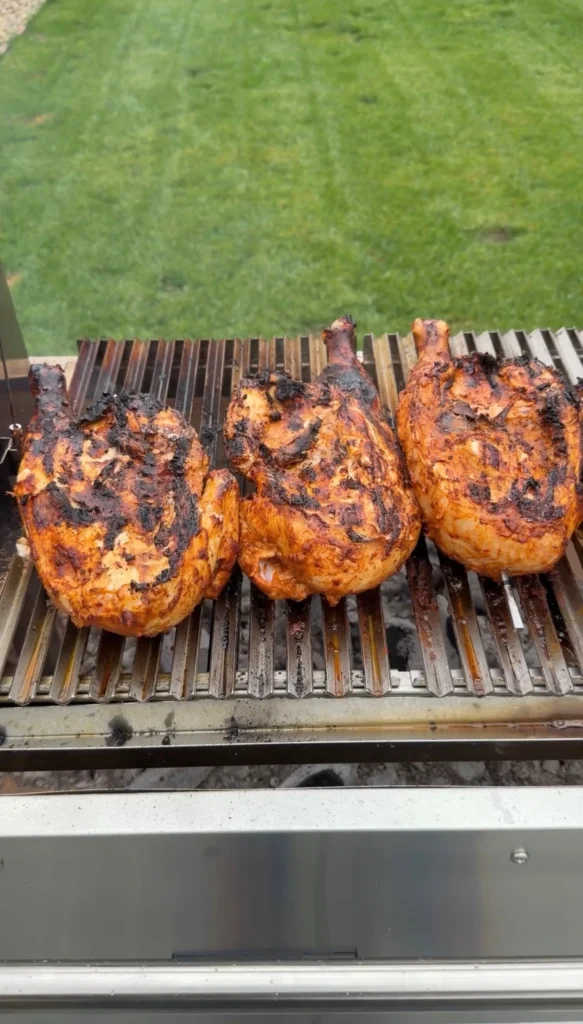
Once the chicken halves reach proper internal temperature, remove them from the smoker and transfer to a cutting board or platter. Tent loosely with aluminum foil and let rest for ten to fifteen minutes. This rest allows juices to redistribute throughout the meat – cutting immediately would cause all those flavorful juices to run out onto the board.
After resting, the chicken halves can be served whole for dramatic presentation, or cut into individual portions by separating the breast from the leg at the joint. The meat should be juicy with deeply flavored, caramelized skin colored deep mahogany to reddish-brown. The exterior should have visible char marks and slightly crispy texture while the interior is tender and moist.
Garnish with fresh lime wedges and cilantro if desired. The lime provides bright acid that cuts through the rich, smoky chicken. Serve with Mexican rice, charred corn, or other sides. The chicken is also excellent sliced for tacos, tortas, or rice bowls. Leftovers keep refrigerated for up to four days and reheat well.
FAQ
Can I use chili powder instead of dried chilies?
Chili powder won’t provide the same depth and complexity as whole dried chilies. Dried chilies have nuanced flavors – fruity, earthy, sweet – that get lost in commercial chili powder. The texture also matters – blended rehydrated chilies create thick, clingy marinade while chili powder makes thin, runny liquid. If you absolutely must substitute, use six tablespoons of quality Mexican chili powder, but know the results won’t be the same.
What if I can’t find guajillo or ancho chilies?
Check the international aisle of larger grocery stores, Mexican markets, or order online. They’re widely available and inexpensive. If absolutely necessary, substitute New Mexico chilies for guajillo or pasilla chilies for ancho, though the flavor will be slightly different. Avoid using fresh peppers like poblanos or jalapeños as substitutes – they’re completely different and won’t work.
Can I grill instead of smoke?
Yes, indirect grilling works well. Set up a two-zone fire with coals on one side or burners on half the grill. Place the chicken on the cool side and close the lid. Add a couple wood chunks to the coals for smoke flavor. The cooking time will be similar – forty-five to sixty minutes. The chicken won’t have as much smoke flavor as true smoking but will still be delicious with the chile marinade.
How spicy is this chicken?
As written, it’s moderately spicy – noticeable heat but not overwhelming. Guajillos provide moderate heat while anchos are very mild. Removing all seeds makes it milder. For spicier chicken, leave more seeds in the chilies or add two to three dried árbol chilies to the marinade. For milder, reduce guajillos to eight and increase anchos to eight.
Can I cook just one chicken instead of two?
Absolutely – just cut the marinade recipe in half. One spatchcocked and halved chicken serves four people. The cooking time remains the same since the pieces are the same thickness. Making the full marinade for one chicken creates excessive waste, so definitely scale down the recipe proportionally.
Conclusion
Garlic guajillo smoked chicken proves that complex Mexican flavors can be achieved at home with dried chilies and straightforward technique. The combination of guajillo and ancho chilies creates marinade that’s simultaneously spicy, sweet, earthy, and bright – hitting multiple flavor notes that make every bite interesting. The garlic reinforces savory depth while lime juice and vinegar provide the acidity that balances richness. Spatchcocking and halving the chickens creates uniform thickness that cooks evenly while maximizing surface area for marinade penetration and smoke exposure.
What makes this guajillo chicken marinade recipe so successful is how it layers flavor throughout the cooking process. The overnight marination allows the chile flavors to penetrate deeply while the acids tenderize the meat. The smoking adds another dimension of flavor while the natural sugars in the marinade caramelize into glossy, mahogany skin. The result is chicken that’s deeply flavored inside and out rather than just seasoned on the surface.
This Mexican smoked chicken works beautifully for meal prep and entertaining alike. Smoking two whole chickens provides enough protein for multiple meals or feeds a crowd generously. The versatility means you can serve it whole for dramatic presentation, slice it for tacos, or use it in rice bowls throughout the week. Master the technique of rehydrating and blending dried chilies, and you’ll unlock authentic Mexican flavors that elevate everything you cook.
Ready to Take Your Cooking to the Next Level?
This is where I keep all my most-used products, gear, and favorite cooking tools — check it out:
🔥 View My Cooking Gear & ToolsRecipe Categories
If you loved this recipe, you’ll find more to savor across our diverse categories. From beef to pork, chicken to turkey, seafood to appetizers, there’s a wealth of flavors waiting for you. Explore them all at CWFeats.