
Garlic Parmesan Pull-Apart Sourdough
Roasted garlic parmesan pull-apart sourdough takes two loaves of sourdough bread sliced every 1/2 inch (without cutting all the way through), stuffed with a roasted garlic butter made from 3 sticks of softened butter, 20 confit garlic cloves, fresh parsley, Parmesan, and black pepper all blended smooth in a food processor, then layered with freshly grated mozzarella between every cut. The garlic gets slow-cooked in oil until golden and soft before it goes into the butter, which gives the whole loaf a mellow, sweet garlic flavor that raw garlic can’t replicate. Cook on the grill or in the oven at 350°F for 25 to 30 minutes until the cheese is fully melted and the bread is crispy and golden on top. Feeds a crowd.
Jump to Recipe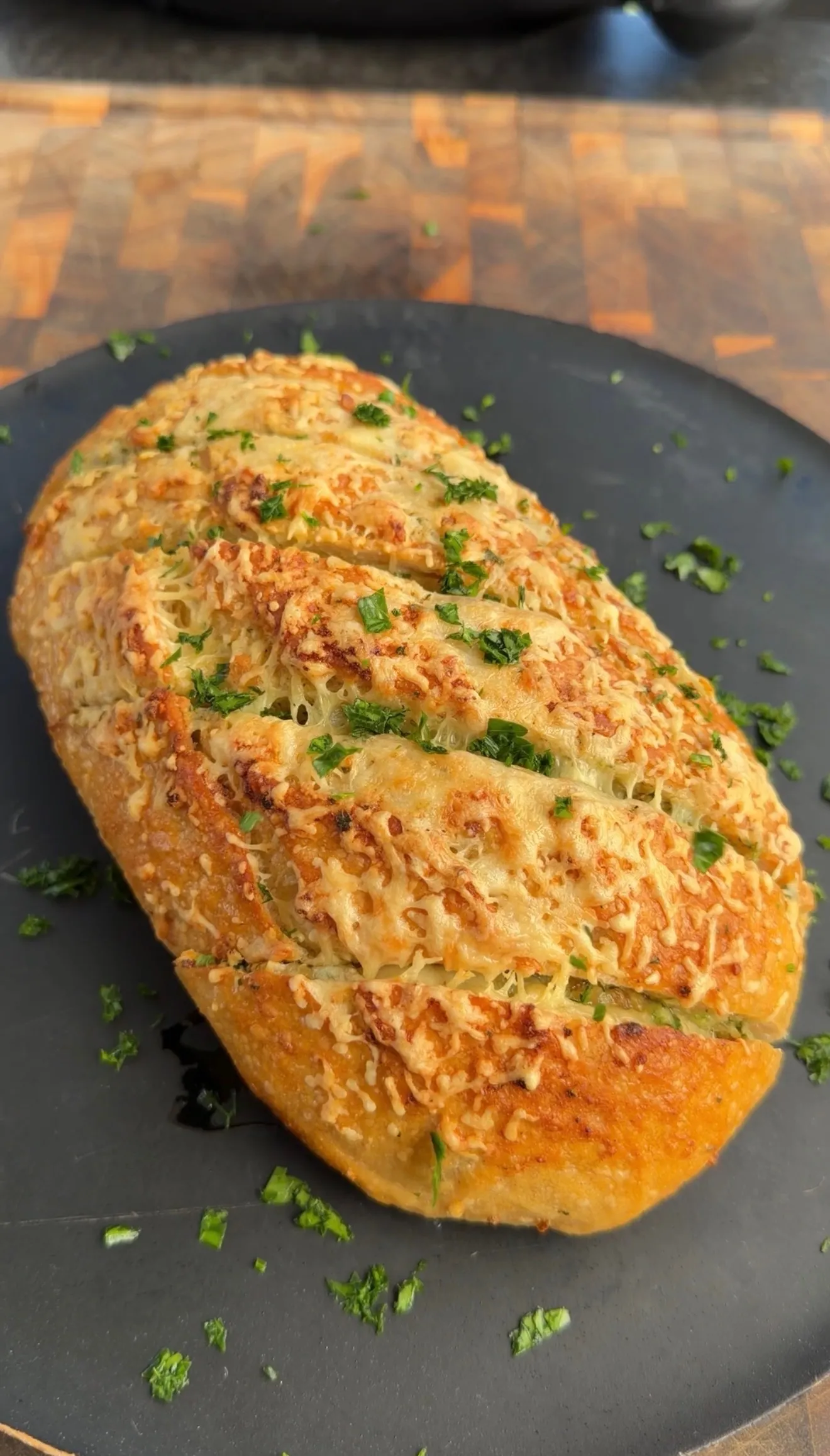
Why Confit Garlic Makes Better Garlic Bread Than Raw
Slow-Cooking Transforms the Flavor
Raw garlic is sharp, pungent, and aggressive. Roasting or confiting garlic in oil over low heat breaks down the harsh sulfur compounds and converts them into mellow, sweet, almost nutty flavors that spread evenly through the butter without any sharp bite. Twenty cloves cooked slowly in oil until golden brown and soft produce a garlic paste that blends seamlessly into the butter, and every slice of sourdough gets that deep, roasted garlic flavor from edge to center.
The Confit Method vs. Oven Roasting
Traditional oven-roasted garlic requires wrapping a whole head in foil and baking at 400°F for 40 to 45 minutes. The confit method submerges individual cloves in oil and cooks them on the stovetop over low heat until golden, which takes less time and gives you more control over the doneness of each clove. You can pull cloves as they finish and avoid burning the smaller ones while waiting for the larger ones to soften. The leftover garlic oil is also usable as a finishing drizzle or for sautéing.
Building the Roasted Garlic Butter in a Food Processor
Why the Food Processor Matters
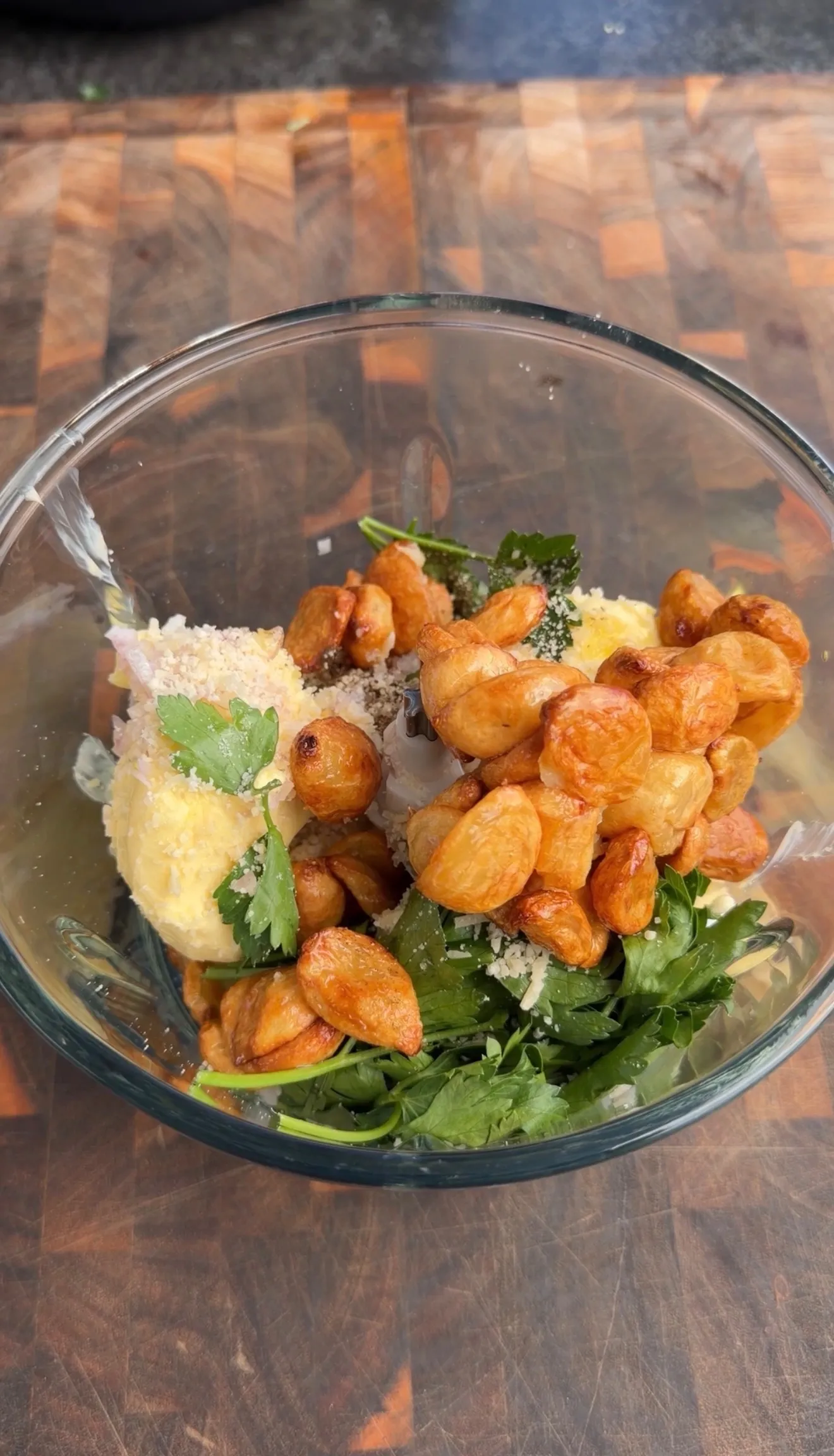
Combining roasted garlic, 3 sticks of softened butter, fresh parsley, Parmesan, and black pepper in a food processor produces a smooth, uniform compound butter where the garlic is fully incorporated into the fat. If you mix by hand, you end up with chunks of garlic unevenly distributed through the butter, which means some slices of bread get a garlic overload while others get none. The food processor eliminates that problem and creates a pipeable consistency.
Transfer to a Zip-Top Bag for Easy Piping
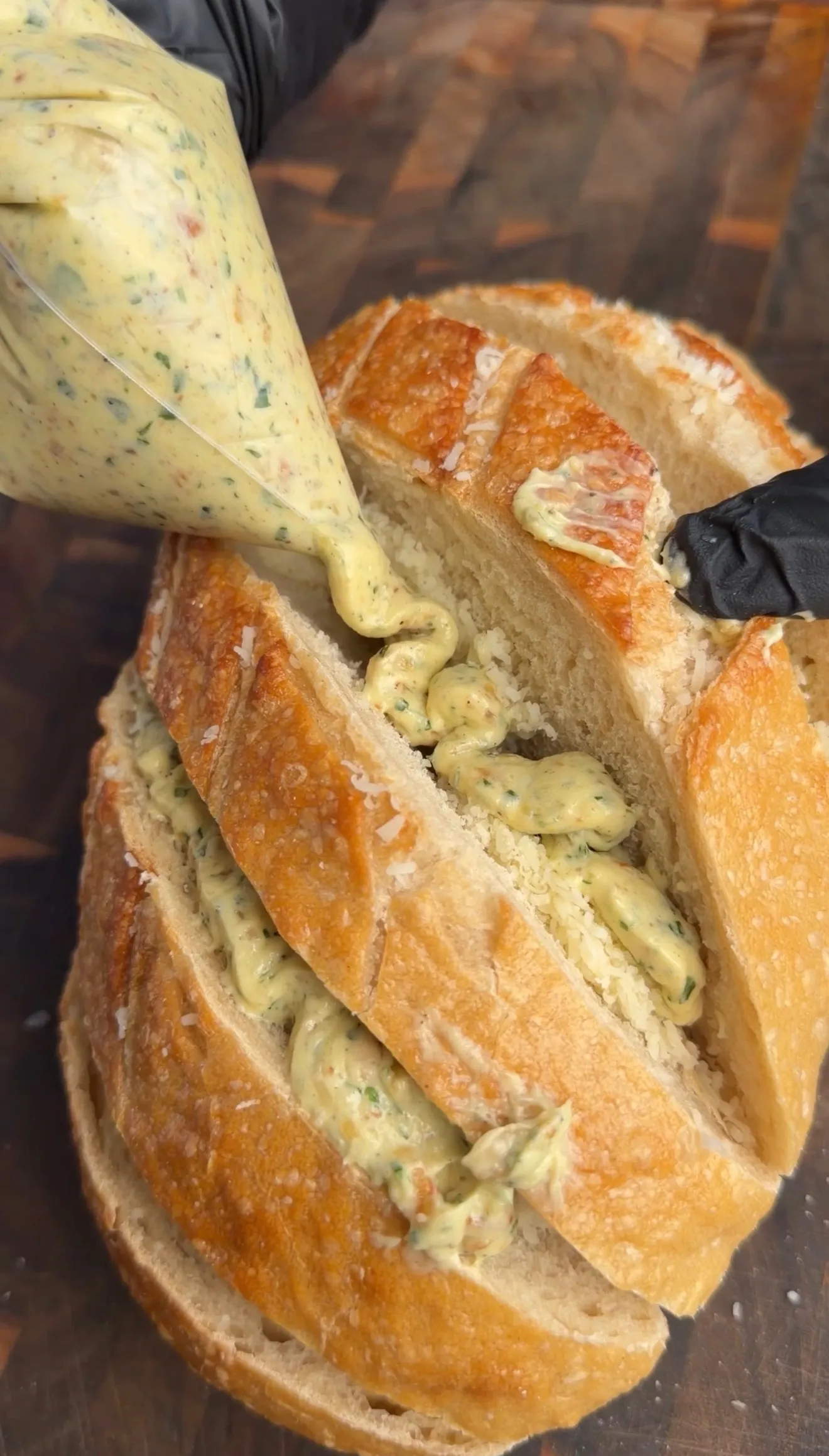
After blending, transfer the garlic butter to a zip-top bag and snip one corner. This turns the bag into a piping tool that lets you squeeze the butter directly into the narrow cuts between each slice of sourdough. Trying to spread compound butter into thin slits with a knife is messy and tears the bread. The piping method delivers a controlled, even amount of butter into every cut without damaging the loaf’s structure.
Slicing the Sourdough Without Cutting Through
Every 1/2 Inch, Connected at the Base
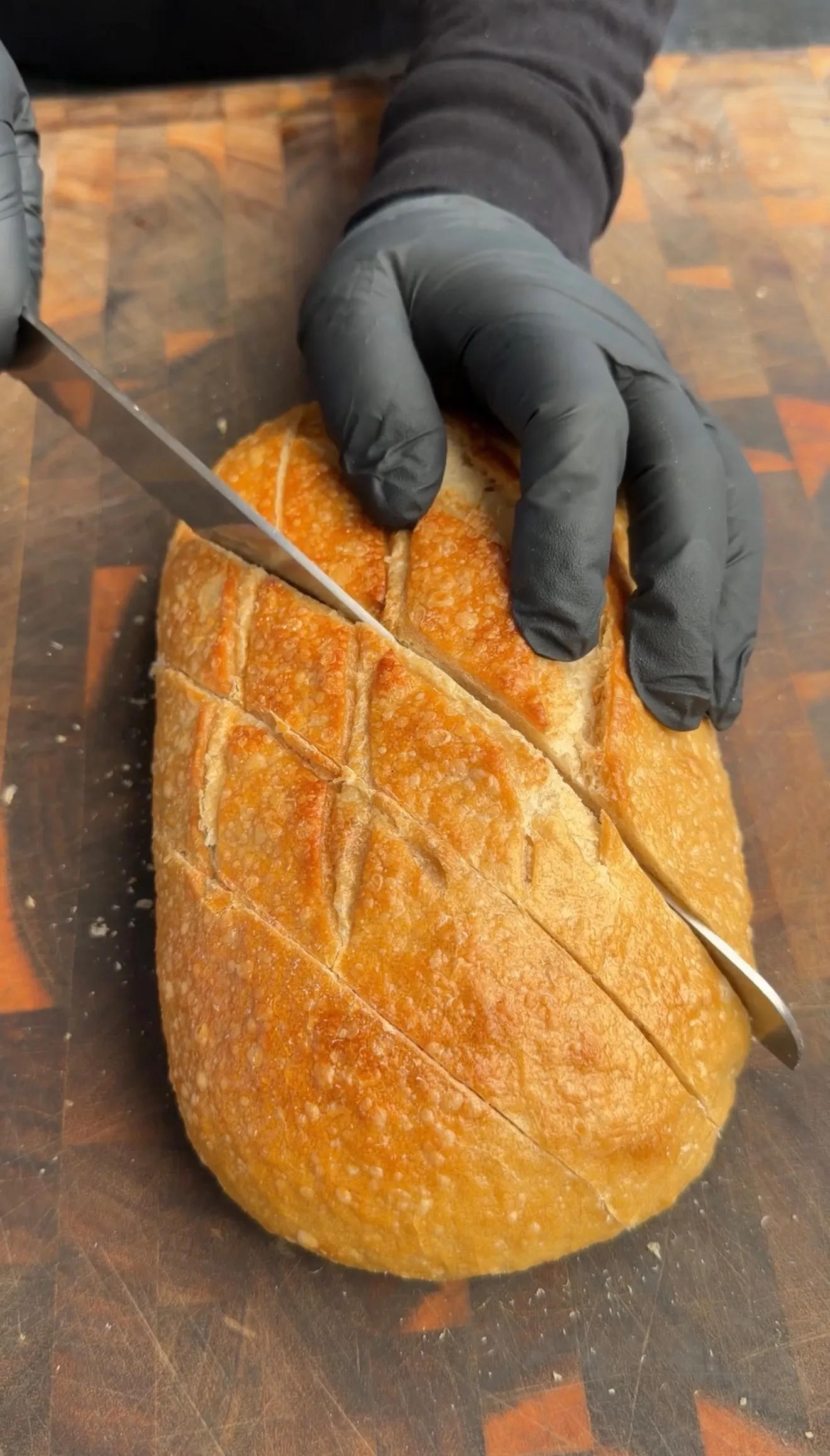
Use a sharp serrated knife to slice the sourdough every 1/2 inch, stopping about 1/2 inch from the bottom so the slices stay connected at the base. The connected base holds the loaf together during cooking and allows each slice to fan open slightly, creating pockets where the garlic butter and mozzarella melt and pool. If you cut too deep or all the way through, the slices separate and fall over during cooking, and the butter and cheese leak out the bottom instead of staying between the bread.
Two Loaves for a Crowd
This recipe calls for two full loaves of sourdough because 3 sticks of butter and 8 oz of mozzarella is enough filling for both. A single loaf with that much butter would be oversaturated and greasy. Splitting the filling across two loaves gives you the right ratio of butter, cheese, and bread in every slice while also giving you enough to feed a crowd at a cookout, game day, or dinner party.
Layering Cheese First, Then Butter
Mozzarella as the Base Layer in Each Cut
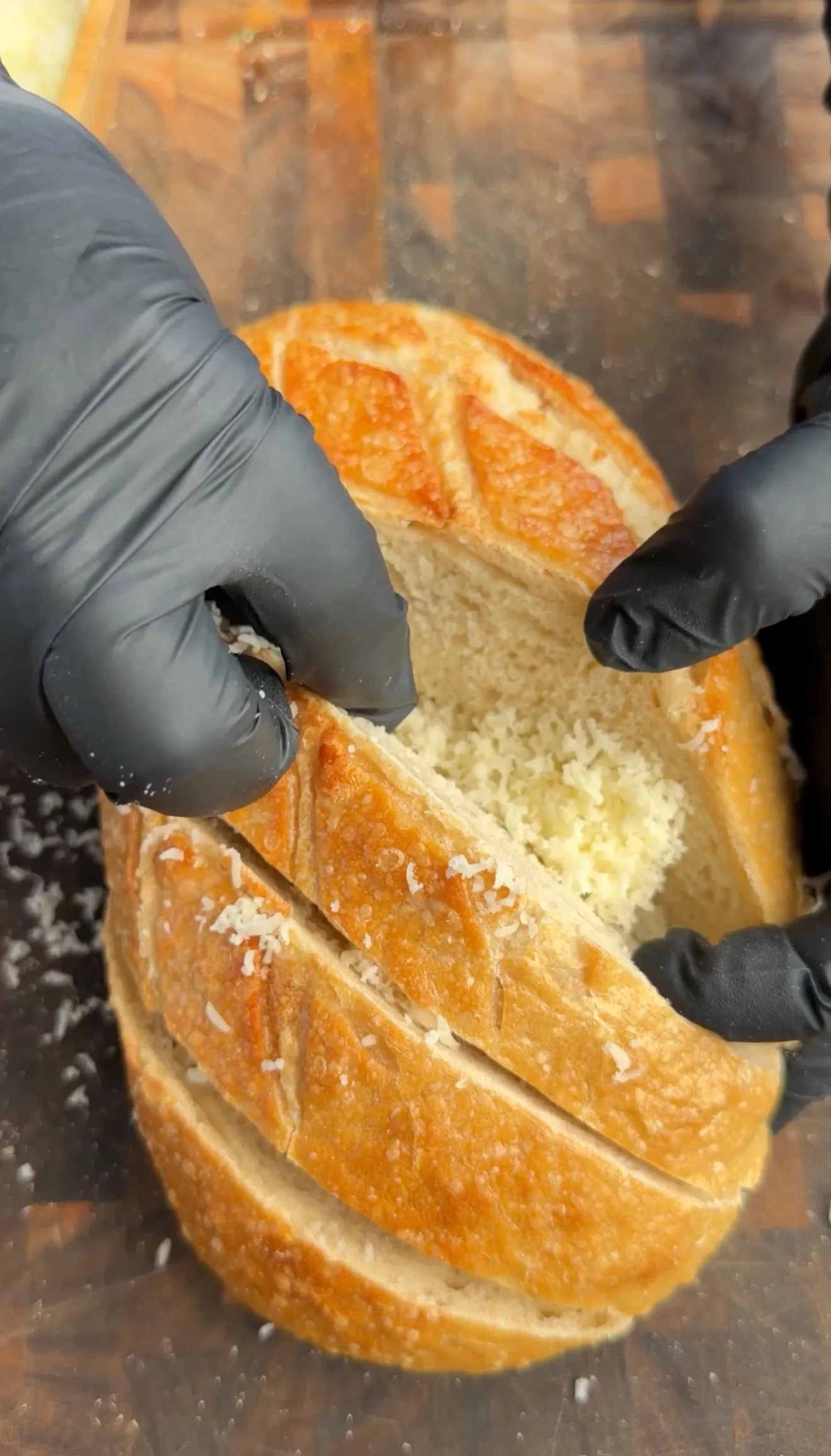
Add about 1 teaspoon of freshly grated mozzarella between each slice before piping in the garlic butter. The cheese melts during the cook and creates stretchy, gooey pockets between each slice that hold the bread together when you pull it apart. The mozzarella also acts as a flavor bridge between the tangy sourdough and the rich, herby garlic butter.
Freshly Grated vs. Pre-Shredded
Pre-shredded mozzarella from a bag contains anti-caking agents like cellulose and potato starch that prevent smooth melting. Freshly grated mozzarella melts into a stretchy, gooey layer that clings to the bread and creates those satisfying cheese pulls when you tear a slice away from the loaf. The difference is visible, and you can feel it in the texture of every bite.
Cooking at 350°F on the Grill or in the Oven
25 to 30 Minutes Until Golden and Melted
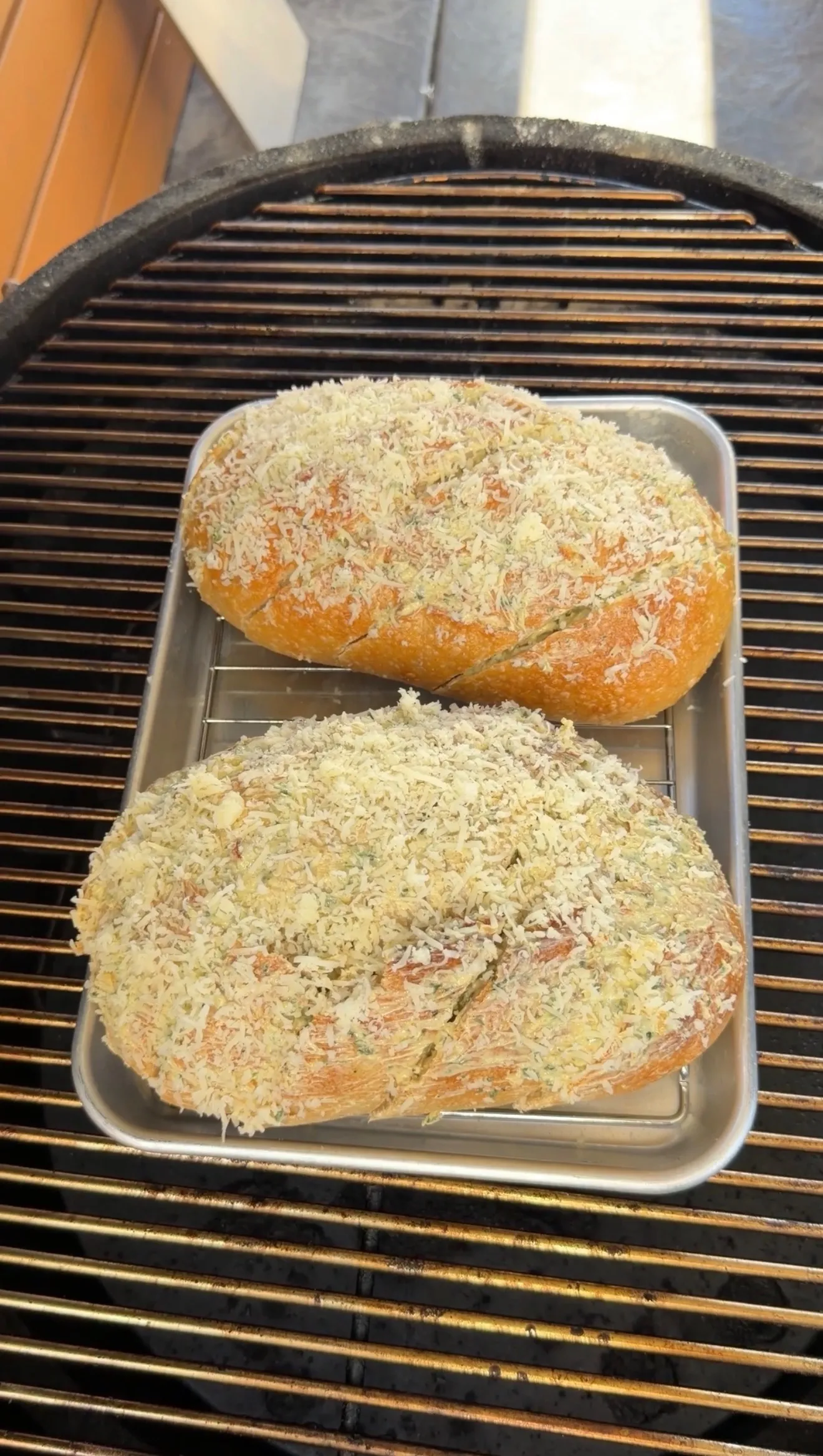
Place the stuffed sourdough on the grill (indirect heat) or in a 350°F oven for 25 to 30 minutes. You want the cheese fully melted and stretchy between every slice, the garlic butter soaked into the bread and bubbling at the edges, and the top of the loaf crispy and golden brown. If the top is browning too fast before the cheese in the center melts, tent loosely with foil for the first 15 minutes and remove it for the final 10 to 15 minutes.
Finishing the Top
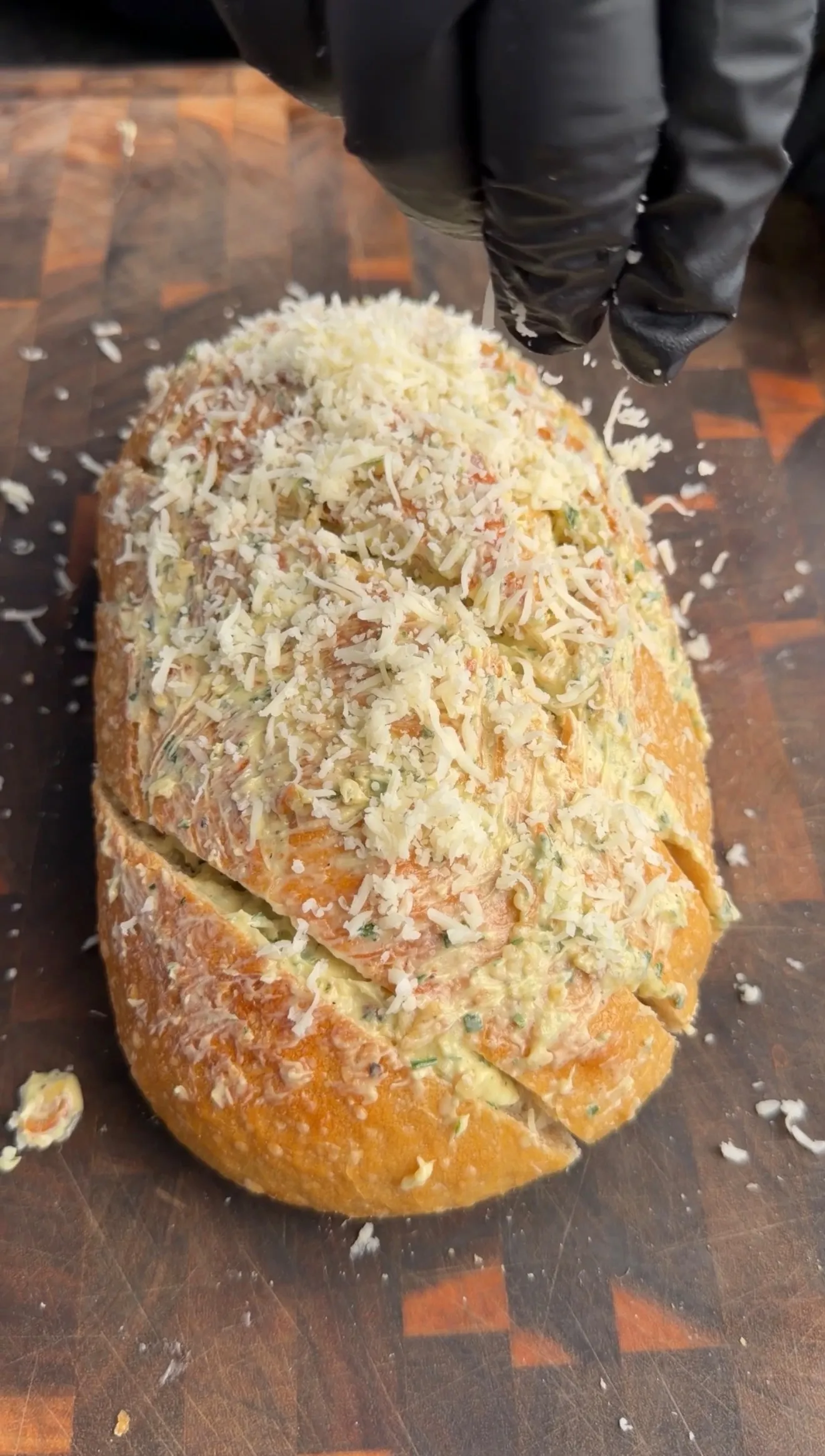
Before cooking, brush more garlic butter over the top of the loaf and sprinkle with remaining mozzarella. This top layer melts and browns during the cook, creating a crispy, cheesy crust on the exterior that contrasts with the soft, butter-soaked interior. The visual presentation of a golden, cheese-crusted loaf with visible garlic butter pooled between the slices is what makes pull-apart bread impossible to walk past at a table.
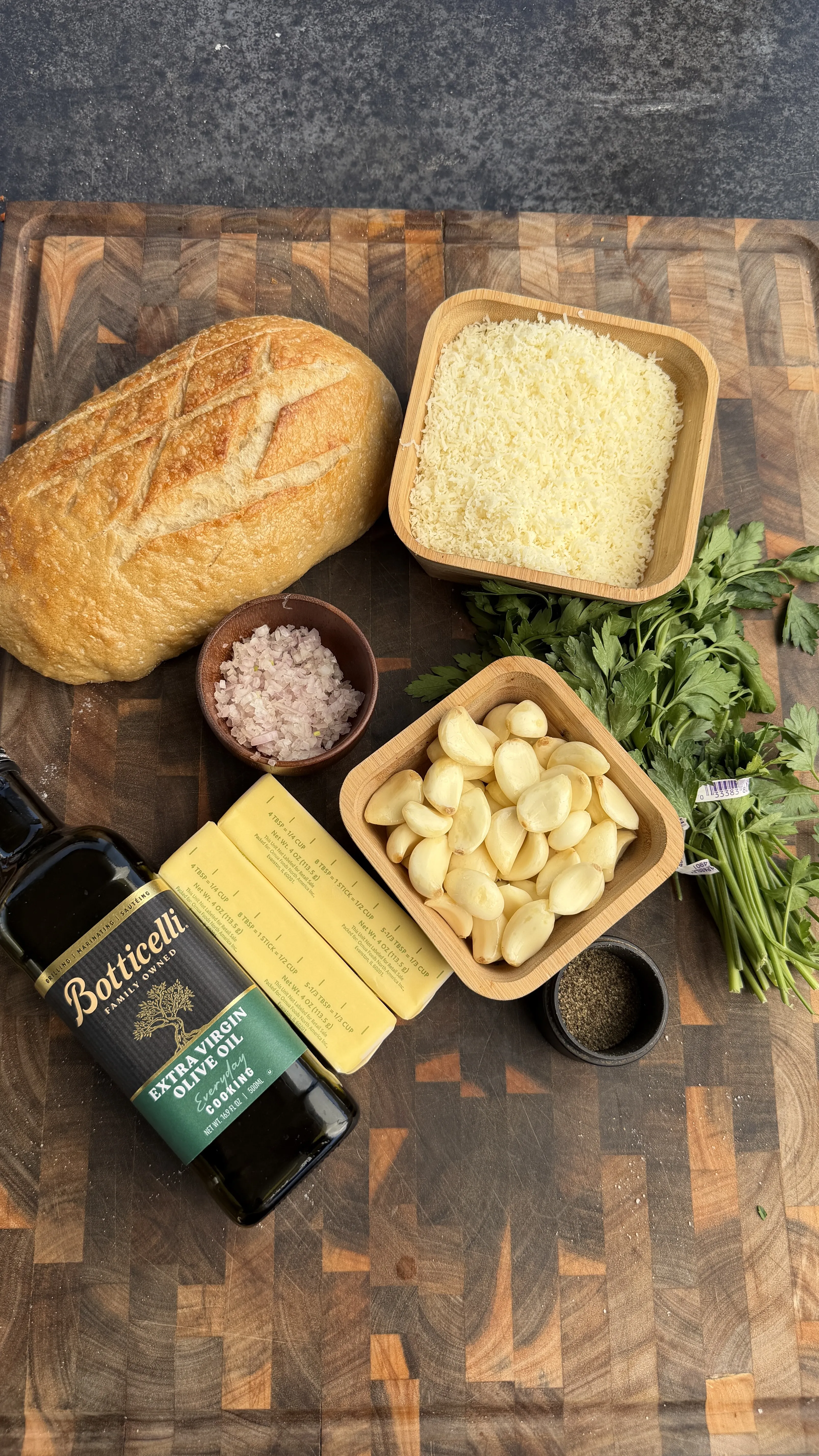
Step-by-Step: How to Make Roasted Garlic Parmesan Pull-Apart Sourdough
Step 1: Confit the Garlic
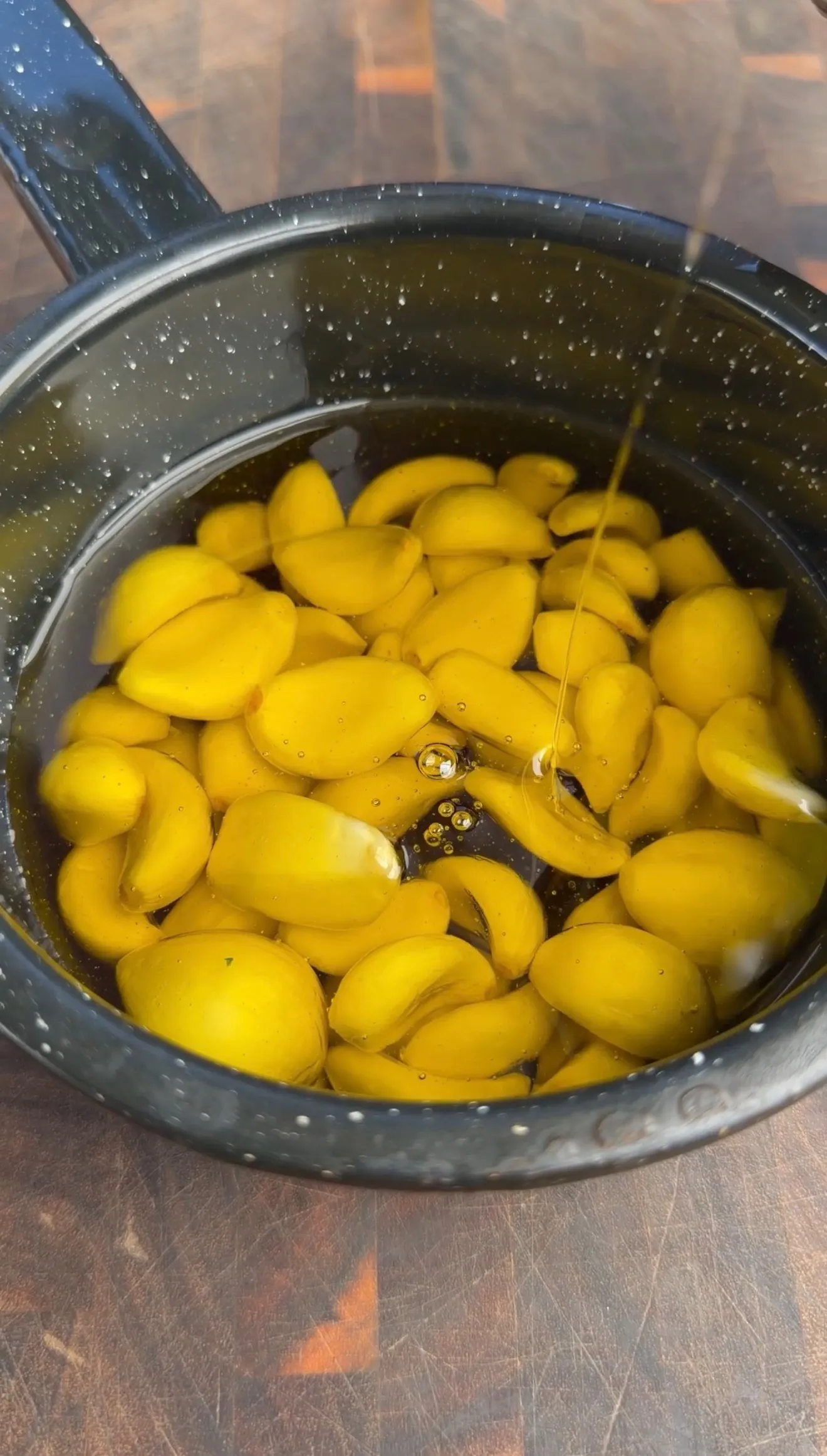
Add 20 garlic cloves to a small pan and cover them with oil. Cook on low heat, stirring occasionally, until the cloves are golden brown and completely soft. This takes roughly 15 to 20 minutes depending on how low your heat is. The garlic should be soft enough to mash with a fork with almost no resistance. Remove the cloves from the oil and let them cool before adding to the food processor.
Step 2: Make the Garlic Butter
Add the cooled roasted garlic, 3 sticks of softened salted butter, 2 tablespoons chopped fresh parsley, 3 tablespoons grated Parmesan, and 1 teaspoon black pepper to a food processor. Blend until smooth and creamy with no visible chunks of garlic remaining. Transfer the compound butter to a zip-top bag and snip one corner to create a piping bag for easy, controlled application into the bread cuts.
Step 3: Slice the Sourdough
Using a sharp serrated knife, slice each sourdough loaf every 1/2 inch, making sure not to cut all the way through to the bottom. Leave about 1/2 inch of bread connected at the base so the loaf holds together during cooking. The slices should fan open slightly, creating pockets for the cheese and butter.
Step 4: Stuff with Cheese and Garlic Butter
Open each cut slightly and add about 1 teaspoon of freshly grated mozzarella between every slice. Then pipe the roasted garlic butter into each cut using the zip-top bag, filling the gaps between the cheese and the bread. The cheese goes in first so it sits against the bread, and the butter goes on top where it melts down through the cheese during cooking.
After filling all the cuts, brush more garlic butter generously over the top of each loaf and sprinkle with the remaining mozzarella. This top layer melts and browns during cooking, creating a crispy, cheesy crust on the exterior.
Step 5: Cook at 350°F
Place the stuffed loaves on the grill (indirect heat) or in a 350°F oven for 25 to 30 minutes. The bread is done when the cheese is fully melted and stretchy between every slice, the garlic butter has soaked into the bread and is bubbling at the edges, and the top is crispy and golden brown. If the top browns too quickly, tent loosely with foil for the first 15 minutes and remove it for the final stretch.
Step 6: Serve Immediately
Pull-apart sourdough is best served hot, straight from the grill or oven while the cheese is still stretchy and the garlic butter is still liquid in the cuts. Set the loaf on a board or platter and let people tear slices away. The connected base keeps the loaf upright and intact while serving, and each piece pulls away with a trail of melted mozzarella.
Roasted Garlic Parmesan Pull-Apart Sourdough
Ingredients
Equipment
Method
- Add 20 garlic cloves to a small pan and cover with oil. Cook on low heat until golden brown and soft. Remove and let cool.
- Blend roasted garlic, softened butter, parsley, Parmesan, and black pepper in a food processor until smooth. Transfer to a zip-top bag for piping.
- Slice each sourdough loaf every 1/2 inch without cutting all the way through. Leave 1/2 inch connected at the base.
- Add about 1 tsp mozzarella between each slice. Pipe roasted garlic butter into each cut.
- Brush more garlic butter over the top and sprinkle with remaining mozzarella.
- Cook on grill (indirect) or in oven at 350°F for 25-30 minutes until cheese is melted and bread is golden. Serve immediately.
Notes
Tried this recipe?
Let us know how it was!Garlic Parmesan Pull-Apart Sourdough FAQ
Common questions about confit garlic, slicing technique, cheese selection, and cooking method.
Your Questions, Answered
You can, but the flavor will be completely different. Raw garlic is sharp and pungent, while confit garlic is mellow, sweet, and nutty because the slow cooking breaks down the harsh sulfur compounds. Raw garlic also does not blend as smoothly into butter, so you will end up with an uneven distribution of strong garlic hits instead of a uniform, subtle garlic flavor throughout.
Yes. French bread, Italian bread, or a ciabatta loaf all work well for pull-apart bread. Sourdough is ideal because the tangy flavor pairs well with the rich garlic butter and the dense crumb holds up to the slicing and stuffing without falling apart. Softer breads like brioche tend to compress too much and become soggy from the butter.
The food processor produces a smooth, uniform compound butter where the roasted garlic is fully incorporated into the fat. Mixing by hand leaves chunks of garlic unevenly distributed, which means some slices of bread get an overload while others get none. The smooth consistency also makes the butter pipeable, so it flows easily into the narrow cuts between slices.
Yes. The compound butter keeps in the refrigerator for up to 5 days in a sealed container or zip-top bag. You can also freeze it for up to 3 months. Just bring it back to room temperature before piping so it flows into the cuts easily. Cold butter is too stiff to pipe and tears the bread when you try to force it into the slits.
Cooking and Serving
Both work at 350°F for 25 to 30 minutes. The grill adds a subtle smoky flavor and gives the exterior a slightly different char than the oven, which is a nice complement to the garlic butter. Use indirect heat on the grill so the bottom of the bread does not burn. The oven produces more even browning on the top and is easier to control if you are cooking other dishes at the same time.
Yes. Assemble the loaf up to 24 hours ahead, wrap it tightly in foil, and refrigerate. When you are ready, unwrap the top (leave the foil underneath for easy cleanup) and cook at 350°F. Add 5 to 10 extra minutes to the cook time since the bread is starting cold from the fridge. The make-ahead assembly actually allows the butter to soak deeper into the bread, which many people prefer.
The pull-apart sourdough is rich enough on its own, but it pairs well with warm marinara sauce, pesto, or a balsamic reduction for dipping. For a simpler option, serve it alongside a bowl of soup or a Caesar salad. The bread also works as a side dish for grilled steaks, pasta, or any dish where you would normally serve garlic bread.
Ready to Level Up?
Take your backyard cooking from good to legendary.
This is where I keep all my most-used smokers, knives, and favorite cooking tools.
Shop My Gear CollectionExplore More Recipes
Find more diverse flavors at CWFeats.com