Spicy grilled freshwater prawns transform giant prawns into restaurant-quality Mexican seafood through a bold marinade of chipotle peppers, fresh lime, and smoky spices grilled over high heat. This recipe starts with two pounds of giant freshwater prawns – dramatically larger than standard shrimp – that get trimmed of their legs and barbs while keeping the flavorful heads intact. The prawns marinate for just thirty minutes in a vibrant mixture of chipotle in adobo, garlic, lime juice and zest, and warm Mexican spices that penetrate the sweet prawn meat without overwhelming its delicate flavor. High-heat grilling creates beautiful char marks and caramelization while the prawns cook through quickly, staying tender and juicy.
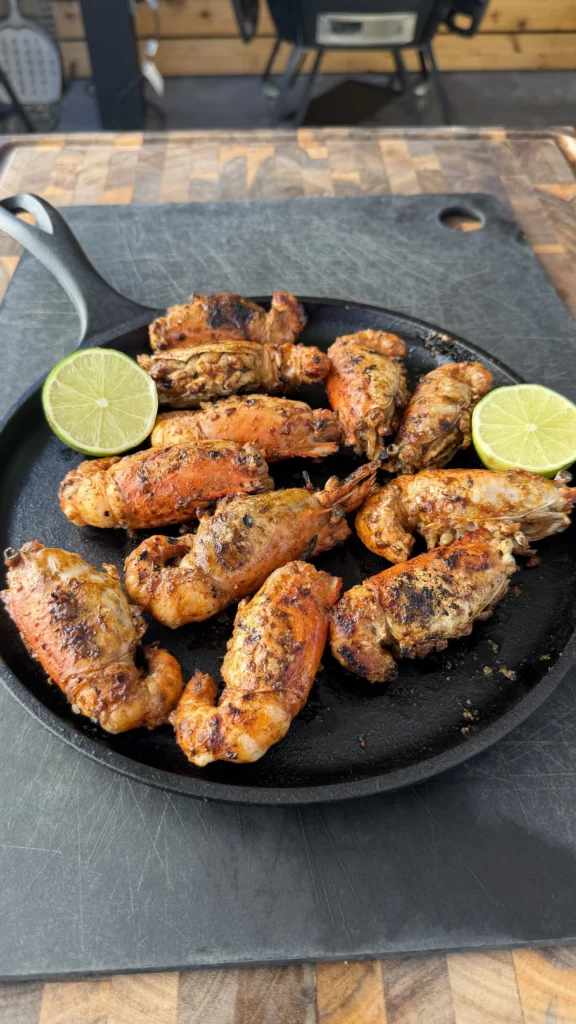
What makes these chipotle lime prawns special is how the smoky, spicy marinade complements rather than masks the prawns’ natural sweetness. Giant freshwater prawns have mild, slightly sweet flavor similar to lobster but with firmer texture than ocean shrimp. The chipotle peppers provide smoky heat that builds gradually, while fresh lime juice adds brightness that cuts through richness. Basting with reserved marinade during grilling creates layers of flavor and a glossy, lacquered finish. These Mexican grilled prawns work beautifully as a main course served with rice and vegetables, or tucked into warm tortillas for spectacular seafood tacos.
Spicy Grilled Freshwater Prawns
Giant freshwater prawns trimmed and cleaned, marinated in chipotle adobo with garlic, lime, and Mexican spices, then grilled over high heat for four minutes per side until charred and bright orange, finished with fresh lime and cilantro
Ingredients
For the Prawns:
- 2 lbs giant freshwater prawns (about 8-12 prawns)
The Chipotle Lime Marinade:
- 3 tbsp olive oil
- 3 cloves garlic, minced
- 1 tbsp chopped chipotle in adobo
- 1 tsp adobo sauce (from the chipotle can)
- 1 tsp smoked paprika
- 1 tsp chili powder
- ½ tsp ground cumin
- Juice of 2 limes
- Zest of 1 lime
- 1 tbsp Mexican hot sauce (Valentina or Tapatío)
- Salt and black pepper to taste
For Finishing:
- Fresh lime juice
- Chopped fresh cilantro
Why Giant Freshwater Prawns Are Different
Giant freshwater prawns – scientifically known as Macrobrachium rosenbergii – are completely different from ocean shrimp despite superficial similarities. These prawns can grow much larger than standard shrimp, with individuals reaching eight to twelve inches in length and weighing several ounces each. Their meat is firmer and meatier than ocean shrimp, with texture closer to lobster tail. The flavor is distinctly sweet and mild without the briny, oceanic taste of saltwater shrimp, making them perfect for bold marinades that would overpower more delicate seafood.
The heads of giant freshwater prawns contain rich, flavorful tomalley – the soft digestive gland that tastes intensely of prawn with creamy, almost buttery texture. This is why keeping the heads intact during grilling is valuable rather than wasteful – they add significant flavor and create dramatic presentation. The claws on freshwater prawns are also larger and meatier than shrimp claws, containing edible meat worth the effort to extract. When properly cleaned and grilled, the entire prawn becomes edible except for the hard shell, with different parts offering varied textures and flavors in each bite.
Proper Prawn Preparation and Trimming
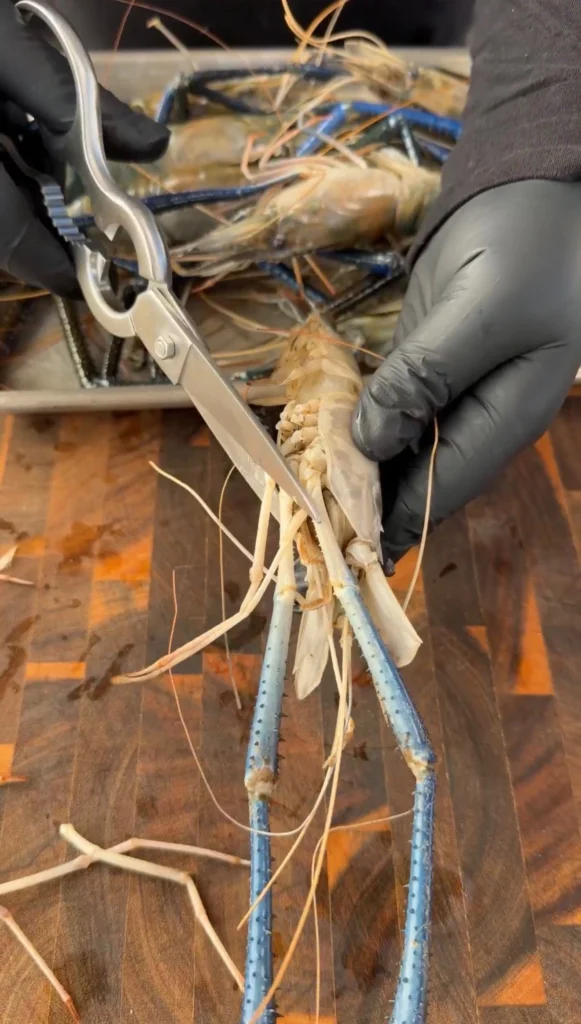
Trimming freshwater prawns correctly ensures even cooking and attractive presentation while making them easier to eat. The small swimming legs (pleopods) along the underside and the sharp barbs (spines) on the head and tail serve no culinary purpose and can be uncomfortable to handle or eat around. Use kitchen shears to snip off all the legs flush with the body, working from head to tail. Trim the long, pointed rostrum (the spike protruding from the head) and any other sharp projections that could poke you during handling or eating.
Removing the shell from just the tail section while leaving the head shell intact creates the ideal balance between ease of eating and flavor retention. The tail meat is the largest, meatiest portion that diners will eat, so shelling it makes the dining experience more pleasant. To shell the tail, use your fingers to peel away the hard segments starting from where the tail meets the body and working toward the tail fin. Leave the very end tail fan attached if desired for visual appeal. The head shell can stay on because it protects the delicate tomalley inside from direct heat while adding flavor. The exposed tail meat will absorb marinade directly while the shelled head and body section will pick up flavor through the marinade that clings to their surface.
Building a Balanced Chipotle Marinade
The chipotle adobo marinade provides the perfect balance of smoke, heat, acid, and aromatics that complement freshwater prawns’ mild sweetness. Chipotle peppers are smoked, dried jalapeños reconstituted in a tangy tomato-based adobo sauce. They contribute complex smoky flavor with moderate heat – hotter than fresh jalapeños due to concentration during drying but not painfully spicy. Using both chopped chipotle and some of the adobo sauce ensures you get the peppers’ smokiness plus the tangy, slightly sweet sauce that balances the heat.
Fresh garlic adds pungent, savory depth that anchors the marinade’s flavor profile. Three cloves provide noticeable garlic presence without overwhelming the delicate prawns. Smoked paprika reinforces the smokiness from the chipotles while adding vibrant red color. Chili powder and cumin contribute warm, earthy notes characteristic of Mexican cuisine – the cumin especially adds that distinctive toasted, almost nutty flavor that makes the marinade taste authentically Mexican rather than generically spicy. The combination of lime juice and zest provides crucial acidity that brightens all the other flavors while the zest’s essential oils add intense citrus aroma. Mexican hot sauce like Valentina or Tapatío adds vinegary tang and additional heat without the sweetness of American-style hot sauces.
The Science of Quick Marination
Thirty minutes represents the optimal marination time for prawns because their delicate protein structure requires shorter exposure to acidic marinades than denser meats. The lime juice’s citric acid begins denaturing (unfolding) the prawn proteins almost immediately upon contact, similar to the “cooking” effect in ceviche. This denaturation tenderizes slightly but extended exposure – more than forty-five minutes – would make the texture mushy and unpleasant as the acid over-processes the proteins. Thirty minutes provides enough time for surface flavor absorption without negative textural effects.
The olive oil in the marinade serves multiple purposes beyond just being a liquid carrier. Oil helps dissolve and distribute fat-soluble flavor compounds from the garlic, spices, and chipotle peppers, making them more bioavailable to your taste buds. The oil also coats the prawn meat, preventing moisture loss during grilling and helping the marinade adhere rather than dripping off. When the oiled prawns hit the hot grill, the oil facilitates heat transfer and promotes better browning and char development. The emulsion of oil and lime juice created by mixing the marinade coats the prawns more evenly than either component would alone.
High Heat Grilling for Proper Sear
Grilling prawns over high heat – approximately 450-500 degrees Fahrenheit – is essential for developing proper char and caramelization while keeping the interior tender and juicy. At high temperatures, the Maillard reaction between proteins and sugars occurs rapidly, creating hundreds of new flavor compounds that taste roasted, nutty, and complex. The surface of the prawns browns and caramelizes in just four minutes per side, developing attractive grill marks and slightly crispy edges. Lower temperatures would cook the prawns through before any meaningful browning occurred, resulting in pale, steamed-looking seafood without the characteristic grilled flavor.
The uneven contact surface created by the prawn’s shape – with the large head on one end and flat tail on the other – actually works in your favor during grilling. The head rests directly on the grates and develops deep char while protecting the delicate tomalley inside with its hard shell. The flattened tail section also makes full contact, allowing even cooking and attractive grill marks. The curved body section between head and tail may lift slightly off the grates, but this area cooks through from ambient heat and doesn’t need direct contact. This natural shape means you don’t need skewers or special equipment – the prawns lay flat enough on their own.
Basting for Flavor Layers
Basting the prawns with reserved marinade halfway through grilling serves multiple purposes beyond just adding extra flavor. Each basting creates a new layer of marinade on the surface that caramelizes during the remaining cooking time, building complex depth that single-application marinades can’t achieve. The fresh marinade also replaces moisture lost during grilling, keeping the surface from drying out. The oil in the basted marinade helps conduct heat to the prawn meat, promoting even cooking. Finally, the repeated application of marinade creates a glossy, lacquered appearance that looks incredibly appetizing on the finished prawns.
However, basting must be done carefully to avoid food safety issues. Never use marinade that touched raw prawns as a finishing sauce without cooking it first. The marinade used for basting should be either set aside before adding the raw prawns, or the contaminated marinade should be brought to a full boil for at least one minute to kill any bacteria. For this recipe, the safest approach is reserving a portion of marinade before adding the prawns, then using that reserved portion for basting. Any marinade applied during grilling will cook thoroughly from the high heat, making it safe to consume on the finished prawns.
Ingredients
The Prawns:
- 2 lbs giant freshwater prawns (about 8-12 prawns)
The Chipotle Lime Marinade:
- 3 tbsp olive oil
- 3 cloves garlic, minced
- 1 tbsp chopped chipotle in adobo
- 1 tsp adobo sauce (from the chipotle can)
- 1 tsp smoked paprika
- 1 tsp chili powder
- ½ tsp ground cumin
- Juice of 2 limes
- Zest of 1 lime
- 1 tbsp Mexican hot sauce (Valentina or Tapatío)
- Salt and black pepper to taste
For Finishing:
- Fresh lime juice
- Chopped fresh cilantro
Step-by-Step Instructions
Trim and Clean the Freshwater Prawns
Place the giant freshwater prawns on a large cutting board. Using sharp kitchen shears, trim off all the small swimming legs (pleopods) along the underside of each prawn, cutting them flush with the body. Work from the head toward the tail, snipping each leg cleanly. Next, trim the long, pointed rostrum (the spike extending forward from the head) and any other sharp barbs or spines on the head and tail sections. These sharp points serve no culinary purpose and make handling difficult.
To shell the tail section while keeping the head intact, grasp the prawn firmly with one hand holding the head and use your other hand to peel away the hard shell segments from the tail. Start where the tail meets the body and work toward the tail fin, removing each overlapping segment. The shell should come away relatively easily, revealing the white tail meat underneath. Leave the tail fan attached at the very end if desired for presentation. Keep the head shell completely intact – don’t remove it or break it open. Rinse the trimmed prawns under cold water and pat completely dry with paper towels. Moisture on the surface will prevent proper browning during grilling.
Make the Chipotle Lime Marinade
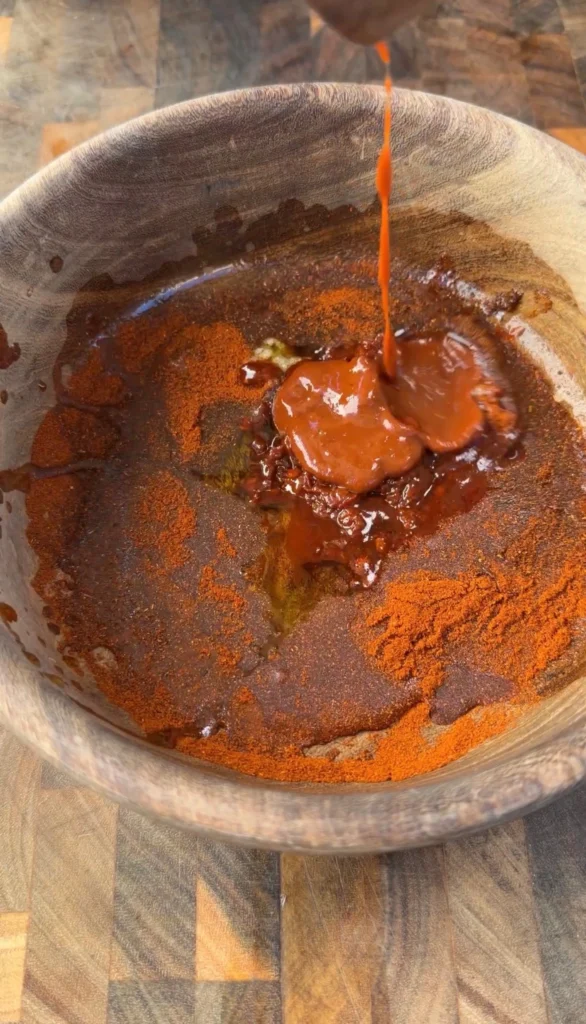
In a medium mixing bowl, combine three tablespoons of olive oil with three cloves of minced garlic. Finely chop one tablespoon of chipotle peppers in adobo – remove them from the can and chop them on a cutting board into small pieces. Add the chopped chipotle to the bowl along with one teaspoon of the adobo sauce from the can. The adobo sauce is the thick, red liquid surrounding the peppers – it contains concentrated flavor and moderate heat.
Add one teaspoon of smoked paprika, one teaspoon of chili powder, and half a teaspoon of ground cumin to the bowl. Use a microplane or fine grater to zest one lime directly into the marinade, being careful to only remove the colored outer layer and avoid the bitter white pith beneath. Cut two limes in half and squeeze their juice into the bowl – you should get approximately three to four tablespoons of juice. Add one tablespoon of Mexican hot sauce such as Valentina or Tapatío. Season with half a teaspoon of salt and quarter teaspoon of black pepper to start, though you’ll adjust this after tasting.
Whisk all the marinade ingredients together vigorously until well combined and slightly emulsified. The oil and lime juice should blend into a cohesive mixture rather than separating into distinct layers. Taste the marinade carefully – it should be spicy, smoky, tangy, and well-seasoned. Adjust salt and pepper if needed. The marinade will taste quite intense on its own, but remember it will be diluted by the mild prawn meat. Reserve about three tablespoons of the marinade in a small bowl and set aside for basting during grilling – this prevents cross-contamination from raw prawns.
Marinate the Prawns
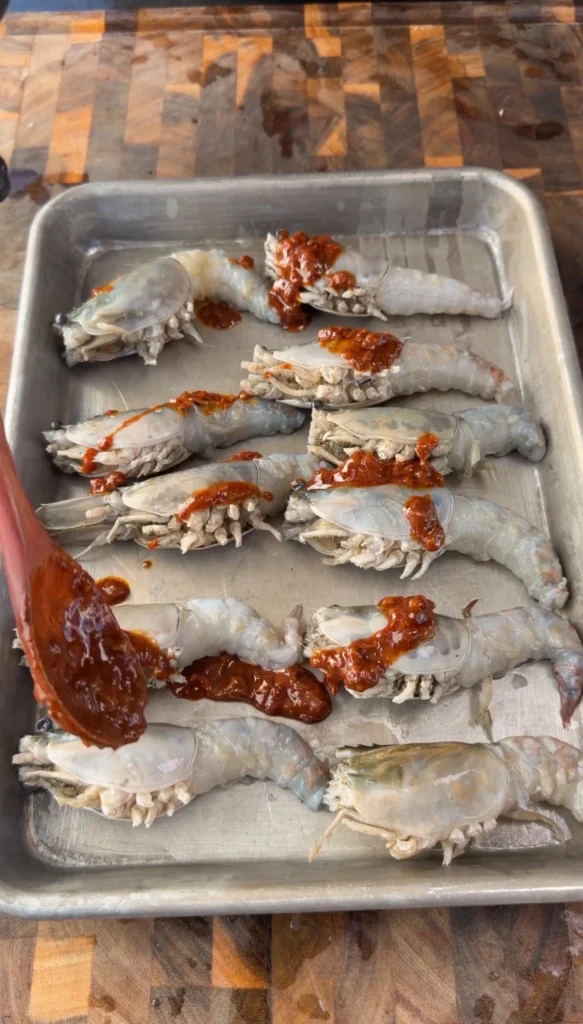
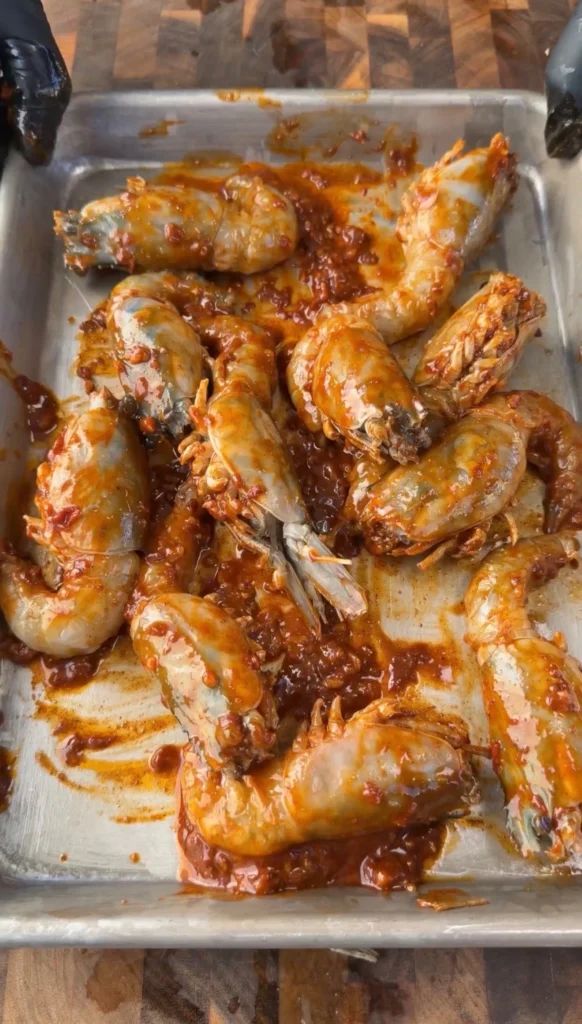
Add the cleaned and trimmed prawns to the bowl with the remaining marinade. Use your hands or tongs to toss the prawns thoroughly in the marinade, ensuring every surface gets coated – the exposed tail meat, the shell-covered head and body, and especially the underside where the legs were removed. Massage the marinade gently into the prawns for thirty to sixty seconds to encourage penetration.
Cover the bowl with plastic wrap or transfer the prawns and marinade to a large zip-top bag, pressing out excess air before sealing. Refrigerate for exactly thirty minutes – set a timer so you don’t forget. During this time, turn or shake the prawns once or twice to redistribute the marinade and ensure even coating. Don’t marinate longer than forty-five minutes maximum, as the acid in the lime juice will begin to over-tenderize the delicate prawn meat and create unpleasant mushy texture. While the prawns marinate, prepare your grill for high-heat cooking.
Preheat Grill to High Heat
Prepare your grill for direct, high-heat grilling. For a gas grill, turn all burners to high and close the lid, allowing it to preheat for ten to fifteen minutes until the temperature reaches 450-500 degrees Fahrenheit. For a charcoal grill, build a full chimney of hot coals and spread them in an even layer across the entire bottom of the grill. Let the coals burn until they’re covered with light gray ash and radiating intense heat – you should only be able to hold your hand five inches above the grate for two to three seconds before needing to pull away.
Clean the grill grates thoroughly with a wire brush to remove any stuck-on debris from previous cooking. Once clean, oil the grates generously using a paper towel dipped in high-heat oil (vegetable, canola, or grapeseed) held with long tongs. Wipe the oiled towel across all the grate surfaces where the prawns will sit. This oil coating prevents sticking and helps create better grill marks. The grill is ready when it’s scorching hot with no cool spots – the heat should be even across the entire cooking surface.
Grill the Marinated Prawns
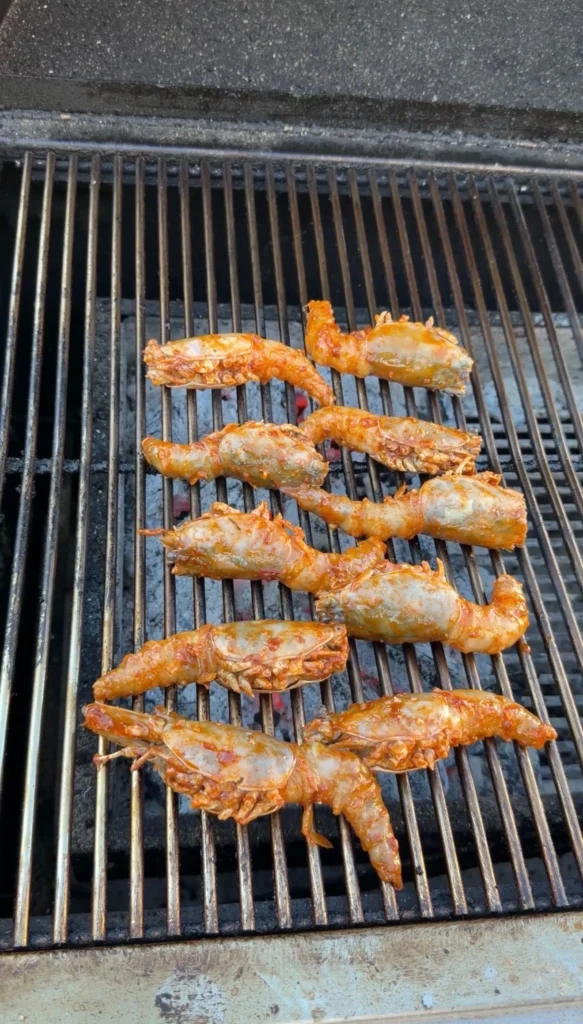
Remove the prawns from the marinade, letting excess marinade drip back into the bowl for a moment but don’t wipe them completely dry – you want some marinade clinging to the surface. Discard the marinade that touched the raw prawns (or boil it for at least one minute if you want to use it for basting). Arrange the prawns on the preheated grill grates, laying them flat with the head and tail both making contact with the grates. They won’t sit completely level due to their curved shape, but the large head and flattened tail should both touch the grates directly.
Close the grill lid and cook for four minutes without moving or flipping the prawns. Resist the urge to peek or adjust them – they need uninterrupted contact with the hot grates to develop proper grill marks and caramelization. After four minutes, open the lid and use tongs to flip each prawn to the opposite side. Immediately brush the just-grilled side with some of the reserved clean marinade using a basting brush. Close the lid and cook for another four minutes.
Finish and Serve the Grilled Prawns
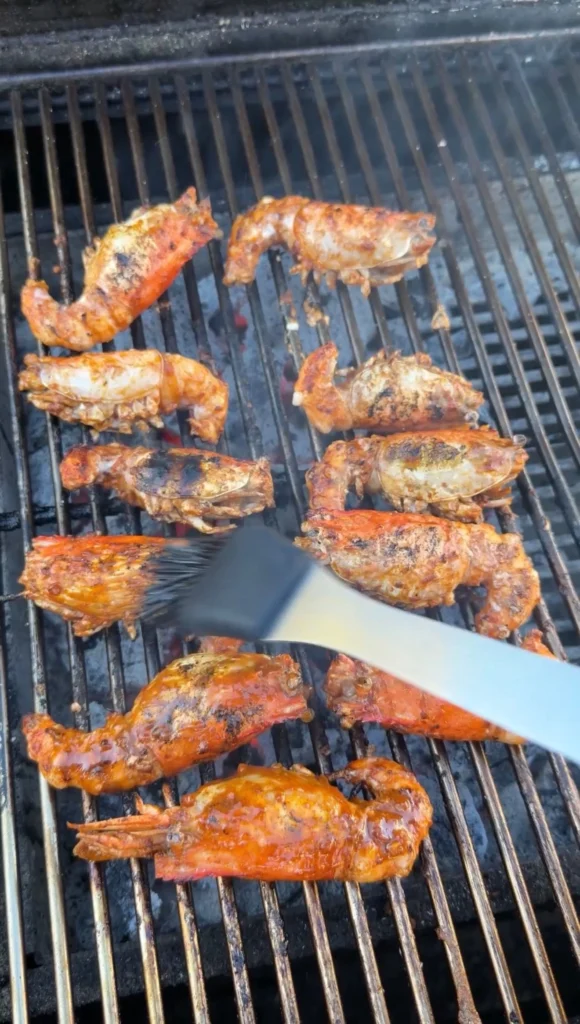
After the second four-minute cooking period, check the prawns for doneness. They should be bright orange throughout with lightly charred spots where the marinade caramelized. The tail meat should be opaque white with no translucent gray areas remaining. The shells should have taken on deeper red-orange color and may show some char marks. If any prawns still look translucent or gray, give them another minute or two of cooking.
Transfer the grilled prawns to a serving platter immediately. While they’re still hot, squeeze fresh lime juice over all the prawns – use one or two limes depending on how much citrus brightness you want. Sprinkle chopped fresh cilantro generously over the top. The cilantro’s fresh, herbal flavor provides the perfect finishing touch to the smoky, spicy prawns. Serve immediately while hot, with extra lime wedges on the side. These prawns are best enjoyed within ten to fifteen minutes of coming off the grill while the exterior is still slightly crispy and the meat is at peak tenderness.

Spicy Grilled Freshwater Prawns
Ingredients
Method
- Trim all swimming legs and sharp barbs from prawns using kitchen shears. Remove shell from tail section only, leaving head shell intact. Rinse and pat completely dry.
- In bowl, whisk together olive oil, minced garlic, chopped chipotle, adobo sauce, smoked paprika, chili powder, cumin, lime juice and zest, hot sauce, salt, and pepper. Reserve 3 tbsp marinade for basting.
- Toss prawns in remaining marinade, coating thoroughly. Cover and refrigerate exactly 30 minutes, turning once halfway through.
- Preheat grill to high heat (450-500°F). Clean and oil grates well.
- Remove prawns from marinade (discard used marinade). Place prawns flat on hot grill with head and tail touching grates. Close lid and cook 4 minutes without moving.
- Flip prawns and brush with reserved clean marinade. Close lid and cook another 4 minutes until bright orange and opaque throughout.
- Transfer to platter, squeeze fresh lime juice over top, and sprinkle with chopped cilantro. Serve immediately.
Notes
Reserve marinade before adding raw prawns for safe basting
Can substitute large ocean shrimp if freshwater prawns unavailable
For less heat, reduce chipotle to 2 tsp or omit adobo sauce
Prawns cook quickly – watch carefully to avoid overcooking
Perfect for tacos with warm tortillas and toppings
Serve with Mexican rice, elote, or grilled vegetables
Tried this recipe?
Let us know how it was!FAQ
Can I use regular ocean shrimp instead of freshwater prawns?
Yes, large ocean shrimp (16-20 count or larger) work well as substitutes, though the texture and flavor will be slightly different. Ocean shrimp have more delicate texture and brinier flavor compared to the firmer, sweeter freshwater prawns. Use the same marinade and grilling technique, but reduce cooking time slightly – large shrimp typically need only three minutes per side over high heat. Jumbo or colossal shrimp (U-15 or U-12 count) are the closest match to giant freshwater prawns in terms of size and meatiness. Keep the shells on during grilling for better flavor and moisture retention.
What if I can’t find chipotle peppers in adobo?
Chipotle in adobo is available in the Mexican food aisle of most grocery stores, usually in small cans. If unavailable, substitute one tablespoon of chipotle powder mixed with one teaspoon of tomato paste and half a teaspoon of apple cider vinegar to approximate the smoky, tangy flavor. You’ll lose some of the authentic depth and complexity, but it’s a workable substitution. Alternatively, use two teaspoons of smoked paprika plus half a teaspoon of cayenne pepper for smoke and heat, though this won’t replicate the distinctive chipotle flavor. Fresh jalapeños won’t work as they lack the essential smokiness.
My prawns are sticking to the grill – how do I prevent this?
Sticking usually results from insufficient grill preparation or flipping too early before the prawns release naturally. Ensure your grill grates are scorching hot before adding prawns – they should sizzle immediately on contact. Clean the grates thoroughly with a wire brush and oil them generously right before grilling. Make sure the prawns are patted dry before marinating, as excess surface moisture prevents proper searing. Most importantly, don’t try to flip the prawns before the four-minute mark – they need time to develop a crust that naturally releases from the grates. If they resist flipping, give them another thirty seconds rather than forcing them.
Can I make these prawns less spicy?
Absolutely – the heat level is easily adjustable. For mild prawns, reduce the chopped chipotle to one teaspoon or omit it entirely, keeping just the adobo sauce for smoky flavor. Replace the Mexican hot sauce with lime juice or omit it. You can also add one tablespoon of honey to the marinade to balance any remaining heat with sweetness. For a completely non-spicy version, substitute regular paprika for the smoked paprika and use just garlic, lime, cumin, and olive oil. The prawns will still be delicious with the citrus and garlic flavors even without heat.
How do I know when the prawns are done?
Properly cooked prawns are bright orange throughout with opaque white meat and no translucent or gray areas remaining. The tail meat should be firm but not rubbery – it should give slightly when pressed with tongs but spring back. Overcooked prawns become tough and rubbery with dry, chalky texture. Since these large prawns cook quickly over high heat, checking at the four-minute mark per side is crucial. If uncertain, sacrifice one prawn by cutting it open to check – the meat should be uniformly white with no raw-looking translucent center. An instant-read thermometer should register 145°F internal temperature.
Can I cook these prawns in a grill pan instead of outdoor grill?
Yes, a cast iron grill pan on the stovetop works well for this recipe. Preheat the grill pan over high heat for five minutes until smoking hot. Oil the pan ridges lightly with a paper towel held with tongs. Cook the prawns exactly as directed – four minutes per side without moving them, flipping once and basting after the flip. You’ll get similar grill marks and char, though you’ll miss the subtle smoke flavor from outdoor grilling. Alternatively, use a regular cast iron skillet if you don’t have a grill pan – the prawns won’t have grill marks but will still develop excellent caramelization and flavor.
Should I devein the prawns before grilling?
Giant freshwater prawns typically have less prominent digestive tracts (veins) than ocean shrimp, so deveining is optional based on personal preference. If you notice a dark line running along the back of the peeled tail section, you can remove it by making a shallow cut along the back with a paring knife and pulling out the vein with the knife tip. This is purely aesthetic and textural – the vein is harmless to eat. Many chefs leave it in freshwater prawns because it’s less noticeable than in shrimp. If you do devein, do it before marinating so the marinade can penetrate the cut area.
What should I serve with these grilled prawns?
These spicy prawns pair beautifully with Mexican and Latin-inspired sides. Serve over cilantro-lime rice or Mexican rice for a complete meal. Elote (Mexican street corn) provides sweet, creamy contrast to the spicy prawns. Warm flour or corn tortillas make excellent prawn tacos – add shredded cabbage, avocado, and crema. Black beans, refried beans, or charro beans complement the prawns well. For lighter options, serve with grilled vegetables, Mexican slaw, or a simple green salad with lime vinaigrette. Chips and guacamole, fresh pico de gallo, or mango salsa make great starters or side dishes.
Can I prepare these prawns ahead of time?
The prawns can be trimmed and cleaned several hours ahead – store them covered in the refrigerator until ready to marinate. The marinade can also be made several hours in advance and refrigerated. However, don’t marinate the prawns until thirty minutes before you plan to grill, as longer marination makes them mushy. Once grilled, prawns are best eaten immediately but can be held at room temperature for up to thirty minutes if needed. Leftover cooked prawns can be refrigerated for up to two days and eaten cold in salads or reheated gently, though they won’t be quite as tender as fresh-grilled.
Why keep the heads on instead of removing them?
The heads contain flavorful tomalley (the soft digestive gland) that adds rich, concentrated prawn flavor. Keeping heads on during grilling allows this flavor to infuse into the meat while the hard shell protects the delicate tomalley from direct heat. The heads also create dramatic presentation that makes the dish look more impressive and restaurant-quality. Finally, some diners enjoy sucking the flavorful juices from the head – it’s considered a delicacy in many cuisines. If you or your guests are squeamish about heads, you can remove them before serving, but they’re worth keeping on during cooking for the flavor they provide.
Ready to Take Your Cooking to the Next Level?
This is where I keep all my most-used products, gear, and favorite cooking tools — check it out:
🔥 View My Cooking Gear & ToolsRecipe Categories
If you loved this recipe, you’ll find more to savor across our diverse categories. From beef to pork, chicken to turkey, seafood to appetizers, there’s a wealth of flavors waiting for you. Explore them all at CWFeats.