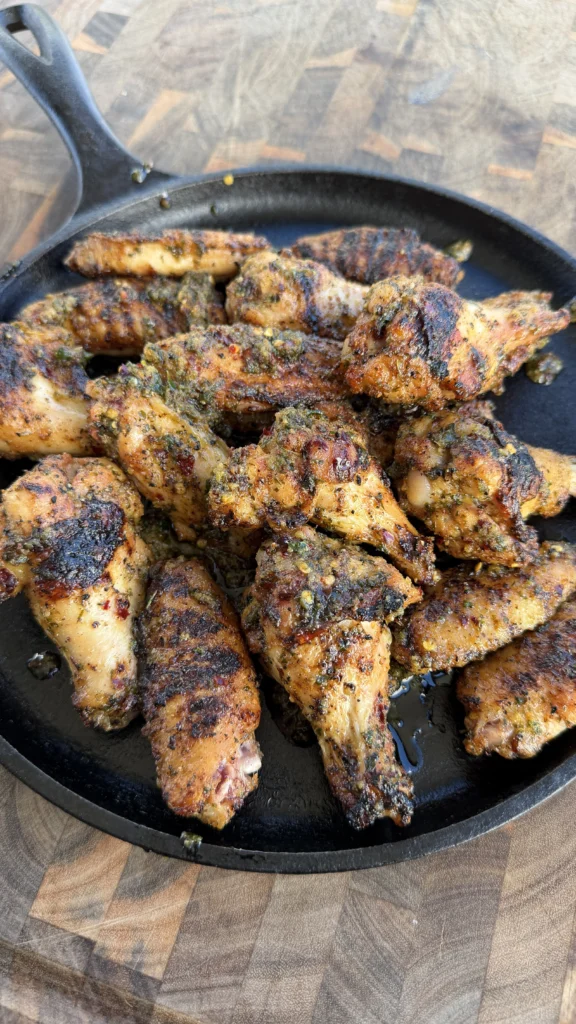
Wet lemon pepper wings use 2 lbs individually cut chicken wings patted completely dry, tossed lightly with 1 tablespoon olive oil, seasoned generously on all sides with lemon pepper, and rested for 10-15 minutes at room temperature. Grill at 350°F direct heat for 30-40 minutes, turning frequently to prevent flare-ups and build crispy skin, until wings reach 185°F internal temperature with crispy, charred skin. While wings grill, make wet lemon pepper sauce by melting 1/2 cup unsalted butter over low heat, stirring in 2 tablespoons fresh lemon juice, 1 teaspoon lemon zest, 1 tablespoon fresh chopped parsley, 1-1.5 tablespoons lemon pepper seasoning, 1 teaspoon garlic powder, and optional 1 tablespoon honey, simmering 2-3 minutes without boiling. Toss hot grilled wings immediately in warm lemon pepper sauce until fully coated, finish with extra lemon zest or light dust of lemon pepper. These grilled lemon pepper wings deliver crispy, charred skin with tangy-savory butter sauce featuring fresh lemon brightness, aromatic parsley, and peppery bite that creates restaurant-quality wet wings perfect for game day or parties.
The whole process takes about 1 hour from start to finish. Spend 10-15 minutes drying, oiling, and seasoning wings. Grill for 30-40 minutes depending on grill heat consistency. Make the sauce in 5 minutes during the final phase of grilling. Toss and serve immediately. The 350°F grilling temperature provides steady heat that renders skin fat without burning while allowing sufficient time for thorough cooking. The frequent turning prevents flare-ups from dripping fat while promoting even crisping on all wing surfaces.
Why Cook Chicken Wings to 185°F Instead of 165°F?

Cooking chicken wings to 185°F internal temperature instead of the USDA-recommended 165°F ensures fully rendered skin and optimal texture. At 165°F, chicken is safe to eat but wing skin remains rubbery and chewy with pockets of unrendered fat. The collagen in wing skin needs higher heat and longer cooking to break down into gelatin. This transformation happens between 170-190°F, creating the crispy, crackling texture people expect from great wings.
The extra time and temperature also renders more fat from under the skin. Chicken wings have substantial fat deposits beneath their skin. At 165°F, much of this fat remains, creating greasy, flabby texture. Cooking to 185°F melts and drips away most subcutaneous fat, leaving crispy skin without the greasy mouthfeel. The rendered fat drips onto the grill, creating flavorful smoke and occasional flare-ups that char the exterior.
Wings cooked to 185°F also develop better flavor through enhanced Maillard reactions. The extended cooking time at proper temperature creates hundreds of flavor compounds through browning. The surface dehydrates more at 185°F than 165°F, concentrating flavors and creating textural contrast between crispy exterior and juicy interior. Wings pulled at 165°F taste bland and steamed compared to the complex, roasted flavor of 185°F wings.
The dark meat in wings also benefits from higher temperatures. Unlike white meat breast which can dry out above 165°F, wing meat is dark meat with more fat and connective tissue. Dark meat actually improves in texture and juiciness when cooked to 175-185°F. The extra cooking breaks down collagen and melts intramuscular fat, making the meat more tender and flavorful rather than dry.
What Makes “Wet” Lemon Pepper Wings Different from Dry?
Wet lemon pepper wings get tossed in butter-based sauce after cooking, creating glossy coating that distinguishes them from dry seasoned wings. The sauce combines melted butter with fresh lemon juice, lemon zest, lemon pepper seasoning, garlic powder, and fresh parsley. This wet coating provides richer, more complex flavor than just dry lemon pepper seasoning alone. The butter carries flavors and creates luxurious mouthfeel.
The butter sauce also adds moisture and richness that dry wings lack. Grilled wings can be slightly dry on their own despite the 185°F target temp. The butter coating adds back moisture and fat, making each bite more succulent. The butter also helps the lemon pepper seasoning and fresh lemon flavors adhere to and penetrate the crispy skin better than dry seasoning sitting on the surface.
Wet wings have different textural experience than dry wings. The sauce creates sticky, finger-licking coating that coats your fingers and lips. This messy eating experience is part of wet wings’ appeal. Dry wings stay relatively clean to eat. Wet wings require napkins and often come with the understanding that you’ll get sauce everywhere – but that’s the fun of it.
The fresh lemon components in wet sauce also provide brighter, more authentic citrus flavor than dried lemon peel in lemon pepper seasoning. Fresh lemon juice adds acidity and tartness. Fresh lemon zest provides aromatic lemon oil. The combination tastes more vibrant and natural than the dried lemon in commercial lemon pepper blends. The fresh parsley adds herbal note and visual appeal that dry wings don’t have.
Why Grill at 350°F Instead of Higher or Lower?
Grilling at 350°F provides optimal balance between skin crisping and thorough cooking over the 30-40 minute cook time. This moderate temperature allows skin to render and crisp gradually without burning before the interior reaches 185°F. Higher temperatures like 450°F would char the exterior black before the inside cooked through. Lower temperatures like 275°F would take too long and risk drying out the meat before achieving proper skin crispness.
The 350°F temperature also manages fat rendering effectively. As wings cook, fat renders and drips onto the grill grates, causing occasional flare-ups. At 350°F, these flare-ups create desirable charring without becoming uncontrollable fires that burn wings. The moderate heat allows you to move wings away from flare-ups when they occur. Higher temps would create more frequent, more intense flare-ups that are harder to manage.
This temperature works particularly well for frequent turning. The recipe calls for turning wings often to prevent flare-ups and ensure even cooking. At 350°F, you have time to turn wings every 5-7 minutes without them cooking too fast. Each turn redistributes heat exposure, preventing any single side from burning while promoting even crisping on all surfaces. This turning strategy wouldn’t work as well at very high or very low temps.
The 350°F also provides margin for error with grill temperature fluctuations. Most grills don’t maintain perfectly steady temp – they cycle up and down. A 350°F target means the grill might fluctuate between 325-375°F, which is perfectly fine for wings. If you targeted 450°F, fluctuations could mean 425-475°F swings that are harder to control. The moderate target creates more forgiving cooking conditions.
Lemon Pepper Wings
Grilled crispy, tossed in butter lemon pepper sauce
Ingredients
Wings
- 2 lb individually cut chicken wings
- 1 tablespoon olive oil (light coat)
- Lemon pepper seasoning (for coating)
Wet Lemon Pepper Sauce
- ½ cup unsalted butter
- 2 tablespoons fresh lemon juice
- 1 teaspoon lemon zest
- 1 tablespoon fresh chopped parsley
- 1-1½ tablespoons lemon pepper seasoning
- 1 teaspoon garlic powder
- 1 tablespoon honey (optional)
Pat wings completely dry before oiling and seasoning. Surface moisture prevents proper crisping during grilling and causes steam instead of crispy skin. The dry wings also allow the lemon pepper seasoning to adhere better and create the base layer of flavor. Turn wings frequently during grilling to prevent flare-ups and ensure even crisping on all surfaces. The 185°F internal temperature ensures fully rendered skin while keeping meat juicy.
Step-by-Step Instructions
Step 1: Prep and Season the Wings

Remove 2 lbs of individually cut chicken wings from packaging and place them on a large plate or tray. Using paper towels, pat every wing completely dry on all surfaces. This takes several paper towels – really press firmly to absorb all surface moisture. The wings should feel dry to the touch, not damp or sticky. This drying step is crucial for crispy skin.
Place the dried wings in a large bowl. Drizzle 1 tablespoon olive oil over the wings. Toss to coat lightly – you want just enough oil to help seasoning adhere, not so much that wings are greasy. The oil should create thin, even coating on all surfaces. Use your hands to ensure every wing gets touched by the oil.
Sprinkle lemon pepper seasoning generously over the wings. Use approximately 2-3 tablespoons total, adding it gradually and tossing between additions. Every wing should have visible coating of lemon pepper on all surfaces – top, bottom, and sides. The seasoning provides the base flavor that the wet sauce will enhance later.
Let the seasoned wings sit at room temperature for 10-15 minutes while you preheat the grill. This rest allows the seasoning to adhere better and removes refrigerator chill from the meat, promoting more even cooking. Wings going straight from refrigerator to grill cook unevenly with cold centers and overcooked exteriors.
Step 2: Grill the Wings
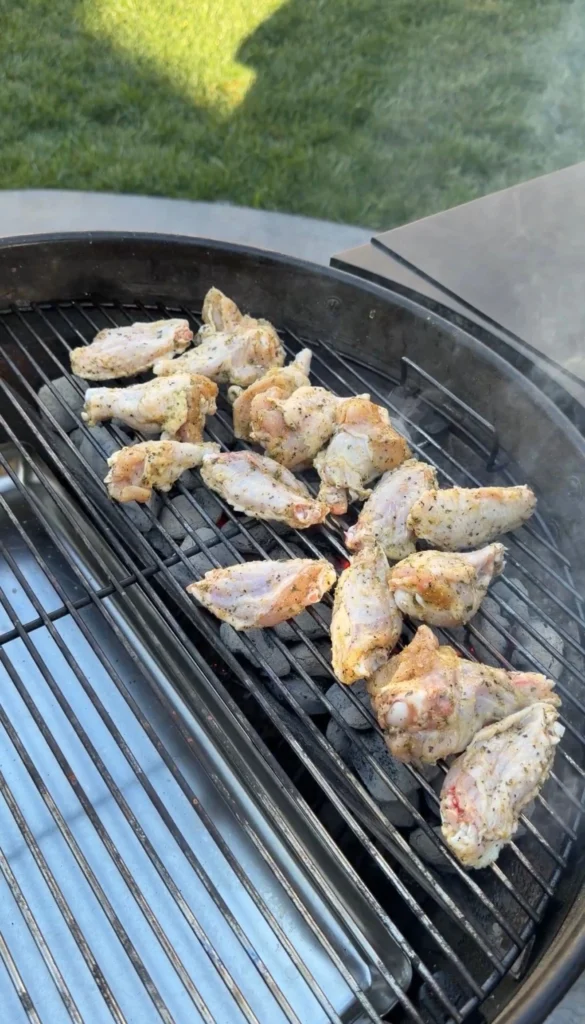
Preheat your grill to 350°F using direct heat. For gas grills, preheat all burners to medium-high and adjust to maintain 350°F. For charcoal grills, build medium fire with coals spread evenly across the bottom. The grill grates should be clean and lightly oiled to prevent sticking. Close the lid and let the grill stabilize at temperature.
Place the seasoned wings directly on the preheated grill grates, spacing them so they’re not touching. They need air circulation for even cooking and crisping. Close the grill lid. Set a timer for 5-7 minutes – this is your turning interval. You’ll be turning wings frequently throughout cooking.
After 5-7 minutes, open the grill and turn all the wings using tongs. Move any wings that are over direct hot spots to cooler areas if they’re browning too quickly. Check for flare-ups caused by dripping fat. If flare-ups occur, move wings away from the flames temporarily until they subside. Close the lid and continue cooking.
Continue this pattern of checking and turning every 5-7 minutes for 30-40 minutes total. You’re looking for wings that are deeply golden brown to charred in spots with crispy skin and internal temperature of 185°F when checked with an instant-read thermometer inserted into the thickest part. The skin should be visibly crispy and the wings should feel firm rather than flabby. When they’re done, remove from grill.
Step 3: Make the Wet Lemon Pepper Sauce
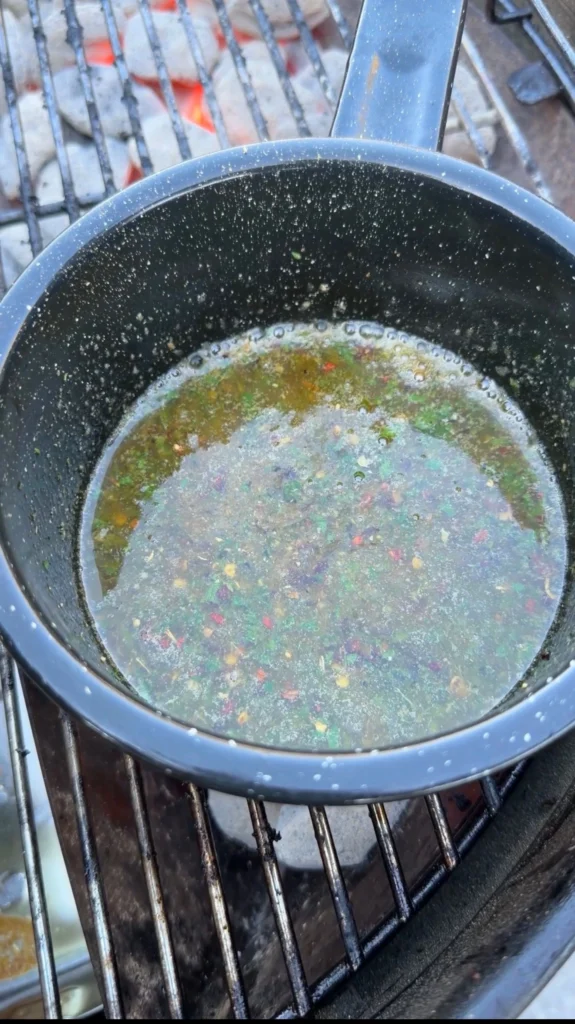
During the final 10-15 minutes of grilling (around the 20-25 minute mark), start making the sauce. In a small saucepan over low heat, add 1/2 cup unsalted butter cut into cubes. Let it melt slowly, stirring occasionally. Don’t rush this step by using high heat – butter can separate or burn if heated too quickly.
When butter is fully melted and just beginning to bubble gently, add 2 tablespoons fresh lemon juice, 1 teaspoon lemon zest, 1 tablespoon fresh chopped parsley, 1-1.5 tablespoons lemon pepper seasoning (start with 1 tbsp and add more to taste), 1 teaspoon garlic powder, and 1 tablespoon honey if using. Stir everything together thoroughly.
Let the sauce simmer very gently for 2-3 minutes, stirring frequently. You want to warm and blend the ingredients without actually boiling the sauce. Boiling can cause the butter to separate and make the lemon taste bitter. The sauce should be warm, fluid, and fragrant. The butter should be golden with visible flecks of lemon zest and parsley.
Taste the sauce and adjust seasoning if needed. If you want more lemon pepper flavor, add the remaining 1/2 tablespoon. If it seems too tart, add a bit more honey. Remove from heat but keep warm. The sauce should be warm and fluid when the wings are ready. If it cools and thickens, rewarm gently over very low heat, stirring constantly.
Step 4: Toss Wings in Sauce and Serve
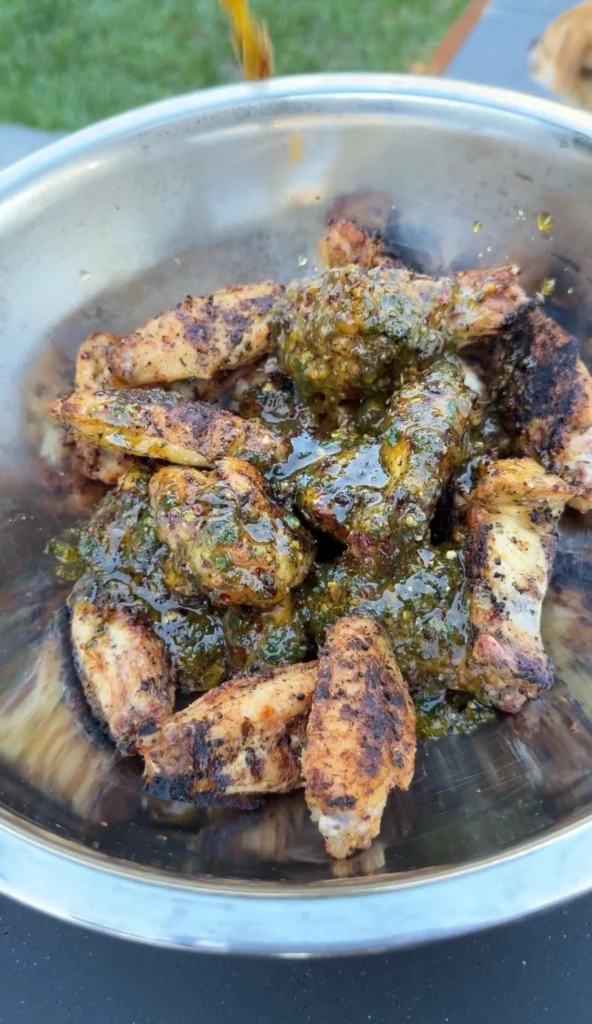
When wings reach 185°F internal temperature with crispy, charred skin, remove them from the grill and place in a large bowl. Work quickly while wings are very hot. Pour the warm wet lemon pepper sauce over the hot wings. Using tongs or a large spoon, toss the wings vigorously in the sauce.
Toss for 30-60 seconds, ensuring every wing gets thoroughly coated. The sauce should coat all surfaces evenly, creating glossy, buttery appearance. The heat from the wings will keep the butter fluid. If any wings seem less coated, continue tossing or add a bit more sauce.
Transfer the sauced wings to a serving platter. The wings should be glistening with sauce but not swimming in excess liquid – most sauce should be clinging to the wings. If desired, finish with extra lemon zest grated over the top or a light additional dusting of lemon pepper seasoning for visual appeal and extra flavor punch.
Serve immediately while hot. Wet lemon pepper wings are best within 15-20 minutes of saucing while the skin is still crispy and the sauce is warm. Provide plenty of napkins – these are finger-licking good but messy. The butter sauce coats fingers and lips, which is part of the experience. Serve with ranch or blue cheese dressing and celery sticks if desired.

Wet Lemon Pepper Wings
Ingredients
Equipment
Method
- Pat 2 lbs chicken wings completely dry with paper towels. Toss lightly with 1 tbsp olive oil. Season generously on all sides with lemon pepper. Rest at room temperature 10-15 minutes.
- Preheat grill to 350°F direct heat. Place wings on grill, spacing so they don’t touch. Grill 30-40 minutes, turning every 5-7 minutes to prevent flare-ups and build crispy skin, until wings reach 185°F internal and skin is crispy and charred.
- During final 10-15 minutes of grilling, make sauce: Melt 1/2 cup unsalted butter over low heat. Stir in 2 tbsp fresh lemon juice, 1 tsp lemon zest, 1 tbsp fresh chopped parsley, 1-1.5 tbsp lemon pepper seasoning, 1 tsp garlic powder, and 1 tbsp honey if using. Simmer gently 2-3 minutes, do not boil. Remove from heat and keep warm.
- Remove wings from grill when they reach 185°F internal. Immediately toss hot wings in warm lemon pepper sauce until fully coated.
- Transfer to serving platter. Finish with extra lemon zest or light dust of lemon pepper if desired. Serve immediately while hot and crispy.
Nutrition
Notes
Tried this recipe?
Let us know how it was!Frequently Asked Questions
Can I bake these wings instead of grilling?
Yes, bake at 425°F on a wire rack over a baking sheet for 40-50 minutes, flipping halfway, until skin is crispy and internal temperature reaches 185°F. The rack allows air circulation for crisping. Toss in the same butter lemon pepper sauce immediately after baking.
The grilled version has more char and smoky flavor from the grill, but baked wings still crisp well. For extra crispiness when baking, pat wings dry thoroughly and use convection setting if available.
What if I don’t have fresh lemons?
Bottled lemon juice can substitute for fresh lemon juice in the sauce, though fresh tastes brighter. Dried lemon peel won’t work well as a substitute for lemon zest – the fresh zest provides essential oils and aromatic quality that dried cannot replicate. If you don’t have fresh lemon for zest, just omit it rather than using dried.
Fresh parsley can be omitted if unavailable, though it adds nice color and fresh herb note. The lemon pepper seasoning and garlic powder carry the flavor even without parsley.
How do I prevent flare-ups when grilling wings?
Turn wings frequently (every 5-7 minutes) to redistribute where fat drips. When flare-ups occur, move wings away from flames temporarily until they subside. Keep grill lid closed between turns to limit oxygen. Have a spray bottle of water nearby for emergency flare-up control, though moving wings is usually sufficient.
The 350°F temperature helps manage flare-ups better than higher temps. Some flare-ups are desirable for charring, but excessive flames burn wings. The frequent turning strategy gives you control.
Can I make the sauce ahead of time?
The butter sauce can be made up to 2 hours ahead and kept warm over very low heat, stirring occasionally. However, fresh-made sauce tastes better and has better texture. If you must make ahead, store refrigerated and reheat gently over low heat before tossing with wings.
Don’t make the sauce days ahead – the fresh lemon juice and parsley lose quality over time. The 5-minute sauce preparation is quick enough to do while wings finish grilling.
What other sauces work with grilled wings?
Buffalo sauce (butter and hot sauce), BBQ sauce, honey sriracha, garlic parmesan butter, or teriyaki all work excellently with the same grilling method. Cook wings to 185°F using the same technique, then toss in your chosen sauce while hot.
The key is having warm sauce ready when wings come off the grill. The hot wings and warm sauce create the best coating. Any cold sauce won’t coat properly.
Ready to Level Up?
Take your backyard cooking from good to legendary.
This is where I keep all my most-used smokers, knives, and favorite cooking tools.
Shop My Gear CollectionExplore More Recipes
Find more diverse flavors at CWFeats.com