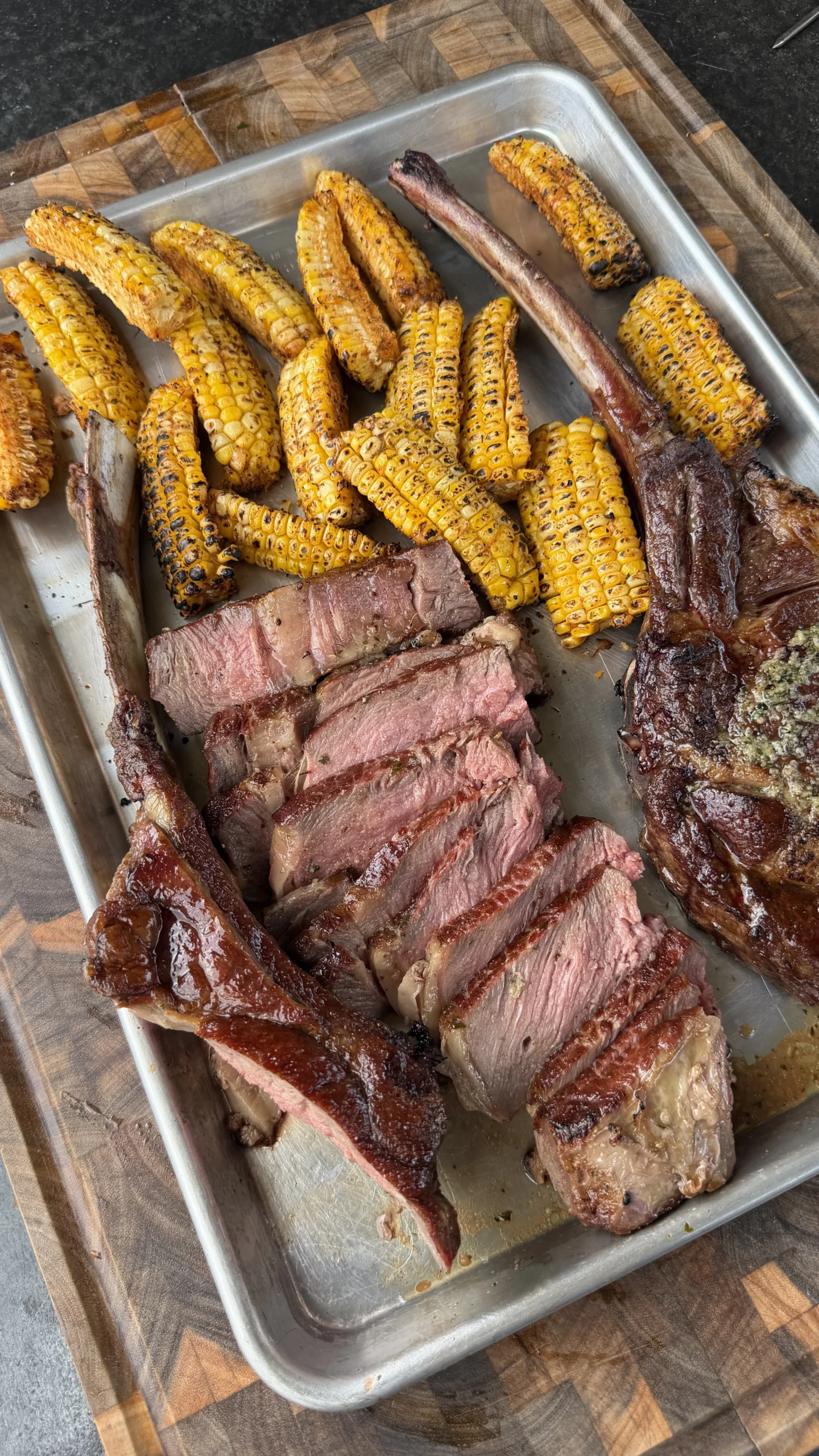
Smoked tomahawk standing rib roast is a 3-bone standing rib roast (approximately 8 to 10 pounds) seasoned generously with 2 to 3 tablespoons of steak seasoning, then smoked at 275°F using mesquite wood until the internal temperature reaches 120°F, which takes approximately 2½ to 3½ hours. After resting for 15 to 20 minutes, you slice the roast between each bone to create 3 individual tomahawk steaks, then sear each steak on a very hot grill or cast iron for approximately 45 seconds per side while basting with garlic herb butter made from 3 tablespoons butter, 3 minced garlic cloves, fresh rosemary, and fresh thyme. The finished steaks rest briefly before slicing against the grain, reaching a final internal temperature of 130 to 135°F for medium-rare.
The entire process takes 3½ to 4½ hours from start to finish. This includes 10 minutes for seasoning the roast and letting it come to room temperature. Smoking takes 2½ to 3½ hours depending on the exact size of the roast. The first rest period adds 15 to 20 minutes. Making the garlic herb butter takes 5 minutes. Slicing the roast into individual steaks takes 5 minutes. Searing all three steaks takes about 5 to 7 minutes total. The final rest before serving adds another 5 minutes. You can season the roast the night before and refrigerate, then bring to room temperature before smoking.
This reverse seared tomahawk roast serves 6 to 9 people depending on appetite and sides. Each 3-bone roast yields 3 individual tomahawk steaks. Each tomahawk steak weighs approximately 2½ to 3 pounds before cooking, yielding about 2 to 2½ pounds cooked. For hearty appetites, one tomahawk serves 2 people who share the steak. For more moderate portions with substantial sides, one tomahawk can serve 3 people. The meat is rich and well-marbled, so smaller portions are satisfying.
Jump to RecipeWhy Smoking the Whole Roast Before Slicing Creates Better Results
Even Heat Distribution Across All Three Steaks
When you smoke a whole standing rib roast, the heat surrounds the entire piece of meat. The three bones and connecting meat act as a single thermal mass. Heat penetrates evenly from all sides. The temperature rises uniformly throughout.
If you tried to smoke three individual tomahawk steaks separately, each steak would be exposed independently. Small variations in smoker temperature or position would affect each steak differently. One might be at 118°F while another is at 125°F. Achieving consistent doneness across all three would be difficult.
The whole roast also has more thermal mass. It heats slowly and steadily. This slow heating allows smoke to penetrate deeply. The smoke flavor develops throughout the meat, not just on the surface.
Individual steaks heat faster due to less mass. They can overshoot target temperature quickly. The window for perfect doneness is narrower. With a whole roast, you have more control and predictability.
Moisture Retention Through Connected Meat
The three tomahawk steaks remain connected during smoking. The meat and fat between the bones stay intact. This connected tissue helps retain moisture throughout the cook.
When meat cooks, it loses moisture through evaporation and protein contraction. Connected meat loses less moisture than separated pieces. The internal surfaces between steaks stay protected. Only the exterior surfaces lose moisture.
If you smoke individual tomahawks, each steak has more exposed surface area. The sides that were previously internal now face the smoker environment. These newly exposed surfaces lose moisture. The steaks can dry out more than they would as part of a whole roast.
The fat cap on top of the roast also bastes the meat during smoking. As the fat renders, it runs down the sides. This natural basting keeps the exterior moist. Individual steaks have less fat cap coverage per piece.
Smoke Penetration and Bark Development
A whole standing rib roast develops excellent bark on the exterior. The continuous surface allows for uniform bark formation. The seasoning creates a cohesive crust across the entire roast.
The smoke penetrates the meat through the exterior. The larger surface area of a whole roast relative to its volume creates optimal smoke exposure. The smoke compounds have time to penetrate deeply during the long cook.
When you slice into individual steaks after smoking, the interior surfaces that were protected remain tender and juicy. The exterior surfaces have the desirable bark and smoke ring. This contrast between crusty exterior and tender interior is ideal.
Individual steaks develop bark on all surfaces including the sides. While this might seem advantageous, it can actually create too much crust. The sides become overly dry. The bark-to-tender-meat ratio becomes unbalanced.
Structural Integrity During Handling
A whole roast is easier to handle during smoking than three individual steaks.
Three individual tomahawk steaks require handling each separately. You need more grate space. You need to monitor three different temperatures. The long bones can catch on grates or each other. The handling is more complex.
The whole roast also stays stable on the grates. The flat bottom and connected structure prevent tipping or rolling. Individual steaks, especially with long bones, can be less stable. They might need propping or positioning to stay upright.
Why 275°F Is the Ideal Smoking Temperature for Standing Rib Roast

Balancing Smoke Absorption and Cooking Time
At 275°F, the standing rib roast absorbs smoke for 2½ to 3½ hours. This duration allows deep smoke penetration. The smoke compounds have time to travel from the surface into the interior. You get smoke flavor throughout the meat, not just on the crust.
Lower temperatures like 225°F would extend the cook to 4 to 5 hours. While more smoke exposure seems beneficial, there’s a limit to smoke absorption. After a certain point, additional smoke exposure creates bitter or acrid flavors rather than pleasant smokiness. The 275°F temperature hits the sweet spot.
Higher temperatures like 325°F would reduce cook time to 1½ to 2 hours. This shorter exposure doesn’t allow sufficient smoke penetration. The smoke flavor stays superficial. The quick cook also makes temperature control harder. You can overshoot your target temperature easily.
The 275°F temperature also allows the fat to render gradually. Intramuscular fat melts and bastes the meat from inside. This rendering needs time. Too fast and the fat doesn’t render properly. Too slow and you risk drying the exterior.
Protein Structure and Tenderness
At 275°F, the proteins in the beef denature gradually. This slow denaturation creates tender texture. The muscle fibers relax rather than tightening aggressively. The result is beef that’s tender throughout.
Higher temperatures like 350°F cause rapid protein denaturation. The exterior proteins tighten quickly. This can create a gradient of doneness with overcooked exterior and properly cooked interior. For premium cuts like standing rib roast, you want even doneness throughout.
Lower temperatures like 225°F denature proteins very slowly. This is excellent for tough cuts with lots of collagen. But standing rib roast is already a tender cut with minimal connective tissue. The ultra-low temperature provides little benefit and significantly extends cooking time.
The 275°F temperature is hot enough to render fat and develop bark but gentle enough to maintain even doneness. This creates the ideal texture for prime rib-style roasts.
Maillard Reaction on the Surface
Even at 275°F, some Maillard reaction occurs on the roast surface. This creates initial browning and flavor development. The exterior develops a light crust during smoking. This crust provides foundation for the bark.
The browning at 275°F is gentle. It doesn’t char or burn. The surface develops golden to light brown color. When you sear the individual steaks after slicing, you’re building on this existing crust rather than starting from pale, raw surface.
Lower temperatures don’t provide sufficient Maillard reaction during smoking. The roast stays pale. Higher temperatures create too much browning before the interior cooks. The surface can become dark or burnt before reaching 120°F internal.
Mesquite Wood at This Temperature
Mesquite produces strong smoke flavor. At 275°F, the mesquite smoke is assertive but not overwhelming. The smoke complements beef’s natural flavor without dominating it.
At lower temperatures, mesquite can create too much smoke exposure. The long cook time with intense mesquite smoke can create bitter notes. Some people find heavy mesquite unpleasant.
At higher temperatures, there’s less time for smoke penetration. The mesquite flavor stays on the surface. You lose the deep smoke character that makes smoked beef special.
Mesquite also burns cleanly at 275°F. It produces thin blue smoke rather than thick white smoke. Thin blue smoke creates good flavor. Thick white smoke creates creosote buildup and bitter taste.
Why You Must Rest Before Slicing Into Individual Steaks
Juice Redistribution Throughout the Roast
During smoking, heat drives moisture from the interior toward the exterior. The center of the roast loses moisture to the hotter outer layers. The proteins contract, squeezing out liquid. This liquid accumulates near the surface.
When you remove the roast from the smoker at 120°F, the temperature differential between interior and exterior is significant. The exterior might be 130°F while the center is 115°F. The moisture distribution is uneven.
During the 15 to 20-minute rest, the temperatures equalize. The exterior cools slightly while the interior warms from carryover heat. As temperatures equalize, the moisture redistributes. The liquid that was driven to the surface migrates back into the drier interior.
If you slice immediately after smoking, the accumulated surface moisture spills out. The interior remains relatively dry. The steaks lose juice unnecessarily. After proper rest, the moisture is distributed evenly. When you slice, minimal juice escapes.
Protein Relaxation and Texture
Hot proteins are tight and contracted. At 120°F, the muscle fibers are in a contracted state. They’re gripping moisture tightly. The texture is firm.
During rest, the proteins begin to relax. As the temperature drops slightly, the muscle fibers loosen. They release their death grip on moisture while still retaining it within the meat structure. The texture becomes more tender.
Rested meat also slices more cleanly. The proteins have set into their final structure. The knife cuts through easily without tearing. Unrested meat can tear or shred because the proteins are still in flux.
The relaxation also affects how the meat feels when eating. Rested beef has pleasant texture that yields to the bite. Unrested beef can feel tight or rubbery even at the correct temperature.
Handling and Slicing Safety
A roast straight from a 275°F smoker is extremely hot on the surface. The bones are like metal handles conducting heat. Trying to handle and slice the roast immediately risks burns.
After 15 to 20 minutes of rest, the exterior cools enough for safe handling. You can grip the bones to stabilize the roast. You can use a knife without the meat being dangerously hot. The safety improvement is significant.
The rested roast is also more stable for slicing. The proteins have firmed up. The meat holds together better. When you cut between the bones, the meat separates cleanly. Immediately-smoked meat can be loose and difficult to slice precisely.
Carryover Cooking to Target Temperature
The 120°F pull temperature seems low. It’s 10 to 15 degrees below medium-rare. But carryover cooking during rest brings it up.
During the 15 to 20-minute rest, the exterior transfers heat to the cooler interior. This heat transfer continues until temperatures equalize. The roast typically gains 3 to 5 degrees during rest, reaching 123 to 125°F.
This carryover is predictable and expected. It’s part of the cooking process. Without rest, you don’t get proper carryover. The roast stays at 120°F, which is too rare for most preferences.
The subsequent searing adds another 5 to 10 degrees. Between rest and sear, you go from 120°F to 130 to 135°F. This is perfect medium-rare. The rest period is critical to this temperature progression.
Smoked Tomahawk Rib Roast
Smoked to 120°F, sliced, reverse seared, garlic herb butter
Ingredients
Standing Rib Roast
- 1 three-bone tomahawk standing rib roast (8-10 lbs)
- 2 to 3 tablespoons your favorite steak seasoning
Garlic Herb Butter
- 3 tablespoons butter
- 3 garlic cloves (minced)
- 1 sprig fresh rosemary
- 2 to 3 sprigs fresh thyme
Pull the roast at 120°F, not higher. Rest 15 to 20 minutes before slicing into individual steaks. The combination of rest and sear will bring final temp to 130 to 135°F medium-rare. Sear only 45 seconds per side on very hot heat. Longer searing overcooks the meat.
Step-by-Step Instructions
Step 1: Season the Standing Rib Roast
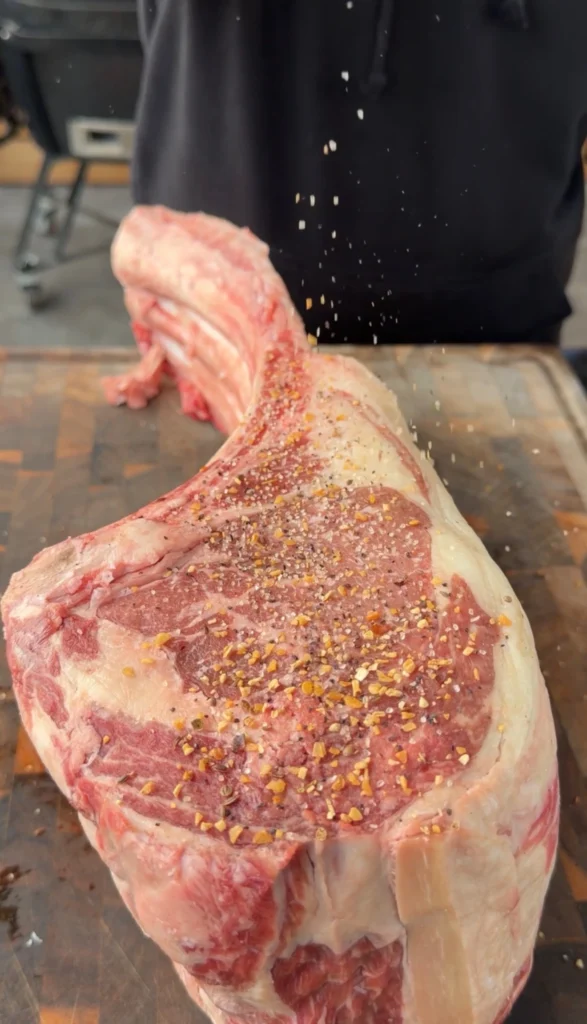
Remove the standing rib roast from refrigerator packaging. Pat completely dry with paper towels. Surface moisture prevents seasoning from adhering and interferes with bark formation.
Season the roast generously on all sides with 2 to 3 tablespoons of your favorite steak seasoning. Apply seasoning to the top, bottom, sides, and between the bones. Don’t be shy. The large roast can handle substantial seasoning.
Let the seasoned roast sit at room temperature for 30 to 45 minutes while the smoker preheats. This takes the chill off the meat. Room temperature meat cooks more evenly than cold meat straight from the refrigerator.
Step 2: Preheat the Smoker
Preheat your smoker to 275°F. Use mesquite wood for traditional Texas-style smoke flavor. Add wood chunks or chips according to your smoker’s specifications.
Wait until the smoker reaches stable 275°F temperature before adding the roast. Temperature stability is important for predictable cooking time. Fluctuating temperature makes timing unreliable.
If using a pellet smoker, set to 275°F and let it run for 10 to 15 minutes to stabilize. For charcoal or stick burners, arrange coals or wood for indirect heat and monitor temperature with a reliable thermometer.
Step 3: Smoke the Standing Rib Roast
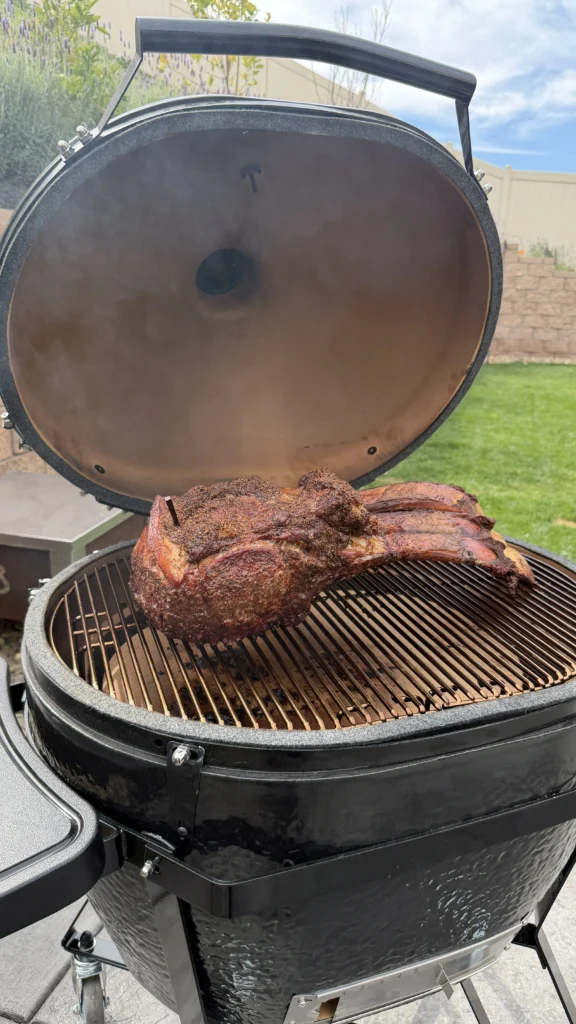
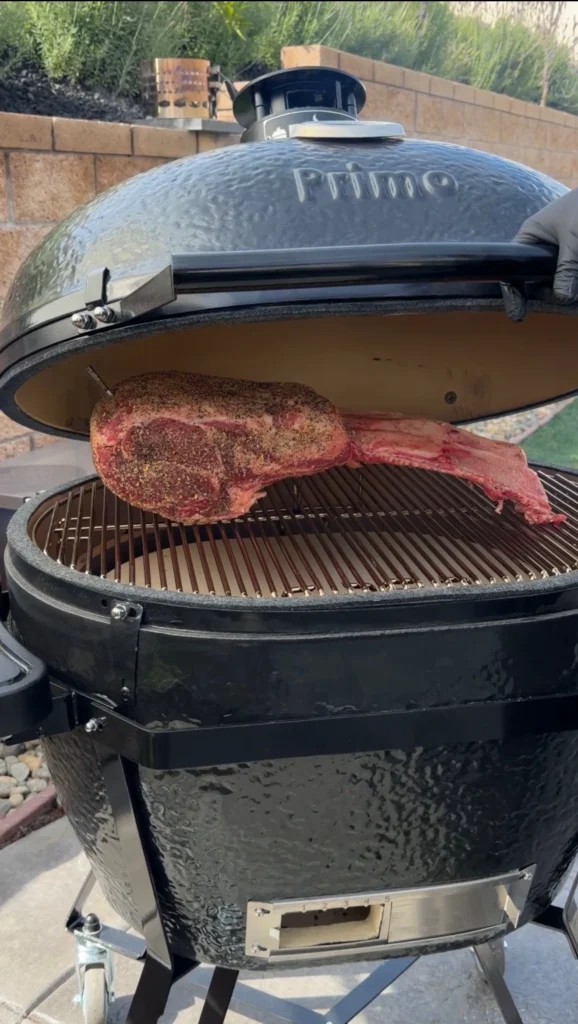
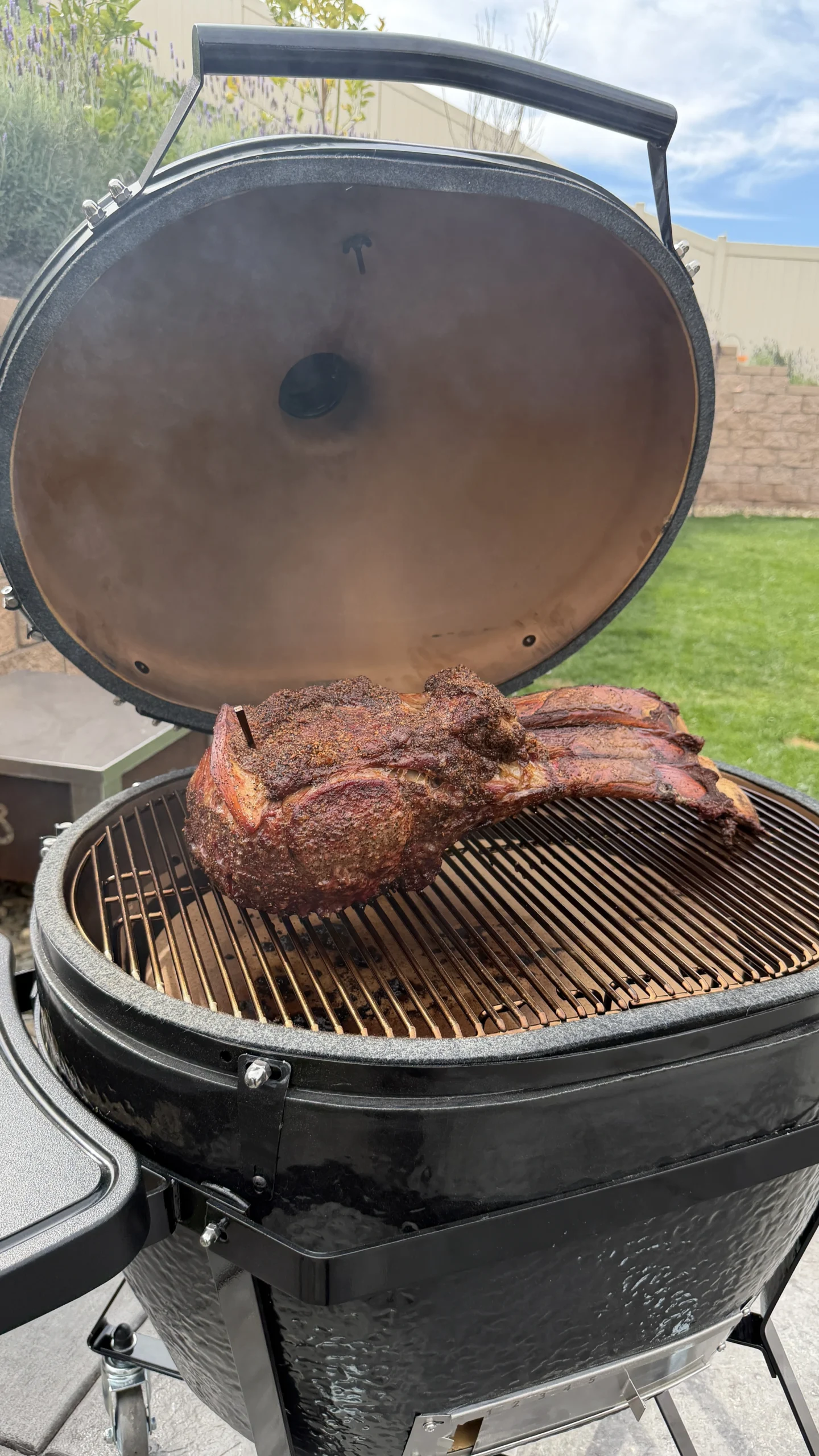
Place the seasoned standing rib roast directly on the smoker grates. Position it bone-side down for stability. The bones act as a natural roasting rack, elevating the meat slightly.
Close the smoker lid. Insert a probe thermometer into the thickest part of the meat, avoiding bone. The probe should reach the center of the roast. This allows continuous temperature monitoring without opening the smoker.
Smoke at 275°F until the internal temperature reaches 120°F. This typically takes 2½ to 3½ hours depending on the exact size of your roast. Smaller roasts (8 lbs) might finish in 2½ hours. Larger roasts (10 lbs) might need 3½ hours.
Don’t open the smoker unnecessarily. Each opening releases heat and smoke. Trust your thermometer reading. Check visually only if needed to ensure even smoking.
Step 4: Rest the Roast
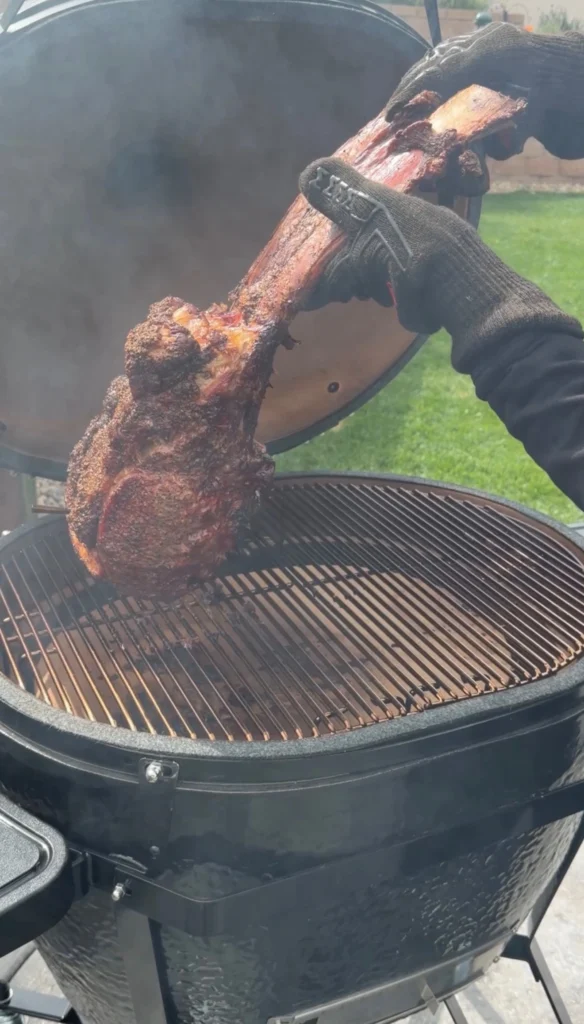
When the roast reaches 120°F internal temperature, remove it from the smoker. Place on a cutting board or large platter. Do not cover it. You want air circulation, not trapped steam.
Let the roast rest for 15 to 20 minutes. Set a timer. This rest is mandatory, not optional. During rest, the temperature will rise to 123 to 125°F from carryover cooking. The juices redistribute throughout the meat.
While the roast rests, preheat your grill or cast iron skillet to very high heat. You want screaming hot temperature for searing. Gas grill on high, charcoal grill with coals directly under grates, or cast iron on high stovetop heat.
Step 5: Make the Garlic Herb Butter
In a small saucepan on the stovetop or in a small cast iron pan, melt 3 tablespoons of butter over medium heat. Don’t let it brown. You want melted, not browned butter.
Add 3 minced garlic cloves to the melted butter. Stir constantly. Cook for 30 to 45 seconds until the garlic becomes fragrant. Don’t let the garlic brown or burn. It should stay light golden to white.
Add 1 sprig of fresh rosemary and 2 to 3 sprigs of fresh thyme to the butter. The herbs will release their aromatics into the butter. Let them steep in the hot butter for 1 to 2 minutes.
Keep the garlic herb butter warm but not boiling. You’ll use this for basting during searing. If it cools and solidifies, gently rewarm before using.
Step 6: Slice Into Individual Tomahawk Steaks
After the 15 to 20-minute rest, the roast is ready to slice. Using a sharp chef’s knife or carving knife, cut between each rib bone. Make clean cuts straight down through the meat.
You should get 3 individual tomahawk steaks, one from each bone. Each steak will be approximately 2 to 2½ inches thick with a long bone handle extending from one side.
The bones make natural handles for moving the steaks. Use the bones to transfer each steak to the hot grill or cast iron. Be careful as the bones can still be warm.
Step 7: Sear the Tomahawk Steaks
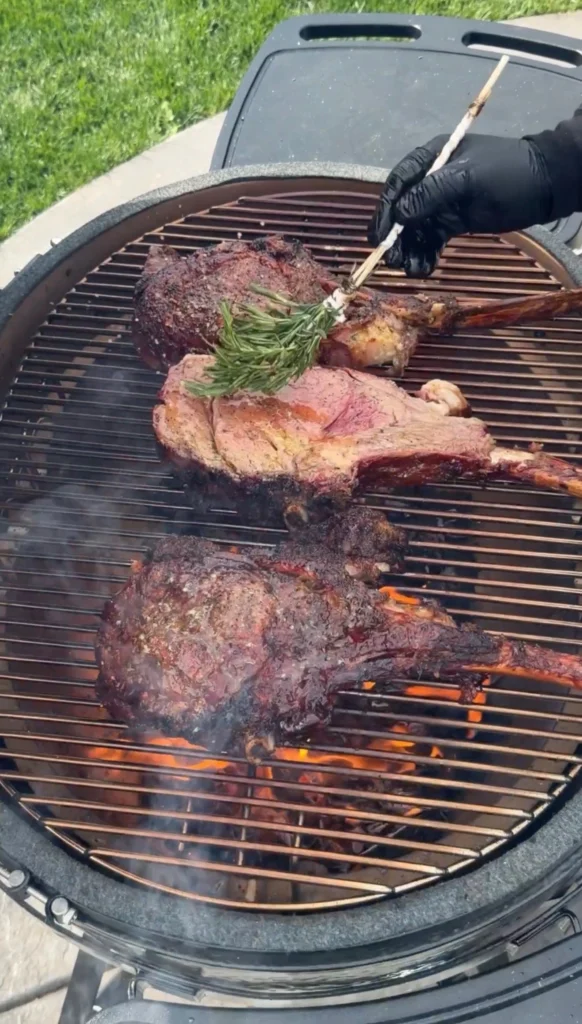
Place the first tomahawk steak on the screaming hot grill grates or in the hot cast iron skillet. It should sizzle immediately. If it doesn’t sizzle, the heat isn’t high enough.
Sear for exactly 45 seconds on the first side. While searing, use a sprig of rosemary as a brush. Dip it in the garlic herb butter and baste the top of the steak. The butter will add flavor and create aromatic smoke.
After 45 seconds, flip the steak. Sear the second side for exactly 45 seconds while basting with more garlic herb butter using the rosemary brush.
Remove the steak after searing both sides. Repeat with the remaining two tomahawk steaks. The brief sear creates brown crust without overcooking the interior.
Step 8: Final Rest and Serve
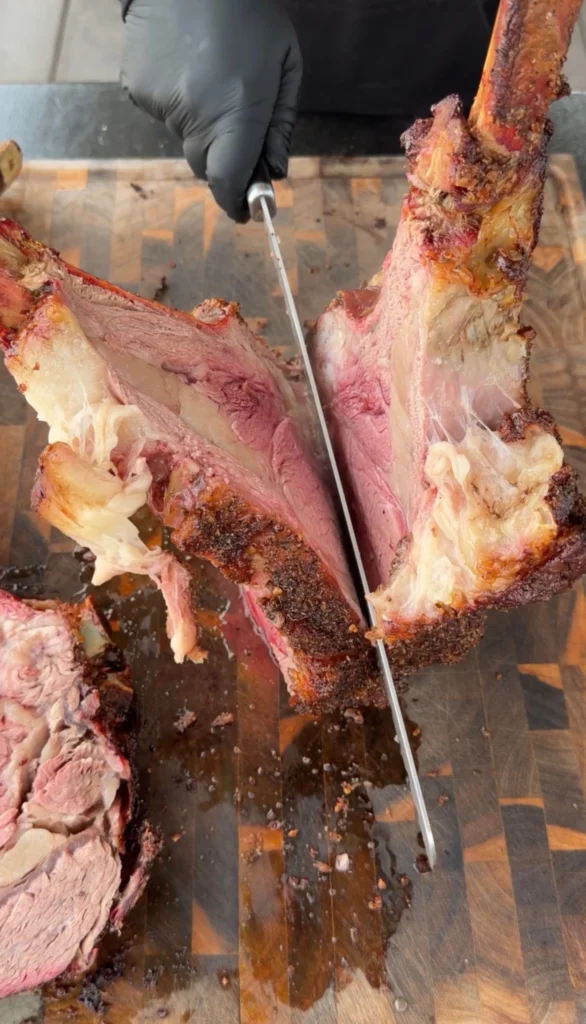
After searing, let the tomahawk steaks rest for 3 to 5 minutes. This final rest allows the searing heat to distribute slightly. The steaks will reach their final temperature of 130 to 135°F.
To serve, you can present the whole tomahawk steaks for dramatic effect. Let diners cut their own portions. Or slice the meat off the bone against the grain, creating individual slices for easier eating.
For slicing, hold the bone with one hand. Using a sharp knife, cut the meat away from the bone. Then slice the meat perpendicular to the grain into ½-inch thick slices.
Drizzle any remaining garlic herb butter over the sliced meat. Serve immediately while hot.
Smoked Tomahawk Standing Rib Roast
Ingredients
Equipment
Method
- Pat roast dry. Season generously all sides with 2 to 3 tablespoons steak seasoning. Let sit at room temperature 30 to 45 minutes.
- Preheat smoker to 275°F using mesquite wood. Ensure temperature is stable before adding meat.
- Place roast bone-side down on smoker grates. Insert probe thermometer into thickest part avoiding bone. Smoke at 275°F until internal temperature reaches 120°F (approximately 2½ to 3½ hours).
- Remove roast from smoker. Rest uncovered 15 to 20 minutes. During rest, preheat grill or cast iron to very high heat.
- Melt 3 tablespoons butter in small pan. Add 3 minced garlic cloves. Cook 30 to 45 seconds until fragrant. Add rosemary and thyme sprigs. Keep warm.
- Cut roast between each bone to create 3 individual tomahawk steaks.
- Sear each tomahawk on very hot grill or cast iron 45 seconds per side. Baste with garlic herb butter using rosemary sprig as brush.
- Rest steaks 3 to 5 minutes. Slice meat off bone against grain into ½-inch slices. Drizzle with remaining garlic herb butter. Serve immediately.
Nutrition
Notes
Tried this recipe?
Let us know how it was!Frequently Asked Questions
Can You Smoke and Sear the Steaks on the Same Day?
Yes, this entire process happens in one cooking session. You smoke the whole roast, rest it, slice it into steaks, and sear them all within 3½ to 4½ hours total. This is a same-day cook from start to finish.
You can break it into two sessions if needed. Smoke the roast to 120°F. Let it cool completely. Refrigerate overnight. The next day, bring to room temperature, slice into steaks, and sear. The flavor will be excellent but the texture won’t be quite as good as continuous cooking.
For best results, complete the entire process in one session. The warm, just-smoked meat sears better than cold, refrigerated meat. The texture is optimal when the meat flows from smoking to resting to searing without cooling completely.
What Cut of Meat Is a Standing Rib Roast?
Standing rib roast is cut from the rib section of beef. It’s the same meat as prime rib. The “standing” refers to how it’s positioned during cooking with the bones pointing up like a roast rack.
A tomahawk standing rib roast specifically has the rib bones left long and frenched (meat scraped from the bones). This creates the dramatic “tomahawk” appearance. Regular prime rib might have the bones cut short or removed entirely.
The meat is ribeye. When you slice a standing rib roast into steaks, you get ribeye steaks attached to bones. If the bones are long and frenched, they’re tomahawk steaks. If the bones are short, they’re bone-in ribeyes.
This is premium, well-marbled beef from the 6th through 12th ribs. A three-bone roast uses three consecutive ribs. It’s expensive but worth it for special occasions.
How Many People Does a Three-Bone Roast Feed?
A three-bone standing rib roast yields three individual tomahawk steaks. Each steak weighs approximately 2 to 2½ pounds before cooking. Each can serve 2 to 3 people depending on appetite and sides.
For hearty eaters or when beef is the main attraction with minimal sides, plan one tomahawk for 2 people. This provides generous portions. Six people total would share three steaks.
For dinner party service with multiple courses or substantial sides, one tomahawk can serve 3 people. This provides more moderate portions. Nine people total would share three steaks.
The rich marbling of ribeye is filling. People tend to eat smaller portions of fatty beef than lean beef. Combined with sides like potatoes and vegetables, the portions go further.
Can You Use Bone-In Ribeye Instead of Tomahawk?
Bone-in ribeye is the same meat as tomahawk, just with shorter bones. You can use a three-bone bone-in ribeye roast for this recipe. The cooking technique is identical.
The main difference is visual presentation. Tomahawk bones are 6 to 8 inches long and dramatic. Bone-in ribeye bones are 2 to 3 inches long and more practical. The flavor and texture are the same.
If you prefer less bone and more meat, bone-in ribeye is more economical. You’re not paying for the extra bone length. The meat portion is the same size. Choose based on whether you want the tomahawk visual impact or practical eating.
Boneless ribeye roast also works but you lose the benefit of bone-in cooking. The bones add flavor and protect the meat during cooking. Boneless cooks faster and can dry out more easily.
How Do You Reheat Leftover Tomahawk Steaks?
Reheat leftover sliced tomahawk beef gently in a 300°F oven for 15 to 20 minutes. Place slices in a baking dish. Add a splash of beef broth to prevent drying. Cover with foil. The gentle heat warms without overcooking.
For whole unsliced tomahawk steaks, reheat in 300°F oven for 20 to 25 minutes. Use a probe thermometer. Heat to 120°F internal temperature, not higher. You’re warming, not re-cooking.
Microwave reheating works but affects texture. Use 50% power. Heat in 30-second intervals. The beef can become tough if microwaved on high power. Add moisture via damp paper towel over the meat.
Don’t reheat on grill or stovetop. These methods apply direct heat that continues cooking. The beef will overcook and become tough. Oven reheating with indirect heat is best for maintaining quality.
For cold leftovers, consider using sliced beef in sandwiches or salads instead of reheating. The cold beef is excellent in French dip sandwiches or sliced thin over greens.
Ready to Level Up?
Take your backyard cooking from good to legendary.
This is where I keep all my most-used smokers, knives, and favorite cooking tools.
Shop My Gear CollectionExplore More Recipes
Find more diverse flavors at CWFeats.com