
Smoked & Fried Pork Belly with Chimichurri
Smoked and fried pork belly with chimichurri takes thick skin-on pork belly strips scored on the meat side, seasoned with salt, pepper, and garlic powder, smoked at 300°F for about 2 hours to 175°F internal, then fried in a cast iron with 1 inch of oil on its side so both skin and meat crisp simultaneously. The side-fry method crisps everything evenly instead of just one surface. A fresh chimichurri made from parsley, garlic, oregano, red chili flakes, olive oil, and red wine vinegar goes on top right before serving. Serves 4 to 6.
See How It’s Made
Watch Miguel walk through the recipe step by step.
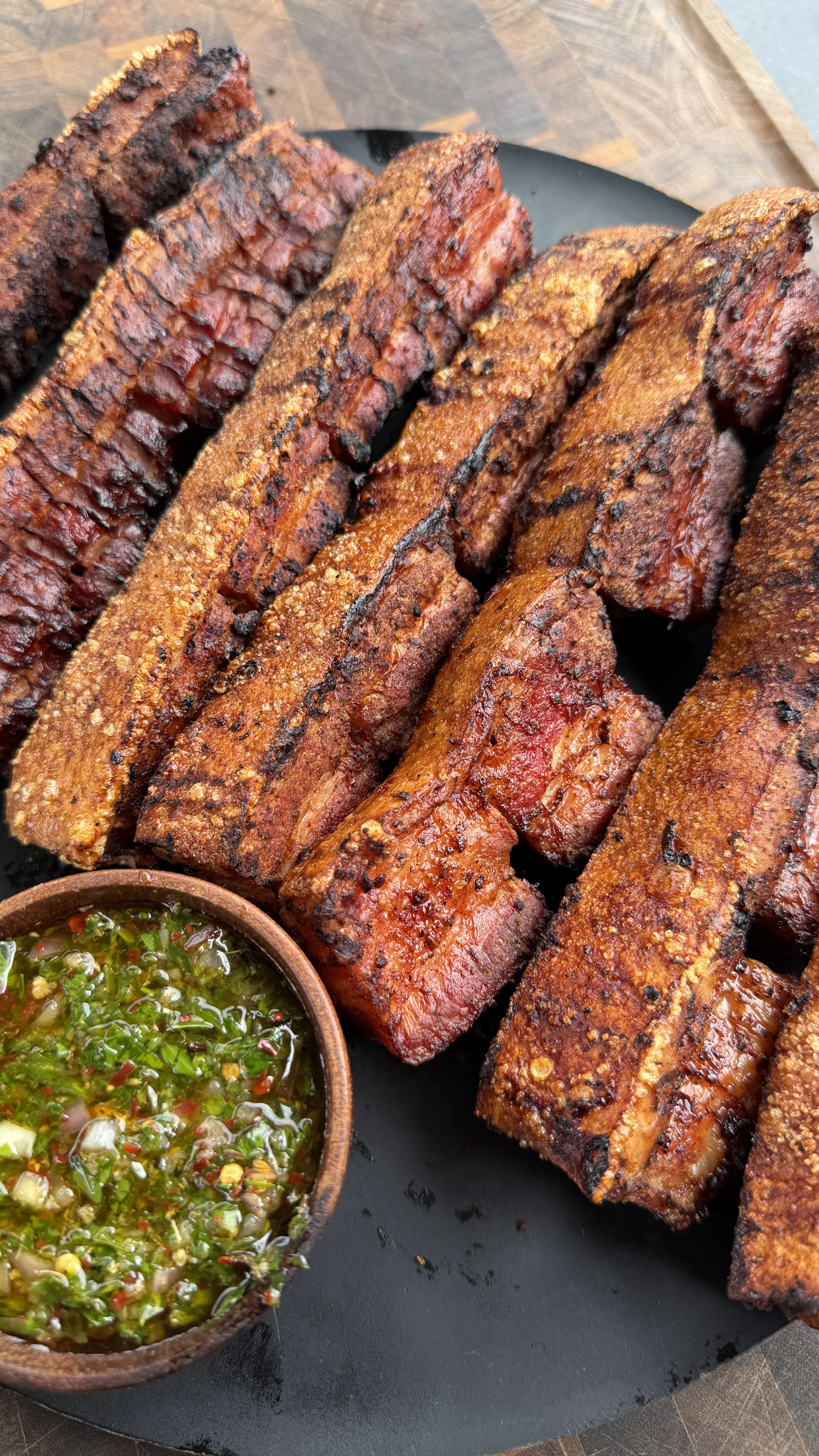
Why Smoking Before Frying Creates the Best Pork Belly
The Smoke Phase Renders the Fat Slowly
Pork belly is roughly 50% fat. If you fry raw pork belly, the exterior burns before the thick fat layer underneath has time to render. Smoking at 300°F for 2 hours renders the fat gradually from the inside out. By the time the internal temperature hits 175°F, the fat is soft, translucent, and partially melted. The meat is tender. The connective tissue has broken down.
This pre-rendered pork belly is now primed for the fryer. The fat layer is already soft, so it crisps in minutes instead of needing a long, slow fry that dries out the meat.
Smoke Flavor Survives the Fry
The 2-hour smoke at 300°F deposits smoke compounds deep into the surface of the pork belly. These compounds don’t disappear during the short fry. You get a crispy, golden exterior with smoke flavor baked into every bite. Frying alone produces crunch but no depth. Smoking alone produces flavor but no crunch. The combination delivers both.
Scoring the Meat Side for Even Cooking
Why Score Deep
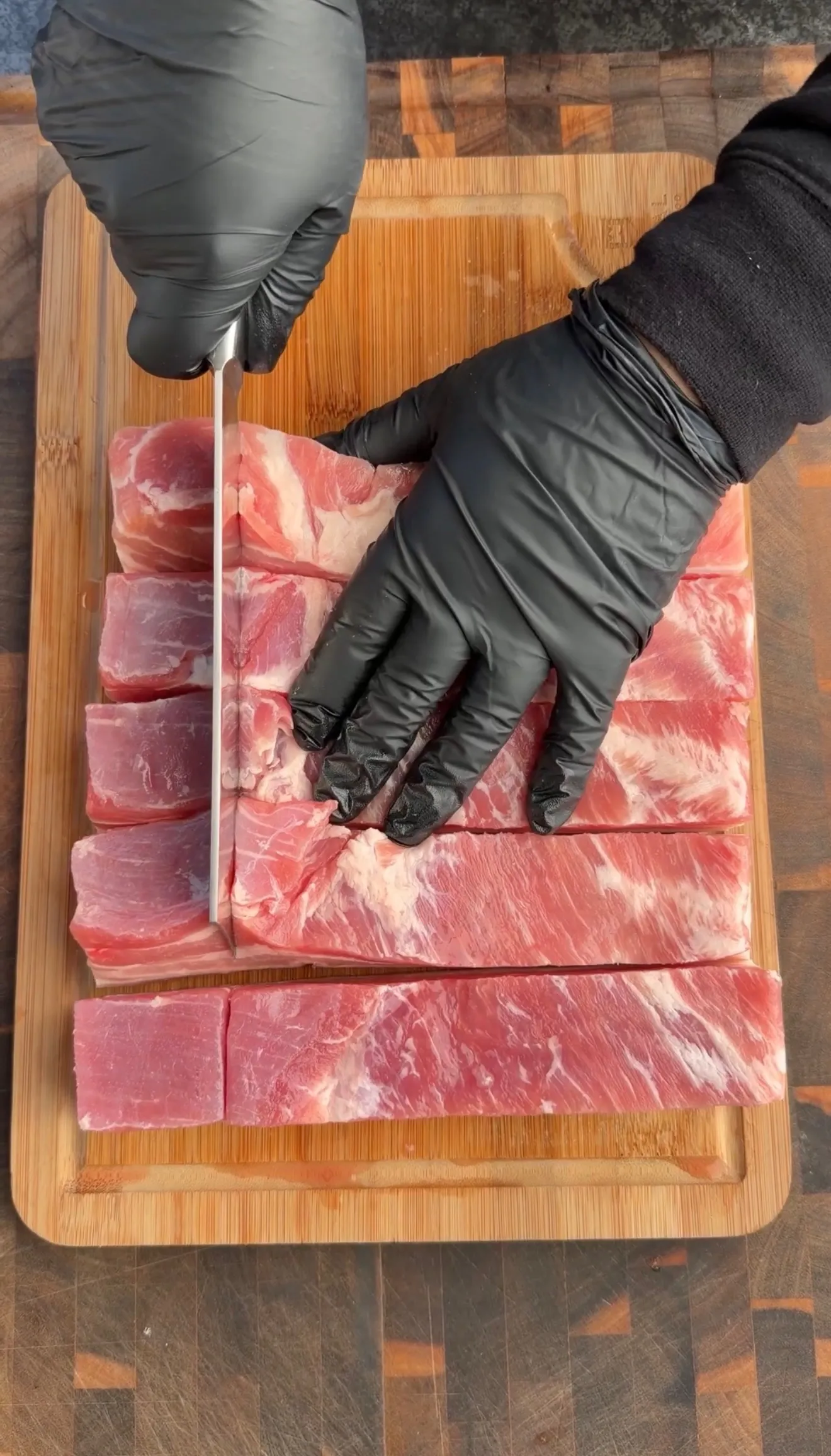
Scoring the meat side of the pork belly (cutting deep without going all the way through) exposes more surface area to the smoke and seasoning. The cuts allow heat to penetrate the thick meat layer more evenly during the smoke phase. Without scoring, the exterior dries out before the center reaches temperature. The score lines also create ridges that crisp up during frying, adding texture.
Season the Meat Side Heavy, Skin Side Light
The meat side gets the full seasoning treatment: salt, pepper, garlic powder, and optional BBQ seasoning. The score lines trap seasoning in the grooves, concentrating flavor into the ridges. The skin side gets only a light salt. Heavy seasoning on the skin prevents it from crisping properly during the fry because the spices burn at high oil temperatures.
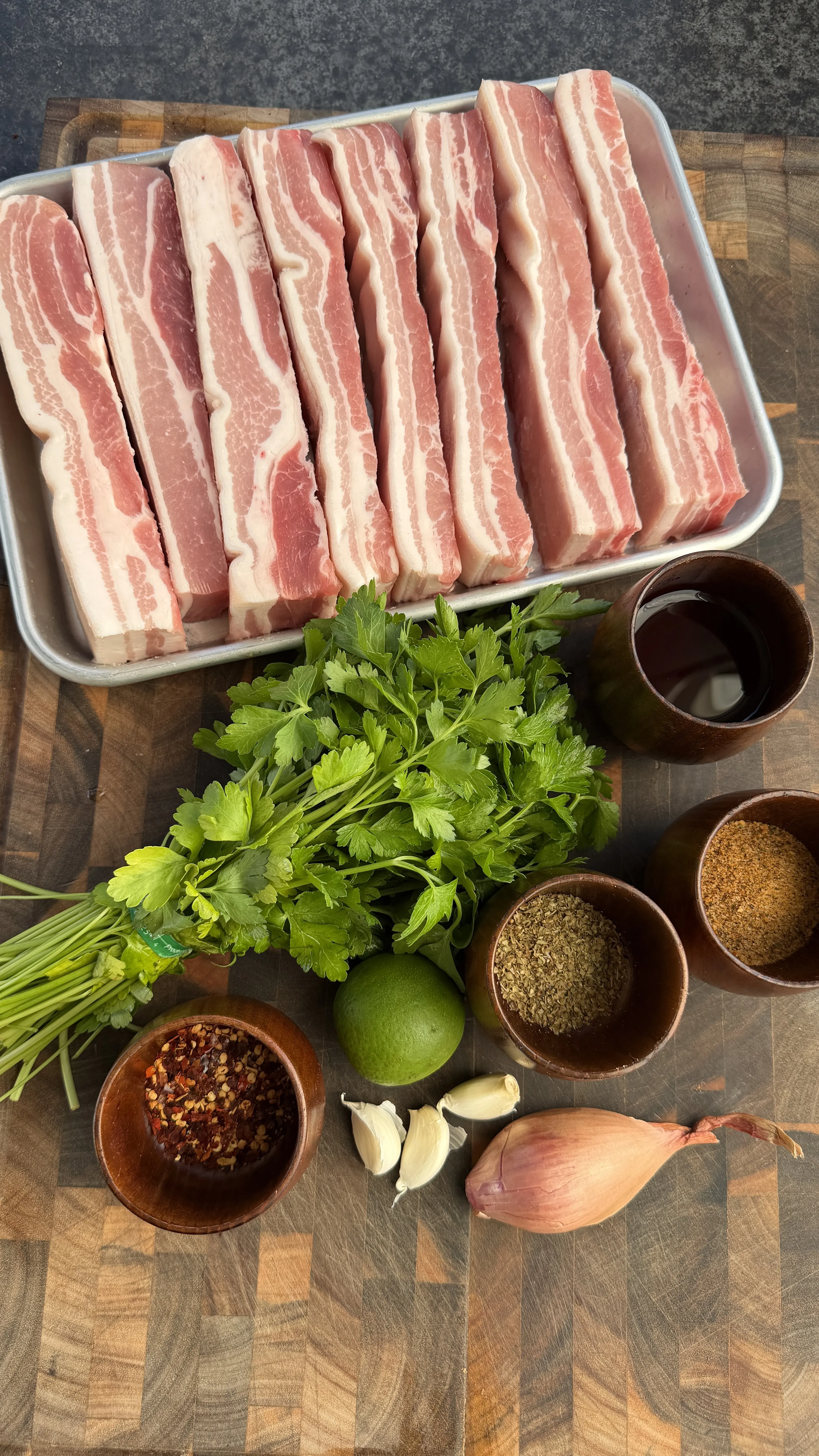
The Side-Fry Method for Pork Belly
Why Fry on the Side, Not Flat
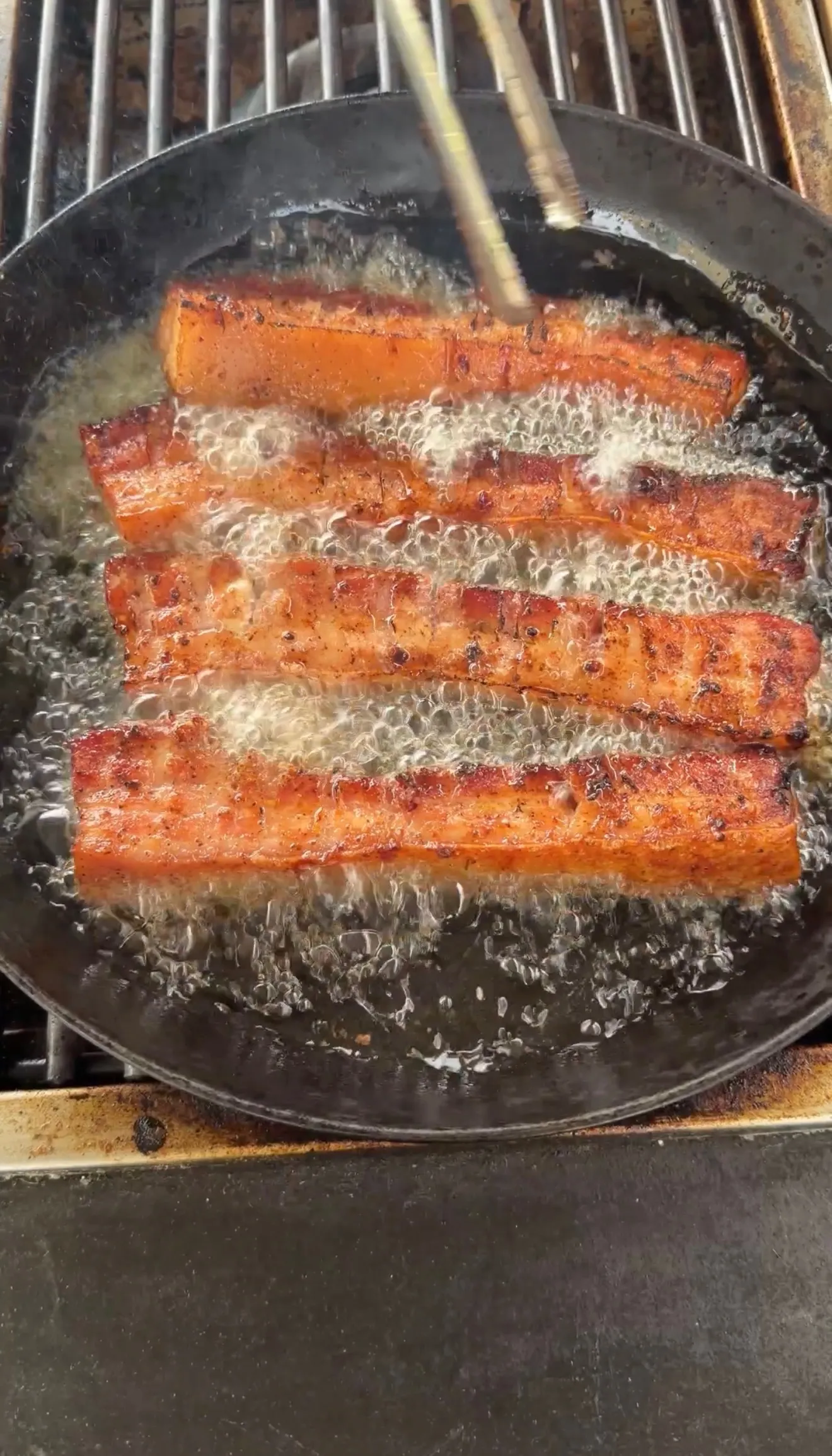
Most pork belly frying methods lay the strips flat in the oil, skin-side down. This crisps the skin but leaves the sides and meat surface soft and pale. The side-fry method lays the pork belly on its side so both skin and meat are partially submerged in the oil simultaneously. You rotate the strip to crisp all four surfaces evenly.
The result is a piece of pork belly that’s crispy and golden on every edge, not just the bottom. The skin blisters and crackles. The fat renders golden. The meat side develops a crust from the seasoning in the score lines. Every surface gets heat.
Cast Iron with 1 Inch of Oil
You don’t need a deep fryer. A cast iron skillet with about 1 inch of oil over medium-high heat is enough. The shallow oil depth forces you to rotate the pork belly strips, which is the whole point. You control which surfaces get crisped and for how long. Two to 3 minutes per side, rotating to hit all edges, produces evenly crispy pork belly in under 10 minutes total.
Fresh Chimichurri Cuts Through the Richness
Why Chimichurri with Pork Belly
Pork belly is rich. Extremely rich. The combination of rendered fat, crispy skin, and smoky meat needs something acidic, fresh, and herbaceous to balance the heaviness. Chimichurri provides all three. The red wine vinegar cuts through the fat. The fresh parsley and oregano add brightness. The garlic and chili flakes add a savory kick that complements the smoke.
Let It Rest 10 to 15 Minutes
After mixing the chimichurri, let it sit for 10 to 15 minutes before serving. The resting time allows the olive oil to absorb the flavors from the garlic, oregano, and chili flakes. Freshly mixed chimichurri tastes sharp and raw. After 10 to 15 minutes, the flavors meld and the acidity softens slightly. The result is a more balanced, cohesive sauce.
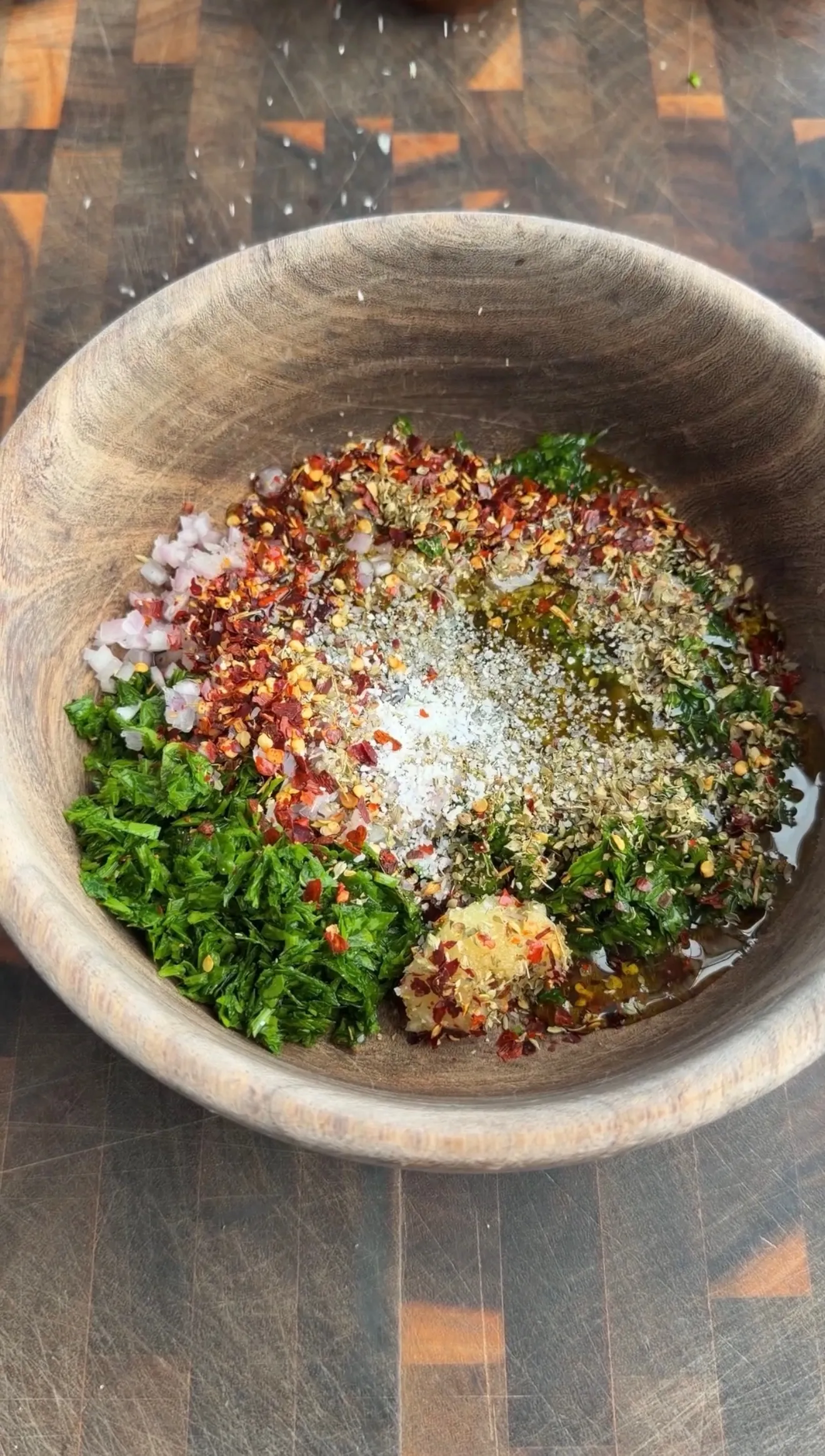
Step-by-Step: How to Make Smoked and Fried Pork Belly with Chimichurri
Step 1: Score and Season the Pork Belly
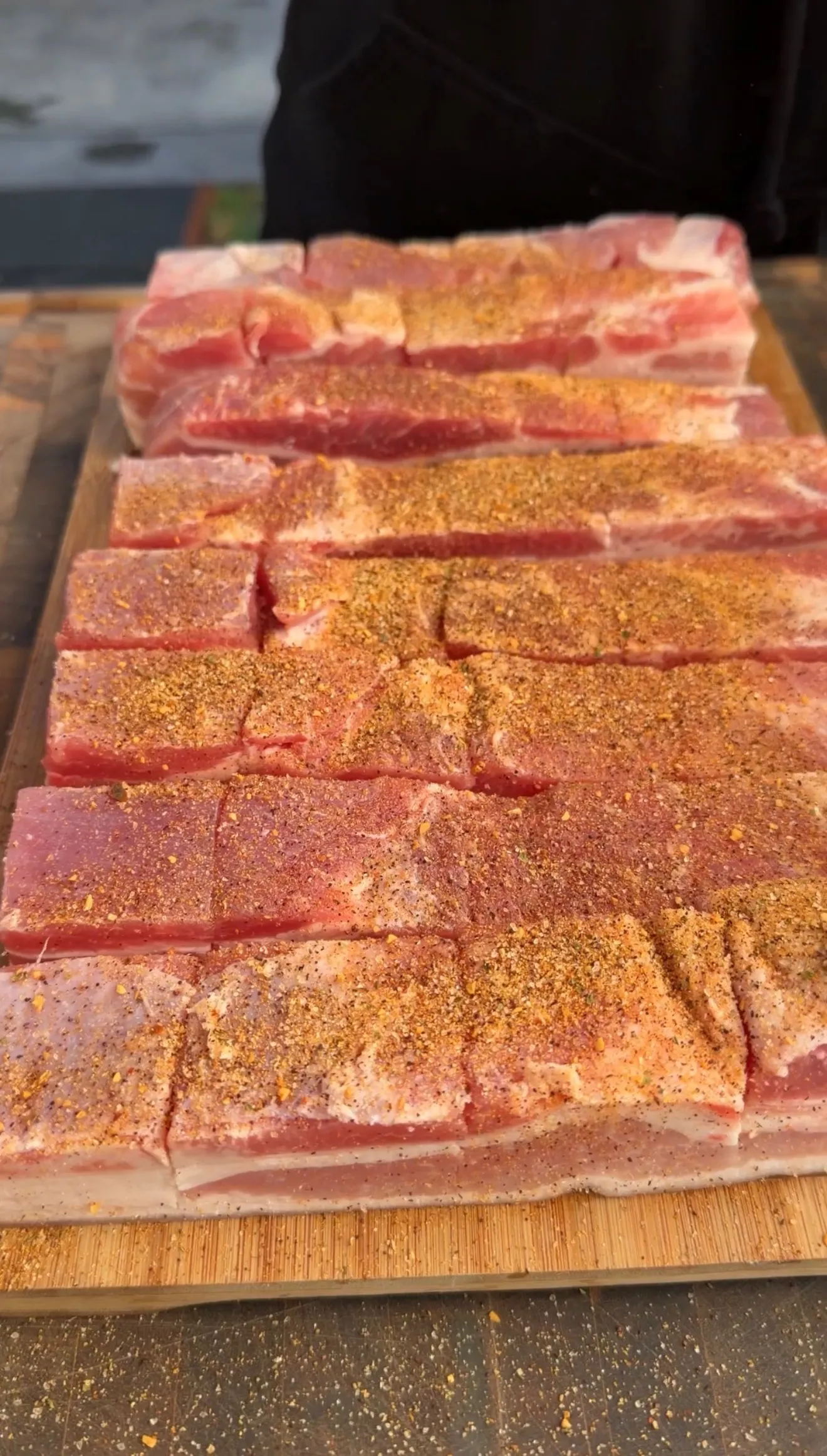
Take 2 lbs of thick-cut, skin-on pork belly strips. Score the meat side with deep cuts in a crosshatch pattern. Cut deep into the fat and meat without going all the way through the skin. The score lines allow heat and smoke to penetrate the thick meat layer and trap seasoning in the grooves.
Season the meat side generously with coarse salt, black pepper, garlic powder, and optional BBQ seasoning. Lightly salt the skin side only. Heavy seasoning on the skin burns during the fry and prevents proper crisping.
Step 2: Smoke at 300°F for 2 Hours
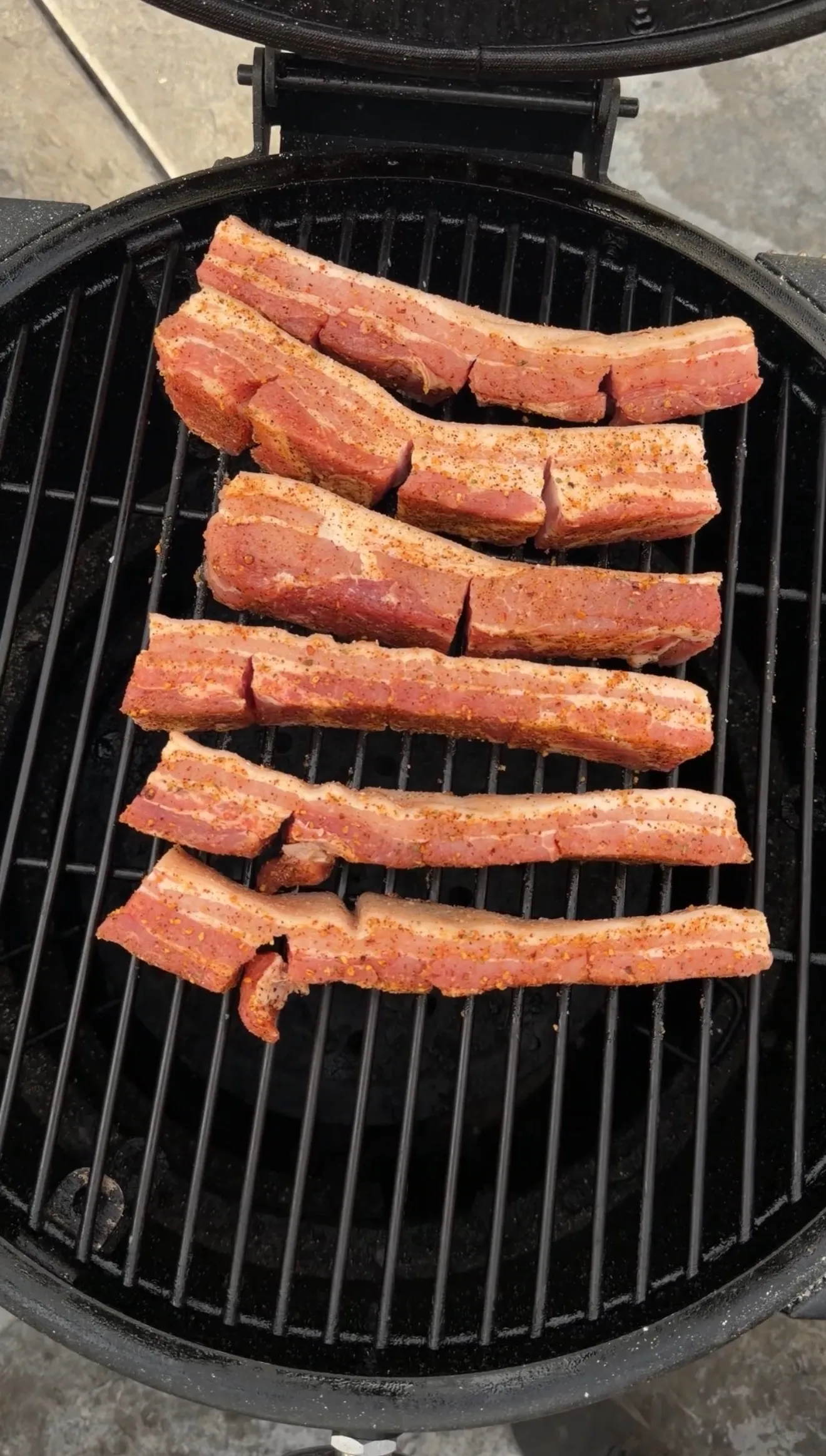
Preheat your smoker to 300°F. Place the seasoned pork belly strips on the grill grate skin-side up. Close the lid. Smoke for approximately 2 hours until the internal temperature reaches 175°F.
At 175°F, the fat is partially rendered, the connective tissue has started to break down, and the meat is tender. The pork belly is now pre-cooked and primed for the fry. The smoke flavor is locked into the surface during this phase.
Step 3: Side-Fry in Cast Iron
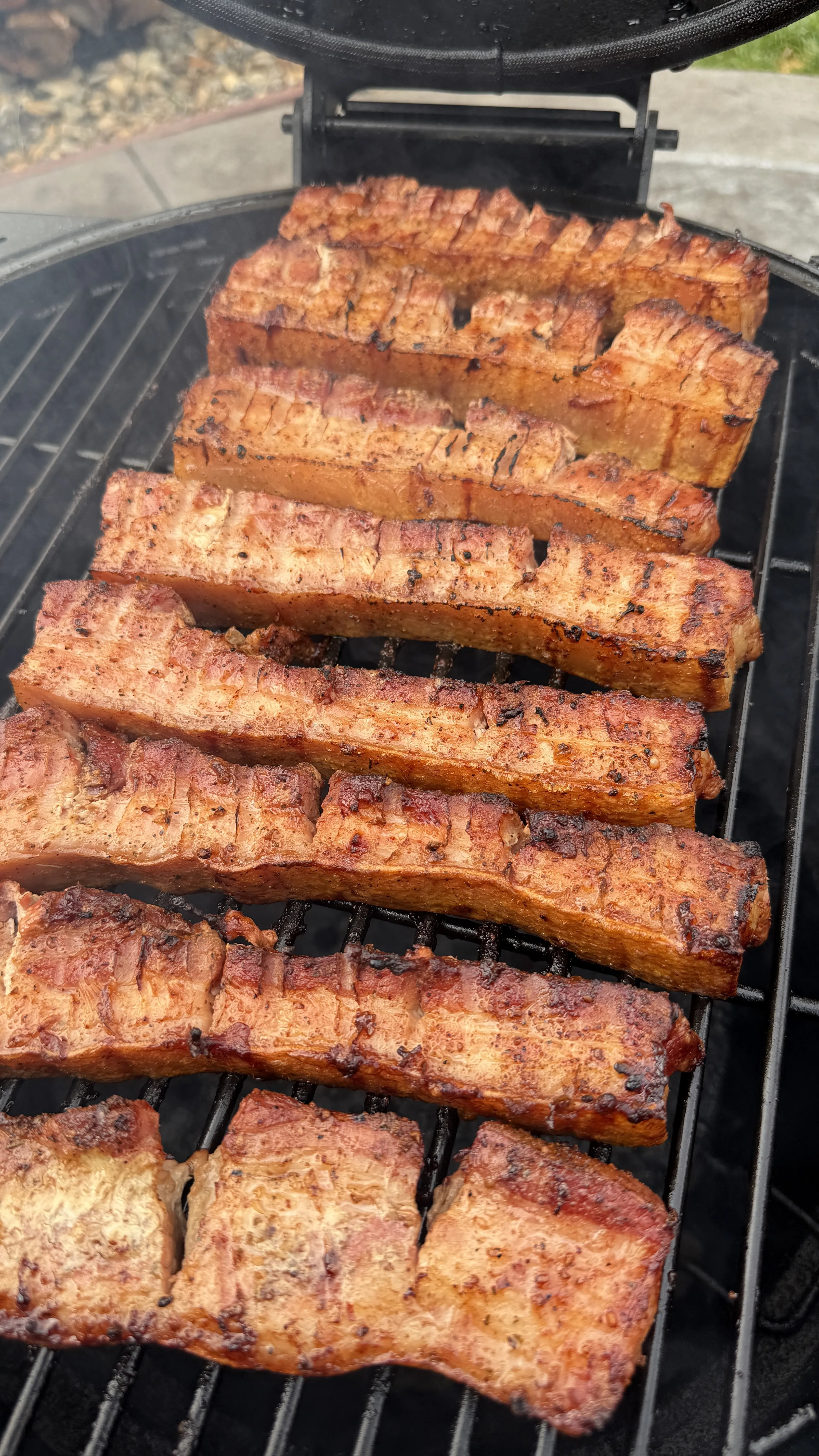
Heat a cast iron skillet with about 1 inch of oil over medium-high heat. When the oil shimmers, lay the smoked pork belly strips on their side, not flat. Position each strip so part of the skin and part of the meat are both submerged in the oil simultaneously.
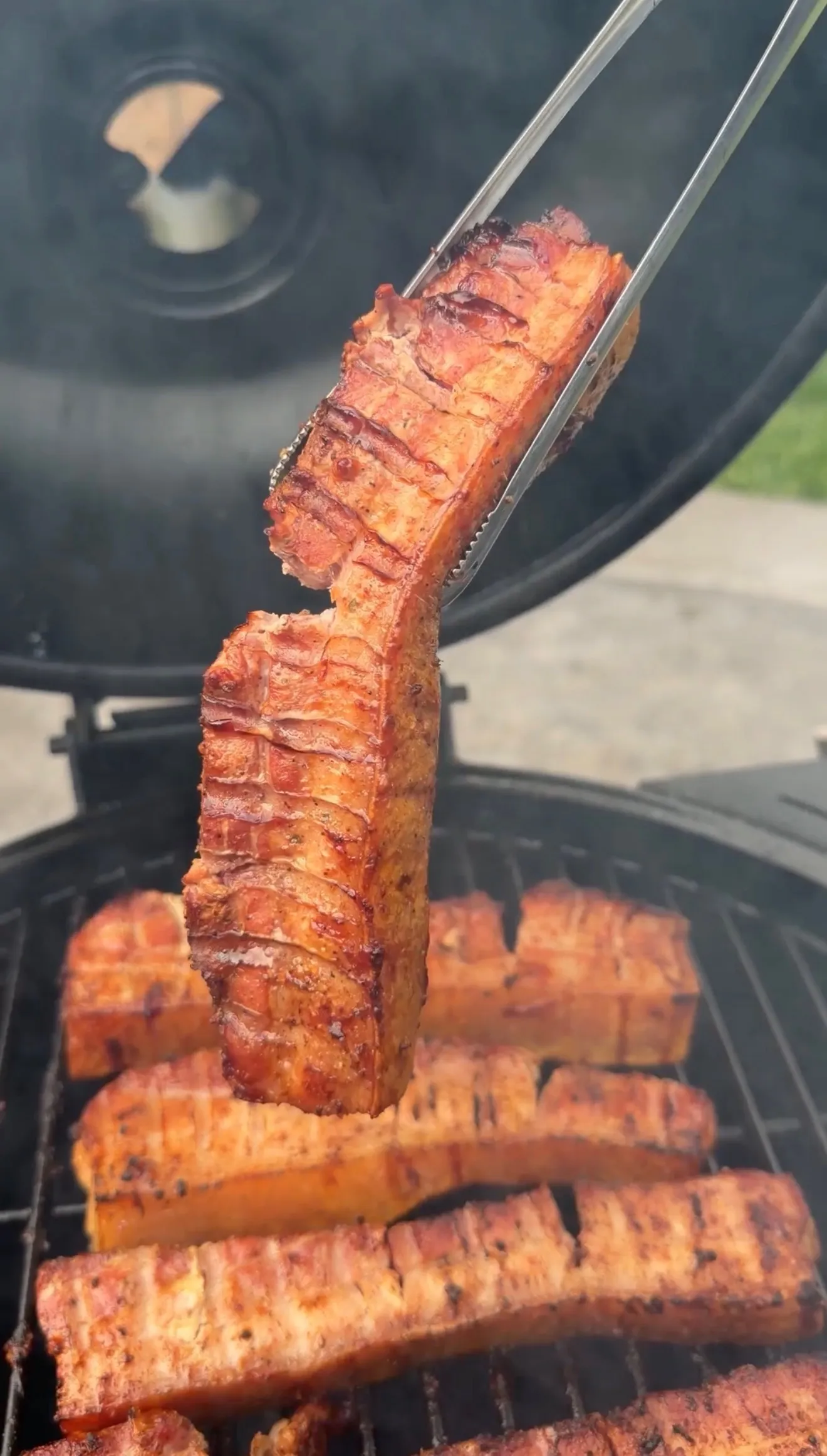
Fry for 2 to 3 minutes per side, rotating to crisp all edges. Flip and repeat until the skin is crispy and blistered, the fat is rendered and golden all around, and the meat side has a crust from the seasoning in the score lines. This method crisps everything evenly instead of just one surface.
Step 4: Make the Chimichurri
While the pork belly smokes or rests, combine 1 bunch finely chopped parsley, 3 minced garlic cloves, 2 teaspoons oregano, and 1 teaspoon red chili flakes in a bowl. Add 1/2 cup olive oil and 3 tablespoons red wine vinegar. Season with salt to taste.
Stir everything together and let the chimichurri sit for 10 to 15 minutes before serving. The resting time allows the olive oil to absorb the garlic and herb flavors. Fresh chimichurri tastes sharp and raw. After resting, the flavors meld into a balanced, cohesive sauce.
Step 5: Slice and Serve
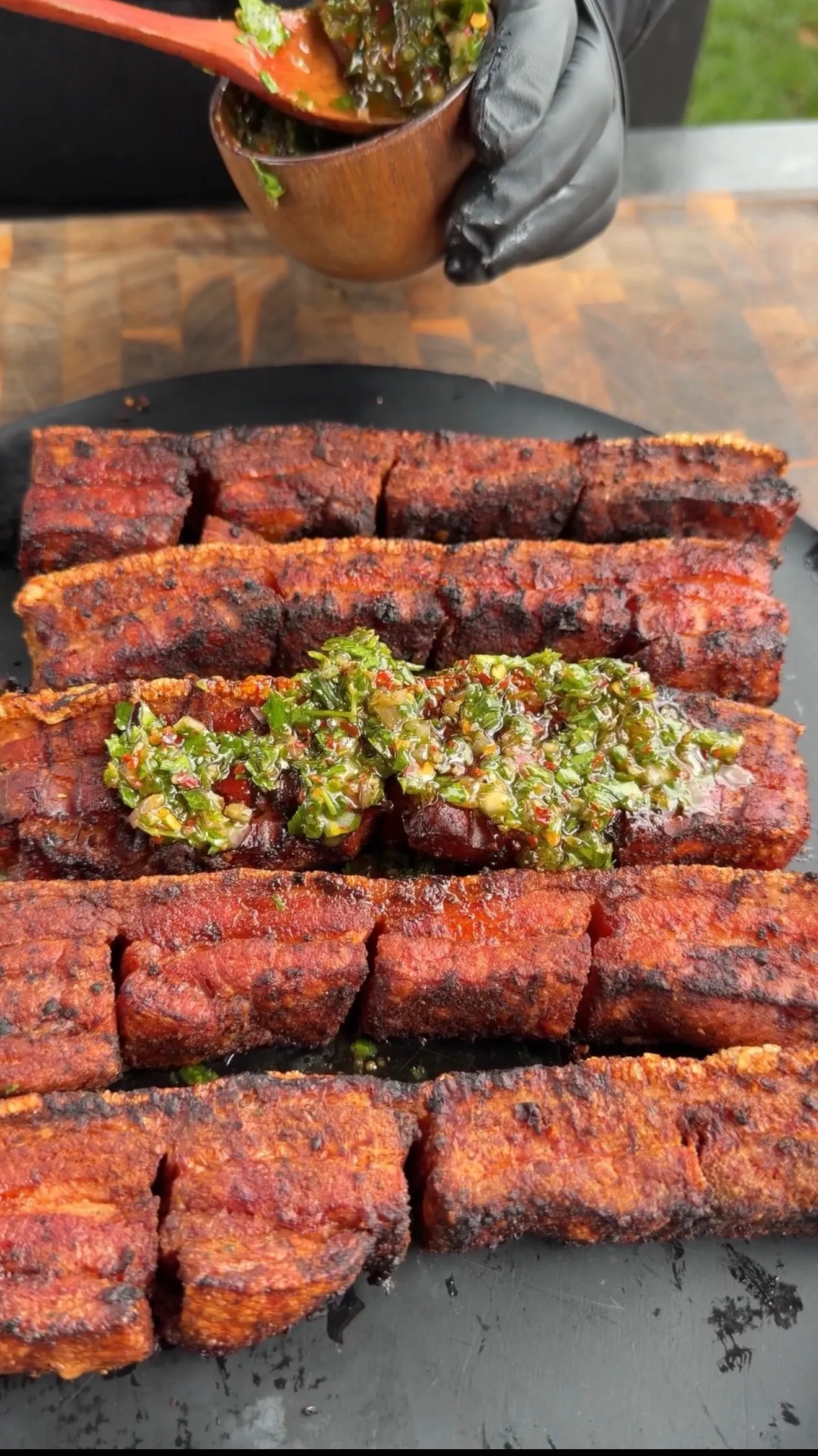
Remove the fried pork belly from the cast iron and let it drain briefly on a wire rack or paper towels. Slice into thick chunks. The interior should be tender and smoky. The exterior should be crispy and golden on all surfaces.
Spoon the chimichurri generously over the top. The acidity from the vinegar and the freshness from the parsley cut through the richness of the pork belly. Optional: squeeze fresh lemon juice over the top for extra brightness. Serve immediately while the skin is still crackling.

Smoked and Fried Pork Belly with Chimichurri
Ingredients
Equipment
Method
- Score the meat side of the pork belly deep in a crosshatch pattern. Season meat side with salt, pepper, garlic powder, and optional BBQ seasoning. Lightly salt the skin side only.
- Smoke at 300°F skin-side up for about 2 hours until internal temp reaches 175°F.
- Heat cast iron with 1 inch of oil over medium-high. Lay pork belly on its side so skin and meat are both in the oil. Fry 2-3 minutes per side, rotating to crisp all edges.
- Combine parsley, garlic, oregano, chili flakes, olive oil, red wine vinegar, and salt. Let sit 10-15 minutes.
- Slice pork belly into chunks. Spoon chimichurri over the top. Optional: squeeze of fresh lemon.
Notes
Tried this recipe?
Let us know how it was!Smoked & Fried Pork Belly — FAQ
Common questions about smoking, frying, and serving pork belly with chimichurri.
Your Questions, Answered
Raw pork belly is roughly 50% fat. If you fry it raw, the exterior burns before the thick fat layer renders. Smoking at 300°F for 2 hours pre-renders the fat, breaks down connective tissue, and deposits smoke flavor deep into the surface. The pre-cooked belly then crisps in minutes in the fryer without drying out.
Scoring the meat side exposes more surface area to smoke and seasoning. The score lines trap seasoning in the grooves and create crispy ridges during the fry. Scoring the skin side can cause it to shrink unevenly and prevents the consistent blistering you want during frying.
Instead of laying pork belly flat in the oil (which only crisps one surface), you lay it on its side so both skin and meat are partially submerged. Rotate the strip to crisp all four edges. The result is pork belly that’s crispy and golden on every surface, not just the bottom.
About 1 inch of oil in a cast iron skillet over medium-high heat. You don’t need a deep fryer. The shallow depth is actually the point because it forces you to rotate the strips manually, giving you control over which surfaces get crisped and for how long.
Chimichurri & Serving
Freshly mixed chimichurri tastes sharp and raw. After 10 to 15 minutes of resting, the olive oil absorbs the garlic, oregano, and chili flake flavors. The vinegar acidity softens slightly. The result is a more balanced, cohesive sauce that pairs better with the rich pork belly.
Yes, but you need something acidic and fresh to cut through the richness. A Vietnamese nuoc cham (fish sauce, lime, chili, sugar), a Thai nam jim jaew, or a simple squeeze of lemon with sea salt all work. The key is acid and brightness. A heavy or creamy sauce would compound the richness instead of balancing it.
Yes. Chimichurri keeps in an airtight container in the fridge for up to 3 days. The flavors actually deepen overnight. Bring it to room temperature before serving so the olive oil loosens up and the sauce is pourable. Cold chimichurri is too thick and doesn’t coat the pork belly as evenly.