Fast smoked wings with a chili crisp honey glaze use the 0 to 400 method, where the wings go on a cold smoker that heats up to 400°F with the wings inside the whole time. Two pounds of split wings get patted dry, tossed in oil and poultry seasoning, then lightly dusted with cornstarch before they ride the smoker for 35 to 50 minutes until the skin is crispy and the internal temp hits 175 to 185°F. The cornstarch reacts with the rendered fat during the cook and creates a thin, shatteringly crisp shell on the skin. A quick chili crisp honey glaze made from honey, chili crisp, soy sauce, butter, garlic, and rice vinegar gets tossed on at the end, then the wings go back on for 2 to 3 minutes to lock it in. Serves 4 to 6.
Jump to Recipe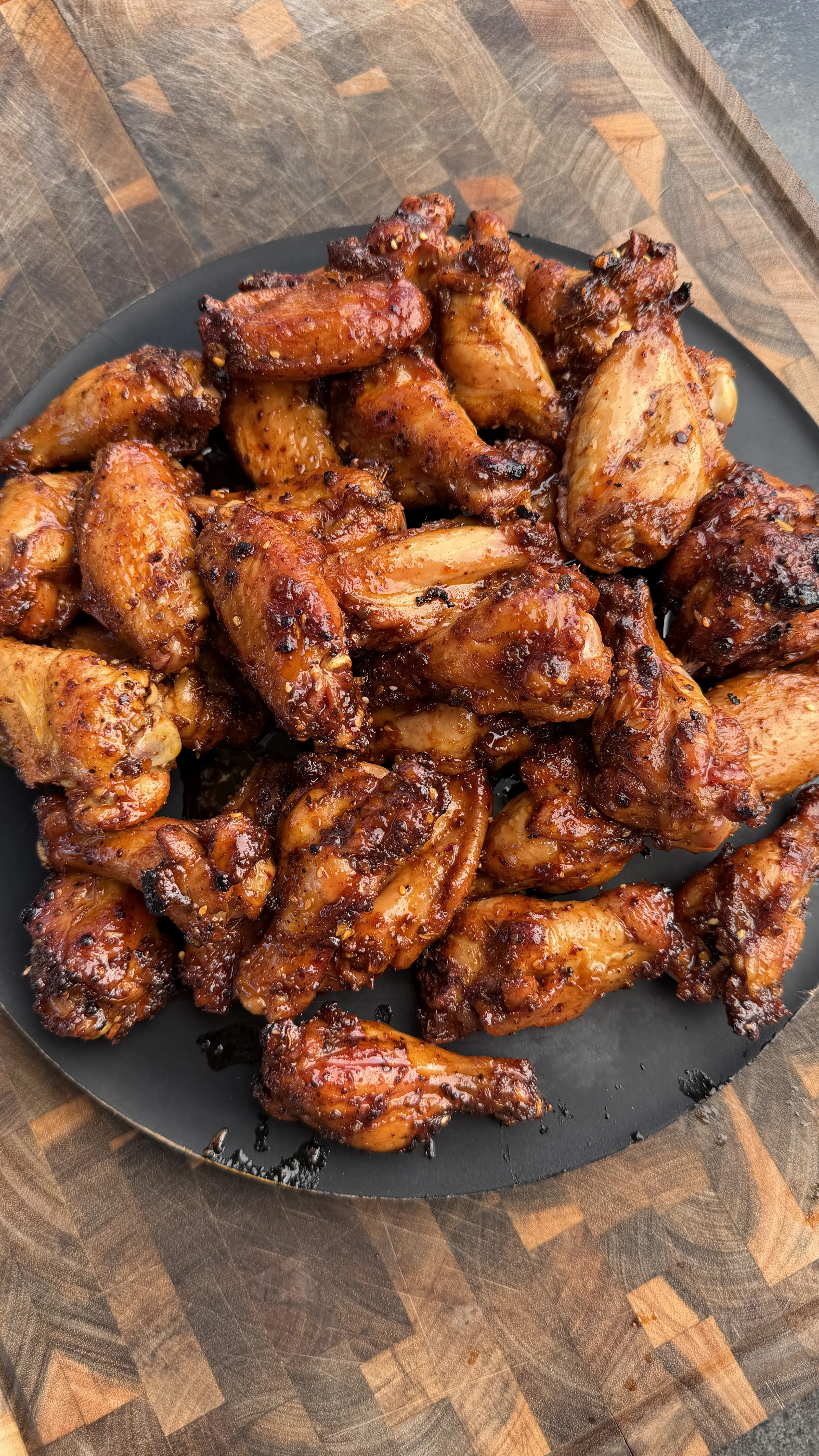
The 0 to 400 Method for Smoked Wings
Why Starting Cold Produces Crispier Skin
Most smoked wing recipes tell you to preheat the smoker first and then add the wings, but the 0 to 400 method works differently. The wings go on a cold smoker, the smoker turns on and climbs to 400°F, and the wings ride the entire temperature curve from ambient up to full heat. As the smoker slowly climbs through the lower temperatures, the fat underneath the skin begins to render gradually before the exterior starts to crisp.
By the time the smoker reaches 400°F, the subcutaneous fat is already partially rendered, which means the skin crisps faster and more evenly once the high heat kicks in. If you drop wings onto a fully preheated 400°F grate, the exterior sears before the fat has time to render, and you end up with a thick, chewy fat layer under the skin instead of a thin, crispy shell.
Total Cook Time and When to Pull
The total cook time is roughly 35 to 50 minutes depending on the size of your wings and how quickly your smoker reaches 400°F. Flip the wings once at the halfway mark so both sides get direct heat exposure. Pull the wings when the skin is visibly crispy and blistered and the internal temperature reads between 175 and 185°F. Wings at this range have fully rendered fat, tender meat, and skin that snaps when you bite through it.
Why Cornstarch Is the Key to Crispy Smoked Wing Skin
How Cornstarch Reacts with Rendered Fat
A light dusting of cornstarch on the wings before they hit the smoker creates a thin, dry layer on the surface of the skin. As the fat underneath renders during the cook, it migrates to the surface and mixes with the cornstarch. This combination of rendered fat and cornstarch produces a crispy, crackling coating that behaves almost like a shallow fry, except the fat comes from inside the wing itself instead of from a pan of oil.
The key word is “light.” You want a thin, even coating, not a thick caked-on layer. Too much cornstarch creates a gummy paste that never fully crisps. Just enough to barely coat the surface is all you need.
The Layering Order Matters
Pat the wings completely dry first, then toss with oil, then add the poultry seasoning and mix well, and finally dust with cornstarch as the last step and toss one more time. This specific order ensures the oil adheres the seasoning to the skin and the cornstarch sits on top as the outermost layer where it can interact directly with the rendering fat during the cook.
The Chili Crisp Honey Glaze
What Makes This Glaze Work
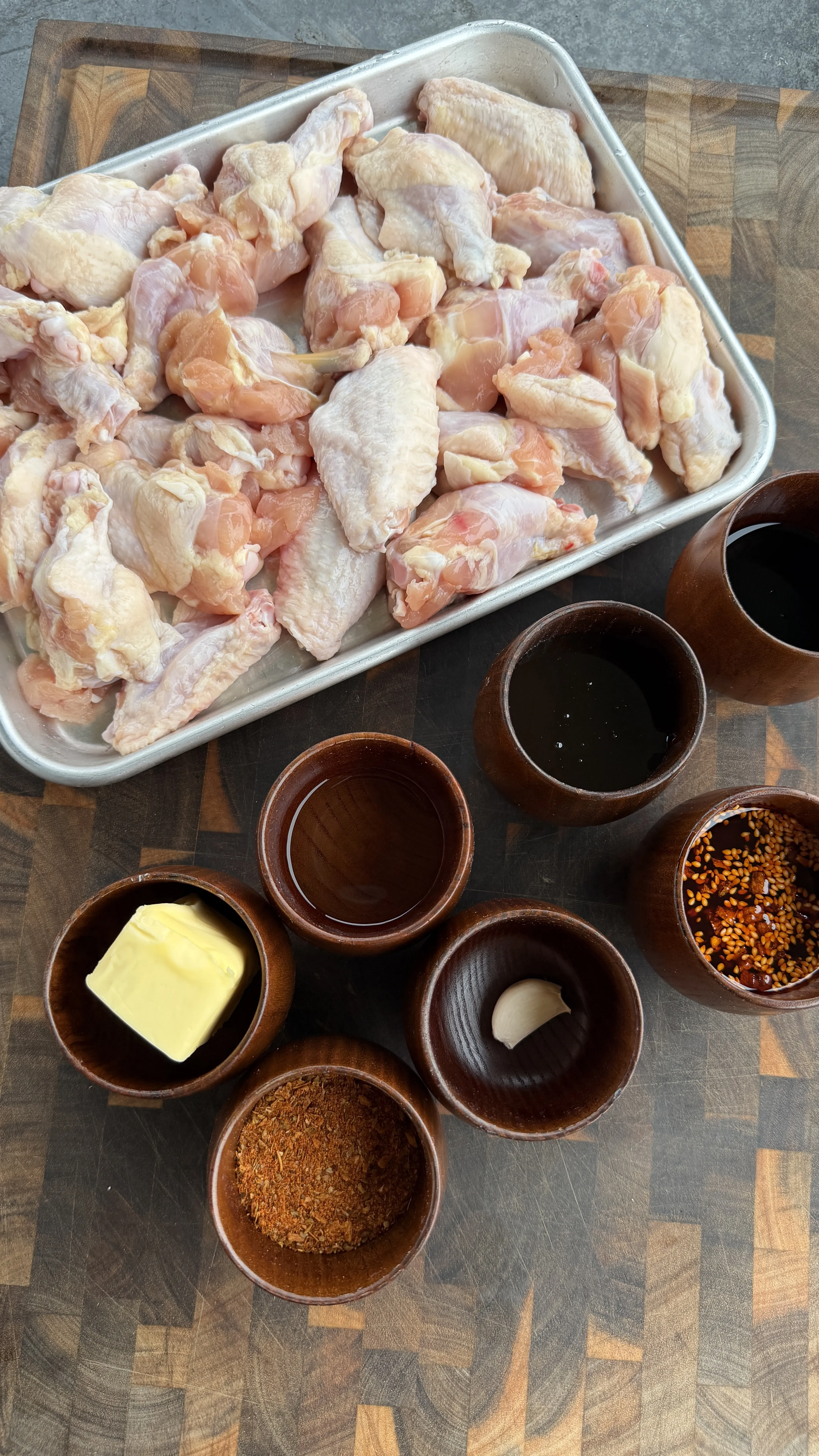
The glaze combines 1/3 cup honey, 2 tablespoons chili crisp, 1 tablespoon soy sauce, 1 tablespoon butter, 1 clove minced garlic, and 1 teaspoon rice vinegar. Honey provides the sticky sweetness that caramelizes on contact with the hot wings. Chili crisp adds smoky, crunchy, garlicky heat with visible flakes of chili and fried aromatics throughout the glaze. Soy sauce adds salt and umami depth. Butter adds richness and helps the glaze cling to the skin instead of sliding off.
Melt Low and Keep It Thick
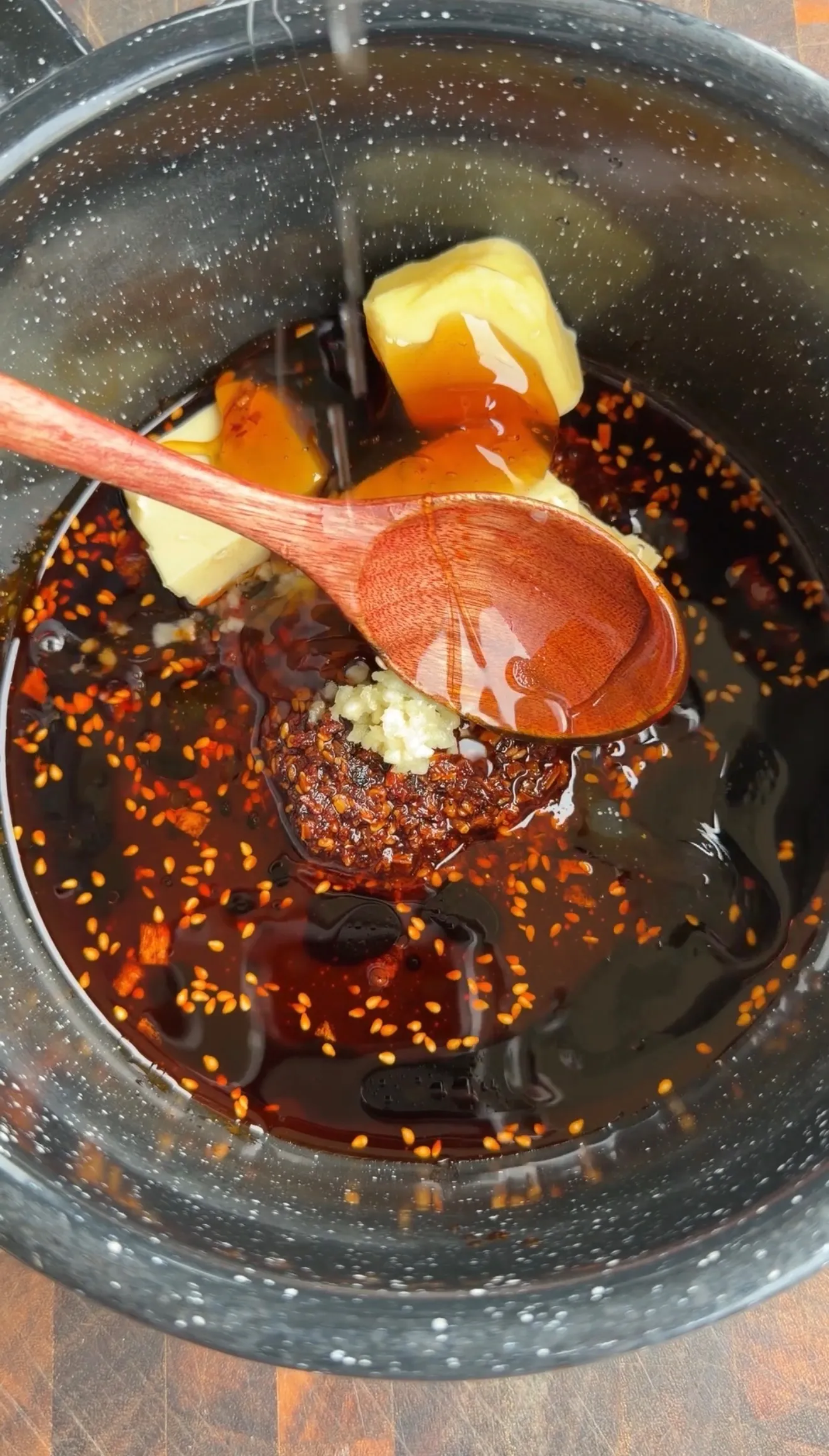
Melt everything together over low heat until the mixture is warm and slightly thickened but still pourable. If you cook the glaze too hot, the honey thins out and becomes watery, which means it runs off the wings instead of coating them. You want the consistency thick enough to visibly cling to each wing when you toss them in the bowl. The rice vinegar adds a subtle tang that balances the sweetness of the honey, so the glaze tastes layered rather than one-note sweet.
Tossing and Setting the Glaze on the Smoker
Toss First, Then Set
After the wings hit their target temp and the skin is crispy, pull them off the smoker and toss them in the warm chili crisp honey glaze in a large bowl until every wing is fully coated. Then place the glazed wings back on the smoker for 2 to 3 minutes. This final set step caramelizes the fresh glaze onto the already-crispy skin and locks it in place so the coating doesn’t slide off when you pick up a wing.
Timing the Glaze Is Critical
If you sauce the wings too early during the cook, the moisture in the glaze softens the crispy skin you spent the entire cook building. The glaze goes on only at the very end, after the cornstarch-and-fat crust is fully set. Those final 2 to 3 minutes on the smoker are just long enough to caramelize the honey without destroying the crispy texture underneath.
Step-by-Step: How to Make Fast Smoked Wings with Chili Crisp Honey Glaze
Step 1: Prep and Layer the Wings
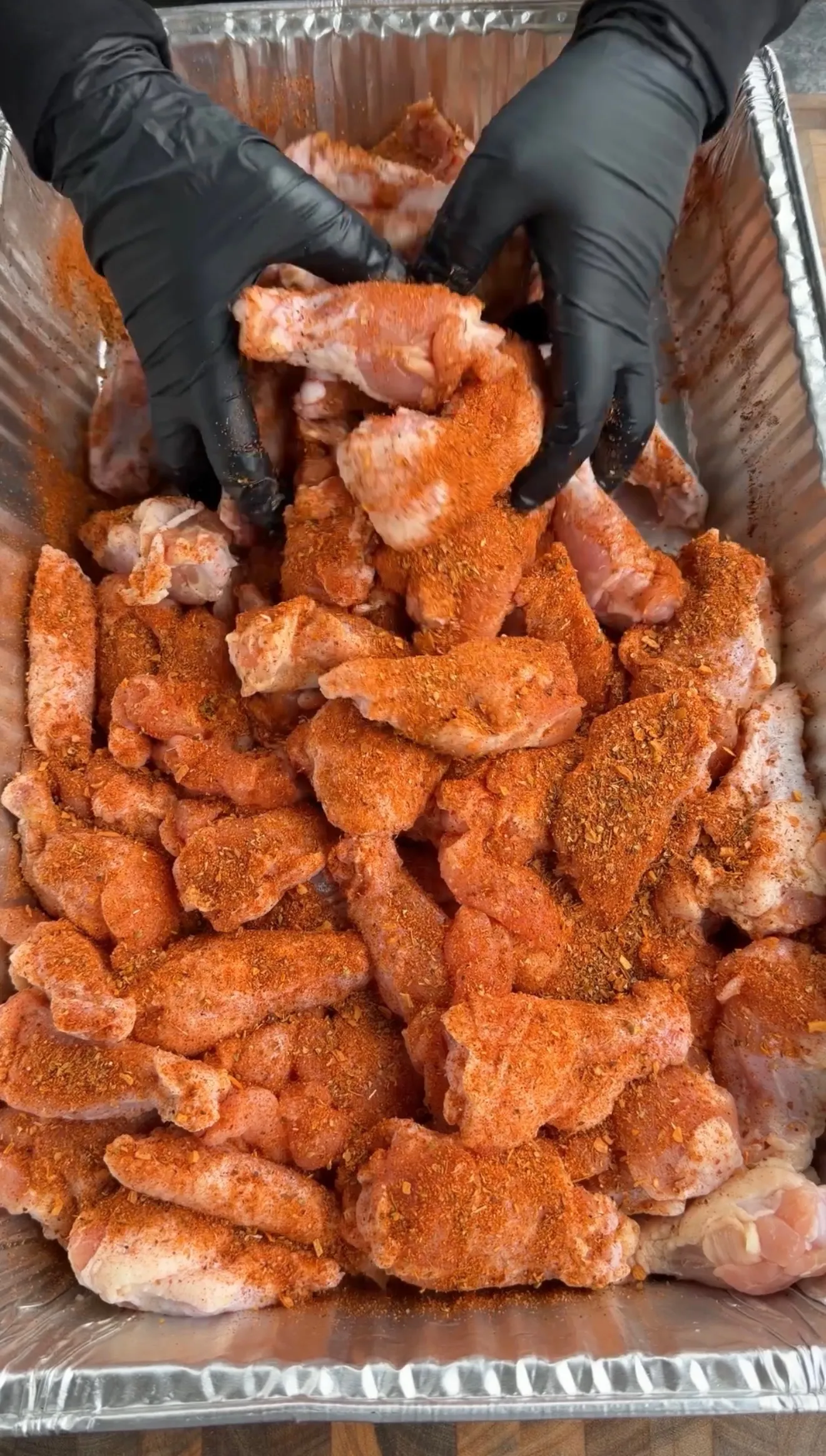
Pat 2 lbs of split chicken wings completely dry with paper towels, since excess moisture on the surface prevents the skin from crisping during the smoke. Toss the dry wings with 1 tablespoon of oil until evenly coated, then add 1 to 1.5 tablespoons of poultry seasoning (or your own mix of salt, pepper, garlic powder, and paprika) and toss again until the seasoning is distributed.
Finally, dust the seasoned wings with 1 tablespoon of cornstarch and toss one more time. The cornstarch goes on last because it needs to sit on the outermost layer of the wing where it can interact directly with the fat that renders out during the cook. Keep the coating thin and even, not caked on.
Step 2: 0 to 400 Smoke Method
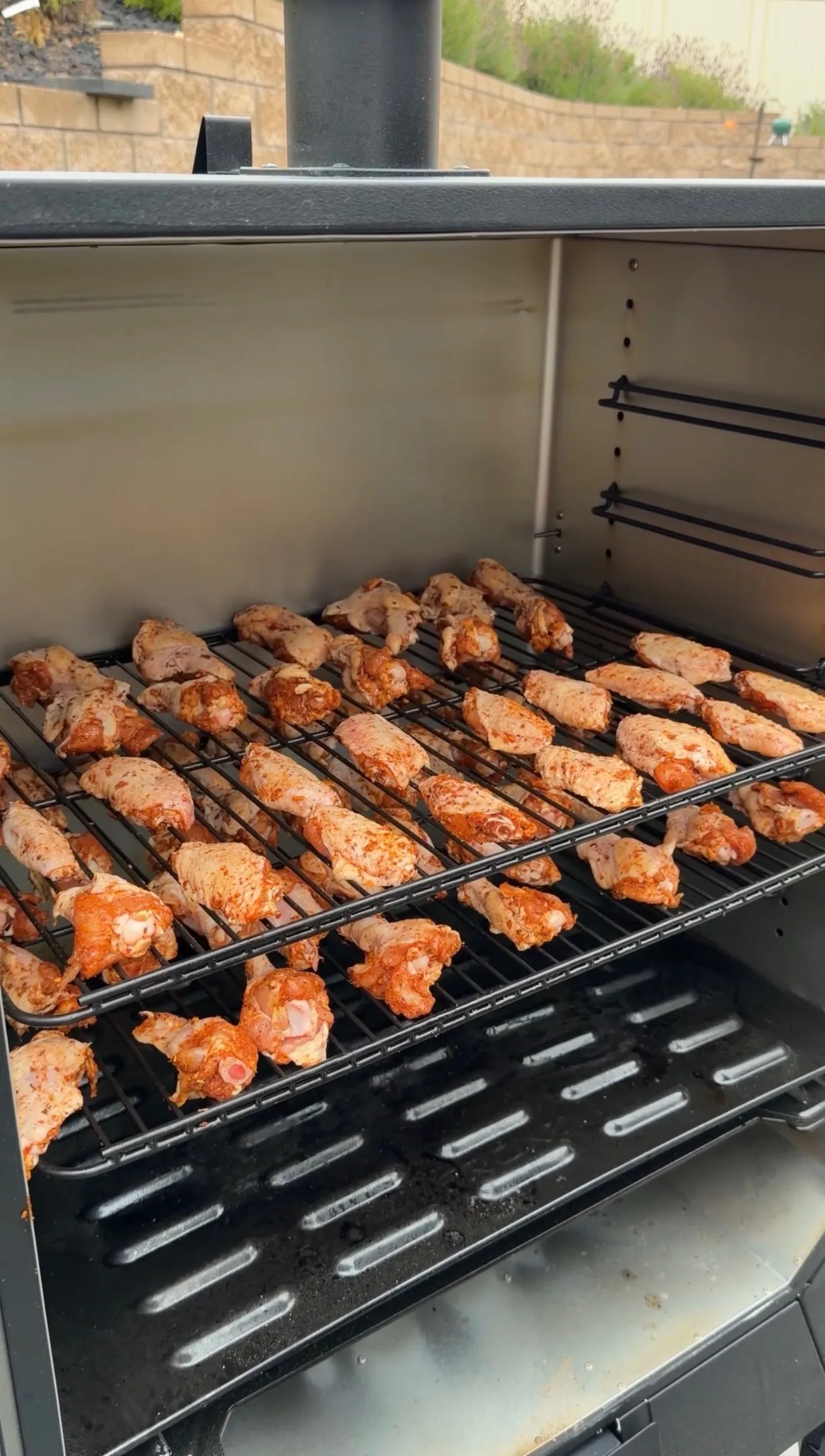
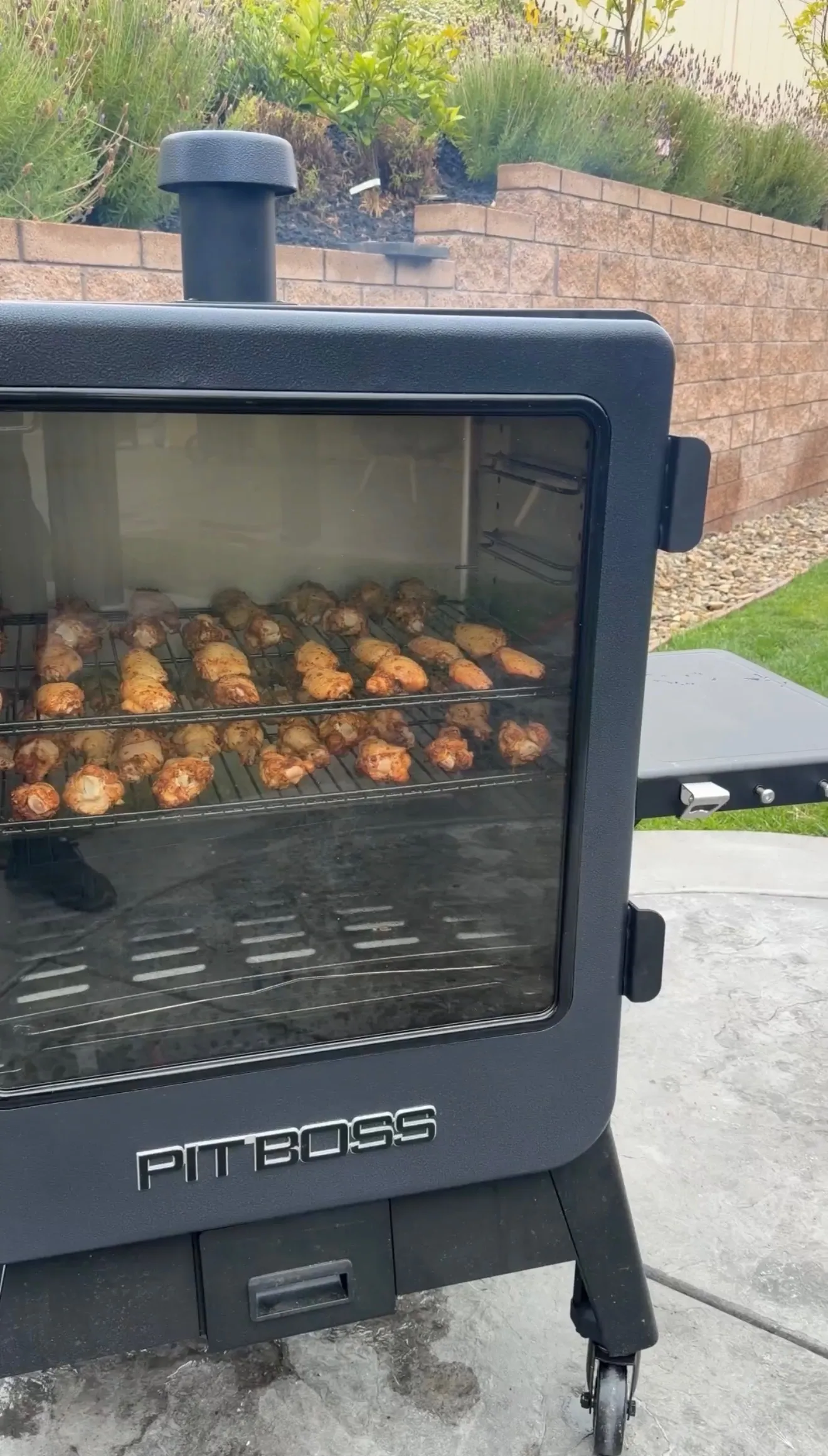
Place the seasoned wings on a cold smoker grate, then turn the smoker on and set it to 400°F. Let the wings ride the entire temperature curve from cold to 400°F without opening the lid. The gradual heat rise renders the subcutaneous fat slowly before the high heat arrives to crisp the exterior, which produces better results than dropping cold wings onto a fully preheated grate.
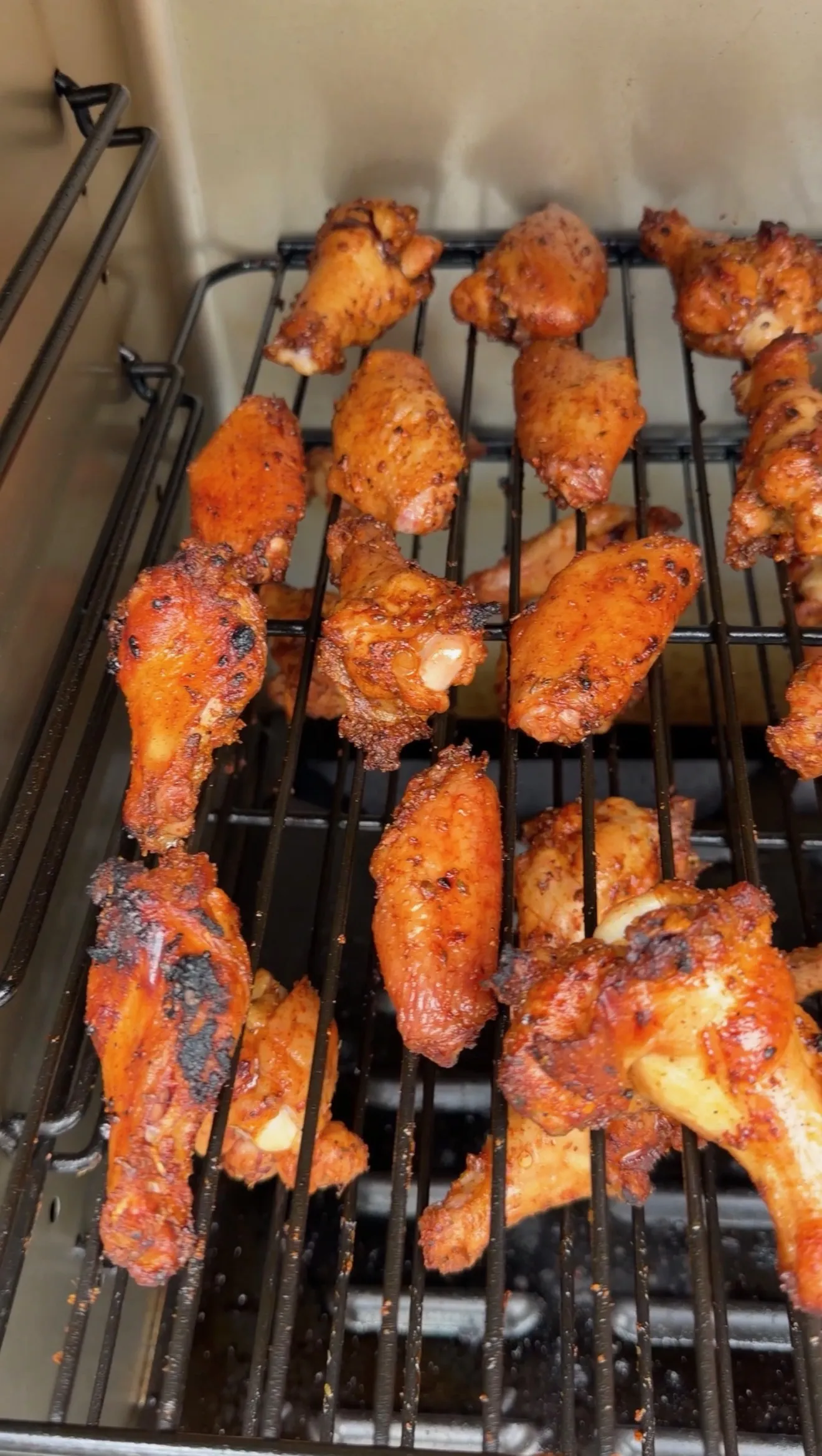
Flip the wings once at the halfway mark (roughly 20 to 25 minutes in) so both sides get direct heat exposure. Total cook time is 35 to 50 minutes. Pull the wings when the skin is visibly crispy and blistered and the internal temperature reads between 175 and 185°F.
Step 3: Make the Chili Crisp Honey Glaze
While the wings smoke, combine 1/3 cup honey, 2 tablespoons chili crisp, 1 tablespoon soy sauce, 1 tablespoon butter, 1 minced garlic clove, and 1 teaspoon rice vinegar (optional) in a small saucepan over low heat. Stir everything together until the butter melts and the glaze is warm and slightly thickened but still pourable. Keep the heat low so the honey does not thin out too much.
Step 4: Toss and Set
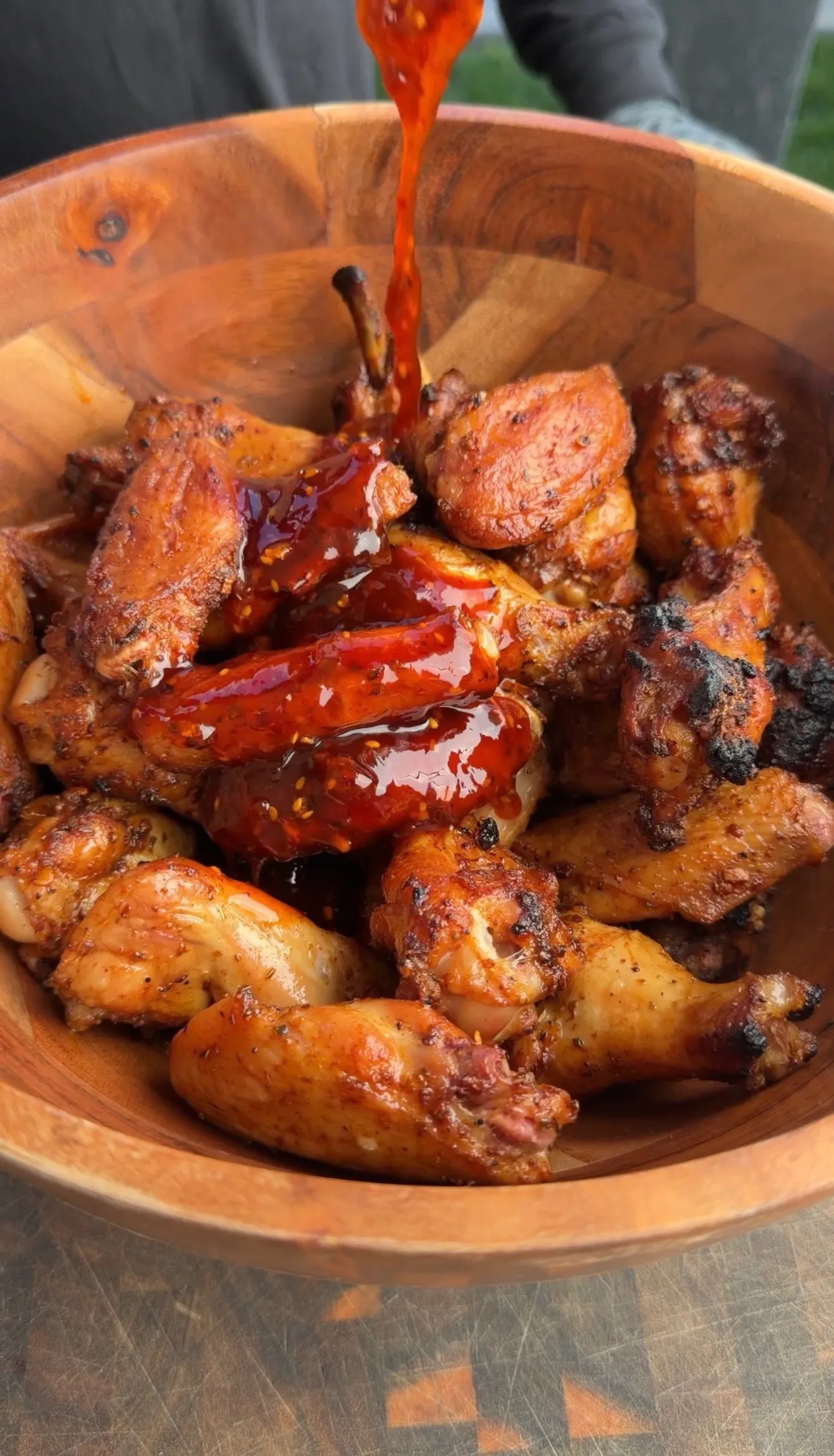
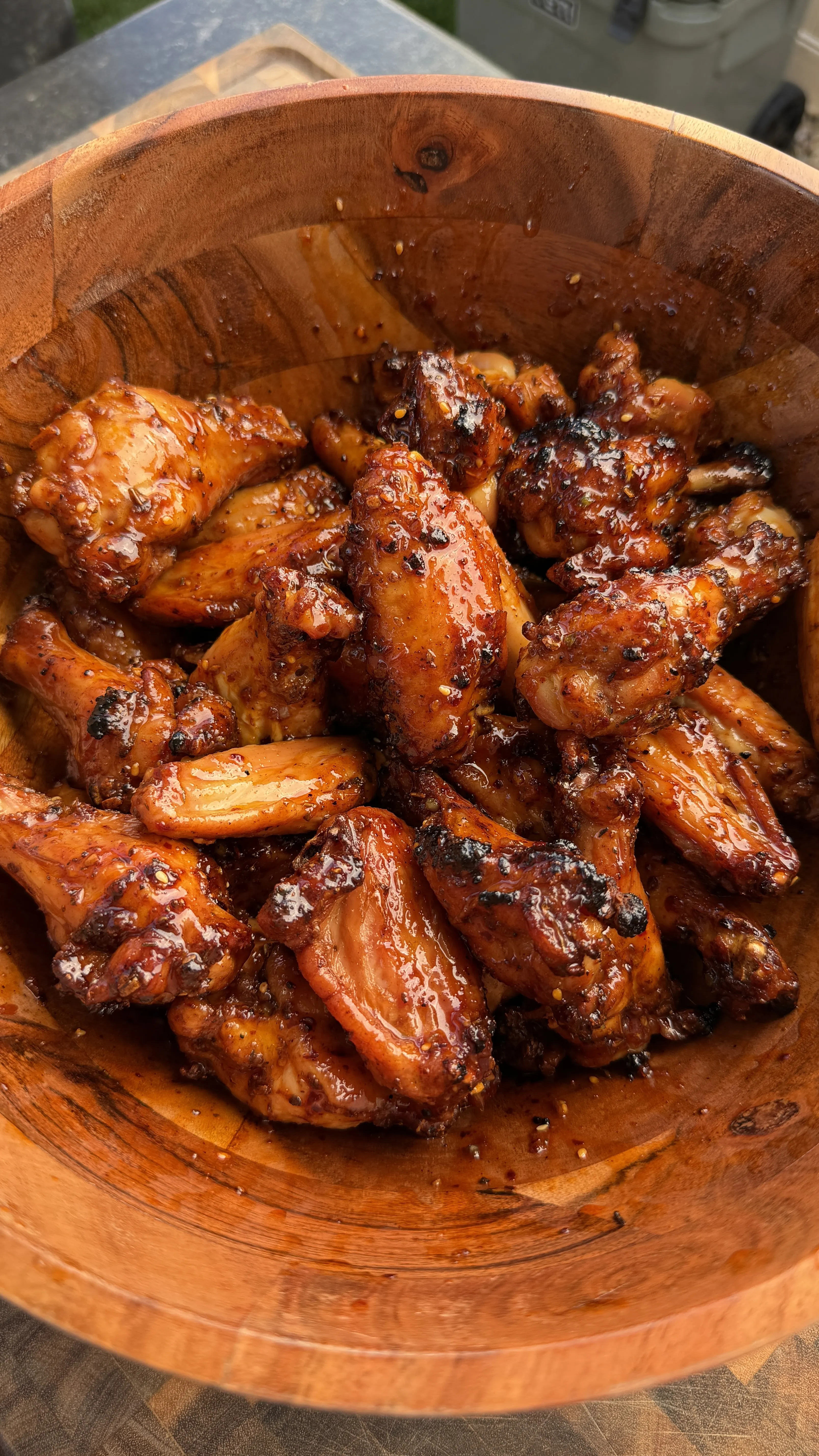
Pull the crispy wings off the smoker and toss them in a large bowl with the warm chili crisp honey glaze until every wing is fully coated. Then place the glazed wings back on the smoker for 2 to 3 minutes to lock the glaze in place. This final set step caramelizes the fresh honey glaze onto the already-crispy cornstarch crust, creating a sticky shell that stays put when you pick up a wing.
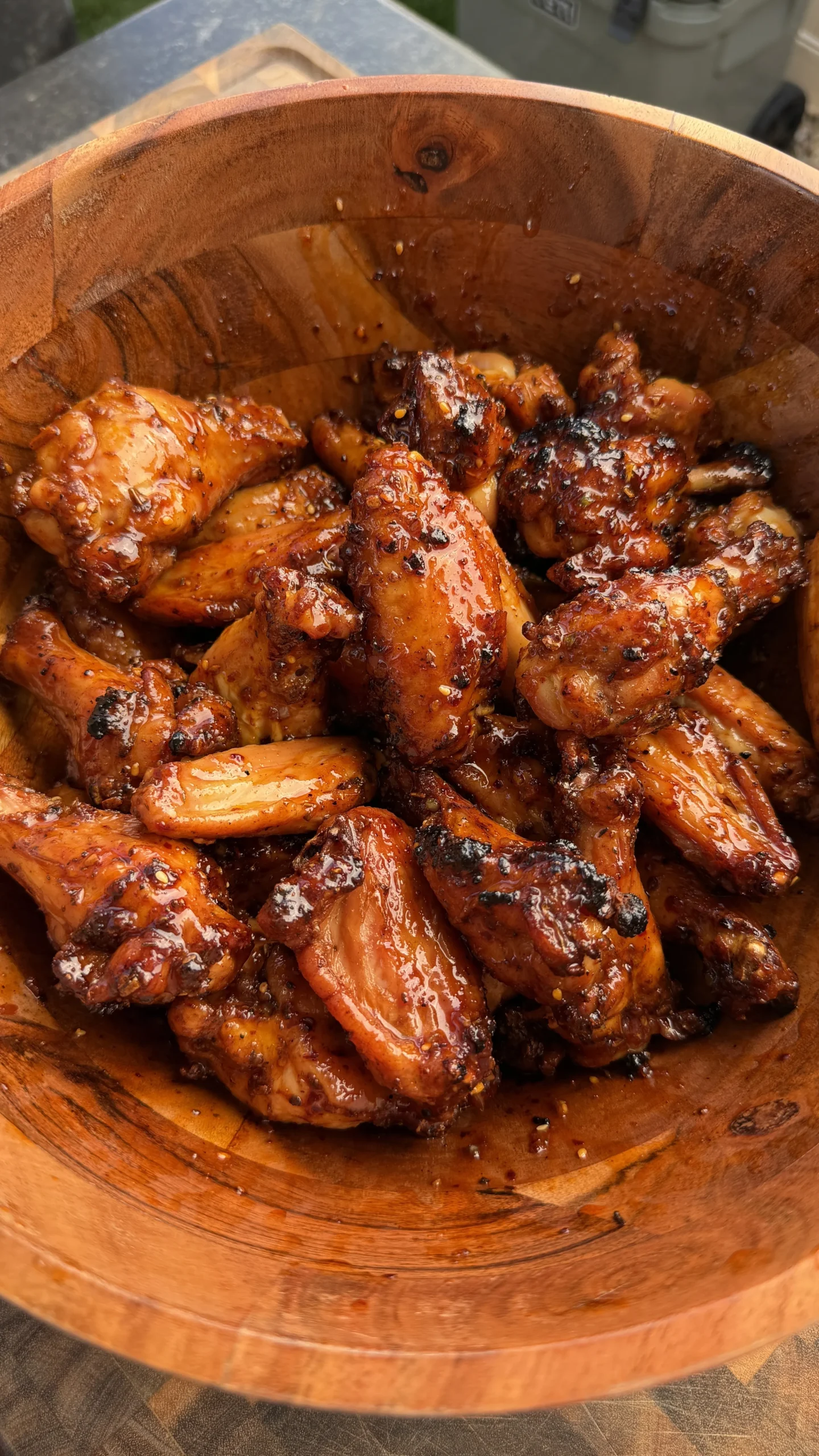
Fast Smoked Wings with Chili Crisp Honey Glaze
Ingredients
Equipment
Method
- Pat wings completely dry. Toss with oil, then add poultry seasoning and mix. Dust lightly with cornstarch last and toss again.
- Place wings on a cold smoker. Turn on and set to 400°F. Let wings ride the full temp curve. Flip once halfway. Cook 35-50 minutes total until skin is crispy and internal temp hits 175-185°F.
- Melt honey, chili crisp, soy sauce, butter, garlic, and rice vinegar together over low heat until warm and slightly thickened.
- Toss crispy wings in the glaze until fully coated. Place back on smoker for 2-3 minutes to lock the glaze in.
Notes
Tried this recipe?
Let us know how it was!Fast Smoked Wings FAQ
Common questions about the 0 to 400 method, cornstarch coating, and the chili crisp honey glaze.
Your Questions, Answered
The wings go on a cold smoker that then heats up to 400°F with the wings inside the whole time. As the smoker slowly climbs through the lower temperatures, the fat underneath the skin begins to render gradually before the high heat arrives. By the time the smoker hits 400°F, the fat is already partially rendered, so the skin crisps faster and more evenly than it would on a fully preheated grate.
A light dusting of cornstarch creates a thin, dry layer on the skin’s surface. As the fat renders during the cook, it migrates to the surface and combines with the cornstarch to create a crispy, crackling coating that behaves almost like a shallow fry. The fat comes from inside the wing itself, not from a pan of oil. Keep the coating thin and even for the best results.
Yes, baking powder also works for crispy skin. Baking powder raises the skin’s pH, which helps it brown and crisp faster. However, cornstarch produces a slightly different texture because it reacts with the rendered fat to form a thin crust. Both approaches work, and some people even mix equal parts of each for maximum crispiness.
While 165°F is the safe minimum, wings at that temp often have rubbery skin and slightly chewy meat near the joints. At 175 to 185°F, the fat is fully rendered, the connective tissue has broken down, and the skin is visibly crispy and blistered. The meat is tender and pulls cleanly from the bone without any chewy or rubbery spots.
Glaze and Serving
Chili crisp is an Asian condiment made from chili oil with toasted aromatics like garlic, scallions, and ginger mixed in. The finished product has crunchy, fried bits suspended in a spicy, savory oil. Lao Gan Ma is the most common brand and is available in the international aisle of most grocery stores. It adds smoky, garlicky heat with visible texture to the glaze.
The 2 to 3 minutes back on the smoker caramelizes the fresh honey glaze onto the already-crispy cornstarch crust, locking it in place so the coating does not slide off when you pick up a wing. If you skip this step, the glaze stays loose and wet, and it drips off instead of forming a sticky shell.
The 0 to 400 method and cornstarch coating work with any glaze or dry rub. Buffalo sauce, garlic parmesan, lemon pepper, or a Korean gochujang glaze all pair well with the crispy base. The key is tossing the glaze on after the wings are fully cooked and the skin is set, then putting them back on the heat briefly to lock the sauce in place.
Ready to Level Up?
Take your backyard cooking from good to legendary.
This is where I keep all my most-used smokers, knives, and favorite cooking tools.
Shop My Gear CollectionExplore More Recipes
Find more diverse flavors at CWFeats.com