Applewood smoked half chickens with Alabama white sauce start with 2 whole chickens spatchcocked and split through the breastbone into halves, seasoned generously with salt, black pepper, and garlic powder, then smoked at 300 to 325°F over applewood until the breast hits 165°F internal. The applewood delivers a mild, slightly sweet smoke that complements chicken without overpowering it the way hickory or mesquite can. The Alabama white sauce is a simple mix of mayonnaise, apple cider vinegar, Worcestershire sauce, salt, and black pepper that gets made ahead and chilled while the chicken smokes. You can serve the sauce on the side for dipping or fully drench each half and let it sit for 10 minutes while the chicken rests, which allows the tangy sauce to soak into the bark and create a creamy, peppery glaze across the surface. Serves 6 to 8.
Jump to Recipe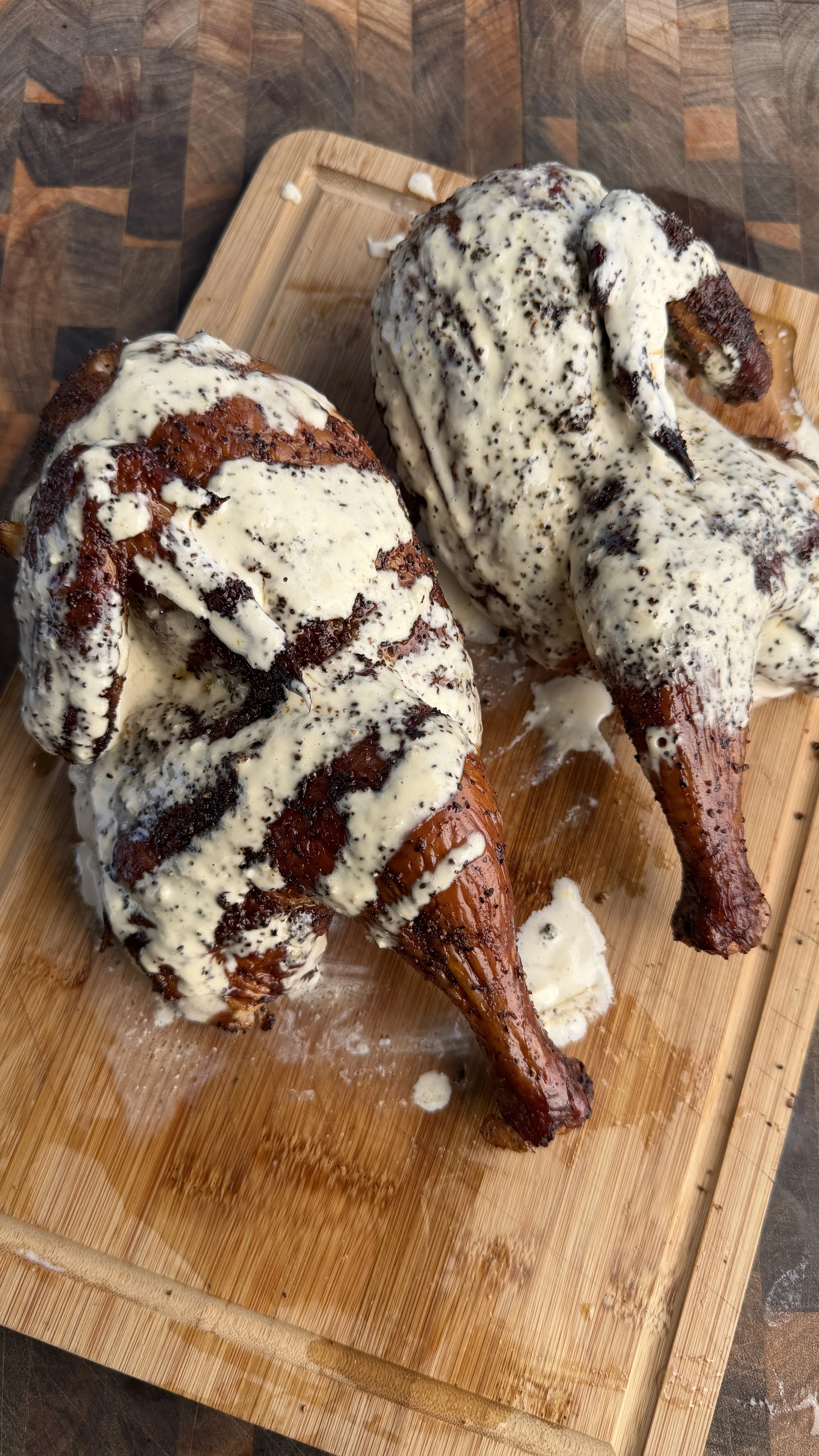
Why Spatchcocking and Splitting Produces Better Smoked Chicken
Removing the Backbone Opens the Bird
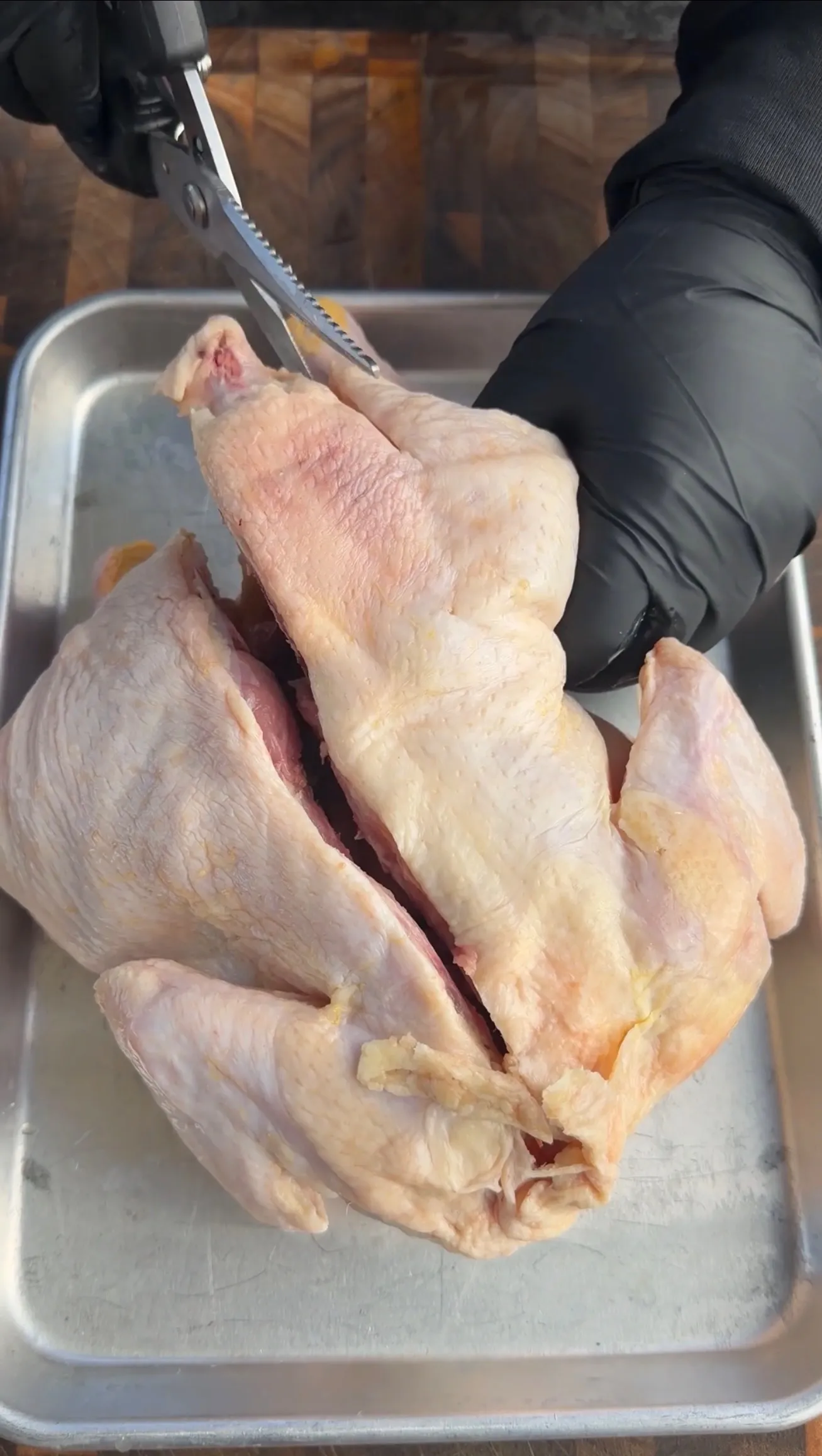
Spatchcocking means cutting out the backbone with kitchen shears and pressing the chicken flat. This exposes the entire surface of the bird to the smoke and heat evenly, which eliminates the problem of the breast overcooking while the thigh is still undercooked near the joint. A whole bird standing upright on the grate has thick, insulated areas at the joints that take significantly longer to cook than the thinner breast, and that uneven cooking leads to dry white meat by the time the dark meat reaches temperature.
Splitting Through the Breastbone for Two Halves
After removing the backbone, flip the chicken over and cut through the breastbone to split it into two symmetrical halves. Each half has a breast portion, a thigh, a drumstick, and a wing all connected, which makes for clean portioning when you serve. The halves lie flat on the grate with maximum surface area exposed to the smoke, and each half cooks independently so you can pull one earlier if it reaches temperature before the other.
Seasoning for Bark on Smoked Chicken
Pat Dry Before Anything Else
Patting the chicken completely dry with paper towels is the single most important step for developing bark on smoked chicken. Moisture on the skin surface creates steam during the cook, which prevents the Maillard reaction (the browning that creates bark) from happening. Dry skin plus direct contact with smoke and heat produces the dark, peppery, slightly crispy exterior that separates great smoked chicken from mediocre smoked chicken.
Go Heavy on the Black Pepper
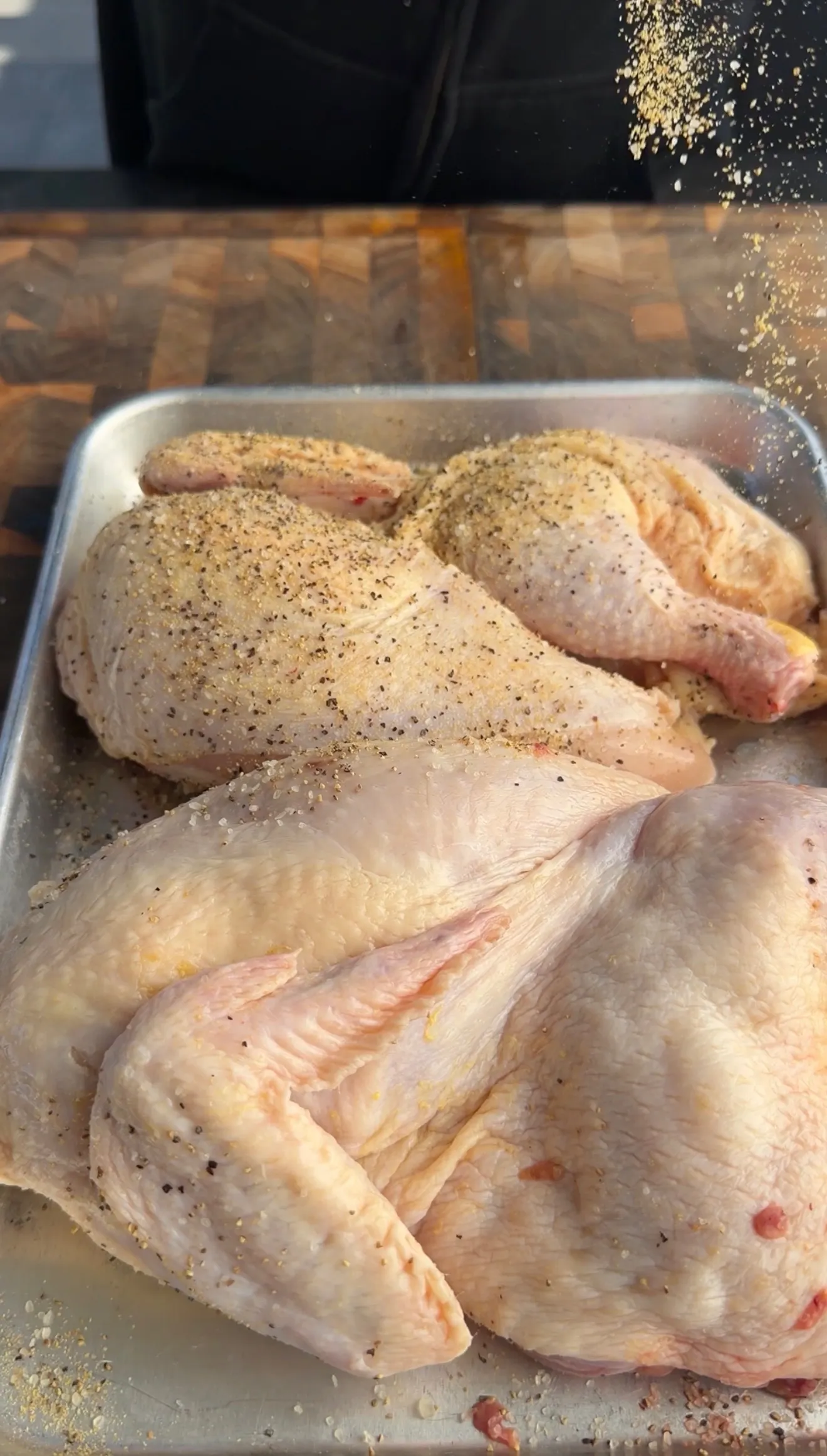
The seasoning for this recipe is deliberately simple: salt, black pepper, and garlic powder. The black pepper is the key to the bark because coarsely ground pepper creates a visible, textured crust on the surface that darkens and intensifies during the smoke. The pepper should be heavy enough that you can see a distinct coating on the skin before the chicken goes on the smoker. The salt draws moisture from the surface (which helps with crisping), and the garlic powder adds savory depth without competing with the applewood smoke or the Alabama white sauce.
Smoking at 300 to 325°F with Applewood
Why 300 to 325°F Instead of 225°F for Chicken
Unlike brisket or pork shoulder, chicken does not have thick connective tissue that requires hours of low-and-slow cooking to break down. Smoking chicken at 225°F often produces rubbery, flabby skin because the temperature is too low to render the subcutaneous fat and crisp the exterior. Cooking at 300 to 325°F renders the fat underneath the skin, crisps the exterior into a solid bark, and still gives the chicken enough time on the smoker to absorb a meaningful amount of smoke flavor.
Applewood for Mild, Sweet Smoke
Applewood produces a mild, slightly sweet smoke flavor that pairs well with poultry without overwhelming it. Heavier woods like hickory and mesquite can make chicken taste acrid and bitter because the delicate white meat absorbs smoke compounds more aggressively than fattier cuts like pork or beef. Applewood adds just enough smokiness that you taste the wood in every bite alongside the pepper and garlic, without the smoke dominating the flavor profile.
Probe the Thickest Part of the Breast
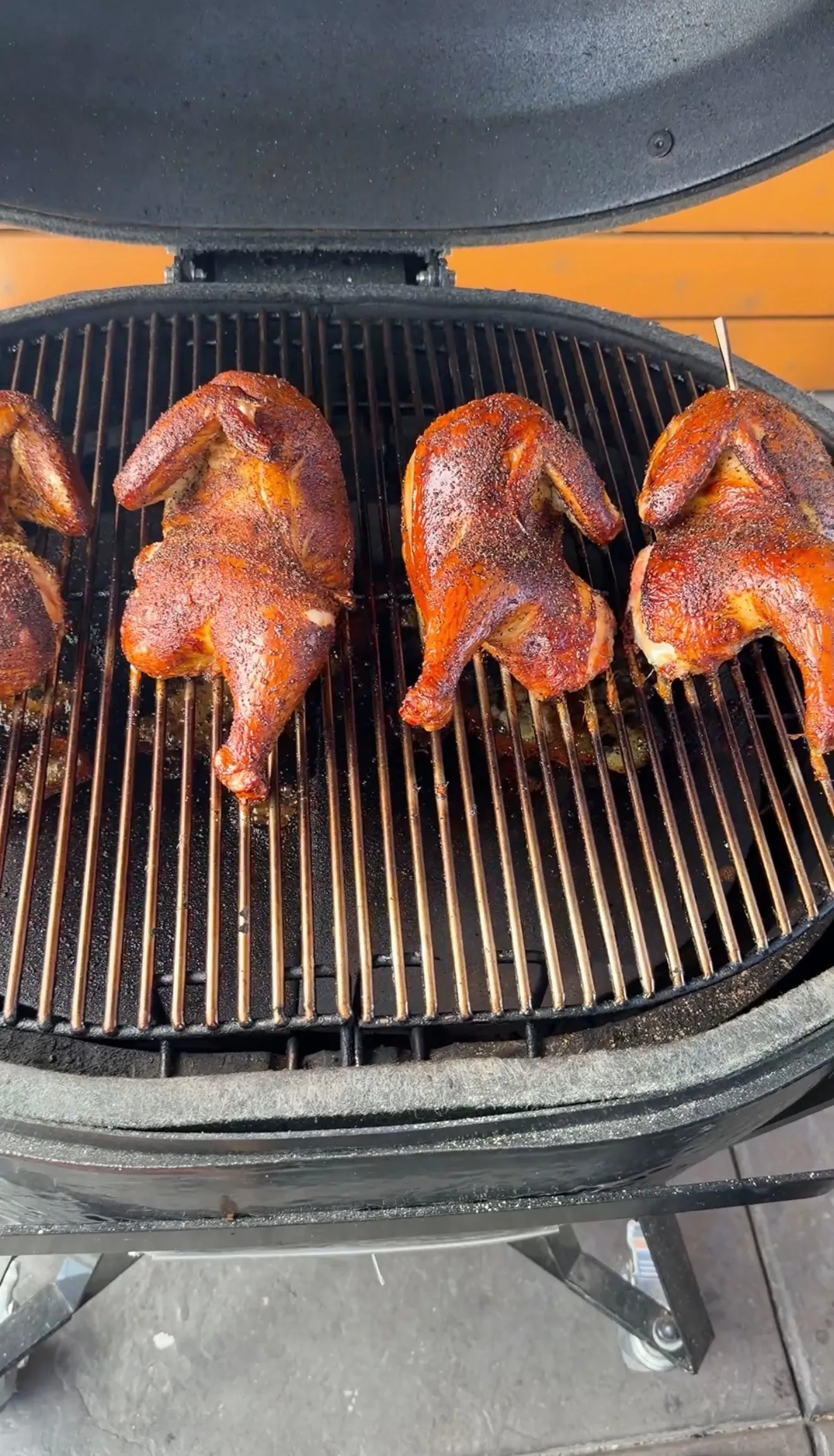
Insert your thermometer probe into the thickest part of the breast, which is the last area to reach temperature. Smoke the chicken halves until the breast reads 165°F internal. At 300 to 325°F, this takes roughly 1.5 to 2 hours depending on the size of your birds. The thigh will read higher than the breast (which is fine, since dark meat benefits from higher temps), and the skin should be golden brown with visible bark from the pepper seasoning.
Alabama White Sauce and How It Works on Smoked Chicken
The Origins and the Flavor Profile
Alabama white sauce was created at Big Bob Gibson’s Bar-B-Q in Decatur, Alabama, and it has been a staple of Northern Alabama barbecue for decades. The base is mayonnaise, which provides creamy richness, combined with apple cider vinegar for sharp acidity and Worcestershire sauce for savory, umami depth. Salt and black pepper round it out. The finished sauce is tangy, peppery, and creamy, with a thin enough consistency to coat the chicken evenly when you drench or brush it on.
Drenching vs. Serving on the Side
You have two options when the chicken comes off the smoker. The first is to serve the sauce on the side as a dipping sauce, which keeps the bark crispy and lets each person control how much sauce they want. The second is to fully drench each half in the white sauce and let it sit for 10 minutes while the chicken rests. The drench method allows the vinegar in the sauce to soak into the bark and create a creamy, tangy, peppery glaze across the entire surface. The heat from the resting chicken warms the sauce and helps it absorb into the skin and seasoning layer.
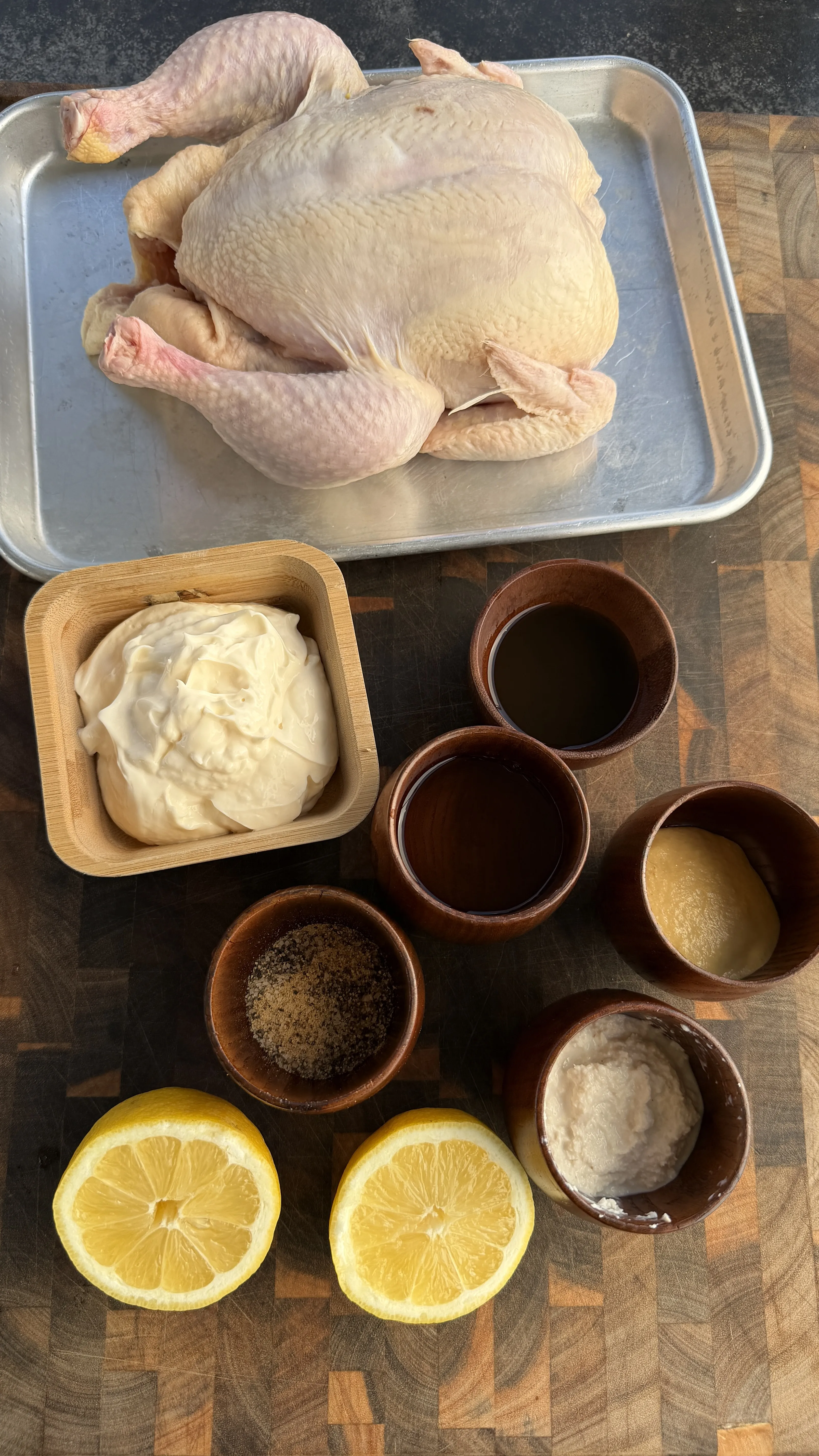
Step-by-Step: How to Make Applewood Smoked Half Chickens with Alabama White Sauce
Step 1: Spatchcock and Split the Chickens
Remove the chickens from packaging, pat them very dry with paper towels, and remove any gizzards from the cavity. Using strong kitchen shears, cut along both sides of the backbone and remove the spine completely. Flip the chicken over and press it flat so the breastbone cracks and the bird lies level. Then cut through the breastbone to split each chicken into two symmetrical halves. Repeat with the second chicken so you have 4 half chickens total.
Step 2: Season Generously
Season all four chicken halves generously on both sides with salt, black pepper (go heavy for the bark), and garlic powder. Make sure the pepper coating is visible on the skin surface. The pepper is what creates the dark, textured bark during the smoke, so do not be shy with it. The garlic powder adds savory depth underneath the pepper layer.
Step 3: Smoke at 300 to 325°F with Applewood
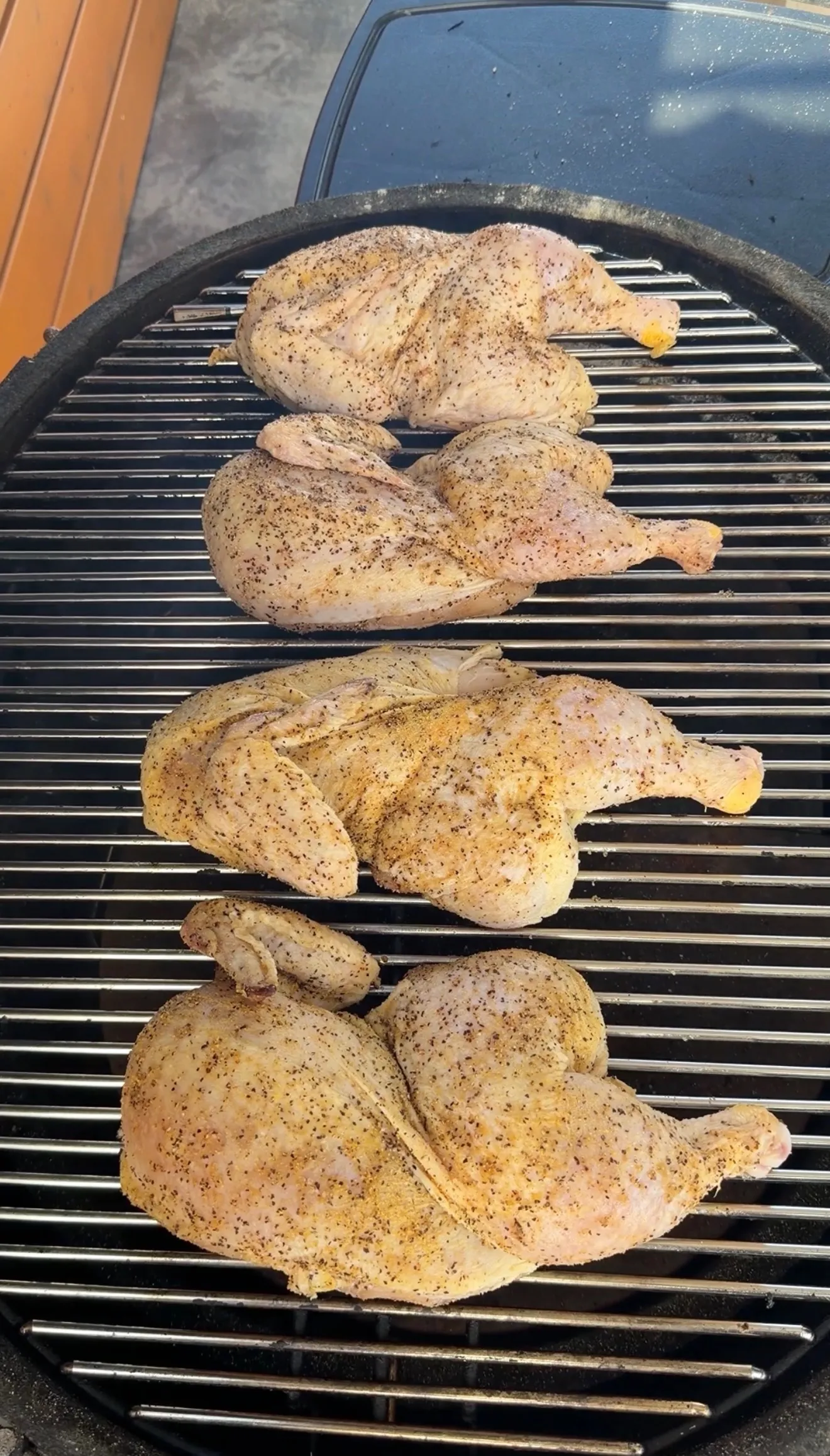
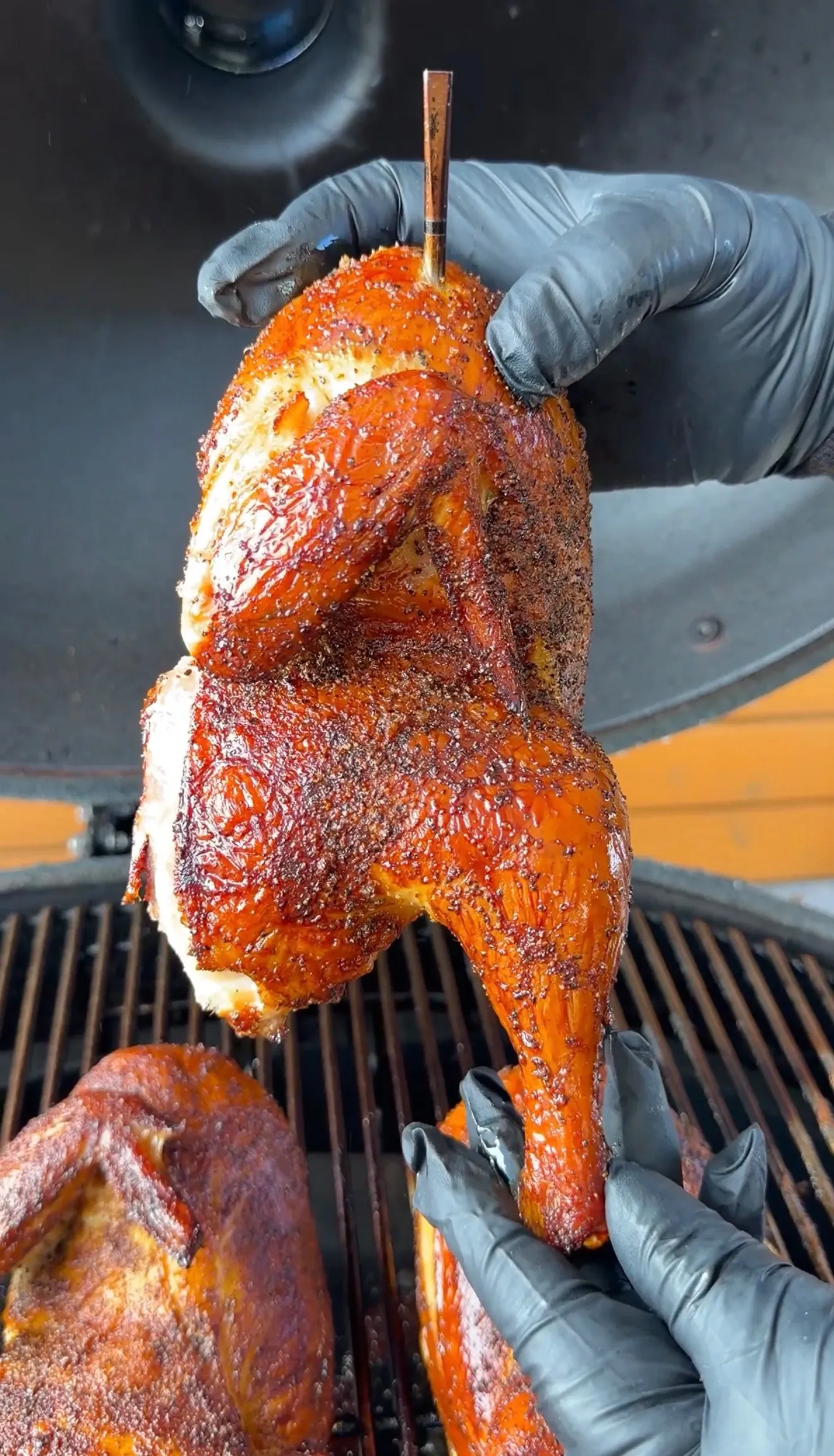
Set your smoker to 300 to 325°F and load it with applewood for a mild, slightly sweet smoke flavor. Place the chicken halves skin-side up on the grate, insert a thermometer probe into the thickest part of the breast, and close the lid. Smoke until the breast reaches 165°F internal, which takes roughly 1.5 to 2 hours depending on the size of the birds. The skin should be golden brown with a visible pepper bark, and the thigh will read higher than the breast since dark meat benefits from the extra temperature.
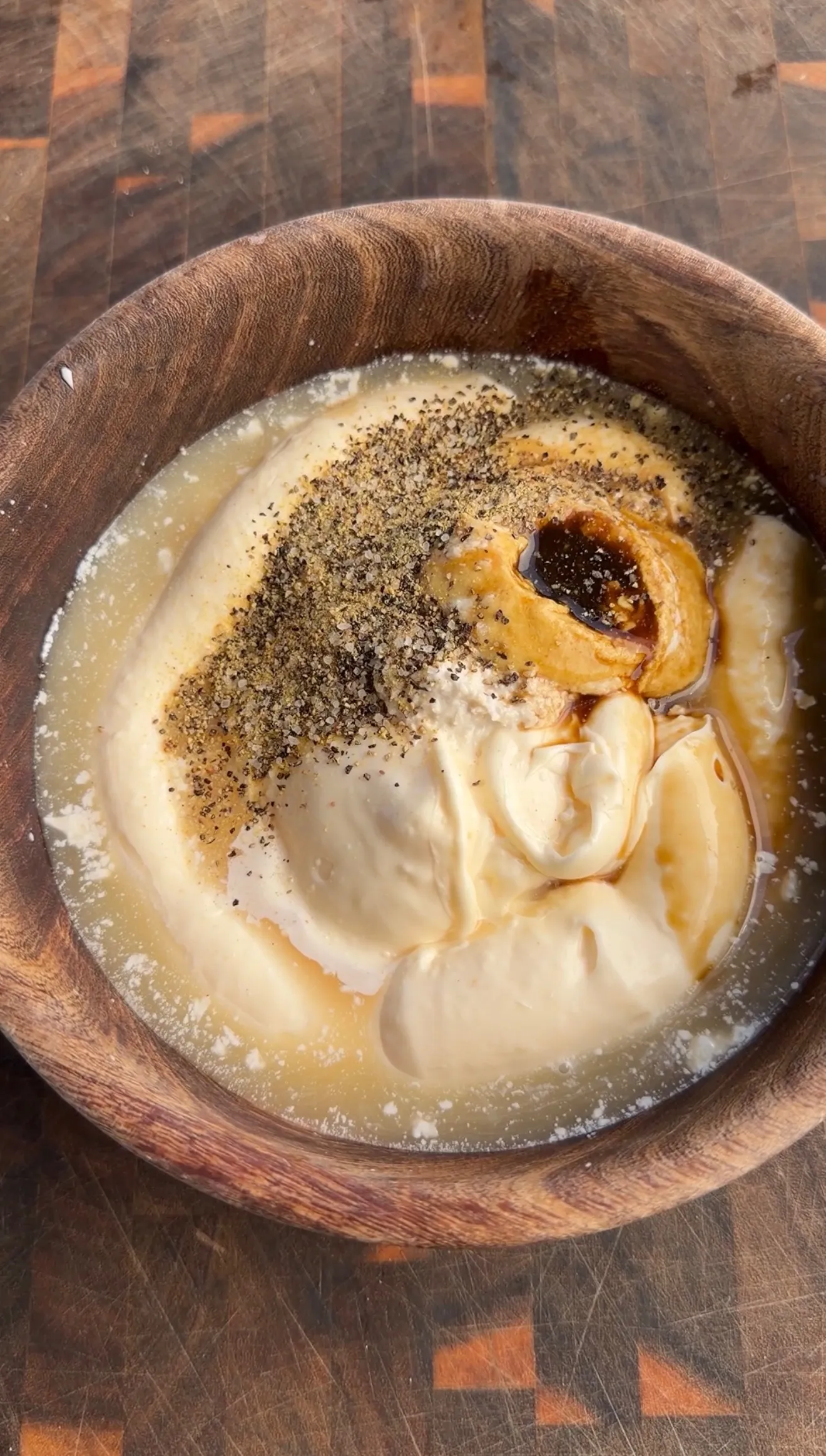
Step 4: Make the Alabama White Sauce
While the chicken smokes, combine 2 cups mayonnaise, 1/4 cup apple cider vinegar, 2 tablespoons Worcestershire sauce, and salt and pepper to taste in a bowl. Mix until smooth and uniform, then refrigerate until the chicken is ready. The cold rest allows the flavors to meld together, and the chilled sauce creates a temperature contrast when it hits the hot chicken.
Step 5: Rest, Drench, and Serve
Pull the chicken halves off the smoker and let them rest. You have two serving options. The first is to serve the Alabama white sauce on the side for dipping, which keeps the bark crispy. The second is to fully drench each half in the white sauce and let it sit for 10 minutes while the chicken rests. The drench method allows the vinegar to soak into the bark and the heat of the chicken warms the sauce into a creamy, tangy, peppery glaze across the entire surface. Slice and serve.
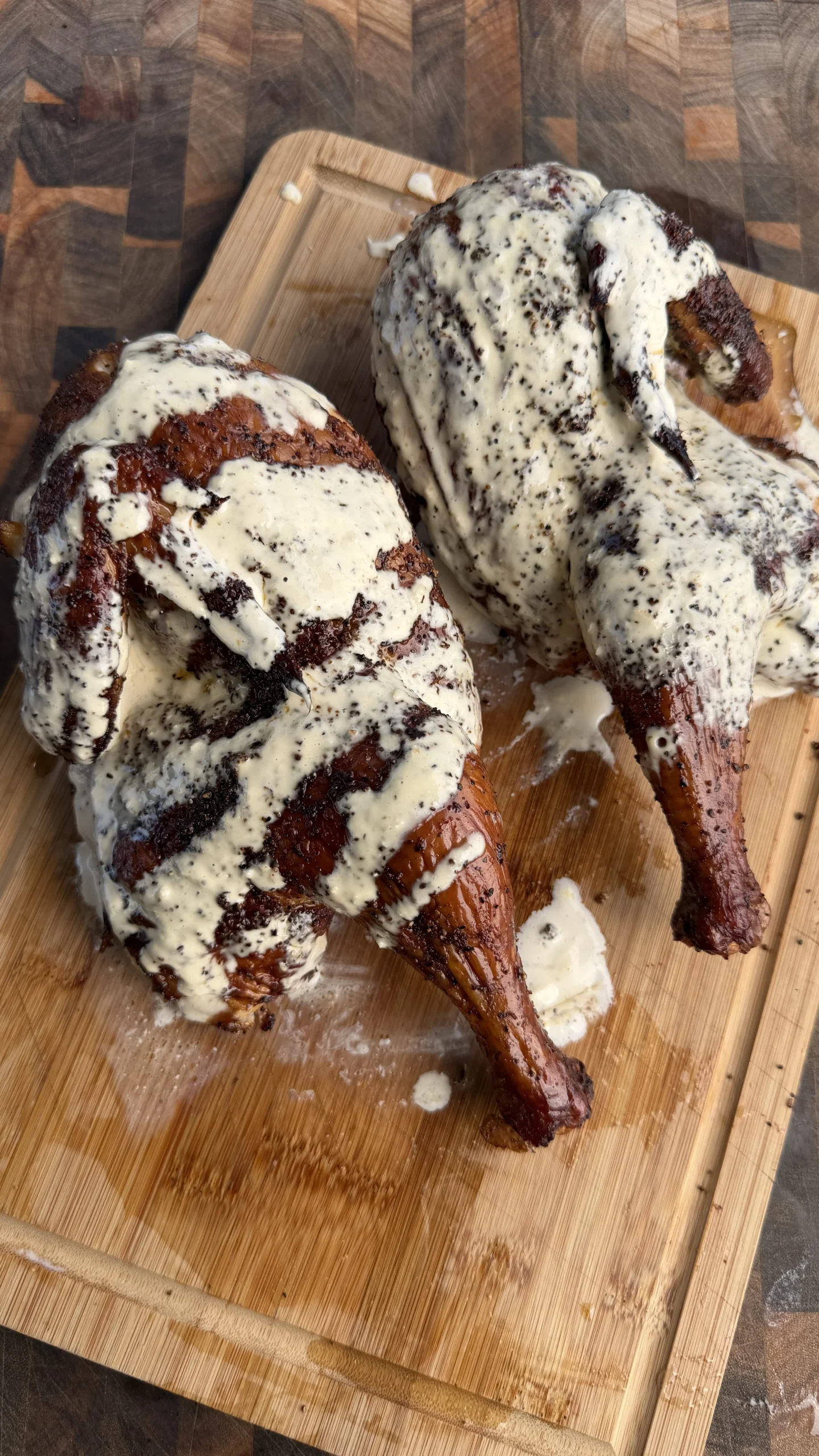
Applewood Smoked Half Chickens with Alabama White Sauce
Ingredients
Equipment
Method
- Remove backbone with kitchen shears. Press flat and split through the breastbone into halves. Pat very dry. Repeat with second chicken.
- Season all halves generously with salt, heavy black pepper, and garlic powder on both sides.
- Smoke at 300-325°F using applewood. Probe the thickest part of the breast. Smoke until breast reads 165°F internal, roughly 1.5-2 hours.
- Mix mayo, apple cider vinegar, Worcestershire sauce, salt, and pepper. Refrigerate until chicken is done.
- Rest chicken 10 minutes. Serve sauce on the side for dipping, or drench each half in sauce and let it sit during the rest before slicing.
Notes
Tried this recipe?
Let us know how it was!Applewood Smoked Half Chickens FAQ
Common questions about spatchcocking, smoke wood, temperature, and Alabama white sauce.
Your Questions, Answered
A whole bird standing upright on the grate has thick, insulated areas at the joints that cook much slower than the thinner breast. Spatchcocking and splitting exposes the entire surface evenly to smoke and heat, which eliminates the problem of dry breast meat by the time the dark meat reaches temperature. Each half also lies flat for maximum surface contact with the smoke.
Chicken does not have thick connective tissue like brisket or pork shoulder, so it does not benefit from hours of low-and-slow cooking. Smoking at 225°F often produces rubbery, flabby skin because the temperature is too low to render the subcutaneous fat and crisp the exterior. The 300 to 325°F range renders the fat, crisps the skin into a solid bark, and still gives the chicken enough time to absorb meaningful smoke flavor.
Yes, but stick to mild fruit woods like cherry or peach. These produce a light, slightly sweet smoke similar to applewood that complements chicken without overpowering it. Heavier woods like hickory or mesquite can make chicken taste acrid and bitter because the delicate white meat absorbs smoke compounds more aggressively than fattier cuts like pork or beef.
The coarsely ground black pepper creates the visible, textured bark on the surface of the smoked chicken. The pepper darkens and intensifies during the smoke, forming a crust that adds both flavor and satisfying texture to every bite. Without enough pepper, the surface stays smooth and pale and does not develop the same depth of bark that makes smoked chicken stand out.
White Sauce and Serving
Alabama white sauce is a mayonnaise-based barbecue sauce that originated at Big Bob Gibson’s Bar-B-Q in Decatur, Alabama. It combines mayo with apple cider vinegar, Worcestershire sauce, salt, and black pepper. The result is a tangy, creamy, peppery sauce that contrasts with smoky, rich meat. It has been a staple of Northern Alabama barbecue for decades and pairs well with smoked chicken, pork, and turkey.
Both work, and it comes down to preference. Serving on the side keeps the bark crispy and lets each person control how much sauce they use. Drenching the halves and letting the sauce sit for 10 minutes during the rest allows the vinegar to soak into the bark, creating a creamy, tangy glaze across the entire surface. The heat from the chicken warms the sauce and helps it absorb into the seasoning layer.
The sauce keeps in an airtight container in the refrigerator for up to 2 weeks. The flavors actually improve after sitting overnight as the vinegar and Worcestershire meld into the mayo base. Give it a stir before serving since the liquid components can settle. The sauce also works well on smoked pork, turkey, grilled fish, or as a dipping sauce for fried chicken.
Ready to Level Up?
Take your backyard cooking from good to legendary.
This is where I keep all my most-used smokers, knives, and favorite cooking tools.
Shop My Gear CollectionExplore More Recipes
Find more diverse flavors at CWFeats.com