
Cast Iron Steak, Eggs and Roasted Potatoes
Cast Iron Steak, Eggs and Roasted Potatoes with Danos Seasoning (Ultimate Breakfast Skillet)
Ingredients
For the Skillet:
- 2 (8oz) ribeye steaks, cut into ½-inch pieces
- 1 lb small golden potatoes, halved
- 3 large eggs
- Danos Original seasoning (use code FIRE15)
For Finishing:
- Fresh chives, chopped
- Butter Dust by Danos
- 2 tablespoons olive oil or vegetable oil
See How It’s Done
Create the ultimate breakfast skillet with this hearty combination of perfectly seasoned ribeye steak pieces, golden roasted potatoes, and farm-fresh eggs. This cast iron masterpiece delivers restaurant-quality flavors using Danos Original seasoning and their signature Butter Dust for finishing. The key lies in proper sequencing – roasting the potatoes first, then searing the steak pieces, and finally adding eggs for a complete one-pan meal. Each component retains its individual character while building layers of flavor throughout the cooking process. Perfect for weekend brunches, special occasions, or any time you want to start the day with something extraordinary.
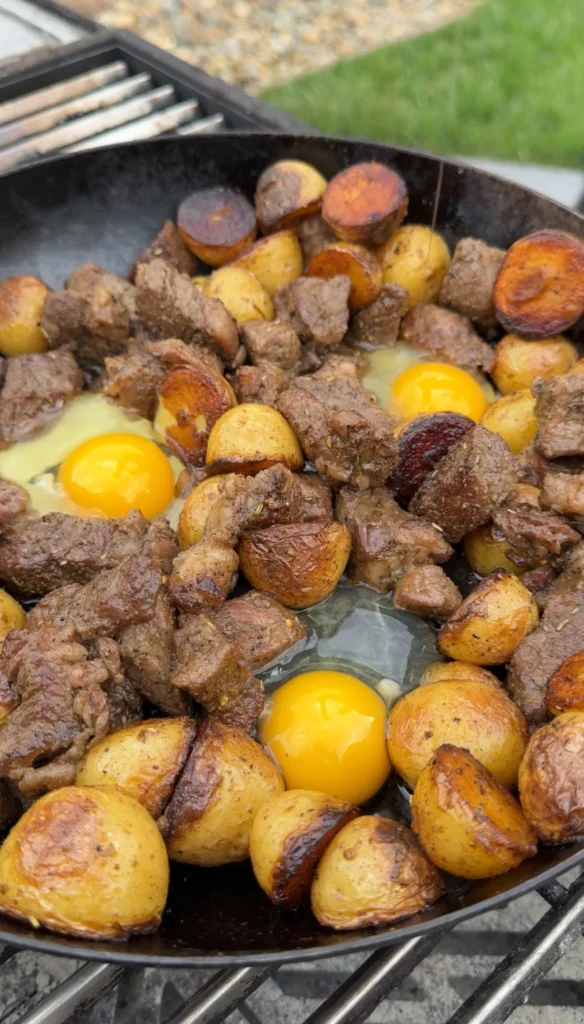
This breakfast skillet represents the pinnacle of hearty morning cooking. The combination transforms simple ingredients into a satisfying meal that fuels your day with quality protein, complex carbohydrates, and essential nutrients. The ribeye provides complete proteins and B-vitamins, while the potatoes offer sustained energy and potassium. Fresh eggs contribute additional protein and healthy fats that help with nutrient absorption. The cast iron cooking method enhances flavors while creating appealing textures that make every bite memorable.
Cast Iron Cooking Techniques and Temperature Management
Cast iron skillets provide superior heat retention and even cooking for this multi-component dish. Preheat the skillet gradually over medium heat to prevent warping and ensure even temperature distribution. The heavy bottom creates perfect searing conditions for the steak pieces while maintaining consistent heat for the roasted potatoes. Start with the longest-cooking component first – the potatoes need time to develop crispy exteriors and fluffy interiors. The residual heat from cooking the potatoes creates ideal conditions for searing the steak pieces. Cast iron’s heat retention allows you to create wells in the skillet for the eggs without losing temperature.
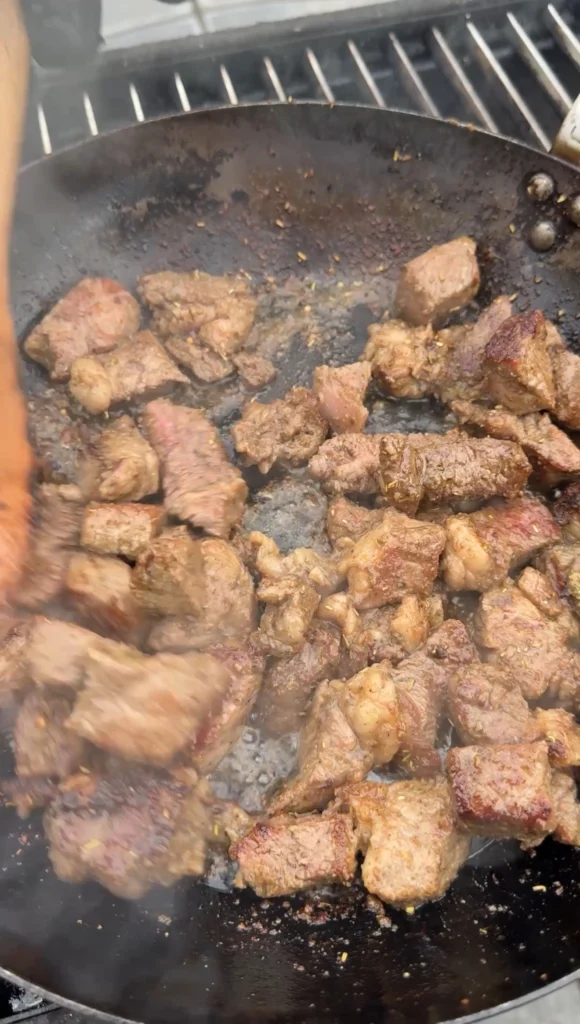
Season your cast iron properly and maintain it well for the best non-stick properties and flavor development. The natural seasoning layer that builds up over time enhances flavor while preventing sticking. Cast iron also provides superior browning compared to non-stick pans because it can handle higher temperatures without damage. The thermal mass of cast iron means it won’t lose heat when you add cold ingredients, maintaining consistent cooking temperatures throughout the process.
The skillet’s ability to go from stovetop to oven makes it incredibly versatile for finishing dishes. This particular recipe benefits from the even heat distribution that prevents hot spots and ensures uniform cooking across all components. The iron material also adds trace amounts of iron to your food, providing a small nutritional benefit. Proper care involves seasoning after each use and storing in a dry environment to prevent rust formation.
Ribeye Selection and Cutting Methods for Even Cooking
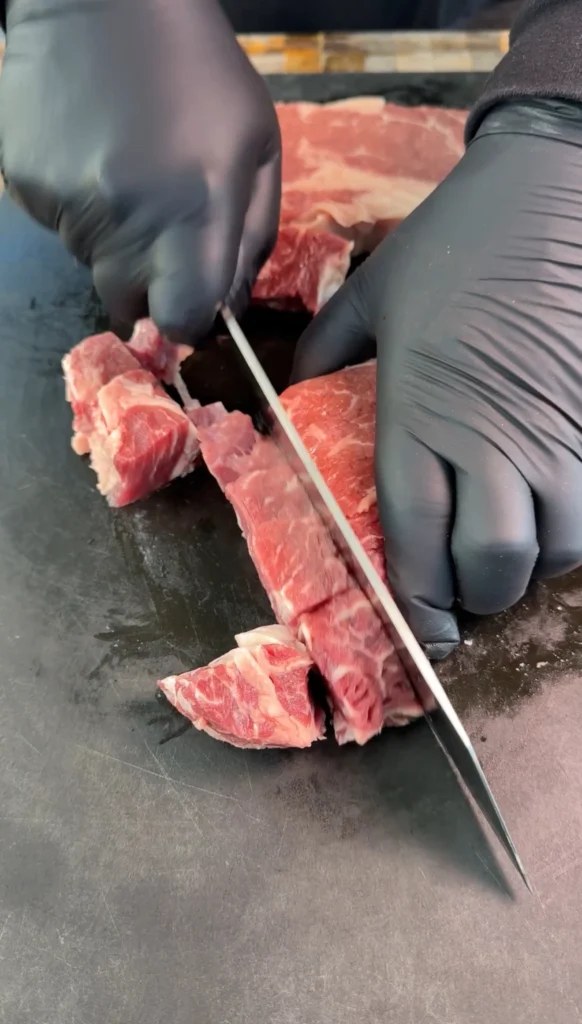
Choose well-marbled ribeye steaks with good fat distribution for maximum flavor and tenderness. The marbling ensures each piece stays juicy during the high-heat searing process. Look for steaks with bright red color and white fat marbling throughout the meat. Avoid steaks with excessive external fat caps, as these won’t render properly in small pieces. The grade of beef matters significantly – Prime grade offers the best marbling, while Choice grade provides good flavor at a more reasonable price point.
Cut the steaks into uniform ½-inch pieces to ensure even cooking throughout. Work against the grain when possible to maximize tenderness in each bite. Use a sharp knife to create clean cuts that prevent ragged edges. Slightly larger pieces work better than smaller ones, as they retain more juice and develop better crusts. Remove any large pieces of gristle or excessive fat during the cutting process. The uniform size ensures that all pieces reach the desired doneness at the same time.
Allow the cut steak pieces to come to room temperature before cooking for more even results. This prevents the exterior from overcooking while the interior remains cold. Cold meat hitting hot cast iron can cause uneven cooking and tough textures. Room temperature meat sears more evenly and develops better crusts. The Danos Original seasoning penetrates the meat better when applied 10-15 minutes before cooking, creating deeper flavor throughout each piece.
Consider the thickness of your cuts based on your preferred doneness. Thicker pieces allow for more control over internal temperature, while thinner pieces cook faster but require more careful timing. The ½-inch thickness provides the ideal balance between proper searing and controlled internal cooking. This size also creates appealing bite-sized pieces that work well in a breakfast skillet format.
Potato Preparation and Egg Timing for Perfect Results
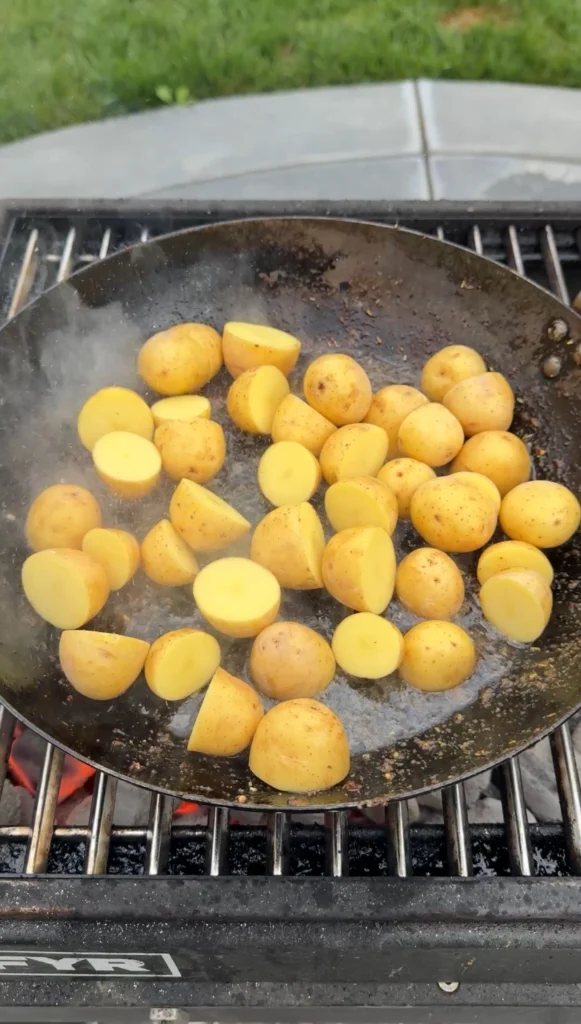
Small golden potatoes are ideal for this dish because they cook evenly and develop crispy exteriors. Their natural sweetness complements the savory steak and eggs beautifully. Choose potatoes that are similar in size for uniform cooking results. Avoid potatoes with green spots or excessive eyes, as these can create bitter flavors. The thin skin of golden potatoes becomes deliciously crispy when properly cooked and doesn’t require peeling.
Cut them in half to create flat surfaces that caramelize beautifully in the cast iron skillet. The flat surfaces maximize contact with the hot pan, creating better browning. Start the potatoes first, as they require the most cooking time to achieve the perfect texture balance. Season them generously with Danos Original seasoning before cooking for maximum flavor penetration. The seasoning should be applied when the potatoes are slightly damp so it adheres properly.
The key to perfect potatoes lies in patience during the initial browning phase. Don’t move them too early, as this prevents proper caramelization. The potatoes should release easily from the pan when properly browned. If they stick, they need more time to develop the crust. Properly cooked potatoes have crispy exteriors and fluffy, tender interiors that provide textural contrast to the other components.
Create small wells in the skillet for the eggs during the final cooking stage. The eggs should be added when the steak is nearly finished, allowing them to cook gently in the residual heat. Fresh eggs hold together better and create more attractive presentations than older eggs. The whites should set completely while the yolks remain creamy for the best texture contrast. Room temperature eggs cook more evenly than cold eggs straight from the refrigerator.
Consider the size of your eggs when planning timing. Large eggs take longer to cook than medium eggs, so adjust accordingly. The wells should be just deep enough to contain the eggs without having them spread too thin. If you prefer firmer yolks, cover the skillet briefly to create steam that helps cook the tops of the eggs more quickly.
Ingredients
For the Skillet:
- 2 (8oz) ribeye steaks, cut into ½-inch pieces
- 1 lb small golden potatoes, halved
- 3 large eggs
- Danos Original seasoning (use code FIRE15)
For Finishing:
- Fresh chives, chopped for garnish
- Butter Dust by Danos
- 2 tablespoons olive oil or vegetable oil
Instructions
Step 1: Prepare and Season All Components
Remove the ribeye steaks from refrigeration and cut them into uniform ½-inch pieces using a sharp knife. Place the cut steak pieces in a bowl and season generously with Danos Original seasoning. The seasoning should coat each piece evenly for maximum flavor penetration. Wash and halve the small golden potatoes, creating flat surfaces for better browning. Pat the potato halves dry with paper towels to remove excess moisture, which helps achieve better caramelization. Season the potato halves with additional Danos Original seasoning, ensuring even coverage on all surfaces.
Allow both the steak and potatoes to rest at room temperature for 10-15 minutes while you preheat your cast iron skillet. This brings them closer to room temperature for more even cooking. During this resting period, the seasoning begins to penetrate the meat and potatoes, developing deeper flavors. Use this time to crack your eggs into separate small bowls for easier handling later. Room temperature ingredients cook more evenly than cold ones, preventing tough exteriors with cold centers.
Step 2: Preheat Cast Iron Skillet
Place your cast iron skillet over medium heat and allow it to preheat gradually for 5-7 minutes. Proper preheating ensures even heat distribution and prevents hot spots. The gradual heating prevents thermal shock that can warp the pan or create uneven cooking surfaces. The skillet is ready when a few drops of water sizzle and evaporate immediately upon contact. This water test indicates the proper surface temperature for optimal cooking results.
Add the olive oil and swirl to coat the bottom evenly. The oil should shimmer and move freely across the surface, indicating the proper temperature for cooking. Use enough oil to coat the pan but not so much that the food swims in it. The oil creates a barrier between the food and pan while adding flavor and helping with browning. High-quality oil with a high smoke point works best for this high-heat cooking method.
Step 3: Roast the Potatoes First
Add the seasoned potato halves to the hot skillet, placing them cut-side down for maximum browning. Arrange them in a single layer without overcrowding, which would cause steaming instead of browning. Cook without moving for 8-10 minutes, allowing the flat surfaces to develop golden-brown crusts. The potatoes should release easily from the skillet when properly browned. Resist the temptation to move them early, as this prevents proper caramelization.
The browning process creates complex flavors through the Maillard reaction. Listen for the gentle sizzling that indicates proper heat levels. Turn them to cook on the other sides for an additional 5-7 minutes until tender throughout and golden on multiple surfaces. Test doneness by piercing with a fork – they should be tender but not falling apart. Push the cooked potatoes to one side of the skillet to make room for the steak, keeping them warm in the retained heat.
Step 4: Sear the Seasoned Steak Pieces
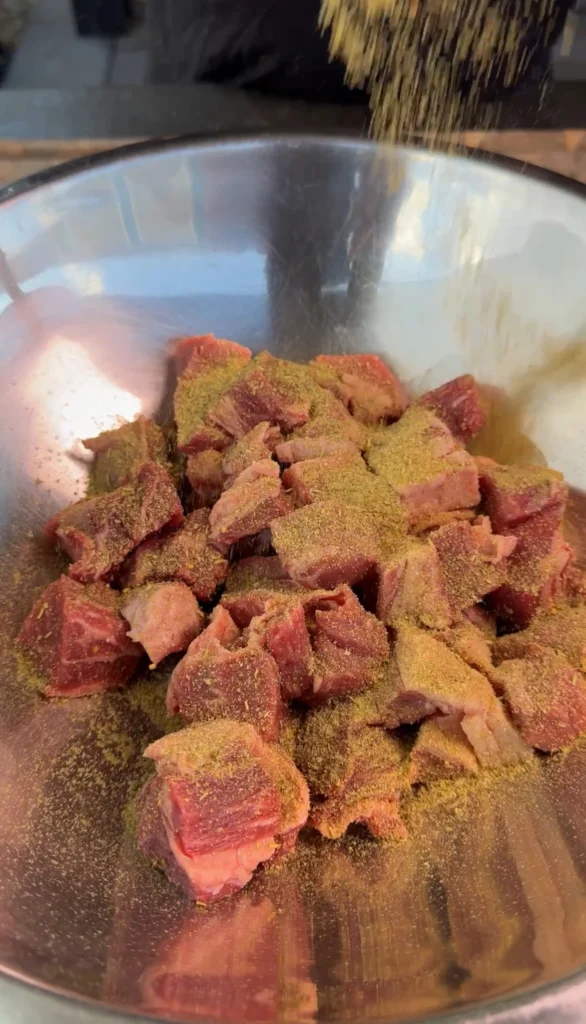
Add the seasoned ribeye pieces to the empty side of the hot skillet. Arrange them in a single layer without overcrowding to ensure proper searing. The pieces should sizzle immediately when they hit the pan – if they don’t, the pan isn’t hot enough. Cook for 2-3 minutes without moving to develop proper searing and caramelization. The high heat creates the Maillard reaction that develops complex flavors and appealing colors.
Turn the pieces using tongs or a spatula and continue cooking for another 2-3 minutes for medium-rare doneness, or longer if you prefer more well-done steak. The internal temperature should reach 130°F for medium-rare or 140°F for medium. Don’t overcook the small pieces, as they can become tough quickly. The exterior should be well-browned while the interior remains juicy. Season with additional Danos Original if desired during cooking.
Step 5: Create Wells for the Eggs
Using a spoon or spatula, create three small wells in the skillet by pushing the steak and potatoes aside. These wells should be just deep enough to contain the eggs without allowing them to spread too thin. The cast iron’s retained heat will cook the eggs gently and evenly. Make sure the wells are stable and won’t collapse when you add the eggs. The surrounding hot food helps create even heat for cooking the eggs from all sides.
Crack each egg into a small bowl first, then carefully pour them into the prepared wells. This prevents broken yolks and allows for better control during the transfer process. Check each egg for freshness before adding to the skillet. Fresh eggs have firmer whites and more vibrant yolks that hold their shape better during cooking. Pour slowly and steadily to maintain the round shape of each egg.
Step 6: Cook the Eggs to Preference
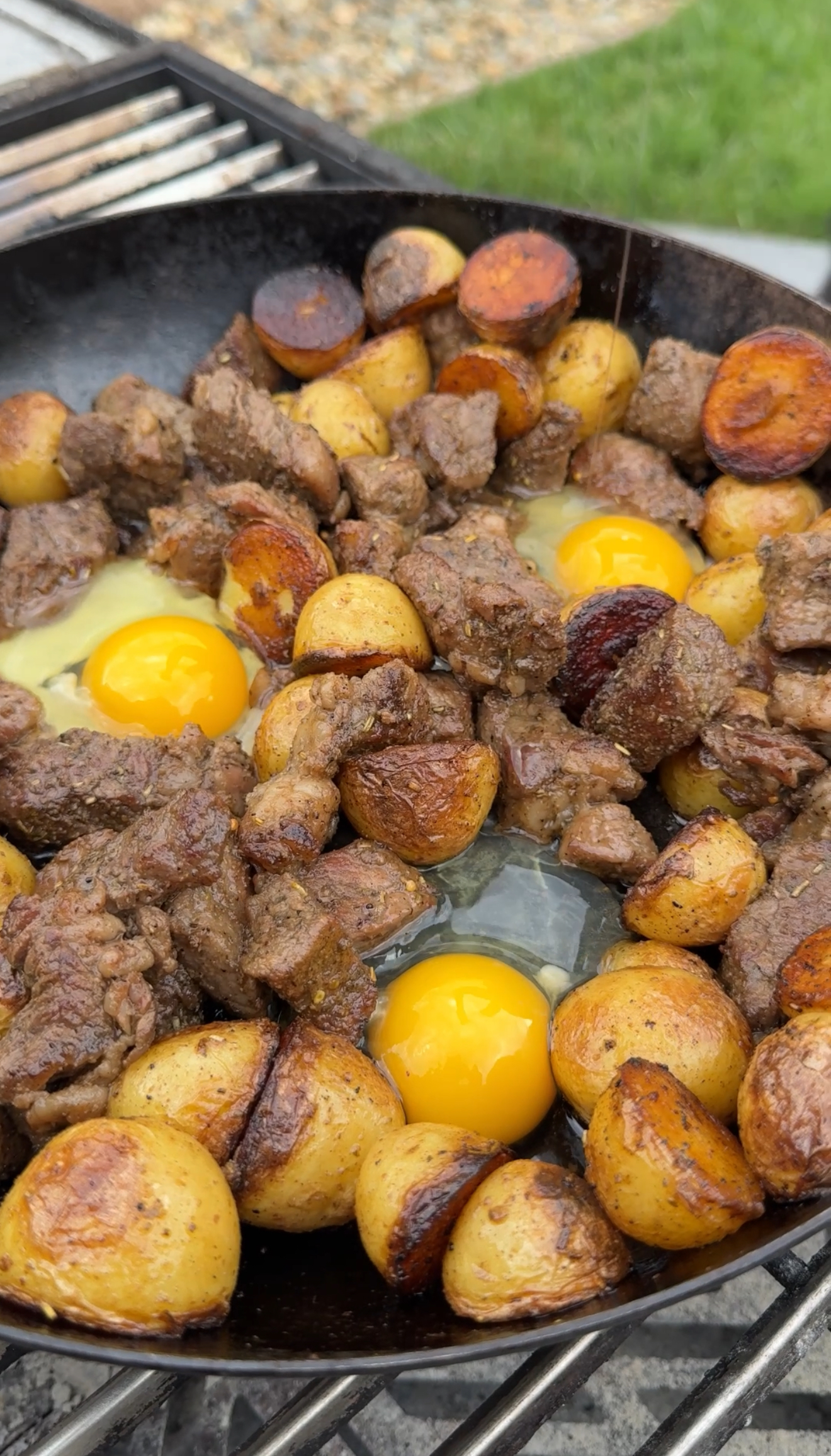
Allow the eggs to cook undisturbed for 2-3 minutes for runny yolks, or longer for firmer results. The cast iron’s even heat distribution cooks the egg whites thoroughly while maintaining the desired yolk consistency. Watch for the whites to set completely while the yolks remain bright yellow and slightly jiggly. Cover the skillet with a lid for the last minute if you prefer more set whites while keeping the yolks creamy.
The residual heat from the skillet continues cooking even after removing from heat, so account for carryover cooking. For over-easy eggs, carefully flip them after the whites set. For over-medium, cook 1-2 minutes longer. The surrounding warm steak and potatoes help maintain optimal cooking temperature throughout the process. Season the eggs lightly with salt and pepper if desired.
Step 7: Finish with Garnishes and Serve The Cast Iron Steak and Potatoes
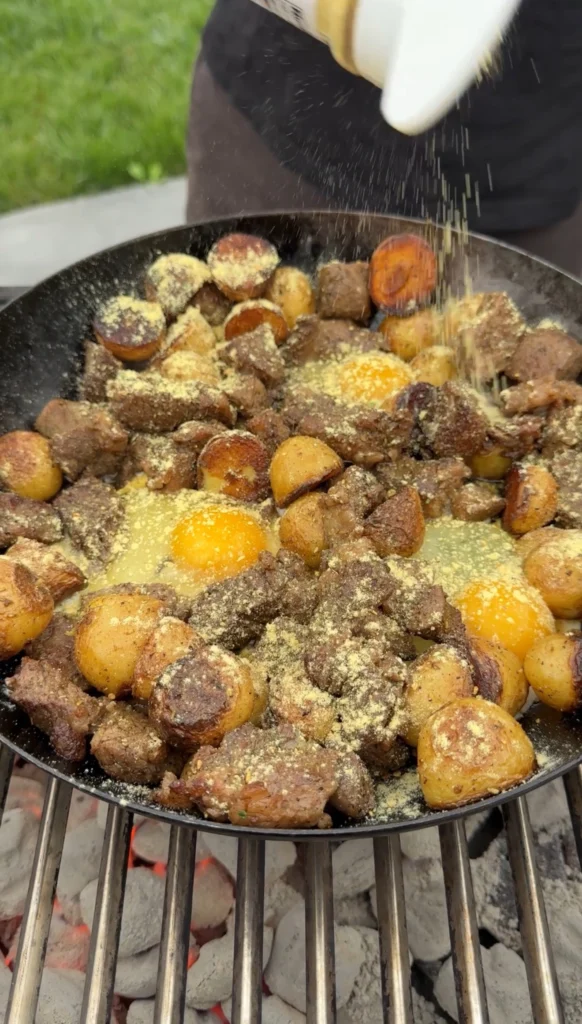
Remove the skillet from heat and immediately sprinkle with fresh chopped chives for color and freshness. The chives add a mild onion flavor that complements all the other ingredients beautifully. Apply a light dusting of Danos Butter Dust over the entire skillet for added richness and flavor complexity. This finishing touch elevates the dish from good to exceptional with its concentrated butter and herb flavors.
Serve directly from the cast iron skillet while everything is still hot and sizzling. The presentation in the cast iron adds rustic charm and keeps the food warm longer. Provide individual plates and utensils, allowing diners to portion out their preferred combination of steak, potatoes, and eggs. The cast iron retains heat well, keeping the food warm throughout the meal. Add final seasoning adjustments to taste, and consider offering hot sauce or additional seasonings on the side for customization.
Cast Iron Steak, Eggs and Roasted Potatoes with Danos Seasoning
Ingredients
Method
- Cut ribeye into ½-inch pieces and halve potatoes. Season both generously with Danos Original seasoning and let rest 10-15 minutes.
- Preheat cast iron skillet over medium heat for 5-7 minutes. Add oil when water droplets sizzle immediately.
- Cook potato halves cut-side down for 8-10 minutes until golden, then turn for 5-7 minutes more. Push to one side.
- Add seasoned steak pieces to empty side of skillet. Sear 2-3 minutes per side for medium-rare doneness.
- Create three wells in the skillet and crack eggs into them. Cook 2-3 minutes for runny yolks.
- Remove from heat and garnish with chopped chives and Butter Dust. Serve immediately from the skillet.
Notes
• Cut steak pieces uniformly for even cooking
• Start potatoes first as they take longest to cook
• Cast iron retains heat well, so food stays warm during serving
• Adjust egg cooking time based on preferred doneness
Tried this recipe?
Let us know how it was!This cast iron steak, eggs and roasted potatoes breakfast skillet brings together the best of hearty morning flavors in one impressive pan. The combination of perfectly seasoned ribeye, crispy-tender potatoes, and farm-fresh eggs creates a restaurant-quality meal that’s surprisingly simple to execute at home. The Danos Original seasoning ties all the flavors together while the Butter Dust adds that final touch of richness that makes this dish truly special. Perfect for weekend brunches, holiday mornings, or any time you want to start the day with something memorable.
This is where I keep all my most-used products, gear, and favorite cooking tools — check it out:
https://linktr.ee/cooking_with_fire___
If you loved this recipe, you’ll find more to savor across our diverse categories. From beef to pork, chicken to turkey, seafood to appetizers, there’s a wealth of flavors waiting for you. Explore them all at CWFeats.
Recipe Categories: