Pan Seared Salmon
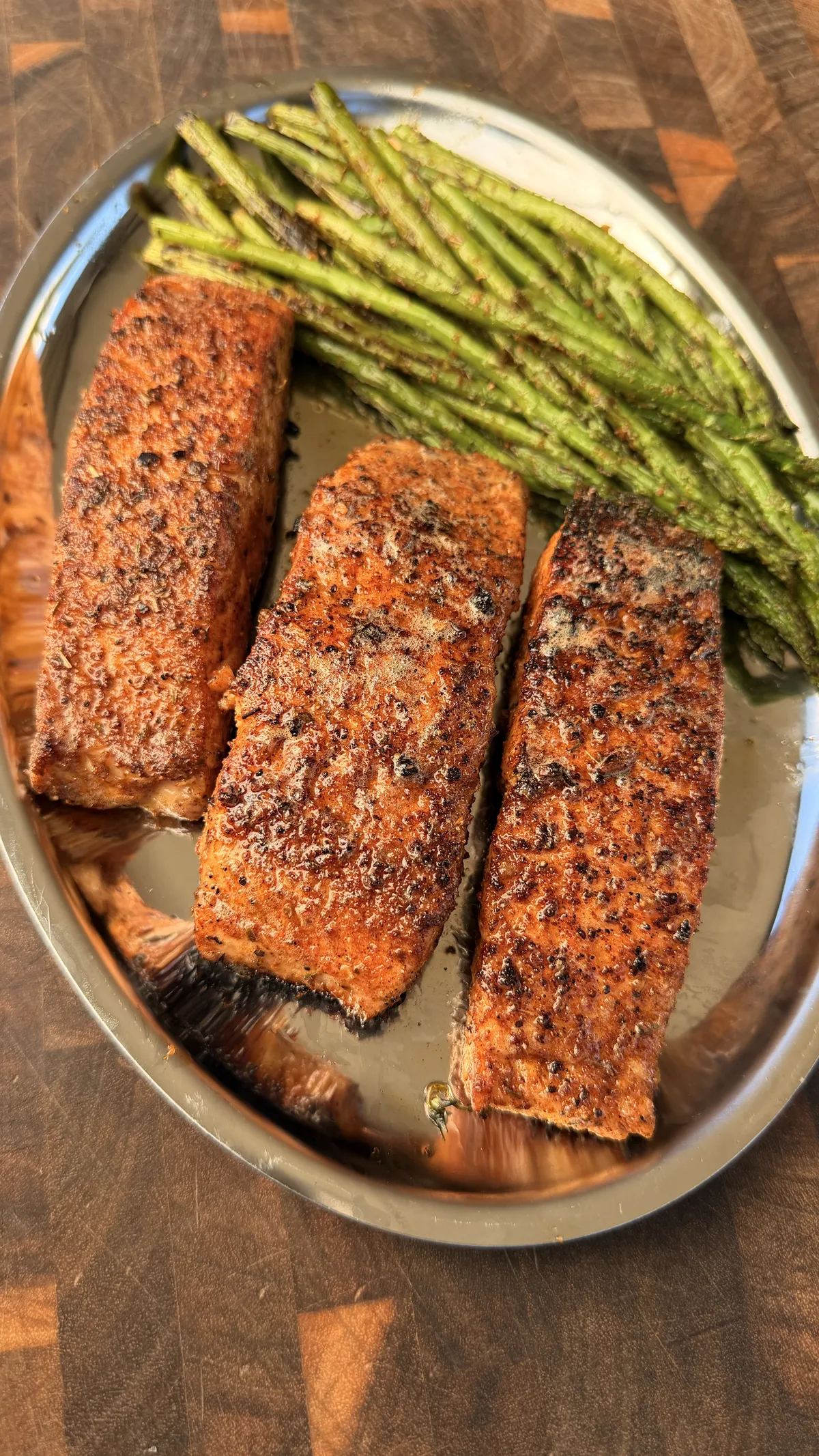
Skinless portions of pan seared salmon hit with Cajun seasoning. Seared in a hot skillet, then basted in butter and thyme. Asparagus goes in first so it comes out charred. Whole dinner is done in thirty minutes. Cajun seasoning pairs perfectly with salmon.
What Goes Into Pan Seared Salmon
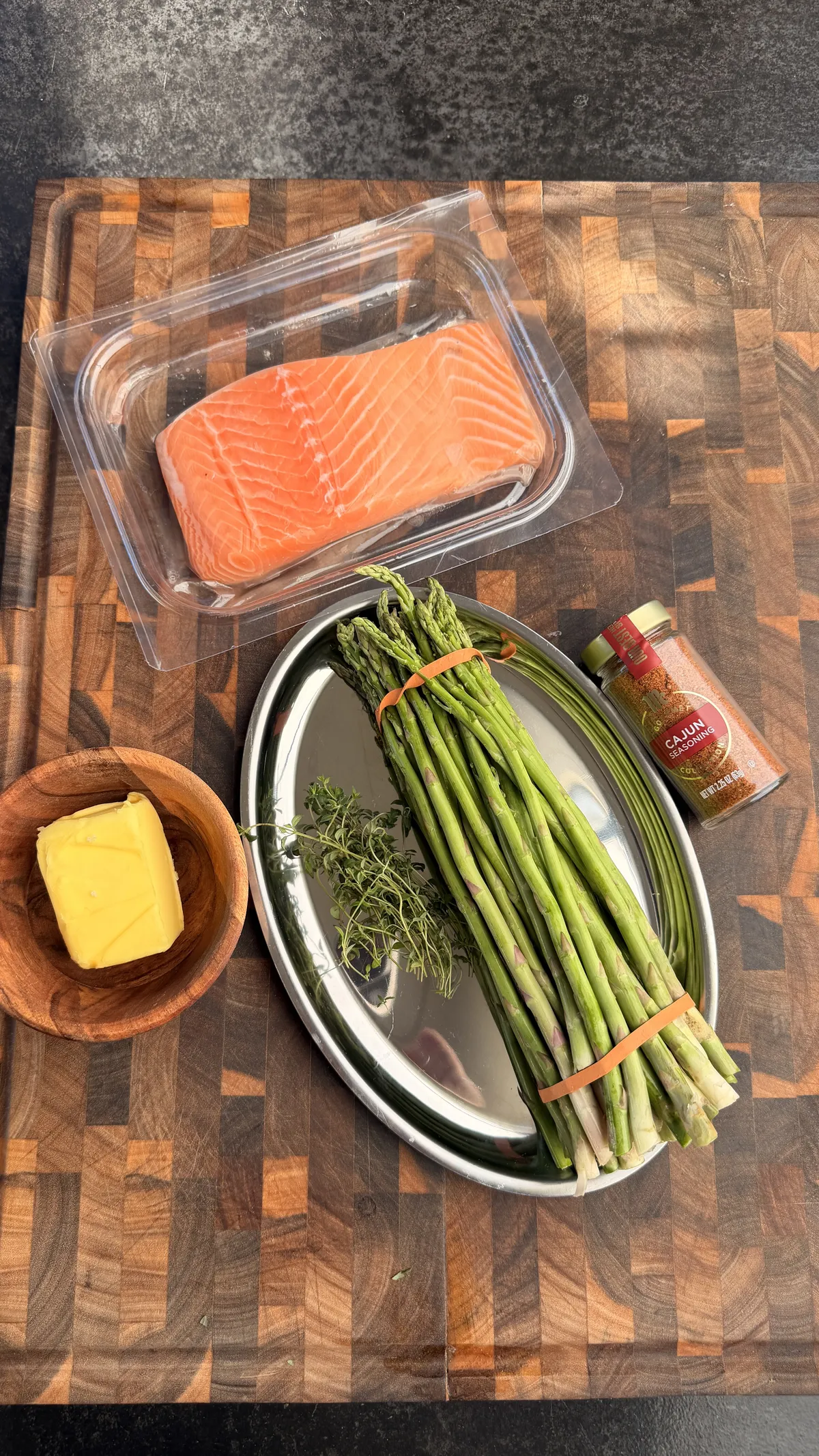
| Ingredient | Notes |
|---|---|
| Salmon portions | Six ounces each, skinless. Three of them. |
| Cajun seasoning | On the salmon and on the asparagus. |
| Cooking oil | About two tablespoons for the salmon. |
| Butter | Two tablespoons added after the flip. |
| Fresh thyme | A few sprigs, into the butter. |
| Asparagus | About a pound, woody ends cut off. |
Exact amounts down below in the recipe card.
Why Skinless Changes the Cook
Almost every pan seared salmon recipe you find is really a recipe for crispy skin. The skin renders, the fat protects the flesh of the filet and basically does all the work cooking.
Skinless portions don’t have that buffer. The difference between moist salmon and chalky salmon is about sixty seconds when you’re going skinless. So we take the pan down to medium high instead of screaming hot, and we add the butter after the flip.
The butter is doing the work here that skin would have done. Once it melts you’re spooning it back over top of the fish which gently finishes cooking the top from above while the bottom finishes below. Thyme gets added to the butter because hot butter wilts herbs and pulls flavor into the fish better than dry seasoning can.
If your portions come with skin then cook them skin down first, and give that side the majority of the cook time.
Author’s Notes
Right Up Your Alley
This is a very quick meal. You can probably have it ready within 30 minutes. If you love salmon this is right up your alley, and the Cajun seasoning just pairs perfectly with salmon.
You don’t wanna overcook it otherwise it’ll dry it out, so please pull it off around 125 internal temperature.
For the asparagus just a nice quick sear on those. I like a nice and crunchy, but you can always cook them to your liking.
Miguel
How I Cooked This Pan Seared Salmon
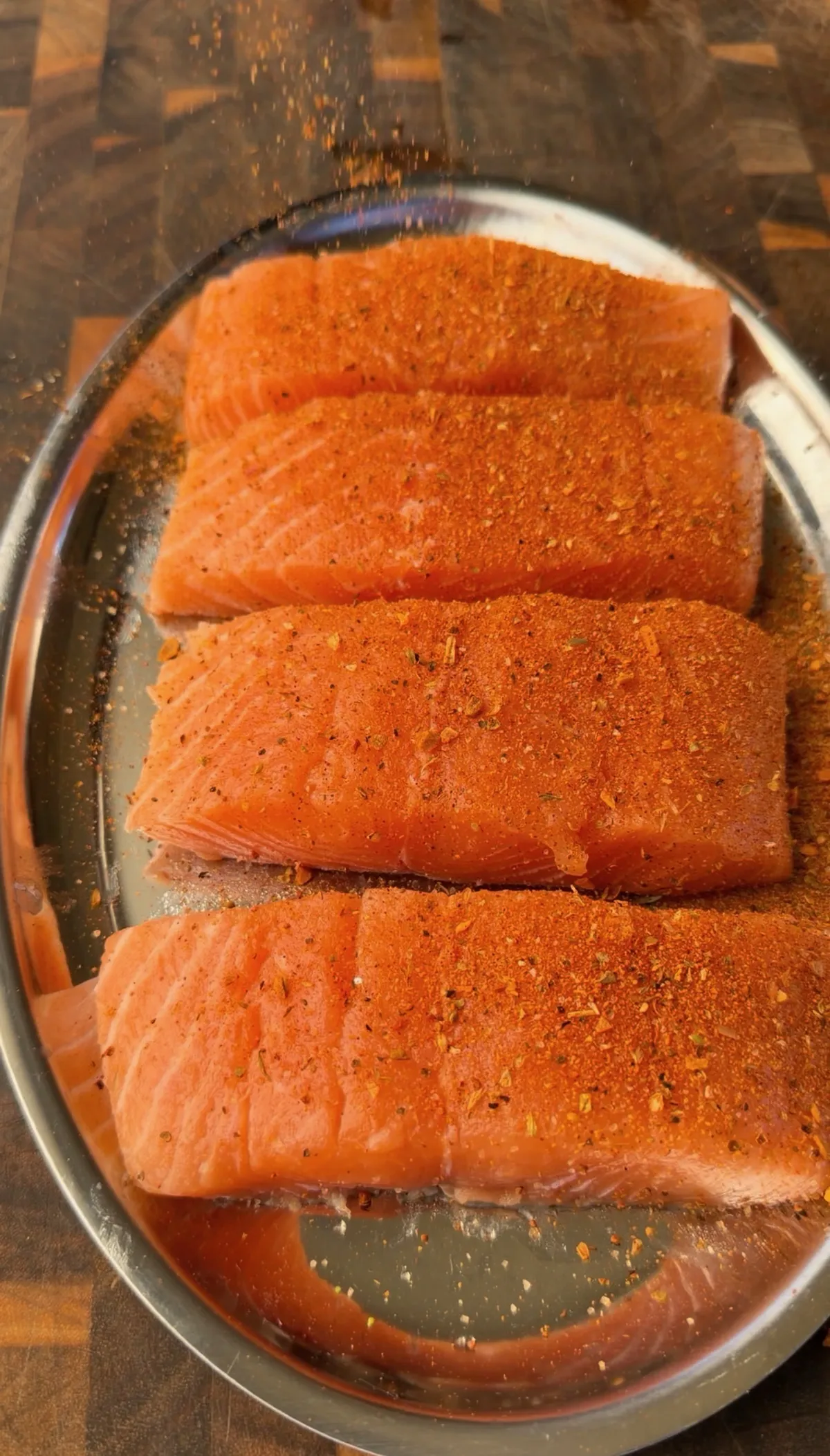
Patted the salmon dry and seasoned all over with Cajun seasoning.
Trimmed woody ends off asparagus and rinsed.
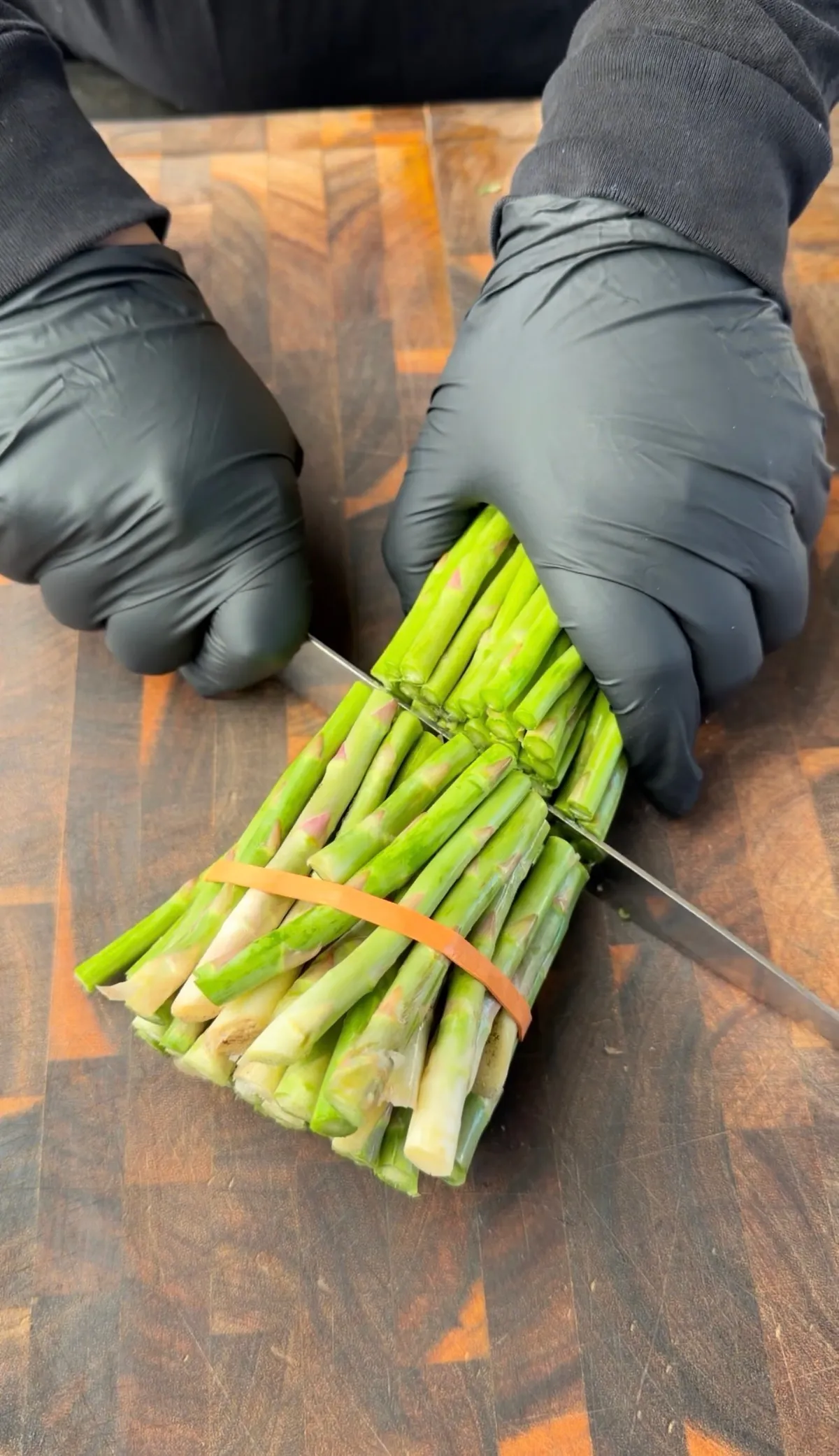
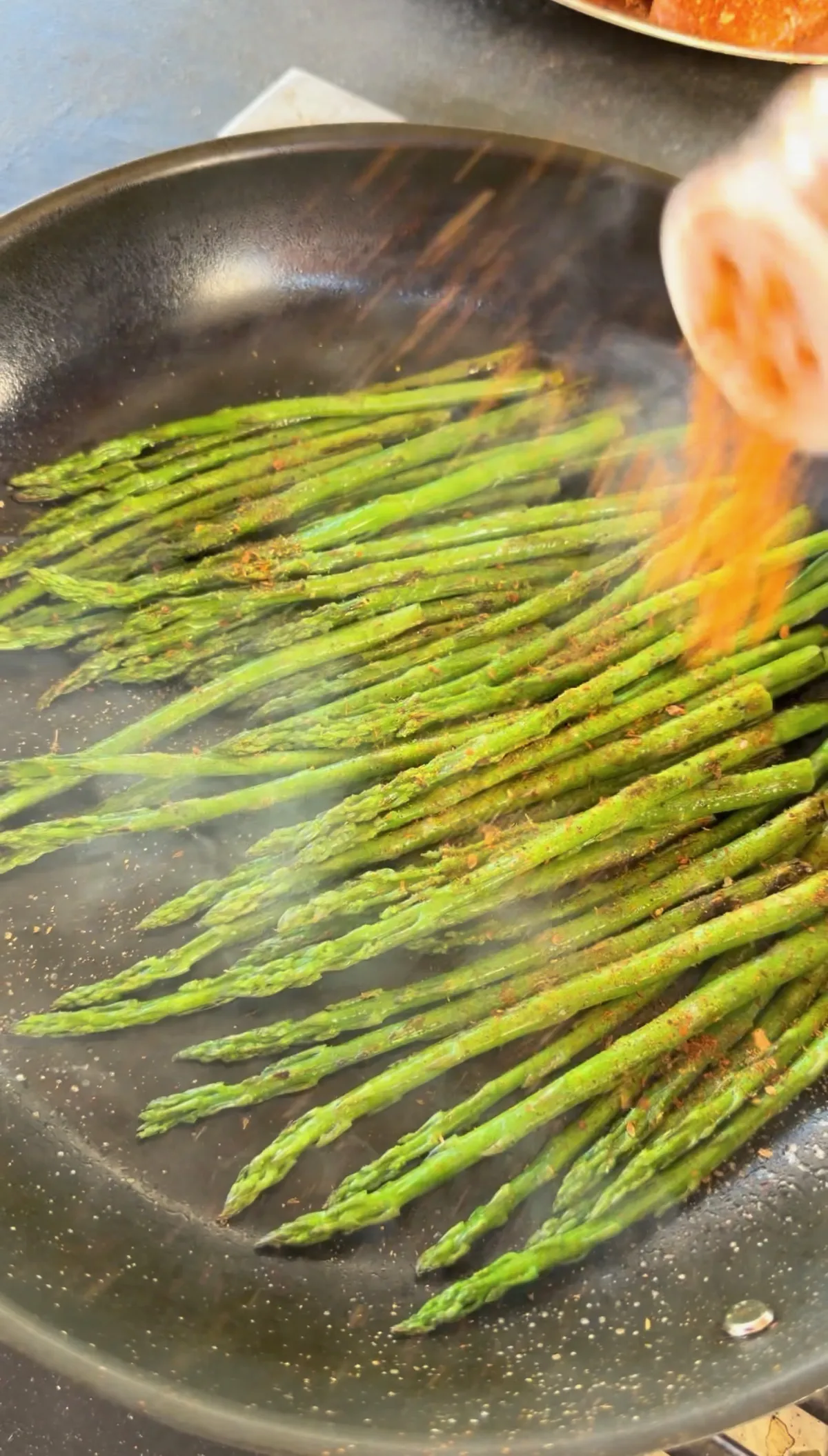
Heated pan on high and added asparagus to char.
Hit asparagus with a little Cajun seasoning then pulled off.
Turned heat down and added cooking oil to pan.
Added salmon to pan and let sit untouched for about three minutes.
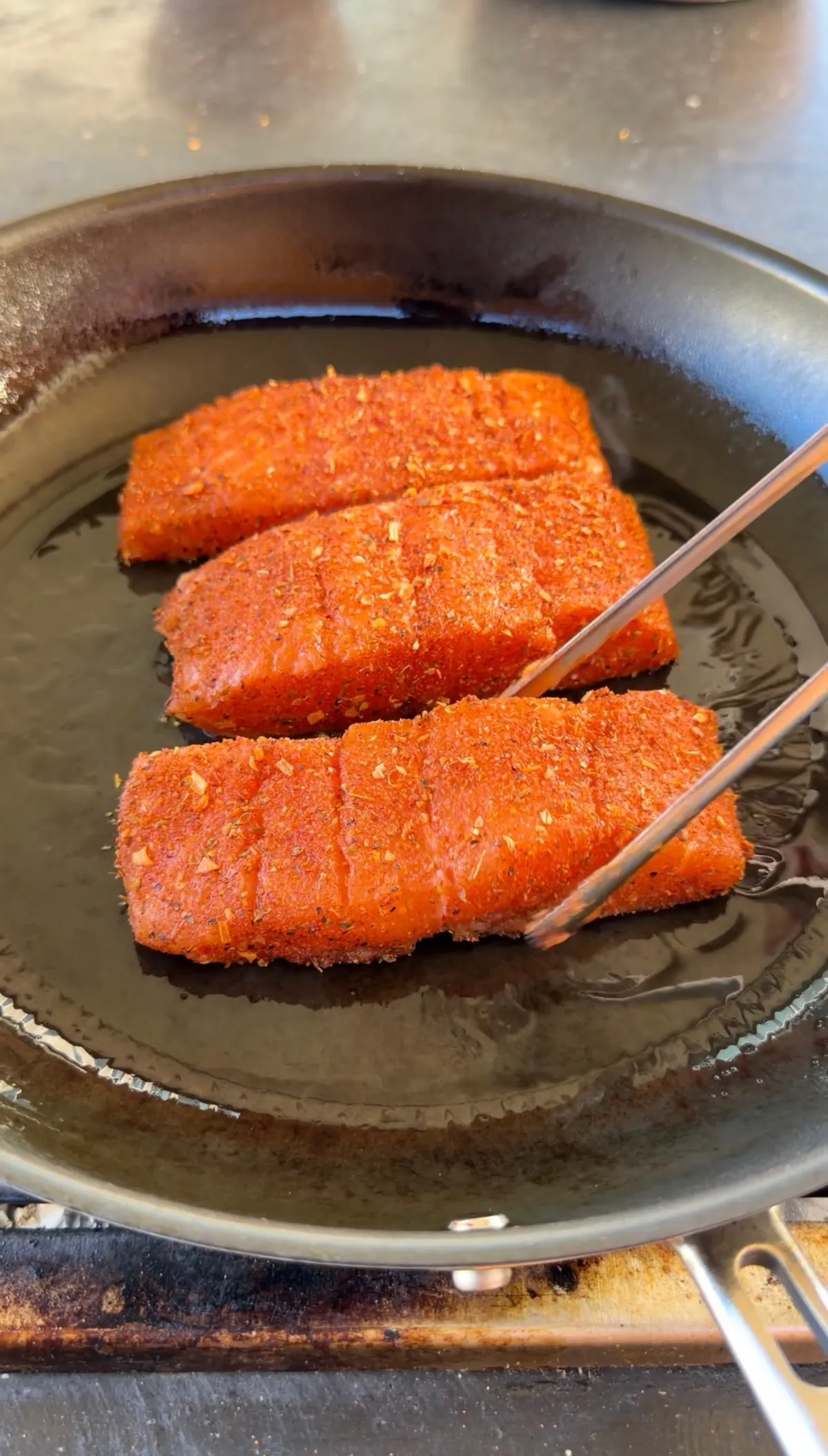
Flipped salmon, added butter and thyme, then basted salmon in melted butter.
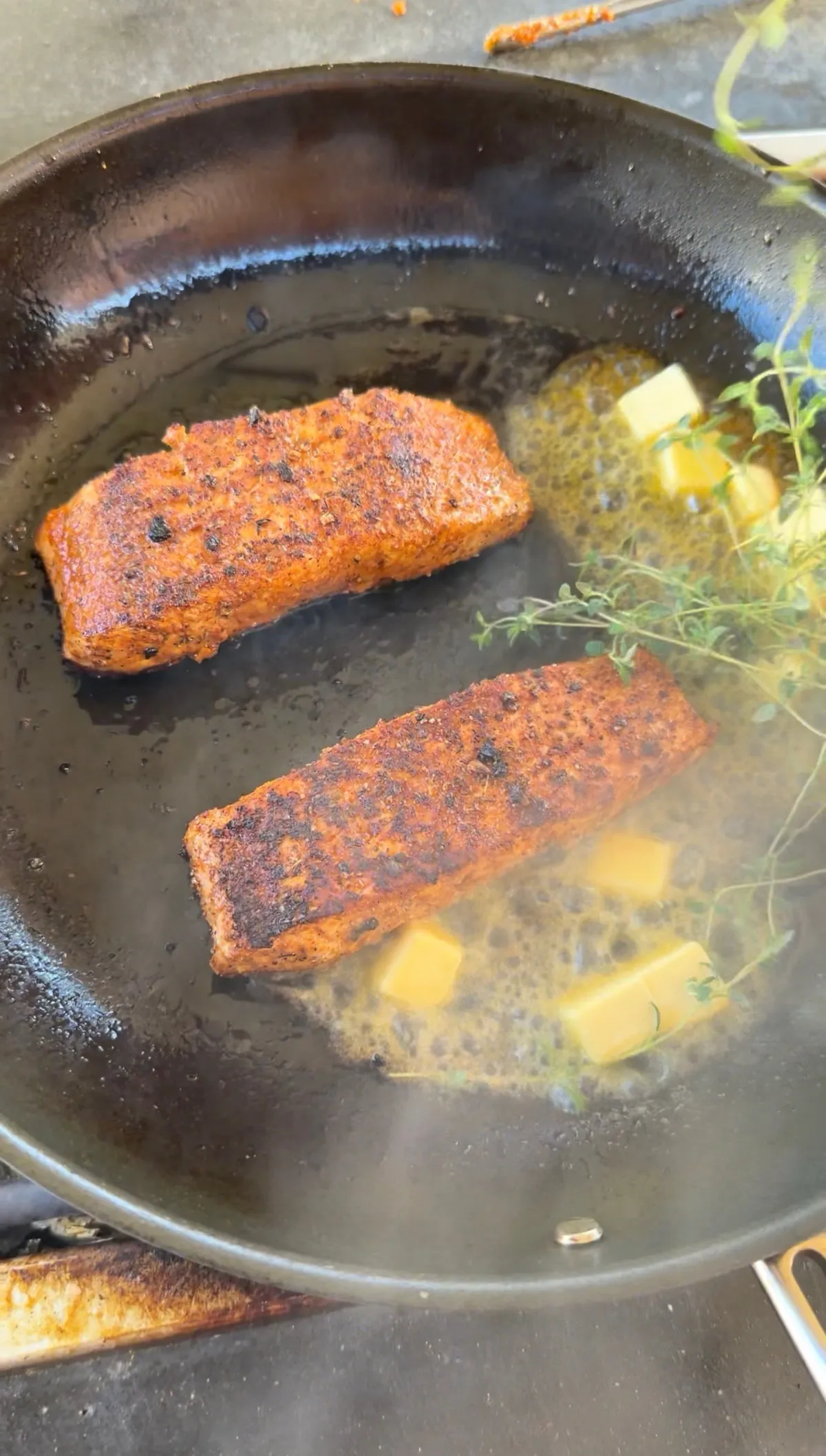
Cooked another three minutes then pulled it off.
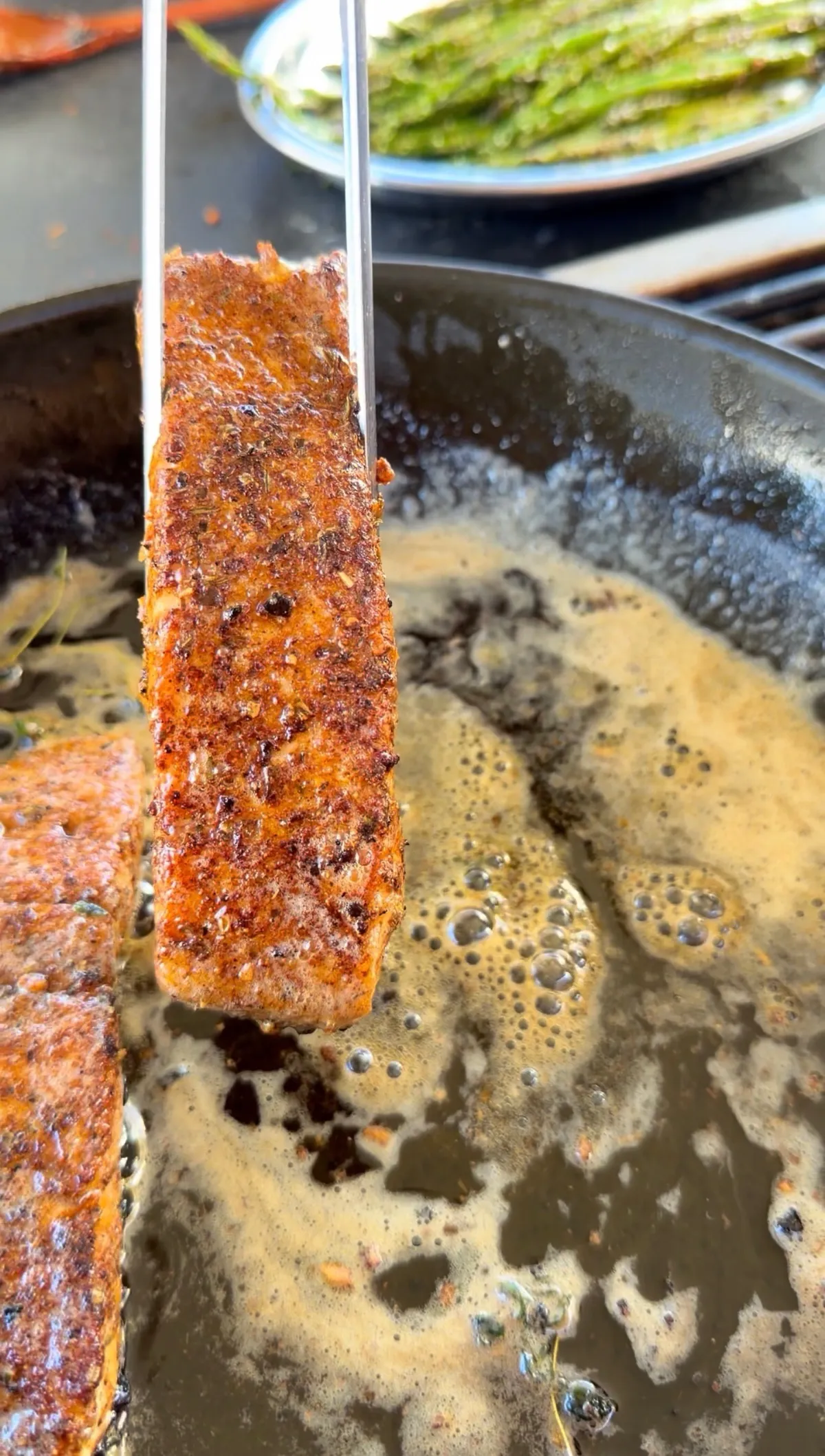
Served salmon over asparagus.
Find exact times and temperatures in the recipe card below.
Pull It Early
Cooking salmon isn’t difficult but drying it out is an easy way to screw it up.
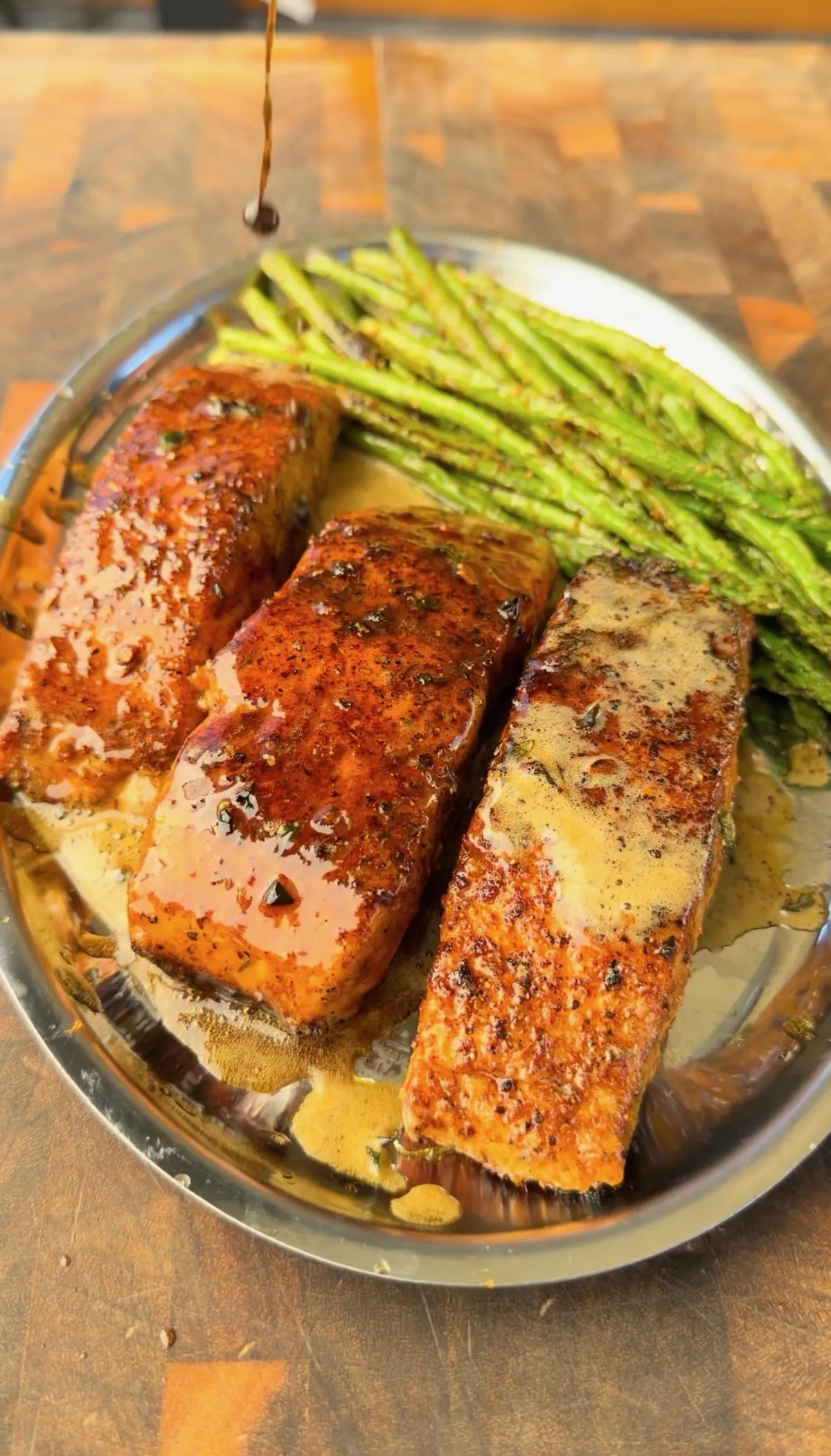
I pull mine at 125 for medium rare and the salmon continues to cook a few degrees while it rests after coming off the pan. If 145 seems better to you because that’s what the USDA recommends then cook it that far. Just know that every degree you cook past 125 you lose moisture. Past 140 you’ll start to see the fat begin to sweat out on the surface of the fish as white curds.
Asparagus is the exact opposite concept. If you like it crunchy then it’s a quick hard sear and off the pan. Cook it a little longer if you want it softer.
Make-Ahead and Storage
This recipe is not make-ahead friendly. Thirty minutes start to finish and salmon doesn’t reheat kindly.
Leftovers can keep in the fridge and be fantastic cold the next day flaked over a salad, more than they are reheated. If you’re reheating, go medium low and take it out early.
Miguel’s Tips
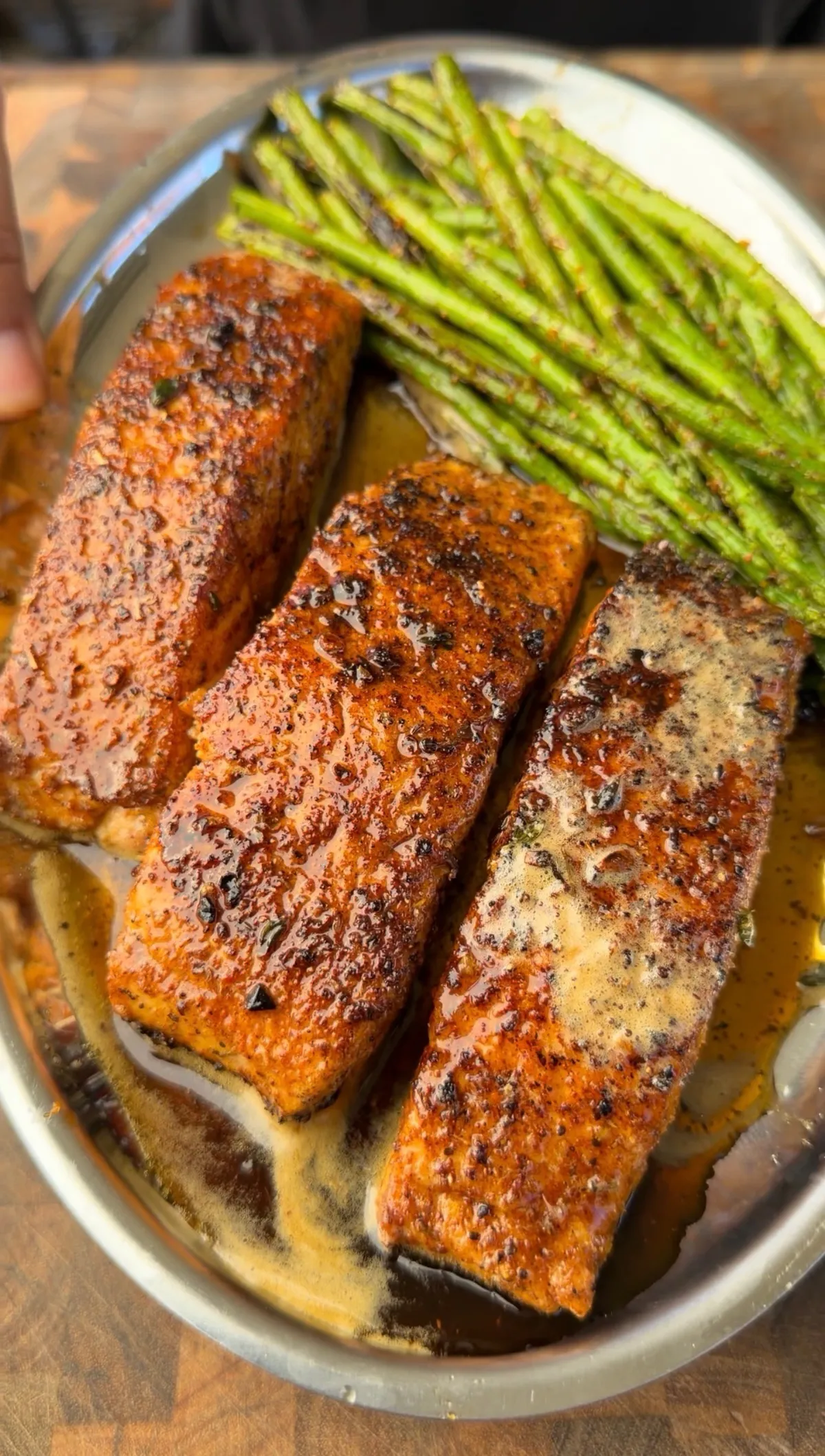
- Asparagus first, dry pan, high heat = Char.
- Drop the heat before adding salmon. High heat is only for our veggie friends.
- Leave salmon alone for the first side. Don’t slide it around and try to flip it early for a sear.
- Butter goes on after you flip salmon, not before. Butter burns fast if you add it to a hot pan.
- Pull your salmon early! There is absolutely no coming back from dried out salmon.
Frequently Asked Questions
What temperature should I cook salmon to?
Pulling mine at about 125 for medium rare. USDA recommends salmon be cooked to 145. You do you boo boo! Just keep in mind that it will continue to cook once you pull it off the pan.
Can I use skin-on salmon?
Absolutely. Just remember to cook the skin side down first and give it the majority of the cook time. Then flip it and baste as normal.
Do I need a cast iron pan?
No, but you need something that will hold heat. Cast iron or heavy stainless both work. You don’t want cookware that dips in temperature when you add food to it.
Related Recipes
- Grilled Bone In Ribeyes and Smashed Parmesan Potatoes
- Parmesan Garlic Grilled Chicken Wings
- Carne Asada Steak Fries
- Chili Cheese Fries
My Gear
Everything I cook with lives here: linktr.ee/cooking_with_fire___
Explore More Recipes
Chicken | Beef | Pork | Seafood
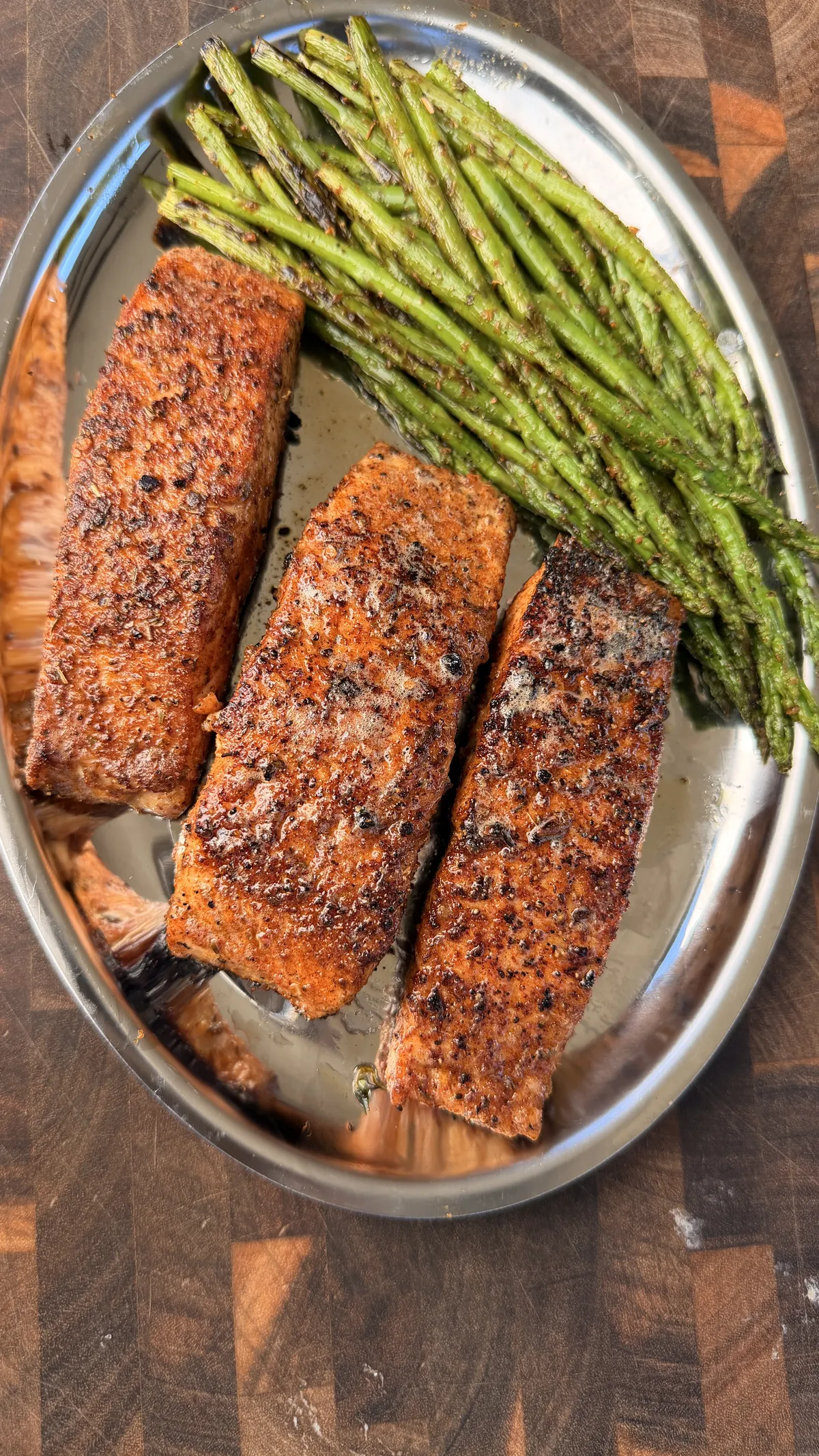
Cajun Pan Seared Salmon with Charred Asparagus
Ingredients
Equipment
Method
- Pat the salmon portions dry and season all sides generously with Cajun seasoning. Set aside.
- Trim the woody ends off the asparagus and rinse. Heat the skillet over high heat and add the asparagus to a dry pan. Cook until nicely charred, turning occasionally.
- Hit the asparagus with a little Cajun seasoning, then pull it out of the pan and set it aside. A quick hard sear leaves it crunchy. Cook it a little longer if you want it softer.
- Turn the heat down to medium high and add about 2 tablespoons of cooking oil to the pan.
- Place the seasoned salmon in the pan and leave it untouched for about 3 minutes.
- Flip the salmon, then add the butter and a few sprigs of fresh thyme. As the butter melts, tilt the pan and spoon it back over the fish to baste.
- Cook for about 3 more minutes. Pull the salmon at around 125°F internal for medium rare. It will keep climbing a few degrees off the heat.
- Serve the salmon over the charred asparagus.