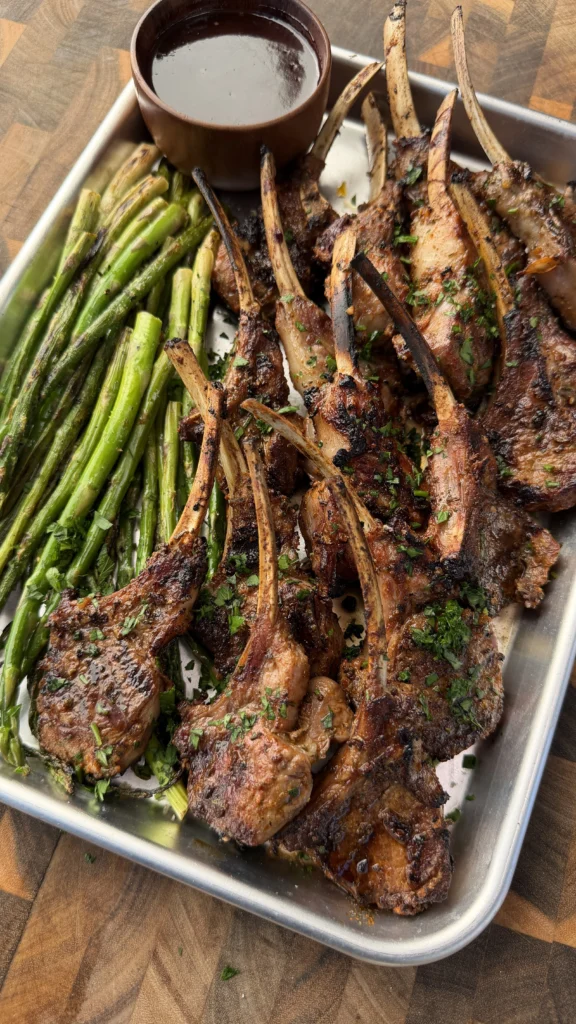
Recipe Overview: Grilled Lamb Chops with Roasted Garlic Red Wine Balsamic Sauce Sixteen lamb chops marinated in Dijon, garlic, rosemary, and thyme, grilled until medium-rare with charred crust, served with red wine balsamic sauce enriched with roasted garlic
Prep Time: 20 min | Cook Time: 15 min | Total Time: 35 min (plus marinating) | Servings: 8 | Calories: 380/serving
Grilled lamb chops with roasted garlic red wine balsamic sauce transform simple rack of lamb into an elegant centerpiece through bold marinade and sophisticated pan sauce. These lamb loin chops start with two racks of lamb cut into sixteen individual chops that get coated in a marinade of olive oil, Dijon mustard, minced garlic, fresh rosemary and thyme, smoked paprika, salt, and pepper. After marinating for at least one hour (preferably overnight), the chops hit a 450°F grill for three to four minutes per side, developing charred exterior while the interior stays rosy medium-rare. The roasted garlic red wine balsamic sauce brings restaurant-quality polish – roasted garlic cloves get simmered with red wine, balsamic vinegar, stock, and honey, then finished with butter for glossy richness that complements lamb’s distinctive flavor.
What makes this lamb chop recipe special is how the marinade and sauce work in tandem to enhance rather than mask lamb’s natural character. The Dijon mustard provides sharp tang and helps the marinade cling to the meat while fresh rosemary and thyme reinforce lamb’s traditional herb pairings. The smoked paprika adds depth without overwhelming, while garlic appears in both the marinade and sauce for savory continuity. The red wine balsamic sauce provides acidity that cuts through lamb’s richness while the roasted garlic adds sweet, mellow notes that balance the wine’s tannic structure.
This grilled lamb recipe delivers impressive results through straightforward technique that’s more accessible than most people realize. Lamb chops cook quickly – just six to eight minutes total – making them ideal for weeknight dinners or entertaining when you want dramatic presentation without hours of preparation. The sauce comes together in fifteen minutes and can be made ahead, while the marinade requires only mixing ingredients. Master the timing for medium-rare doneness and you’ll have a signature dish that consistently impresses.
Understanding Lamb Racks and Chops
Lamb racks come from the rib section of young sheep, typically containing eight ribs per rack with tender, flavorful meat attached to each bone. The racks are sold “frenched” – with the rib bones cleaned of meat and fat for clean presentation – or unfrenched with meat still attached to the bones. Frenched racks look more elegant but unfrenched provide slightly more meat. Either works perfectly for this recipe since you’ll be cutting them into individual chops.
Each rack weighs about one and a half to two pounds and yields eight chops when cut between the bones. Two racks provide sixteen chops total – two chops per person for eight servings. This portion size is appropriate when serving lamb chops as the main protein with substantial sides. The chops are small compared to beef chops or pork chops, but lamb’s rich, distinctive flavor means smaller portions are satisfying.
The meat on lamb racks is exceptionally tender because this section doesn’t get much exercise. The loin muscle (longissimus dorsi) that runs along the backbone is naturally tender with good marbling – thin lines of intramuscular fat that melt during cooking to create juicy, flavorful results. Unlike tougher cuts that need long braising, lamb chops benefit from quick, high-heat cooking that develops charred crust while keeping the interior tender and pink.
Look for lamb racks with bright red meat – not dark brown or gray which indicates age or improper storage. The fat should be white or cream-colored, never yellow. Avoid racks with excessive fat caps that would need trimming. Most grocery stores sell lamb racks in their meat department, though you may need to special order from the butcher counter. Costco and specialty meat markets often have good selection and pricing.
Building the Herb-Dijon Marinade
The marinade combines olive oil, Dijon mustard, fresh garlic, herbs, and spices into a thick coating that clings to the lamb chops rather than running off. Olive oil provides the fat base that carries flavor compounds from the garlic and herbs while promoting browning through heat conduction. Four tablespoons is enough to coat sixteen chops without creating excess that drips off and causes flare-ups during grilling.
Dijon mustard serves multiple crucial functions beyond adding flavor. Its sharp, tangy character complements lamb’s richness while providing acidity that helps tenderize the meat’s surface. The mustard’s thick, emulsified texture helps the marinade cling to the chops rather than sliding off. Mustard also contains compounds that enhance savory (umami) perception, making the lamb taste meatier. Two tablespoons provides noticeable mustard presence without overwhelming the other flavors.
Fresh rosemary and thyme are lamb’s traditional herb companions for good reason – their aromatic, slightly piney character complements lamb’s distinctive flavor without clashing. Rosemary has bold, assertive flavor with pine and citrus notes, while thyme is more subtle and earthy. Together they create the classic “lamb with herbs” profile that’s familiar and comforting. One tablespoon each provides pronounced herb presence – dried herbs can’t match fresh herbs’ aromatic intensity and should not be substituted.
Smoked paprika adds depth and subtle smokiness that reinforces the char from grilling. The paprika doesn’t make the lamb taste overtly smoky, but provides background richness that makes the overall flavor more complex. Two teaspoons is enough to add color and flavor without overwhelming. Garlic appears in both the marinade and the sauce, creating continuity throughout the dish – four cloves minced into the marinade provides savory foundation.
The salt and pepper are crucial for seasoning the meat itself. Two teaspoons of coarse salt might seem like a lot but distributes across sixteen chops, and lamb’s rich flavor can handle assertive seasoning. Black pepper adds subtle heat and aromatic complexity. Together with the Dijon’s tang, herbs’ freshness, and paprika’s depth, the marinade creates bold flavor that stands up to lamb without masking its character.
Marinating Time and Technique
One hour represents the minimum marinating time for adequate flavor penetration, though overnight marinating (eight to twelve hours) produces significantly better results. Lamb chops are relatively thin – about one to one and a half inches thick – so marinades penetrate fairly quickly compared to thick roasts. However, longer marinating allows the acids in the mustard more time to tenderize the surface while the oil-soluble compounds from herbs and garlic gradually work deeper into the meat.
The marinade should coat every surface of each chop thoroughly. After whisking the ingredients together, add all the lamb chops to a large bowl or heavy-duty plastic bag and toss or massage to ensure complete coverage. Every chop should be visibly coated with the thick marinade. If using a bag, squeeze out excess air and seal, then refrigerate. If using a bowl, cover tightly with plastic wrap.
Marinate in the refrigerator rather than at room temperature for food safety. Lamb is relatively safe compared to chicken, but refrigeration prevents any potential bacterial growth during the extended marinating time. The cold environment also slows the marinade’s tenderizing effect slightly, preventing the surface from becoming mushy if you marinate for the full twelve hours.
Remove the marinated chops from refrigeration thirty minutes before grilling to take the chill off. Cold meat doesn’t cook evenly – the exterior overcooks before the cold center warms up. Room temperature meat cooks more uniformly from edge to center. This brief warming period won’t bring the meat into the temperature danger zone (above 40°F for extended periods), so it’s food-safe while promoting better cooking results.
Roasted Garlic for the Sauce
Roasting an entire head of garlic transforms its character from sharp and pungent to sweet, mellow, and almost buttery through the same caramelization process discussed in previous recipes. The garlic for this sauce gets the same treatment – top sliced off, drizzled with oil, wrapped in foil, and roasted at 400°F for thirty-five to forty minutes. The finished cloves should squeeze out of their skins as smooth paste.
The roasted garlic provides the sauce’s savory foundation without the harsh bite of raw garlic. One head of roasted garlic (about two tablespoons of paste) creates noticeable garlic presence that reinforces the garlic in the marinade. The sweet, caramelized character of roasted garlic complements the red wine’s tannic structure better than raw garlic would – raw garlic’s sharpness would clash with the wine rather than harmonizing.
The roasted garlic can be prepared up to three days ahead and refrigerated in an airtight container. This makes day-of preparation easier since the sauce comes together quickly once the garlic is ready. You can roast the garlic while the lamb marinates, or do it even earlier as part of meal prep.
Building the Red Wine Balsamic Sauce
Red wine provides the sauce’s foundation with its tannic structure, acidity, and complex fruity notes. Cabernet Sauvignon or Merlot work beautifully – both have enough body and tannins to stand up to lamb’s rich flavor without being overwhelmed. The wine should be drinkable but doesn’t need to be expensive – a ten to fifteen dollar bottle provides plenty of quality for cooking. Avoid “cooking wine” which contains added salt and inferior flavor.
One cup of wine seems like a lot, but it reduces significantly during simmering, concentrating its flavors while mellowing the alcohol’s harshness and the tannins’ astringency. The five to seven minute initial simmer reduces the wine by about one-third, creating more concentrated, complex flavor. Balsamic vinegar adds sweet-tart complexity with its characteristic aged, slightly syrupy character. Two tablespoons provides tanginess without making the sauce taste like salad dressing.
Beef or lamb stock adds savory depth and body that thins the reduced wine-vinegar mixture to proper sauce consistency. Lamb stock is ideal if available but beef stock works perfectly – both provide the meaty, savory character that complements lamb. Half a cup is enough to create pourable sauce without diluting the wine’s concentrated flavor. The stock also contributes gelatin that helps the sauce coat the lamb chops when spooned over them.
Honey balances the wine’s tannic bitterness and vinegar’s acidity with subtle sweetness. One tablespoon isn’t enough to make the sauce taste sweet – it just rounds out the sharp edges and creates more harmonious flavor. The honey also adds slight viscosity that helps the sauce cling. Butter finished into the sauce adds richness and creates glossy sheen while helping emulsify all the components into stable sauce. One tablespoon provides luxurious mouthfeel without making the sauce taste overtly buttery.
The optional cornstarch slurry (one teaspoon cornstarch mixed with one teaspoon water) thickens the sauce if needed. Some prefer thin, pourable sauce while others want thicker consistency that coats the back of a spoon. Add the slurry if you want thicker sauce, whisking constantly until the sauce reaches desired consistency. The cornstarch takes about one minute of simmering to thicken fully and lose any raw starch taste.
Grilling Technique for Perfect Lamb Chops
The 450°F grill temperature represents the sweet spot for lamb chops – hot enough for quick searing and char development but not so hot that the thin chops overcook before developing proper crust. Lower temperatures around 350°F take too long and can dry out the lean meat. Higher temperatures above 500°F risk burning the exterior before the interior warms through. Medium-high heat allows the three to four minutes per side to develop beautiful char while the interior reaches perfect medium-rare.
Preheat the grill with all burners on high (for gas) or with coals spread evenly (for charcoal) for at least ten to fifteen minutes. The grates should be very hot – hot enough that you can only hold your hand five inches above them for three to four seconds. Clean the grates thoroughly with a grill brush, then oil them using a paper towel dipped in oil and held with tongs. This prevents sticking and helps create good grill marks.
Place the marinated lamb chops on the hot grill in a single layer, spacing them with an inch or two between pieces. Don’t crowd them or they’ll steam rather than sear. The marinade will cause some flare-ups as it drips onto the flames or coals – this is normal and actually desirable as it creates char. However, if flames get too high and threaten to burn the chops, move them temporarily to a cooler spot or reduce heat slightly.
Grill for three to four minutes on the first side without moving them. Resist the urge to flip early – let the chops develop proper sear and grill marks before flipping. After three to four minutes, flip each chop and grill another three to four minutes on the second side. Total cooking time is six to eight minutes for medium-rare (internal temp 130-135°F). The chops should be beautifully charred on the exterior with rosy pink interior.
Lamb chops are thin enough that you generally don’t need to finish on indirect heat like thick steaks. The quick, high-heat searing cooks them through while developing proper char. However, if your chops are particularly thick (over one and a half inches), you can sear both sides over direct heat, then move to indirect heat to finish cooking gently to avoid burning the exterior.
Doneness and Resting
For lamb chops, medium-rare (130-135°F internal temperature) is ideal – the meat is rosy pink throughout, tender, and juicy with just enough heat to render the fat. Rare (120-125°F) leaves the fat unrendered with slightly chewy, cool-centered meat. Medium (140-145°F) is acceptable if you prefer less pink, though the meat will be slightly less juicy. Beyond medium, lamb chops become dry and tough – their leanness doesn’t forgive overcooking like fattier cuts.
Use an instant-read thermometer to check doneness by inserting it horizontally into the thickest part of a chop, avoiding the bone which conducts heat differently. The chops are thin enough that carryover cooking is minimal – they’ll only rise two to three degrees during resting rather than the five to ten degrees typical of thick steaks. This means you can remove them right at your target temperature rather than five degrees below.
The five-minute rest after grilling allows the meat’s proteins to relax and juices to redistribute. During the intense heat of grilling, the proteins contract and squeeze juices toward the center. Resting gives those proteins time to relax, allowing the juices to spread back throughout the meat. Cut into the chops immediately and those juices flood out onto the plate; rest them and the juices stay in the meat where they belong.
Tent the chops loosely with aluminum foil during resting to keep them warm. Don’t wrap tightly or the trapped steam will soften the hard-won char. Five minutes is enough for thin chops – longer resting doesn’t provide additional benefit and allows them to cool too much.
Ingredients
For the Lamb Chops:
- 2 racks of lamb (about 16 chops total), sliced into individual pieces
- 4 tbsp olive oil
- 2 tbsp Dijon mustard
- 4 cloves garlic, minced
- 1 tbsp fresh rosemary, chopped
- 1 tbsp fresh thyme, chopped
- 2 tsp smoked paprika
- 2 tsp coarse salt
- 1 tsp black pepper
For the Roasted Garlic Red Wine Balsamic Sauce:
- 1 head of garlic
- 1 tbsp olive oil
- 1 cup red wine (Cabernet or Merlot)
- ½ cup beef or lamb stock
- 2 tbsp balsamic vinegar
- 1 tbsp honey
- 1 tbsp butter
- 1 tsp cornstarch mixed with 1 tsp water (optional, for thickening)
- Salt to taste
Step-by-Step Instructions
Slice and Marinate the Lamb Chops
Place both racks of lamb on a cutting board. Using a sharp chef’s knife, cut between each rib bone to separate the racks into individual lamb chops. You should have sixteen chops total – eight from each rack. Each chop will have one rib bone attached with a small medallion of tender meat. Trim any excessive fat if desired, though some fat adds flavor and helps keep the meat juicy.
In a large bowl, whisk together four tablespoons of olive oil, two tablespoons of Dijon mustard, four cloves of minced garlic, one tablespoon each of chopped fresh rosemary and thyme, two teaspoons of smoked paprika, two teaspoons of coarse salt, and one teaspoon of black pepper. Whisk vigorously until the mustard emulsifies with the oil, creating a thick, uniform marinade with no separated pools of oil.
Add all sixteen lamb chops to the marinade. Using your hands or tongs, toss and turn the chops to coat every surface thoroughly with marinade. Make sure each chop is completely covered – the thick marinade should cling to the meat rather than running off. Transfer the coated chops to a large dish or heavy-duty plastic bag. Cover the dish with plastic wrap or seal the bag, squeezing out excess air.
Refrigerate the marinated lamb chops for at least one hour and up to twelve hours (overnight). The longer marinating time allows deeper flavor penetration. Turn or massage the chops once during marinating to ensure all surfaces get equal exposure to the marinade. Remove from refrigeration thirty minutes before grilling to take the chill off.
Roast the Garlic for the Sauce
Preheat your oven to 400°F. Take one head of garlic and use a sharp knife to slice off the top quarter-inch, exposing the tops of all the cloves while keeping the head intact. Place the trimmed garlic head on a piece of aluminum foil large enough to wrap it completely.
Drizzle one tablespoon of olive oil over the exposed cloves, letting it seep between them. The oil helps conduct heat and prevents drying during roasting. Wrap the garlic head completely in the foil, creating a sealed packet. Place directly on the oven rack or on a small baking sheet.
Roast for thirty-five to forty minutes until the cloves are very soft and golden to light brown. You should smell sweet, mellow garlic aroma. To test doneness, carefully open the foil (watch for steam) and gently squeeze one clove – it should feel mushy-soft. If still firm, rewrap and continue roasting in five-minute increments.
Once roasted, remove from oven and let cool ten to fifteen minutes until cool enough to handle. Squeeze the softened cloves out of their papery skins into a small bowl – they should slide out easily as smooth paste. Mash any remaining chunks with a fork until completely smooth. You should have about two tablespoons of roasted garlic paste. Set aside while you prepare the rest of the sauce.
Make the Red Wine Balsamic Sauce
In a medium saucepan, combine the roasted garlic paste, one cup of red wine (Cabernet Sauvignon or Merlot), and two tablespoons of balsamic vinegar. Place over medium heat and bring to a gentle simmer, stirring to distribute the garlic paste throughout the liquid.
Simmer for five to seven minutes, stirring occasionally, until the mixture reduces by about one-third. The alcohol’s harsh edge will mellow and the liquid will concentrate in flavor. You should be able to smell the wine’s fruity character mixing with the sweet roasted garlic.
Add half cup of beef or lamb stock and one tablespoon of honey. Stir to combine and return to a simmer. Continue simmering for another five minutes, stirring occasionally. The sauce should be slightly thickened and reduced by about one-quarter of its volume.
Remove the saucepan from heat and whisk in one tablespoon of butter until completely melted and incorporated. The butter adds richness and creates glossy sheen. If you prefer thicker sauce, return to low heat and whisk in the cornstarch slurry (one teaspoon cornstarch mixed with one teaspoon water). Simmer one to two minutes while whisking until the sauce thickens to your desired consistency.
Taste the sauce and add salt if needed – start with a quarter teaspoon and adjust. The sauce should be rich and balanced with sweet roasted garlic, tannic wine depth, balsamic tang, and slight honey sweetness. Keep warm over very low heat until ready to serve, or set aside and reheat gently when needed.
Grill the Lamb Chops
Preheat your grill to 450°F (medium-high heat). For a gas grill, set all burners to high and close the lid, preheating for ten to fifteen minutes. For a charcoal grill, light enough coals to create an even layer across the bottom, wait until they’re covered in white ash, then spread evenly. Use a grill thermometer to verify the temperature is around 450°F.
Clean the grill grates thoroughly with a grill brush to remove any residue. Using a paper towel dipped in oil and held with long tongs, wipe the grates to create a non-stick surface.
Remove the marinated lamb chops from the refrigerator thirty minutes before grilling if you haven’t already. They should be at room temperature. Shake off any excess marinade – you want a coating that clings but not thick globs that will cause excessive flare-ups.
Place all the lamb chops on the hot grill grates in a single layer with an inch or two between them. You may need to work in batches if your grill isn’t large enough. Close the lid and grill for three to four minutes without moving the chops. The marinade will cause some flare-ups – this is normal and adds char. However, if flames get too high, move chops temporarily to a cooler spot.
After three to four minutes, use tongs to flip each chop. The cooked side should be beautifully charred with visible grill marks and crispy, caramelized exterior. Close the lid and grill another three to four minutes on the second side.
For medium-rare (the recommended doneness), the internal temperature should reach 130-135°F. Insert an instant-read thermometer horizontally into the thickest part of a chop, avoiding the bone. If the chops haven’t reached temperature yet, continue grilling one to two minutes longer. Total cooking time should be six to eight minutes.
Rest and Serve
Once the lamb chops reach 130-135°F for medium-rare (or your desired doneness), remove them from the grill and transfer to a platter or cutting board. The chops should be deeply charred on both sides with rosy pink centers visible where you inserted the thermometer.
Tent the chops loosely with aluminum foil and let rest for five minutes. This rest allows juices to redistribute throughout the meat. During resting, the internal temperature will rise another two to three degrees.
While the chops rest, reheat the roasted garlic red wine balsamic sauce if needed, stirring gently over low heat until warmed through. Don’t let it boil vigorously – just warm it.
After the five-minute rest, arrange the lamb chops on individual plates or a serving platter. Spoon the warm roasted garlic red wine balsamic sauce generously over the chops, making sure each portion gets some of the sauce. The sauce should pool around the chops and soak into any crevices.
Garnish with fresh rosemary or thyme sprigs if desired, or finish with a sprinkle of flaky sea salt for textural contrast. Serve immediately while hot. Each serving should include two chops with generous sauce spooned over them. The combination of charred exterior, juicy medium-rare interior, and rich wine sauce creates restaurant-quality results.