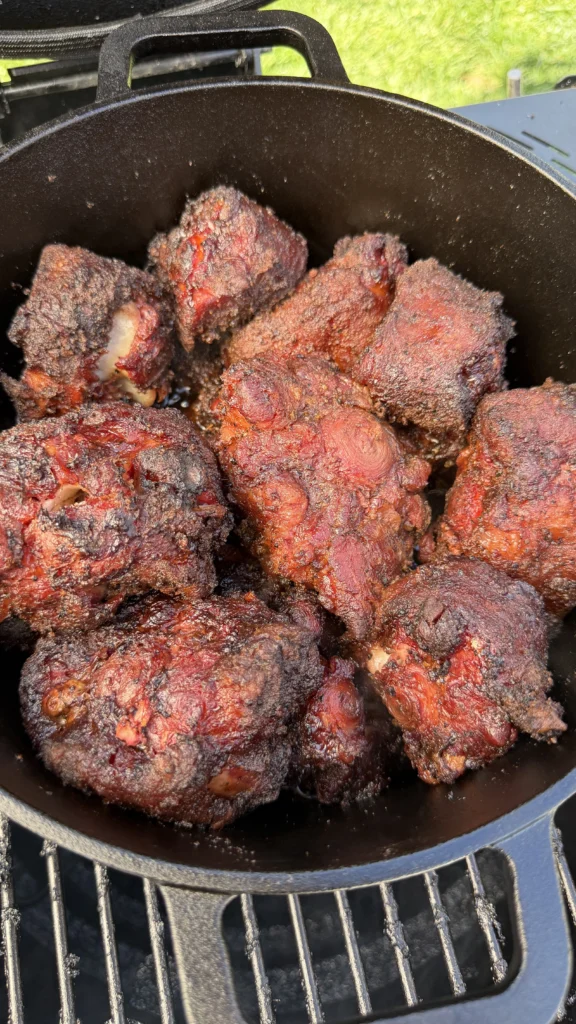
Smoked and braised oxtails are 5 pounds of oxtails patted dry, seasoned generously on all sides with salt, pepper, garlic seasoning (SPG blend), then smoked at 275°F directly on the grates for 2½ to 3 hours until a deep mahogany bark develops and the exterior is richly colored and crusty. After the smoke phase, you transfer the oxtails to a Dutch oven or foil tray, add 2 heaping spoonfuls of beef tallow and an optional splash of beef broth, cover tightly with a lid or foil, and return to the smoker at 275°F for approximately 3 hours until the meat is probe tender and pulling apart easily from the bone. The oxtails rest uncovered for 15 to 20 minutes before serving.
The entire process takes 6 to 7 hours from start to finish. This includes 10 to 15 minutes for drying and seasoning the oxtails. The smoking phase takes 2½ to 3 hours to develop bark and smoke flavor. The braising phase takes approximately 3 hours for the meat to reach fall-apart tenderness. Resting adds another 15 to 20 minutes. You can season the oxtails the night before and refrigerate to save time on cooking day, though they should come to room temperature 30 minutes before smoking.
These braised oxtails serve 4 to 6 people depending on appetite and sides. Oxtails are rich and filling due to their high fat and collagen content. A pound of raw oxtails yields approximately ½ to ¾ pound of cooked meat after bone and fat rendering. The oxtails pair well with rice, mashed potatoes, polenta, or grits to soak up the rich braising liquid. They also work in tacos, over noodles, or served as a standalone main course.
Jump to RecipeWhy Two-Stage Cooking Creates Better Texture Than Smoking Alone
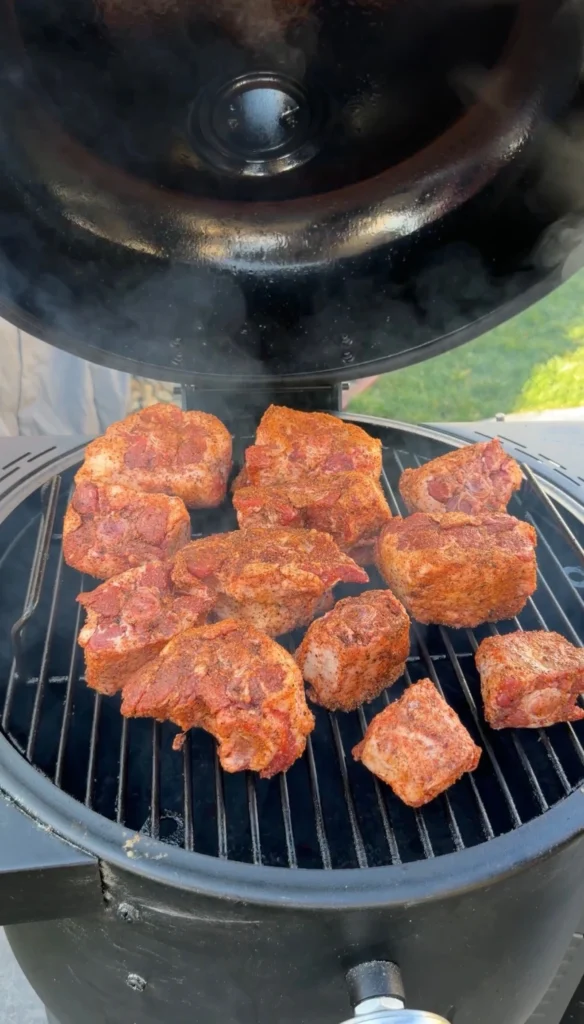
Bark Development Requires Dry Heat
Bark forms when meat is exposed to dry, moving air with moderate heat. The surface moisture evaporates. The seasoning concentrates. The proteins and sugars on the surface undergo the Maillard reaction. This creates the dark, crusty exterior with complex flavors.
Smoking oxtails uncovered at 275°F for 2½ to 3 hours creates ideal bark conditions. The circulating smoke and heat dry the surface. The SPG seasoning toasts and caramelizes. By the end of the smoke phase, the oxtails have developed thick, mahogany bark.
If you braised oxtails from the start, no bark would form. The moist, covered environment prevents surface drying. The oxtails would be tender but pale and soft on the exterior. They’d lack the textural contrast and flavor depth that bark provides.
Smoking alone for 6 hours without braising would create excellent bark but tough meat. Oxtails need the moist braise to break down collagen. Dry smoking can’t provide sufficient moisture for proper collagen conversion in reasonable time.
Collagen Breakdown Needs Moisture
Oxtails contain massive amounts of collagen in the connective tissue surrounding bones and throughout the meat. This collagen makes raw oxtails very tough. The collagen must convert to gelatin for tender texture.
Collagen conversion happens between 160°F and 205°F. But the conversion requires moisture. In dry environments, collagen can dehydrate and tighten rather than melting. This creates meat that reaches high internal temperature but stays tough.
The braising phase provides the moisture collagen needs. The covered Dutch oven or foil tray traps steam. The beef tallow and optional broth create liquid that surrounds the oxtails. This moist heat at 275°F converts collagen efficiently.
The 3-hour braise is sufficient because the oxtails are already hot from the smoke phase. They start braising at 150 to 160°F rather than cold. This head start reduces total braise time compared to starting from raw.
Fat Rendering and Redistribution
Oxtails have significant external fat and intermuscular fat. During the smoke phase, some of this fat begins rendering. The rendered fat drips away or pools on the surface. This initial rendering helps crisp the bark.
During braising, the remaining fat continues rendering in the moist environment. But instead of dripping away, it stays in the covered vessel. The rendered fat mixes with the tallow and broth to create rich braising liquid.
This fat-enriched liquid bastes the oxtails continuously during braising. It coats the meat and keeps it moist. When you uncover the oxtails after braising, they’re glistening with this fatty coating. This creates the sticky, luxurious texture.
Smoking alone would render fat but it would drip into the smoker. Braising alone would render fat but without the smoke flavor. The two-stage method captures both benefits.
Smoke Penetration Timing
Smoke flavor develops most effectively when meat is cold to warm, below 140°F internal temperature. Once meat exceeds 140°F, smoke absorption slows dramatically. The “smoke ring” stops developing entirely above 140°F.
The smoke phase happens while oxtails are still relatively cool. They’re starting at room temperature, maybe 60 to 70°F. During the first hour of smoking, they’re absorbing smoke aggressively. Even as they warm, they’re still below 140°F for the first 1½ to 2 hours.
By the time they reach the braising phase, the oxtails have absorbed maximum smoke. The braising doesn’t add smoke flavor but it doesn’t need to. The smoke character is already locked in.
If you tried to smoke oxtails for 6 hours straight to achieve tenderness, the last 3 hours would add little smoke flavor. The meat would be hot and less receptive. The two-stage method maximizes smoke absorption during the smoke-receptive phase.
What Makes Oxtails Different from Other Beef Cuts
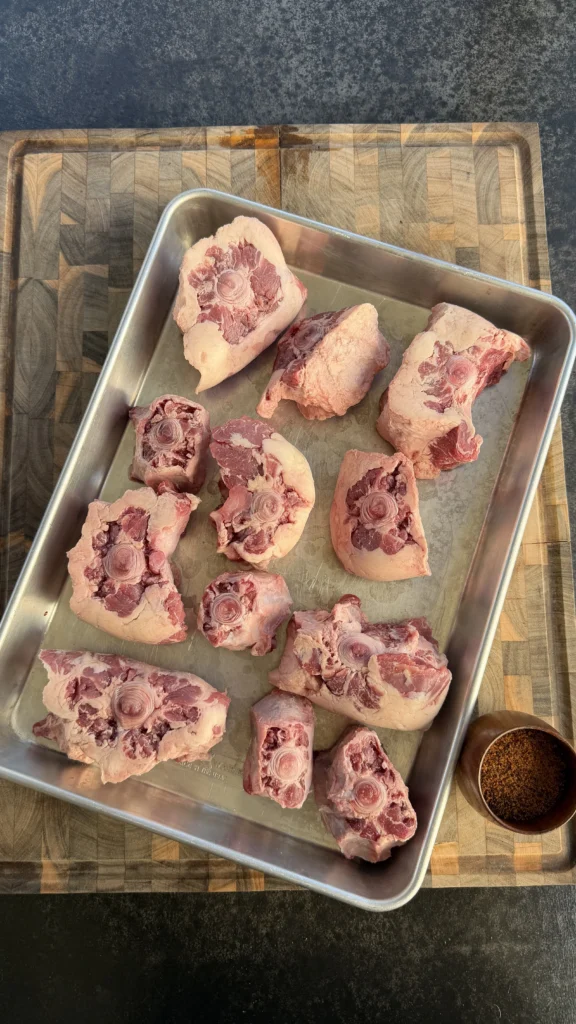
Bone Structure and Meat Distribution
Oxtails are literally the tail of the cow, cut into 2 to 3-inch cross-sections. Each piece has a bone running through the center. The meat surrounds the bone in a ring. The bone tapers from thick near the body to thin at the tail end.
The pieces near the body are largest, often 3 to 4 inches in diameter with substantial meat. Middle sections are medium, 2 to 3 inches. Tail end pieces are smallest, sometimes only 1 to 2 inches with minimal meat.
This varying size affects cooking. Large pieces take longer to become tender than small pieces. When buying 5 pounds of oxtails, you get a mix of sizes. The smallest pieces might be tender after 2½ hours of braising while large pieces need the full 3 hours.
Other beef cuts have more uniform structure. Brisket is a flat slab. Short ribs are rectangular. Chuck roast is a solid piece. Oxtails’ unique structure creates different eating experience where you work around the bone.
Collagen and Gelatin Content
Oxtails have the highest collagen content of any commonly available beef cut. The tail works constantly during the animal’s life, creating dense connective tissue. This collagen makes raw oxtails incredibly tough.
When properly cooked, this collagen converts to gelatin. Gelatin creates rich, silky mouthfeel. The braising liquid from oxtails is thick and luxurious. It coats your lips and palate. This gelatin content is what makes oxtails so prized.
Other tough cuts like chuck or brisket have collagen but not at oxtail levels. Oxtail braising liquid is noticeably thicker and more viscous. If you refrigerate it, it sets into solid jelly. This gelatin is pure flavor and nutrition.
The high collagen content means oxtails must be cooked low and slow. There’s no quick-cooking method that works. They need extended time for collagen conversion. This makes them ideal for smoking and braising.
Fat Content and Flavor
Oxtails have layers of fat between the meat and bone, plus marbling throughout the meat. Much of this is hard fat that needs long cooking to render. When rendered, it creates incredibly rich flavor.
The fat is different from other beef cuts. Brisket fat is primarily in a defined cap. Oxtail fat is distributed in layers throughout each piece. As it renders during braising, it melts into the meat rather than separating completely.
This fat distribution creates self-basting effect. The meat stays moist as the fat renders from inside. Even well-done oxtails don’t dry out the way well-done steak would. The fat content protects against drying.
The flavor of oxtail fat is intensely beefy. It’s richer than ribeye fat. Combined with bone marrow from the center bones, oxtails deliver flavor that’s almost overwhelming in its beef character. This bold flavor stands up to smoke and strong seasoning.
Cost and Availability
Oxtails were once considered cheap, throwaway cuts. Butchers gave them away or sold them cheaply. This changed as more people discovered how delicious they are. Now oxtails command premium prices, often $8 to $12 per pound.
The high price reflects both increased demand and limited supply. Each cow has only one tail. The amount of oxtail available is fixed. Rising popularity without increasing supply drives prices up.
Availability varies by location. Areas with Caribbean, Asian, or soul food traditions always stocked oxtails. Mainstream grocery stores are hit or miss. You might need to special order from a butcher or buy from ethnic markets.
For 5 pounds of oxtails at $10 per pound, you’re spending $50. This is expensive but competitive with premium steaks when you consider the rich flavor and the number of servings. The gelatin-rich braising liquid also provides value that steaks don’t offer.
Should You Use Beef Tallow or Butter for Braising
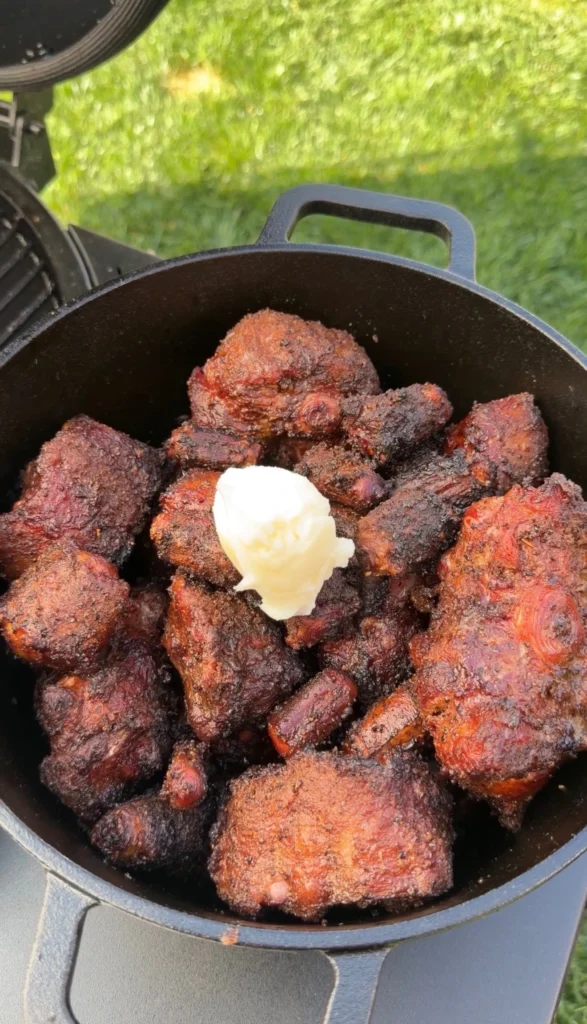
Fat Stability at High Temperature
Beef tallow has a high smoke point, approximately 400°F. During braising at 275°F, tallow remains stable. It doesn’t break down or develop off-flavors. The tallow maintains its clean, beefy character throughout the 3-hour braise.
Butter has a lower smoke point, around 350°F for whole butter and 450°F for clarified butter. At 275°F braising temperature, whole butter is borderline. The milk solids in butter can brown excessively during extended braising, creating bitter notes.
If you use butter, clarified butter or ghee works better than whole butter. The milk solids are already removed. Ghee has a smoke point around 450°F and won’t develop bitter flavors during the long braise.
Tallow’s stability makes it the safer choice for this recipe. You don’t have to worry about monitoring for burnt butter flavors. The tallow performs consistently.
Flavor Profile Match
Beef tallow tastes like concentrated beef. When you add it to braising oxtails, it amplifies the natural beef flavor. The oxtails taste more intensely beefy. This flavor reinforcement is desirable in BBQ applications.
Butter has dairy flavor that’s distinct from beef. In some applications like steak au poivre, this butter richness is welcome. For smoked oxtails where you want to emphasize smoke and beef character, butter’s dairy notes can feel out of place.
The smoke flavor from the initial smoking phase pairs better with tallow than butter. Smoke and beef fat are natural partners in BBQ. Smoke and butter can work but create different flavor profile that’s less traditional for BBQ-style oxtails.
If you’re making oxtails for a French-style braise, butter makes sense. For Texas BBQ-inspired smoked and braised oxtails, tallow is more appropriate.
Rendering and Texture Contribution
Tallow melts completely at the 275°F braising temperature. It creates thin, coating liquid that mixes with rendered oxtail fat and any broth. This combined fat bastes the meat continuously.
Whole butter contains water and milk solids in addition to fat. During braising, these components behave differently. The water can make the braising liquid slightly more watery. The milk solids can separate and create sediment.
Clarified butter or ghee behaves more like tallow. It’s pure fat without water or solids. If you’re using butter, this is the form to use. But clarified butter is often more expensive than tallow per pound.
Tallow is also easier to source from butchers or render yourself. Many butchers sell beef fat trimmings cheaply or free. You can render your own tallow. This makes it economical and accessible.
Traditional and Cultural Considerations
In soul food and Caribbean cooking where oxtails are traditional, animal fats like lard or tallow are classical. Butter is less common. Using tallow connects to these culinary traditions.
In French cuisine, butter is standard for braises. Boeuf bourguignon and similar dishes use butter. If you’re taking a French approach to oxtails, butter fits.
For BBQ-style oxtails where the smoke is prominent, matching the fat choice to BBQ tradition makes sense. Texas BBQ uses beef fat. Tallow is the authentic choice.
The “2 heaping spoonfuls” in the recipe likely means 2 tablespoons or approximately ¼ cup. This amount of tallow adds richness without making the braise greasy. You could use butter but tallow is the better choice for this particular preparation.
How to Tell When Oxtails Are Properly Tender
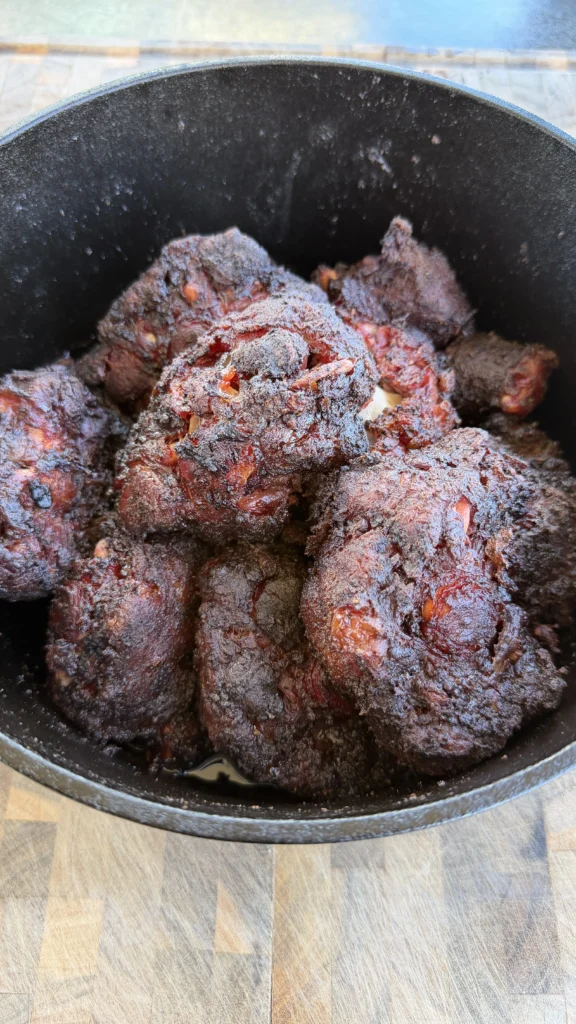
The Probe Test for Oxtails
Insert a probe thermometer or thin skewer into the meatiest part of the largest oxtail piece. The probe should slide through with almost no resistance. It should feel like pushing through warm butter or soft cheese.
If you encounter significant resistance, the collagen hasn’t fully converted. The oxtails need more braising time. Continue braising and check again every 15 to 20 minutes.
Unlike solid cuts like brisket where you probe once, oxtails have multiple pieces. Test the largest pieces. If the biggest pieces are probe tender, the smaller pieces are definitely done. Small pieces from the tail end might even be overly soft, which is fine.
The probe should go through both meat and any connective tissue easily. If the probe glides through meat but sticks on connective tissue, more time is needed. Fully tender oxtails have no tough connective tissue remaining.
Visual Meat Pullback
Look at the bones in each oxtail piece. Properly cooked oxtails show ¼ to ½ inch of exposed bone at the edges. The meat pulls back as it shrinks during cooking. This pullback is a reliable visual indicator.
If the meat still covers the bone ends completely, the oxtails aren’t done. They haven’t cooked long enough for the meat to shrink and pull away. Continue braising until you see clear pullback.
Excessive pullback, more than ¾ inch, suggests overcooking. The meat is falling off too easily. While still edible, the texture might be mushy rather than tender. For most applications, ½ inch pullback is ideal.
The meat should also look dark and deeply colored from the smoke and braising. Pale meat indicates undercooking even if temperature is correct. Well-cooked oxtails have rich brown color throughout.
The Wiggle Test
Pick up a large oxtail piece with tongs. Hold it by one end. The meat should wiggle and move independently from the bone. If you gently shake, the meat jiggles loosely.
Undercooked oxtails move rigidly. The meat and bone move together as a solid unit. The connective tissue holds everything tightly attached. No independent movement occurs.
Perfectly cooked oxtails have meat that’s loose and mobile but not falling off. If the meat drops off the bone when you pick up the piece, it’s overcooked. You want it tender enough to pull away easily when eating but not disintegrating.
This test works best with medium to large pieces. Small tail-end pieces might not have enough meat for reliable wiggle testing.
The Pull-Apart Test
Using a fork or your fingers, try to pull some meat away from the bone. It should separate with gentle tugging. The meat should pull away in tender shreds or chunks.
If you need to forcefully tear the meat, it’s undercooked. Properly tender oxtails yield to light pressure. The collagen has converted fully and the meat fibers separate easily.
The texture when you bite should be soft but not mushy. The meat should have some structure. It should pull apart into strands rather than dissolving into paste. This balance between tender and structured is what you’re aiming for.
The fat and connective tissue should be completely tender. There shouldn’t be any chewy bits. Everything should melt in your mouth. Biting into a properly cooked oxtail should feel luxurious and rich.
The Best Temperature for Smoking Oxtails Before Braising
Why 275°F Works Better Than 225°F
At 275°F, oxtails develop bark in 2½ to 3 hours. The surface dries and crusts efficiently. The Maillard reaction happens at a good pace. The bark is dark and substantial without being burnt.
At 225°F, bark development is slower. You’d need 4 to 5 hours to achieve similar bark. This extended time doesn’t add much smoke flavor after the first 2 hours. It’s inefficient and risks drying the surface excessively.
The 275°F temperature also brings the oxtails to a good starting temperature for braising. After 3 hours at 275°F, the oxtails are probably 140 to 160°F internally. This head start reduces total braising time.
If you smoked at 225°F, the oxtails would be cooler after 3 hours, maybe 120 to 140°F. They’d need longer braising time to reach tenderness. The total cook time increases unnecessarily.
Higher Temperatures Risk Surface Drying
Temperatures above 300°F are too aggressive for the smoke phase. The bark can become hard and crusty rather than dry and flavorful. The exterior can burn before the interior warms adequately.
At 350°F, you might get bark in 1½ hours but it would be very dark, possibly burnt. The seasoning could char. The meat underneath the bark might not have time to absorb smoke properly.
The 275°F temperature balances bark development speed with controlled, even heating. The oxtails warm gradually while the bark forms at a steady pace. Nothing burns or hardens excessively.
Consistency with Braising Temperature
Keeping the same 275°F temperature for both smoke and braise simplifies the process. You don’t need to adjust smoker temperature. The transition from smoke to braise is seamless.
If you smoked at 225°F then needed to braise at 300°F, you’d have to increase smoker temperature. This takes time. The oxtails would sit waiting during the temperature adjustment.
The consistent temperature also means consistent fuel consumption if using charcoal or wood. You maintain the same fire throughout. Temperature management is easier.
Wood Selection and Clean Smoke
At 275°F, wood burns more completely than at lower temperatures. You get cleaner blue smoke rather than thick white smoke. Clean smoke tastes sweet and mild. Dirty smoke tastes acrid and bitter.
For oxtails, oak is traditional. Hickory works well for stronger smoke flavor. Pecan provides middle-ground option. These hardwoods burn clean at 275°F and complement beef.
Avoid fruit woods like apple or cherry. They’re too subtle for oxtails’ bold beef flavor. The smoke gets lost. Mesquite can work but use it sparingly or blended with oak. Pure mesquite for 3 hours can be overwhelming.
The 275°F temperature ensures whatever wood you choose burns efficiently and creates the best possible smoke flavor for the oxtails.
Smoked & Braised Oxtails
3 hrs smoke, 3 hrs braise, beef tallow finish
Ingredients
Oxtails
- 5 lbs oxtails
- Salt, pepper, garlic seasoning (SPG blend)
Braising
- 2 heaping tablespoons beef tallow
- Splash of beef broth (optional)
The smoke phase builds bark and flavor but doesn’t create tenderness. Don’t skip the braise. The covered, moist environment is essential for converting collagen to gelatin. Beef tallow during braising adds richness that makes the oxtails sticky and luxurious.
Step-by-Step Instructions
Step 1: Prepare the Oxtails
Remove 5 pounds of oxtails from packaging. Rinse them under cold water to remove any bone fragments from butchering. Pat completely dry with paper towels on all sides.
Examine the oxtails. You’ll have pieces of varying sizes. Large pieces from near the body will be 3 to 4 inches in diameter. Small pieces from the tail end will be 1 to 2 inches. This size variation is normal.
Trim any loose pieces of fat or meat hanging from the edges. These burn during smoking. Don’t trim the fat cap covering the meat. This fat renders during cooking and contributes flavor.
Place the dried oxtails on a large plate or baking sheet. They’re ready for seasoning.
Step 2: Season with SPG
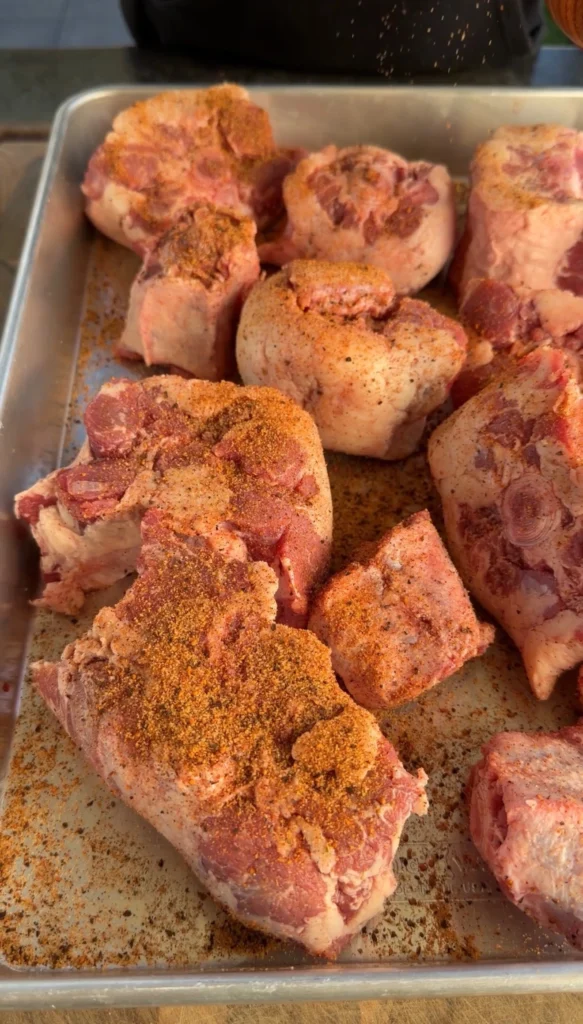
Season all surfaces of the oxtails generously with salt, pepper, garlic seasoning. Use your SPG blend or individual seasonings combined in equal parts.
Start with one side. Apply a heavy coating of seasoning. You should see a thick layer covering the meat. Don’t be conservative. Oxtails are rich and can handle aggressive seasoning.
Flip each piece and season the other side equally well. Get into the crevices around the bones. Make sure every exposed surface has seasoning.
The seasoning should stick to the meat without a binder. But if you want insurance, you can lightly coat with mustard or oil first. For oxtails, it’s optional.
Let the seasoned oxtails sit at room temperature for 20 to 30 minutes while you preheat the smoker. This allows them to come off the chill and helps the seasoning adhere.
Step 3: Preheat the Smoker
Preheat your smoker to 275°F. Use oak, hickory, or pecan wood. These hardwoods provide bold smoke that matches beef’s rich flavor.
Let the smoker stabilize at temperature for at least 10 minutes. You want clean, thin blue smoke. Thick white smoke indicates incomplete combustion. Adjust airflow for clean burn.
Clean the grill grates if needed. Residue from previous cooks can transfer flavors or cause sticking.
Step 4: Smoke the Oxtails
Place the seasoned oxtails directly on the smoker grates. Arrange them so they’re not touching or overlapping. Air should circulate around each piece.
Close the smoker lid. Don’t open it for the first hour. Each time you open the lid, heat and smoke escape. This extends cooking time.
Smoke the oxtails for 2½ to 3 hours total. Monitor smoker temperature and adjust as needed to maintain 275°F. Add wood as necessary to keep smoke production steady.
After 2 hours, check the bark development. The oxtails should be developing dark, crusty exterior. The color should be deep mahogany to almost black in spots.
When the bark is well-developed and the oxtails have rich color all over, they’re ready for braising. This typically happens at the 2½ to 3-hour mark.
Step 5: Prepare for Braising
Remove the oxtails from the smoker. Handle carefully as they’re hot. Transfer them to a Dutch oven or disposable aluminum foil tray. A Dutch oven works better because it has a tight-fitting lid.
Add 2 heaping tablespoons of beef tallow to the Dutch oven. The tallow can be solid when you add it. It will melt during braising.
If using beef broth, add a small splash, approximately ¼ to ½ cup. Don’t add too much. You want moisture for braising but not so much that you’re boiling the oxtails.
Arrange the oxtails in the Dutch oven so they fit relatively snugly. They can overlap slightly. Cover tightly with the Dutch oven lid. If using foil tray, cover tightly with heavy-duty aluminum foil. No steam should escape.
Step 6: Braise in the Smoker
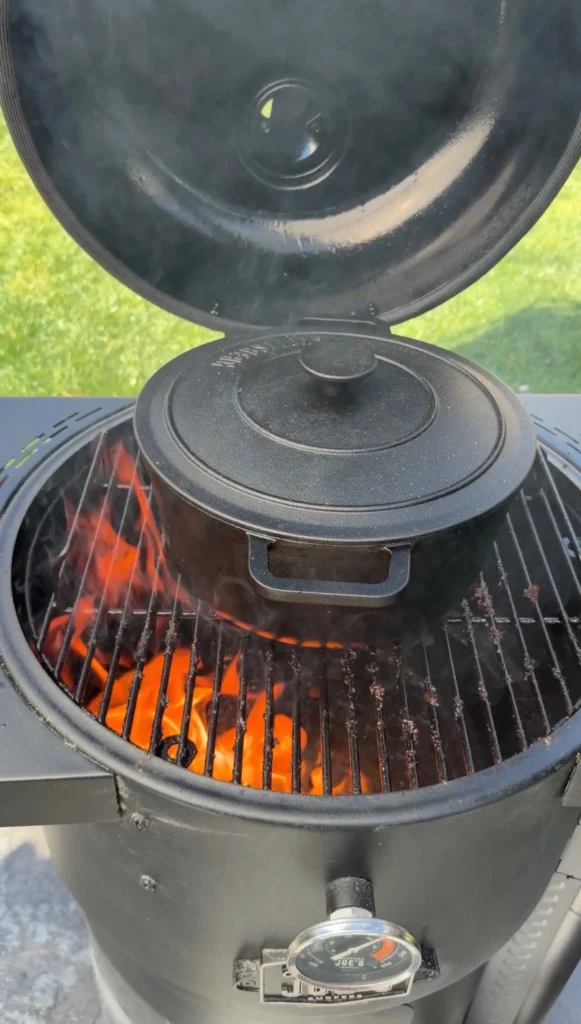
Return the covered Dutch oven to the smoker. Keep the temperature at 275°F. The oxtails will braise in the sealed vessel.
The braising phase takes approximately 3 hours. The exact time varies based on oxtail size and how thickly they’re packed. Larger pieces take longer than smaller pieces.
After 2 hours of braising, check for tenderness. Carefully remove the lid or foil. Be cautious of the steam that escapes. It’s very hot.
Insert a probe thermometer or skewer into the largest oxtail piece. It should slide through with minimal resistance. If you feel resistance, re-cover and continue braising.
Check every 20 to 30 minutes until the probe slides through like soft butter. The meat should be pulling away from the bones. The oxtails should look glossy and dark.
When probe tender, remove the Dutch oven from the smoker.
Step 7: Rest the Oxtails
Remove the lid or foil from the Dutch oven. Let the oxtails rest uncovered for 15 to 20 minutes. This allows excess steam to escape. The braising liquid will thicken slightly as it cools.
During resting, the meat firms up just slightly. This makes the oxtails easier to handle for serving. They’ll still be fall-apart tender but won’t disintegrate when you pick them up.
The surface will develop a slight glaze as the fat from the braising liquid coats the meat. The oxtails should look sticky and rich.
Step 8: Serve
Transfer the oxtails to a serving platter. Use tongs and be gentle. They’re very tender and can fall apart if handled roughly.
Spoon some of the braising liquid over the oxtails. This liquid is pure gold. It’s rich with rendered beef fat, tallow, and gelatin from the collagen. Don’t waste it.
Serve the oxtails immediately while hot. Provide individual plates or bowls. Give each person 1 to 2 large pieces or 2 to 3 smaller pieces depending on size.
For serving suggestions, oxtails go over white rice, creamy polenta, mashed potatoes, or grits. The rich braising liquid soaks into the starch. You can also serve them in tacos, over noodles, or as a standalone main with crusty bread for dipping.
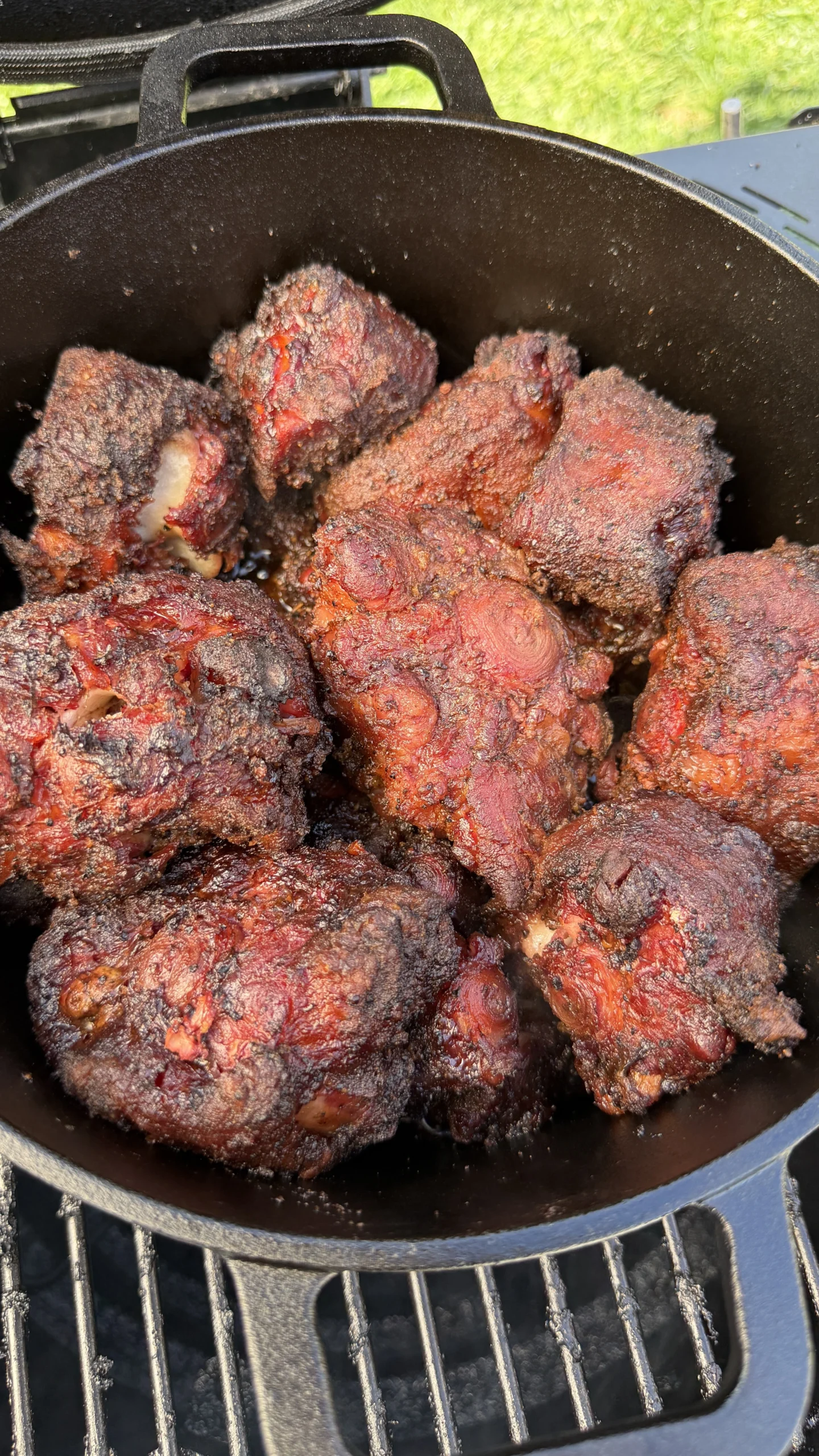
Smoked and Braised Oxtails
Ingredients
Equipment
Method
- Pat oxtails completely dry. Season generously on all sides with SPG blend. Let sit at room temperature 20 to 30 minutes.
- Preheat smoker to 275°F with oak, hickory, or pecan wood.
- Place oxtails directly on smoker grates. Close lid. Smoke for 2½ to 3 hours until deep mahogany bark develops and exterior is richly colored.
- Transfer smoked oxtails to Dutch oven or foil tray. Add 2 heaping tablespoons beef tallow and optional splash of beef broth. Cover tightly with lid or foil.
- Return to smoker at 275°F. Braise for approximately 3 hours until probe slides through meat like soft butter and meat is pulling from bones.
- Remove from smoker. Rest uncovered 15 to 20 minutes.
- Serve immediately over rice, mashed potatoes, polenta, or in tacos. Spoon braising liquid over top.
Nutrition
Notes
Tried this recipe?
Let us know how it was!Frequently Asked Questions
Can You Make Oxtails Without a Smoker?
You can braise oxtails in the oven without smoking. Brown them first in a hot skillet or under the broiler to develop some crust. This creates color and flavor similar to bark but without smoke.
Transfer browned oxtails to a Dutch oven. Add beef tallow, broth, aromatics like onions and garlic if desired. Cover and braise at 275°F for 4 to 5 hours until tender.
For smoke flavor without a smoker, add liquid smoke to the braising liquid. Use 1 to 2 teaspoons. This provides smoke character but not the same depth as actual smoking.
The oven method produces tender, flavorful oxtails. But they won’t have the bark and smoke complexity of smoked-then-braised oxtails. If you have access to a smoker, the two-stage method is worth it.
What Should You Serve with Oxtails?
White rice is traditional. The braising liquid soaks into the rice creating rich, savory bites. Jasmine rice works well. So does plain long-grain white rice.
Mashed potatoes provide creamy base that absorbs the braising liquid. Make them buttery and smooth. The richness complements the oxtails.
Creamy polenta or grits work excellently, especially for soul food or Southern-style presentations. Cook them with butter and cheese for extra richness.
For lighter sides, serve roasted or steamed vegetables. Green beans, Brussels sprouts, or carrots provide contrast to the rich oxtails.
Crusty bread for dipping in the braising liquid is essential regardless of other sides. The liquid is too good to waste.
Why Are My Oxtails Tough After Braising?
Insufficient braising time is the most common cause. Oxtails need approximately 3 hours of covered braising at 275°F. If you only braised for 1 to 2 hours, the collagen hasn’t fully converted.
Continue braising until the probe test confirms tenderness. Some racks need 3½ to 4 hours. Large pieces from older cattle take longer than small pieces from younger animals.
Braising temperature too high can cause toughness. Above 300°F, the meat can dry out before collagen converts. Stick to 275°F for best results.
Insufficient moisture in the braising vessel can prevent proper collagen breakdown. Make sure you added the tallow and optional broth. The sealed environment should trap steam.
Can You Use the Braising Liquid as Sauce?
Absolutely. The braising liquid is incredibly flavorful. It’s rich with rendered beef fat, tallow, gelatin from collagen, and concentrated beef flavor.
Strain the liquid through a fine-mesh strainer to remove any solids. You can serve it as-is, spooned over the oxtails and rice.
For thicker sauce, reduce the liquid in a saucepan over medium-high heat. Simmer until it reaches desired consistency. The gelatin will thicken it naturally.
You can also refrigerate the liquid overnight. The fat will solidify on top. Scrape off the fat layer if you want leaner sauce, or leave it for richness.
The liquid freezes well for up to 3 months. Use it as base for soups, stews, or sauces for other beef dishes.
How Do You Store and Reheat Leftover Oxtails?
Store oxtails in an airtight container with the braising liquid. The liquid keeps them moist. Refrigerate for up to 4 days.
For reheating, place oxtails and liquid in a covered pot or Dutch oven. Heat gently over medium-low heat until warmed through, about 15 to 20 minutes.
Microwave reheating works but can create uneven heating. Use 50% power and heat in 2-minute intervals, turning pieces between intervals.
For freezing, cool completely then pack in freezer-safe containers with braising liquid. Freeze for up to 3 months. Thaw in refrigerator overnight before reheating.
Leftover oxtails can be shredded and used in tacos, over nachos, in pasta, or mixed into rice dishes. The meat is so tender it falls apart easily for these applications.
Ready to Level Up?
Take your backyard cooking from good to legendary.
This is where I keep all my most-used smokers, knives, and favorite cooking tools.
Shop My Gear CollectionExplore More Recipes
Find more diverse flavors at CWFeats.com