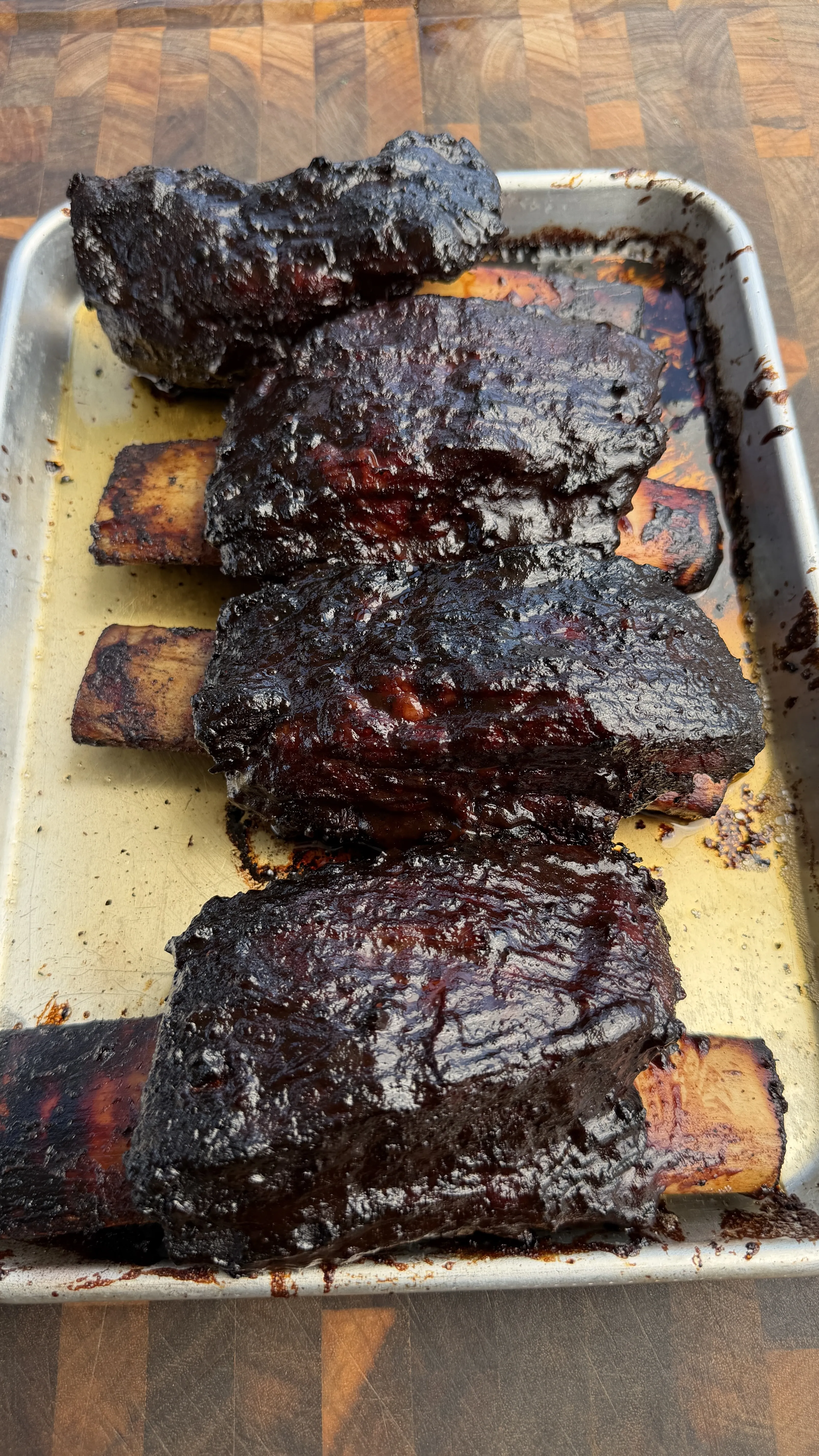
Smoked beef ribs cooked hot and fast at 300 to 350°F with hickory wood come out with incredible bark on the outside and rich, juicy meat on the inside. A rack of beef plate ribs gets trimmed, separated, seasoned, smoked bone-side down to 185°F, wrapped until probe tender at 210°F, and finished with a barbecue sauce glaze.
What Are Smoked Beef Plate Ribs?
Beef plate ribs (sometimes called dino ribs or beef short ribs) are cut from the short plate section of the cow. They are large, meaty ribs with a lot of intramuscular fat and connective tissue that breaks down during a long cook.
Smoking them hot and fast at 300 to 350°F renders the fat faster and develops a thick bark on the exterior while keeping the total cook time to about 4 to 5 hours instead of the 8 to 10 hours a low-and-slow cook takes.
If you enjoy smoked beef recipes, the smoked beef brisket and hanging beef rib tacos use similar smoking techniques.
Ingredients
- Beef plate ribs (1 rack, 4 bones)
- Yellow mustard or oil (binder, optional)
- PS Seasoning Pig Rub or your favorite sweet barbecue rub
- Salt, pepper, and garlic seasoning (optional)
- Hickory wood for smoking
- Your favorite barbecue sauce for glazing
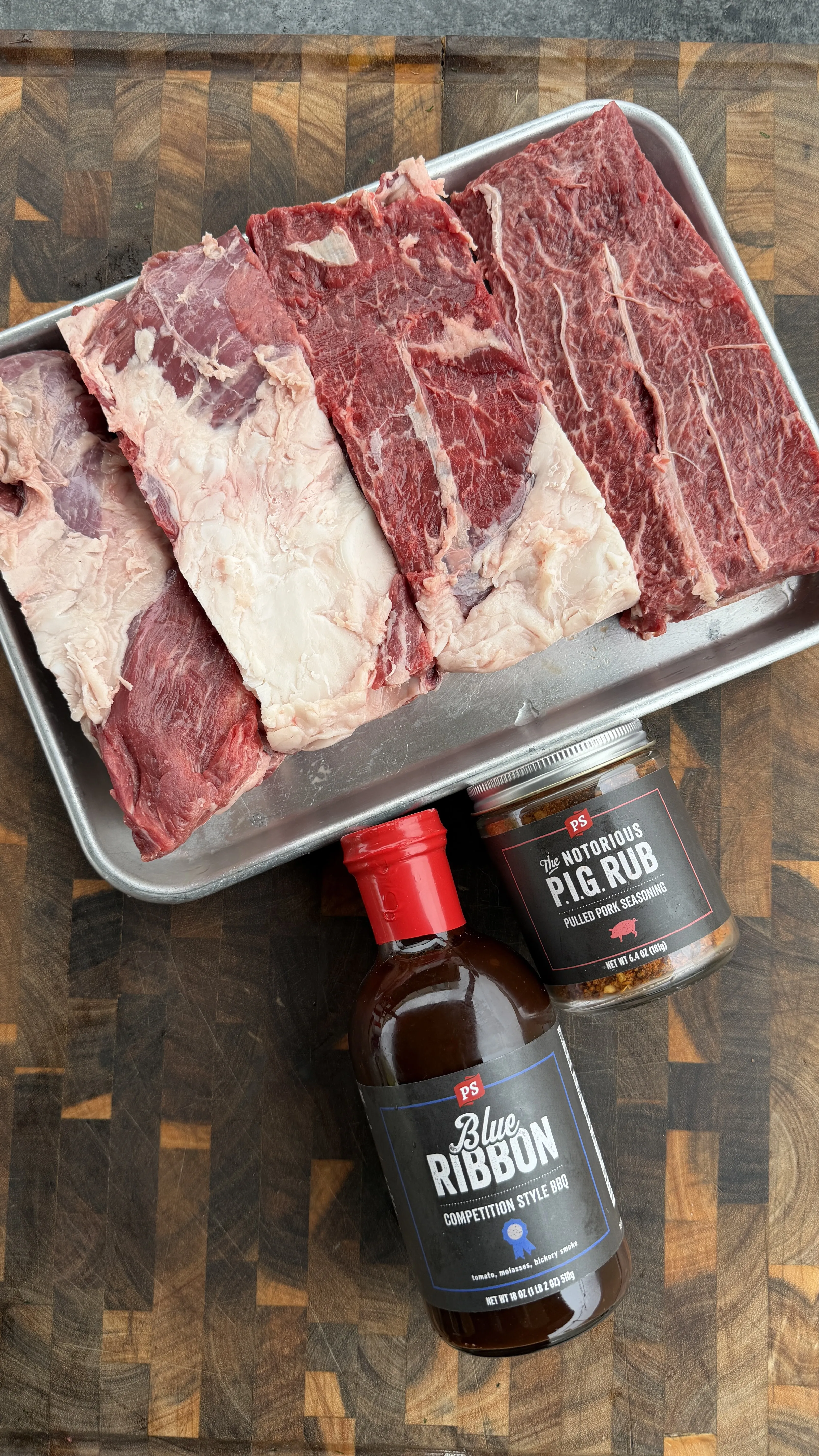
Trim and Prep the Ribs
Trim any thick pads of hard fat and silver skin from the top of the rack, but leave the membrane on the bone side. The membrane on beef plate ribs crisps up during the hot and fast cook and helps hold the rib together.
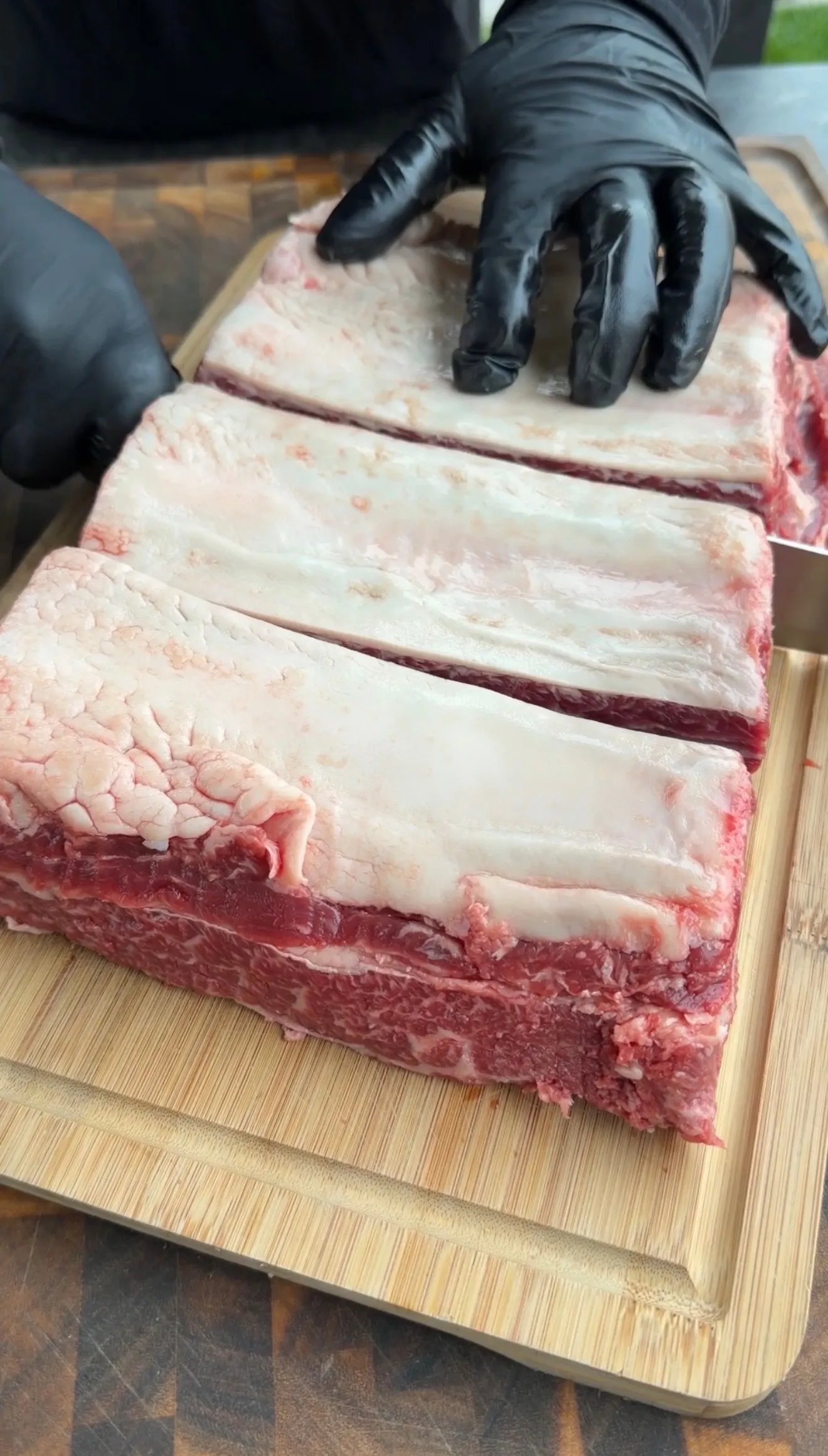
Slice the rack into individual ribs before seasoning. Separating them exposes all four sides to smoke and heat, which means bark develops on every surface instead of just the top and bottom.
Season the Ribs
Coat each rib lightly with yellow mustard or oil as a binder if you prefer. The mustard flavor cooks off completely and just helps the seasoning stick.
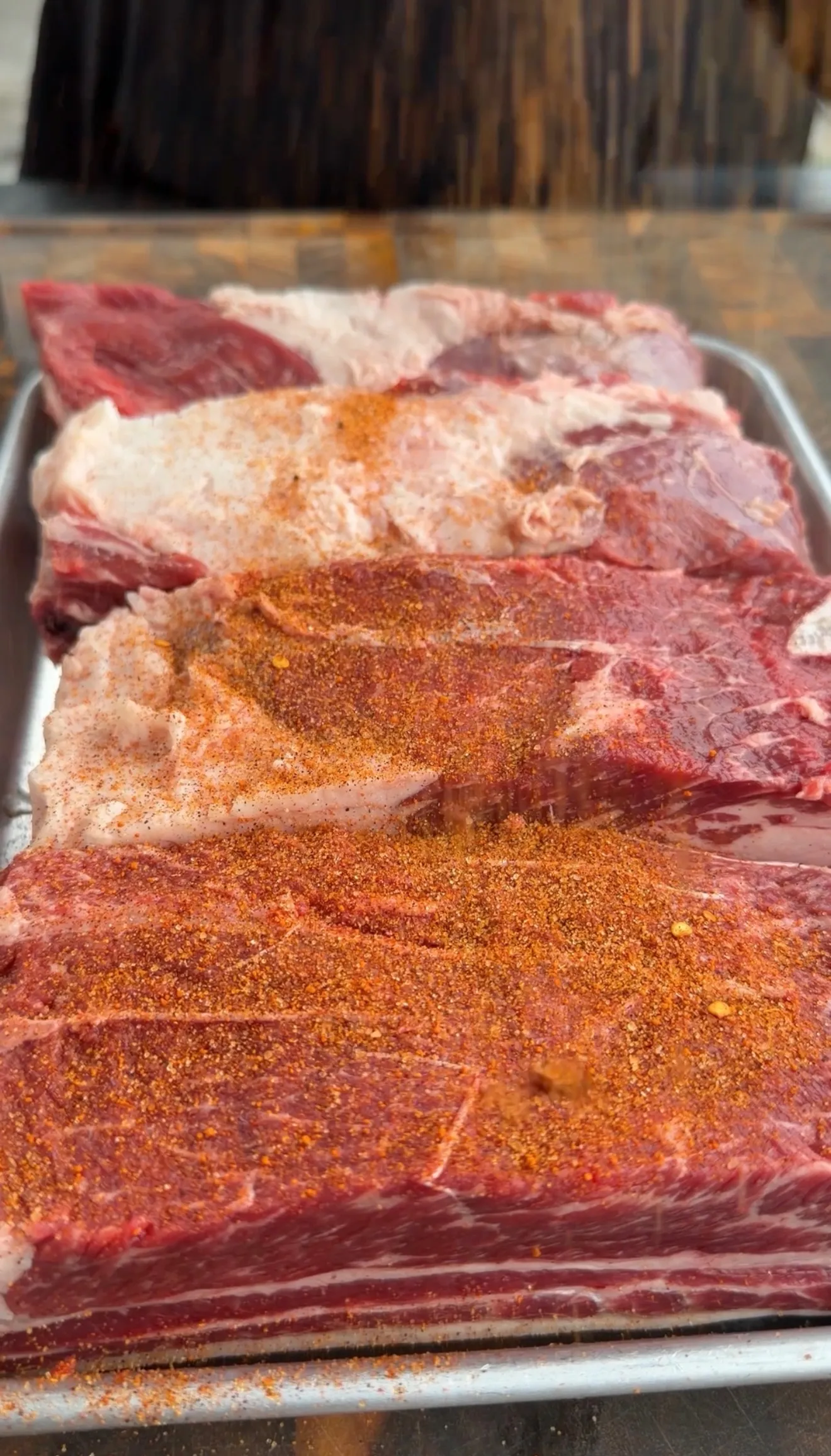
Season generously on all sides with a sweet barbecue rub. A sweet rub works well on beef ribs because the sugar caramelizes during the cook and contributes to bark formation.
Smoke the Ribs Bone-Side Down
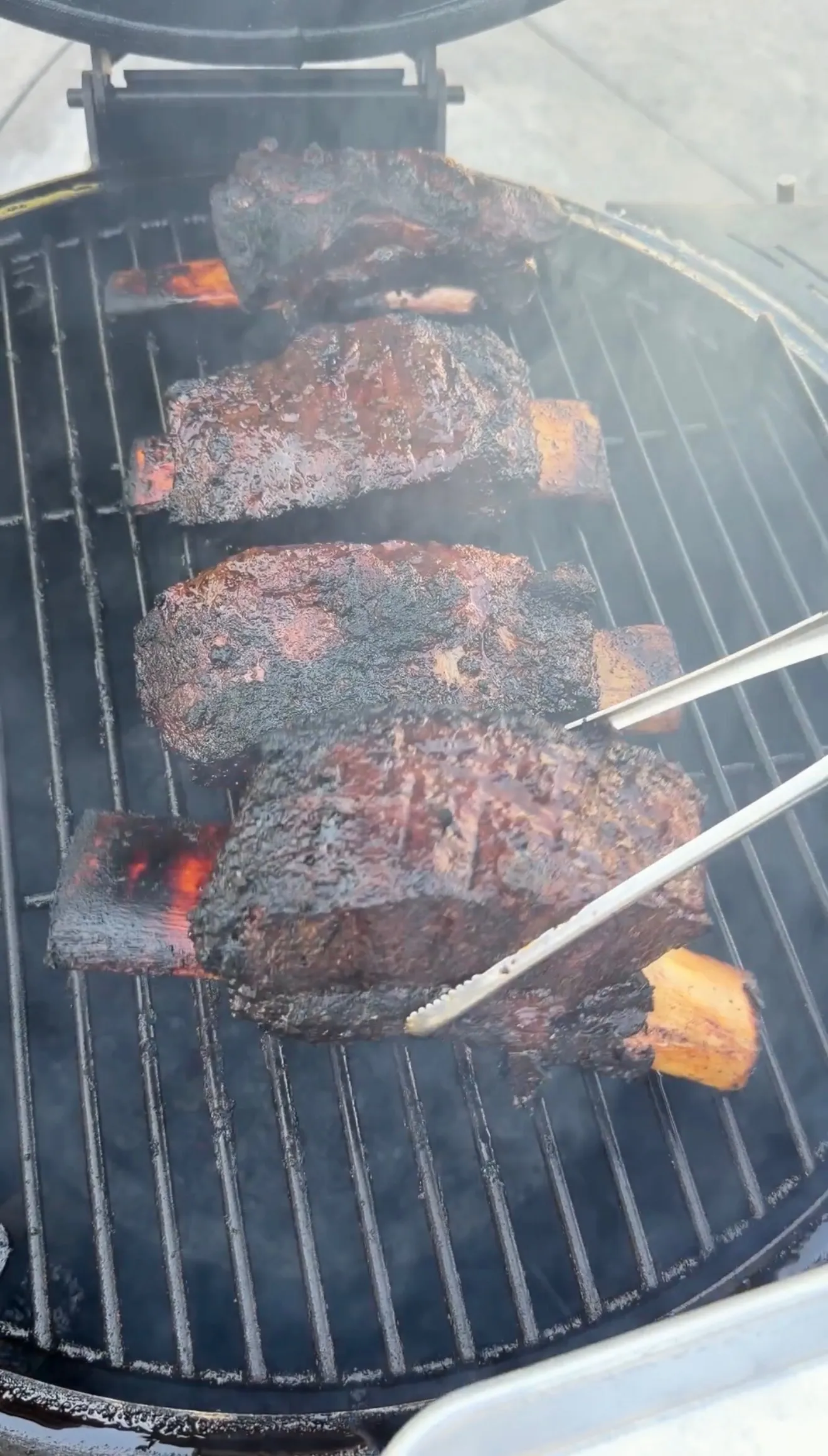
Preheat the smoker to 300 to 350°F with hickory wood. Place the ribs bone-side down directly on the grates. The bones act as a heat shield between the fire and the meat, preventing the bottom from drying out.
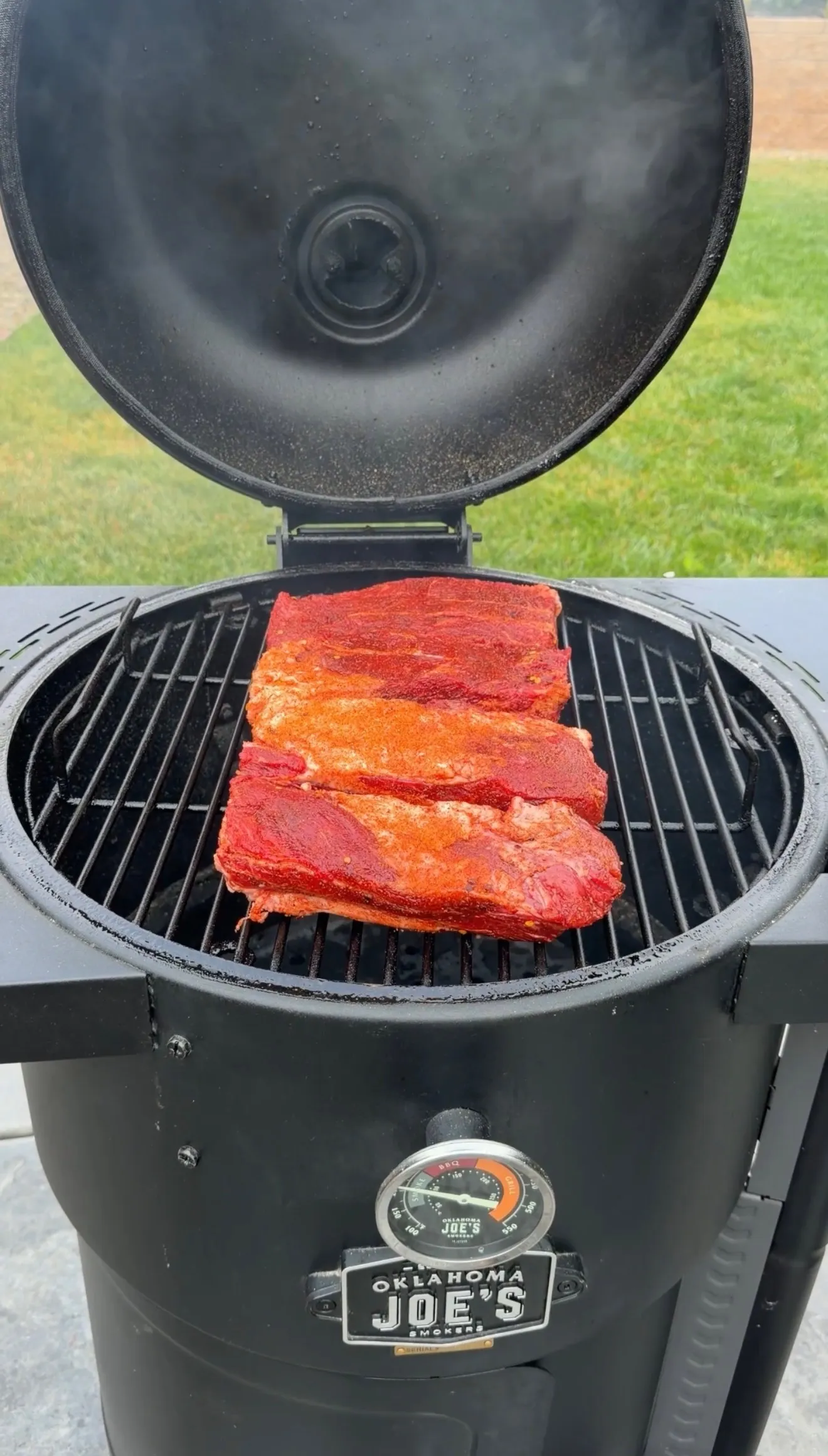
Smoke until the internal temperature reaches around 185°F. The bark should be a deep mahogany color and firmly set before moving to the wrap phase.
Wrap Until Probe Tender
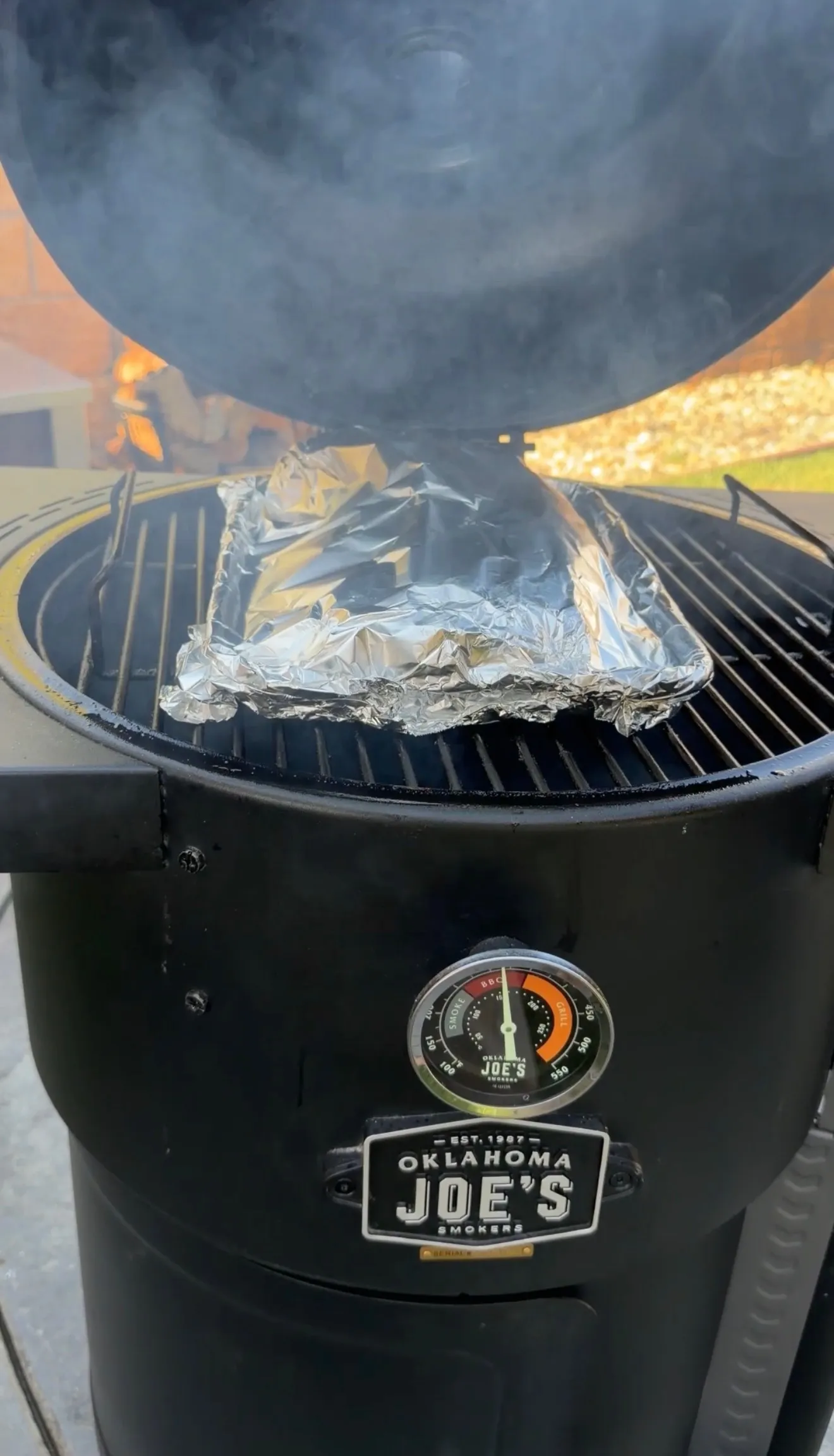
Transfer the ribs to a foil tray and wrap tightly with aluminum foil. Return them to the smoker and continue cooking for about 2 more hours.
The ribs are done when the internal temperature reaches approximately 210°F and they are completely probe tender. A thermometer probe should slide into the thickest part of the meat with zero resistance.
Glaze, Rest, and Serve
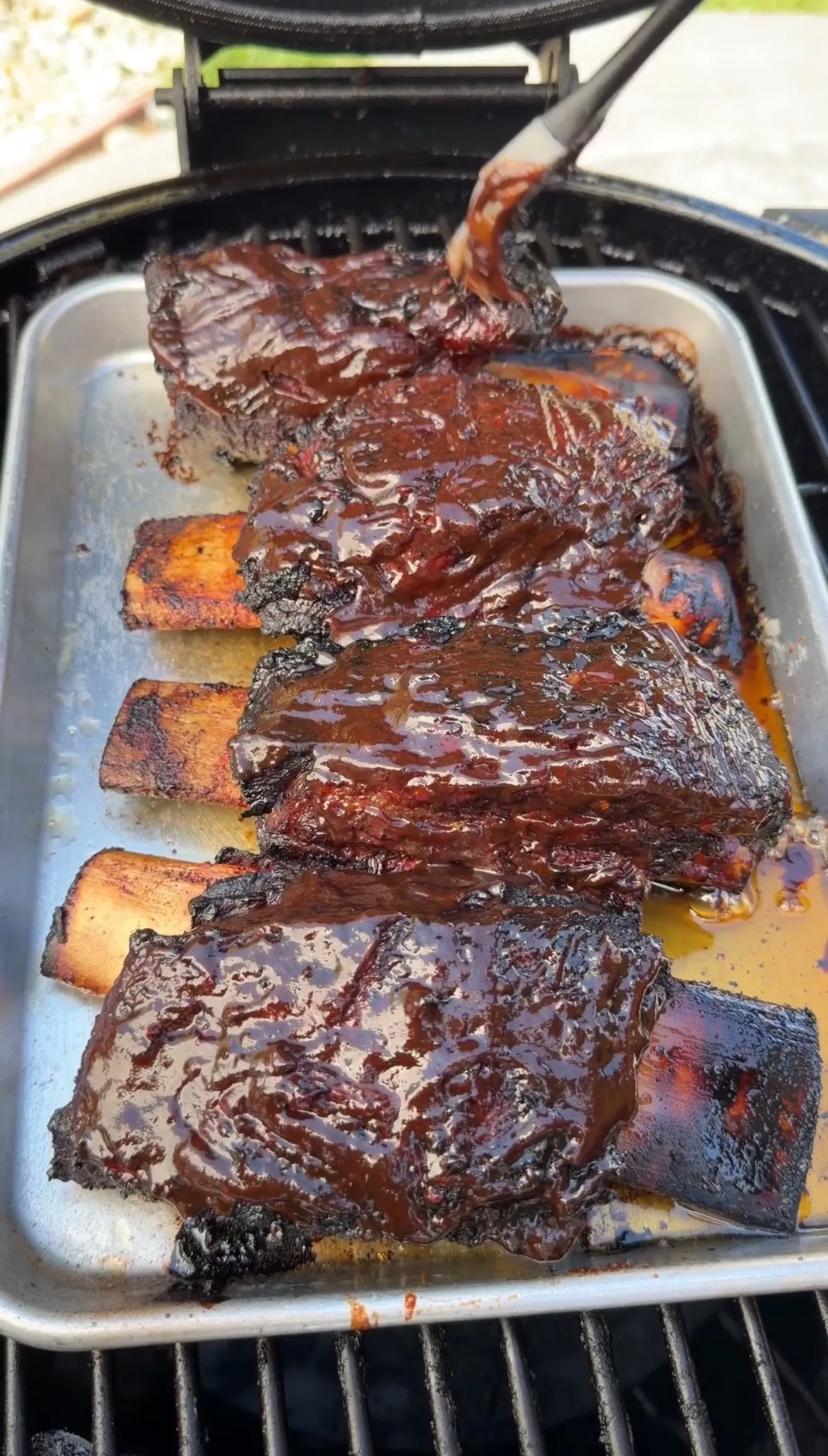
Remove the foil and brush the ribs with your favorite barbecue sauce on all exposed sides. Return them to the smoker unwrapped for about 10 minutes to let the sauce tack up and become sticky.
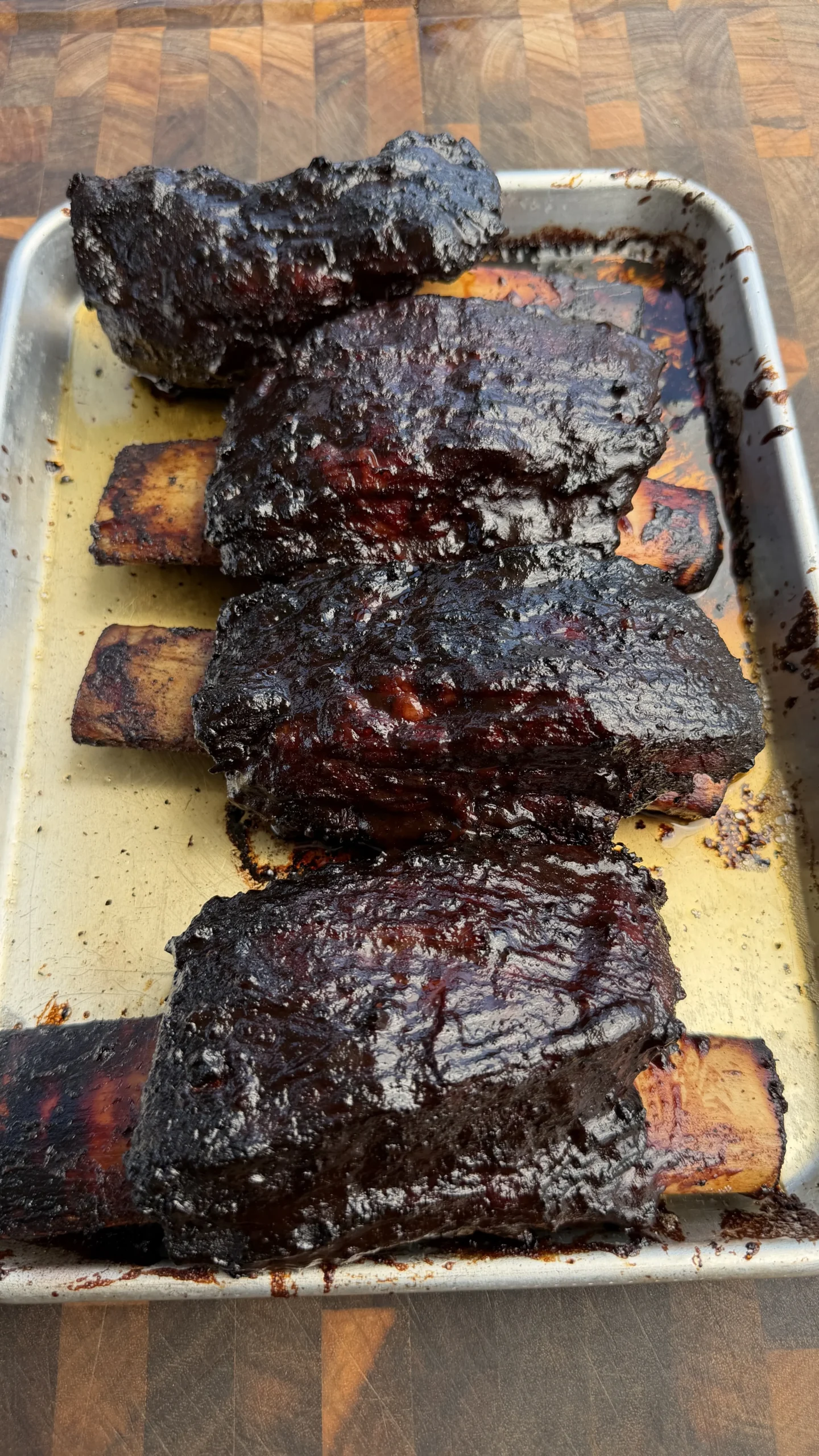
Remove the ribs and let them rest for 15 to 20 minutes before slicing or serving. Resting allows the juices to redistribute so they stay in the meat instead of running out on the cutting board.
Tips and Frequently Asked Questions
- Probe tenderness is the real doneness indicator, not just temperature. 210°F is the guide, but the probe should slide into the meat like butter with zero resistance. If there is any grab, wrap them back up for another 20 to 30 minutes.
- Leave the membrane on the bone side. Unlike pork ribs, the membrane on beef plate ribs crisps up at these temperatures and adds crunch.
- Separate the rack into individual ribs before seasoning so bark develops on all four sides instead of just the top and bottom.
- Hickory is the best wood for beef ribs. Milder woods like apple or cherry can get lost behind the intense beefy flavor. Oak is a good alternative if you want something slightly less assertive.
- Wrap at 185°F, not earlier. Wrapping before the bark is fully set causes it to soften too much in the foil.
- You can smoke beef ribs at 225°F instead of 300 to 350°F, but the cook will take 8 to 10 hours instead of 4 to 5. Both methods finish at the same internal temperature.
- Beef plate ribs can be found at butcher shops, Costco, or specialty meat markets. Ask for beef short ribs, dino ribs, or NAMP 123A if the butcher needs a specific cut name.
- Let the ribs rest for at least 15 minutes. Cutting into them immediately causes the juices to run out.
Similar Recipes
- Hanging Beef Rib Tacos
- Smoked Beef Rib Tacos
- Beef Rib Tacos
- Smoked Beef Ribs Pastrami
- Smoked Beef Brisket
- Wine Braised Short Ribs
- Smoked Direct Heat BBQ Ribs
Smoked Barbecue Beef Ribs
Ingredients
Equipment
Method
- Trim excess fat and silver skin from the top. Leave the membrane on the bone side. Slice the rack into individual ribs.
- Coat with mustard or oil if desired. Season generously on all sides with sweet barbecue rub.
- Preheat smoker to 300-350°F with hickory. Place ribs bone-side down and smoke until internal temperature reaches 185°F.
- Transfer ribs to foil tray. Wrap tightly with foil. Return to smoker and cook about 2 more hours until probe tender at approximately 210°F.
- Remove foil. Brush with barbecue sauce. Let sauce tack up 10 minutes uncovered on the smoker.
- Remove from smoker and rest 15-20 minutes before slicing or serving.
Notes
Tried this recipe?
Let us know how it was!Ready to Level Up?
Take your backyard cooking from good to legendary.
This is where I keep all my most-used smokers, knives, and favorite cooking tools.
Shop My Gear CollectionExplore More Recipes
Find more diverse flavors at CWFeats.com