
Hot Honey Smoked Ribs
See How It’s Done:
This pork ribs recipe takes 2 racks of pork loin ribs, cuts them into individual ribs for maximum bark surface, then coats them with molasses as a binder before a heavy BBQ rub. The ribs smoke unwrapped at 250 to 275°F for 1.5 to 2 hours until they hit 165°F internal, then get drowned in a homemade molasses hot honey sauce in a foil tray and smoke another hour until probe tender at 203°F. A final 10 minutes uncovered sets the sticky glaze. Total cook runs 3 to 3.5 hours and serves 4 to 6.
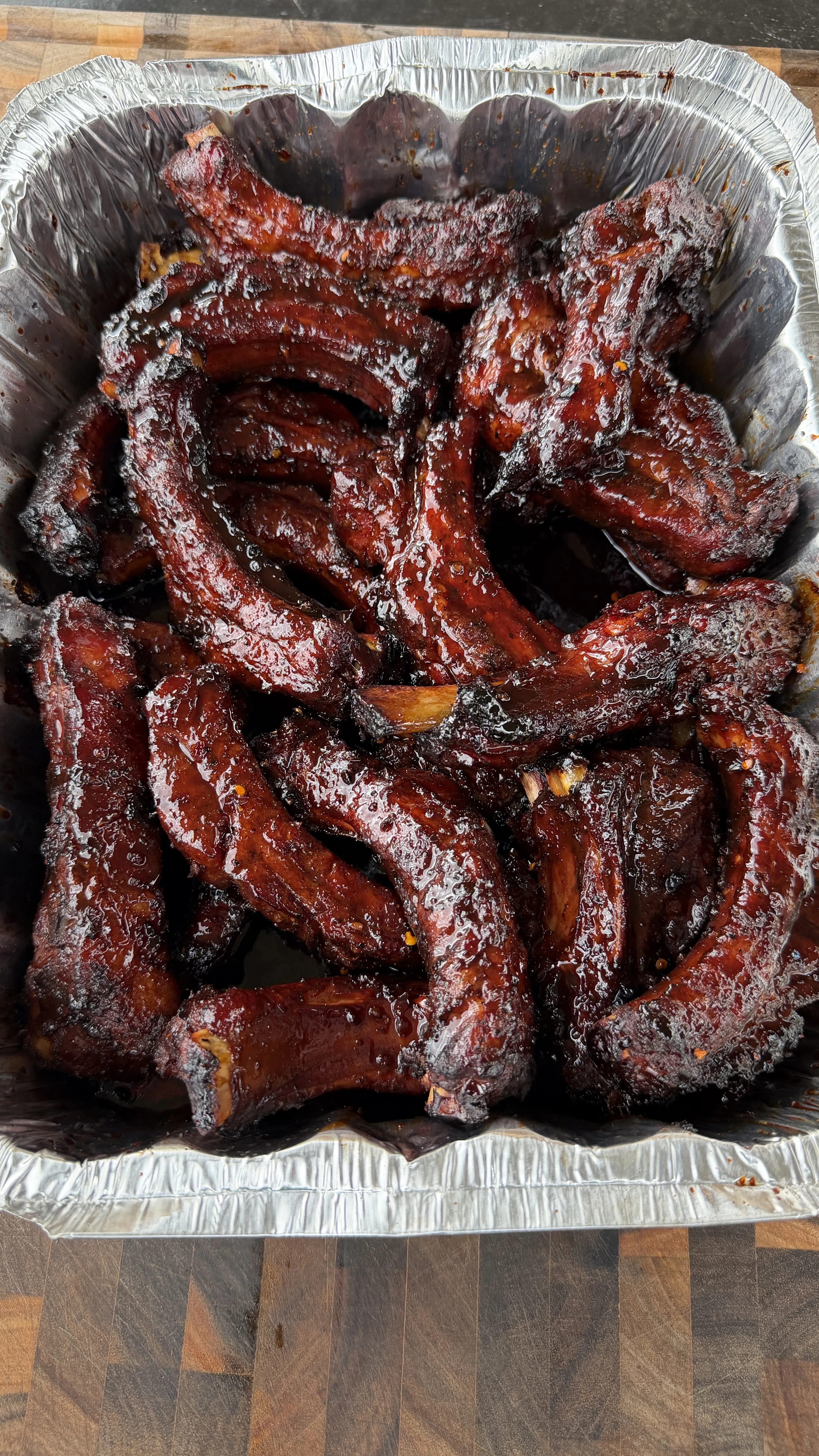
Why This Pork Ribs Recipe Cuts the Rack Into Individual Ribs Before Smoking
More Surface Area Equals More Bark and More Glaze
Most pork ribs recipes smoke the whole rack and slice at the end. The result is bark on the top and bottom, but the meat between each bone stays soft and unbarked. Cutting the rack into individual ribs before smoking exposes the sides of every rib to the smoke, the rub, and the eventual glaze. Consequently, every bite has crusted edges instead of just the outer ribs.
Faster Cook Time Than a Whole Rack
A full rack of loin ribs typically takes 4 to 6 hours to reach probe tender. Individual ribs hit the same finish in 3 to 3.5 hours because heat penetrates from all sides instead of just the top and bottom. As a result, the total smoke time drops by almost 40% without sacrificing tenderness or flavor depth, which makes this technique ideal for weeknight smokes or backyard parties.
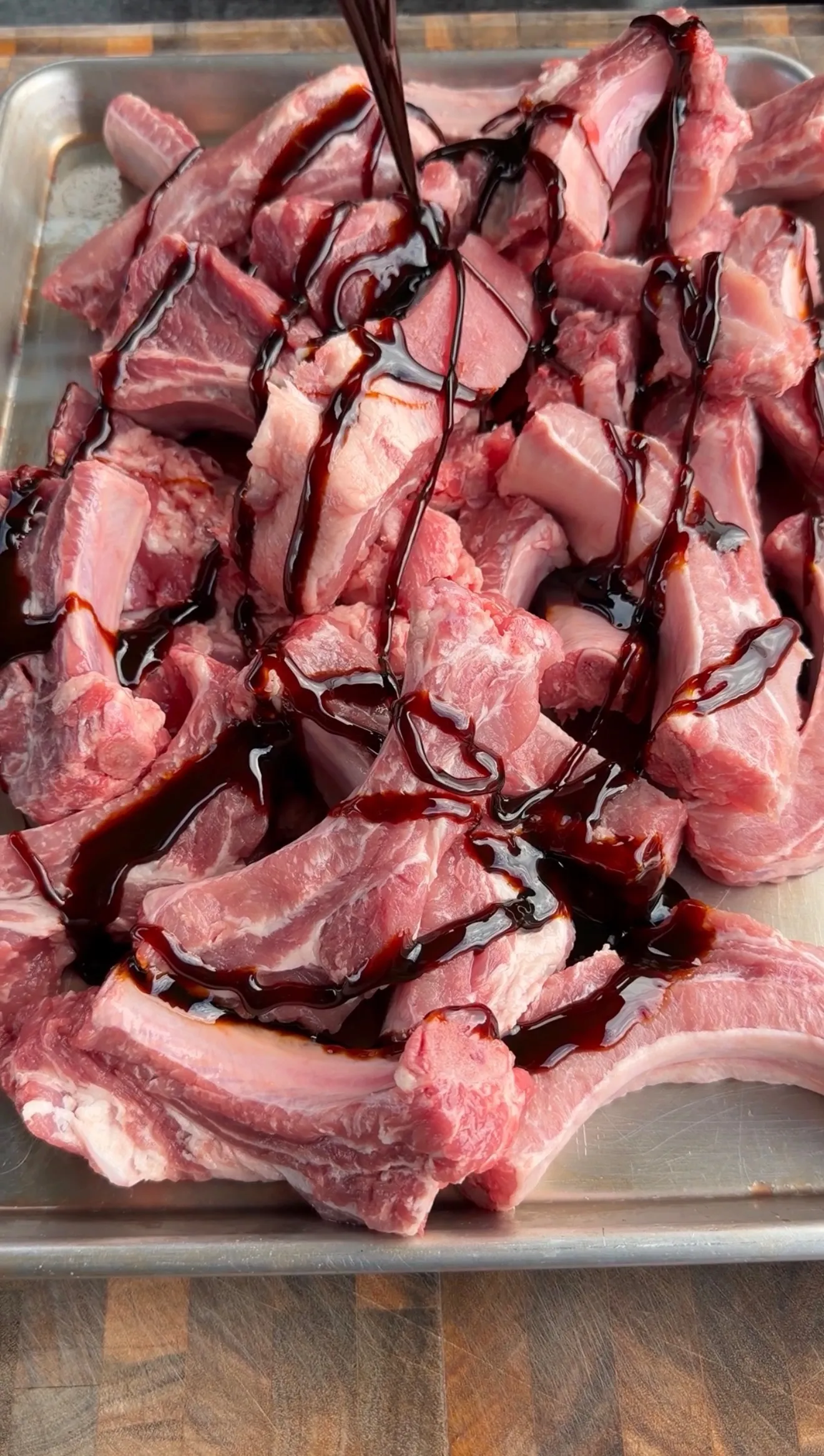
Molasses as a Binder: Why It Beats Mustard or Oil
Sticky Sugar Base Holds the Rub Better
Yellow mustard and olive oil are the standard binders most rib recipes call for. Both work, but neither adds flavor. Molasses changes that. Furthermore, the thick, sticky consistency holds onto BBQ rub far better than mustard or oil, which means more seasoning stays on the meat through the cook instead of falling off during handling. The result is a heavier, more even crust of rub adhered to every rib.
Caramelizes Into the Bark During the Smoke
Molasses contains roughly 70% sugars by weight, mostly sucrose with some glucose and fructose. At smoking temperatures of 250 to 275°F, those sugars caramelize directly into the bark over the 90 minute unwrapped phase. Therefore, the molasses binder contributes a deep, dark sweetness to the crust that mustard and oil cannot match. The smoke flavor sits on top of that caramelized foundation instead of fighting it.
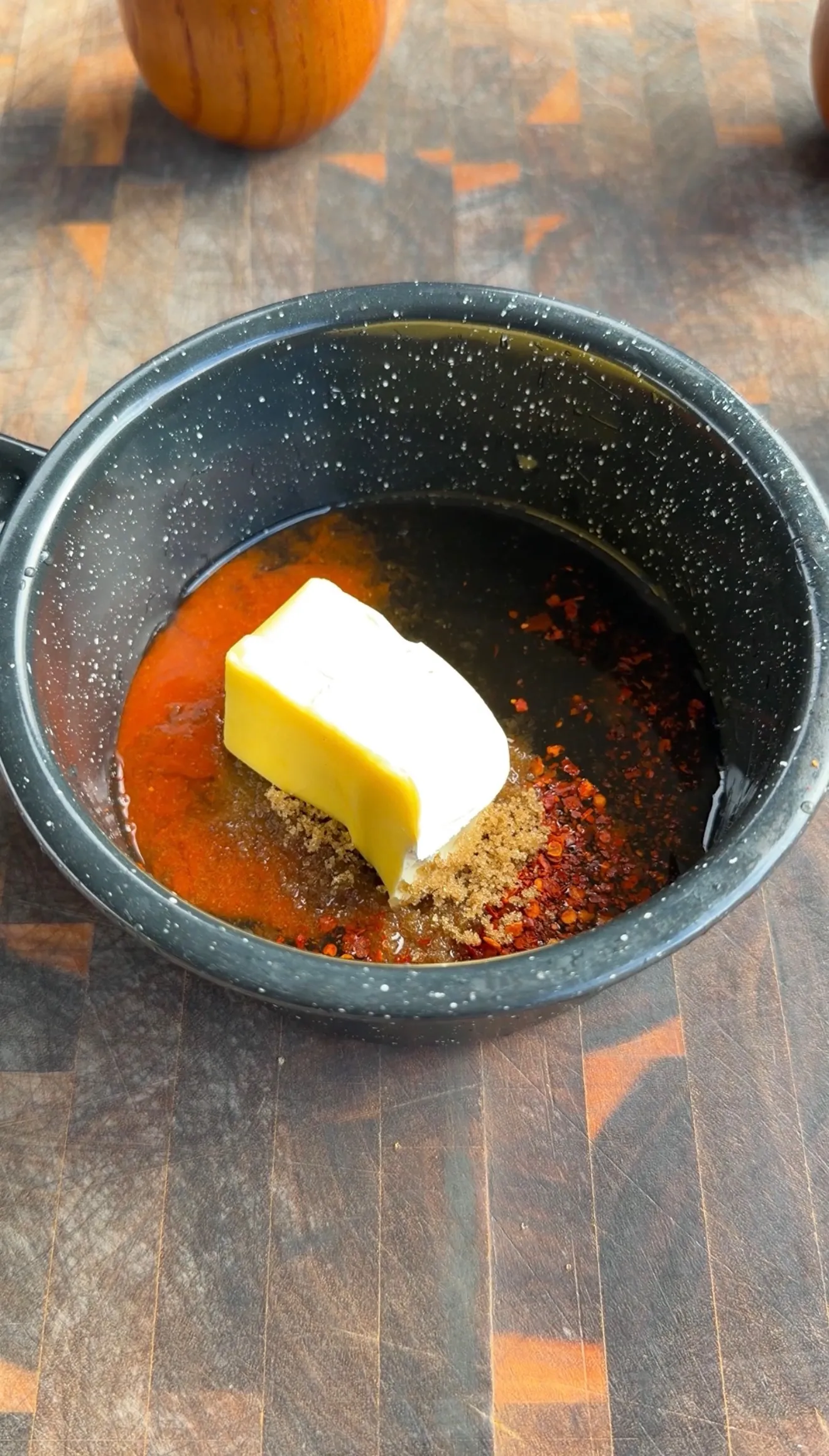
Building the Molasses Hot Honey Sauce
The Sweet-Heat-Acid Balance That Works
The sauce hits four flavor pillars in a precise ratio. Molasses and honey carry the sweet base, hot sauce and red pepper flakes deliver the heat in two waves (immediate burn from the hot sauce, slow build from the flakes), apple cider vinegar provides the acid that keeps the whole thing from feeling cloying, and butter rounds out the harsh edges with fat and silky body. Moreover, the brown sugar boosts the sticky factor for a glossier glaze finish.
How to Avoid the Sauce Breaking on Heat
Honey and butter can split if rushed over high heat. Specifically, the water in the honey separates from the fat in the butter and the sauce turns grainy. Therefore, build the sauce over medium-low heat in a saucepan, whisking gently as the butter melts into the honey and molasses. Pull it off the heat the moment everything looks glossy and combined. Additionally, do not let it simmer aggressively, as that breaks the emulsion.
Smoking at 250 to 275°F With a Two-Stage Cook
Stage 1: Naked Smoke to 165°F
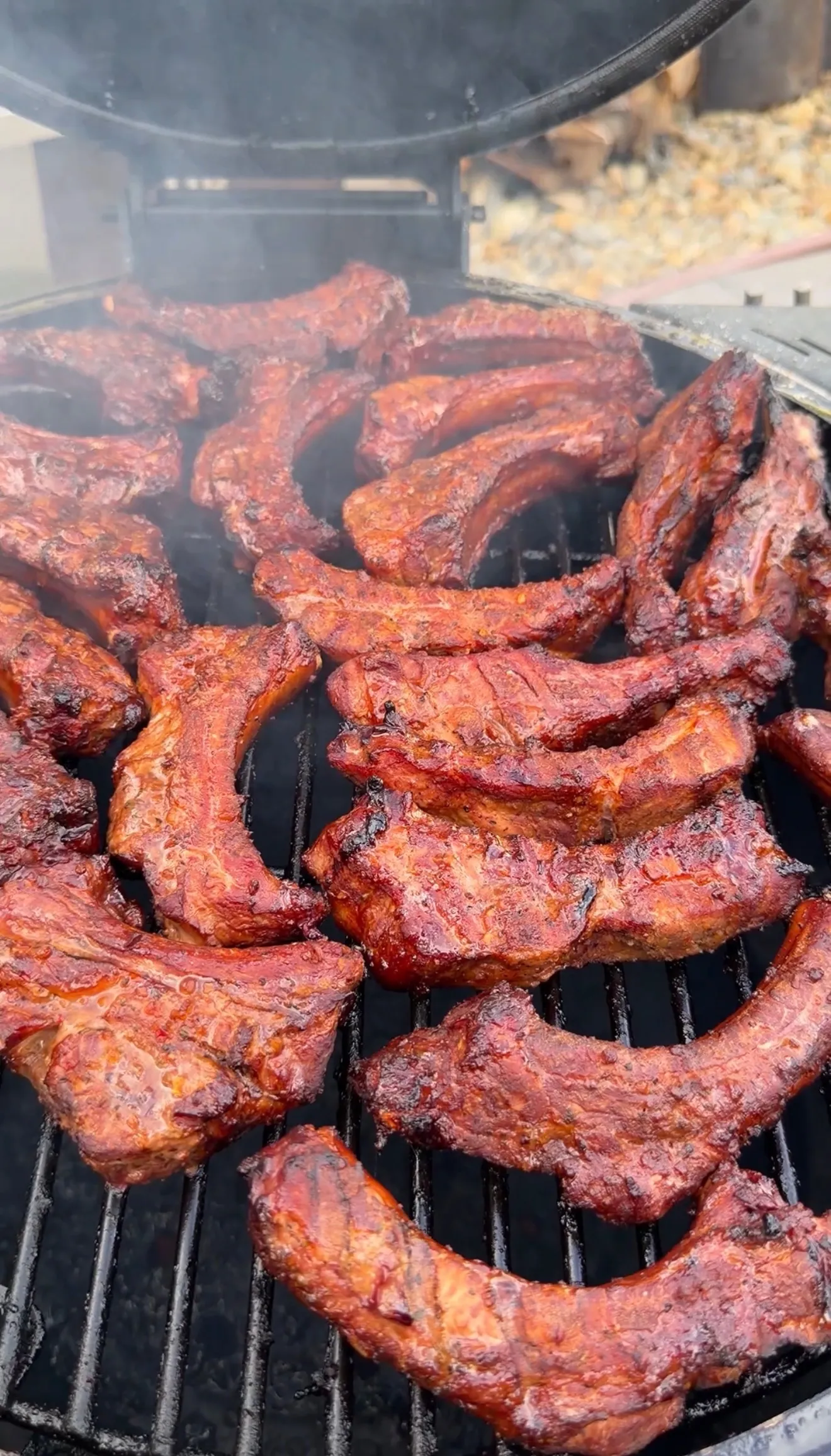
Place the seasoned individual ribs directly on the smoker grates and cook unwrapped at 250 to 275°F until the internal temperature in the meatiest rib reads around 165°F, about 1.5 to 2 hours. This stage builds the bark and lets the smoke deeply penetrate the meat before the sauce gets involved. In contrast, saucing too early traps moisture against the surface and prevents the bark from setting.
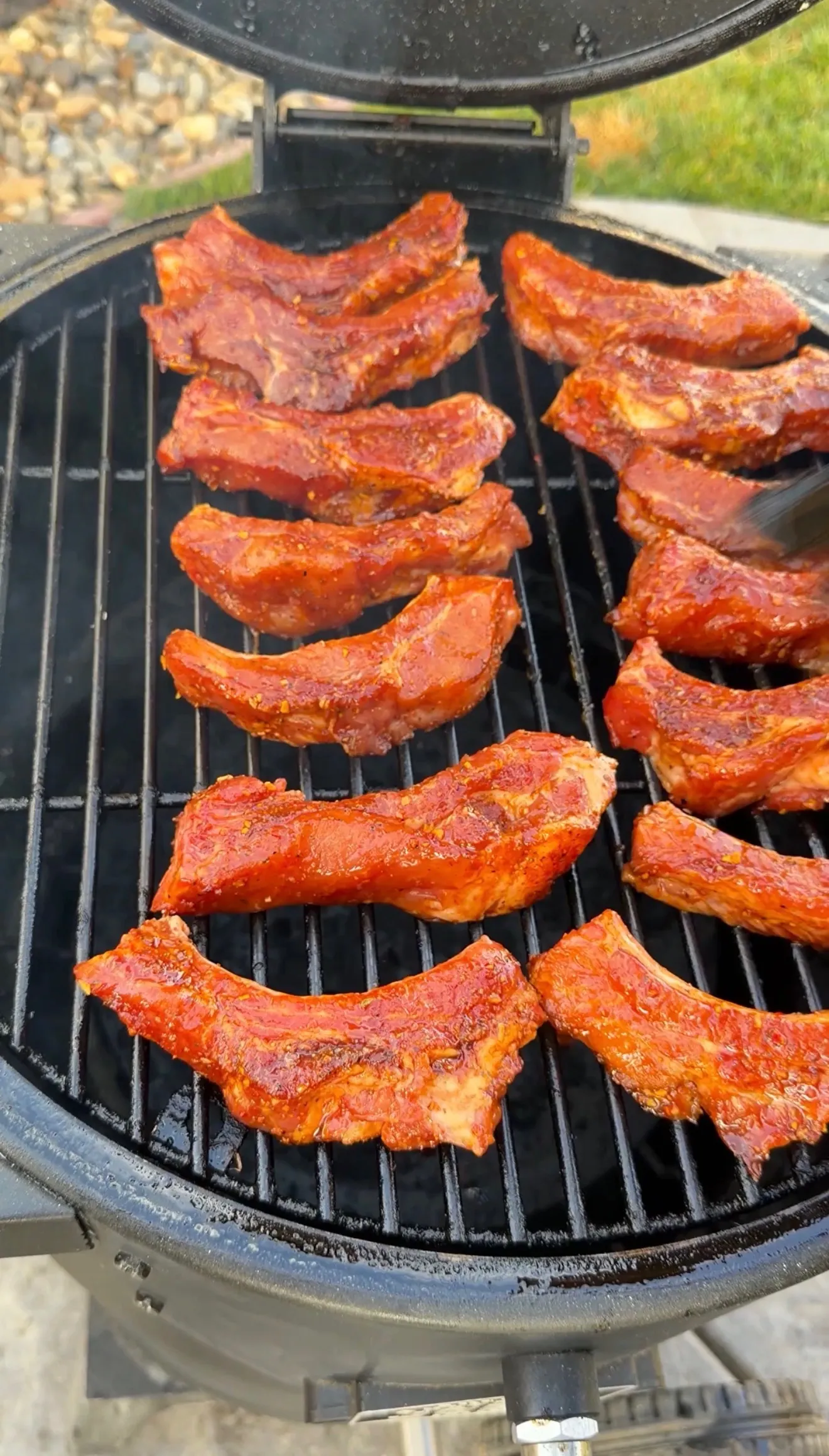
Stage 2: Foil Tray Braise in the Sauce to 203°F
Transfer the ribs to a foil tray, pour the molasses hot honey sauce over the top, and cover tightly with foil before returning to the smoker. Continue cooking until the ribs reach 203°F internal and a probe slides in with zero resistance, about another 1 to 1.5 hours. As a result, the ribs absorb the sauce while the connective tissue finishes breaking down, which gives you the tender bite and the flavor depth at the same time.
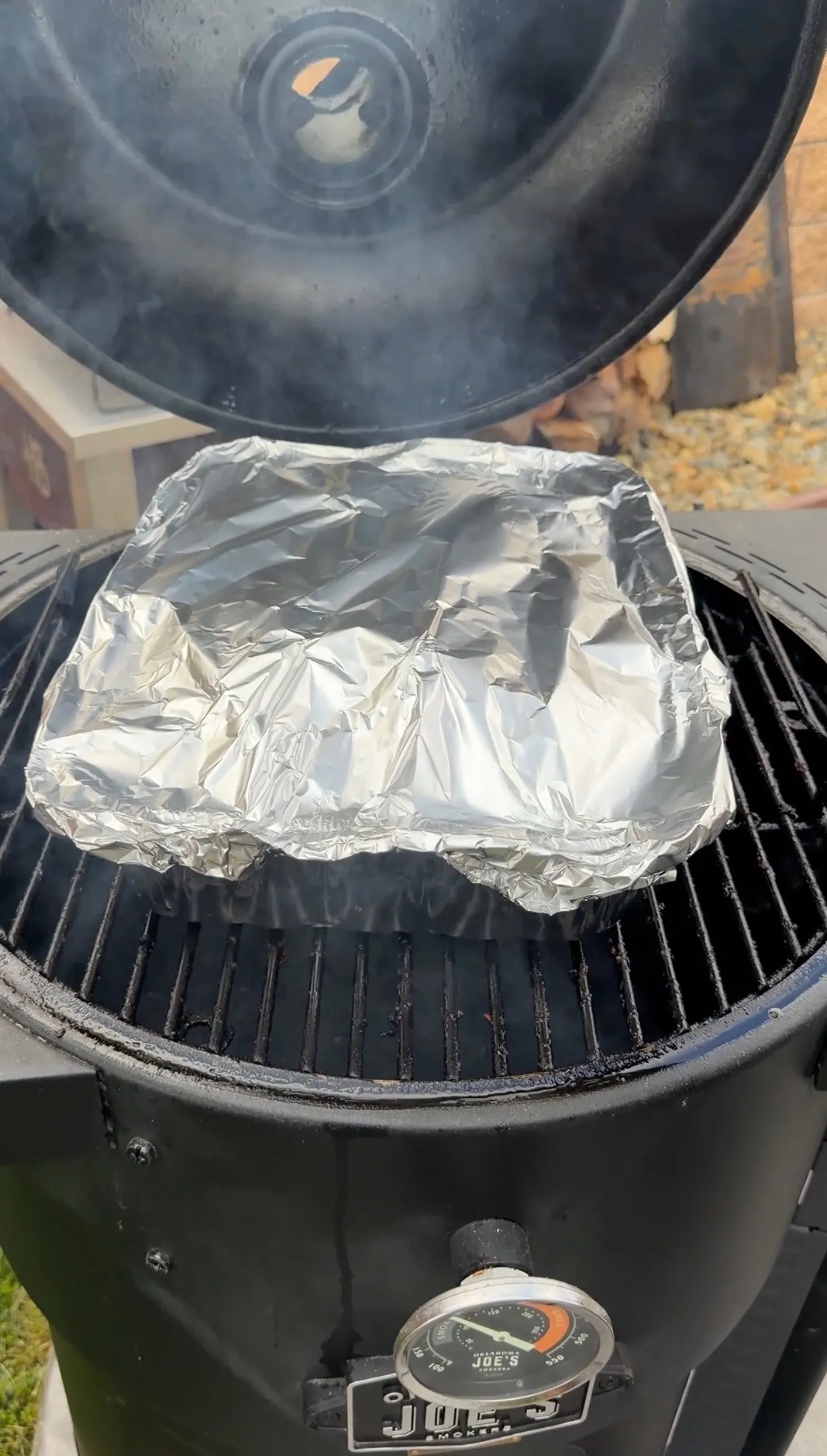
Setting the Glaze for That Sticky Restaurant Finish
Uncover and Brush With More Sauce
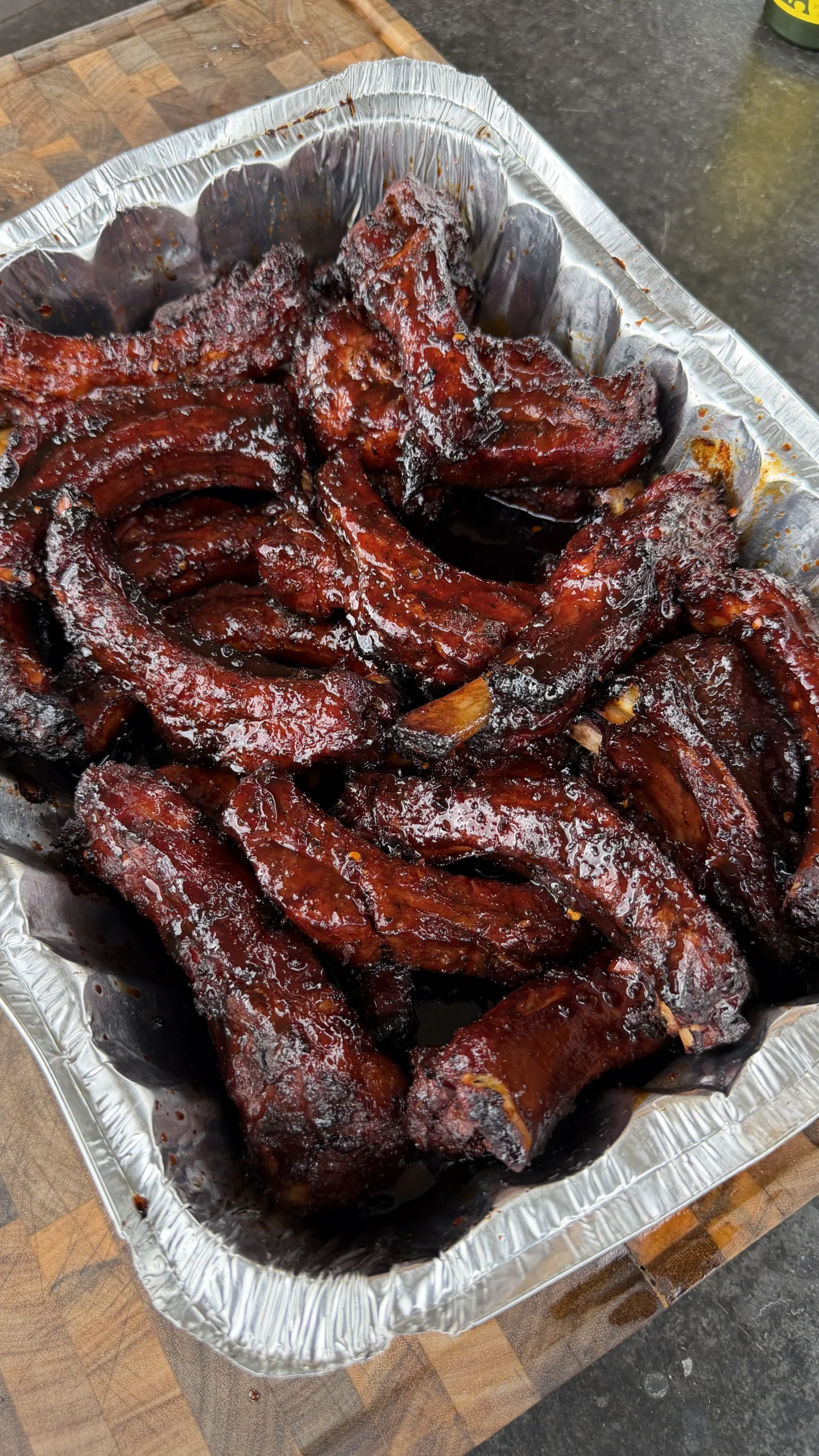
Once the ribs hit 203°F, remove the foil cover and brush each rib generously with more of the molasses hot honey sauce using a basting brush. The fresh layer of sauce sits on top of the already-cooked sauce coating and creates depth in the glaze. Specifically, the top layer caramelizes and sets, while the underneath layer stays glossy and saucy, which gives you the visual lacquer that restaurant ribs are known for.
10 Minutes to Set Without Burning the Sugars
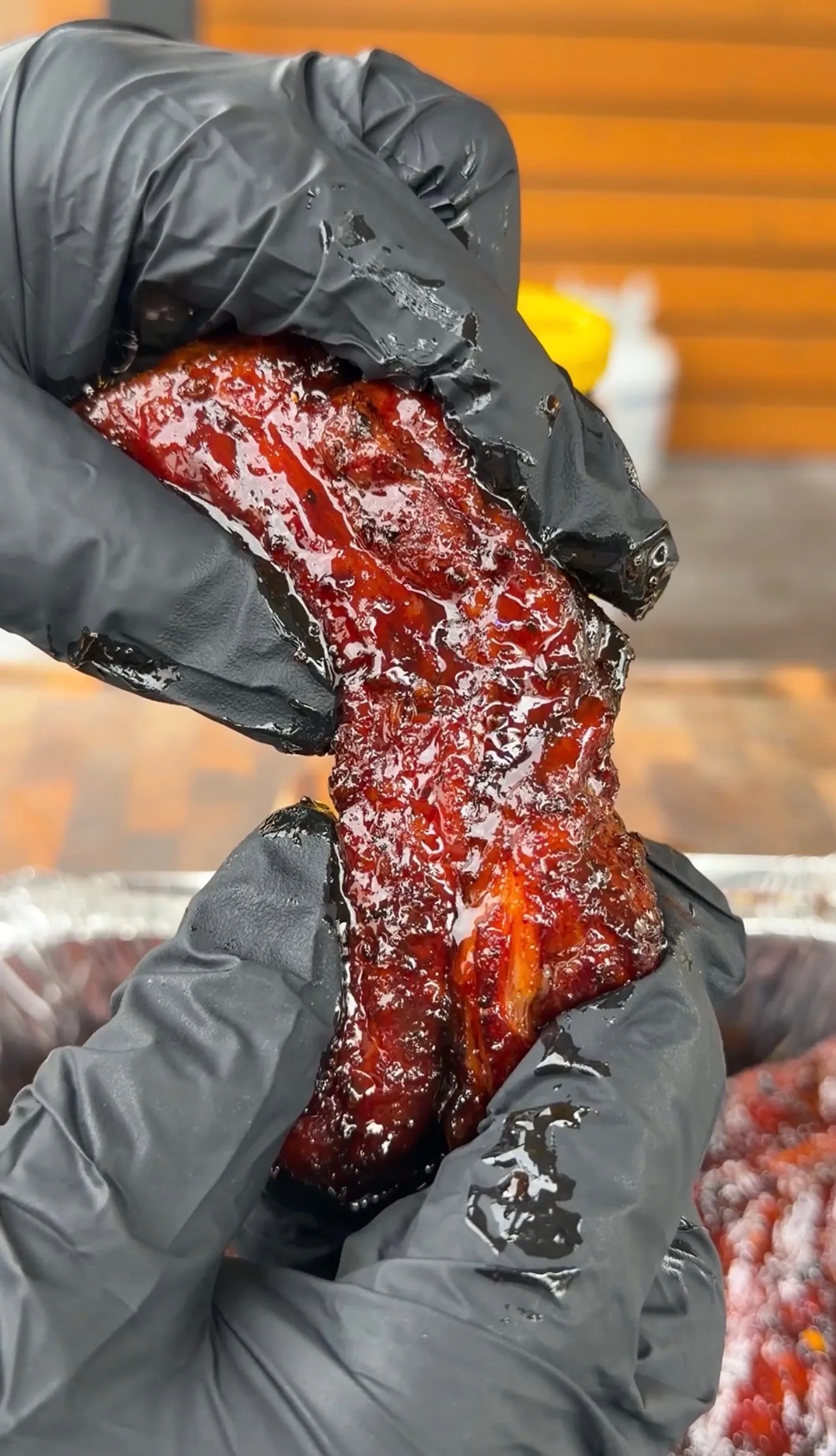
Return the uncovered tray to the smoker for exactly 10 minutes. Longer than that and the high sugar content in the sauce starts to scorch from the bottom of the foil tray. Shorter and the glaze stays loose and runny instead of sticky. Therefore, set a timer and watch the surface carefully. The cue is when the sauce shifts from shiny-wet to shiny-tacky.
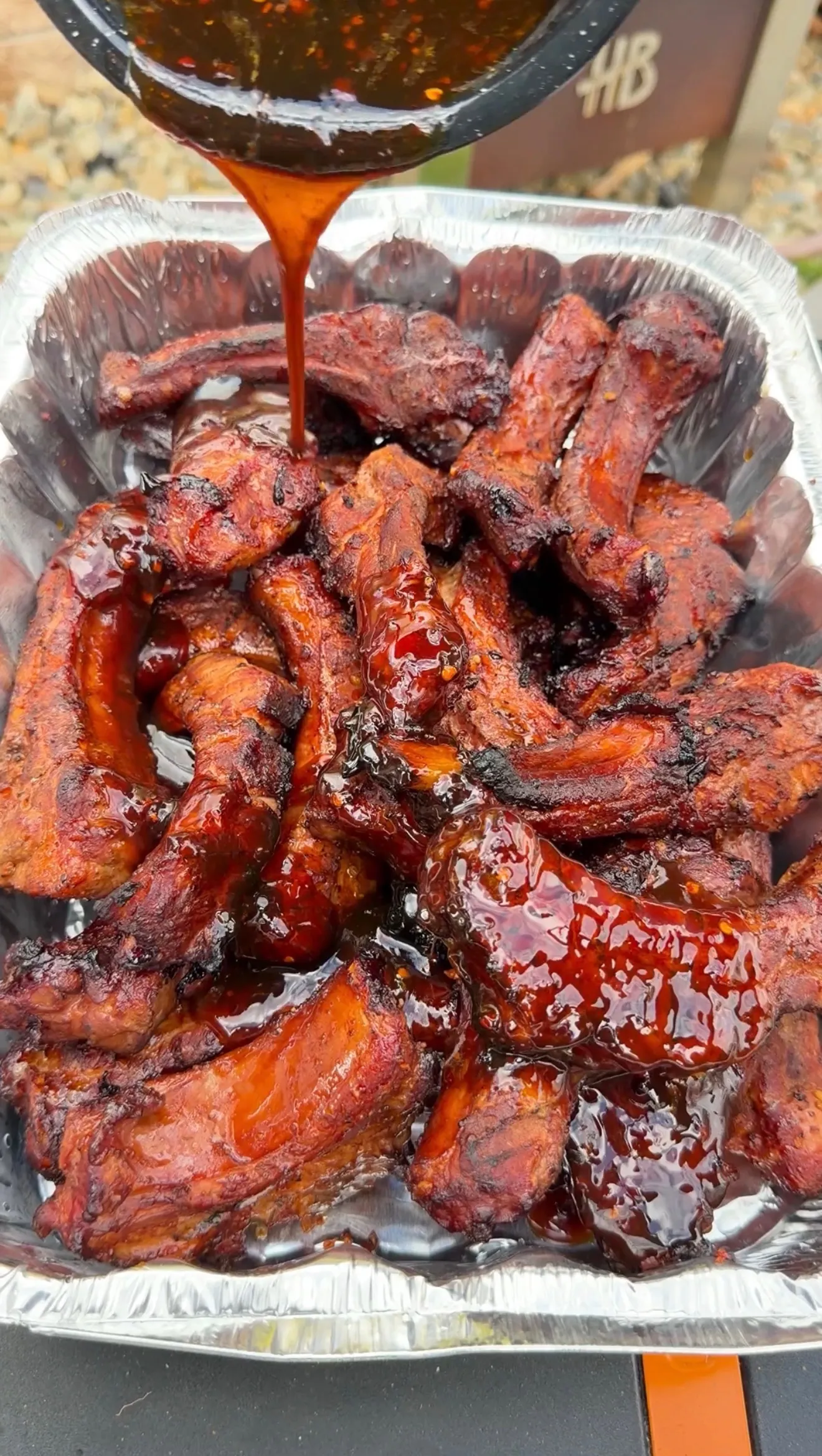
Step-by-Step: How to Make This Molasses Hot Honey Pork Ribs Recipe
Step 1: Remove the Membrane and Cut Into Individual Ribs
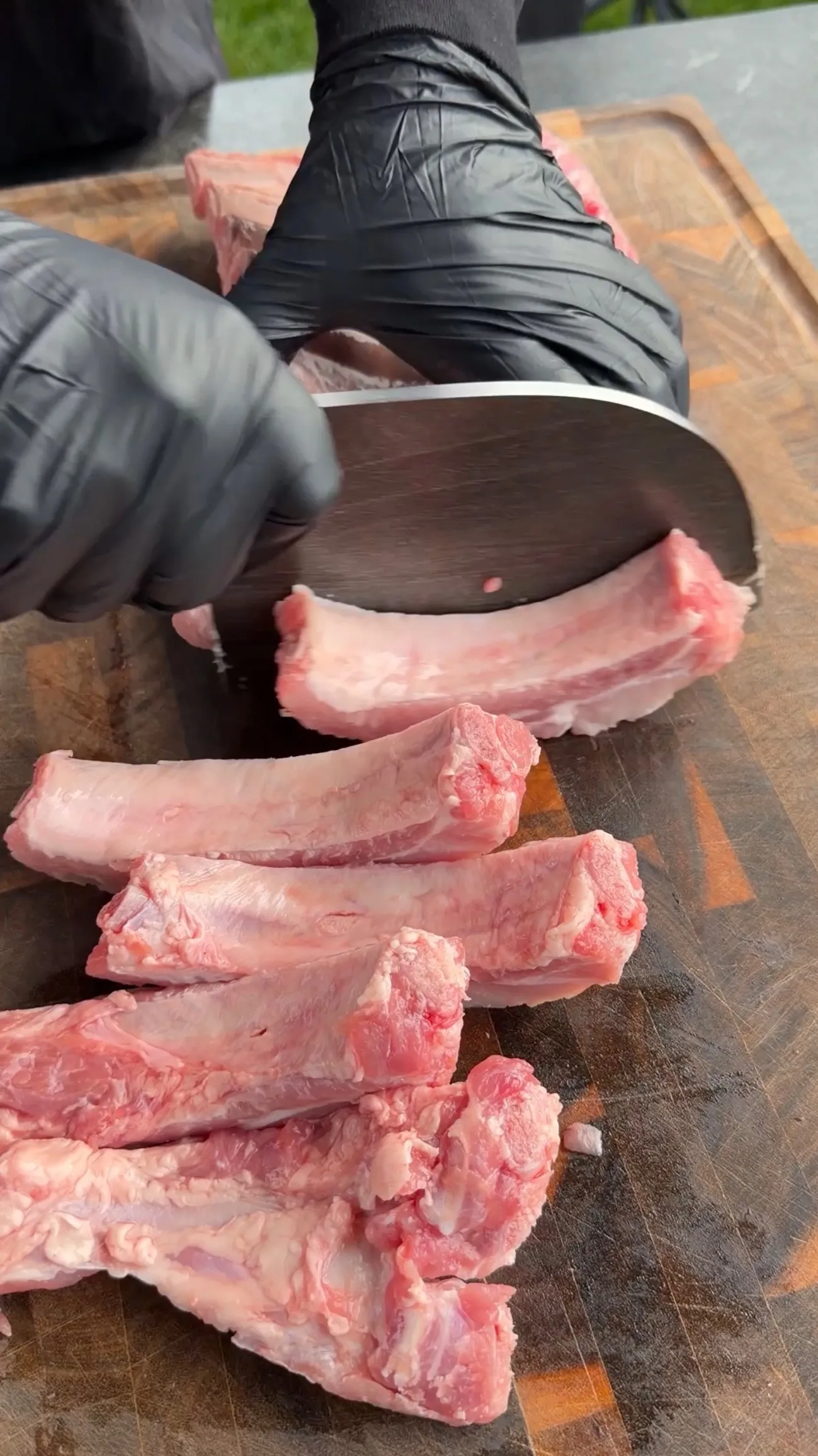
Flip each rack of pork loin ribs bone-side up and slide a butter knife under the membrane at one end. Grip the membrane with a paper towel and peel it off in one smooth pull. Then slice between each bone to separate the racks into individual ribs.
Step 2: Coat With Molasses and Season Heavily
Place the individual ribs in a large pan or tray. Drizzle 3 tablespoons of molasses over the top and toss until every rib is evenly coated on all sides. Then season heavily with your favorite BBQ seasoning, pressing the rub into the sticky molasses surface.
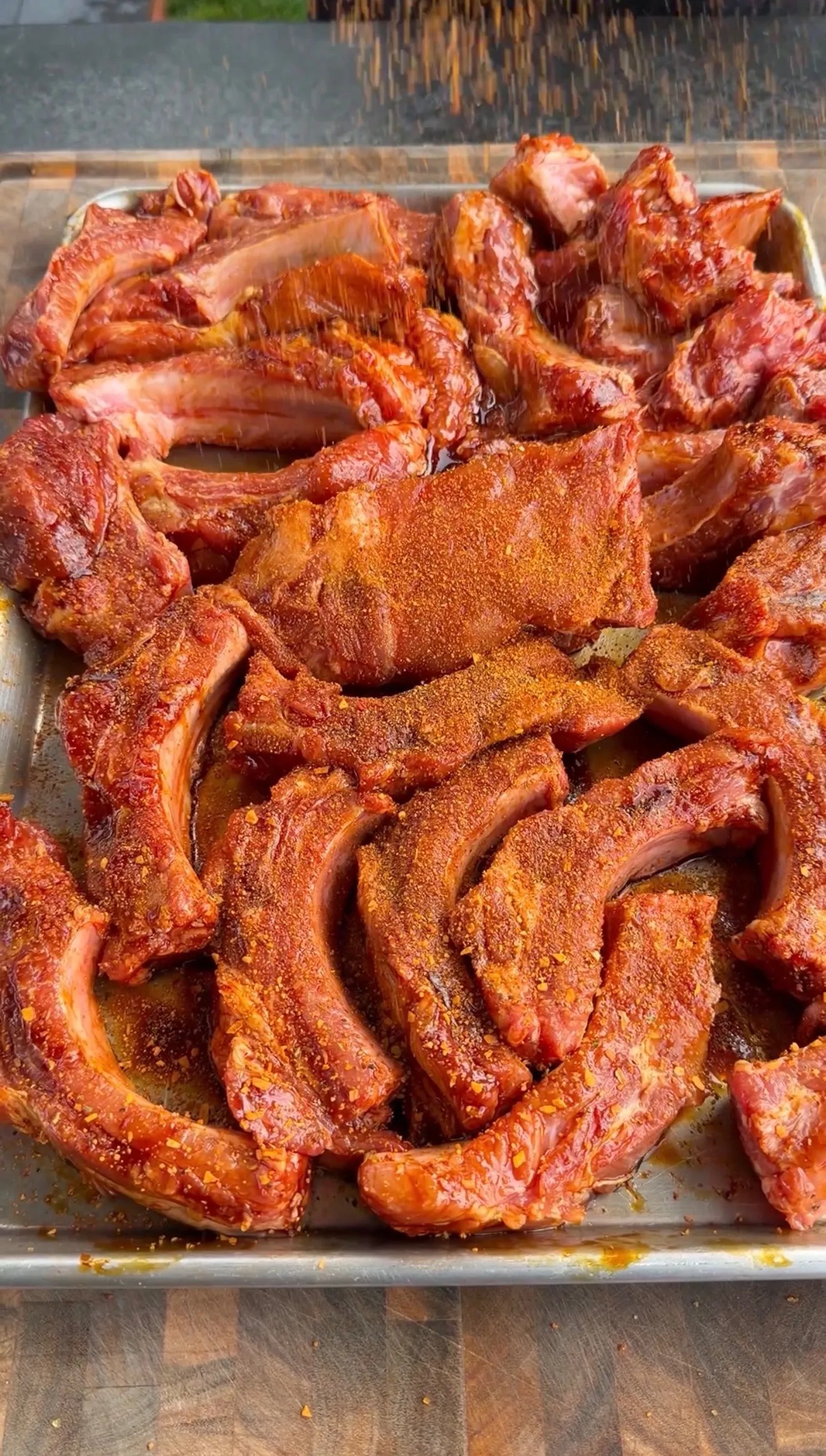
Step 3: Smoke at 250-275°F to 165°F Internal
Preheat the smoker to 250 to 275°F. Place the ribs directly on the grates with space between each one for smoke circulation. Cook unwrapped for 1.5 to 2 hours, or until the color looks deep mahogany and the meatiest ribs read around 165°F internal.
Step 4: Make the Molasses Hot Honey Sauce
While the ribs smoke, combine the molasses, honey, hot sauce, butter, brown sugar, red pepper flakes, and apple cider vinegar in a saucepan. Heat over medium-low, whisking gently until the butter is fully melted and the sauce is smooth and glossy. Pull off the heat as soon as it looks combined to avoid breaking the emulsion.
Step 5: Sauce, Cover, and Continue Smoking to 203°F
Transfer the ribs to a foil tray and pour the molasses hot honey sauce over the top, tossing to coat every rib. Cover tightly with aluminum foil and return to the smoker. Continue cooking for another 1 to 1.5 hours, or until the ribs are probe tender and read around 203°F internal.
Step 6: Uncover and Brush With More Sauce
Remove the foil cover from the tray. Using a basting brush, brush each rib generously with more of the molasses hot honey sauce so a fresh layer sits on top of the cooked sauce coating.
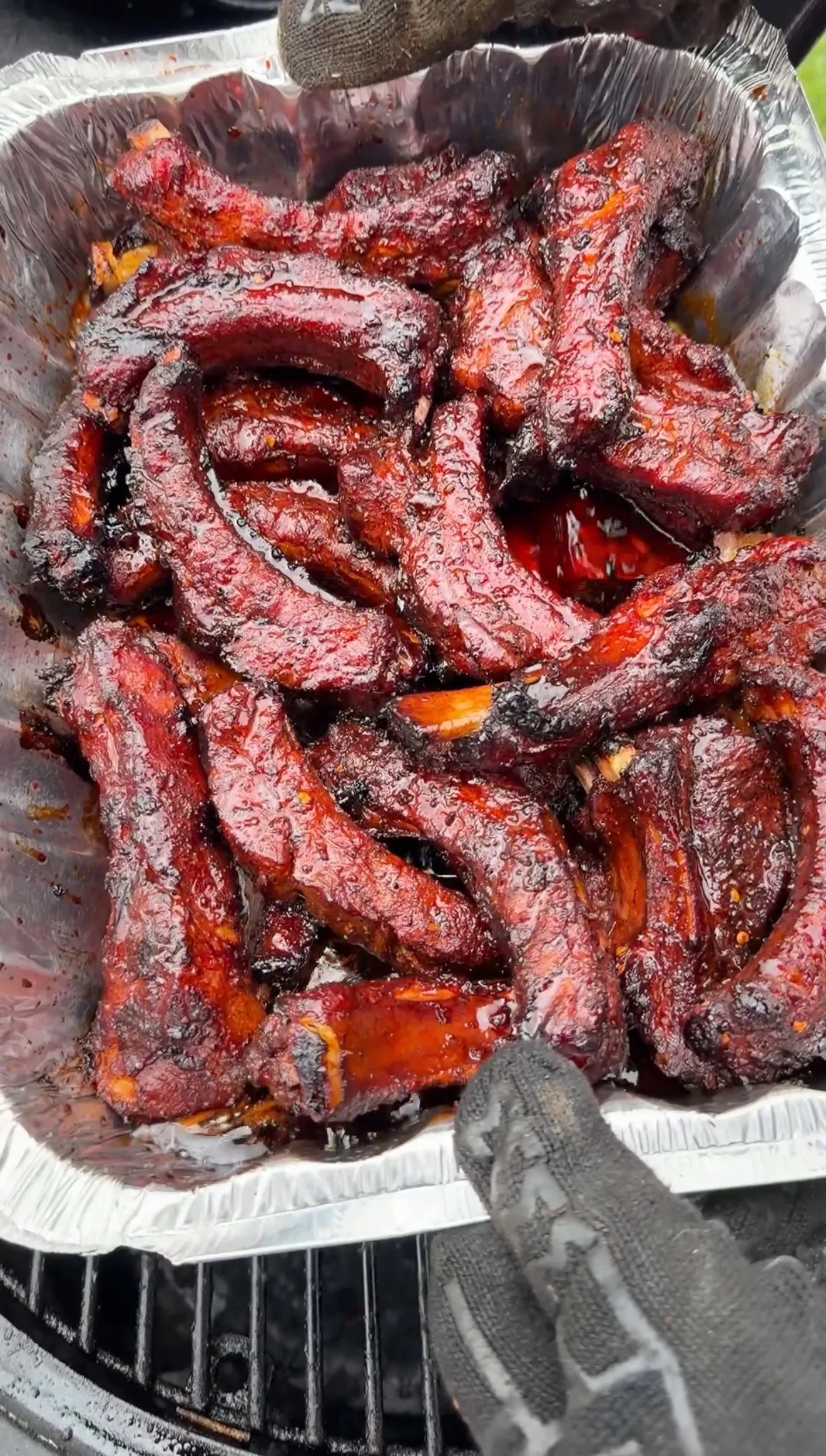
Step 7: Set the Glaze for 10 Minutes and Serve
Return the uncovered tray to the smoker for exactly 10 minutes. The glaze will shift from shiny-wet to shiny-tacky. Pull the ribs off the smoker once the surface is set and serve hot.
Molasses Hot Honey Ribs
Ingredients
Equipment
Method
- Remove the membrane from the back of the ribs by sliding a butter knife under one corner and pulling it off in a single piece. Then slice between each bone to separate the racks into individual ribs.
- Place the individual ribs in a large pan. Drizzle the 3 tablespoons of molasses over them and toss until every rib is evenly coated. Season heavily on all sides with your favorite BBQ seasoning, pressing the rub into the molasses.
- Preheat the smoker to 250-275°F. Place the ribs directly on the smoker grates and cook unwrapped for 1.5 to 2 hours, or until the color looks deep mahogany and the ribs reach around 165°F internal.
- While the ribs smoke, combine the molasses, honey, hot sauce, butter, brown sugar, red pepper flakes, and apple cider vinegar in a saucepan. Heat over medium-low, whisking gently until the butter is fully melted and the sauce is smooth and glossy. Pull off the heat the moment it looks combined to avoid breaking.
- Transfer the smoked ribs to a foil tray and pour the molasses hot honey sauce over the top, tossing to coat. Cover tightly with aluminum foil and return to the smoker. Continue cooking for another 1 to 1.5 hours, or until the ribs are probe tender and read around 203°F internal.
- Remove the foil cover and brush each rib generously with more of the molasses hot honey sauce using a basting brush.
- Return the uncovered tray to the smoker for exactly 10 minutes so the sauce can set and become sticky. The surface will shift from shiny-wet to shiny-tacky when ready. Pull off the smoker and serve hot.
Notes
Tried this recipe?
Let us know how it was!Molasses Hot Honey Ribs — FAQ
Everything you need to nail the cut, the binder, the sauce, and the glaze.
Setup & Basics
Baby back ribs and pork loin ribs are the same thing: smaller, leaner ribs cut from the top of the rib cage near the spine. Spare ribs are larger and fattier, cut from the belly side below the baby backs. St. Louis ribs are spare ribs trimmed to a rectangle. This recipe uses pork loin (baby back) ribs since they cook faster and stay tender, which works perfectly with the individual-rib technique.
Three reasons. First, molasses is stickier than mustard or oil, so it grips the rub harder and holds more seasoning on the meat through the cook. Second, the sugars in molasses caramelize directly into the bark over the unwrapped phase, contributing a deep dark sweetness to the crust. Third, molasses flavor pairs with the hot honey glaze coming later, while yellow mustard tang would clash with the sweet-heat profile.
Hot honey is honey infused with chili heat, typically from red pepper flakes, cayenne, or whole chilies. The flavor hits sweet first, then a slow building burn that lingers in the back of the throat. The modern trend started with Mike’s Hot Honey in 2010 (born from a Brooklyn pizza shop), and it now appears on everything from fried chicken to pizza to cocktails. In this recipe, the homemade hot honey sauce builds the same profile with hot sauce and red pepper flakes for layered heat.
About 3 to 3.5 hours total smoke time, plus 15 minutes of prep. Breakdown: 15 minutes for membrane removal, cutting, and seasoning, then 1.5-2 hours unwrapped at 250-275°F to hit 165°F, then 1-1.5 hours covered in sauce to hit 203°F, then 10 minutes uncovered to set the glaze. Cutting the rack into individual ribs is what shaves about 90 minutes off a standard whole-rack cook.
Technique & Troubleshooting
Yes. Set the oven to 275°F and cook the seasoned individual ribs on a wire rack over a sheet pan for 1.5 hours. Transfer to a foil tray, pour the sauce over, cover with foil, and continue baking another 1 hour until probe tender. Uncover, brush with more sauce, and broil on high for 2 to 3 minutes to set the glaze (watch closely so the sugars don’t burn). You’ll lose the smoke flavor but the molasses and hot honey carry the dish.
Two common causes. First, the final uncovered glaze stage ran too long. Stick to exactly 10 minutes. The high sugar content scorches fast past that. Second, the smoker temperature drifted too high. Stay in the 250-275°F window. Above 300°F the sugars caramelize too aggressively from below. If the bottom of the foil tray is touching direct heat, slide a second pan underneath as a buffer.
Ready to Level Up?
Take your backyard cooking from good to legendary.
This is where I keep all my most-used smokers, knives, and favorite cooking tools.
Shop My Gear CollectionExplore More Recipes
Find more diverse flavors at CWFeats.com