
Cherry Smoked Brisket
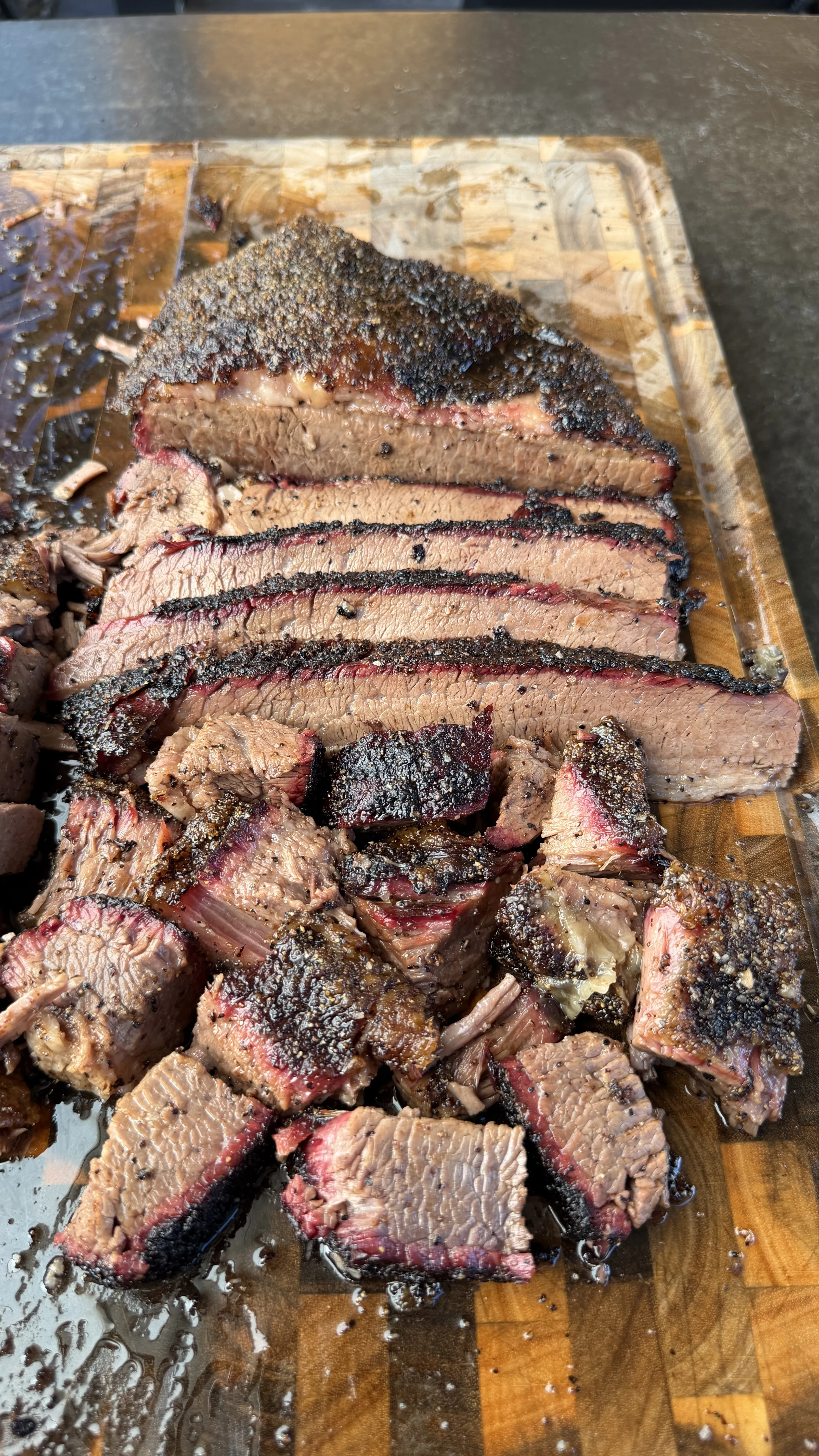
This all-day cherry smoked brisket takes a whole 16-pound packer low and slow over cherry wood, then holds overnight for an extra-tender, juicy result. You trim the brisket, season it with a coarse salt, pepper, and garlic rub, and smoke it at 225°F. Pull it once the thickest part of the flat reaches 195°F internal. Then hold it wrapped overnight at 150 to 170°F, which lets the fat and collagen keep breaking down. The next day, slice against the grain and serve. A 16-pound packer feeds roughly 12 to 16 people, depending on trim and appetite.
Choosing a Whole Packer Brisket
Prime vs Choice Grade
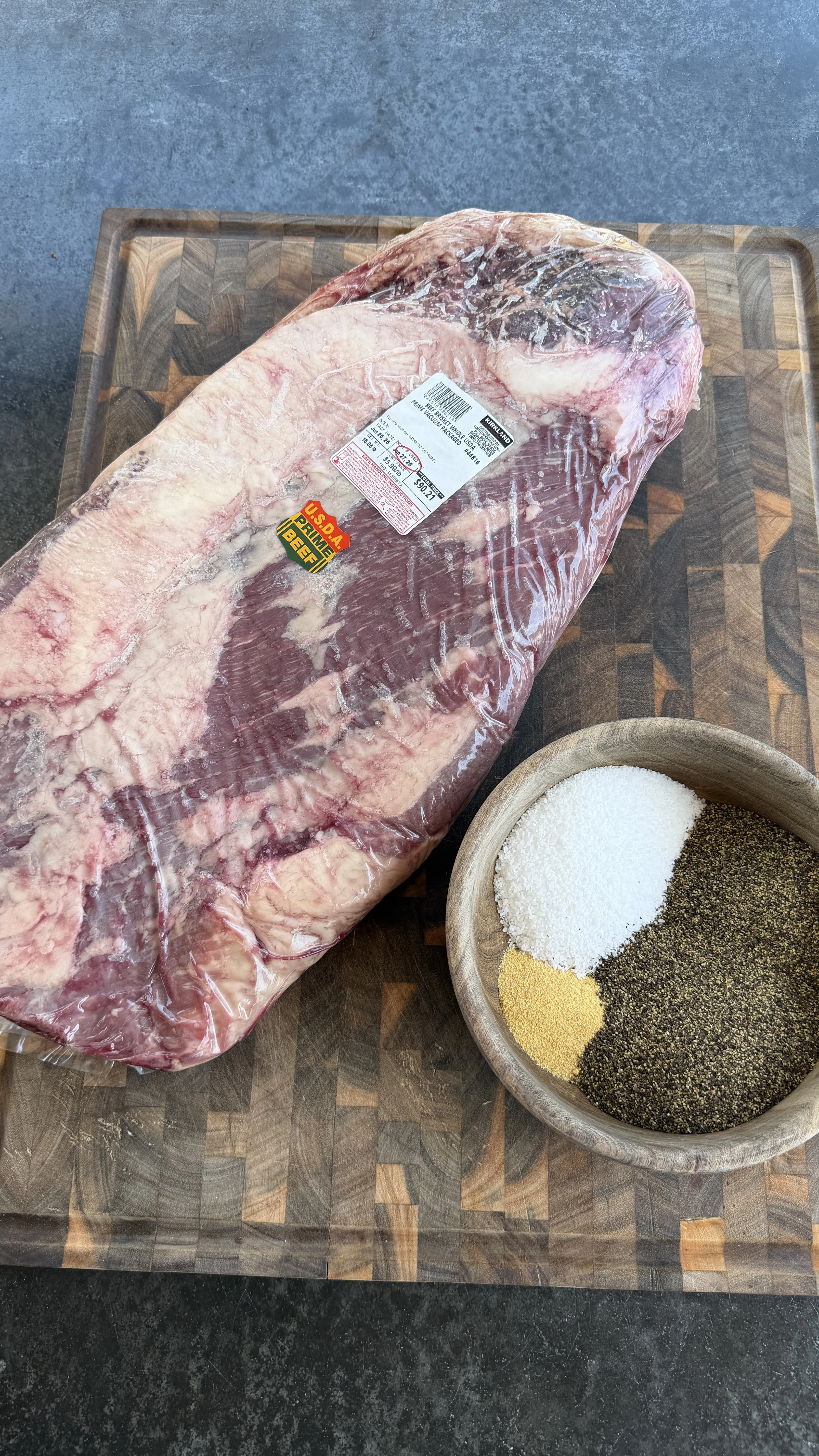
A whole packer brisket includes both the flat and the point, joined by a fat seam. Grade matters for cherry smoked brisket, since marbling drives the final tenderness. USDA Prime carries the most intramuscular fat and forgives small mistakes. Choice costs less and still smokes well with good technique. However, avoid Select, which runs lean and dries out over a long cook. For a 16-pound packer, Prime gives you the best margin for an all-day smoke. Therefore, buy the best grade your budget allows.
The Flat and the Point
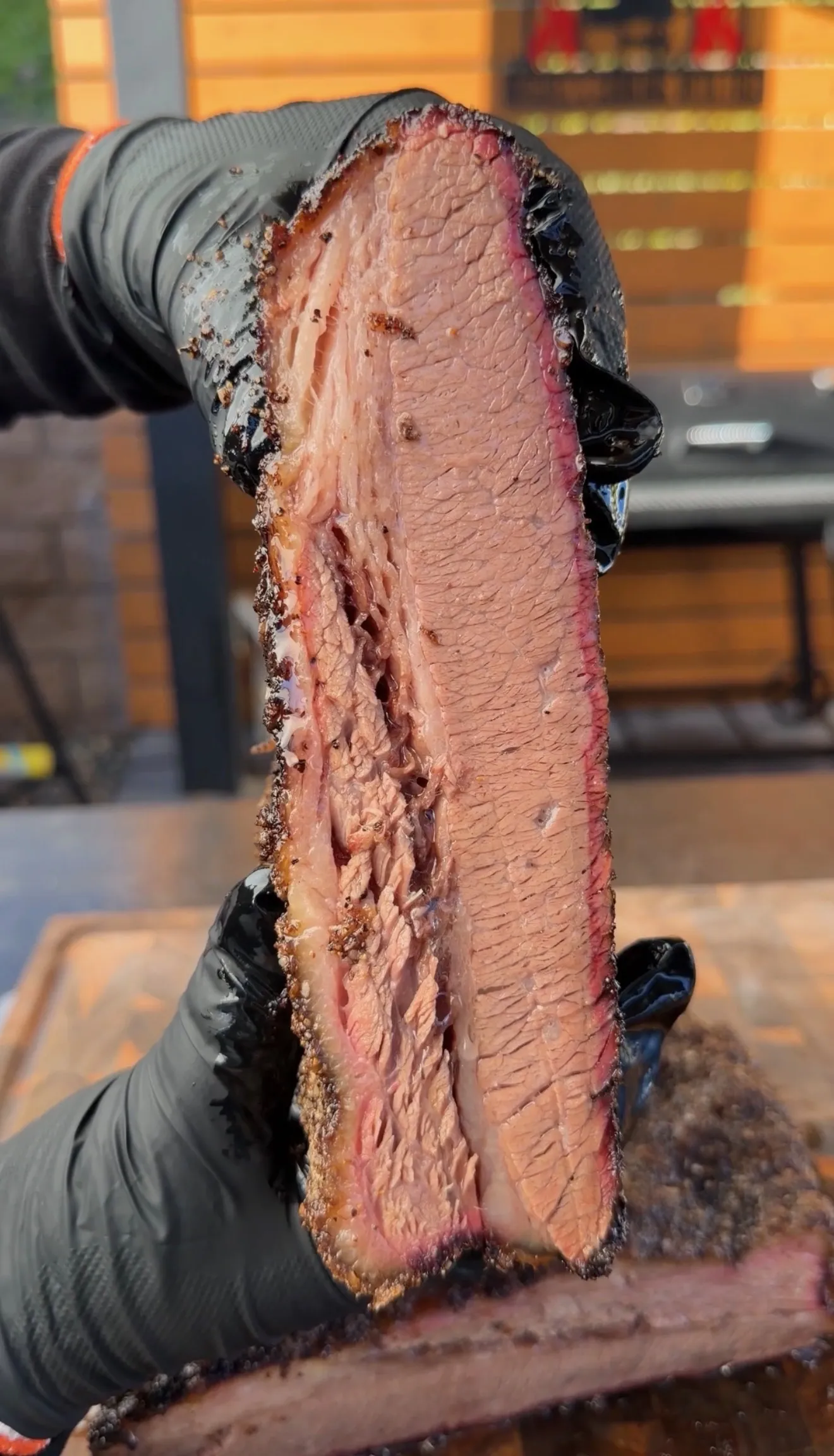
The flat is the leaner, even muscle that produces uniform slices. In contrast, the point is fattier, richer, and used for burnt ends. The two muscles run in different grain directions, which matters at slicing time. Additionally, the point sits on top of the flat with a thick fat seam between them. A whole packer lets you cook both together for the full range of texture. As a result, you get lean slices and rich, marbled bites from one cut.
Trimming and Seasoning the Brisket
Trimming the Fat Cap to 1/4 Inch
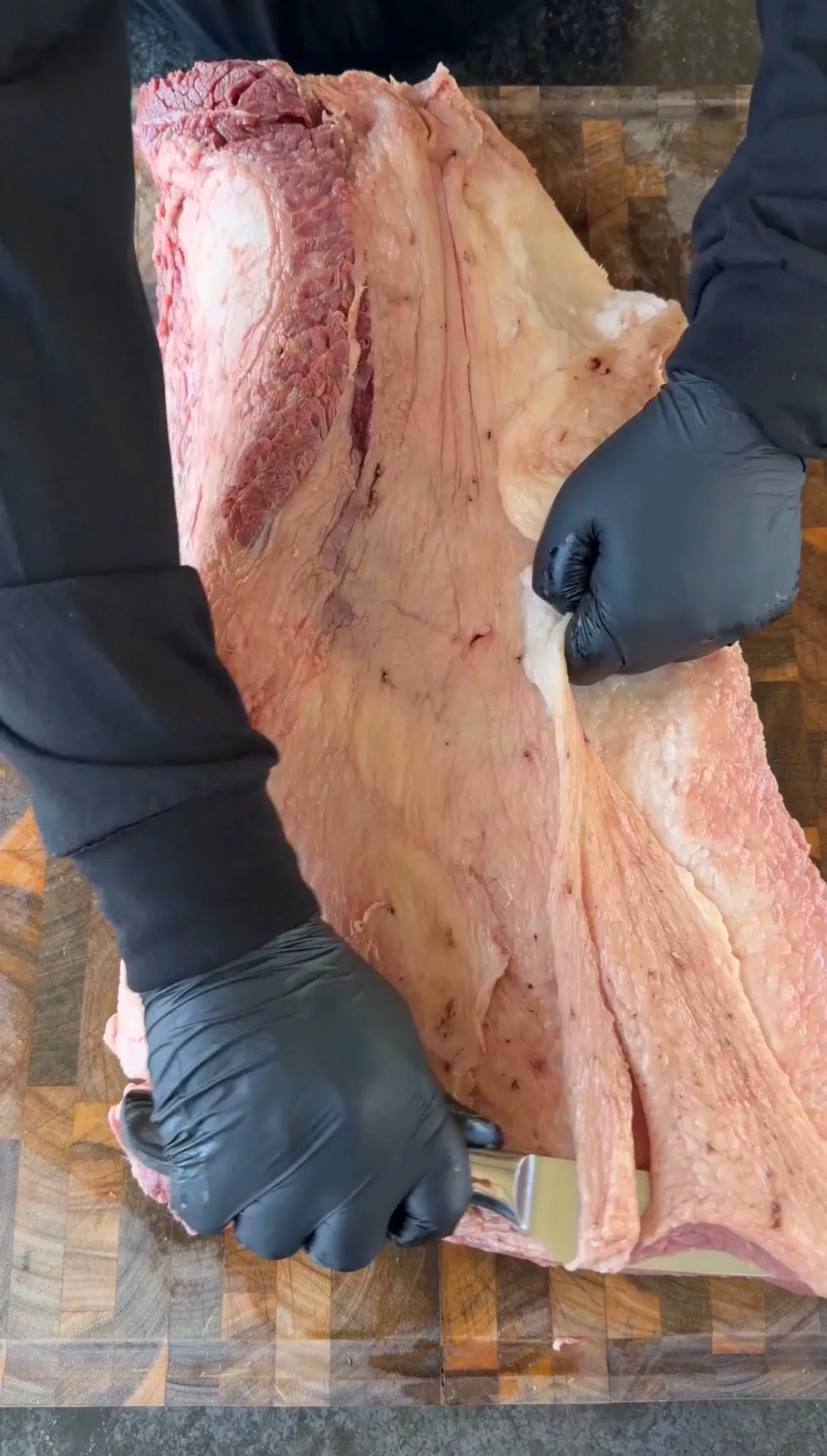
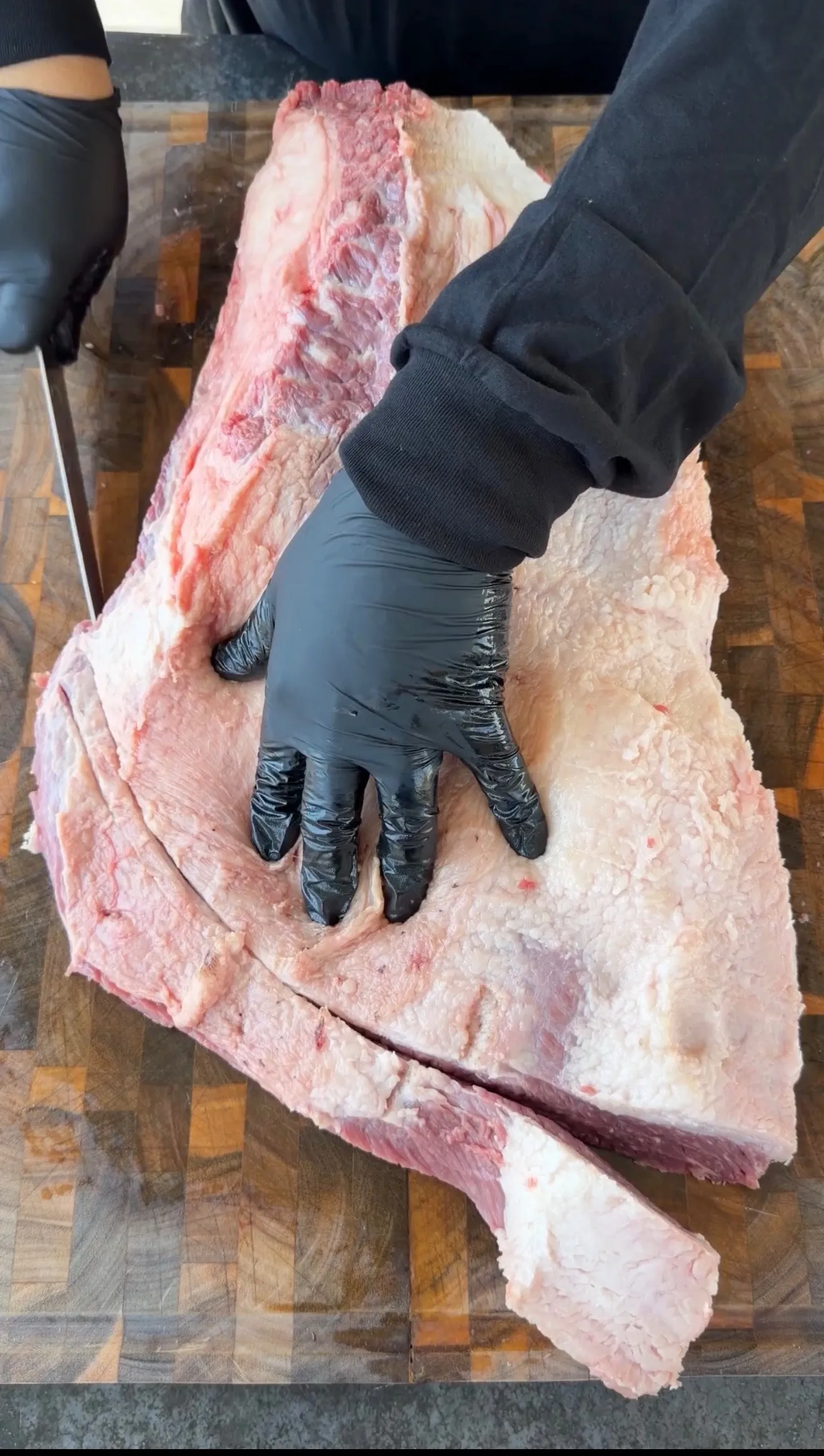
Start by trimming loose pieces of meat and hard fat. Trim the fat cap down to about a quarter inch thick across the brisket. This thickness renders and bastes the meat without blocking the rub. Furthermore, round off the thin edges so they do not burn during the long cook. Remove the hard deckle fat between the flat and point where you can reach it. As a result, the brisket cooks more evenly and the bark forms across the surface. Take your time here, since clean trimming pays off later.
The Texas-Style Salt and Pepper Rub
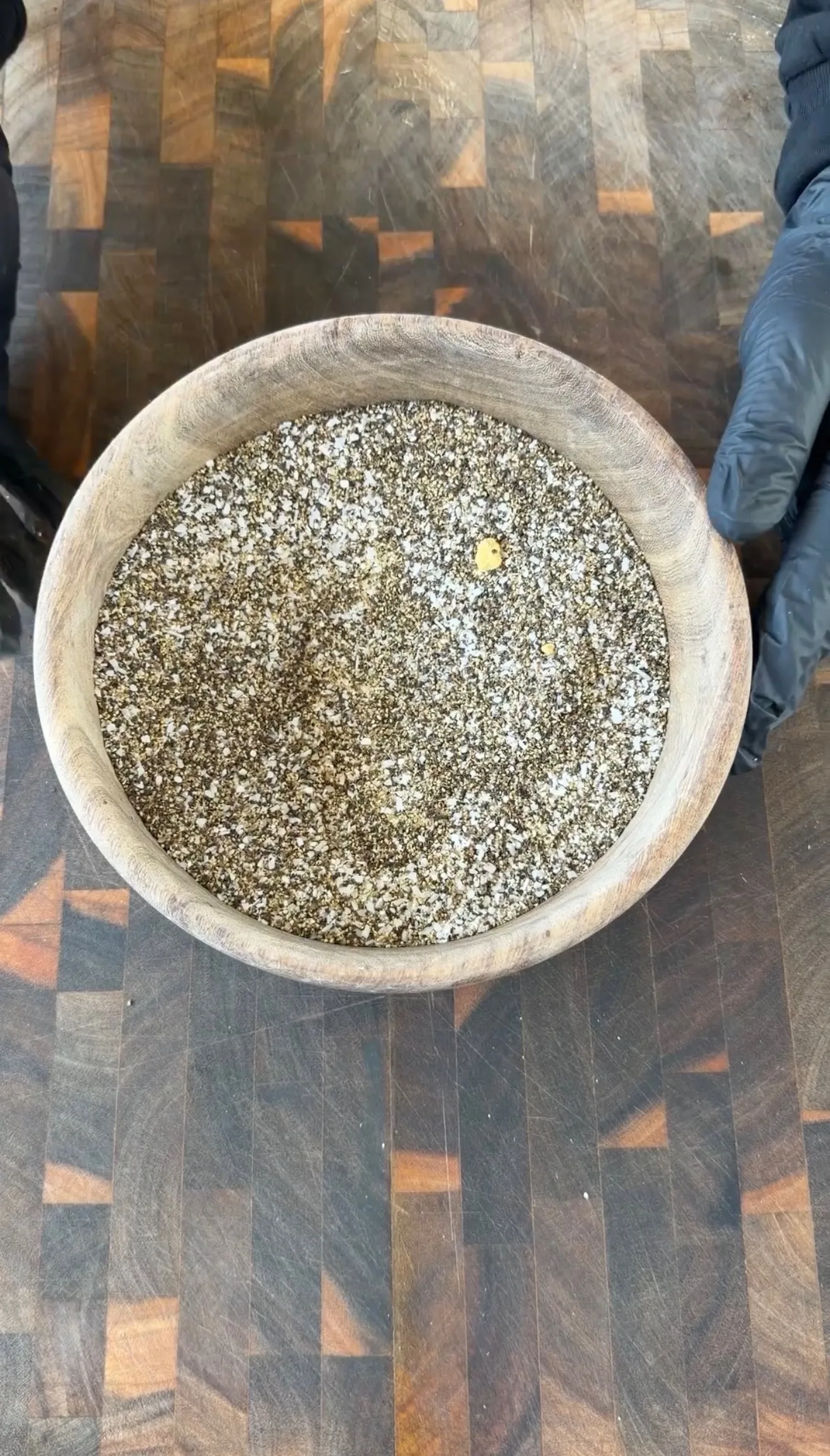
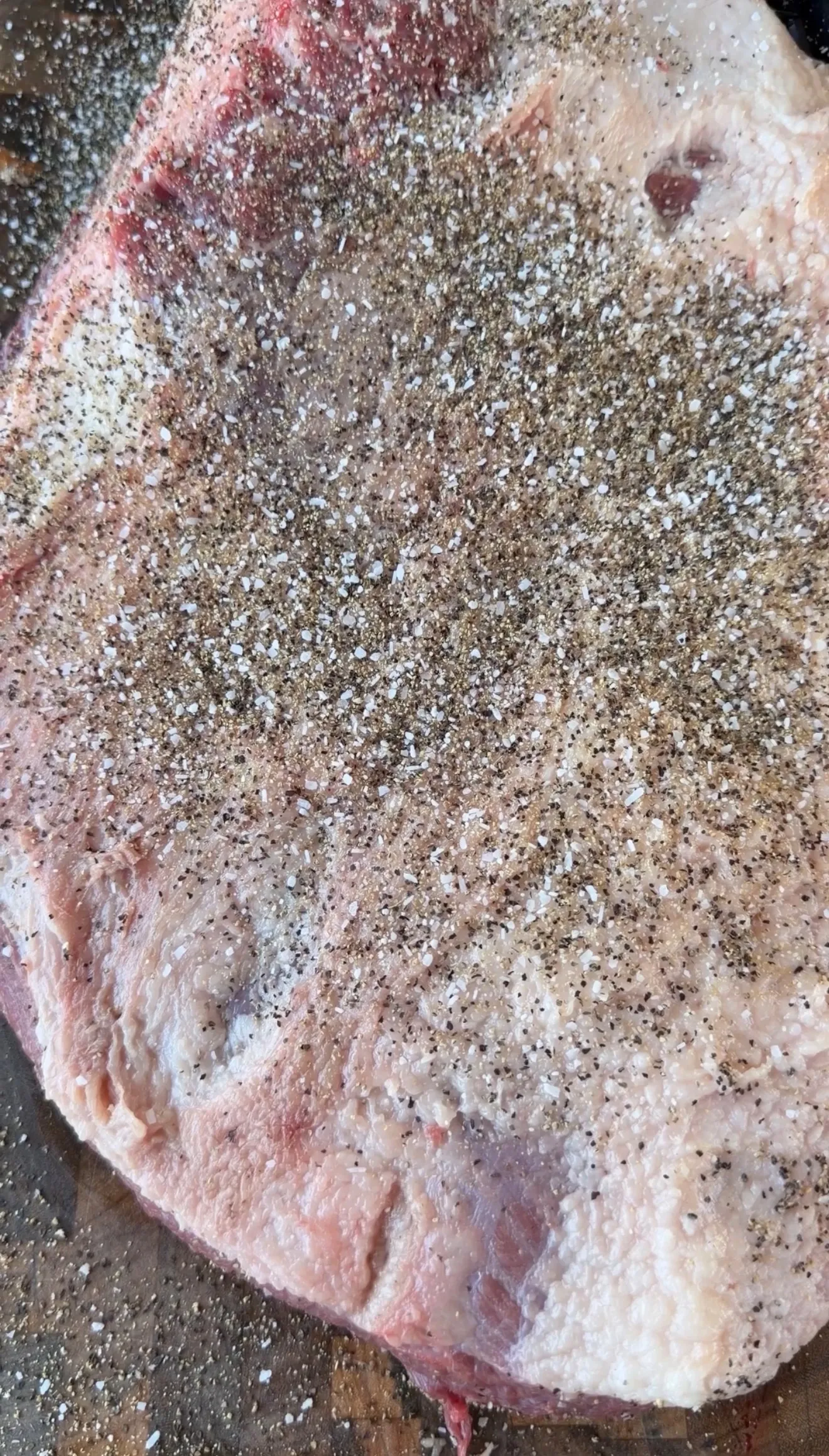
This cherry smoked brisket uses a simple, pepper-forward Texas rub. Combine 2 parts coarse black pepper, 1 part coarse kosher salt, and a quarter part granulated garlic. The coarse grind builds texture in the bark. First, coat the brisket lightly with yellow mustard or another binder. The binder helps the rub stick without adding noticeable flavor. Then season generously on all sides and let it adhere while the smoker heats. Moreover, this salt and pepper base lets the beef and cherry smoke lead.
Smoking with Cherry Wood at 225°F
Why Cherry Wood
Cherry wood gives this brisket a mild smoke and a deep mahogany color. The mild profile suits a long cook, since it builds flavor without turning acrid. Additionally, cherry darkens the bark for a striking finished look. For more punch, you can blend cherry with a stronger wood like oak or hickory. However, cherry alone keeps the smoke balanced over 12 or more hours. As a result, the beef flavor stays front and center under the cherry smoked brisket bark.
Smoking to 195°F in the Flat
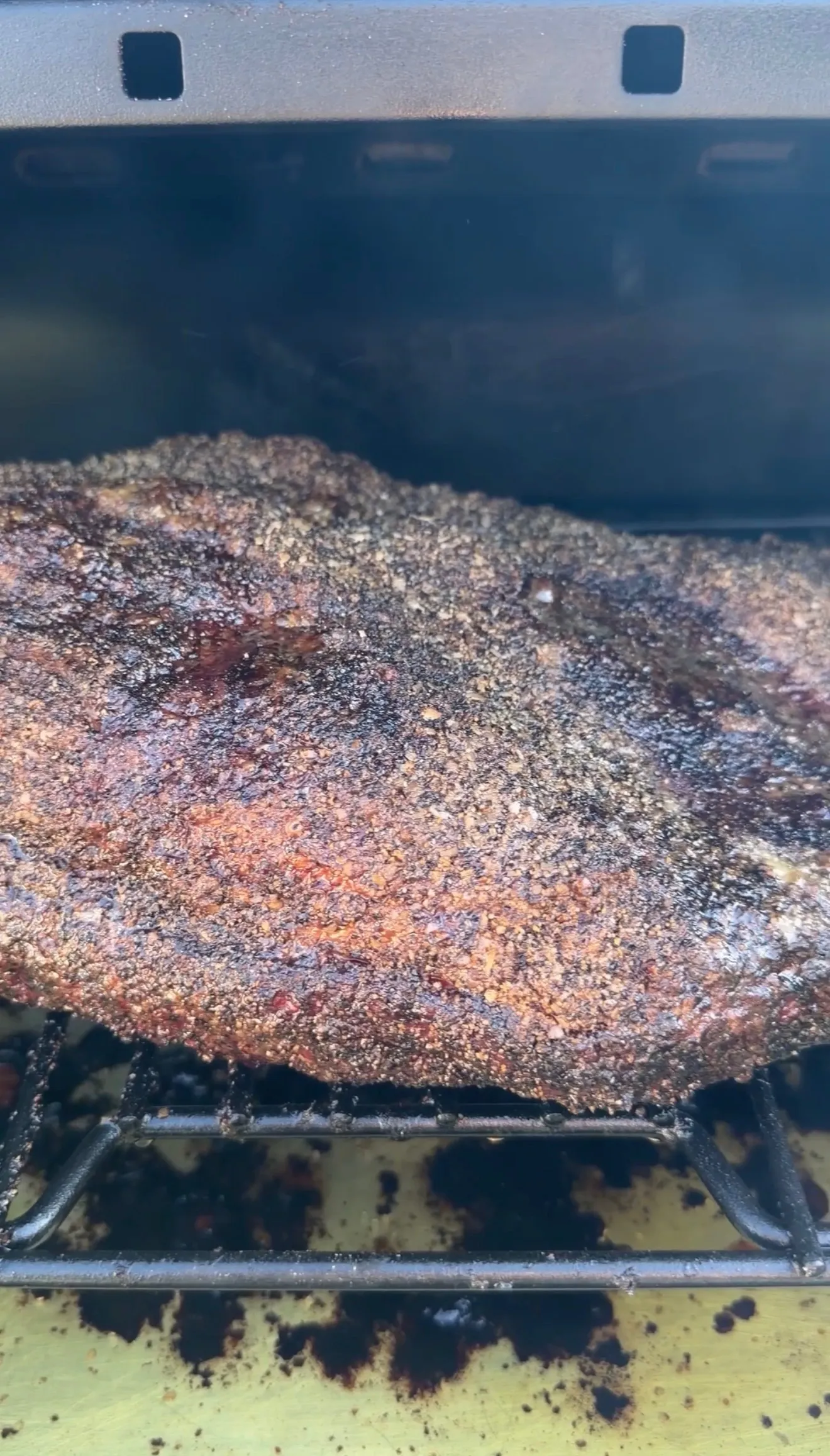
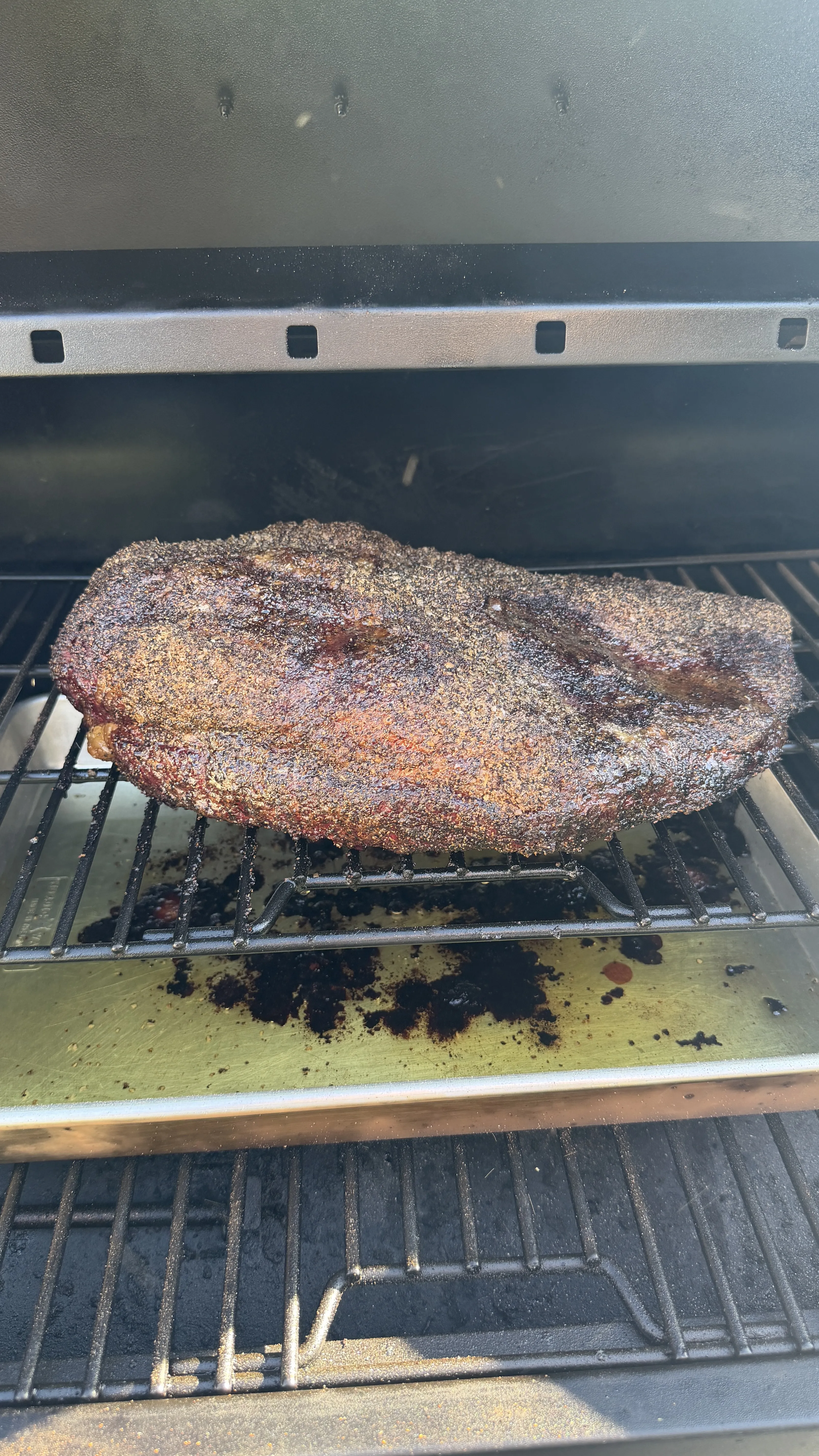
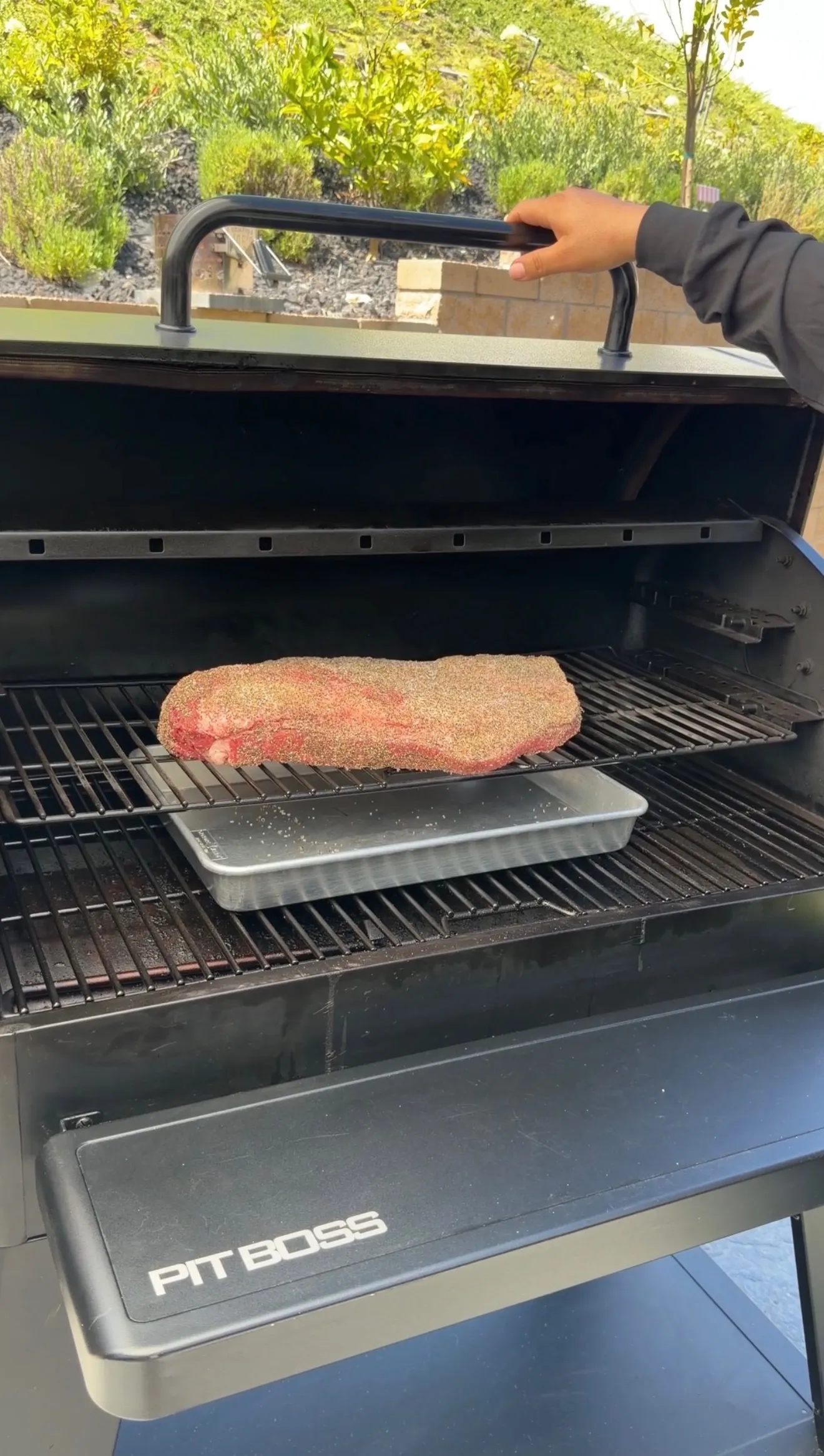
Preheat your pellet smoker to 225°F and load the cherry pellets. Place the brisket fat-side up and insert a probe into the thickest part of the flat. Then smoke until that probe reads 195°F internal. A 16-pound packer often takes 12 hours or more at this temperature. Meanwhile, the brisket will stall in the 150s to 170s as moisture evaporates. This recipe rides through the stall unwrapped to build a firm bark. Therefore, plan for a long cook and rely on the thermometer.
The Overnight Hold
Why You Pull at 195°F
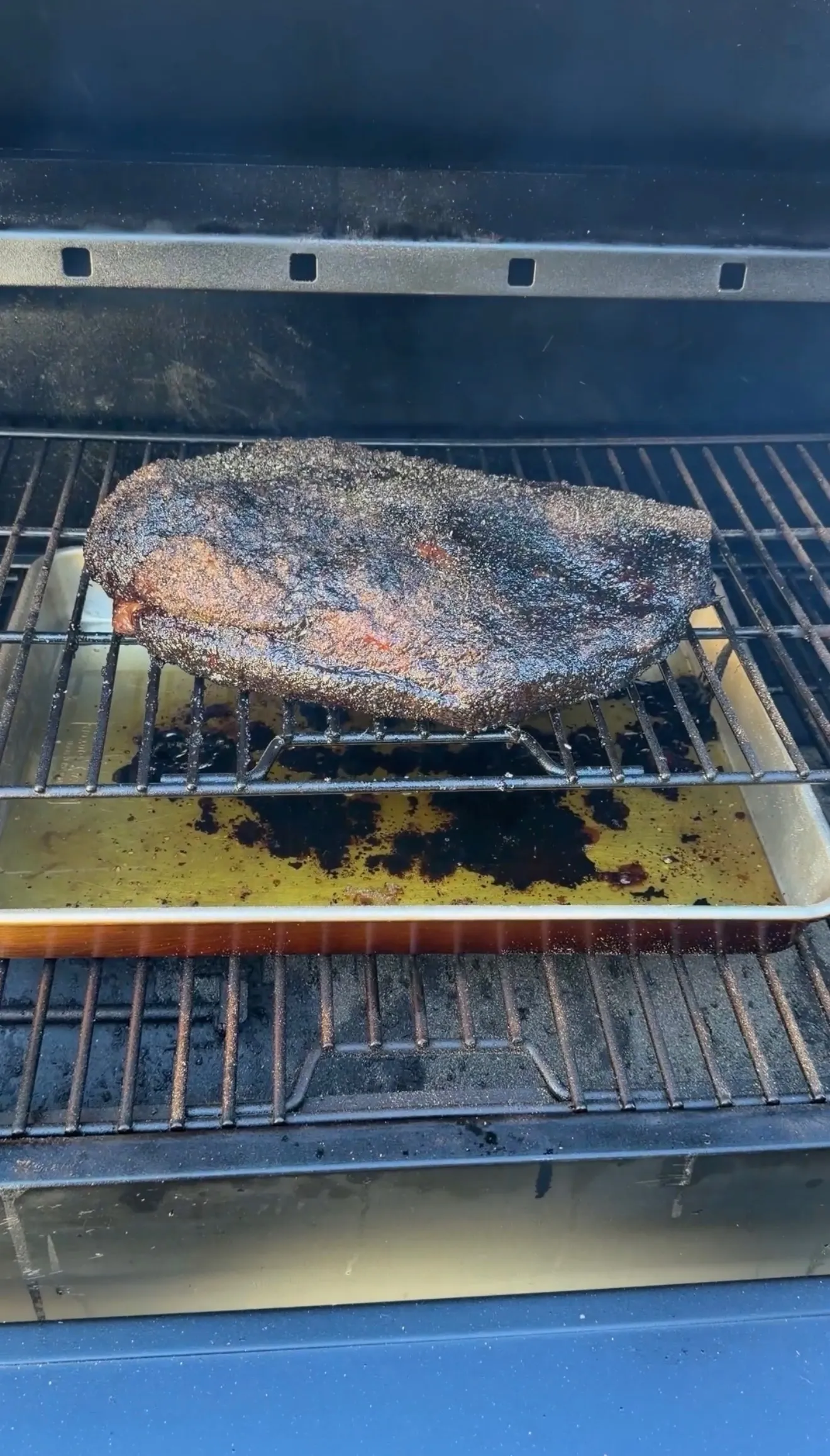
Most brisket recipes pull at 203°F, where the collagen has fully rendered. This all-day method pulls earlier, at 195°F, because the hold finishes the job. During the long overnight hold, residual heat keeps breaking down fat and collagen. As a result, the brisket reaches full tenderness without overcooking on the smoker. Pulling at 195°F also leaves a margin so the meat does not dry out. Consequently, the hold does the final tenderizing that a hotter pull would force too fast.
Two Ways to Hold Overnight
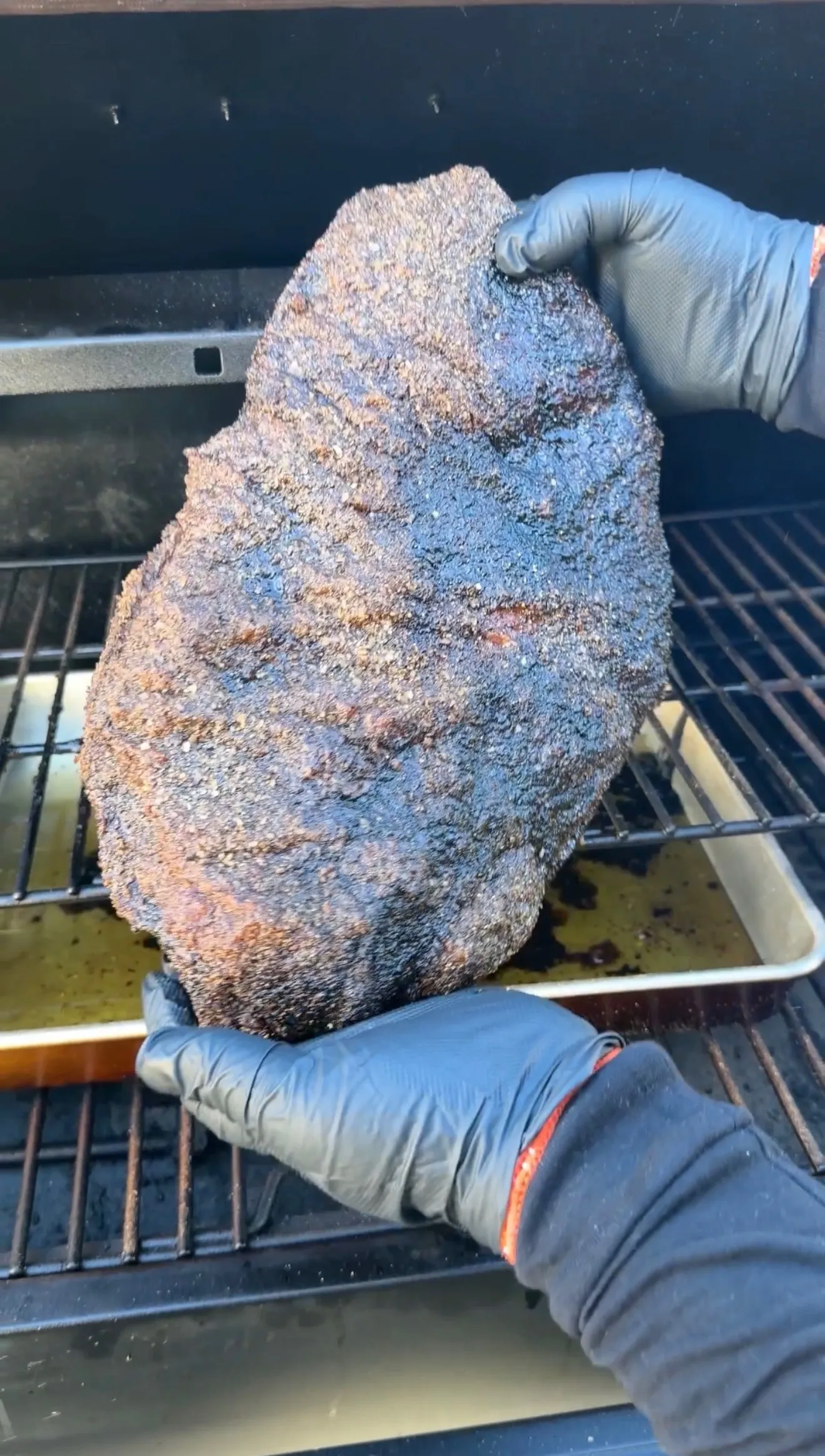
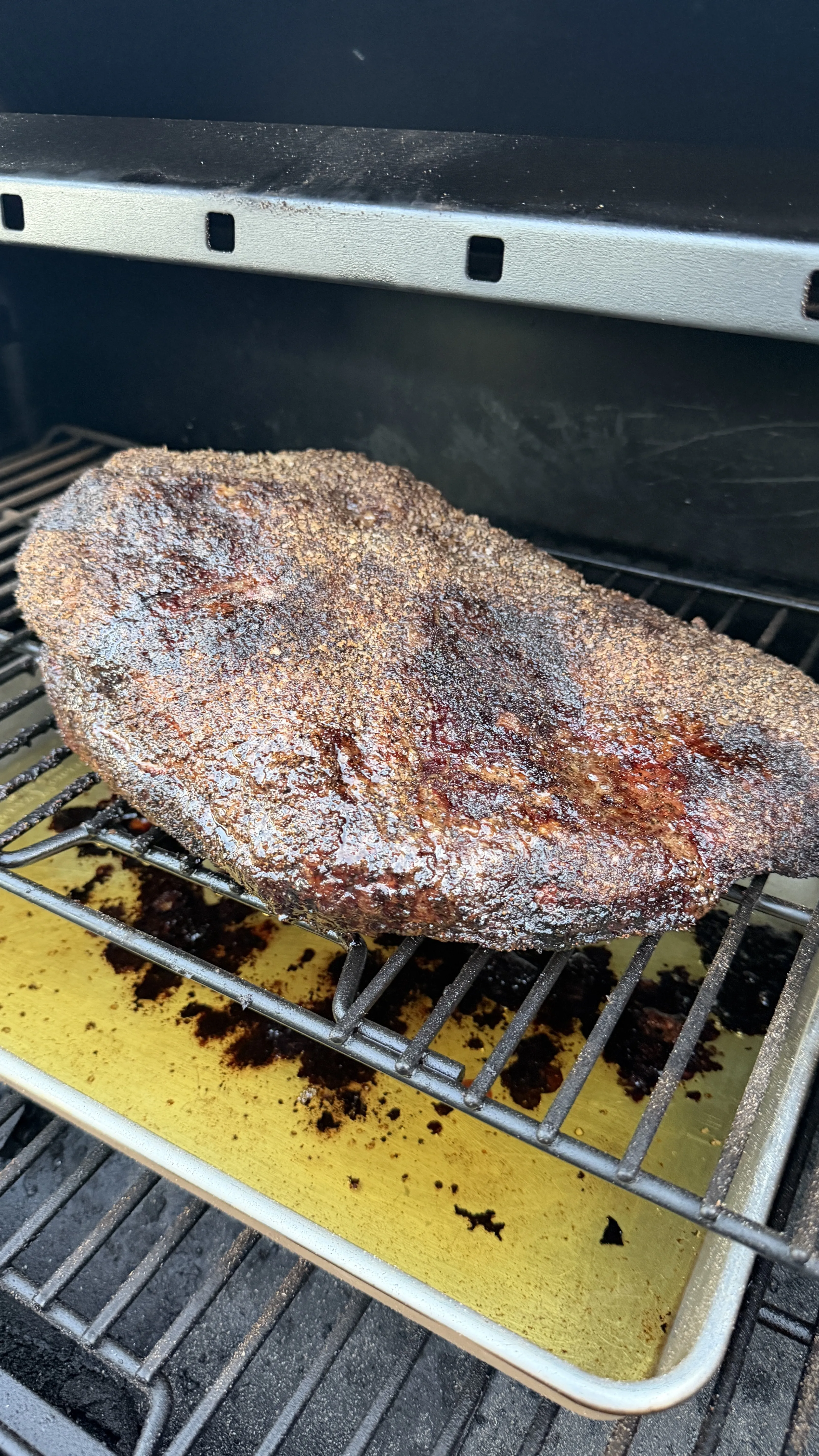
You have two simple options for the overnight hold. First, you can leave the brisket on your smoker’s warm setting through the night. Alternatively, wrap it tightly in butcher paper or foil and hold it in an oven at its lowest warm setting, around 150 to 170°F. Keep the hold at or above 150°F so the meat stays out of the food-safety danger zone. The brisket then rests and tenderizes until the next day. Either way, the long, gentle hold is what makes this cherry smoked brisket so tender.
Slicing and Serving the Next Day
Slicing Against the Grain
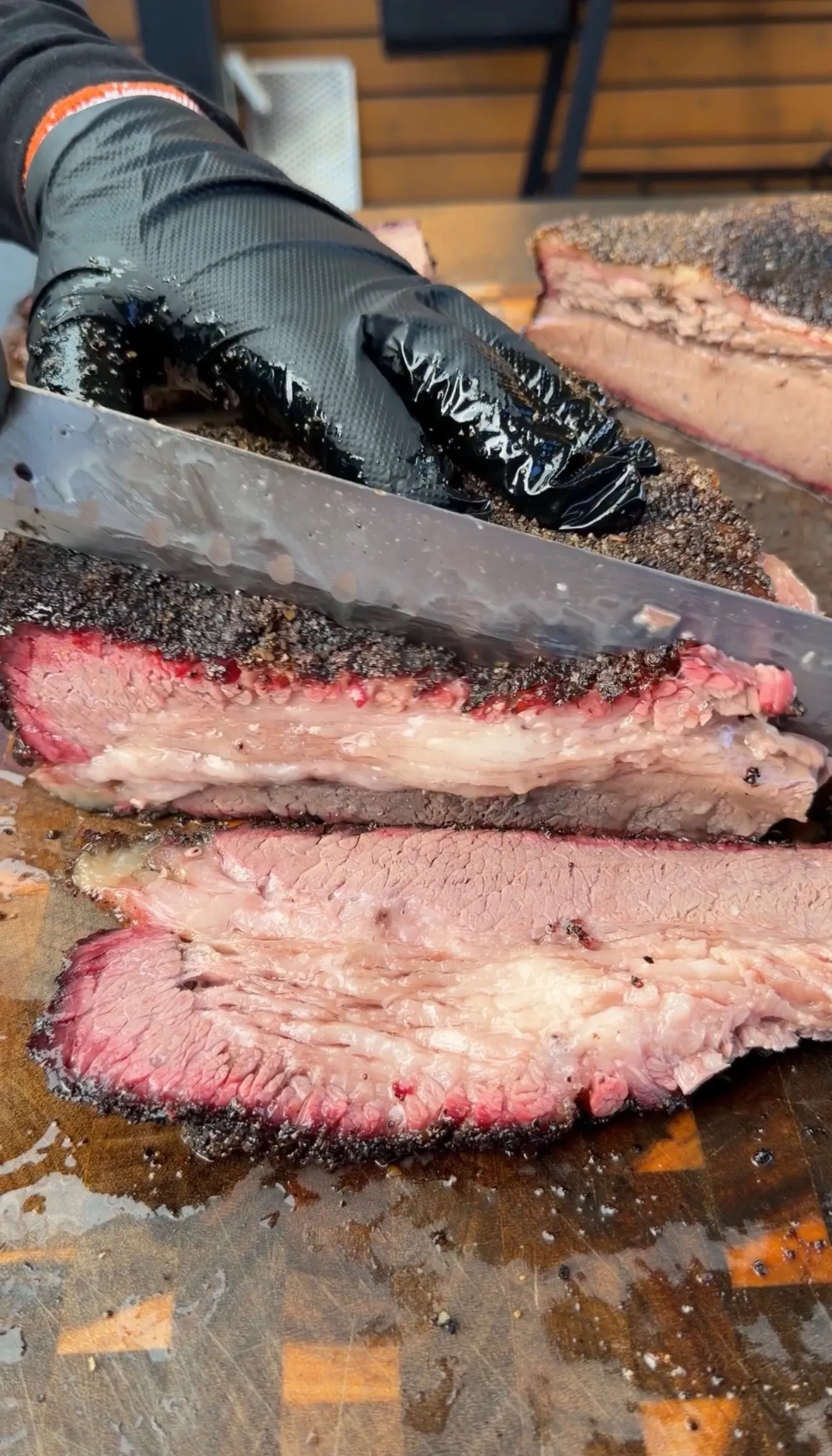
The next day, unwrap the brisket and find the direction of the grain. Slice across the grain, rather than with it, to shorten the muscle fibers. As a result, each slice bites tender instead of chewy. Use a long, sharp slicing knife and pull it through in smooth strokes. Cut the flat into slices about the thickness of a No. 2 pencil. Additionally, serve the slices right away while they are warm and juicy.
Separating the Flat and Point
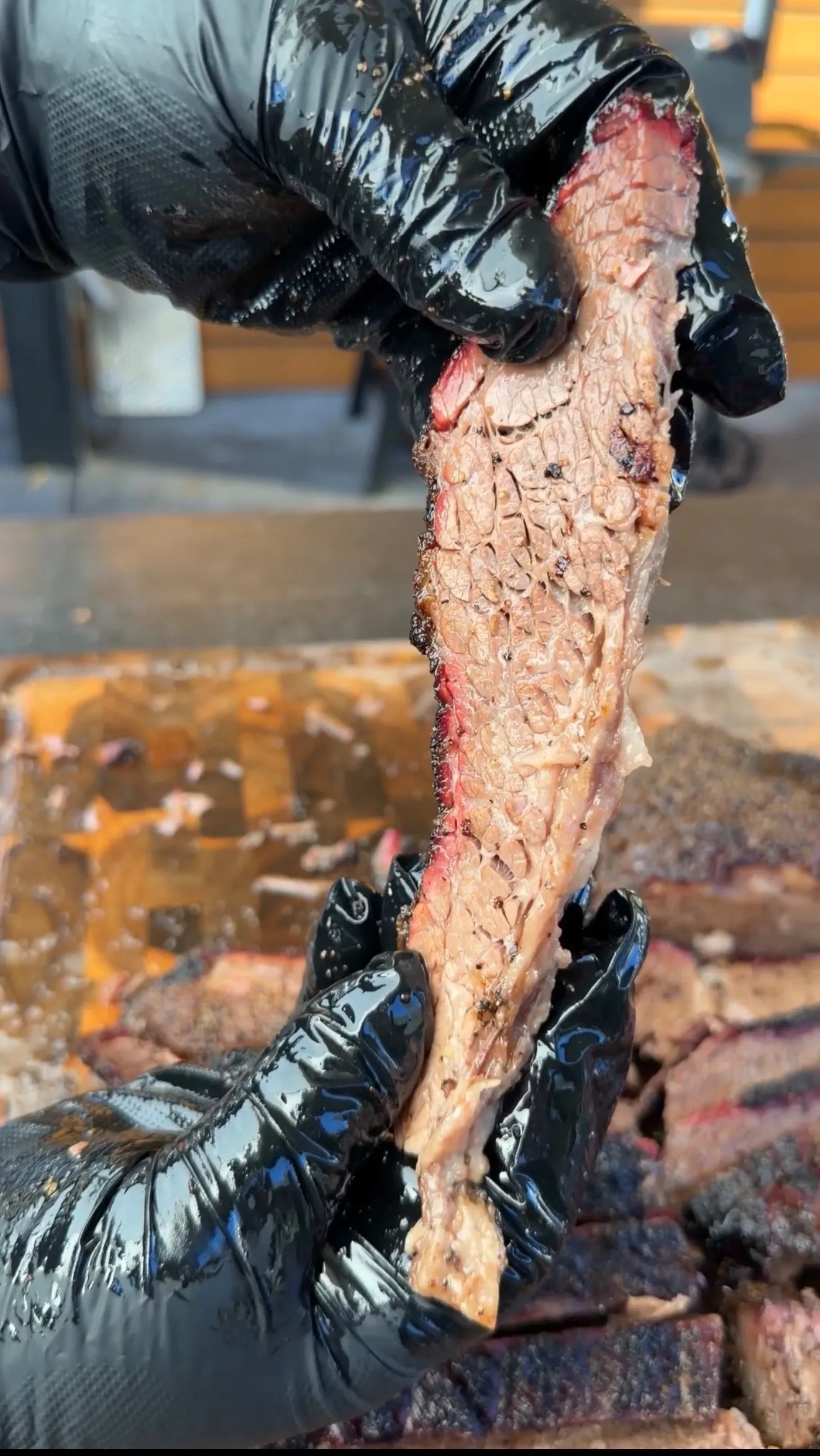
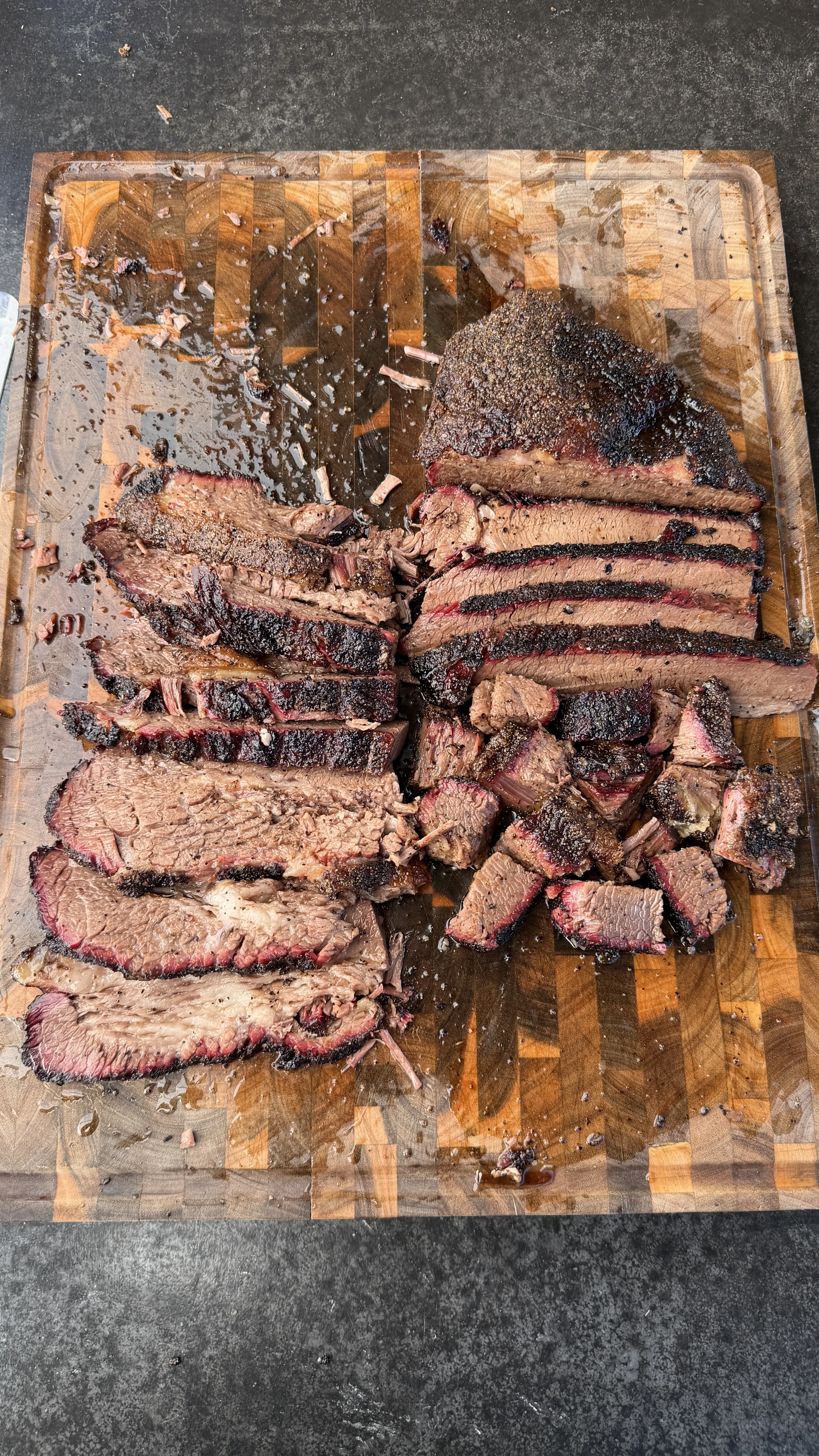
The flat and point run in different grain directions, so separate them before slicing. Find the fat seam between the two muscles and cut along it. Then rotate each piece to slice each one against its own grain. The point slices thicker, or you can cube it for burnt ends. Furthermore, separating the muscles keeps every slice tender and uniform. This step is what distinguishes a well-cut cherry smoked brisket from a chewy one.
Common Brisket Problems and Fixes
Avoiding a Dry Brisket
Dry brisket usually comes from too lean a cut or too hot a cook. First, choose Prime or Choice for the fat content that keeps the meat moist. Second, hold the smoker steady at 225°F rather than spiking the heat. Additionally, leave a quarter inch of fat cap to baste the meat as it renders. The overnight hold also guards against dryness, since it tenderizes gently. As a result, the brisket stays juicy even at the lower 195°F pull.
Fixing Tough or Undercooked Brisket
Tough brisket means the collagen has not finished rendering yet. The fix is more time, rather than more heat. If a slice chews tough, return the brisket to a low oven wrapped until it probes tender. The probe should slide in with almost no resistance. Meanwhile, slicing with the grain instead of against it also makes good brisket seem tough, so check your cut direction first. Therefore, give the meat time and mind the grain for tender cherry smoked brisket.
Step-by-Step: How to Make All-Day Cherry Smoked Brisket
Step 1: Trim the Brisket
Trim away any loose pieces of meat and excess hard fat. Then trim the fat cap down to about a quarter inch thick across the brisket. Round off the thin edges so the brisket cooks evenly and the edges do not burn over the long smoke.
Step 2: Season
Lightly coat the brisket with yellow mustard or your favorite binder. Then season generously on all sides with the salt, pepper, and garlic rub. Let the seasoning adhere while you prepare your smoker.
Step 3: Smoke at 225°F to 195°F
Preheat your pellet smoker to 225°F and use cherry wood pellets for color and a mild smoke. Place the brisket on the smoker and cook until the thickest part of the flat reaches 195°F internal. Expect 12 hours or more for a 16-pound packer.
Step 4: Overnight Hold
Once the brisket hits 195°F, hold it overnight. Either leave it on the smoker’s warm setting, or wrap it tightly in butcher paper or foil and hold it in an oven at its lowest setting, around 150 to 170°F. Keep the hold at or above 150°F and let it rest until the next day.
Step 5: Slice and Serve
The next day, unwrap the brisket and slice against the grain. The long overnight hold lets the fat and collagen keep breaking down for an incredibly tender, juicy result. Serve immediately.
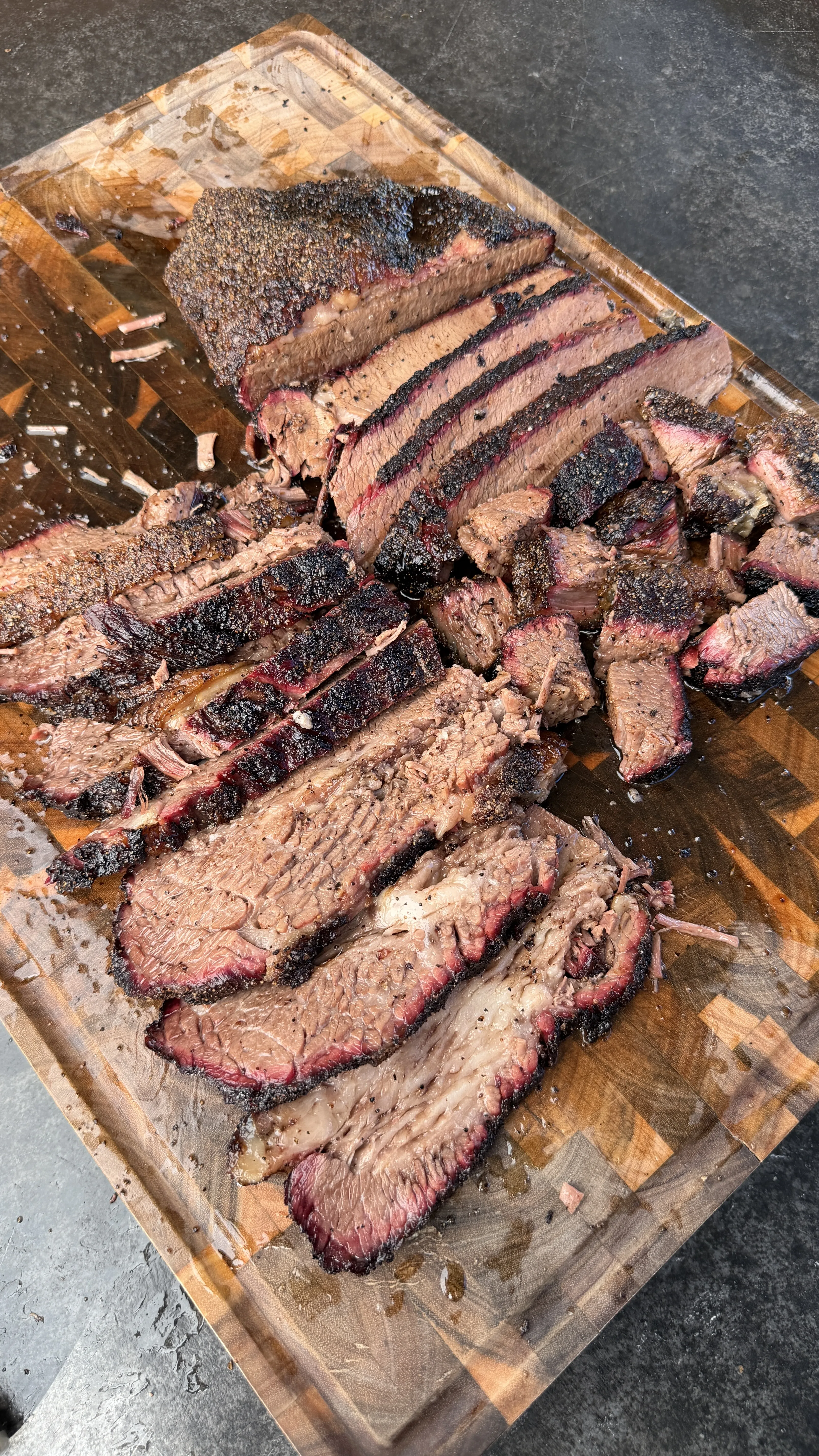
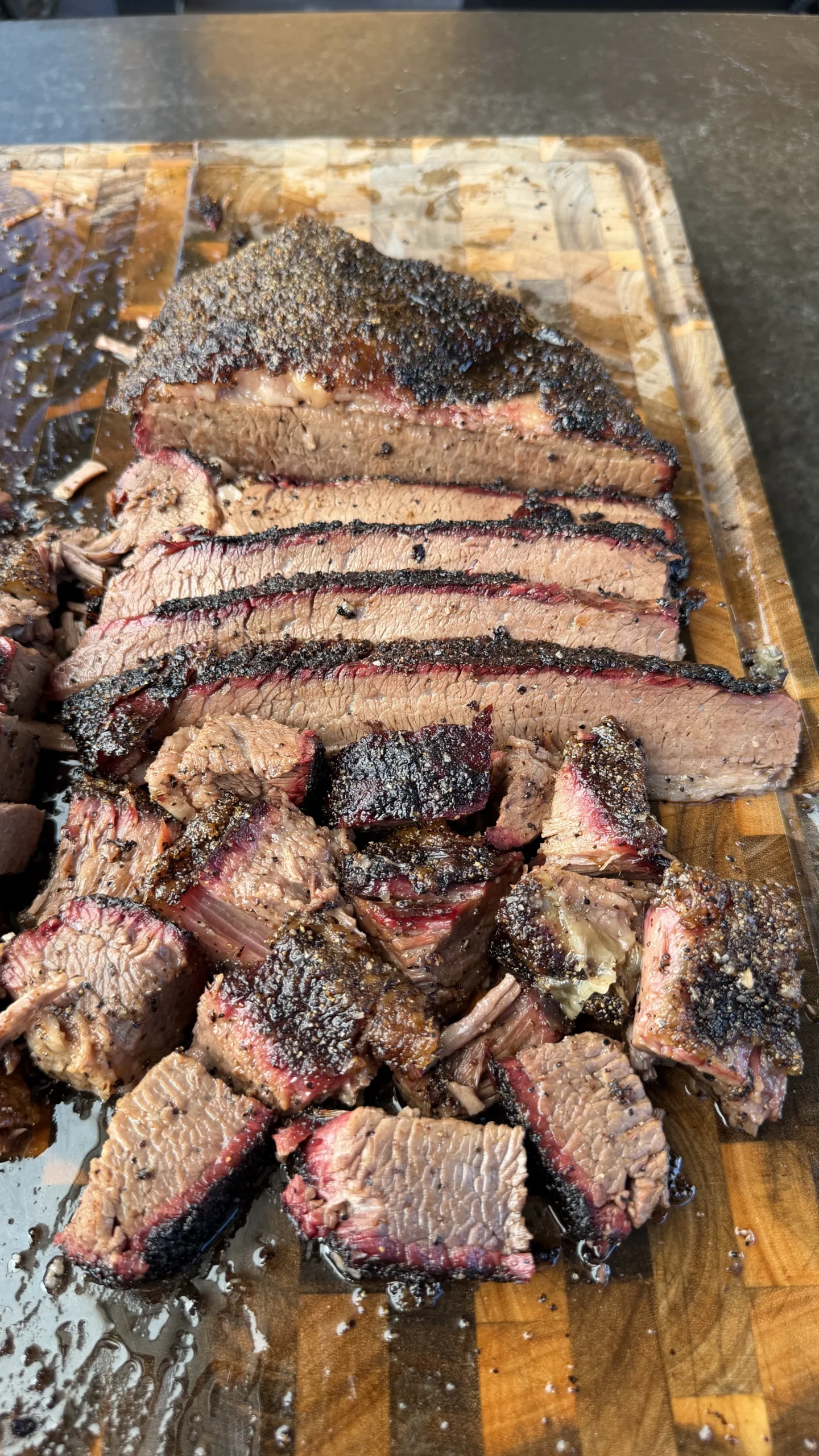
All-Day Cherry Smoked Brisket
Ingredients
Equipment
Method
- Trim away any loose pieces of meat and excess fat. Trim the fat cap down to about a quarter inch thick and round off the edges so the brisket cooks evenly.
- Lightly coat the brisket with a binder, then season generously on all sides with the salt, pepper, and garlic mixture. Let the seasoning adhere while you prepare your smoker.
- Preheat your pellet smoker to 225°F and use cherry wood pellets for color and mild smoke. Place the brisket on the smoker and cook until the thickest part of the flat reaches 195°F internal.
- Once the brisket reaches 195°F, hold it overnight. Either leave it on the smoker’s warm setting, or wrap it tightly in butcher paper or foil and place it in an oven set to its lowest warm setting, around 150 to 170°F. Keep the hold at or above 150°F.
- The next day, unwrap the brisket and slice against the grain. The long overnight hold lets the fat and collagen continue breaking down for an incredibly tender, juicy brisket. Serve immediately.
Notes
Tried this recipe?
Let us know how it was!All-Day Cherry Smoked Brisket — FAQ
Common questions about smoking, holding, and slicing a whole packer brisket.
Cut, Trim & Rub
This recipe uses a whole packer brisket around 16 pounds, which includes both the flat and the point. After trimming and the cook, expect it to feed roughly 12 to 16 people, since brisket loses a good amount of weight to trimmed fat and rendering. Plan on about half a pound of cooked brisket per person, and a little more for a hungry crowd. Buy the best grade your budget allows, since marbling drives the final tenderness.
Trim the fat cap down to about a quarter inch thick across the brisket. That leaves enough fat to render and baste the meat without blocking the rub or smoke. Round off the thin edges so they don’t burn over the long cook, and remove loose meat and hard deckle fat. Clean trimming helps the brisket cook evenly and develop bark across the whole surface.
A simple Texas-style salt and pepper rub is the classic choice. This recipe uses 2 parts coarse black pepper, 1 part coarse kosher salt, and a quarter part granulated garlic. The coarse grind builds texture in the bark, and the salt-and-pepper base lets the beef and cherry smoke lead. Coat the brisket lightly with yellow mustard or another binder first so the rub adheres.
Cherry gives a mild smoke and a deep mahogany color, which suits a 12-plus hour cook without turning the flavor harsh or acrid. It darkens the bark for a striking finish while keeping the beef flavor front and center. If you want a stronger smoke, blend cherry with oak or hickory. Cherry on its own keeps the profile balanced over the long smoke.
Cook, Hold & Slice
Because the overnight hold finishes the job. Most briskets pull around 203°F, where the collagen has fully rendered. In this method, you pull at 195°F and let the long, gentle hold keep breaking down the fat and collagen overnight. Pulling earlier leaves a margin so the brisket reaches full tenderness without overcooking or drying out on the smoker. Always go by feel too: the probe should slide in with almost no resistance.
Keep the hold at or above 150°F so the brisket stays out of the food-safety danger zone (40 to 140°F). You have two options: leave it on your smoker’s warm setting, or wrap it tightly in butcher paper or foil and hold it in an oven at its lowest setting, around 150 to 170°F. Either way, the brisket tenderizes gently until the next day. If your oven can’t hold that low, the smoker’s warm setting is the safer choice. The next day, slice against the grain and serve.
Ready to Level Up?
Take your backyard cooking from good to legendary.
This is where I keep all my most-used smokers, knives, and favorite cooking tools.
Shop My Gear CollectionExplore More Recipes
Find more diverse flavors at CWFeats.com