
Chuck Roast Burnt Ends
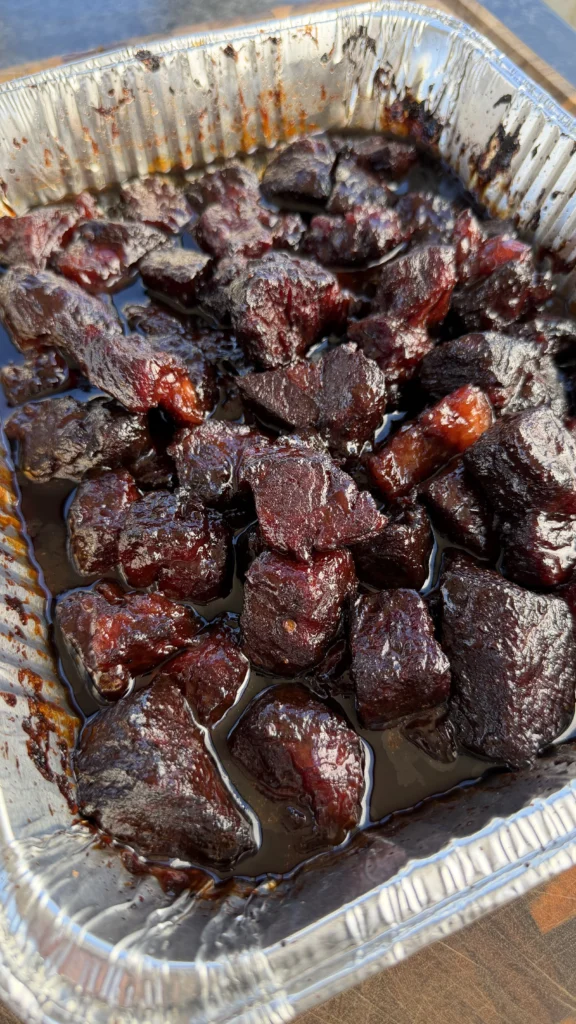
Chuck roast burnt ends deliver the same smoky, sticky, fall-apart tenderness as brisket burnt ends, but with a 3 lb chuck roast that costs a fraction of the price. This recipe starts by cutting the chuck into 1-inch cubes, seasoning them with your favorite BBQ rub, and smoking at 275°F over apple wood for 2 to 3 hours until a deep bark forms. The cubes then braise in BBQ sauce, brown sugar, and water at 300 to 315°F until they’re melt-in-your-mouth tender. Total cook time runs about 4 to 5 hours. Serves 6 to 8.
Jump to RecipeWhy Chuck Roast Burnt Ends Rival Brisket
The Case for Chuck Over Brisket
Traditional burnt ends come from the point of a whole packer brisket. That cut is loaded with intramuscular fat and produces incredible results. However, a whole brisket weighs 10 to 20 lbs and can cost well over $100. Chuck roast, by contrast, runs 3 to 5 lbs and delivers a remarkably similar beefy flavor. Chuck comes from the shoulder area of the cow, sitting right above the brisket. It contains generous marbling and tough connective tissue that breaks down beautifully during a low-and-slow cook.
Time Savings With Chuck Roast Burnt Ends
Brisket burnt ends require 10 to 12 hours of total cook time. Chuck roast burnt ends cut that nearly in half. You’re looking at 4 to 5 hours from raw cubes to finished product. Additionally, the smaller portion size makes chuck roast burnt ends ideal for weeknight cooks or smaller gatherings where a full brisket would be overkill.
Choosing the Right Chuck Roast
Look for a roast with visible white flecks of intramuscular fat running through the meat. Those flecks are your insurance policy against dryness. Avoid roasts with large, solid chunks of white fat on the exterior. You want marbling inside the muscle, not a thick fat cap on top. A 3 lb chuck roast yields approximately 2 to 2.5 lbs of finished burnt ends after trimming and cooking.
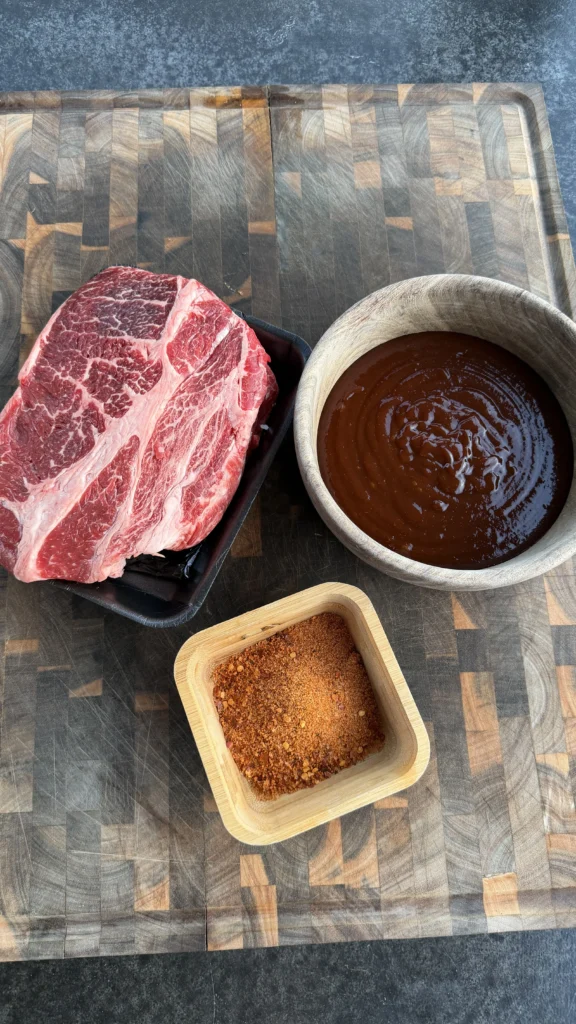
How to Cut and Season Chuck Roast Burnt Ends
Cube Size Matters
Cut your chuck roast into 1-inch cubes. This size gives you the ideal ratio of bark to tender interior. Cubes smaller than 1 inch risk drying out during the smoke phase. Cubes larger than 1.5 inches take significantly longer to become tender during the braise. Consequently, 1-inch cubes hit the sweet spot for smoke penetration, bark formation, and tenderness.
Trimming Before You Cube
Before cutting, remove any large external fat caps or silverskin. Leave the intramuscular fat alone. That marbling renders during cooking and keeps each cube moist. You want to trim away anything that won’t render at smoking temperatures, specifically thick, hard white fat and connective tissue membranes.
The Seasoning Approach
Keep the rub simple. A good BBQ seasoning with salt, pepper, garlic powder, and paprika is all you need. The smoke, sauce, and brown sugar provide plenty of flavor layers later. Season generously on all sides. Since every cube has six faces exposed to smoke, each face needs rub coverage for maximum bark development.
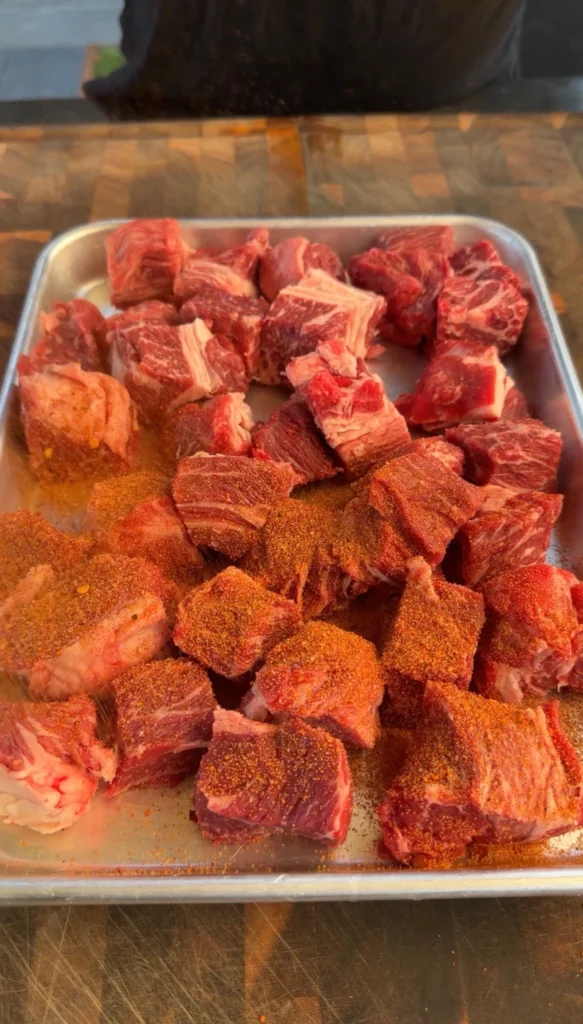
Smoking Chuck Roast Burnt Ends: Temperature and Wood
Why 275°F Is the Sweet Spot
Smoking at 275°F gives you the best balance between bark formation and cook time. Lower temperatures (225°F) build great bark but extend the smoke phase to 4+ hours before you even braise. Higher temperatures (300°F+) rush the exterior and don’t allow enough time for smoke penetration. At 275°F, your chuck roast burnt ends develop a deep, dark bark in 2 to 3 hours while absorbing clean smoke flavor throughout.
Best Wood for Beef Burnt Ends
Apple wood is the choice for this recipe. It produces a mild, slightly sweet smoke that complements the BBQ sauce and brown sugar without overpowering the beef. Hickory and oak are stronger alternatives that work well if you prefer a heavier smoke profile. Cherry wood adds a subtle sweetness and gives the bark a reddish mahogany color. Avoid mesquite for long cooks because it can turn bitter over extended smoking times.
Reading the Bark
The bark is your visual cue that the smoke phase is complete. You’re looking for a deep mahogany to dark brown exterior on all sides of each cube. The surface should feel firm and dry to the touch, almost like a crust. If the cubes still look moist or light in color, they need more time. The bark locks in moisture and provides the textural contrast that makes chuck roast burnt ends addictive.
The Braise: Where Chuck Roast Burnt Ends Get Tender
Building the Braising Liquid
Transfer the smoked cubes to a foil pan. Add 1 cup of your favorite BBQ sauce, 1/2 cup brown sugar, and 1/4 cup water. The BBQ sauce provides the flavor base. Brown sugar adds sticky sweetness and caramelization. Water loosens the mixture so every cube gets coated and braised evenly. Toss the cubes gently to distribute the sauce.
Foil, Seal, and Braise
Cover the pan tightly with aluminum foil. This traps steam and creates a braising environment that breaks down the tough connective tissue in the chuck. Place the covered pan back on the smoker at 300 to 315°F. The higher temperature during this phase accelerates the braising process. Cook for 1 to 2 hours until the meat is fall-apart tender.
The Tenderness Test
Check your chuck roast burnt ends by picking up a cube with tongs. If it holds together but breaks apart easily when you squeeze gently between your fingers, it’s done. The meat should feel like it could almost fall apart on its own. If it resists pressure or feels firm, cover and cook for another 30 minutes. Furthermore, a probe thermometer should slide into any cube with zero resistance.
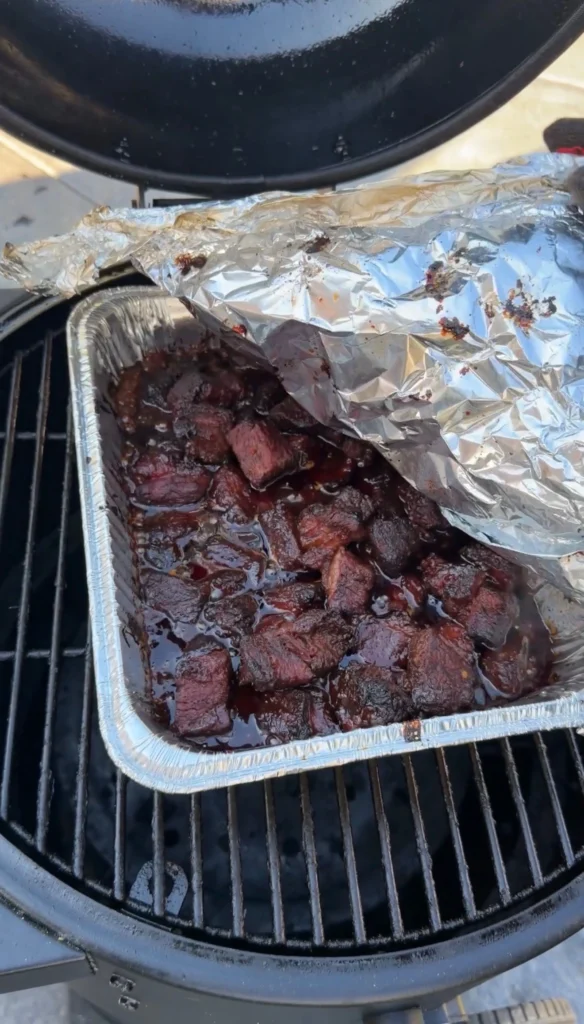
The Glaze: Finishing Your Burnt Ends
Remove the Foil and Reduce
Once the cubes are tender, remove the foil. Toss the meat in the sauce one more time. Return the uncovered pan to the smoker for 15 to 20 minutes. This final step allows the sauce to reduce and thicken into a sticky, caramelized glaze that coats each burnt end. The exposed surface also firms up slightly, giving you a tacky exterior with a melt-in-your-mouth interior.
How to Serve Chuck Roast Burnt Ends
Serve these hot, straight from the smoker. They work as a standalone main course, piled on slider buns, or served alongside classic BBQ sides like mac and cheese, coleslaw, or baked beans. For a more complete plate, add cornbread and pickled onions. Chuck roast burnt ends also make incredible taco or nacho toppings. The sticky glaze pairs especially well with sharp, acidic sides that cut through the sweetness.
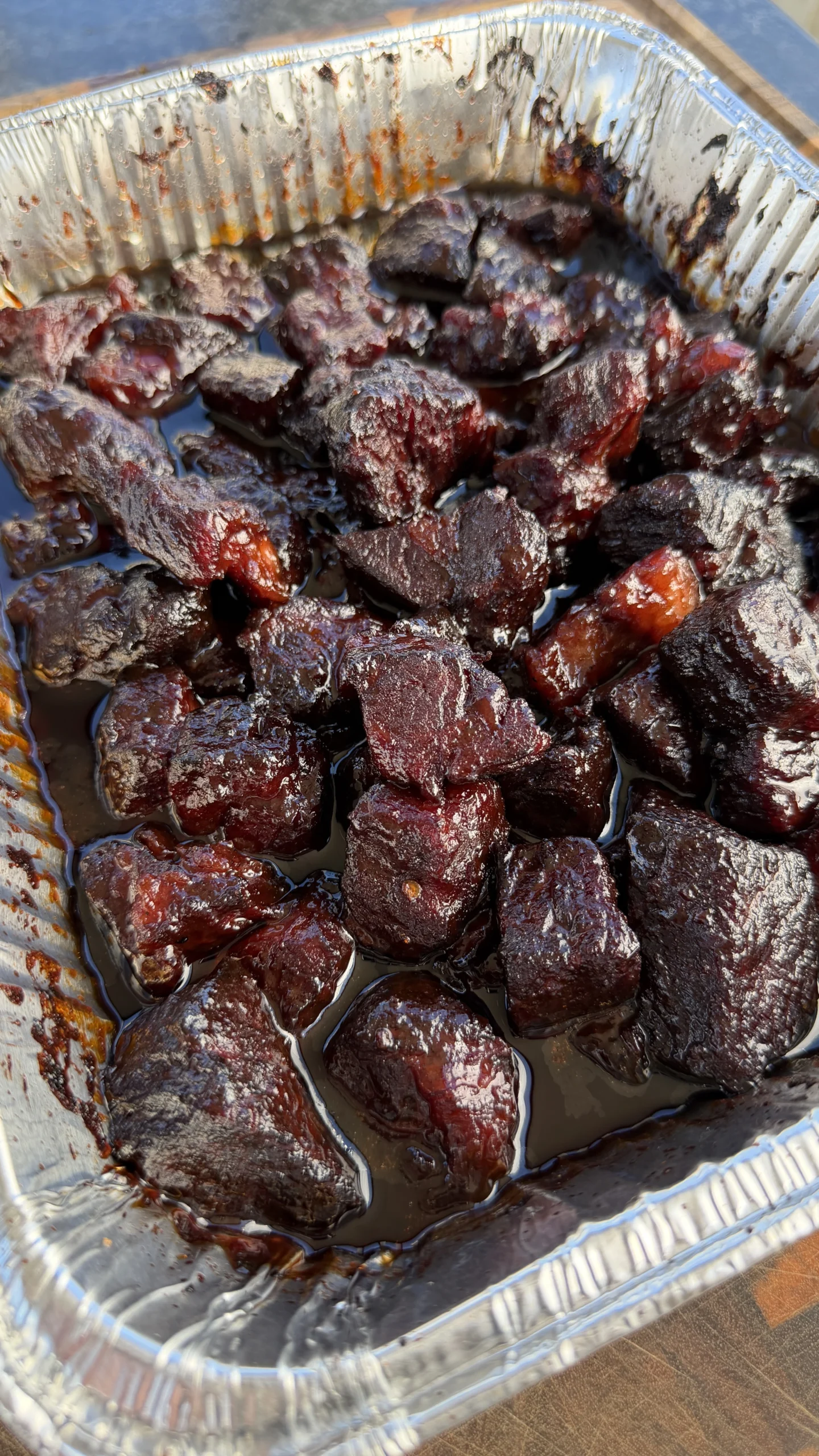
📸 IMAGE: chuck-roast-burnt-ends-finished-sticky-glaze.webp Alt: Finished chuck roast burnt ends with sticky caramelized glaze in a foil pan
Chuck Roast Burnt Ends
Apple wood smoked · 275°F then braised at 300-315°F
Ingredients
Beef
- 3 lbs chuck roast, cut into 1-inch cubes
- Your favorite BBQ seasoning
Smoke
- Apple wood chunks or chips
Braising Sauce
- 1 cup BBQ sauce
- ½ cup brown sugar
- ¼ cup water
Instructions
-
1Cut the chuck roast into 1-inch cubes. Season generously on all sides with your favorite BBQ rub.
-
2Preheat smoker to 275°F with apple wood. Place seasoned cubes directly on the grates.
-
3Smoke for 2-3 hours until the meat develops a deep, dark bark on all sides.
-
4Transfer smoked cubes to a foil pan. Add 1 cup BBQ sauce, ½ cup brown sugar, and ¼ cup water. Toss to coat.
-
5Cover tightly with foil. Return to the smoker at 300-315°F. Braise for 1-2 hours until fall-apart tender.
-
6Remove foil, toss the meat in the sauce, and return uncovered for 15-20 minutes until the sauce becomes a sticky glaze. Give one final toss and serve hot.
Pick Marbled Meat
Look for white flecks of fat in the muscle. Marbling keeps each cube moist during the long cook.
The Squeeze Test
Pick up a cube with tongs and squeeze gently. If it breaks apart without crumbling, it’s done.
Don’t Rush the Bark
The smoke phase builds all the flavor. Wait for deep mahogany color before moving to the braise.
Step-by-Step: How to Smoke Chuck Roast Burnt Ends
Step 1: Cube and Season the Chuck Roast
Cut a 3 lb chuck roast into 1-inch cubes. Trim away any thick external fat caps or silverskin, but leave the intramuscular marbling intact. That internal fat renders during cooking and keeps the cubes moist throughout the smoke and braise.
Season the cubes generously on all sides with your favorite BBQ rub. Since each cube has six exposed faces, every surface needs coverage for full bark development. Toss the cubes in a large bowl to distribute the rub evenly.
Step 2: Set Up the Smoker
Preheat your smoker to 275°F. Add apple wood chunks for a mild, slightly sweet smoke that complements the BBQ sauce and brown sugar in the braise. Clean the grates and arrange the seasoned cubes directly on the cooking surface with space between each piece. Air circulation around every cube promotes even bark formation.
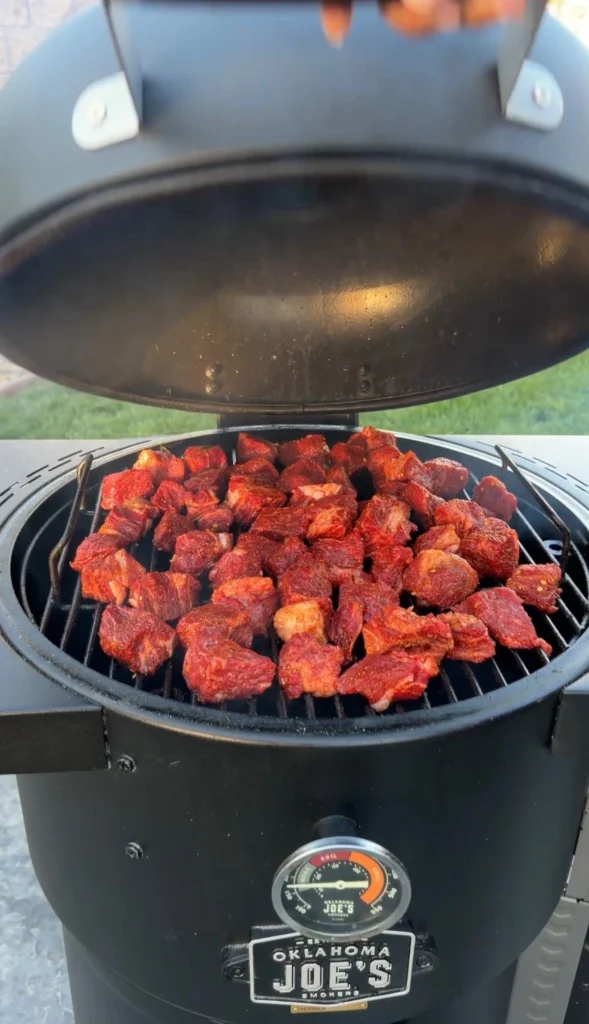
Step 3: Smoke Until Bark Forms
Close the lid and let the cubes smoke undisturbed for 2 to 3 hours. You’re looking for a deep mahogany to dark brown bark on all sides. The surface should feel firm and dry. This bark is where all the smoky flavor lives, and it also creates the textural contrast between crispy exterior and tender interior in the final product.
Don’t open the lid constantly. Every time you do, you lose heat and extend the cook time. Check once per hour at most.
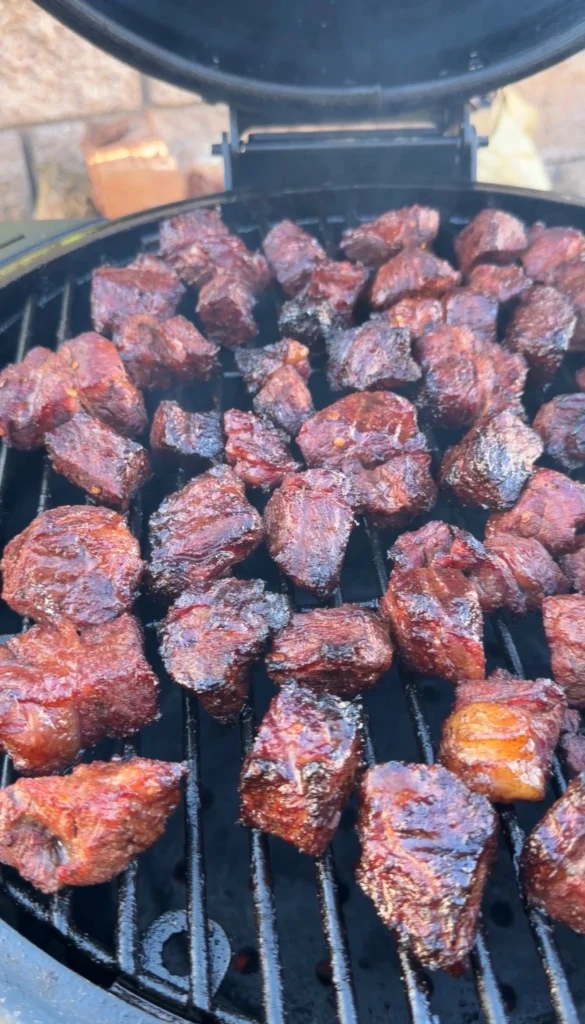
Step 4: Build the Braise
Transfer the smoked cubes into a foil pan. Add 1 cup BBQ sauce, 1/2 cup brown sugar, and 1/4 cup water. Toss everything together gently so each cube is coated. The brown sugar will dissolve during cooking and create a sticky caramel layer. The water loosens the sauce so it penetrates every surface.
Step 5: Cover and Braise Until Tender
Cover the foil pan tightly with aluminum foil. Place it back on the smoker at 300 to 315°F. The covered pan traps steam and creates a braising environment that breaks down the tough connective tissue in the chuck.
Braise for 1 to 2 hours. Check tenderness by picking up a cube with tongs and squeezing gently. If it breaks apart easily without completely crumbling, it’s done. If it still feels firm, cover and cook 30 more minutes.
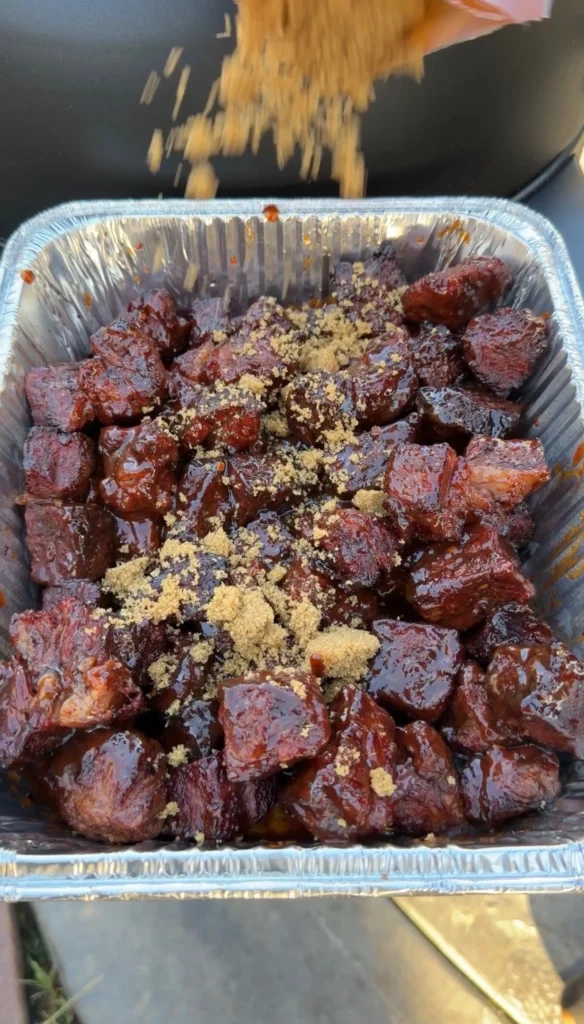
Step 6: Glaze and Serve
Remove the foil. Toss the meat in the sauce one final time. Return the uncovered pan to the smoker for 15 to 20 minutes. This final step reduces the sauce into a thick, sticky glaze that coats each burnt end with a lacquered finish.
Give the cubes one last toss and serve immediately. The texture should be: crispy bark exterior, melt-in-your-mouth tender interior, sticky sweet glaze all over.
Chuck Roast Burnt Ends
Ingredients
Equipment
Method
- Cut the chuck roast into 1-inch cubes. Season generously on all sides with your favorite BBQ rub.
- Preheat smoker to 275°F with apple wood. Place seasoned cubes directly on the grates with space between each piece.
- Smoke for 2-3 hours until the meat develops a deep, dark bark on all sides.
- Transfer smoked cubes to a foil pan. Add 1 cup BBQ sauce, 1/2 cup brown sugar, and 1/4 cup water. Toss to coat evenly.
- Cover tightly with foil. Return to the smoker at 300-315°F. Braise for 1-2 hours until the meat is fall-apart tender.
- Remove foil, toss the meat in the sauce, and return uncovered for 15-20 minutes until the sauce becomes a sticky glaze. Give one final toss and serve hot.
Notes
Tried this recipe?
Let us know how it was!Chuck Roast Burnt Ends
Apple wood smoked · 275°F then braised at 300-315°F
Ingredients
Beef
- 3 lbs chuck roast, cut into 1-inch cubes
- Your favorite BBQ seasoning
Smoke
- Apple wood chunks or chips
Braising Sauce
- 1 cup BBQ sauce
- ½ cup brown sugar
- ¼ cup water
Instructions
-
1
Cut the chuck roast into 1-inch cubes. Season generously on all sides with your favorite BBQ rub.
-
2
Preheat smoker to 275°F with apple wood. Place seasoned cubes directly on the grates.
-
3
Smoke for 2-3 hours until the meat develops a deep, dark bark on all sides.
Braise & Glaze
-
4
Transfer smoked cubes to a foil pan. Add 1 cup BBQ sauce, ½ cup brown sugar, and ¼ cup water. Toss to coat.
-
5
Cover tightly with foil. Return to the smoker at 300-315°F. Braise for 1-2 hours until fall-apart tender.
-
6
Remove foil, toss the meat in the sauce, and return uncovered for 15-20 minutes until the sauce becomes a sticky glaze. Give one final toss and serve hot.
Pick Marbled Meat
Look for white flecks of fat in the muscle. Marbling keeps each cube moist during the long cook.
The Squeeze Test
Pick up a cube with tongs and squeeze gently. If it breaks apart without crumbling, it’s done.
Don’t Rush the Bark
The smoke phase builds all the flavor. Wait for deep mahogany color before moving to the braise.
Chuck Roast Burnt Ends — FAQ
Common questions about smoking perfect burnt ends from chuck roast.
Your Questions, Answered
Chuck roast burnt ends are cubed, smoked, and braised pieces of chuck roast that mimic traditional brisket burnt ends. They deliver the same smoky, sticky, fall-apart texture at a fraction of the cost and cook time of a full brisket.
A whole packer brisket weighs 10 to 20 lbs and can cost over $100. A 3 lb chuck roast costs significantly less and cooks in half the time. The name refers to the smaller, more affordable scale, not a lesser result. Most people at the table won’t know the difference.
Smoke the cubes at 275°F for the initial bark-building phase. Then increase to 300-315°F for the covered braise. The higher temperature during braising accelerates the breakdown of connective tissue.
Use the squeeze test. Pick up a cube with tongs and press gently. If it breaks apart easily without completely crumbling, it’s done. A probe thermometer should also slide into any cube with zero resistance, similar to room-temperature butter.
Tips, Wood & Serving
Apple wood produces a mild, slightly sweet smoke that pairs perfectly with the BBQ sauce and brown sugar. Hickory and oak deliver a stronger smoke profile. Cherry adds a reddish color to the bark. Avoid mesquite for long cooks as it can turn bitter.
This recipe cubes before smoking so every side of each piece gets seasoned and builds bark. Some pitmasters smoke the roast whole and cube at the end, which retains more moisture but produces less bark. Cubing first gives you maximum flavor on every surface.
You can braise in the oven, but you’ll miss the smoke flavor entirely. For the best compromise, smoke the cubes on a grill for 2 hours, then finish the braise in a 300°F oven covered with foil. This gives you smoke flavor with the convenience of an indoor finish.
Classic BBQ sides work best: mac and cheese, coleslaw, baked beans, or cornbread. They also make incredible sliders, nachos, or taco toppings. The sticky glaze pairs well with sharp, acidic sides like pickled onions or vinegar slaw that cut through the sweetness.
Ready to Level Up?
Take your backyard cooking from good to legendary.
This is where I keep all my most-used smokers, knives, and favorite cooking tools.
Shop My Gear CollectionExplore More Recipes
Find more diverse flavors at CWFeats.com