Easy Sausage Shrimp Skewers
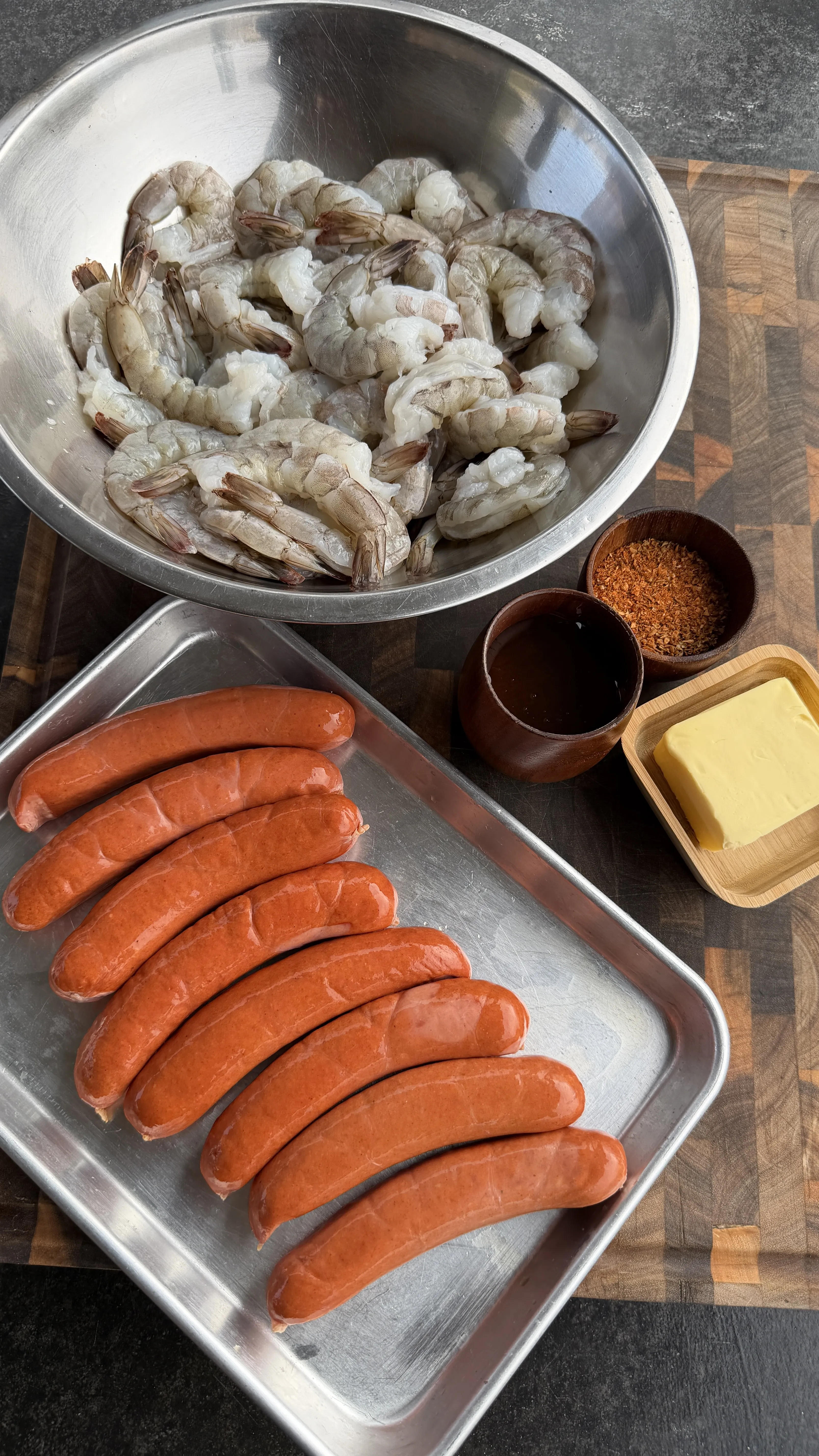
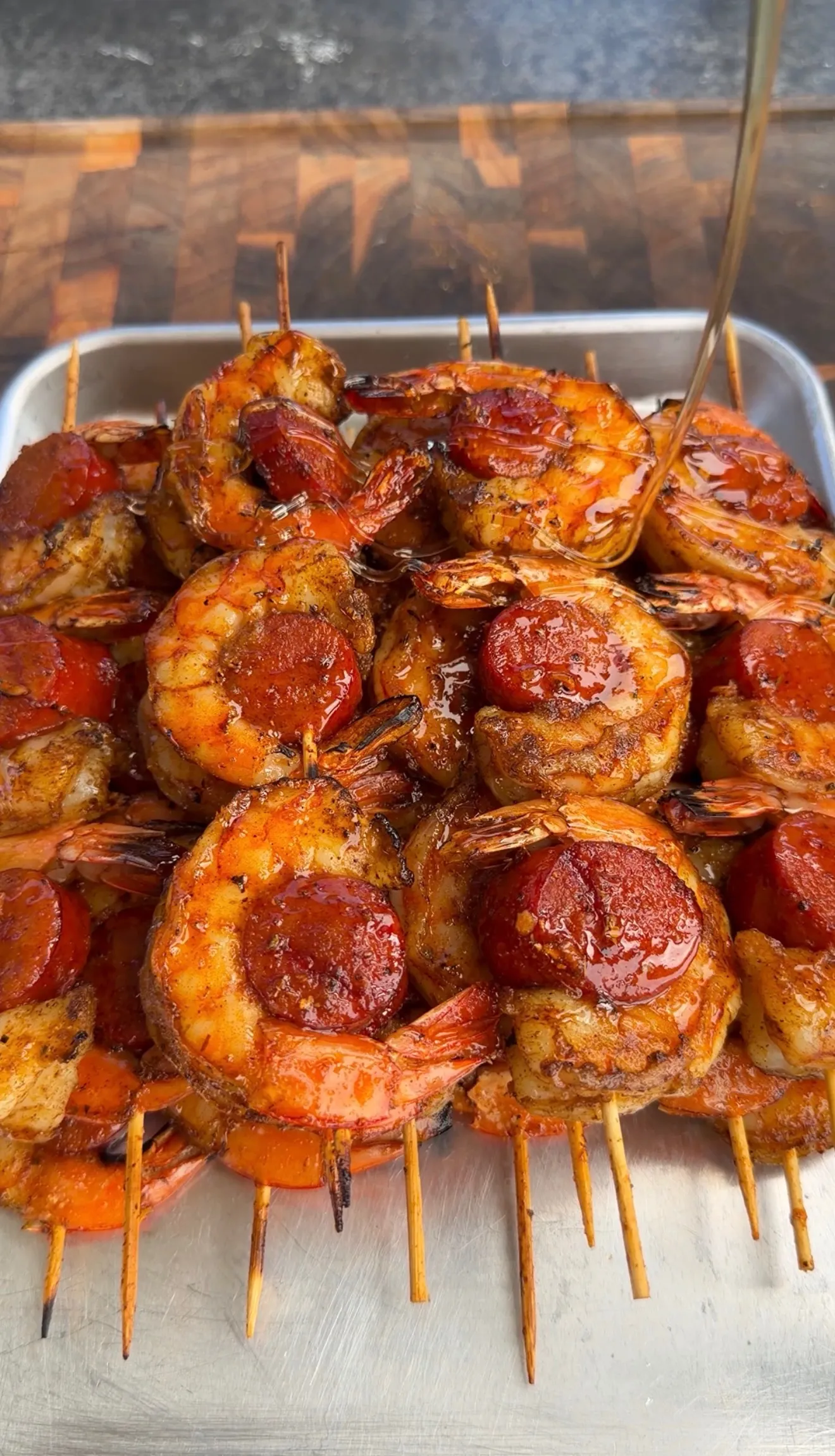
These shrimp skewers wrap Cajun-seasoned large shrimp around half-inch pieces of Louisiana hot link sausage, then smoke them at 225°F until the shrimp hits 140°F internal. In the last 10 to 15 minutes, a homemade Cajun honey butter glaze gets basted on every few minutes to build a sticky caramelized finish that layers sweet, smoky, and spicy in one bite. Total cook runs about 30 to 40 minutes and yields 16 to 20 skewers as an appetizer for a backyard cookout or party platter.

Why These Shrimp Skewers Wrap Around Sausage Instead of Alternating
The Wrap Locks Flavor Between Two Ingredients
Most shrimp and sausage skewers thread the two ingredients alternately on the stick: shrimp, sausage, shrimp, sausage. That works, but the shrimp and sausage cook independently and you only get the combined flavor when both end up on the same fork. Wrapping each shrimp around a half-inch sausage cube changes that. Consequently, the shrimp curls around the sausage as it cooks, the sausage fat renders into the shrimp meat, and every single bite delivers both flavors at once.
Even Sausage Distribution in Every Bite
Alternating threading also creates uneven proportions. Some bites are mostly sausage, others mostly shrimp. The wrap method guarantees a 1:1 ratio in every piece because the shrimp encases the sausage completely. Furthermore, when the wrapped shrimp hits the heat, the sausage piece holds the shrimp in its curled shape so it does not flatten out, which keeps the texture plump and juicy instead of flat and dried.

Choosing Shrimp and Sausage for the Best Cajun Skewers
Why Large Shrimp (16-20 Count) Hold Up Best on the Smoker
Shrimp size is measured by count per pound, so a lower number means a bigger shrimp. For this recipe, look for shrimp labeled 16-20 count or larger (sometimes called “jumbo” or “extra jumbo”). Smaller shrimp like 31-40 count overcook in the 30-minute smoke window and turn rubbery before the glaze sets. Additionally, larger shrimp have enough surface area to wrap around the sausage cube without splitting, and they hold more of the Cajun seasoning on the surface.
Louisiana Hot Links vs Andouille vs Smoked Sausage
Louisiana hot links are the traditional choice for Cajun-leaning recipes. They are spicy, coarse-ground, and pre-smoked, which means they bring built-in heat and smoke flavor that complements the Cajun seasoning on the shrimp. Andouille is a strong alternative with a coarser texture and deeper smoke. Therefore, you can swap either of those for similar results. Avoid sweet Italian or breakfast sausage, which clash with the Cajun profile and lack the pre-smoke that links provide.

Building the Cajun Honey Butter Glaze
The 1:1 Butter-to-Honey Ratio Plus Cajun Seasoning
The glaze uses a 1:1 ratio of butter to honey (half a cup of each) plus 2 tablespoons of Cajun seasoning. This balance hits sweet, spicy, and rich in equal measure. Specifically, the butter carries the heat from the Cajun spices, the honey provides the sticky-sweet caramelization, and the Cajun seasoning bridges the glaze with the rub already on the shrimp. As a result, every layer of basting builds on the previous flavor instead of competing with it.
Why Low Heat Matters When Melting the Butter
Honey and butter can split if rushed over high heat. Specifically, the water in the honey separates from the fat in the butter and the glaze turns grainy. Therefore, melt the butter over low heat in a small saucepan, then whisk in the honey and Cajun seasoning until smooth and glossy. Pull off the heat the moment everything is combined. Moreover, do not let the glaze simmer or reduce. The emulsion needs to stay loose for clean basting.
Smoking Instead of Grilling at High Heat
225°F Lets the Smoke Penetrate the Shrimp
Most shrimp skewer recipes call for direct grilling at 400°F or higher, which cooks the shrimp in 3 to 4 minutes but barely allows time for smoke flavor to penetrate. Smoking at 225°F changes that. The lower temperature extends the cook to 25 to 30 minutes, giving the shrimp time to absorb wood smoke deeply into the meat. As a result, the finished shrimp tastes distinctly smoked rather than just grilled.

Pull at 140°F Internal for Food Safety and Texture
The FDA recommends an internal temperature of 145°F for shrimp, but pulling at 140°F accounts for carryover cook as the skewers rest. The shrimp will continue to rise 5°F off the smoker, landing exactly at the safe threshold without overcooking. Furthermore, the C-shape curl of the shrimp around the sausage is the visual cue that backs up the thermometer reading. A tight O-shape means the shrimp has gone too far and turned rubbery.
Basting Technique for the Caramelized Glaze Finish
When to Start Glazing (Last 10-15 Minutes)
Start basting the skewers with the Cajun honey butter during the last 10 to 15 minutes of cooking, not earlier. Honey contains roughly 80% sugars by weight, and those sugars caramelize aggressively under direct smoker heat. Applying the glaze too early in the cook means the sugars burn before the shrimp finishes. Therefore, save the basting for the final stretch when the shrimp is nearly done and the heat has time to set the glaze without scorching it.
How to Layer the Glaze Without Burning the Sugars
Baste every 3 to 4 minutes during the final stretch, using a brush to apply a thin even coat each time. Three to four light coats build a sticky lacquered finish that tastes deeper than one heavy coat. In contrast, dumping the glaze on at the end leaves a runny puddle that drips off the skewers before it can set. Additionally, if you see the surface going from glossy to dark brown anywhere, pull the skewers immediately to prevent the sugars from crossing into burnt.
Step-by-Step: How to Make These Cajun Shrimp Skewers
Step 1: Prep and Season the Shrimp
Peel and devein the shrimp if not already prepped, rinse under cold water, and pat dry with paper towels. Place in a large bowl and toss evenly with the 2 tablespoons of Cajun seasoning until every shrimp is coated. Dry surfaces let the seasoning stick directly to the meat instead of dissolving into surface moisture.

Step 2: Cut and Cube the Sausage
Slice the Louisiana hot links into half-inch pieces. Each link should yield 5 to 6 cubes depending on length. Set the cubes aside in a separate bowl from the shrimp so the wet seasoning does not mix into the dry sausage.
Step 3: Wrap and Skewer
If using wooden skewers, soak them in water for 30 minutes before this step to prevent burning. Wrap each seasoned shrimp around a half-inch piece of sausage so the shrimp encases the cube in a C-shape curl. Then thread a skewer straight through the center of the shrimp-and-sausage bundle to lock it together. Repeat until all skewers are assembled.
Step 4: Make the Cajun Honey Butter
In a small saucepan over low heat, melt the half cup of unsalted butter. Whisk in the half cup of honey and the 2 tablespoons of Cajun seasoning until the glaze is smooth and glossy. Remove from the heat the moment everything is combined to avoid breaking the emulsion. Set aside within arm’s reach of the smoker for basting.

Step 5: Smoke at 225°F and Baste in the Final 10-15 Minutes
Preheat the smoker to 225°F using your preferred wood pellets. Place the assembled skewers directly on the smoker grates with space between each for smoke circulation. Cook until the shrimp reaches an internal temperature of 140°F, about 25 to 30 minutes total. During the last 10 to 15 minutes, baste the skewers with the Cajun honey butter every 3 to 4 minutes, applying thin even coats. Three to four layers of basting build the lacquered glaze finish. Once the shrimp hits 140°F, pull the skewers and serve immediately with any remaining glaze drizzled over the top.


Garlic Herb Parmesan Grilled Oysters
Ingredients
Equipment
Method
- Preheat the grill to around 400°F. Using an oyster shucking knife and a folded kitchen towel to protect your hand, shuck and fully open all 12 oysters. Leave the oysters on the half shell with their natural brine intact.
- In a small bowl, combine the melted butter, minced garlic, chopped parsley, chopped chives, fresh thyme, lemon paste, salt, and black pepper. Stir until evenly distributed.
- Spoon a generous amount of the garlic herb butter onto each oyster, making sure the herbs land on the meat. Season each oyster lightly with your favorite seafood seasoning.
- Place the oysters directly onto the hot grill grates, cup side down so the brine and butter stay in the shells. Cook for about 6 minutes uncovered without disturbing them.
- Top each oyster with about 1 teaspoon of freshly grated parmesan cheese. Close the grill lid and cook another 1 to 2 minutes until the cheese is melted and bubbling.
- Remove the oysters from the grill and finish with juice from charred lemon wedges (grill the lemon wedges cut-side down for 4-6 minutes before the oysters go on). Serve immediately while hot and bubbly.
Notes
Tried this recipe?
Let us know how it was!Cajun Honey Shrimp Skewers — FAQ
Everything you need to nail the wrap, the smoke, and the glaze.
Setup & Basics
Both are smoked pork sausages with Cajun roots, but the differences matter. Louisiana hot links are finer-ground, spicier, and made with cayenne, paprika, and red pepper flakes. Andouille is coarser-ground, smokier, and more garlic-forward, traditionally double-smoked over pecan wood. Either works in this recipe. Hot links bring more heat, andouille brings deeper smoke. Avoid sweet Italian or breakfast sausage, which clash with the Cajun seasoning on the shrimp.
16-20 count shrimp (jumbo) is the sweet spot. Smaller shrimp like 31-40 count cook through too fast on a 225°F smoker and turn rubbery before the glaze sets. Larger shrimp like U-15 colossal will work but need an extra 5-10 minutes of cook time and are harder to wrap around a 1/2-inch sausage cube without overhang. If shrimp size is your only option below 16-20, drop the smoker temp to 200°F and pull at 140°F internal.
Metal skewers are the better all-around choice. They never burn, conduct heat into the center of each piece for more even cooking, and they last forever. The downside is the cost upfront. Wooden bamboo skewers work fine but must be soaked in water for 30 minutes before threading to prevent them from burning on the grates. Flat-sided bamboo skewers grip better than round ones and stop the pieces from spinning when you flip them.
Cajun seasoning blends salt, paprika, garlic powder, onion powder, cayenne, oregano, thyme, and black pepper. Tony Chachere’s is the standard store-bought version. For homemade: 2 tbsp paprika, 2 tbsp salt, 1 tbsp garlic powder, 1 tbsp onion powder, 1 tbsp dried oregano, 1 tbsp dried thyme, 2 tsp cayenne, 2 tsp black pepper, 1 tsp white pepper. Mix and store in an airtight jar. Adjust the cayenne up or down based on heat preference.
Technique & Troubleshooting
Almost always an overcooking issue. Three causes to check. First, the shrimp size is too small for the 225°F method (use 16-20 count or larger). Second, you waited for a visual cue (pink and opaque) instead of pulling at 140°F internal with a thermometer. Third, the smoker drifted hotter than 225°F, especially common with pellet grills on windy days. Visual backup: a loose C-shape curl means done. A tight O-shape means overcooked.
Yes, but adjust the technique. Set up a two-zone fire on a charcoal grill or use one burner on a gas grill. Cook the skewers over the indirect (cooler) side at around 300-325°F for 12-15 minutes, then move to direct heat for the last 3-4 minutes while basting with the Cajun honey butter. You will lose the deep smoke flavor that low-and-slow at 225°F provides, but adding a foil packet of wood chips over the direct burner helps. Still pull the shrimp at 140°F internal.
Ready to Level Up?
Take your backyard cooking from good to legendary.
This is where I keep all my most-used smokers, knives, and favorite cooking tools.
Shop My Gear CollectionExplore More Recipes
Find more diverse flavors at CWFeats.com