
Pork Tenderloin Pinwheels Sponsored By Missouri Pork
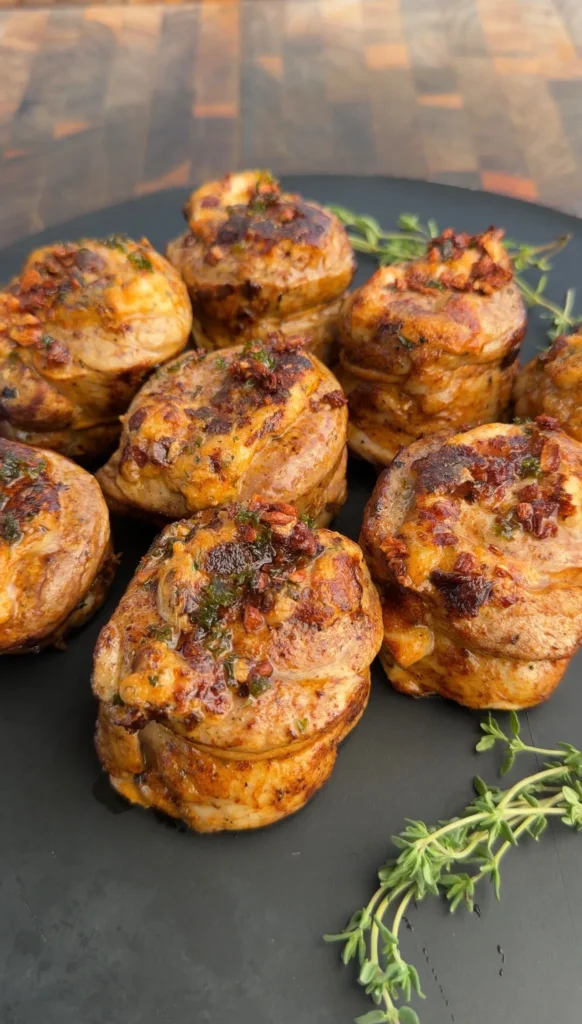
Stuffed pork tenderloin pinwheels take a butterflied tenderloin loaded with cream cheese, mozzarella, bacon bits, and garlic, rolled tight, tied with butcher’s twine, sliced into thick pinwheels, seared in a hot pan until golden on both sides, and finished in a 375°F oven to 145°F internal. While still hot, each pinwheel gets topped with a garlic parsley compound butter that melts down into all the layers. The cream cheese and mozzarella filling melts inside the pork during the oven finish, creating a rich, gooey center in every slice. Serves 4 to 6.
Jump to RecipeWhy the Butterfly and Pound Method Creates Perfect Stuffed Pork Tenderloin Pinwheels

Butterflying Opens the Tenderloin for Stuffing
A whole pork tenderloin is a cylinder. You can’t spread a filling inside a cylinder. Butterflying slices the tenderloin lengthwise (without cutting all the way through) so it opens like a book into a flat, rectangular piece of meat. This flat surface gives you room to spread the cream cheese, mozzarella, bacon, and garlic filling edge to edge before rolling it back into a log.
Pounding Creates Uniform Thickness
After butterflying, the tenderloin is thicker in the center and thinner at the edges. Cover it with plastic wrap and pound it gently with the flat side of a meat mallet until the thickness is even across the entire surface. Uniform thickness is critical for two reasons. First, it ensures the pork cooks evenly when seared and oven-finished. Second, it creates a consistent layer of meat around the filling in every pinwheel slice. Without pounding, some pinwheels have thick meat on one side and almost no meat on the other.
The Cream Cheese and Bacon Filling

Why This Combination Works
Cream cheese provides a rich, creamy base that melts into a gooey layer during cooking. The mozzarella adds stretch and pull when you bite into a pinwheel. The bacon bits add salty, smoky crunch that contrasts the smooth cheese. The minced garlic ties everything together with savory depth. Each ingredient serves a specific purpose, and removing any one of them changes the texture and flavor profile significantly.
Spread Evenly, Leave the Edges
Mix the softened cream cheese, shredded mozzarella, bacon bits, and minced garlic in a bowl until combined. Spread the filling across the entire butterflied surface of the tenderloin, but leave about 1/2 inch uncovered on all edges. The filling expands slightly when heated, and the clean edges give the pork something to seal against when you roll it. If filling goes all the way to the edge, it squeezes out during rolling, tying, and searing.
Rolling, Tying, and Slicing into Pinwheels
Roll Tight

Starting from one long side, roll the tenderloin into a tight log. Keep pressure consistent as you roll. A loose roll creates air pockets where the filling separates from the meat, and the pinwheels fall apart during searing. A tight roll ensures the filling is compressed against the meat in a uniform spiral.
Tie Every 2 Inches
Use butcher’s twine to tie the rolled tenderloin every 2 inches along its length. The twine holds the roll together during slicing and cooking. Without it, the pinwheels unravel when they hit the hot pan. Tie snug but not so tight that you squeeze the filling out the ends.
Slice Between the Ties
Use a sharp knife to slice between each piece of twine. Each slice becomes a stuffed pinwheel about 1.5 to 2 inches thick. The twine stays on each pinwheel during cooking, holding the spiral shape intact through searing and the oven finish. Remove the twine after cooking, right before serving.
Sear Then Oven Finish for Stuffed Pork Tenderloin Pinwheels
Sear for the Crust
Heat 1 to 2 tablespoons of oil in an oven-safe skillet over medium-high heat. Place the pinwheels flat-side down in the pan. Let them sear without moving for 2 to 3 minutes until a deep golden-brown crust forms. Flip and sear the other flat side for another 2 to 3 minutes. The sear creates a Maillard crust on both sides of each pinwheel that locks in the filling and adds concentrated flavor. Without the sear, the exterior of the pork is pale and soft.
Oven Finish to 145°F
Transfer the skillet directly to a 375°F oven. Cook until the internal temperature of the pork reaches 145°F. Depending on the thickness of your pinwheels, this takes 12 to 18 minutes. Use an instant-read thermometer inserted into the thickest part of the pork (not the filling) for an accurate reading. The cream cheese and mozzarella filling melts completely during the oven phase, creating the gooey center that defines this dish.
Rest Before Serving
Remove from the oven and let the pinwheels rest for 3 to 5 minutes. The carryover heat brings the internal temperature up a few more degrees while the juices redistribute. Cutting into a pinwheel immediately after pulling from the oven causes the melted filling to pour out instead of staying contained inside the spiral.
Garlic Parsley Butter Finish
Compound Butter While Hot
Mix 3 tablespoons of softened butter with 3 cloves of minced garlic and 2 teaspoons of fresh parsley. While the pinwheels are still hot from the oven, spoon or lay a piece of the compound butter on top of each one. The residual heat melts the butter immediately. It runs down the sides of each pinwheel, pools around the base, and soaks into the seared crust. The garlic and parsley add a fresh, bright layer of flavor on top of the rich cream cheese and bacon filling.
Stuffed Pork Tenderloin Pinwheels
Cream cheese + bacon filling · Sear + oven at 375°F · Garlic parsley butter finish
Ingredients
Pork
- 1 whole pork tenderloin
- Butcher’s twine
- Salt & pepper
- 1 tsp garlic powder
- 1 tsp paprika
- 1-2 tbsp oil
Filling
- 4 oz cream cheese, softened
- ½ cup shredded mozzarella
- ⅓ cup bacon bits
- 3 cloves garlic, minced
Garlic Parsley Butter
- 3 tbsp butter, softened
- 3 cloves garlic, minced
- 2 tsp fresh parsley
Use Your Hands
Spread the filling with your hands, not a spoon. Even coverage in under a minute. Leave 1/2 inch on all edges so it doesn’t squeeze out.
Roll Tight
A loose roll creates air pockets and pinwheels that fall apart during searing. Keep pressure consistent as you roll.
145°F in the Meat
Probe the pork, not the filling. Cream cheese reads hotter than the meat. Pull at 145°F and rest 3-5 minutes.
Step-by-Step: How to Make Stuffed Pork Tenderloin Pinwheels
Step 1: Butterfly and Pound the Tenderloin

Place 1 whole pork tenderloin on a cutting board. Using a sharp knife, slice lengthwise through the center without cutting all the way through. Open the tenderloin like a book so it lays flat. Cover with plastic wrap and pound gently with the flat side of a meat mallet until the thickness is even across the entire surface, roughly 1/2 inch thick. Even thickness means even cooking in every pinwheel.
Season the inside surface with salt, pepper, 1 teaspoon garlic powder, and 1 teaspoon paprika.
Step 2: Make and Spread the Filling
In a bowl, combine 4 oz softened cream cheese, 1/2 cup shredded mozzarella, 1/3 cup bacon bits, and 3 minced garlic cloves. Mix until evenly combined. Spread the filling across the entire butterflied surface, leaving about 1/2 inch uncovered on all edges. Use your hands for the most even coverage. A spoon pushes the filling around and creates thick and thin spots.
Step 3: Roll and Tie
Starting from one long side, roll the tenderloin into a tight log. Keep consistent pressure throughout the roll. No air pockets. Using butcher’s twine, tie the rolled tenderloin every 2 inches along its length. Tie snug enough to hold the shape but not so tight that filling squeezes out the ends.
Step 4: Slice Into Pinwheels
Using a sharp knife, slice between each piece of butcher’s twine. Each slice becomes a stuffed pinwheel about 1.5 to 2 inches thick. The twine stays on during cooking to hold the spiral shape. You should get 5 to 7 pinwheels depending on the size of your tenderloin.
Step 5: Sear Both Sides

Heat 1 to 2 tablespoons of oil in an oven-safe skillet over medium-high heat. Place the pinwheels flat-side down with space between each one. Sear for 2 to 3 minutes without moving until a deep golden crust forms on the bottom. Flip and sear the other side for another 2 to 3 minutes. The crust locks in the filling and adds flavor that the oven alone can’t produce.
Step 6: Oven Finish to 145°F
Transfer the skillet directly to a 375°F oven. Cook for 12 to 18 minutes until the internal temperature of the pork reaches 145°F. Check with an instant-read thermometer in the thickest part of the meat, not the filling. The cream cheese and mozzarella melt completely during this step, creating the gooey center.
Remove from the oven. Let the pinwheels rest in the skillet for 3 to 5 minutes.
Step 7: Finish with Garlic Parsley Butter

While the pinwheels rest, mix 3 tablespoons softened butter with 3 minced garlic cloves and 2 teaspoons fresh parsley. While the pinwheels are still hot, spoon or lay the compound butter on top of each one. The butter melts on contact, runs down the sides, and pools at the base. The garlic and parsley add brightness that cuts through the rich cream cheese and bacon filling. Remove the twine and serve immediately.
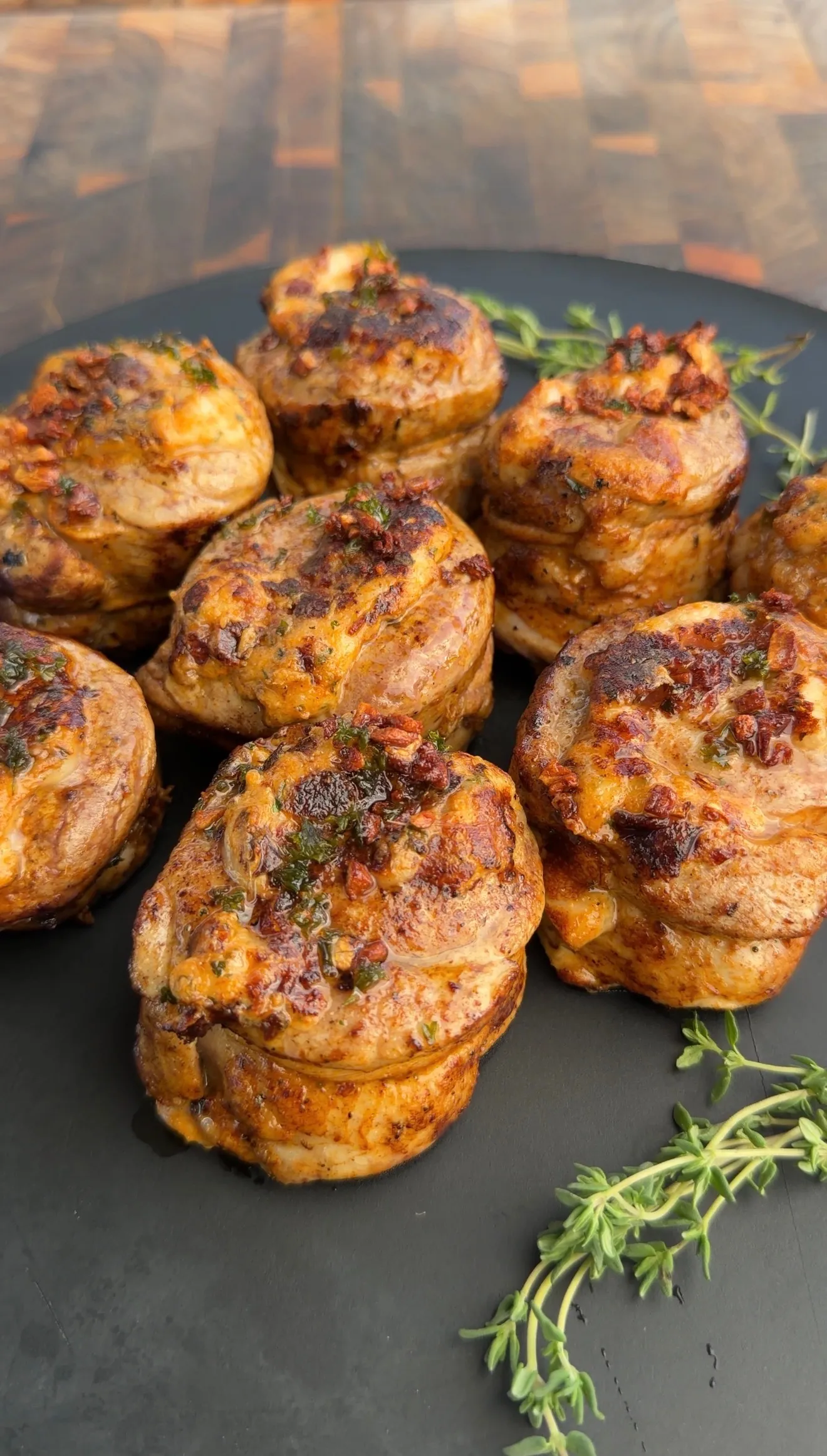
Stuffed Pork Tenderloin Pinwheels
Ingredients
Equipment
Method
- Butterfly pork tenderloin lengthwise. Pound to even thickness. Season inside with salt, pepper, garlic powder, and paprika.
- Mix cream cheese, mozzarella, bacon bits, and garlic. Spread filling evenly over the inside, leaving 1/2 inch on all edges.
- Roll tightly into a log. Tie with butcher’s twine every 2 inches. Slice between each tie to create pinwheels.
- Sear pinwheels flat-side down in hot oil, 2-3 minutes per side until golden brown.
- Transfer to 375°F oven. Cook until internal temperature reaches 145°F, about 12-18 minutes. Rest 3-5 minutes.
- Mix butter, garlic, and parsley. While hot, spoon compound butter over each pinwheel and let it melt down.
Notes
Tried this recipe?
Let us know how it was!Stuffed Pork Tenderloin Pinwheels — FAQ
Common questions about stuffing, rolling, and cooking pork pinwheels.
Your Questions, Answered
Butterflying means slicing the tenderloin lengthwise without cutting all the way through, then opening it like a book so it lays flat. This creates a large, flat surface for spreading the filling before rolling it back into a log.
The butterflied tenderloin is thicker in the center and thinner at the edges. Pounding creates uniform thickness so the pork cooks evenly and each pinwheel has a consistent layer of meat around the filling. Without pounding, some pinwheels have thick meat on one side and almost none on the other.
Toothpicks work for holding a whole roll together, but they don’t hold individual pinwheel slices as securely as twine. The twine wraps around the entire circumference of each slice, keeping the spiral tight during searing and oven finishing. Toothpicks can shift or fall out when you flip the pinwheels.
The sear creates a golden Maillard crust on both flat sides of each pinwheel. This crust locks in the filling, adds concentrated flavor, and provides texture contrast against the soft, melted cream cheese center. The oven alone produces pale, soft-surfaced pinwheels without the same depth of flavor.
Filling & Finishing
Ready to Level Up?
Take your backyard cooking from good to legendary.
This is where I keep all my most-used smokers, knives, and favorite cooking tools.
Shop My Gear CollectionExplore More Recipes
Find more diverse flavors at CWFeats.com