
Rotisserie Chicken On the Grill
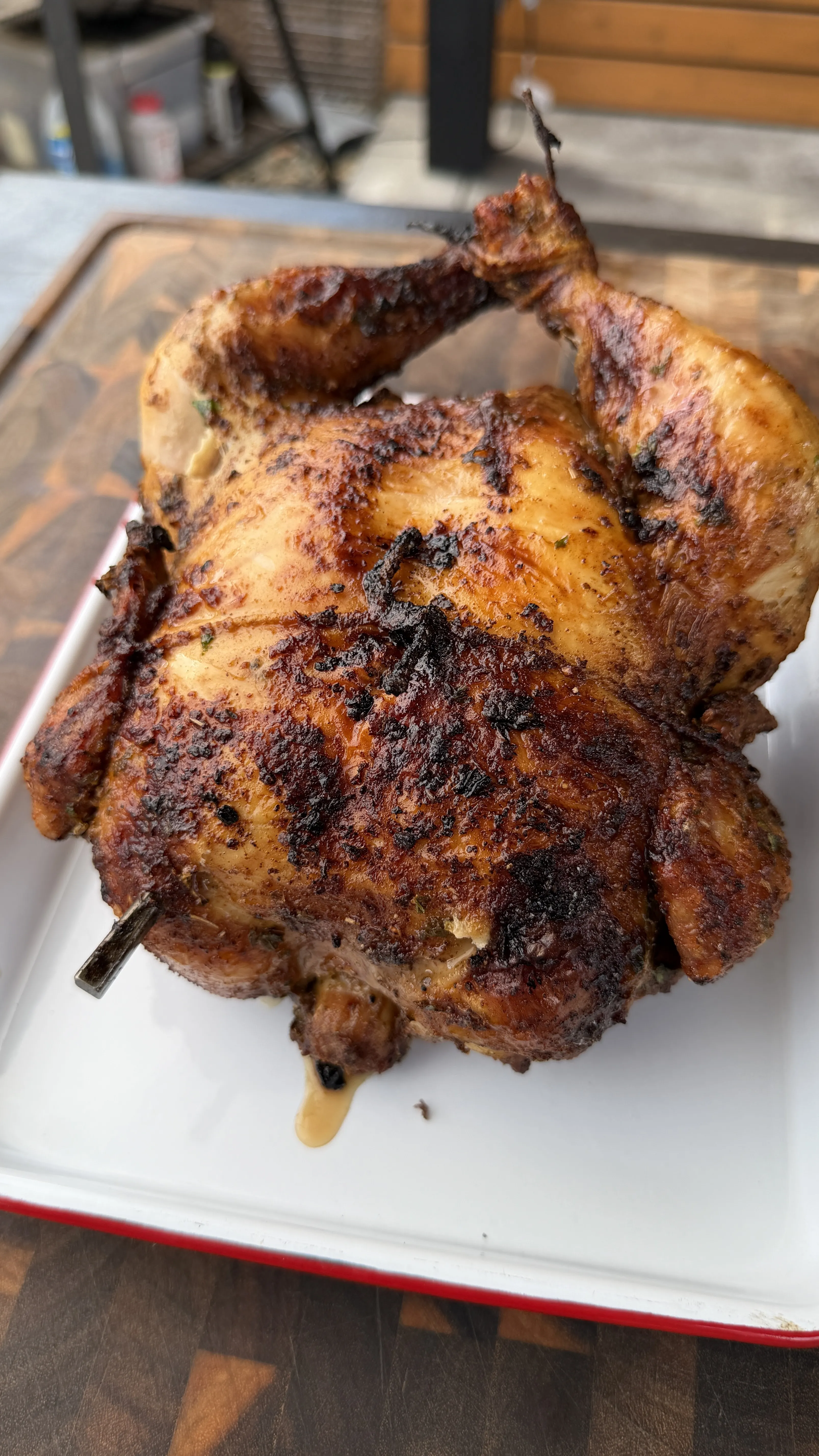
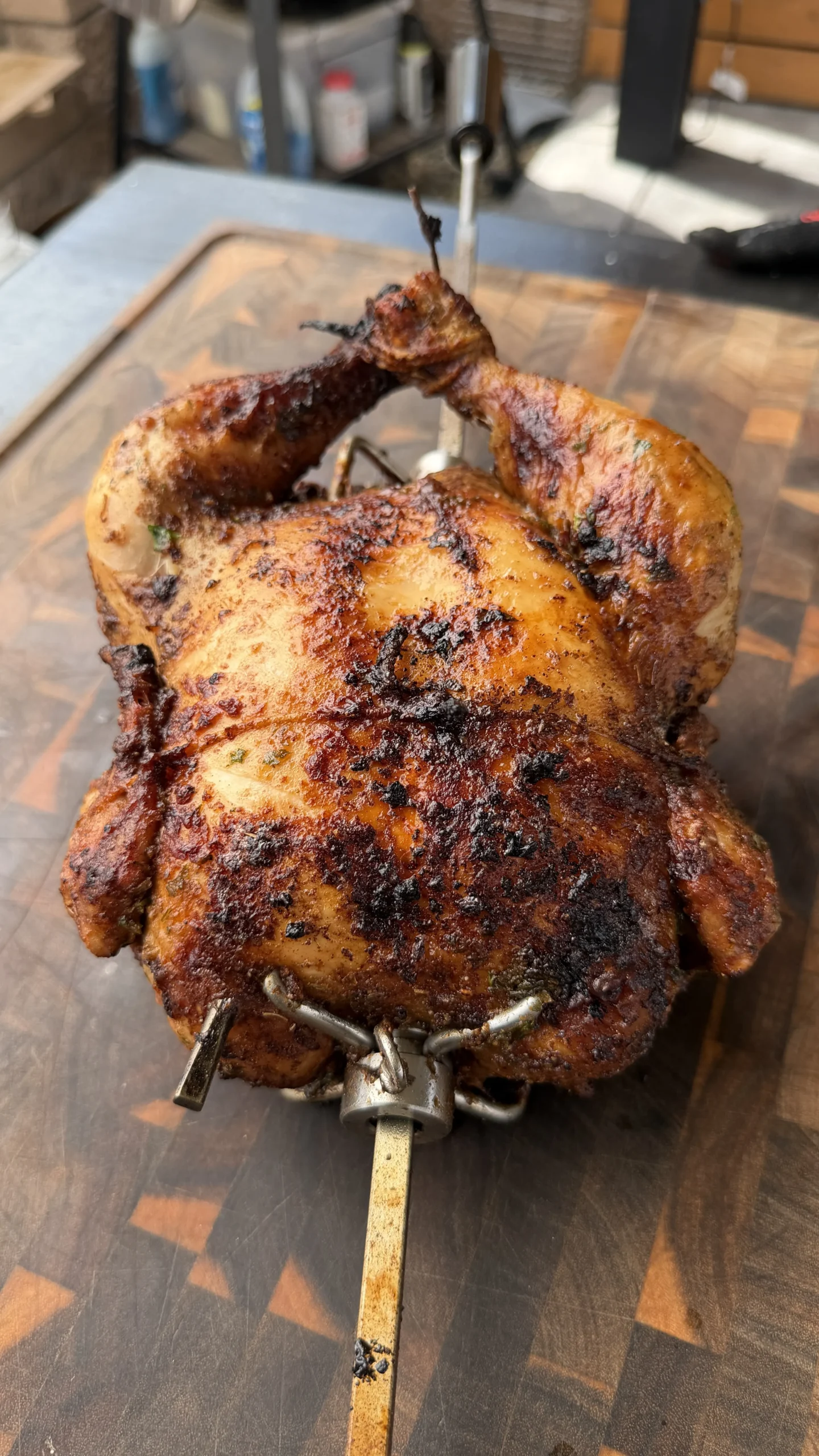
Rotisserie chicken cooked on the grill starts with a whole bird slathered in a spicy Cajun mud rub. It spins over charcoal at 350 degrees for an hour and a half to two hours, then gets basted with a garlic Cajun butter during the last 10 minutes of cooking. The constant rotation keeps the meat juicy while rendering the skin crisp and deep golden brown.
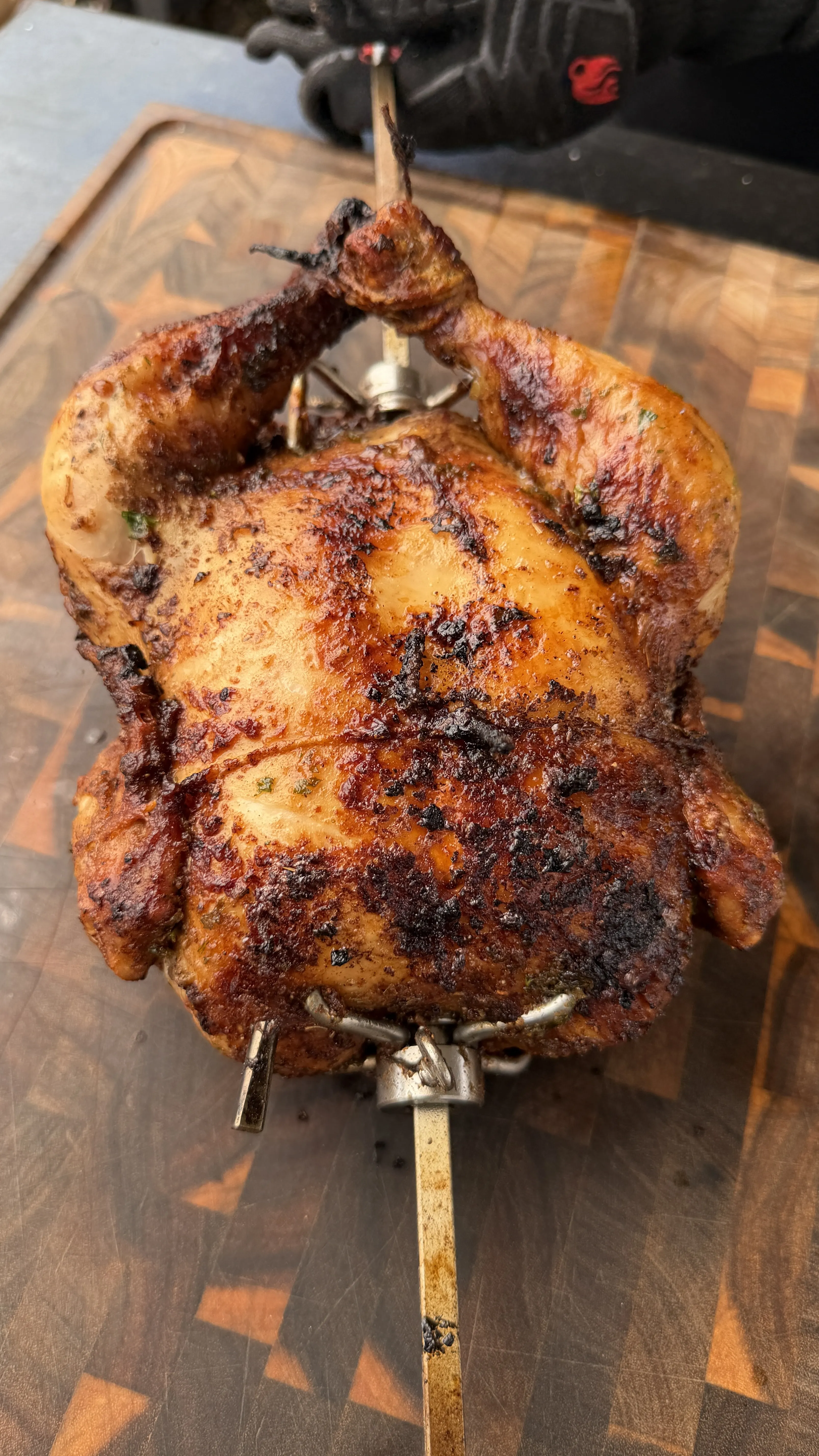
How Long to Rotisserie a Chicken on the Grill
Allow an hour and a half to two hours cooking time for every 4 to 5 pounds bird roasted at 350 degrees. Bigger birds need more time and smaller ones less. There’s no clean formula since variables like grill size and setup throw it off every time, so ignore the clock and only trust the thermometer.
Pull it from the heat when it reaches 165 degrees in the thickest part of the breast.
Check the thigh meat separately. While breast is safe at 165 degrees cooked dark meat tastes best closer to 175 degrees, and on a rotating bird the two get to that temperature at different times.
If the skin browns faster than you want it before the breast nears 165, loosely tent it with foil to keep the direct heat off while you keep the spit turning.
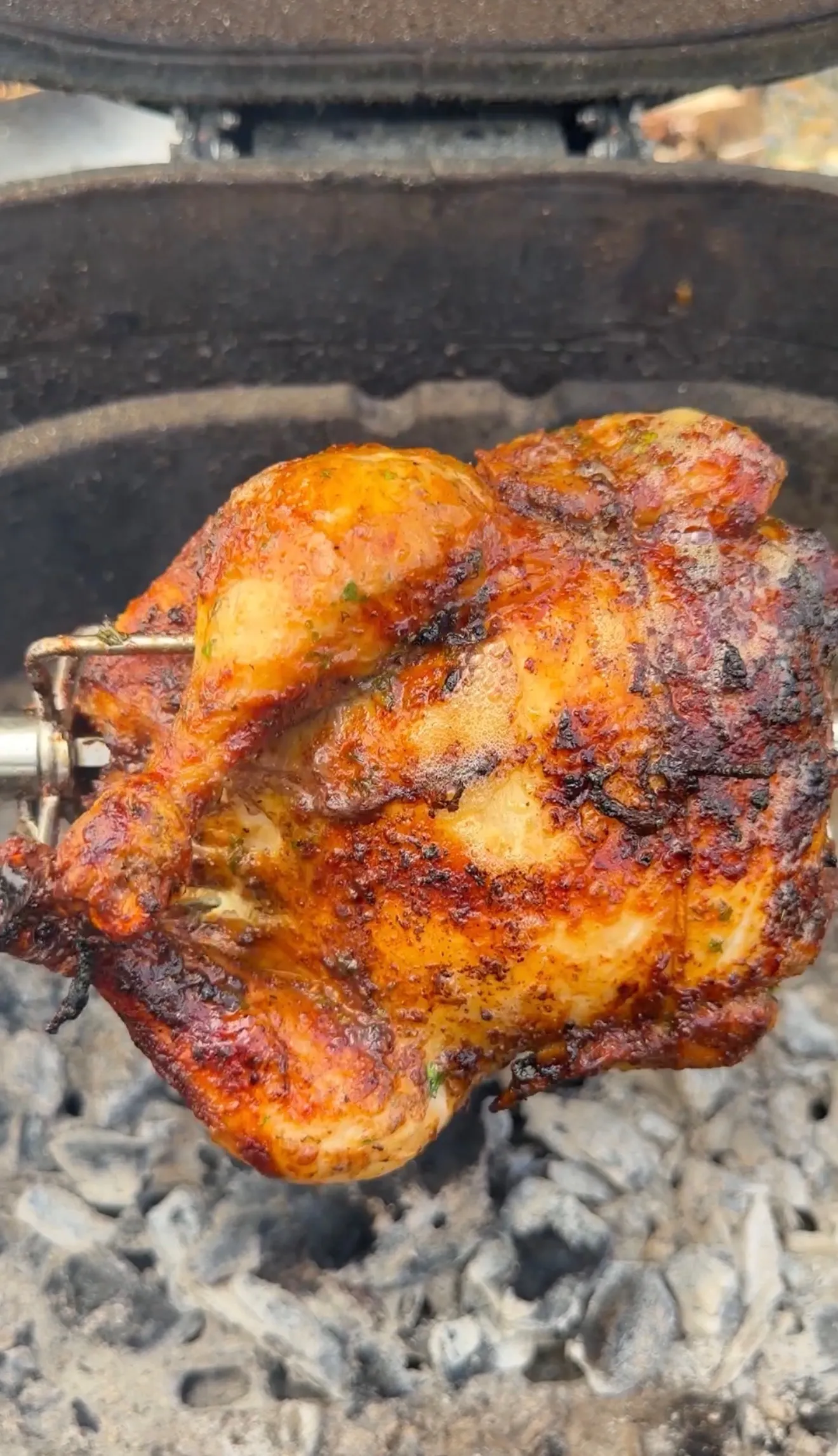
Why the Mud Rub Beats a Dry Rub Here
Seasoning that’s sprinkled or shaken on the chicken will slide right off when the bird spins. Mixing dry spices with oil first creates a paste that grips the skin. It stays put throughout the full two hours on the grill too. Bonus: the oil helps transfer fat-soluble spices in the rub so the paprika and cayenne bloom instead of burning and tasting acrid.
Dry skin underneath is important here as well. Patting every surface of the chicken with paper towels pulls away surface moisture that would steam the skin from beneath as it cooks. Think dry skin plus an oil-based paste equals crackly, not rubbery chicken skin.
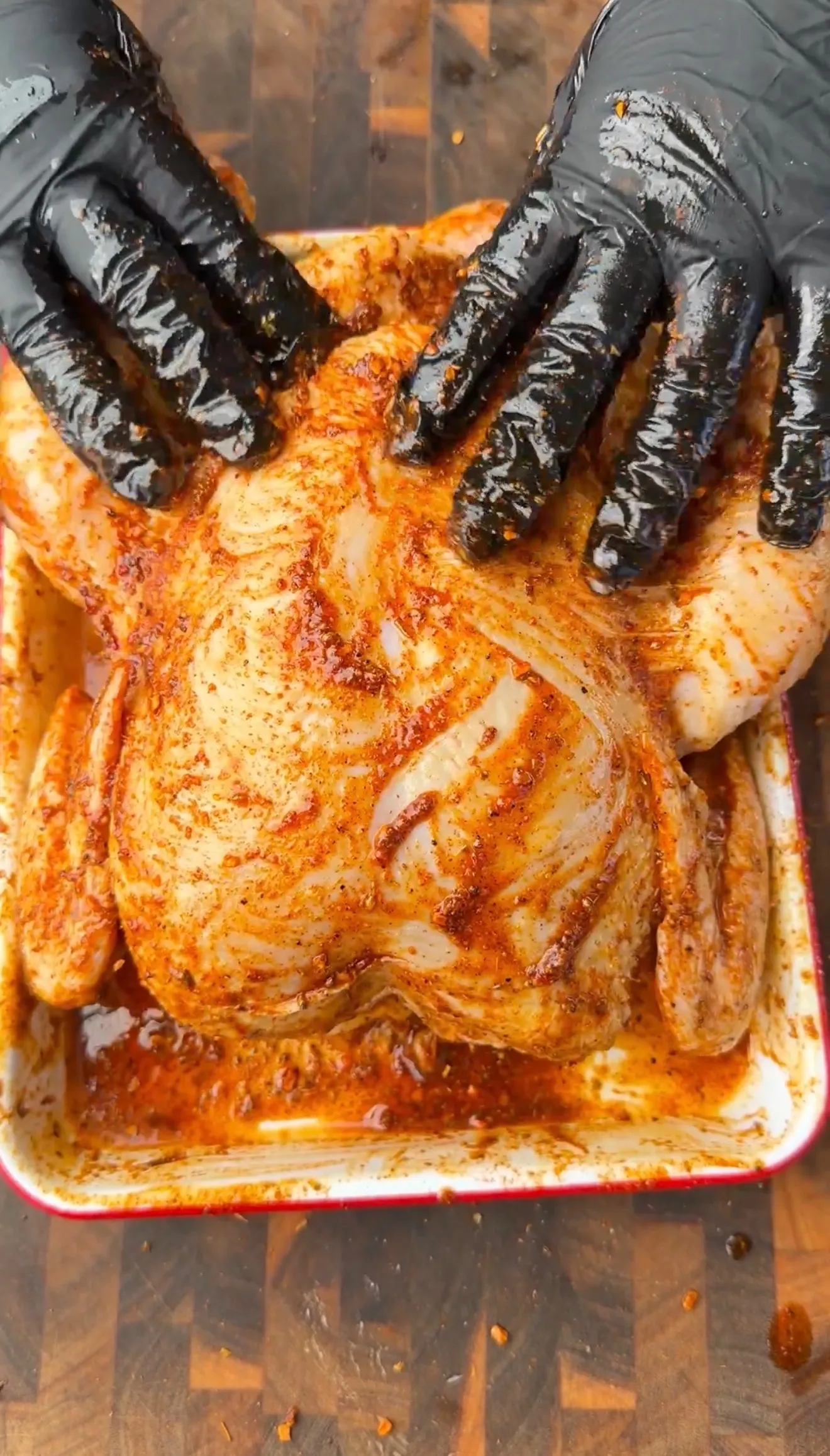
Ingredients
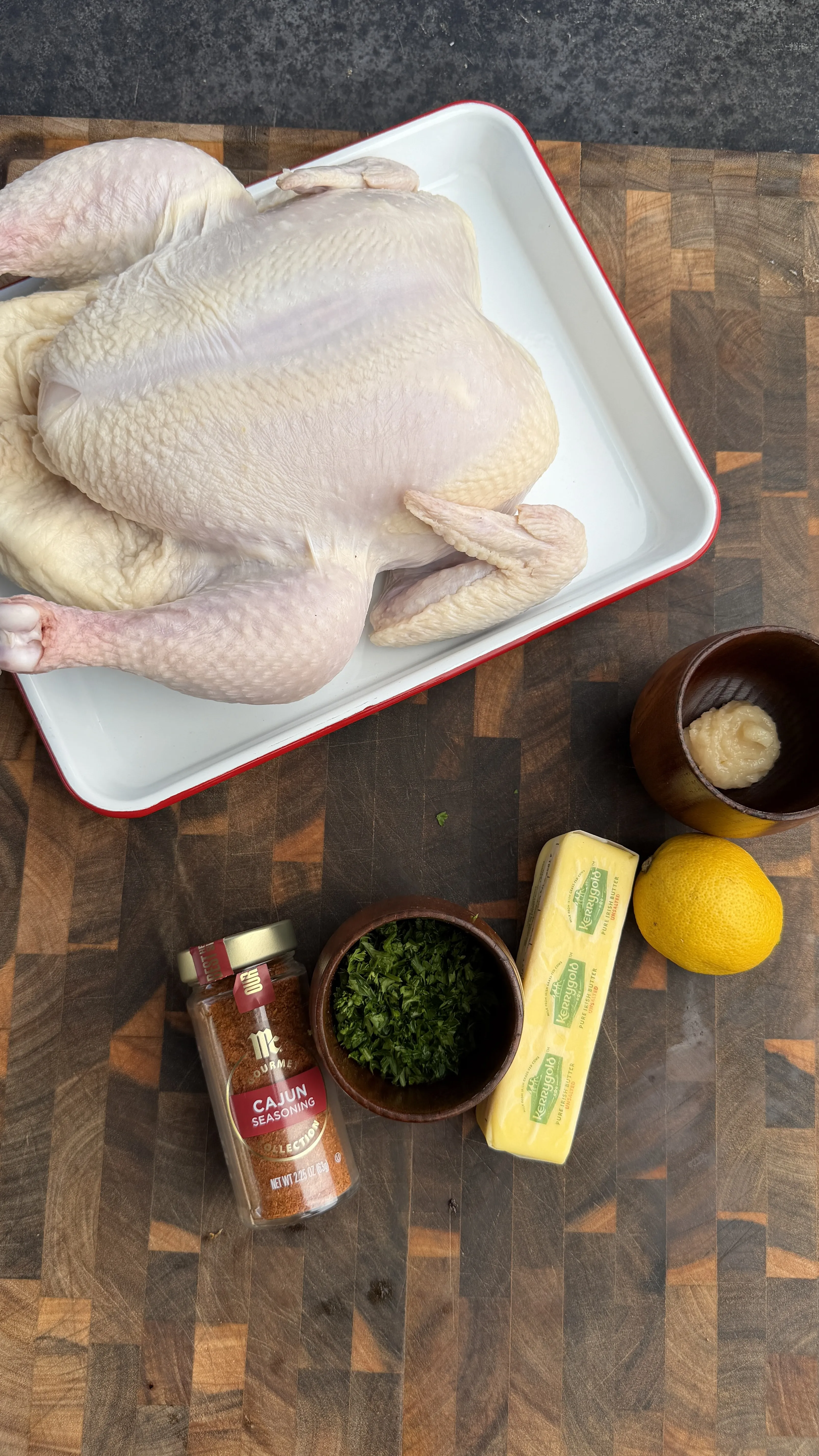
| Ingredient | Notes |
|---|---|
| Whole chicken, 4 to 5 lbs | Larger birds require more time. Trust the breast temperature, not the clock. |
| Cajun seasoning | Used twice, once in the mud rub and again in the butter. |
| Avocado oil | Turns seasoning into paste that will cling. Plus avocado oil can handle the heat of a rotisserie without smoking. Use olive oil or any neutral cooking oil you prefer. |
| Butcher’s twine | A secure chicken spins true. Loose legs and wings flap around as they try to cook evenly, burn frequently, and can throw your spit off balance. |
| Unsalted butter | Cajun seasoning blends tend to run salty. Starting with unsalted butter will keep your basting mixture from tipping the scale. |
| Garlic, parsley, lemon juice | Fresh garlic cloves and lemon juice cut through the richness of melted butter so the last-minute coat tastes bright, not like grease. |
Exact measurements and salt are in the recipe card below.
How I Made It
- Pat the chicken dry with paper towels.
- Coat every surface of the bird with the Cajun mud rub.
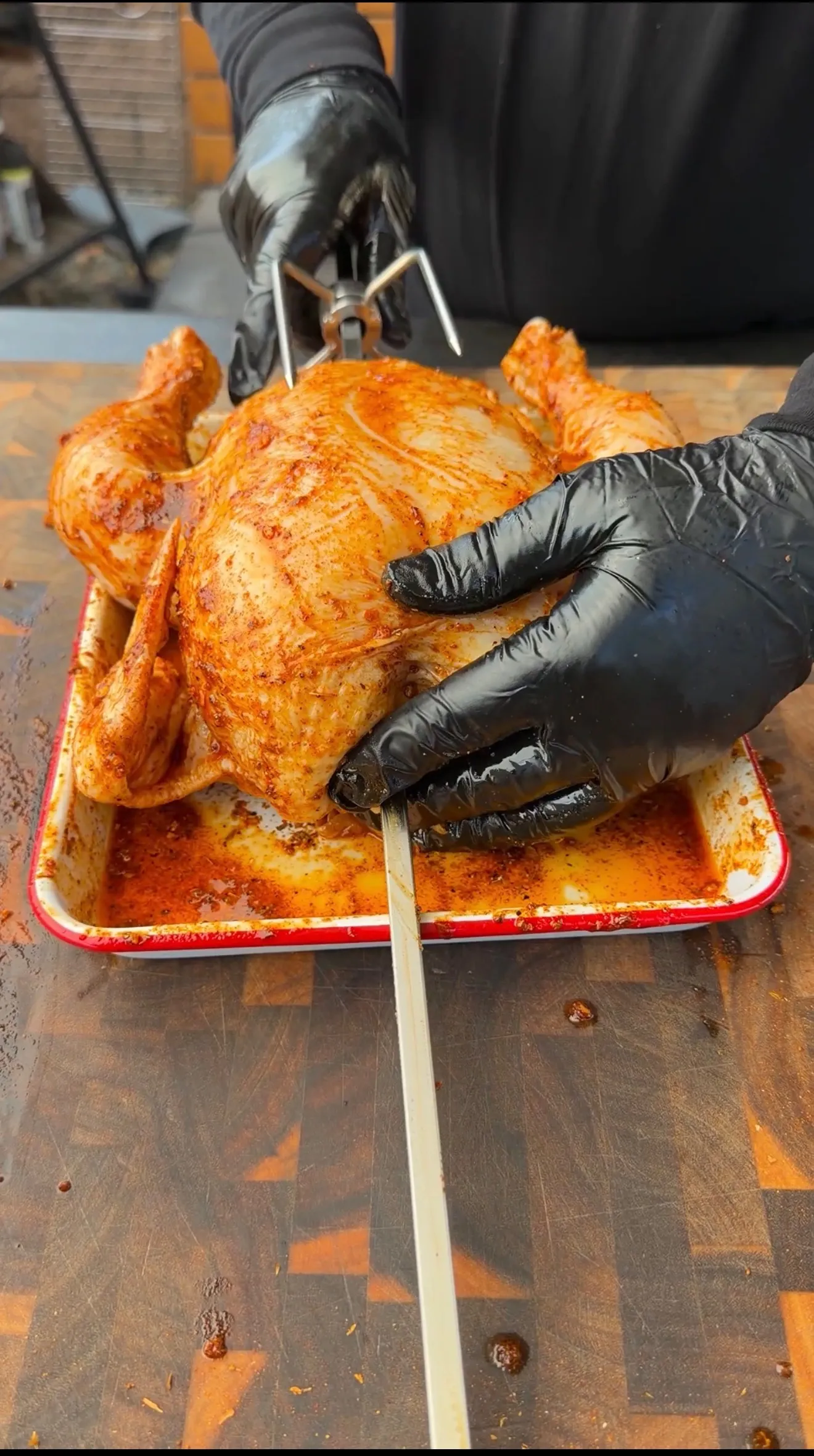
- Tie the legs together with butcher’s twine, tuck in the wings, then center on the spit.
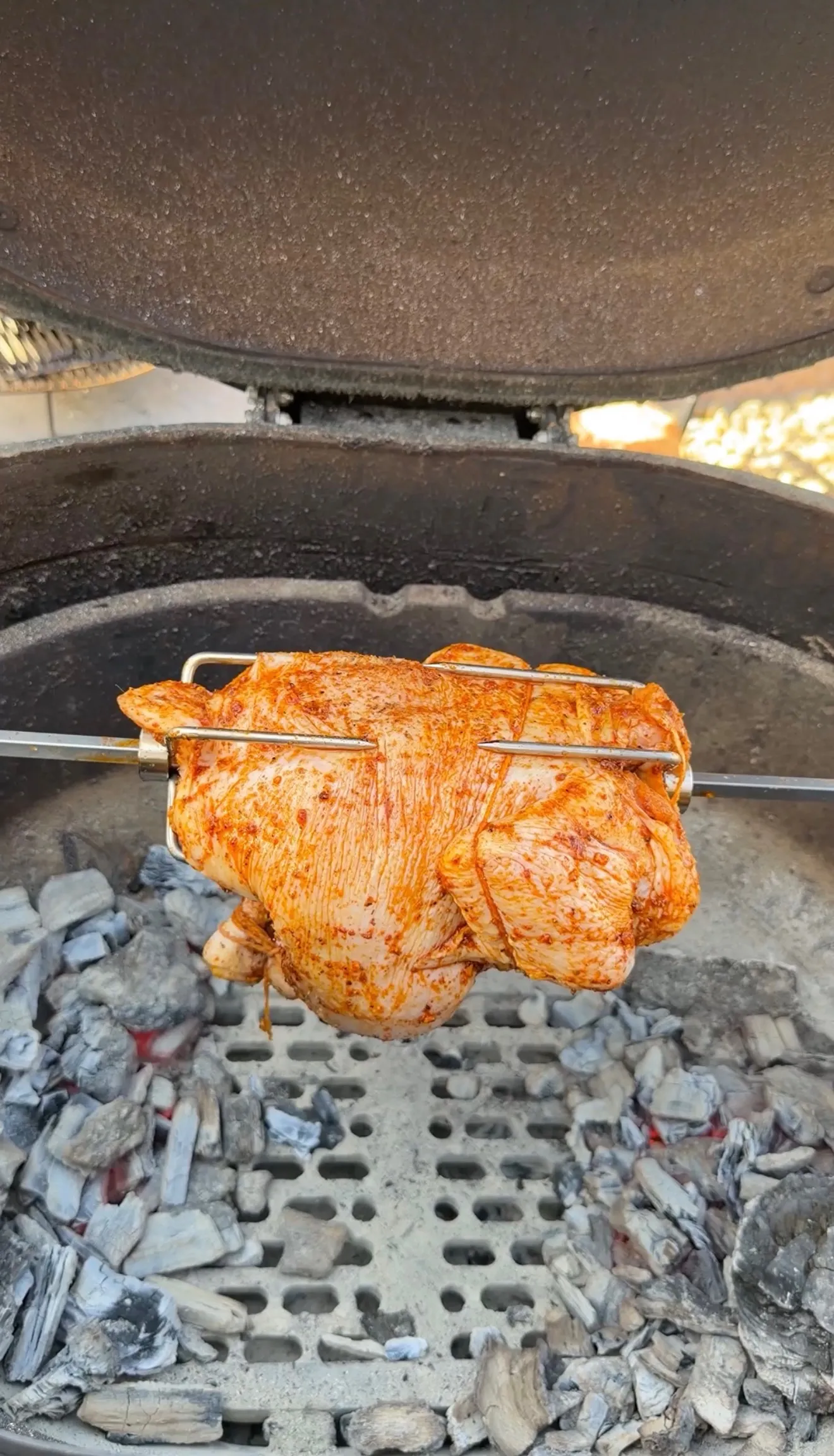
- Preheat the grill, banking the coals on one side and starting the rotisserie motor. Wait until the grill is fully preheated before adding the chicken.
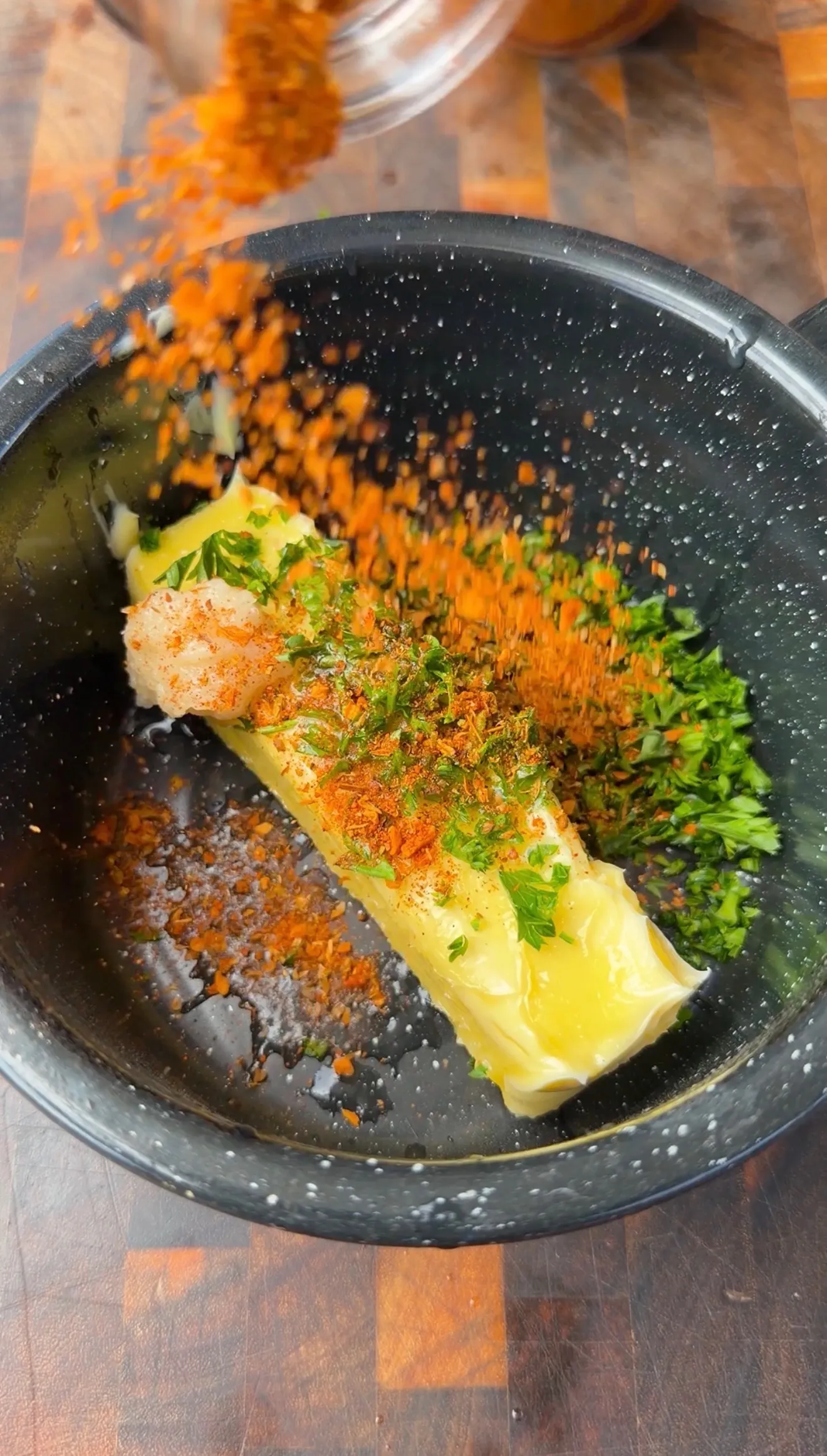
- Stir melted butter with garlic, Cajun seasoning, parsley, and lemon juice while the chicken cooks.
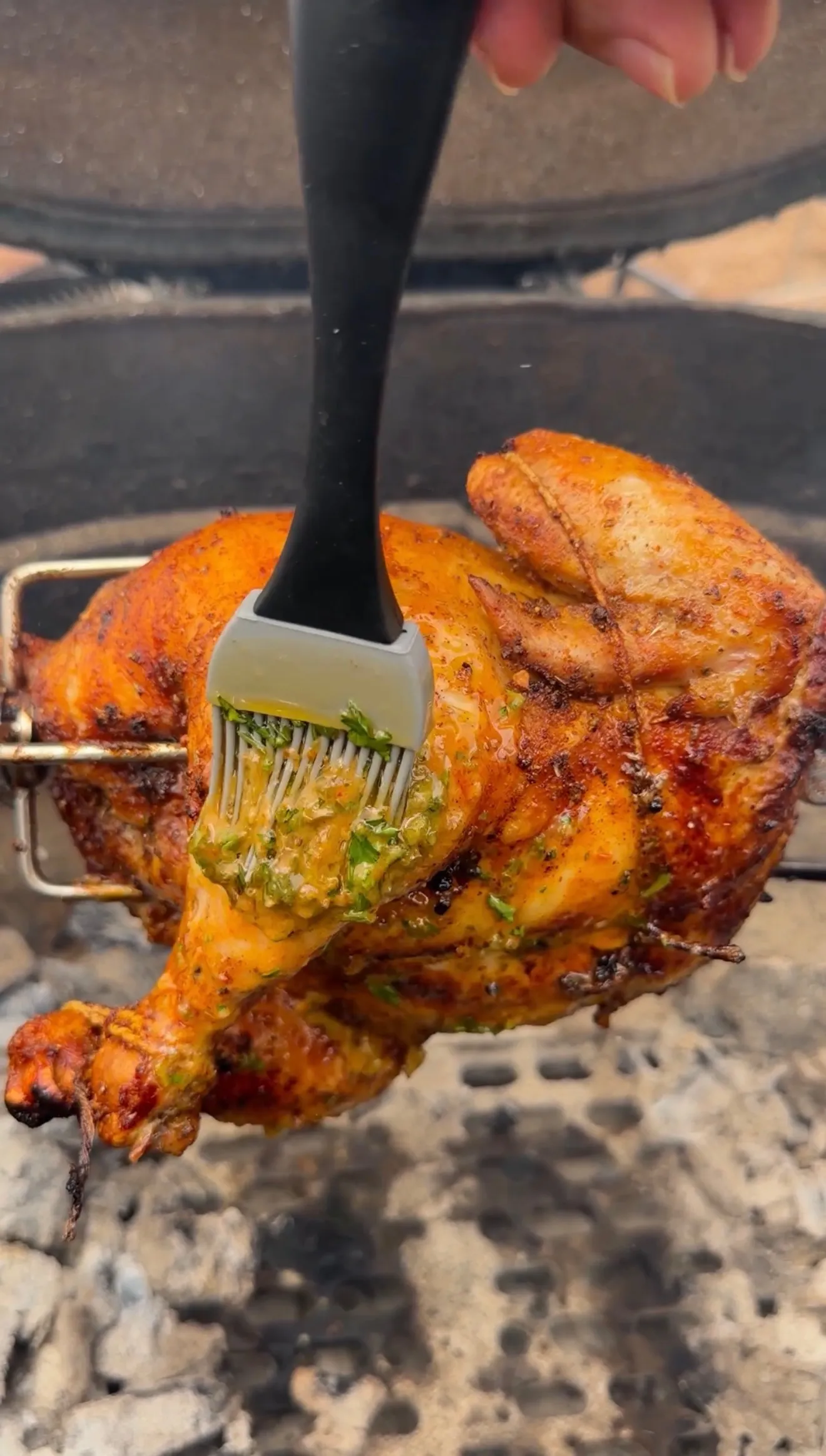
- Brush the Cajun butter over the bird in the last 10 minutes.
- Pull it off at temperature, rest, carve, and drizzle remaining butter over sliced chicken.
Timers and temperatures are in the recipe card below.
Why the Cajun Butter Goes On Last
Adding butter this early in a two hour cook would burn. The milk solids brown quickly then go from toasted to acrid and black. Brushing it on during the final stretch of cooking gives fresh garlic and herbs enough time to heat into the crispy skin without destroying it. Fresh garlic will soften, but keep some bite. Lemon juice will stay bright instead of evaporating.
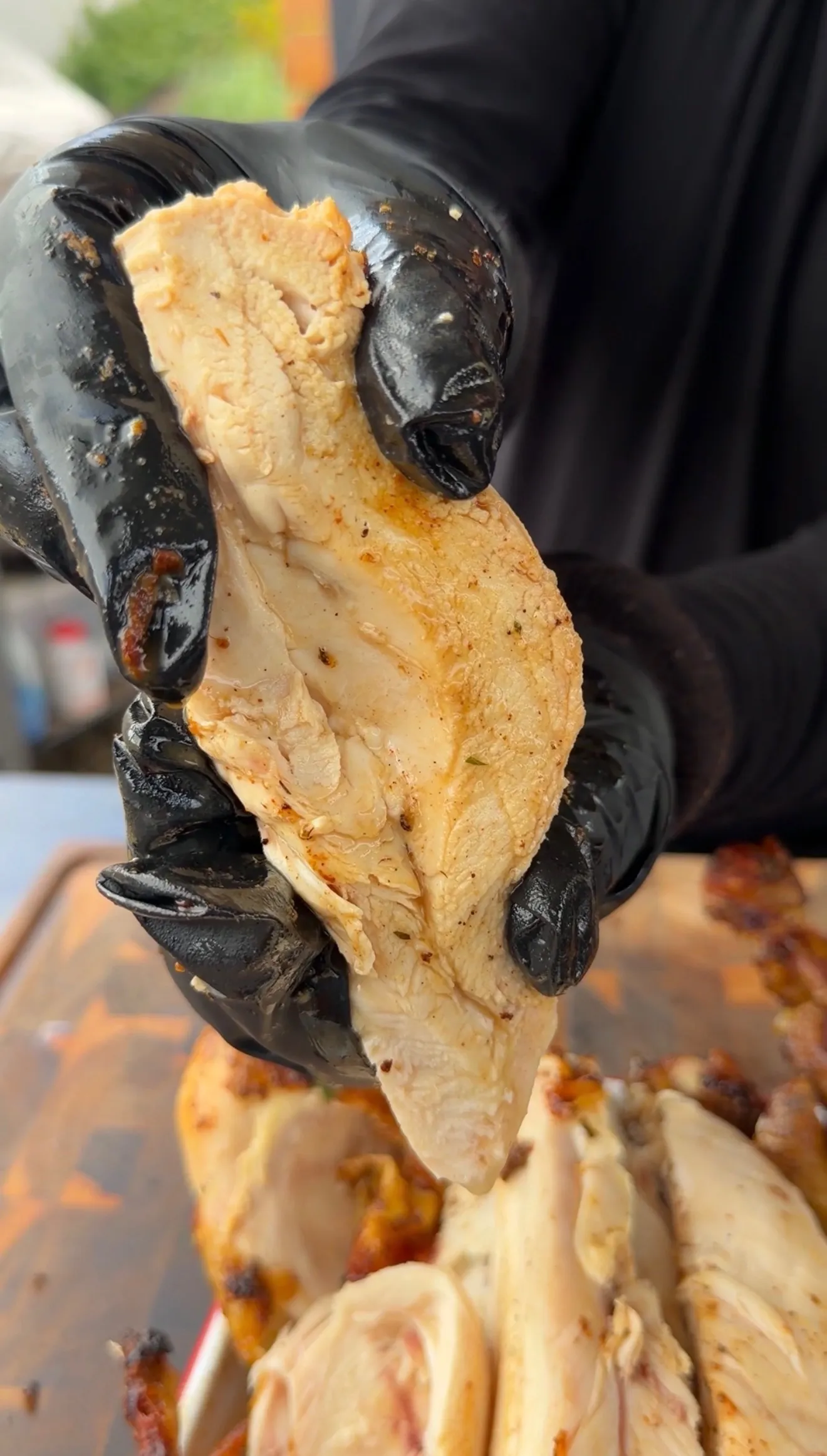
Reserve a few spoonfuls for drizzling after you carve the bird. Warm melted butter poured over sliced breast meat seasons every piece, including the meat on the inside the spice rub never reached.
No Rotisserie Attachment? Other Ways to Cook It
Roast trussed and rubbed chicken on a rack in a 350 degree oven, or over indirect heat on your kettle grill with coals banked to one side. Cook until the breast reaches 165 degrees then rotate the bird once or twice partway through cooking since you don’t get the self-basting benefit of spinning. Wait until the last ten minutes to brush it with butter.
Make-Ahead and Storage
Make the Cajun butter a day or two ahead and store in the fridge. Rewarm it until melted, then baste as directed. Leftovers keep for 3 to 4 days in the refrigerator. Warm oven (covered, low heat) and any remaining butter (microwave) to rewarm.
Miguel’s Tips
- Pat the skin completely dry before you rub. Surface moisture will steam chicken skin instead of crisping it.
- Center the bird on the spit so it’s balanced. Asymmetrical chicken strains the motor and won’t cook evenly.
- If the skin browns too quickly before the chicken reaches temperature, loosely cover it with foil while it continues to cook.
- Don’t rely on breast temperature alone; cook chicken to proper temp through the thigh meat too. Dark meat is safe at 165 degrees, but tastes better cooked to 175 or more.
FAQ: Rotisserie Chicken on the Grill
How long does it take to cook chicken on a rotisserie grill?
About an hour and a half to two hours at 350 degrees Fahrenheit for a four to five pound chicken. The size of the bird and the style of grill will vary that time frame. Remember to cook chicken to temperature, not by timing alone.
What temperature should I cook chicken on a rotisserie?
Set the grill to 350 degrees then cook until a thermometer inserted into the thickest part of the breast reads 165 degrees Fahrenheit. That’s considered safe by the USDA and because of variability among grills, the only accurate way to know for sure.
Can I cook this without a rotisserie?
Sure! Roast a trussed chicken on a rack in a 350 degree oven or over indirect heat on your kettle grill with coals placed on one side only. The cooking time will be similar, but you’ll need to rotate the bird once or twice halfway through the cooking time since it won’t benefit from spinning around. Brush the butter on during the last ten minutes of either method.
Related Recipes
More chicken off the fire: the Honey Lemon Pepper Whole Chicken runs another whole bird with a brighter finish, the Pollo Asado Cornish Hens scale the same idea down to single servings, the Butter Chili Lime Grilled Chicken Drumsticks are the quick weeknight version, and the Cajun Lemon Pepper Honey Chicken Thighs put the same Cajun lane on dark meat.
Rotisserie Chicken on the Grill with Cajun Butter
Ingredients
Equipment
Method
- Pat the chicken dry all over with paper towels. Surface moisture steams the skin instead of crisping it.
- Stir the Cajun seasoning into the oil to make a loose paste, then coat every surface of the bird with it.
- Tie the legs together with butcher’s twine, tuck the wings in, and center the chicken on the spit so it spins balanced.
- Bank the coals to one side and bring the grill to 350°F. Start the rotisserie motor and wait until the grill is fully preheated before adding the chicken.
- While the chicken spins, stir the melted butter together with the garlic, Cajun seasoning, parsley, and lemon juice.
- Cook for about 1 1/2 to 2 hours. If the skin browns faster than the breast comes up to temperature, tent it loosely with foil and keep the spit turning.
- Brush the Cajun butter over the bird during the last 10 minutes of the cook. Adding it earlier scorches the milk solids.
- Pull the chicken when the thickest part of the breast reads 165°F. Check the thigh separately; dark meat eats better closer to 175°F.
- Rest 10 to 15 minutes, then carve and drizzle the reserved Cajun butter over the sliced meat.
Notes
Tried this recipe?
Let us know how it was!My Gear
This is where I keep all my most-used smokers, knives, and favorite cooking tools: Shop My Gear Collection
Explore More Recipes
Beef | Pork | Chicken | Turkey | Seafood | Appetizers
Find more recipes at CWFeats.com