
Smoked Picanha Recipe
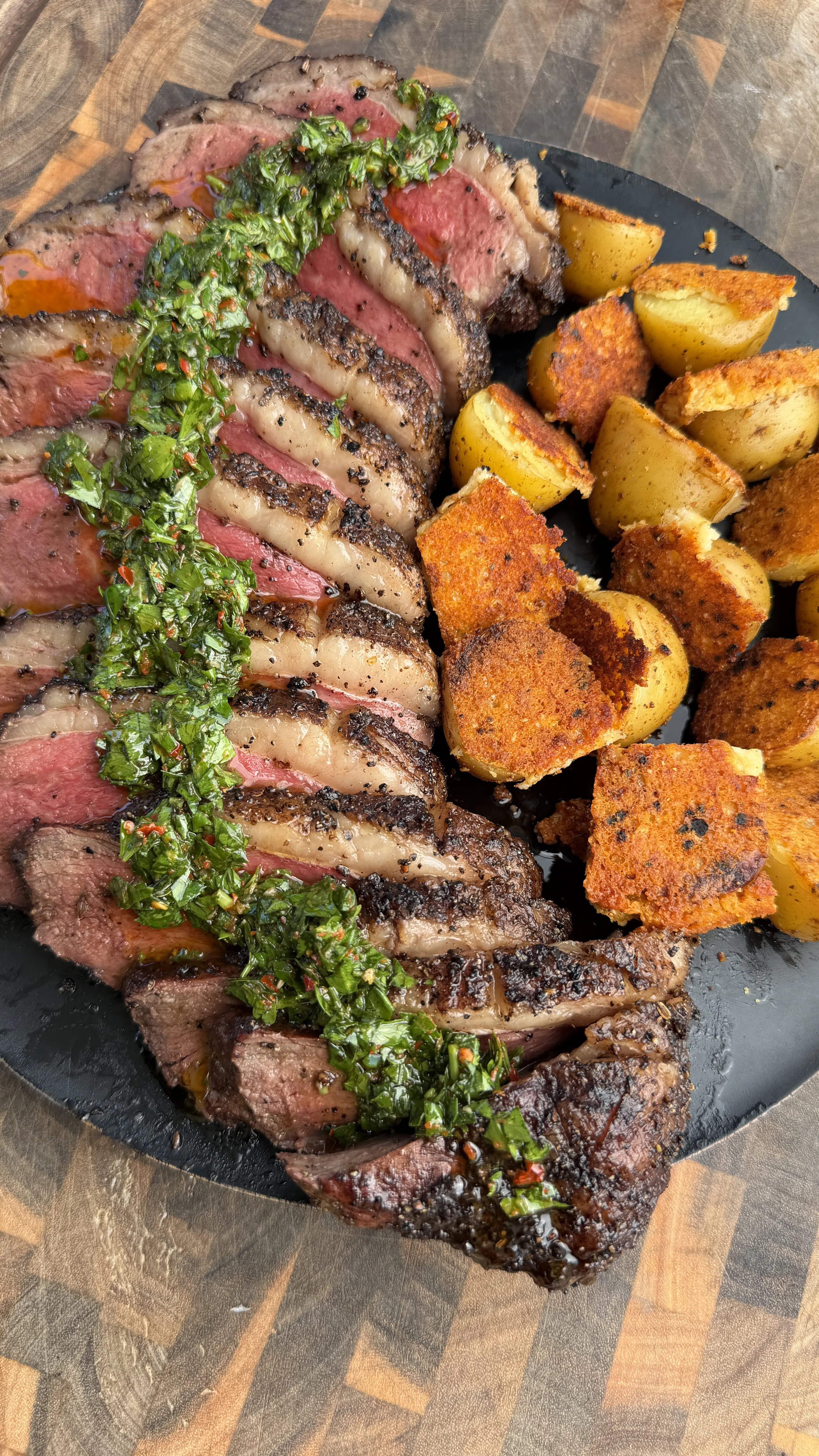
This smoked picanha recipe cooks a whole 2.5 to 3 pound picanha roast fat-side down at 275 to 300°F while a tray of Parmesan-crusted baby gold potatoes crisps up on the smoker beside it. The fat cap gets scored in a diamond pattern, seasoned with salt, pepper, and garlic powder, and rendered slowly over the cook into a deep crust. The potatoes get par-boiled, tossed in Cajun seasoning, and placed cut-side down on a bed of freshly grated Parmesan that bakes into a golden cheese crust. A fresh chimichurri made with parsley, cilantro, garlic, shallot, and red wine vinegar finishes the sliced roast. Pull at 125 to 135°F for medium-rare, rest 15 minutes, and the whole meal lands in about 2 hours with one smoker doing all the work.
Smoking Picanha Whole vs the Steak Method
Why This Recipe Keeps the Roast Intact
There are two main ways to cook picanha. The Brazilian churrasco method slices the roast into thick steaks, bends them onto skewers, and grills them over open flame. This recipe takes the second path: smoking the picanha whole as a roast. Keeping the roast intact has specific advantages for a smoker cook. The larger mass absorbs smoke gradually over 1.5 to 2 hours, building deeper smoke flavor than quick-grilled steaks can develop. Furthermore, the whole roast cooks more evenly at the moderate 275 to 300°F range and produces uniform edge-to-edge doneness when sliced. If you want the skewered open-fire version instead, that recipe lives separately on the site.
Scoring the Fat Cap Without Cutting the Meat
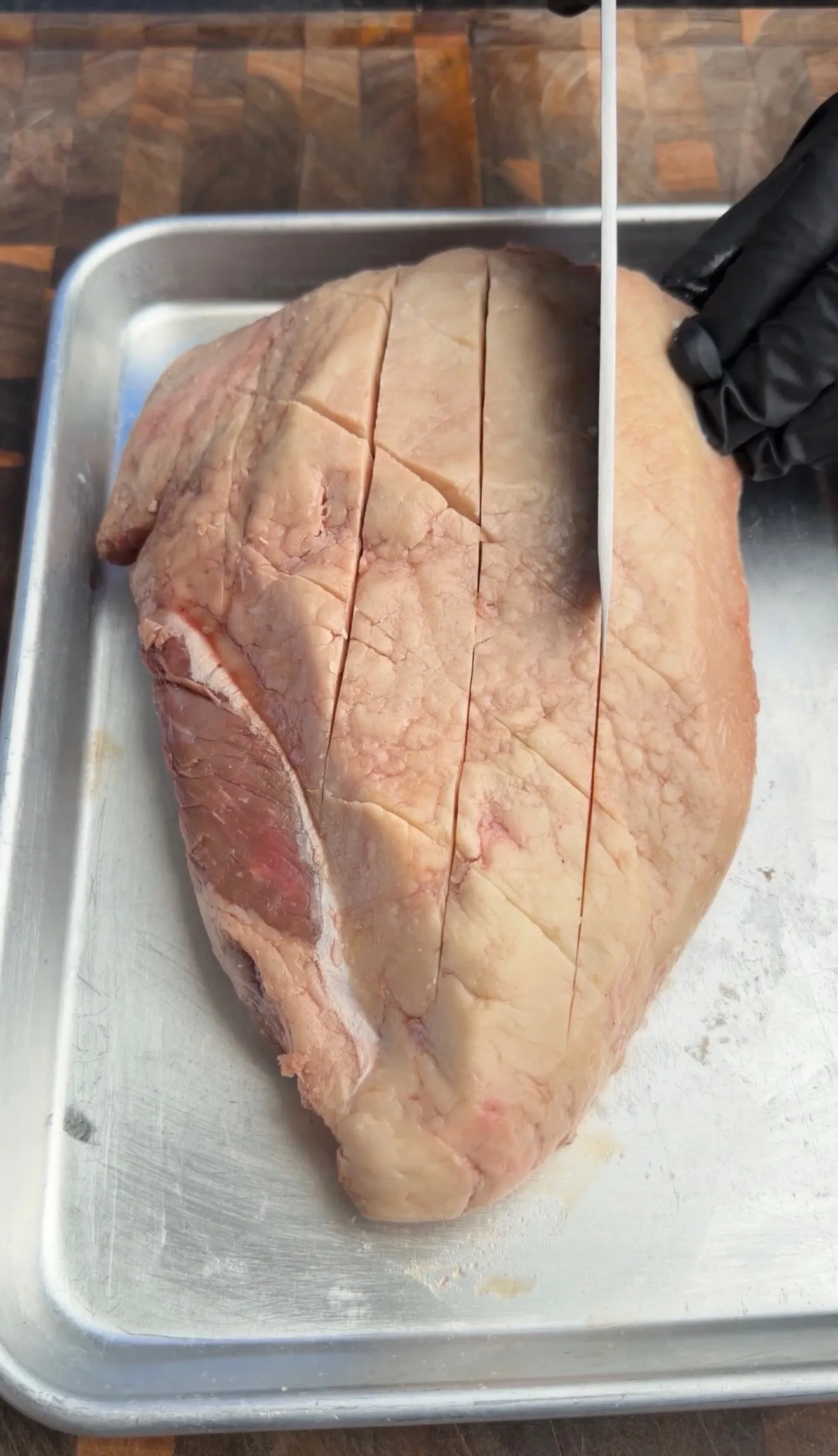
Score the fat cap in a diamond (crosshatch) pattern before seasoning, cutting through the fat but stopping just before the meat below. The scoring serves three purposes during the long smoke. First, it opens pathways for the fat to render gradually instead of staying as a thick, rubbery layer. Second, it lets the seasoning penetrate into the fat instead of sitting only on the surface. Third, the diamond pattern shrinks and caramelizes during the cook into the visual crust that makes a sliced picanha look as good as it tastes. Therefore, take the extra two minutes with a sharp knife before the roast goes anywhere near the smoker.
Why Fat-Side Down at 275-300°F
The Fat Cap Renders Into the Crust
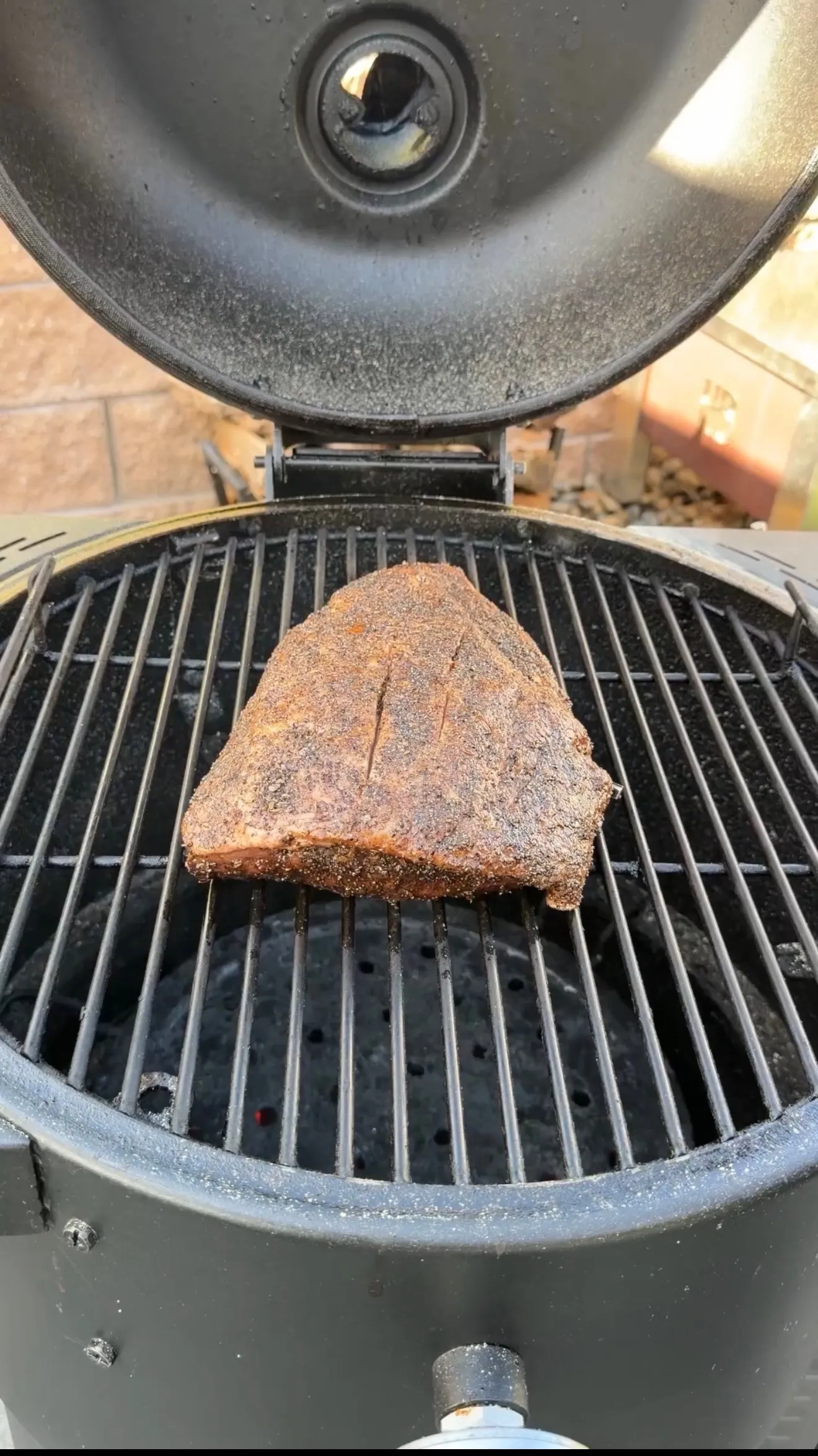
Placing the picanha fat-side down puts the thick fat cap closest to the heat source for the entire cook. Consequently, the fat renders steadily from below, crisping into a deep golden-brown crust while the rendered fat bastes upward into the meat. The fat-side-up alternative (common with brisket) protects lean cuts from drying out, but picanha doesn’t need that protection at this temperature range. Specifically, the cut’s intramuscular marbling keeps the meat juicy on its own, so the fat cap is better spent building crust than acting as a shield. The result is the crispy rendered fat cap that defines a properly cooked picanha.
The 275-300°F Window Explained
The 275 to 300°F range runs hotter than classic low-and-slow smoking (225°F) on purpose. Picanha is a tender cut that does not need hours of collagen breakdown the way brisket or pork shoulder does. At 275 to 300°F, a 2.5 to 3 pound roast reaches medium-rare in roughly 1.5 to 2 hours, the fat cap renders fully, and the exterior builds color without the gray overcooked band that higher temperatures create. Moreover, this temperature window is exactly where the Parmesan potatoes crisp best, which is what lets the roast and the side dish share the smoker on one cook.
The Crispy Parmesan Potato Technique
Par-Boil, Ice Bath, and Dry Completely
The potatoes go through three prep steps before they touch the smoker, and each one matters. Boiling the halved baby gold potatoes in salted water for 12 to 15 minutes cooks the interiors to creamy tenderness, since the smoker time alone won’t get them there. The ice bath immediately stops the cooking so the potatoes hold their shape instead of going mushy. Finally, patting them completely dry is the step people skip and regret: surface moisture steams the cheese layer instead of letting it crisp. As a result, dry potatoes plus hot smoker equals the golden crust, while wet potatoes equal soggy cheese.
The Parmesan Bed Trick
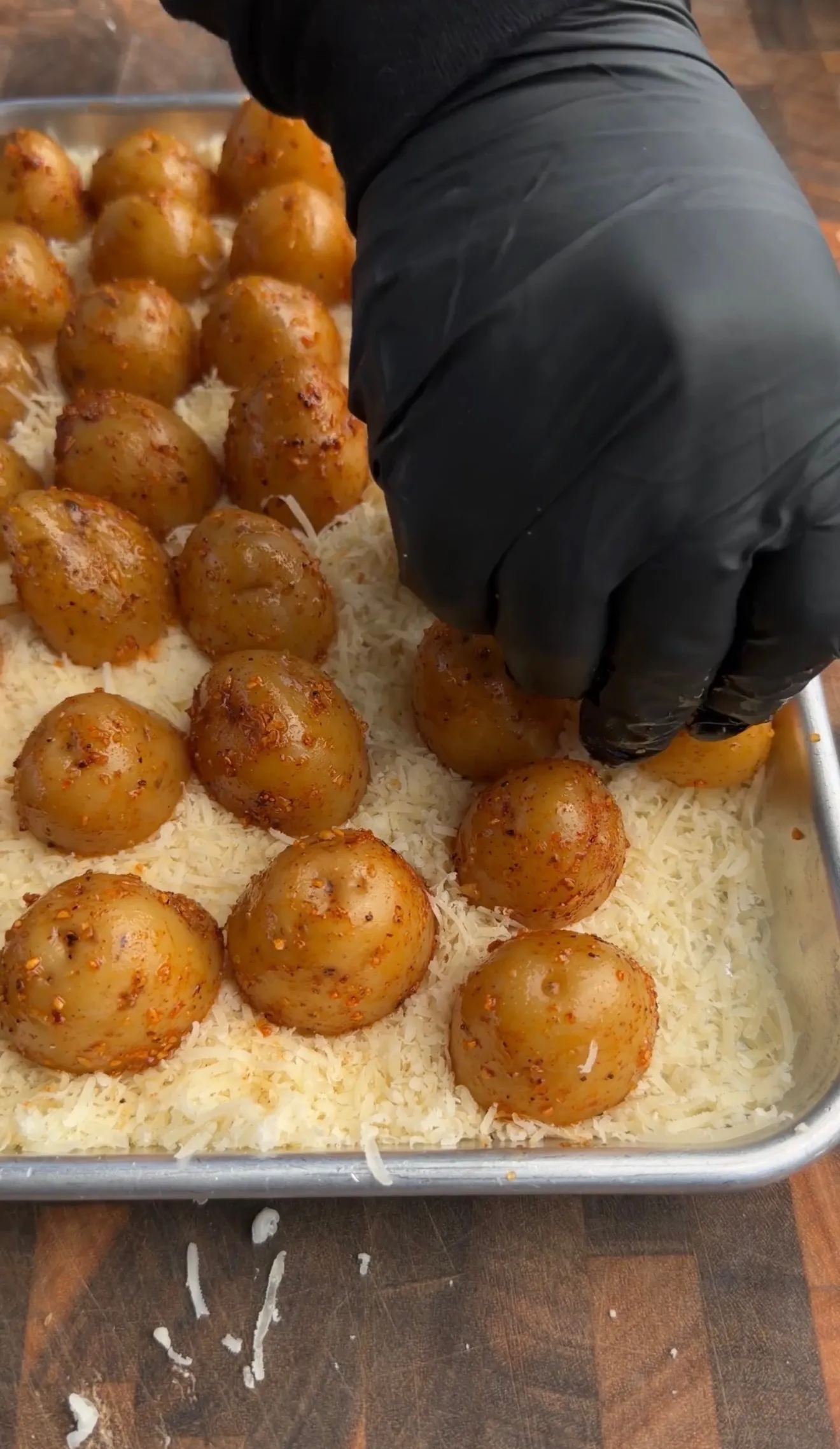
Instead of sprinkling cheese over the potatoes, this recipe inverts the technique. The 6 to 8 ounces of freshly grated Parmesan spreads evenly across the tray first, and the seasoned potatoes go cut-side down on top of the cheese. During the smoke, the Parmesan melts, bubbles, and fries in the olive oil and potato starch until it sets into a single crispy cheese crust fused to every cut face. Furthermore, use freshly grated Parmesan from a wedge, not the pre-grated shelf-stable kind. Pre-grated Parmesan contains anti-caking agents that prevent it from melting into the unified golden layer this technique depends on.
Building the Easy Chimichurri
The Parsley-Cilantro Base With Shallot
This chimichurri combines 1 cup of finely chopped parsley with 1/4 cup of cilantro, which leans closer to the traditional Argentine parsley-dominant ratio than a 50/50 blend. The cilantro adds a bright citrus note without taking over, while the finely diced shallot contributes a gentler allium sweetness than raw onion would. Combined with 4 minced garlic cloves, red pepper flakes, red wine vinegar, lemon juice, and 1/2 cup of olive oil, the sauce balances herb, acid, heat, and fat in every spoonful. Strictly traditional Argentine chimichurri skips the cilantro, lemon, and shallot, so consider this an easy weeknight-friendly take rather than a textbook version.
Why Chimichurri and Rendered Beef Fat Need Each Other
A properly smoked picanha slice carries a strip of rich rendered fat along one edge. The chimichurri exists to balance exactly that richness. Specifically, the red wine vinegar and lemon juice cut through the fat, the raw garlic and shallot add sharpness against the deep smoke flavor, and the fresh herbs reset the palate between bites. As a result, spooning chimichurri over the sliced roast isn’t a garnish decision — it’s the acid component that completes the dish. Make the sauce while the roast smokes so the flavors have at least 30 minutes to meld before serving.
Doneness Temperatures and the 15-Minute Rest
The Full Temperature Guide for Picanha
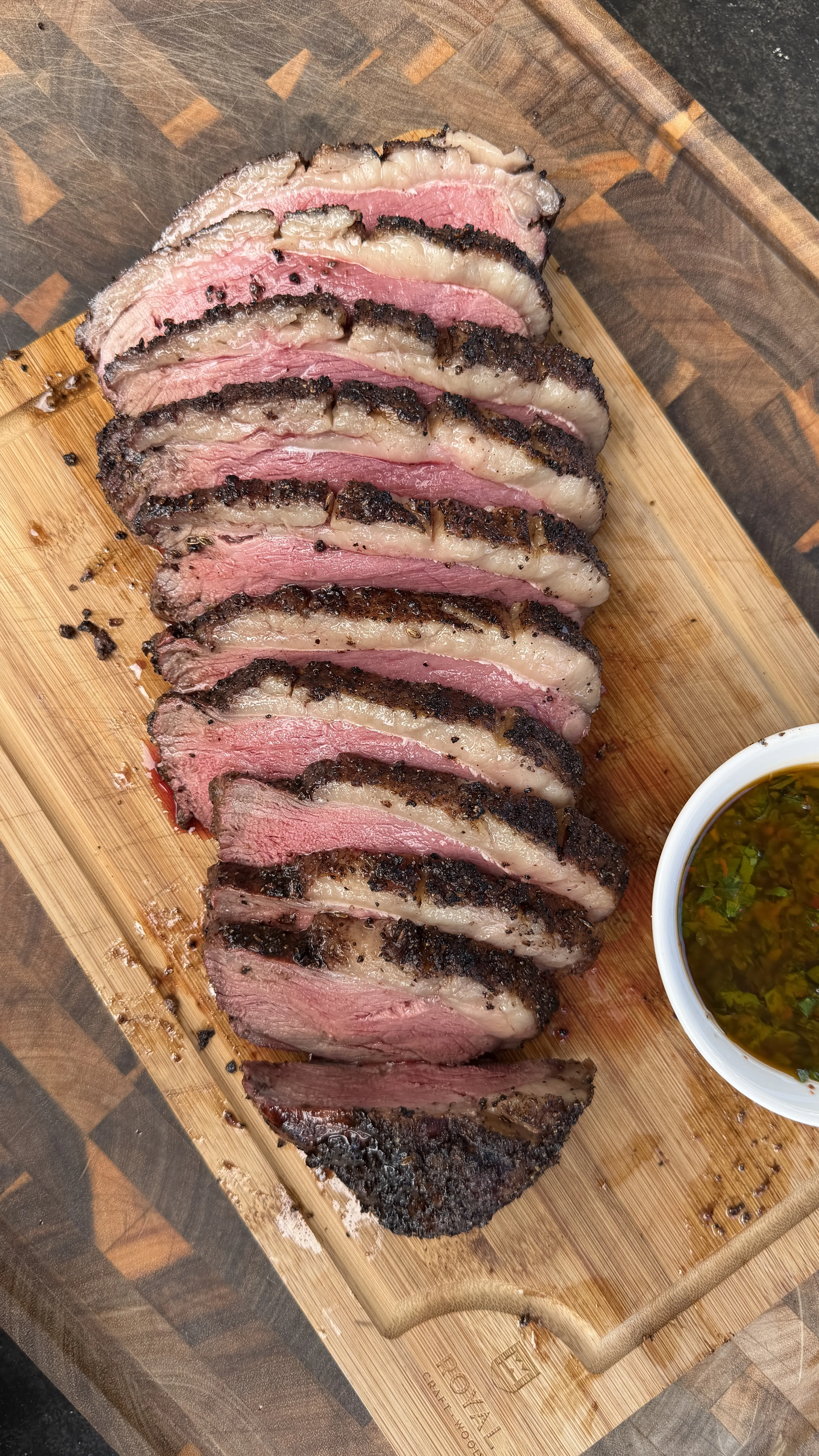
Pull the roast from the smoker when the internal temperature in the thickest part hits your target: 120 to 125°F for rare, 125 to 135°F for medium-rare, 135 to 145°F for medium, 145 to 155°F for medium-well, and 155°F+ for well done. Medium-rare (pulling around 125 to 130°F) is the recommendation for picanha since the cut’s flavor and texture peak with a rosy pink center and fully rendered fat. Additionally, remember that carryover cooking adds roughly 5 degrees during the rest, so pull slightly below your final target. A leave-in probe thermometer removes the guesswork without repeatedly opening the smoker.
Rest, Then Slice Against the Grain
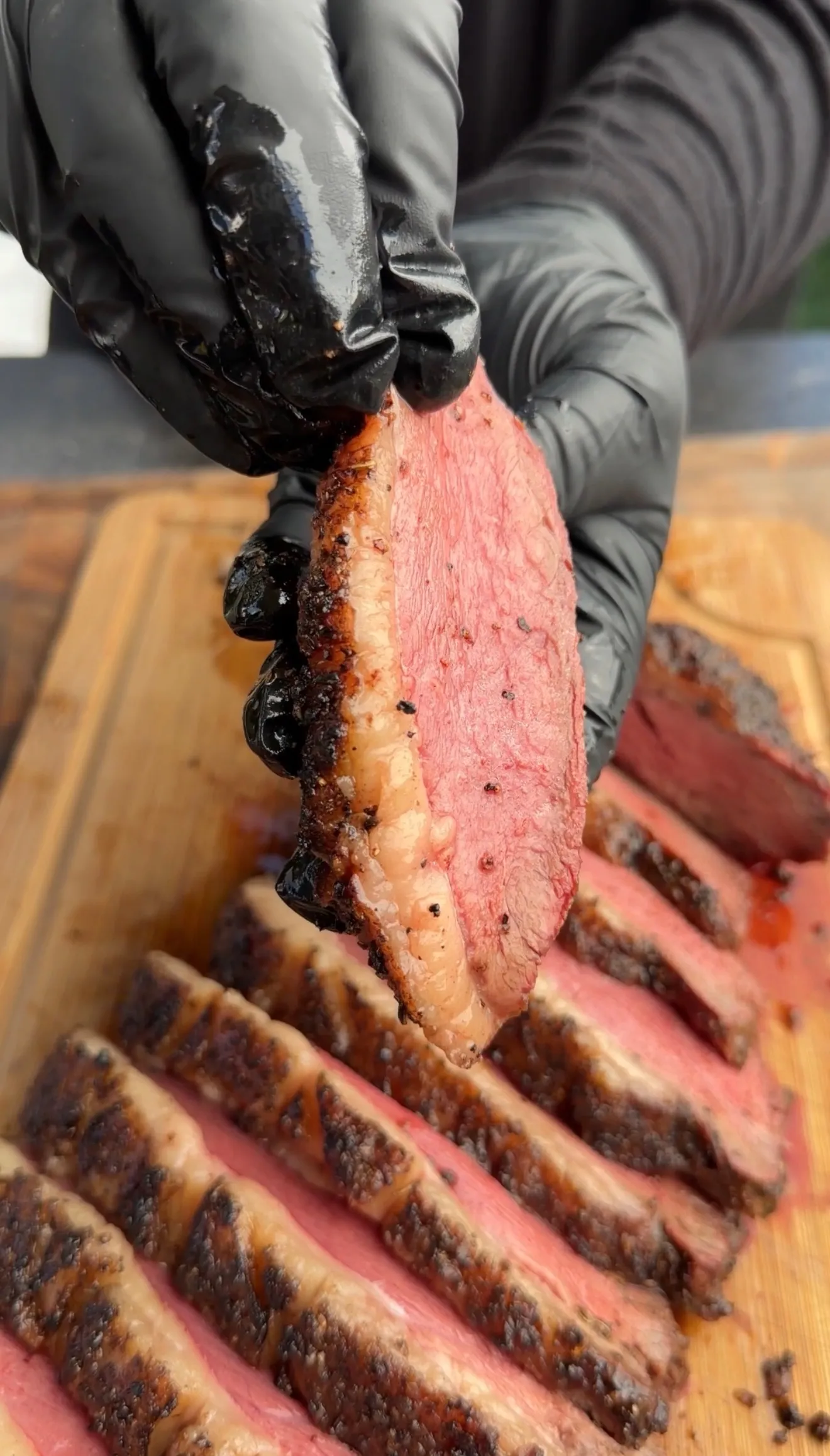
Rest the roast for at least 15 minutes before slicing. The rest lets the muscle fibers relax and redistributes the juices that the heat pushed toward the center, which keeps them in the slices instead of pooling on the cutting board. After the rest, find the grain direction running across the meat and slice perpendicular to it. Picanha has a clear, consistent grain, so this is easier than with cuts like flank or skirt. Slice to your preferred thickness — 1/2-inch slices showcase the crust and pink interior, while thinner slices stretch the roast further for a crowd. Spoon the chimichurri over the top and serve with the crispy Parmesan potatoes.
Step-by-Step: How to Make Smoked Picanha With Parmesan Potatoes
Step 1: Score and Season the Picanha
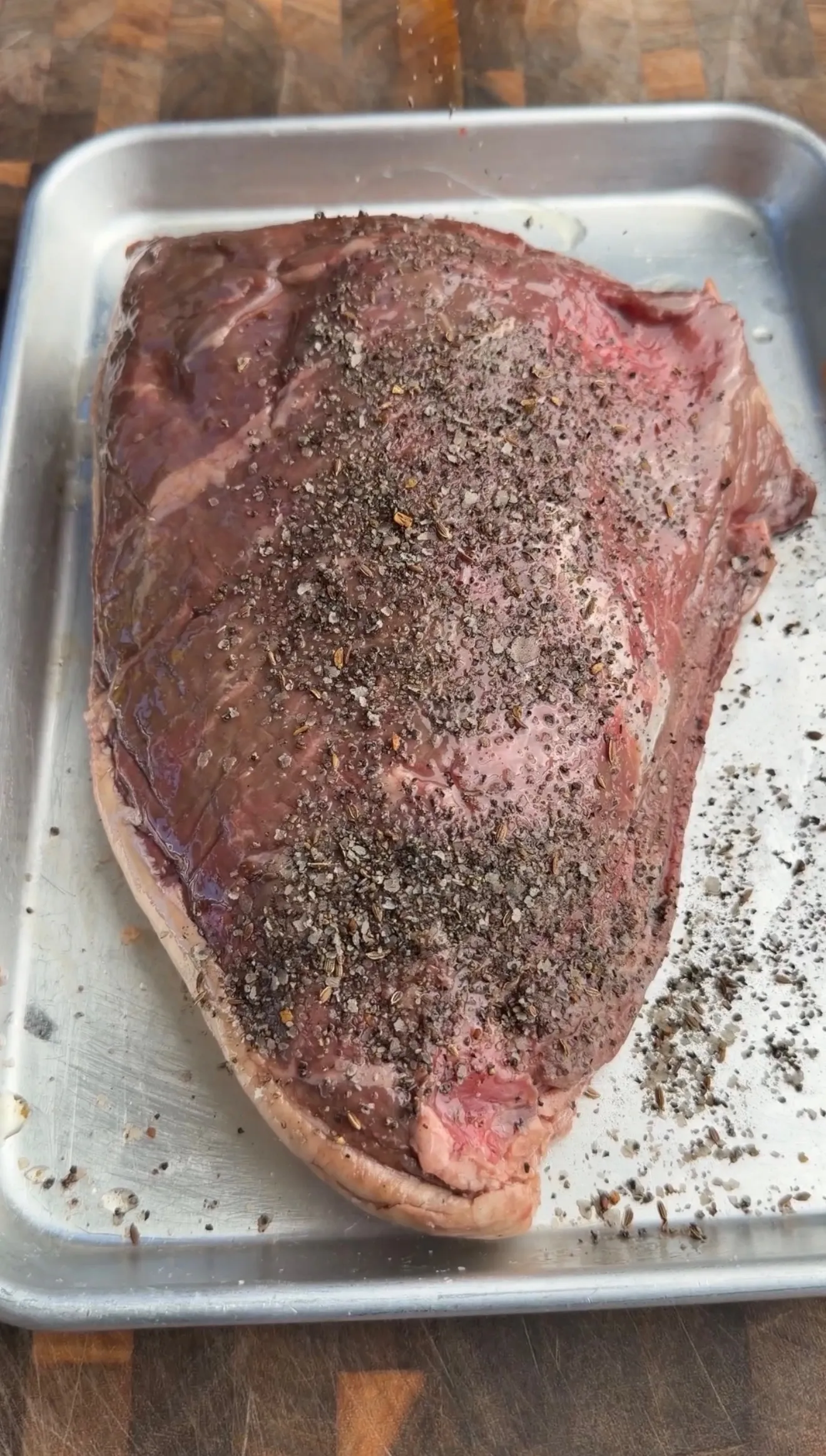
Score the fat cap of the picanha in a diamond pattern with a sharp knife, cutting through the fat but not into the meat below. Season generously on all sides with 2 to 3 tablespoons of steak seasoning, or the mixture of 1 tablespoon each of kosher salt, coarse black pepper, and garlic powder. Set aside at room temperature while you prepare the potatoes.
Step 2: Par-Boil the Potatoes
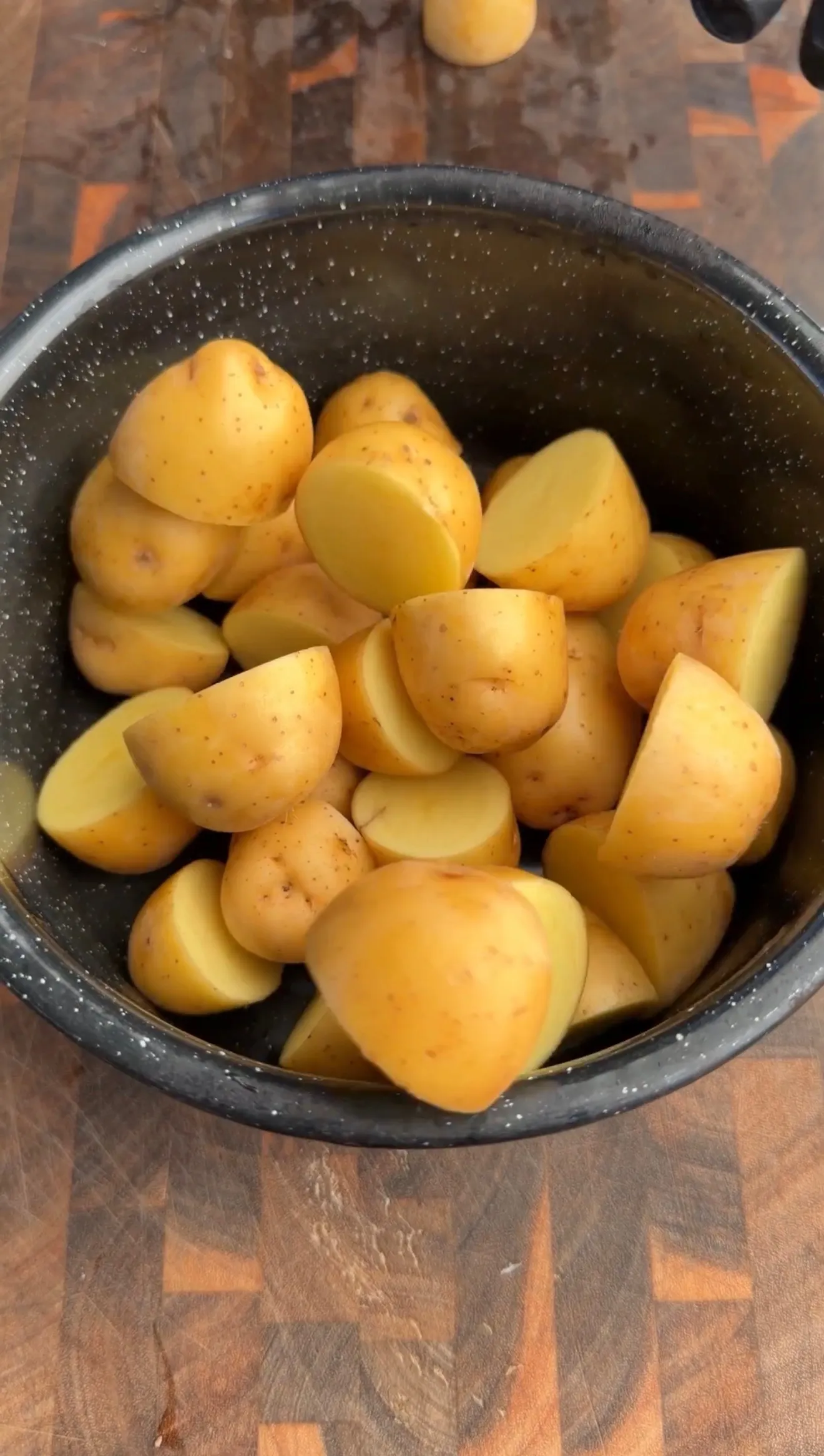
Bring a large pot of salted water to a boil. Add the halved baby gold potatoes and cook for 12 to 15 minutes until fork tender but not falling apart. Transfer immediately to an ice bath to stop the cooking, then drain and pat completely dry with paper towels or a clean kitchen towel.
Step 3: Season the Potatoes and Build the Parmesan Bed
Toss the dried potatoes with the 2 tablespoons of olive oil and 1 to 2 tablespoons of Cajun seasoning until evenly coated. Spread the 6 to 8 ounces of freshly grated Parmesan in an even layer across a baking sheet or grill-safe tray. Place the potatoes cut-side down directly onto the cheese layer, spacing them so the cheese can crisp between them.
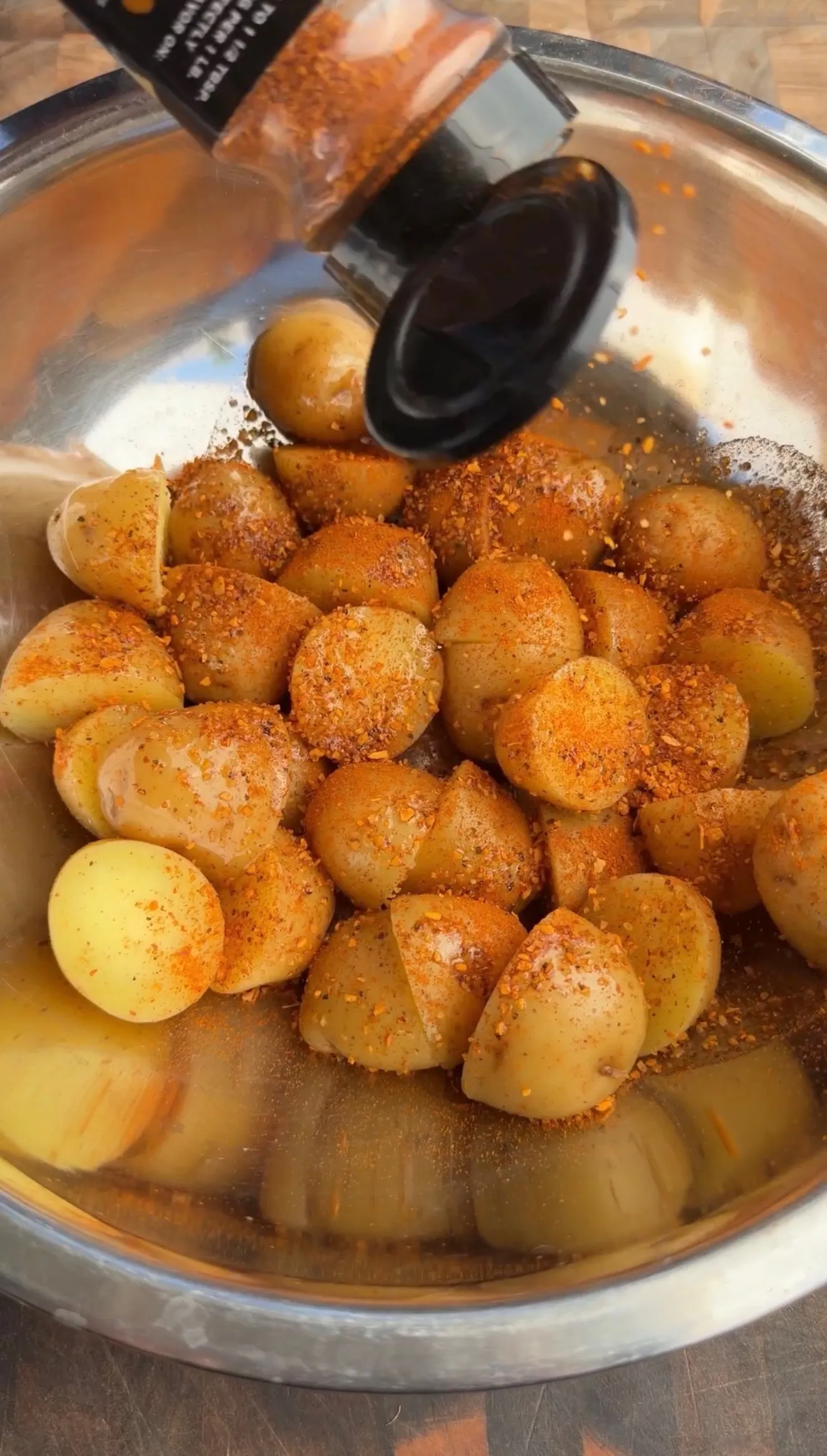
Step 4: Mix the Chimichurri
In a bowl, combine the parsley, cilantro, minced garlic, diced shallot, red pepper flakes, red wine vinegar, lemon juice, olive oil, kosher salt, and black pepper. Stir until well combined and set aside at room temperature. Making the chimichurri before the smoke gives the flavors at least an hour to meld.
Step 5: Smoke the Picanha Fat-Side Down
Preheat the smoker to 275 to 300°F. Place the picanha on the grates fat-side down so the fat cap renders and crisps against the heat. Insert a leave-in probe thermometer into the thickest part of the roast.
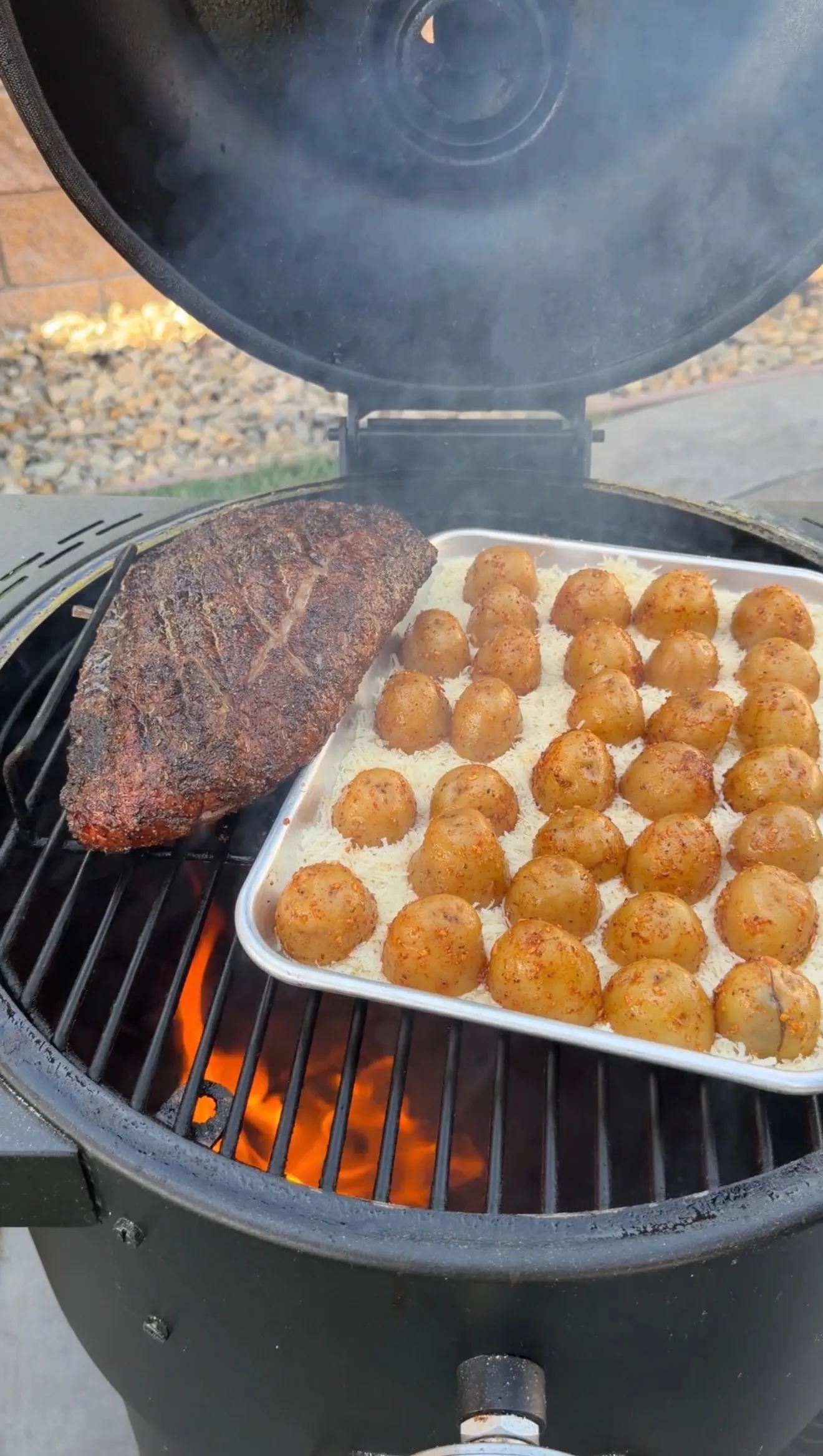
Step 6: Add the Potato Tray Beside the Roast
Place the tray of Parmesan potatoes on the smoker beside the roast. Both cook in the same 275 to 300°F environment. Smoke until the potatoes develop a crispy, golden Parmesan crust and the roast reaches your target internal temperature, roughly 1.5 to 2 hours for medium-rare on a 2.5 to 3 pound roast.
Step 7: Pull at Your Target Temperature and Rest
Use the temperature guide: 120 to 125°F for rare, 125 to 135°F for medium-rare, 135 to 145°F for medium, 145 to 155°F for medium-well, 155°F+ for well done. Medium-rare is the recommendation for picanha. Remove the roast at your preferred temperature and rest for at least 15 minutes. Carryover adds roughly 5 degrees during the rest.
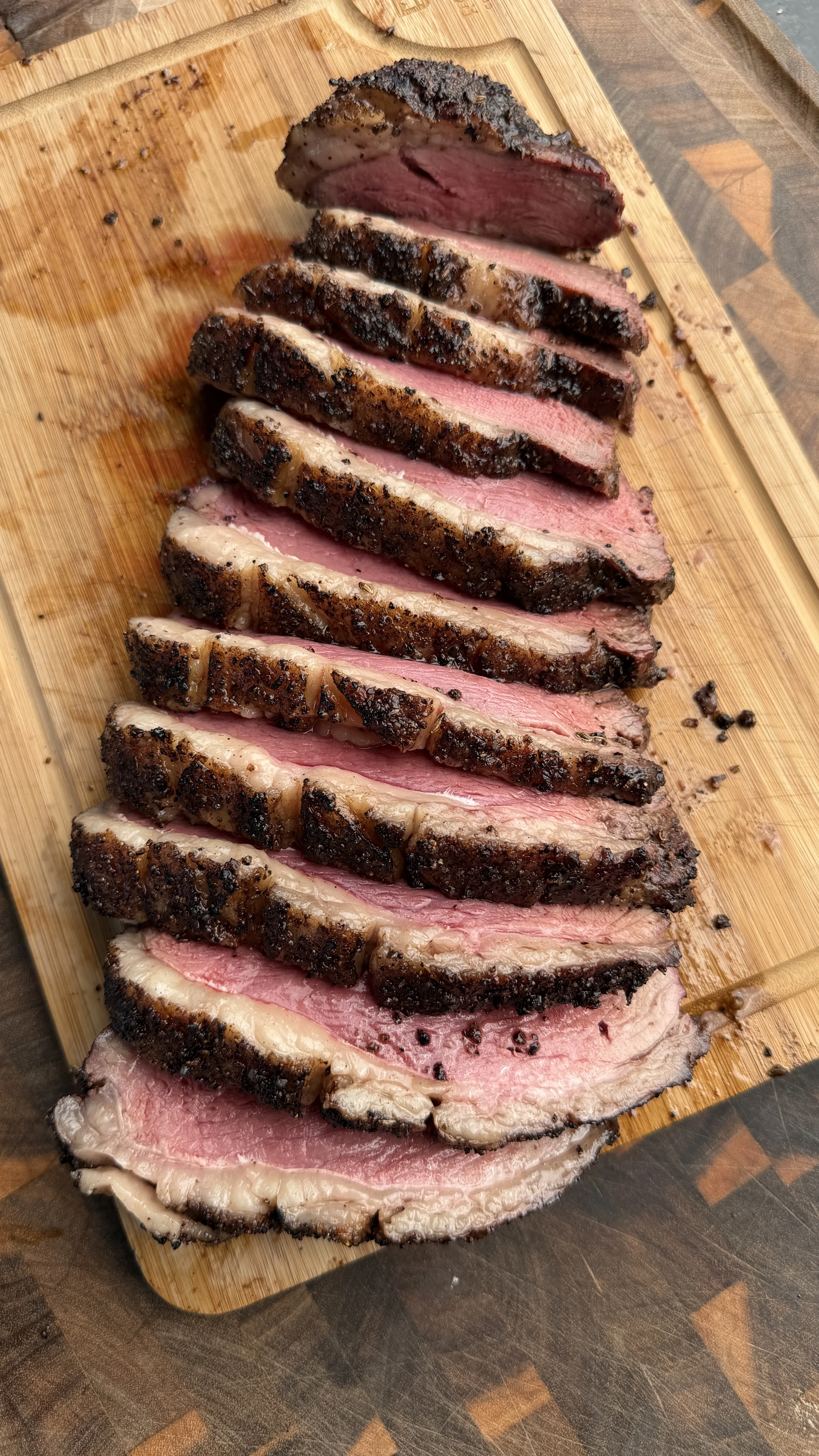
Step 8: Slice Against the Grain and Serve
Find the grain direction running across the rested roast and slice perpendicular to it, about 1/2-inch thick. Arrange the slices on a platter, spoon the chimichurri generously over the top, and serve with the crispy Parmesan potatoes alongside.
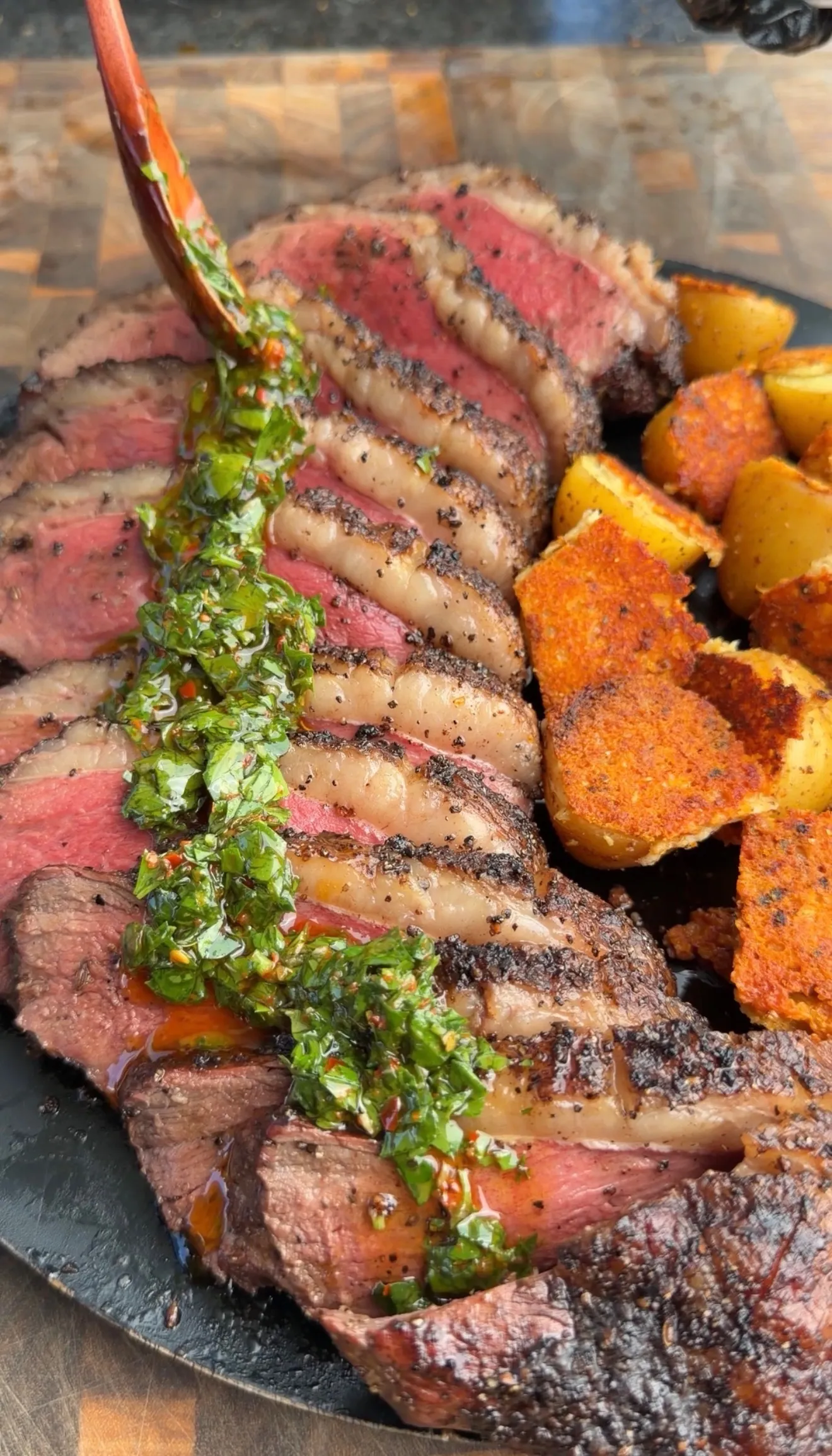
Smoked Picanha Roast with Crispy Parmesan Potatoes & Chimichurri
Ingredients
Equipment
Method
- Score the fat cap of the picanha in a diamond pattern, cutting through the fat but not into the meat. Season generously on all sides with steak seasoning or the salt, pepper, and garlic powder mixture. Set aside while you prepare the potatoes.
- Bring a large pot of salted water to a boil. Cook the halved baby gold potatoes for 12 to 15 minutes until fork tender but not falling apart. Transfer immediately to an ice bath, then drain and pat completely dry.
- Toss the dried potatoes with olive oil and Cajun seasoning. Spread the freshly grated Parmesan in an even layer across a baking sheet or grill-safe tray, then place the potatoes cut-side down directly onto the cheese layer.
- Combine the parsley, cilantro, garlic, shallot, red pepper flakes, red wine vinegar, lemon juice, olive oil, salt, and pepper in a bowl. Stir well and set aside so the flavors meld while the roast smokes.
- Preheat the smoker to 275 to 300°F. Place the picanha on the grates fat-side down so the fat cap renders and crisps. Insert a leave-in probe thermometer into the thickest part.
- Place the tray of Parmesan potatoes on the smoker beside the roast. Smoke until the potatoes develop a crispy golden Parmesan crust and the roast reaches your target internal temperature, about 1.5 to 2 hours for medium-rare.
- Pull the roast at your preferred doneness: 120-125°F rare, 125-135°F medium-rare, 135-145°F medium, 145-155°F medium-well, 155°F+ well done. Rest for at least 15 minutes before slicing.
- Slice the picanha against the grain, about 1/2-inch thick. Spoon the chimichurri over the top and serve alongside the crispy Parmesan potatoes.
Notes
Tried this recipe?
Let us know how it was!Smoked Picanha Roast — FAQ
Everything you need to nail the smoke, the potatoes, and the chimichurri.
Setup & Basics
Two different cooking approaches for the same cut. Grilled picanha (the Brazilian churrasco method) slices the roast into thick steaks, bends them onto skewers, and cooks them fast over open flame at high heat \u2014 done in 15 to 20 minutes with heavy char. Smoked picanha keeps the roast whole and cooks it at 275 to 300°F for 1.5 to 2 hours, building deeper smoke flavor and more even edge-to-edge doneness. The smoked version also frees up your hands since the roast doesn’t need constant rotation, which is what makes the simultaneous Parmesan potato cook possible. Both are excellent \u2014 grilled is theater and char, smoked is depth and convenience.
Costco stocks whole picanha in many warehouse locations, often labeled “top sirloin cap.” Brazilian and Latin American markets almost always carry it. Online butchers like Porter Road, Snake River Farms, Crowd Cow, and ButcherBox ship quality picanha to your door. At a standard grocery store, ask the meat counter for a “top sirloin cap,” “sirloin cap,” “rump cap,” or “coulotte” \u2014 all names for the same cut. Whatever the label, make sure the fat cap is intact (3/4 to 1 inch thick across one side). A picanha with the fat trimmed off loses the rendering and crust this recipe is built around.
Different cuts, different jobs for the fat. Brisket is a tough cut smoked low-and-slow for 10+ hours, and the fat-side-up convention (debated even among pitmasters) treats the cap as a moisture shield over a long cook. Picanha is a tender cut on a short 1.5 to 2 hour cook at moderate heat, and its intramuscular marbling keeps the meat juicy on its own. That frees the fat cap for a better job: facing the heat, where it renders steadily into a crispy golden crust while basting upward into the meat. Fat-side up on picanha leaves you with a pale, rubbery cap. Fat-side down gives you the crispy rendered crust that defines the cut.
Yes. Follow the same prep (par-boil 12 to 15 minutes, ice bath, dry completely, toss with oil and Cajun seasoning), spread the Parmesan bed on a baking sheet, and place the potatoes cut-side down on the cheese. Bake at 400°F for 25 to 30 minutes until the cheese sets into a deep golden crust. The oven version actually crisps slightly faster than the smoker because of the higher temperature \u2014 you just lose the light smoke flavor. Let the tray cool for 5 minutes before lifting the potatoes; the cheese crust releases cleanly once it sets, but tears if you pull the potatoes while the cheese is still molten.
Technique & Troubleshooting
Three likely causes. First, the roast was fat-side up instead of down \u2014 away from the heat, the cap never renders and stays pale and chewy. Second, you skipped or under-did the scoring. Without the diamond crosshatch opening pathways into the fat, the heat can’t penetrate the thick layer and only the surface renders. Third, the smoker ran below 275°F. At 225°F-style low-and-slow temps, the short cook time of a tender roast ends before the fat finishes rendering. Quick rescue for an already-cooked roast: sear the fat cap in a ripping-hot cast iron skillet for 2 to 3 minutes before resting \u2014 it crisps the cap without overcooking the interior.
Chimichurri improves with a little time and keeps well. Make-ahead: The sauce is at its best 1 to 24 hours after mixing, once the garlic and shallot mellow and the flavors meld. Making it the night before the cook is ideal. Storage: Refrigerate in an airtight container for up to 5 days. The olive oil will solidify in the fridge \u2014 just let it sit at room temperature for 20 to 30 minutes before serving and stir. The herbs darken slightly over time but the flavor holds. Don’t freeze it \u2014 the fresh herbs turn black and mushy on thaw. Leftover chimichurri is excellent on eggs, grilled chicken, roasted vegetables, and sandwiches, so a double batch rarely goes to waste.
Ready to Level Up?
Take your backyard cooking from good to legendary.
This is where I keep all my most-used smokers, knives, and favorite cooking tools.
Shop My Gear CollectionExplore More Recipes
Find more diverse flavors at CWFeats.com